Recognizing Ant Infestations in Kennesaw Homes

Common Ant Species in Kennesaw
Kennesaw’s warm, humid climate welcomes a handful of ant species that can quickly become unwelcome house guests. The three you’ll most likely encounter are:
- Carpenter ants – larger, black or dark brown workers that love moist wood. They don’t eat wood, but they hollow out galleries, which can weaken structural members over time.
- Pavement ants – small, dark brown to black ants that build nests in cracks of sidewalks, driveways, and foundation walls. They’re the most common indoor foragers.
- Odorous house ants – medium‑sized, light brown ants that emit a faint, rotten‑egg smell when crushed. They favor sugary foods and often nest in wall voids or under appliances.
Visual Cues: What You’ll See
Spotting an ant problem early can save you a lot of hassle. Keep an eye out for these tell‑tale signs:
- Thin, irregular trail lines of ants moving between a food source and a hidden nest.
- Small soil mounds or piles of sand near foundation cracks, especially after rain.
- Visible nest chambers tucked in wall cavities, under floorboards, or inside the attic insulation.
Even a single ant marching across the kitchen counter can be the first clue that a colony is establishing a foothold.
Behavioral Signs to Watch For
Ants are opportunistic, and their habits reflect what’s most attractive in your home:
- Nocturnal foraging – many species, especially carpenter ants, are more active after dark. You may notice a surge of traffic near lights or around pantry doors at night.
- Sugar attraction – open cereal boxes, spilled juice, or pet food bowls are ant magnets. If you find crumbs or sticky residues, expect ant trails nearby.
- Wood damage – look for small, smooth galleries in wooden beams, window frames, or door thresholds. Carpenter ants create these as they expand their nest.
Health and Structural Risks
While most household ants aren’t disease vectors, their presence can still pose problems. Odorous house ants can contaminate food surfaces with bacteria from their bodies, and large carpenter ant colonies can compromise structural integrity, especially in load‑bearing beams. Over time, unchecked damage may lead to costly repairs, and a thriving ant population often invites other pests such as spiders or roaches.
Simple DIY Inspection Steps
Before you dial a professional, run through this quick, no‑cost inspection:
- Check the perimeter. Walk the exterior of your home with a flashlight. Look for ant trails along siding, under eaves, and around utility lines.
- Inspect entry points. Examine windows, doors, and any gaps around pipes or vents. Seal obvious cracks with caulk to reduce access.
- Search interior hotspots. Open cabinets, pantry shelves, and under appliances. Use a white towel to sweep surfaces; ants will reveal themselves on the fabric.
- Look for moisture. Carpenter ants favor damp wood. Check for water stains, leaky pipes, or condensation near windows.
- Document findings. Take photos of trails, nests, or damage. This information will help a pest‑control professional pinpoint the infestation’s source.
If you notice extensive wood damage, large numbers of ants, or persistent trails despite your best DIY efforts, it’s time to call Anthem Pest Control. Our local expertise means we’ll identify the species, assess the risk, and recommend a treatment plan that protects both your home and your budget.
When and Why to Treat Ant Problems in Kennesaw
Understanding the rhythm of ant activity throughout the year is the first step to keeping your home ant‑free. Below is a quick reference chart that maps typical ant activity in Kennesaw from January through December. Use it as a visual cue for when to schedule inspections and treatments.
| Month | Activity Level | Typical Ant Species |
|---|---|---|
| January | Low | Carpenter ants (overwintering) |
| February | Low | Carpenter ants |
| March | Moderate | Carpenter, odorous house |
| April | High | Odorous house, pavement |
| May | High | Odorous house, pavement, pharaoh |
| June | High | All common species |
| July | High | All common species |
| August | High | All common species |
| September | Moderate | Pavement, carpenter |
| October | Low | Carpenter, pavement |
| November | Low | Carpenter |
| December | Low | Carpenter (deeply nested) |
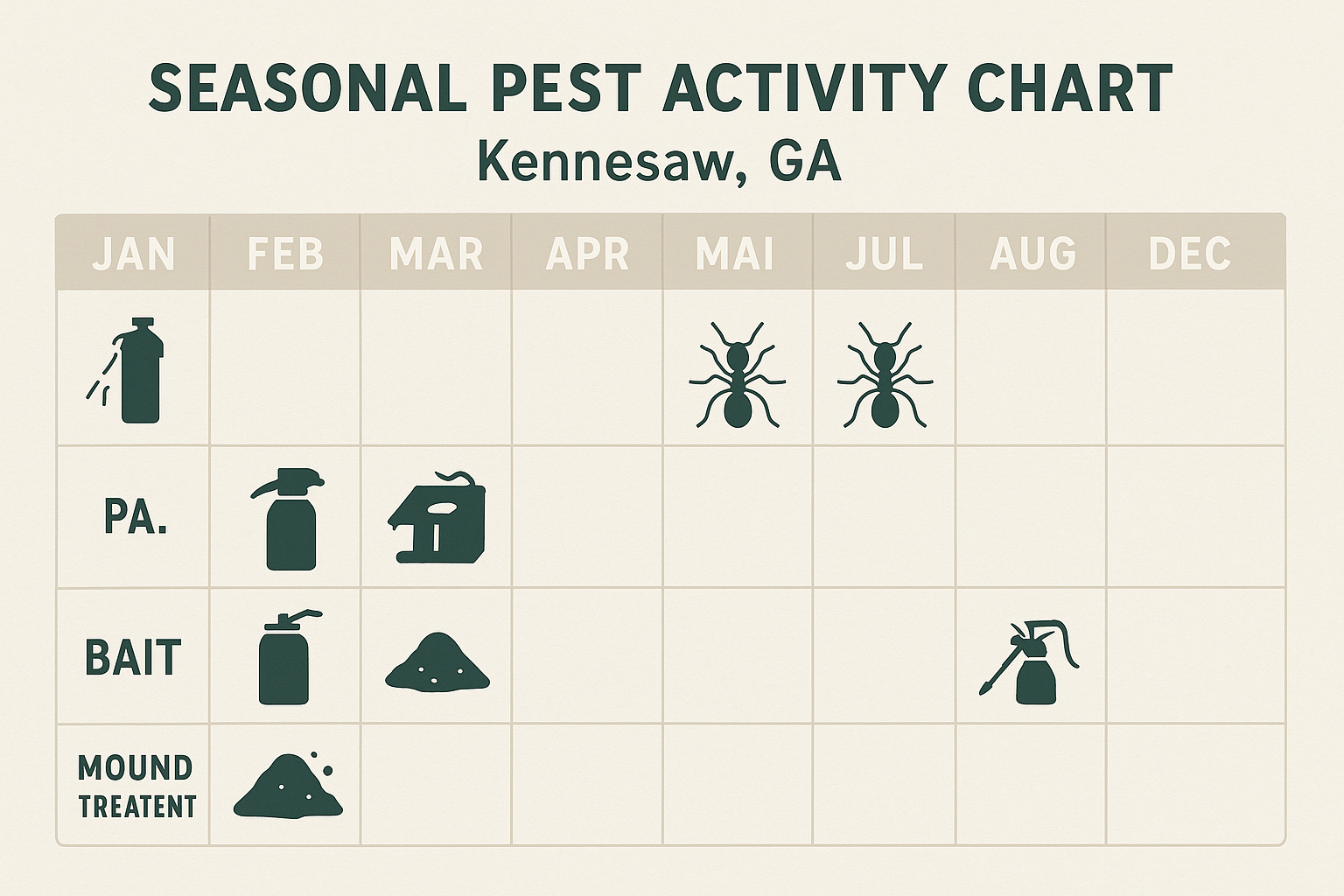
Peak Ant Activity: Late Spring Through Early Fall
From April to September, temperatures consistently sit between 70 °F and 90 °F, and humidity stays high enough for foraging ants to thrive. Colonies use this window to expand their nests, send out swarms of workers, and establish satellite colonies inside homes. The warm soil encourages queen reproduction, while abundant outdoor food sources (picnic crumbs, pet food, garden debris) fuel rapid growth.
Season‑Specific Treatment Recommendations
- Spring (March–May): Apply a perimeter barrier spray around the foundation, windows, and entry points. This creates a chemical “moat” that stops foragers before they reach interior spaces.
- Summer (June–August): Deploy bait stations in kitchens, garages, and along ant trails. Summer foragers are most eager to feed, making bait the most effective way to deliver a slow‑acting toxin back to the colony.
- Fall (September–October): Treat visible mounds and nests with a targeted mound‑kill product. As colonies begin to prepare for winter, eliminating the queen at this stage prevents a resurgence in the following spring.
Risks of Delaying Treatment
Postponing action until after the peak season can have three major consequences:
- Exponential colony growth: A small ant problem in May can become a massive infestation by August, making eradication more labor‑intensive.
- Structural damage: Certain species, like carpenter ants, excavate wood to expand nests. A mature colony can compromise load‑bearing beams, decks, or siding, leading to costly repairs.
- Higher control costs: Larger colonies require more product, multiple visits, and sometimes specialized equipment—raising the overall price tag.
How Weather Influences Ant Behavior and Treatment Efficacy
Rainfall and temperature swings directly affect both ant activity and the success of your chosen treatment:
- Heavy rain: Saturates soil and can wash away barrier sprays, reducing their residual life. Re‑application after a prolonged downpour is essential.
- Temperature spikes: When daytime highs exceed 95 °F, ants retreat deeper into the soil, making bait less attractive. Schedule bait placements during cooler morning or evening periods.
- Cold snaps: Sudden drops below 50 °F slow colony metabolism, which can temporarily mask an infestation. This is an ideal time for thorough inspections and pre‑emptive barrier applications.
By aligning your ant control strategy with Kennesaw’s seasonal patterns, you’ll keep colonies from gaining a foothold, protect your home’s structural integrity, and avoid inflated service fees. If you notice any of the warning signs—ant trails, small soil mounds, or wood damage—reach out to Anthem Pest Control today. Our local experts know exactly when and how to act, ensuring you stay one step ahead of the ants.
Ant Control Methods and What to Expect
When ants march into your kitchen or set up a mound in the yard, you need a solution that’s fast, safe, and sustainable. At Anthem Pest Control we follow an Integrated Pest Management (IPM) framework that blends careful inspection, ongoing monitoring, and targeted treatments. Below is a walkthrough of the most common ant‑control tactics we employ, how they work, safety tips for families and pets, and what timeline you can expect from the first visit to a long‑term peace of mind.

Integrated Pest Management (IPM) Approach
IPM starts with a thorough inspection of interior and exterior entry points, nesting sites, and food sources. Technicians map ant trails, identify the species, and note environmental factors that favor infestations. Monitoring devices—such as sticky traps or discreet bait stations—are placed to gather data over several days. Only after the assessment do we decide which treatment, or combination of treatments, will be most effective. This data‑driven approach lets us pinpoint exactly where the colony is thriving, so we treat only the hotspots.
Barrier Sprays
Barrier sprays create an invisible shield around the perimeter of your home, foundation, and any outdoor structures where ants are likely to travel. Professional‑grade formulations contain residual insecticides that remain active for 30‑90 days, depending on the product and weather conditions. The spray is applied in a thin, even coat that dries quickly, leaving no visible residue. The residual effect means you won’t need another application for up to three months under normal conditions.
Safety considerations: All barrier products are EPA‑registered and applied at safe concentrations. Keep pets and children away until the spray dries (15‑30 minutes).
Bait Stations
Bait stations contain a slow‑acting toxicant mixed with an attractive food lure. Foraging ants transport the bait back to the nest, sharing it with workers, the queen, and larvae, eventually collapsing the colony.
Placement strategy: Technicians position bait stations along ant trails, near entry points, and in shaded outdoor areas where moisture is present. Stations are typically spaced 10‑15 feet apart and checked every 3‑5 days during the initial treatment phase. Because the toxicant acts slowly, you may continue to see some activity for a week or two. That is normal; the ants are still distributing the bait throughout the colony.
Mound Treatments
Mound treatments target outdoor colonies with visible nests. After locating the mound, we drill small holes and inject a concentrated liquid insecticide directly into the chamber. Common actives like bifenthrin or chlorpyrifos kill workers on contact and disrupt the queen’s reproductive cycle.
Post‑treatment monitoring involves revisiting the site after 48‑72 hours to assess collapse and applying a follow‑up spray if any activity persists. Homeowners should avoid mowing or watering the treated area for at least 24 hours to allow the product to bind to the soil.
Smoke Machine Applications
Smoke machines release a fine, non‑toxic smoke that suffocates ants and forces nest evacuation. Within minutes you’ll see a rapid knock‑down, making it an excellent first‑step before applying a residual barrier.
Environmental considerations are minimal because the smoke consists of water vapor and a biodegradable carrier. However, we recommend using this method on calm days to prevent drift onto neighboring properties or indoor spaces.
Follow‑up Visits and Warranty Periods
Most plans include at least two follow‑up visits 7‑14 days apart to evaluate efficacy, replace bait stations, and address new activity. Anthem Pest offers a 90‑day warranty; if ants return, we’ll re‑treat at no extra charge. We also provide a simple maintenance checklist to keep your home ant‑free year‑round.
During the warranty period, we advise keeping food sealed, fixing water leaks, and maintaining a tidy yard. Following these habits maximizes the longevity of the treatment and reduces the likelihood of future infestations.
By understanding each method and the timeline it follows, you can make an informed decision and feel confident that your home is protected from the tiny invaders that cause big headaches.
Ant Extermination Pricing in Kennesaw by Home Size
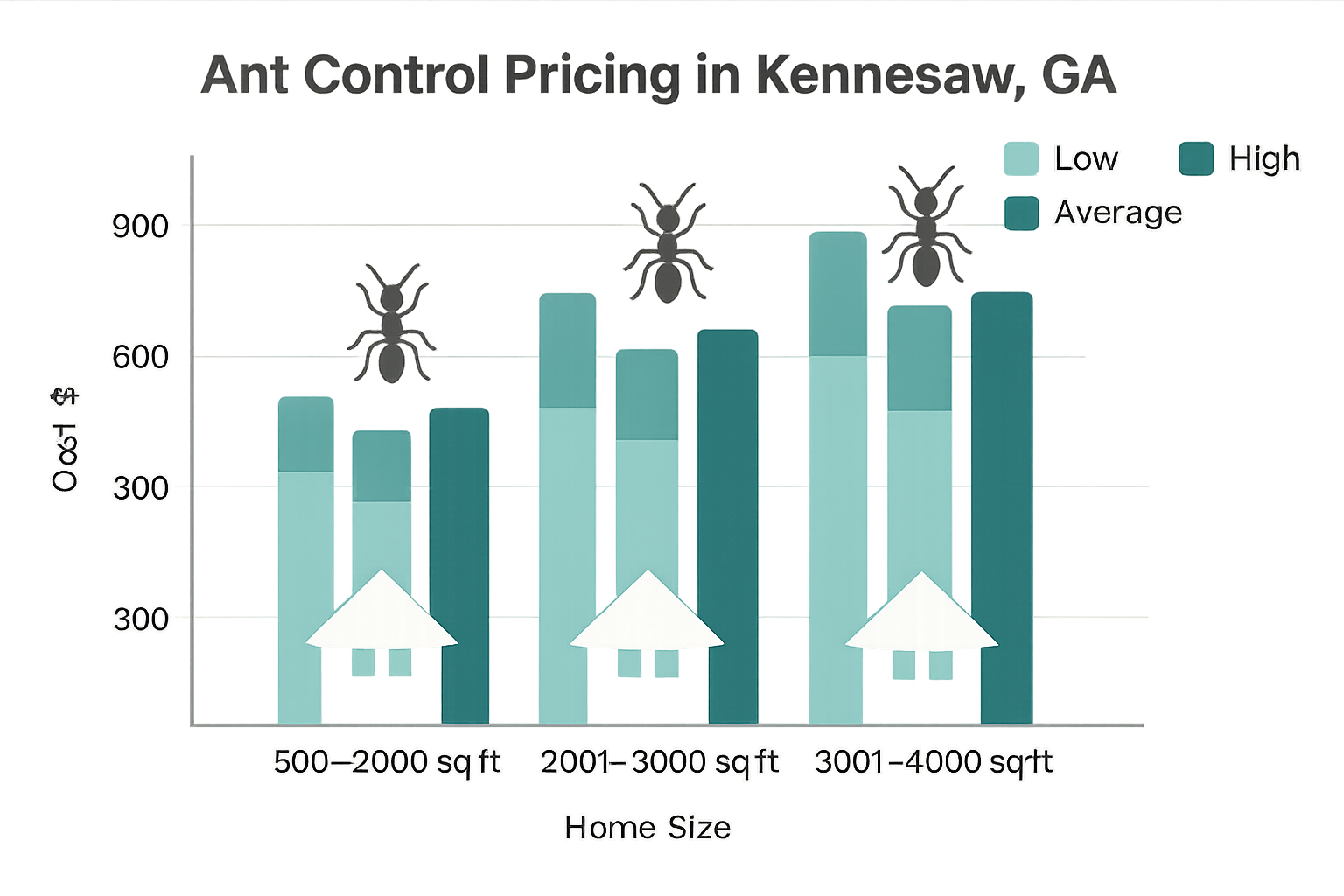
Understanding how home size influences ant‑control pricing helps you budget confidently and avoid surprises. In Kennesaw, the average cost for a single‑visit treatment typically falls into three tiers—low, average, and high—each shaped by the square footage, infestation severity, and the treatment method you choose.
Low, Average, and High Cost Tiers
Low tier: For a modest 500‑2000 sq ft residence with a light ant presence, most local companies quote between $80 and $130. This range usually covers a basic barrier spray or a single bait station.
Average tier: A mid‑size home (2001‑3000 sq ft) with moderate activity often sees quotes from $130 to $210. At this level, technicians may combine a perimeter spray with a small bait program to address multiple entry points.
High tier: Larger properties (3001‑4000 sq ft) or homes battling several colonies can expect $210 to $350 or more. The high end reflects extensive coverage, specialized treatments such as mound removal, and sometimes the need for follow‑up visits.
Typical Price Ranges for Common Treatments
| Treatment Type | Low Tier | Average Tier | High Tier |
|---|---|---|---|
| Barrier Spray (perimeter) | $80 – $110 | $120 – $160 | $170 – $240 |
| Bait Program (setup + 1 month) | $90 – $130 | $140 – $190 | $200 – $280 |
| Mound Treatment (removal & insecticide) | $100 – $150 | $160 – $220 | $250 – $350 |
What Can Push the Cost Higher?
- Multiple colonies: Each active nest requires its own bait or spray zone, adding labor and product costs.
- Hard‑to‑reach locations: Ants nesting under decks, in crawl spaces, or within dense landscaping demand extra time and specialized equipment.
- Seasonal follow‑ups: In Kennesaw’s humid climate, ant activity spikes in spring and fall. Scheduling quarterly checks ensures lasting control but adds $40‑$70 per visit.
National Context
According to HomeGuide’s national ant‑exterminator cost data, the United States average sits around $150 per service. Kennesaw’s pricing aligns closely with the national median for homes under 2,000 sq ft, while larger properties naturally exceed the average due to increased labor and product usage.
Tips for Getting Accurate Quotes and Avoiding Hidden Fees
- Request a detailed estimate: Ask the provider to break down labor, chemicals, and any equipment fees.
- Confirm the treatment type: Some companies bundle bait programs with barrier sprays; verify exactly what you’re paying for.
- Inquire about guarantees: Reputable firms often offer a 30‑day or 60‑day guarantee that includes a free re‑treatment if ants return.
- Get multiple quotes: Comparing three local providers gives you leverage to negotiate the best price.
- Ask about seasonal discounts: Early‑spring or late‑summer promotions can shave $20‑$50 off the final bill.
By understanding how square footage, infestation level, and treatment choice affect the bottom line, you can confidently choose a plan that protects your Kennesaw home without breaking the bank.
Protect Your Home with Professional Ant Control Today
When it comes to ant infestations, timing is everything. Spotting the first trail in spring, acting before colonies mature, and applying the right treatment at the right moment can mean the difference between a one‑time fix and a recurring battle. Early detection lets technicians target the queen and the nest before they spread, while seasonal timing aligns treatments with the ants’ life cycle for maximum impact. Proper, professionally‑applied treatments also ensure that the chemicals reach the hidden galleries and foraging routes without jeopardizing the safety of your family or pets. In short, catching ants early, treating at the optimal season, and using proven methods set the stage for long‑term, worry‑free ant management.
Why Choose Anthem Pest Control?
- Locally trained technicians – Our team knows the Kennesaw climate, the ant species that thrive here, and the most effective local strategies.
- Safe and effective methods – We use EPA‑approved products applied with precision to protect your home, children, and pets while eliminating the colony.
- Transparent pricing – No hidden fees. You receive a clear, itemized quote that matches the size of your home and the level of ant activity.
- Satisfaction guarantee – If ants return within the warranty period, we’ll re‑treat at no extra cost, giving you confidence in the result.
Ready to take the next step? Schedule a free, no‑obligation inspection and receive a detailed, customized quote. Our technicians will assess the extent of ant activity, evaluate vulnerable entry points, and recommend a treatment plan that fits both your budget and your schedule. Whether you own a cozy bungalow or a sprawling family home, we tailor the solution to the specific layout, construction type, and ant species you’re dealing with.
Give us a call today at 877‑371‑8196 or visit our website to book your online appointment. The process is quick, the inspection is free, and you’ll walk away with a clear understanding of what’s needed to protect every corner of your property.
Imagine the peace of mind that comes with knowing your home is shielded from relentless ant invasions—no more watching tiny soldiers march across countertops or fearing damage to wooden structures. Our soft‑sell approach means we provide the information, the expertise, and the options, then let you decide the best path forward. We’re here to safeguard your family, your belongings, and your sanity, without any pressure or hard‑selling tactics.
Visit Anthem Pest Control now to learn more and claim your free quote.