Why Ant Control Costs Matter for Snellville Homeowners

An ant infestation may look harmless, but the hidden costs add up quickly for Snellville families—especially when evaluating the real ant control cost Snellville homeowners may face. Structural damage from carpenter ants can compromise beams, siding, or decks, and repairs often climb into the high three-figure range. Meanwhile, pantry raids force you to discard spoiled food—sometimes $200 to $400 worth in a single season. Add the expense of emergency service calls, and a short-term problem can become a budget-breaker before you realize it.
Health risks make the financial picture even bleaker. Odorous house ants travel along kitchen counters, leaving behind bacteria that can contaminate meals and trigger food‑borne illnesses. Fire ant stings deliver a burning sensation and, for people with sensitivities, can swell into dangerous allergic reactions that sometimes require a doctor’s visit. Even non‑aggressive carpenter ants can stir asthma‑type symptoms in dust‑allergic occupants, turning a simple pest issue into a medical expense.
Snellville’s warm, humid climate fuels ant activity year‑round, leaving little downtime to wait for a ‘good season’ to treat the problem. The three species you’ll most likely encounter are carpenter ants, which excavate wood and weaken structures; odorous house ants, infamous for infiltrating food storage; and fire ants, whose colonies thrive in moist soil and deliver painful bites during outdoor gatherings. Knowing which ant you’re dealing with lets you choose the right treatment and avoid unnecessary spending on generic spray‑and‑forget solutions.
The stakes are real: the U.S. Environmental Protection Agency estimated that ant‑related damage cost homeowners $1.2 billion in 2023 alone (EPA 2023 report). That national figure translates into a substantial slice of the local pie for Snellville, where each household can face hundreds of dollars in repair, food loss, or medical bills if the problem isn’t addressed promptly. Understanding these hidden costs is the first step toward a data‑driven budgeting plan, which we’ll break down in the next section of this guide.
Common Ant Species in Snellville
Carpenter Ants
Carpenter ants are the largest household ants you’ll encounter in Snellville, with workers ranging from dark black to reddish‑brown and measuring up to ½ inch. They prefer moist, decaying wood, often nesting behind drywall, in window frames, or within roof joists that have been exposed to water damage. The Georgia Department of Agriculture reports that carpenter ants are found in 42 % of suburban homes across the state (GA Dept. of Agriculture). Over time, their tunneling can compromise structural integrity, leading to sagging floors, weakened support beams, and costly repairs.
- Visible sawdust or frass near wood structures
- Rusty‑colored wings discarded after mating flights
- Wood that sounds hollow when tapped
Odorous House Ants
These tiny, brown ants are a common nuisance in Snellville kitchens and pantries. When crushed, they release a sour, vinegar‑like odor—hence the name “odorous.” Their colonies typically establish in moist soil, under foundations, or within wall voids, giving them easy access to food sources. Although they don’t cause structural damage, they contaminate food by trailing bacteria and can trigger allergic reactions in sensitive individuals.
- Small, fast‑moving ants on countertops
- Sweet or greasy food residues attract them
- Ant trails leading to hidden wall or floor voids
Fire Ants
Fire ants are the most aggressive of the three, recognizable by their bright red bodies and painful sting. In Snellville’s Shiloh neighborhood, they frequently build conspicuous mounds in lawns, especially in sunny, well‑drained areas. Their nests can expand quickly, damaging turf, ornamental plants, and even underground irrigation lines. A single sting can cause a burning sensation that lasts for hours, and multiple stings may lead to severe allergic reactions.
- Mounds up to 6 inches tall with a crater‑shaped opening
- Visible trails of ants moving in and out of the mound
- Yellow‑ish pustules on skin after stings
Prevalence and Infestation Signs
While carpenter ants dominate structural infestations, odorous house ants are the most frequently reported indoor nuisance, and fire ants dominate outdoor complaints. Homeowners should watch for the signs listed above and act quickly—early detection reduces treatment costs and prevents extensive damage. If you notice any of these indicators, contacting a local professional like Anthem Pest Control can ensure a safe, effective solution tailored to Snellville’s unique ant challenges.
Detailed Cost Breakdown for Snellville Residents
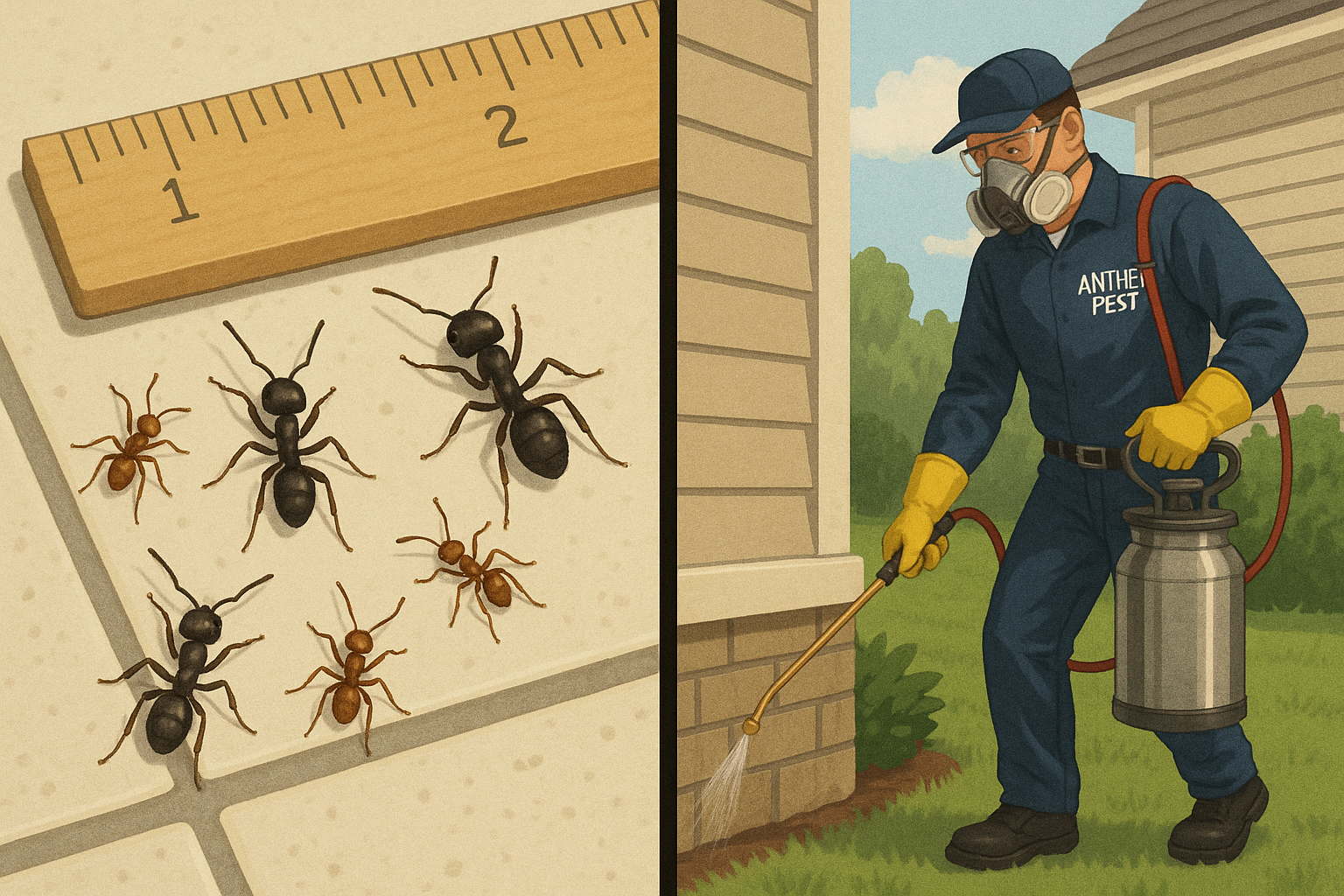
When you call a professional ant-control service in Snellville, the invoice isn’t a single flat fee. It’s a collection of line items that reflect the work, materials, and logistics required to eradicate an infestation and keep it from returning. Understanding each component helps you compare quotes, avoid hidden charges, and better evaluate the true ant control cost Snellville homeowners can expect before committing to a treatment plan.
Core Cost Components
- Inspection fee – covers the technician’s time to locate nests, identify species, and assess the severity of the problem.
- Labor – the hands‑on work of applying sprays, setting baits, or installing barriers.
- Chemicals – the actual pesticide products, which vary in price depending on brand, concentration, and whether they are low‑toxicity, pet‑safe formulas.
- Travel surcharge – an extra charge for trips that fall outside the company’s core service area or require extended mileage.
- Disposal fees – costs associated with safely discarding used bait stations, empty containers, or contaminated debris, especially when local regulations mandate special handling.
Snellville Price Ranges
| Service | Price Range (USD) |
|---|---|
| Inspection | $45 – $65 |
| Single‑visit treatment (spray + bait) | $150 – $275 |
| Bait‑only package (pre‑placed stations) | $120 – $200 |
| Annual prevention contract (quarterly visits) | $250 – $425 |
| Travel surcharge (Gwinnett County) | $10 – $25 per visit |
| Disposal fees (regulated waste) | $15 – $30 per service |
These ranges reflect the competitive market in Snellville and include the mandatory travel and disposal fees that Gwinnett County pest‑control providers must charge. The inspection fee is usually the first line item; many companies apply it toward the total if you schedule a treatment within a set time frame.
Regional Comparison
| Service | Snellville | Lawrenceville | Suwanee |
|---|---|---|---|
| Inspection | $45‑$65 | $50‑$70 | $48‑$68 |
| Single‑visit treatment | $150‑$275 | $160‑$290 | $155‑$285 |
| Bait‑only package | $120‑$200 | $130‑$210 | $125‑$205 |
| Annual prevention contract | $250‑$425 | $260‑$440 | $255‑$435 |
| Travel surcharge | $10‑$25 | $12‑$28 | $11‑$27 |
| Disposal fees | $15‑$30 | $18‑$35 | $16‑$32 |
All three cities sit within Gwinnett County, so the travel surcharge and disposal fees are regulated similarly. However, Lawrenceville’s slightly higher median reflects a denser commercial zone that drives up mileage for some technicians, while Suwanee’s figures hover close to Snellville’s because of comparable suburban layouts.
National Baseline Context
The EPA’s 2023 Home Pest Management Cost Report places the average U.S. household spend on ant control at roughly $180 per treatment and $320 for an annual contract. Snellville’s ranges sit comfortably within that national band, confirming that local providers are neither overcharging nor under‑pricing relative to the broader market.
Key Takeaways for Homeowners
- Ask for a detailed, itemized quote so you can see exactly where inspection, labor, chemicals, travel, and disposal fees land.
- Leverage the inspection credit: many companies will deduct the $45‑$65 fee if you commit to a treatment within 30 days.
- Consider an annual prevention contract if you’ve struggled with recurring ant activity; the $250‑$425 package spreads costs over four visits and often includes a free re‑inspection.
- Compare Snellville’s numbers with the Lawrenceville and Suwanee columns to gauge whether a particular provider’s quote is truly competitive.
By breaking down each cost element and seeing how Snellville aligns with neighboring cities and national averages, you can make a confident, data‑driven decision about the ant‑control service that best protects your home.
Factors That Influence Your Ant Control Quote
Property size and layout
When you request an ant‑control quote, the number you see isn’t a random guess. Technicians calculate the cost based on several measurable factors that affect how much time, product, and equipment are needed to eradicate the colony. A larger home means more square footage to treat, and a complex floor plan—multiple rooms, hallways, and open‑concept spaces—requires additional labor and more pesticide coverage. For a typical 2,000‑sq‑ft house, the baseline labor charge might be $150, while a 3,500‑sq‑ft property can push that number past $250.
Infestation severity and species
The severity of the infestation is the next big driver. A few scout ants spotted near a kitchen doorway are a light job, but a thriving colony with multiple satellite nests demands repeated applications and a higher‑volume treatment. Species matters, too: fire ants build deep, extensive mounds and often need a more aggressive, multi‑step protocol than pavement or odorous house ants, which can increase the quote by 20‑30 %.
Access difficulty
Access difficulty can add hidden costs. Tight crawl spaces, steep landscaping, or homes built on a slab with limited entry points force technicians to spend extra time maneuvering equipment and may require specialized applicators. Those obstacles typically add $30‑$70 to the final price.
Seasonal timing
Seasonal timing also plays a role. Spring is the peak season for ant activity, so demand for treatments spikes. Companies may raise rates modestly or prioritize larger jobs, whereas off‑season appointments in late summer or fall can sometimes be negotiated at a lower price.
Real‑world example
For instance, a 2,500-sq-ft downtown Snellville home with several entry points, moderate fire-ant activity, and a backyard that’s partially fenced was quoted between $350-$400. This estimate gives homeowners a realistic look at ant control cost Snellville properties may incur, reflecting the combined impact of size, species, and access challenges.
Discount opportunities
Anthem Pest offers several discount pathways that can shave 5‑15 % off the base estimate. Eligible customers can receive automatic reductions for:
- Senior citizen discount
- Military discount
- Bundled services (e.g., mosquito + ant)
All discounts are outlined on the Anthem Pest discount policy page for verification.
Seasonal Timing and Prevention Tips
When are ants most active in Georgia?
In the Peach State, the bulk of ant activity falls between April and September. Warm temperatures accelerate colony expansion, and the humidity of early summer creates ideal foraging conditions. This six‑month window is when you’ll notice the most foraging trails, bait theft, and the occasional fire‑ant mound appearing in lawns.
Early spring: start before they spread
April marks the first chance to intercept a colony before it spreads across your property. Place bait stations in the perimeter of your home and near known entry points—under decks, around foundation gaps, and in garden beds. Early placement gives ants a chance to discover the bait, start feeding, and return it to the nest, reducing the population before the first summer surge.
Summer heat: reinforce barriers and watch for fire‑ant migration
June through August brings higher temperatures and more aggressive foraging. Increase the frequency of perimeter barrier applications, especially in shaded areas where fire‑ant mounds tend to relocate. Inspect your lawn regularly for fresh mounds; fire‑ants often move to cooler, moist spots during peak heat, and a timely treatment can prevent a full‑scale invasion.
Homeowner checklist for year‑round deterrence
- Eliminate standing water in gutters, pet bowls, and pet‑dish trays.
- Seal cracks and gaps in foundation, window frames, and door thresholds.
- Store pantry items in airtight containers; avoid open food on countertops.</ pet
- Keep outdoor trash in sealed containers and place them away from the house.
- Trim vegetation touching the house to reduce bridge‑path for ants.
Neighborhood‑specific advice: Lake Windward homes
Properties near Lake Windward experience higher moisture levels, which can attract both carpenter ants and fire‑ants. For these homes, prioritize moisture control: repair any leaking irrigation, ensure the lawn is not overly saturated, and conduct a thorough perimeter inspection every two weeks during the peak season. A modest increase in barrier spray around the property’s edge can make a noticeable difference.
For a comprehensive, evidence‑based approach, refer to the CDC 2025 indoor pest‑prevention guidance, which outlines best practices for sealing entry points and maintaining a dry, clean interior—key steps that complement any professional treatment from Anthem Pest Control.
Choosing the Right Ant Control Service Provider
When it comes to eliminating ants, the cheapest quote isn’t always the smartest choice. A reliable provider protects your home, your family’s health, and your wallet. Use the quick checklist below to separate reputable companies from fly‑by‑night operators.
Vetting Checklist
- Valid state licensing – Confirms the technician meets Georgia’s legal standards for pesticide application.
- Liability insurance – Shields you from potential property damage or accidental injury during treatment.
- EPA‑approved product certifications – Guarantees the chemicals are tested, safe for indoor use, and effective against the specific ant species in Snellville.
- Verified customer reviews – Look for consistent five‑star feedback on independent platforms, not just the company’s website.
- Guaranteed response time – A prompt 24‑hour or faster arrival window shows the company values urgent infestations.
Why Anthem Pest Stands Out
Anthem Pest checks every box on the list. All technicians are EPA‑registered, meaning they are trained and authorized to apply the latest low‑toxicity ant treatments safely inside homes. The company backs every service with a 24‑hour response guarantee, so a call at 8 p.m. will trigger a same‑night visit. Additionally, Anthem’s staff are locally trained in Snellville, giving them intimate knowledge of the area’s ant species and seasonal patterns.
“I called Anthem after spotting carpenter ants in my kitchen. They arrived within two hours, treated the problem, and the ants haven’t returned. Their punctuality and clear communication made the whole process stress‑free.” – Jenna L., Snellville, GA
By following the checklist and choosing a provider like Anthem Pest, you can feel confident that your ant issue will be resolved quickly, safely, and with a transparent price.
Frequently Asked Questions About Ant Control
Will ant control affect my pets?
We use EPA‑approved low‑toxicity baits and barrier sprays that are safe for cats, dogs, and other household animals when applied exactly as directed. The products are placed out of reach or in sealed stations, so pets cannot ingest them. If you have a particularly sensitive pet, let your technician know and we’ll adjust the application method.
How long before I see results?
Most homeowners notice ant activity drop within 48‑72 hours as worker ants collect the bait and bring it back to the colony. A full protective barrier typically takes 1‑2 weeks to establish, especially for outdoor perimeters and hard‑to‑reach indoor cracks.
Do I need a follow‑up visit?
Our standard service includes a 30‑day warranty; if ants return, we’ll re‑treat at no extra charge. Many clients opt for an annual contract, which provides scheduled inspections and a complimentary follow‑up, ensuring long‑term protection.
Get Transparent Pricing and Peace of Mind
In Snellville, ant control typically falls between $120 and $250 for a single‑service visit, while comprehensive year‑round plans range from $300 to $500. Those numbers reflect professional treatment by technicians who know the local species, soil conditions, and seasonal patterns.
At Anthem Pest, we believe pricing should be as clear as the result—no hidden fees, no surprise add‑ons. After a quick inspection, we’ll provide a written estimate that outlines every step, the products used, and the exact cost. If you need a customized schedule—monthly, quarterly, or a one‑time fix—we’ll tailor it to fit your budget and your home’s unique needs.
- Transparent, written estimate with every charge disclosed.
- Local Snellville technicians who understand the ants in your neighborhood.
- Guarantee of treatment effectiveness or we’ll re‑treat at no extra cost.
These guarantees turn a simple service into lasting peace of mind for you and your family.
Ready to take the next step? Call us at 877-371-8196 for a free, no-obligation quote and get clear answers about ant control cost Snellville homeowners can expect, or schedule your inspection online today. Visit our website to learn more and book your service with confidence.