Why Knowing Carpet Beetle Control Costs Matters in Lawrenceville
Carpet beetles may seem harmless at first glance, but they’re relentless fabric thieves. Their larvae chew through natural fibers, leaving unsightly holes in carpets, blankets, and drapes. Upholstered furniture isn’t safe either—tiny bite marks turn a favorite sofa into a patchwork of loss. Even stored food can fall victim; adult beetles are attracted to pantry items like grains, nuts, and dried fruit, contaminating them with shed skins and feces.
Recent EPA data reveals a 12% rise in carpet beetle reports across Georgia over the past three years (EPA). This uptick isn’t random; older homes in Lawrenceville’s East Lake, Brookside, and West End neighborhoods are reporting higher infestation levels. The combination of mature woodwork, vintage carpeting, and long‑term food storage creates the perfect breeding ground for these pests.
Understanding the local cost of treatment is more than a budgeting exercise—it’s a protective strategy. When homeowners know the typical price range for inspection, preventive sprays, and follow‑up visits, they can allocate funds before damage escalates. Early intervention often means a single, targeted treatment rather than multiple rounds that drive up expenses.
Cost awareness also empowers you to compare service plans. Anthem Pest Control, for example, offers transparent pricing that includes a detailed inspection, a customized treatment protocol, and a warranty period to keep beetles at bay. Knowing these figures lets you weigh the short‑term outlay against the long‑term savings of preserving your carpets, furniture, and pantry supplies.
In short, recognizing the hidden damage carpet beetles cause and staying informed about Lawrenceville‑specific treatment costs equips you to protect your home’s comfort and value without surprise expenses.
Spotting the Enemy: Carpet Beetle Life Stages and Signs
Life Cycle Overview
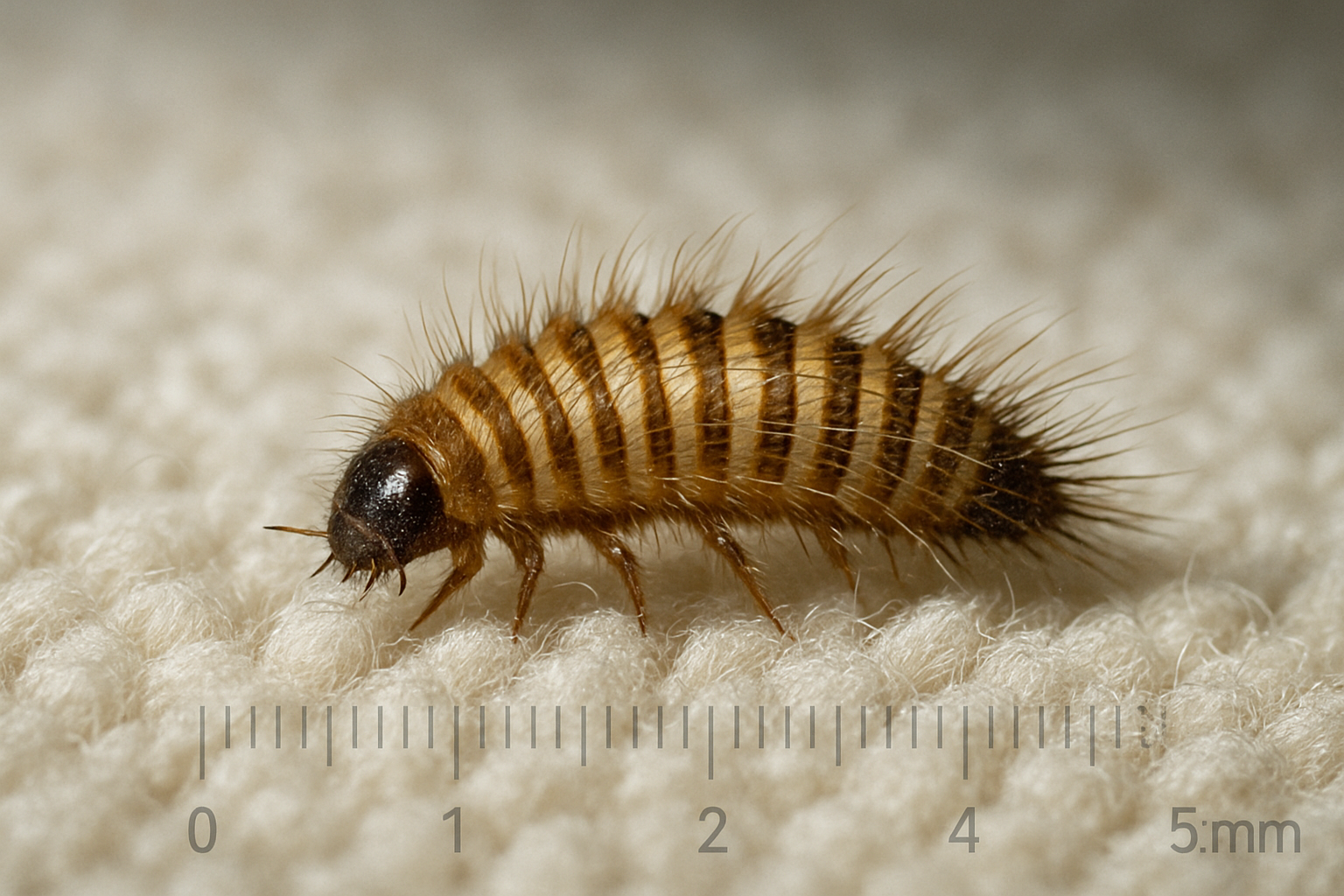
Carpet beetles go through a complete metamorphosis: egg, larva, pupa, adult. The adult beetle, about a half‑inch long, is usually tan or mottled brown and is seen only briefly when it flies in search of a mate or a place to lay eggs. Once the eggs hatch, the real damage begins. Larvae—often called “cobweb beetles”—are creamy‑white with a dark head and a banded, bristly body that can grow up to a quarter‑inch. They hide in carpet fibers, wool, and stored animal products, feeding on natural proteins. After several weeks to months of feeding, the larvae spin a silken cocoon and pupate; the pupal stage lasts only a few days before the adult emerges to repeat the cycle. Pupae hide inside a silken cocoon for a few days before emerging as adult beetles.
Key Visual Indicators
Because the larval stage is the only feeding stage, spotting its evidence is the fastest way to catch an infestation early. Homeowners should watch for three tell‑tale signs:
- Shed skins (exuviae) – As larvae grow, they molt. Tiny, translucent shells often accumulate near baseboards or under furniture.
- Irregular holes in fabrics – Look for uneven, ragged openings in clothing, blankets, or upholstered cushions. The holes are usually larger than a pinprick and lack clean edges.
- Carpet fuzz or “powdery” debris – A fine, hair‑like residue may appear on the surface of light‑colored carpet, especially after vacuuming. This is the shed hair and fecal pellets of the larvae.
Why Early Detection Matters
According to the National Pest Management Association, 1 in 5 households with carpet older than 15 years experience carpet‑beetle damage (NPMA). This underscores why regular inspections are crucial, especially in homes with older flooring.
Detecting these clues early lets a professional intervene before the larvae have built a large population. A targeted treatment—often a combination of vacuuming, steam, and a low‑toxicity insecticide—can eradicate the insects and protect vulnerable fabrics for years.
Beyond DIY: Benefits of Licensed Exterminators
Carpet beetle shed skins, feces, and dead larvae are more than a cosmetic nuisance; they are potent indoor allergens. The CDC 2023 indoor allergen guidelines warn that exposure to these particles can trigger asthma attacks, eczema flare‑ups, and chronic sinus irritation, especially in children and seniors. A professional exterminator knows how to target the hidden sources of these allergens—inside wall voids, under insulation, and in crawl spaces—so you breathe cleaner air.
Why DIY falls short
Many homeowners start with a vacuum‑only approach, assuming that sucking up visible beetles will solve the problem. Unfortunately, vacuuming reaches only surface insects. Larvae tucked away in wall cavities, attic insulation, or beneath flooring remain untouched, allowing the colony to rebound within weeks. The result is a repeat infestation that costs more time, effort, and frustration than a single professional treatment.
Peace of mind from licensed experts
When you hire a licensed exterminator like Anthem Pest Control, you receive a warranty that covers re‑infestation for a specified period. This guarantee isn’t just marketing fluff; it’s backed by state‑mandated training, insurance, and strict adherence to EPA‑approved products. Should a treatment fail, the company is liable to revisit the site at no extra charge, protecting you from hidden costs and potential health liabilities.
In short, professional pest control eliminates the hidden reservoirs of allergens, avoids the false security of DIY methods, and provides a warranty‑backed safety net—making it the smartest investment for a healthy, beetle‑free home. Plus, Anthem’s transparent pricing ensures you know exactly what you’re paying for, without hidden fees.
Effective Methods: Chemical, Non‑Chemical, and Integrated Solutions
Targeted Residual Insecticides (e.g., Pyrethroids)
Residual insecticides are the backbone of many professional carpet‑beetle programs. Pyrethroid‑based sprays cling to fabric fibers, baseboards, and carpet seams, creating a lethal barrier that kills adult beetles and emerging larvae for weeks after application. Pros include rapid knock‑down, ease of application, and relatively low cost per treatment.
Cons involve potential resistance buildup in beetle populations, limited penetration into deep‑seated infestations, and the need for strict safety measures around children, pets, and food preparation areas. Technicians must wear protective gloves, ensure proper ventilation, and follow label instructions to avoid over‑application.
All products used in Lawrenceville must be EPA‑registered for indoor use, and technicians must verify the registration number on the label before application. This guarantees that the formulation meets federal safety standards and that the treatment is documented for homeowner peace of mind.
Heat Treatment
Heat treatment works by raising the ambient temperature of a room or entire home to 130‑140 °F (54‑60 °C) for a sustained period, typically 2–4 hours. At these temperatures, carpet‑beetle eggs, larvae, and adults cannot survive, even in hidden layers of insulation, wall voids, or under floorboards.
The method is especially effective for deep‑penetrating infestations where chemicals cannot reach. Because heat permeates every crevice, it eliminates the need for repeated chemical applications and reduces the risk of residue exposure. However, the equipment and labor required make heat treatment a higher‑priced option, often ranging from $500 to $1,200 for an average 2,000‑sq‑ft home in Lawrenceville.
Safety precautions include removing heat‑sensitive items (electronics, candles, certain plastics) and monitoring humidity to prevent wood warping. Professional technicians use calibrated thermometers and data loggers to ensure the target temperature is achieved uniformly.
Integrated Pest Management (IPM)
IPM blends chemical and non‑chemical tactics into a cohesive, homeowner‑friendly strategy. Core components include:
- Thorough vacuuming of carpets, upholstery, and cracks to physically remove larvae and eggs.
- Sealing entry points such as baseboard gaps, window screens, and attic vents to block new beetles from entering.
- Monitoring with pheromone traps or sticky cards to gauge population levels and identify hotspots.
- Follow‑up inspections at 30‑ and 60‑day intervals to assess treatment efficacy and adjust tactics as needed.
When combined with targeted residual sprays or occasional heat sessions, IPM delivers long‑term control while minimizing chemical exposure.
Case Example: Brookside Home Success
In a recent Brookside residence, homeowners faced recurring carpet‑beetle activity despite two prior spray applications. Anthem Pest deployed a combined heat‑plus‑IPM approach: a full‑home heat treatment followed by a rigorous IPM protocol (vacuuming, crack sealing, and trap monitoring). Within six weeks, trap counts dropped by 85 %, and no new damage was observed during the subsequent three‑month inspection.
This outcome illustrates how pairing an aggressive, non‑chemical method with diligent preventive measures can dramatically reduce re‑infestation risk, delivering both immediate relief and lasting peace of mind for Lawrenceville homeowners.
What Drives the Price Tag?
When you call a professional to tackle carpet beetles, the quote you receive isn’t a random number—it reflects a handful of concrete variables. Understanding these factors helps you see why a treatment in a 1,100 ft² cottage can cost less than a sprawling 2,800 ft² colonial, and why a one‑time spray differs from an ongoing Integrated Pest Management (IPM) plan.
Home Size Matters
We break residential properties into two practical categories:
- Small homes (≤1,200 ft²) – Less square footage means fewer rooms to treat, shorter travel time for technicians, and reduced material usage.
- Large homes (>2,500 ft²) – Bigger spaces require more pesticide, additional equipment (like extra nozzles or heat blankets), and more labor hours.
In Lawrenceville, the size difference typically adds $50‑$150 to the base price.
Infestation Severity
Carpet beetle activity is classified as:
- Light – A few larvae spotted in one or two areas.
- Moderate – Noticeable damage across multiple rooms.
- Severe – Widespread larvae, extensive fabric damage, and possible secondary infestations.
Each step up in severity can increase labor and product costs by roughly 20‑30 %.
Treatment Types
Choosing the right method hinges on both severity and homeowner preference:
- Single spray – Quick, targeted application; ideal for light to moderate cases.
- Heat add‑on – Raises ambient temperature to kill hidden larvae; often paired with a spray for moderate to severe infestations.
- Full IPM plan – Combines chemical, mechanical, and educational steps, plus regular monitoring.
Frequency of Service
One‑time treatments address the immediate problem, while quarterly maintenance keeps the beetles at bay year after year. Ongoing plans spread costs over multiple visits and usually include a discount on each service.
2024 Price Ranges (Lawrenceville, GA)
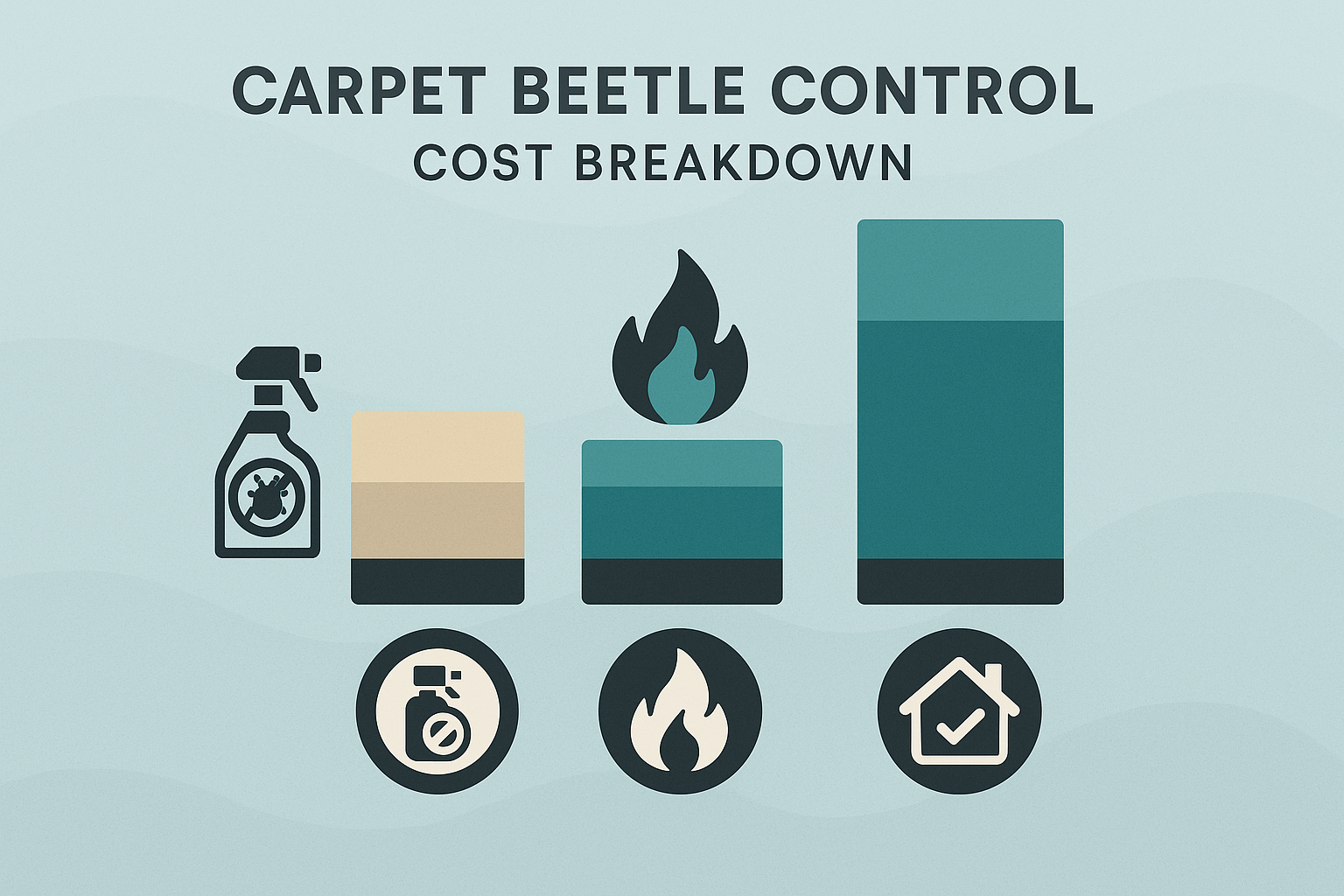
| Treatment Type | Typical Price per Visit |
|---|---|
| Single spray | $150 – $300 |
| Heat add‑on (combined with spray) | $200 – $400 |
| Quarterly IPM plan (per visit) | $250 – $500 |
Because Lawrenceville sits in Gwinnett County, regional labor rates are modestly higher than the state average. Expect a 5‑10 % uplift on the figures above to reflect local wage standards, vehicle mileage, and licensing fees.
In short, the final price tag is a blend of square footage, infestation level, chosen treatment, service frequency, and local labor economics. By knowing which levers move the cost, you can work with Anthem Pest Control to craft a solution that fits both your budget and your beetle‑free goals.
Local Market Snapshot: Lawrenceville Prices
When you’re budgeting for carpet beetle control, knowing the going rates in Lawrenceville helps you avoid surprise fees and choose the best value. The city’s pest‑control market is competitive, with several reputable companies offering similar treatment methods but varying price structures. Below is a clear picture of what you can expect to pay in 2024.
Anthem Pest’s Transparent Rates
Anthem Pest lists two primary options on its 2024 pricing page. A standard 1‑hour treatment costs $179 and targets active infestations with a quick, focused application of low‑toxicity insecticide. For homeowners who want comprehensive protection, the full‑home Integrated Pest Management (IPM) package is priced at $349. This package includes a thorough inspection, a full‑home treatment, and a 90‑day follow‑up visit to ensure beetles are eradicated and future outbreaks are prevented.
How Other Local Companies Stack Up
| Provider | Standard 1‑hour Treatment | Full‑Home IPM Package | Notes |
|---|---|---|---|
| Anthem Pest | $179 | $349 | Includes 90‑day follow‑up |
| Provider A (anonymized) | $190–$210 | $360–$380 | Additional $20 service call fee |
| Provider B (anonymized) | $175–$185 | $340–$360 | Discounts for multi‑year contracts |
Real‑World Savings from a Neighbor
“I bundled carpet beetle control with my annual pest‑protection plan and saved $120. The combined service was seamless, and I got a written guarantee that the beetles won’t return for a year.” – East Lake homeowner
City‑Specific Fees to Watch For
Lawrenceville homeowners sometimes encounter extra line items that aren’t reflected in base quotes. Many HOAs require a processing surcharge—typically $15 per invoice—to cover paperwork and compliance checks. Some providers also add a modest travel fee for homes located more than 10 miles from their service hub, usually $10–$12. These fees are small but can affect the final bill, so ask for a detailed estimate before signing.
Why Bundling Can Be a Smart Move
Bundling carpet beetle control with an annual pest‑prevention contract often unlocks a 10‑15 % discount, as demonstrated by the East Lake homeowner above. In addition to the upfront savings, a bundled plan spreads the cost over twelve months, making budgeting easier. Most companies, including Anthem Pest, lock in the discounted rate for the contract’s duration, protecting you from seasonal price spikes.
Seasonal Promotions and Additional Savings
Seasonal promotions also influence pricing. In early spring, many Lawrenceville firms run a “first‑treatment” discount of $25‑$40 to encourage early action before beetles emerge from wall voids. Anthem Pest’s 2024 spring promotion trims the standard 1‑hour treatment to $159 for appointments booked before April 30, while the full‑home IPM package drops to $329 when paired with any mosquito‑control service. These limited‑time offers can shave off 5‑10 % from the listed price, but they usually require a signed service agreement.
Best Times to Treat and How to Prevent Re‑Infestation
In Lawrenceville, adult carpet beetles typically emerge from their larval hideouts as the weather warms in late spring. The first adults take flight between late March and early May, seeking new food sources and mating partners. Targeting this narrow window gives you the best chance to interrupt the life cycle before larvae start feeding on your carpets, upholstery, and stored fabrics.
Optimal Treatment Window
Our recommendation is to schedule a professional treatment between March – May. Treating early in this period catches the first wave of adults, while a follow‑up in late May ensures any late‑emerging beetles are also addressed. Acting within this timeframe reduces the likelihood of a full‑blown infestation later in the summer when larvae can cause the most damage.
Three Key Prevention Steps
- Vacuum carpets and upholstery regularly. Use a vacuum with a HEPA filter and linger on seams, under furniture, and along baseboards. Empty the canister or bag outdoors after each session to prevent re‑release of trapped beetles.
- Store seasonal clothing in sealed containers. Keep sweaters, blankets, and extra linens in airtight plastic bins or vacuum‑sealed bags. This eliminates a favorite food source and makes it harder for beetles to lay eggs inside your closet.
- Seal cracks around windows and baseboards. Inspect the exterior for gaps, especially where siding meets the foundation. Caulk or apply weather‑stripping to block entry points that adult beetles use to get inside.
These actions, combined with timely professional treatment, create a double‑layer defense that keeps carpet beetles at bay year after year. For a detailed seasonal outlook, consult the Georgia Department of Agriculture pest‑season calendar (2024), which confirms March‑May as the peak emergence period for this pest.
Your Top Carpet Beetle Cost Questions Answered
Will my insurance cover carpet beetle damage?
Most standard homeowner policies treat carpet beetles as a maintenance issue, not a covered peril. Insurers typically exclude damage caused by insects that are considered preventable through regular cleaning and routine pest‑control measures. If you discover extensive feeding, file a claim quickly, but be prepared for a deductible and possible denial. The safest approach is to document the infestation, keep receipts for any professional treatment, and discuss coverage limits with your agent. Even when insurance won’t pay, many providers will offer a one‑time adjustment if you can prove the problem resulted from a sudden, unforeseen event, such as a severe water intrusion that attracted the beetles.
How long does a treatment last?
A professional carpet beetle service from Anthem Pest creates a residual barrier that remains active for roughly four to six weeks. During this window, newly hatched larvae encounter treated areas before they can establish a feeding cycle. After the initial period, a follow‑up visit is usually recommended to inspect for lingering activity and to re‑apply product if hotspots remain. Homeowners can extend effectiveness by maintaining low humidity, vacuuming regularly, and storing natural fibers in sealed containers. In most cases, a single treatment plus one scheduled revisit keeps the infestation under control for the entire season.
Can I negotiate a discount for multiple services?
Yes. Anthem Pest rewards bundled projects with a 10 % discount when you add another service—such as rodent control—to your carpet beetle treatment. The savings apply to the combined invoice, not just the individual line item, so you benefit from comprehensive protection while keeping costs down. Simply ask your technician during the estimate, or call our office at 877‑371‑8196 to arrange a customized package. Bundling also reduces the number of technician visits, which means fewer disruptions to your daily routine.
Take Control Today – Get a Free Quote
Managing carpet beetles in Lawrenceville doesn’t have to be a guessing game. At Anthem Pest we keep pricing transparent—no hidden fees, just a clear cost per square foot or per treatment that matches the local market. Our technicians know the Georgia climate, so we schedule inspections and treatments before the May peak when beetles are most active, giving you a proactive edge. Because we service dozens of homes in Lawrenceville, we’ve seen the patterns that trigger outbreaks and can adjust treatment intervals to keep beetles at bay year‑round.
If you’re ready for a personalized estimate, simply call 877‑371‑8196 or visit our website. Our online quote tool tailors the price to your home’s size, carpet type, and any existing infestations, ensuring you only pay for what you need.
Anthem Pest’s approach blends safety and effectiveness. We use low‑toxicity products that protect families and pets while eradicating beetles at every life stage. Our plans are affordable, and we back them with a satisfaction guarantee—so you can breathe easy knowing your home is defended. Scheduling now also locks in the current rate before seasonal price adjustments.
Take the first step toward a beetle‑free home today. Visit Anthem Pest Control for your free quote and let our local experts handle the rest.