Carpet Beetles and Other Common Household Pests

What are carpet beetles?
Carpet beetles belong to the family Dermestidae. The most common species in Georgia homes are the varied carpet beetle (Anthrenus verbasci) and the black carpet beetle (Attagenus unicolor). Their life cycle includes four stages: egg, larva, pupa, and adult. While the adult beetles are harmless to humans, it’s the larval stage that causes trouble—tiny, hair‑like creatures that chew through natural fibers such as wool, silk, feathers, and even stored food products.
How they compare to other indoor invaders
Carpet beetles share the spotlight with a handful of other household pests that homeowners in Woodstock, GA, regularly encounter:
- Ants – drawn to food and moisture; they can contaminate surfaces but rarely damage structures.
- Cockroaches – thrive in warm, humid kitchens; they spread bacteria and trigger asthma.
- Rodents – chew wires, gnaw wood, and leave droppings that pose disease risks.
Unlike ants or cockroaches, carpet beetles are silent destroyers. Their damage isn’t immediately visible, which often leads homeowners to underestimate the threat until fabrics are riddled with holes.
Common misconceptions
Many people assume carpet beetles “only affect carpets.” In reality, they target any keratin‑rich material: upholstery, curtains, blankets, and even pet bedding. Another myth is that a single adult beetle signals a major infestation; it’s actually the hidden larvae that signal a problem, and they can be present for months before you notice any damage.
Economic and health impacts of ignoring the infestation
Untreated carpet beetle populations can cost homeowners hundreds of dollars in fabric replacement—think ruined heirloom blankets, pricey sofa upholstery, or cherished clothing. Beyond the financial hit, the shed skins and fecal pellets of larvae can become airborne allergens, aggravating asthma or causing skin irritation for sensitive individuals. When combined with other pests, the cumulative effect on indoor air quality can be significant.
Red‑flag checklist: Is a pest problem brewing?
- Small, irregular holes appearing in wool blankets, clothing, or carpet fibers.
- Fine, powdery droppings or shed larval skins near baseboards, closets, or under furniture.
- Visible adult beetles fluttering near windows or light sources, especially in the spring.
- Unexplained allergic reactions that worsen when you’re near stored fabrics.
- Increased activity of other pests (ants, cockroaches) that share the same damp, food‑rich environments.
If you tick more than one of these boxes, it’s time to call a professional. Anthem Pest Control can identify the species, assess the extent of damage, and implement a safe, cost‑effective treatment plan before the infestation spreads further.
Spotting Carpet Beetles – Identification and Warning Signs
What the bugs look like
Adult carpet beetles are tiny, usually 2‑4 mm long, and have a rounded, oval shape. Their backs are covered with a mixture of black, brown, and white scales that give them a speckled, almost dusty appearance. The most common species, the varied carpet beetle (Anthrenus verbasci), displays a distinctive “V”‑shaped pattern of lighter scales on each wing cover, which can help you separate it from other small beetles.
The larvae—often called “woolly bears”—are longer than the adults, measuring about 5‑7 mm, and are densely covered in bristly hairs that may be brown, white, or a mottled blend. Their bodies are creamy‑white with darker bands near the head, and they move in a characteristic “C” shape. Eggs are even smaller, less than 1 mm, smooth, white, and are laid in clusters of 10‑30 on or near a food source.
Where they like to hide
- Carpet and rug pile, especially in low‑traffic corners or under furniture where dust accumulates.
- Upholstered furniture seams, cushions, and the underside of sofas where hair and skin flakes collect.
- Natural‑fiber clothing stored in closets, drawers, or suitcases—wool, silk, and cotton are prime targets.
- Pet bedding, cages, and even the fur on your dog or cat, which provides a constant protein source for larvae.
- Stored food products such as grains, dried fruit, pet treats, and even pantry spices that have become contaminated.
Signs of an early infestation
Detecting carpet beetles early can save you from costly fabric replacement. Keep an eye out for these clues:
- Irregular, round or oval holes in wool, silk, or cotton fabrics—often starting at the edges and expanding inward.
- Shedding of larval skins; you’ll find tiny, translucent shells on the floor, in carpet seams, or tucked into drawer corners.
- Fine, pepper‑like droppings (frass) that look like black sand scattered near feeding sites.
- Delicate, silky webbing near the edges of carpets, inside closet rods, or around pet bedding.
Carpet beetles vs. other culprits
It’s easy to confuse carpet beetle damage with that of moths or termites, but a few details set them apart. Moth larvae tend to move in a straight line and rarely leave webbing, while carpet beetle larvae create a noticeable web trail as they crawl. Termites, by contrast, damage wood, leaving mud tubes and a honey‑comb pattern—nothing like the fabric holes and frass produced by beetles. If the problem is limited to textiles and you spot the bristly larvae or peppery droppings, carpet beetles are the most likely offender.
DIY inspection steps
- Turn off the lights and shine a bright flashlight over carpet edges, under furniture, and inside closet rods; the light will highlight both adult beetles and the reflective larvae.
- Run a clean vacuum over suspected areas, then immediately empty the canister into a sealed plastic bag. Check the bag for live insects, shed skins, or eggs.
- Place sticky traps (yellow or white) in closets, near pet bedding, and on the back of upholstered chairs. Check the traps after 5‑7 days; captured beetles confirm activity.
When to call a professional
If you only find a few adults or isolated larvae, a thorough vacuuming, washing affected fabrics in hot water, and regular use of sticky traps may curb the problem. However, extensive webbing, multiple holes across several rooms, or repeated sightings despite your DIY efforts indicate a larger, hidden population. At that point, a licensed technician can treat cracks, baseboards, and other concealed spaces with safe, residual insecticides, and set up a monitoring plan that protects your home throughout the year.
Seasonal Carpet Beetle Activity in Woodstock, GA
Woodstock sits in the foothills of the Blue Ridge Mountains, enjoying a humid subtropical climate. Average summer highs hover around 88‑92°F with humidity often exceeding 70%, while winter lows rarely dip below 30°F. This temperature swing, combined with ample rainfall in spring and early fall, creates the perfect backdrop for carpet beetles to move in and multiply. The key drivers are temperature—beetles become active when daytime highs stay above 70°F—and relative humidity, which helps their eggs and larvae stay moist enough to develop.
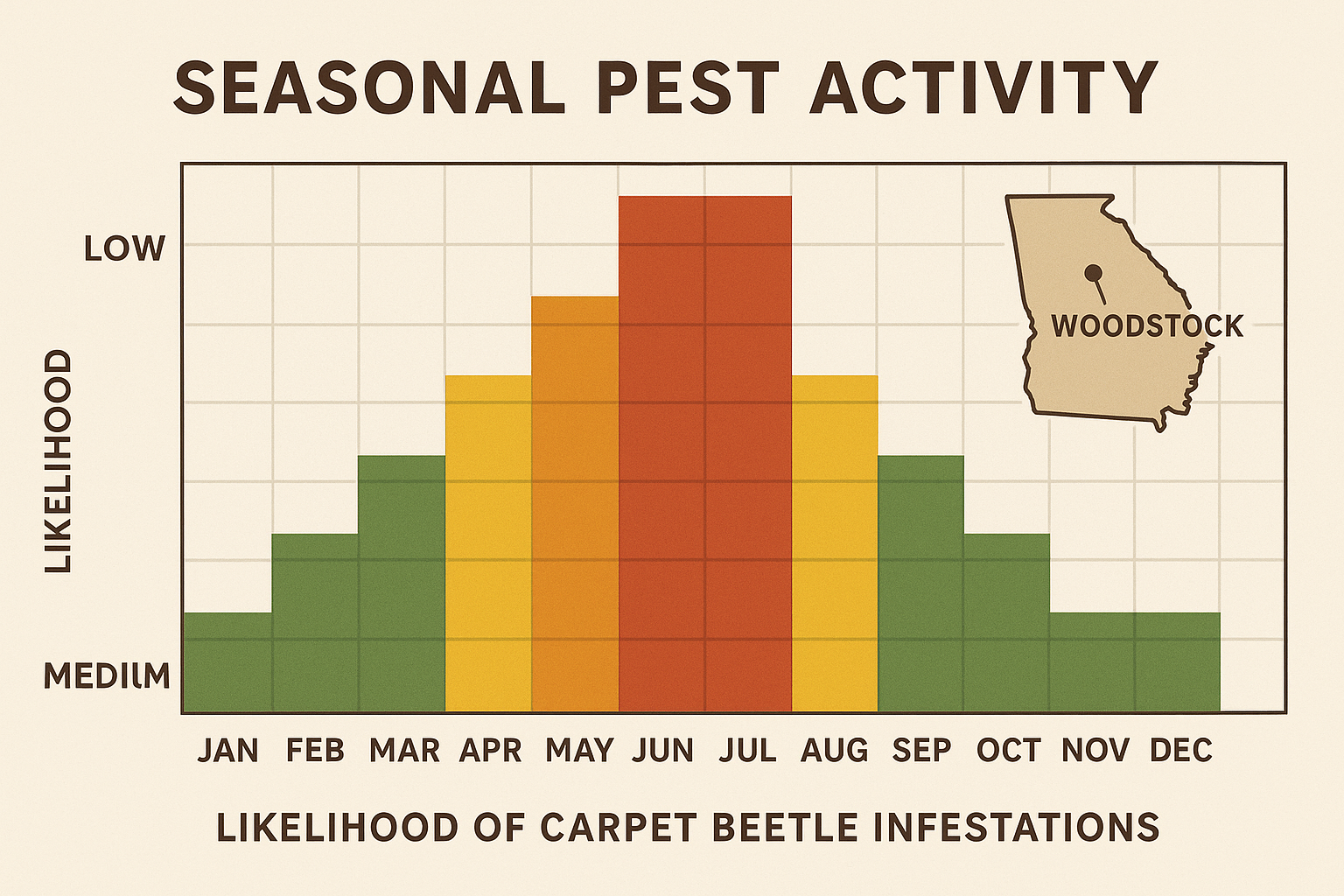
Reading the Seasonal Activity Chart
The chart breaks the year into three risk tiers:
- Low risk (December‑February): Cooler nights and lower indoor humidity slow breeding, so infestations are rare.
- Medium risk (March‑May & September‑November): Temperatures rise, homeowners begin using humidifiers or opening windows, and beetles start to venture indoors.
- High risk (June‑August): Consistently warm days and high indoor humidity from air‑conditioning condensate create an ideal breeding environment.
Why Indoor Heating and Humidity Matter
Carpet beetles spend most of their lives hidden in fabrics, carpets, and stored goods. When you turn on indoor heating in the fall, the warm, dry air can actually deter activity, but the opposite happens with air‑conditioning in summer. The condensate from AC units raises indoor humidity to 60‑70%, which speeds up egg hatch rates and larval growth. This moisture boost shortens the beetle life cycle from the typical 2‑3 months to as little as six weeks, explaining the sharp spike in reports during July and August.
Practical Tips by Risk Tier
- Low‑risk months: Focus on sealing cracks around windows, doors, and utility entries. Use caulk or weather‑stripping to keep adult beetles from slipping inside, and store seasonal clothing in sealed plastic bins.
- Medium‑risk months: Conduct a thorough vacuum of carpets, upholstery, and under furniture. Dispose of the vacuum bag immediately to remove any hidden larvae, and inspect stored blankets for tiny specks of shed skins.
- High‑risk months: Deep‑clean all textiles with hot water or steam. Wash blankets, curtains, and pet bedding at 130°F, and consider a professional “spot‑treat” spray on vulnerable areas such as baseboards and closet corners.
Seasonal Trends and Treatment Pricing
Because beetle populations peak in summer, pest‑control companies often schedule treatments during the high‑risk window. Early‑season inspections (late spring) can lock in lower rates, while emergency calls in August may carry a premium due to increased demand. According to the Fixr cost guide, average extermination in Georgia ranges from $150 to $300, with summer appointments typically at the higher end of that range. Additionally, homeowners who opt for a pre‑emptive treatment plan in the low‑risk period can often negotiate a discount of 10‑15%.
By aligning inspections and preventive actions with Woodstock’s seasonal beetle cycle, you’ll reduce infestation chances, keep treatment costs predictable, and protect your home’s fabrics and furnishings year‑round.
Treatment Options – From Foggers to Heat Treatments
Chemical Treatments: Residual Sprays, Spot Treatments, and Foggers
When carpet beetles infiltrate a home, most homeowners first think of a quick spray. Residual sprays create a lasting barrier on baseboards, under furniture, and in closets, killing beetles that crawl over the treated surface for weeks. Spot treatments target obvious hotspots—such as moth‑infested wool blankets or carpet edges—without saturating the entire room.
For larger infestations, a fogger (often called a “total release fogger”) disperses a fine mist of insecticide that settles on hard‑to‑reach places. The fog penetrates cracks, crevices, and the undersides of furniture, reaching beetles hidden in the fabric fibers where sprays can’t.

Safety tip: Always evacuate the home, seal windows and doors, and follow the product’s re‑entry interval. Professional‑grade foggers are calibrated for indoor use and contain lower‑toxicity formulas, making them safer for families and pets than many over‑the‑counter options.
Non‑Chemical Alternatives: Heat, Vacuum‑Extraction, and Steam
Heat treatment raises indoor temperatures to 120‑130°F for several hours, a range lethal to all life stages of carpet beetles. This method is ideal for historic homes or families who prefer a pesticide‑free solution, but it requires moving heat‑sensitive items out of the treatment zone.
Vacuum‑extraction combines a powerful vacuum with a rotating brush to pull larvae and adults from carpet fibers, upholstery, and cracks. While it won’t eradicate a deep infestation alone, it dramatically reduces beetle numbers and removes the debris they feed on.
Steam cleaning uses saturated steam (above 212°F) to kill beetles on contact. Steam is especially effective on drapes, mattresses, and delicate rugs that can’t tolerate harsh chemicals.
Integrated Pest Management (IPM): A Balanced Approach
Anthem Pest Control recommends an IPM strategy that blends sanitation, exclusion, and targeted treatments. First, eliminate food sources by regularly vacuuming and laundering fabrics. Next, seal gaps around windows, doors, and utility lines to block beetle entry. Finally, apply the most appropriate chemical or non‑chemical method based on the severity of the infestation and the homeowner’s preferences.
Preparing Your Home for a Professional Visit
- Declutter: Remove piles of clothing, blankets, and stored items that could hide beetles.
- Launder fabrics: Wash or dry‑clean all washable textiles at the hottest setting safe for the material.
- Move furniture: Shift sofas, chairs, and tables away from walls to give technicians full access to baseboards and floor seams.
- Secure pets: Keep cats, dogs, and small animals in a separate room or temporarily at a friend’s house.
Post‑Treatment Monitoring and Follow‑Up
After the initial treatment, a monitoring plan is crucial. Place sticky traps in closets and near baseboards for 2‑4 weeks to catch any surviving adults. If beetles reappear, a second targeted application—often a spot spray or a brief heat session—will finish the job. Anthem typically schedules a follow‑up visit within 30 days to verify that the population is fully suppressed.
By understanding the strengths and limits of each method, Woodstock homeowners can choose the most effective, safest solution for their carpet beetle problem and keep their homes beetle‑free year after year.
Carpet Beetle Control Pricing – What Homeowners Can Expect
When you’re budgeting for carpet beetle treatment, the first thing to understand is that the price isn’t a flat number. It shifts based on four key variables: the square footage of the area being treated, how severe the infestation is, the number of rooms involved, and the method you choose—whether a conventional spray or a heat‑based approach.
What drives the cost?
- Square footage: Larger homes require more product and more technician time, so a 2,500‑sq‑ft house will cost noticeably more than a 1,200‑sq‑ft condo.
- Infestation severity: Low‑level sightings might be handled with a single‑visit spray, while medium or high severity often needs multiple visits or supplemental treatments.
- Number of rooms: Every additional bedroom, living area, or closet adds to the labor count, especially if you have carpeted floors in each space.
- Chosen method: Sprays are the most common and generally the cheapest option. Heat treatments, which can eradicate eggs and larvae hidden deep in padding, command a premium.
Pricing infographic
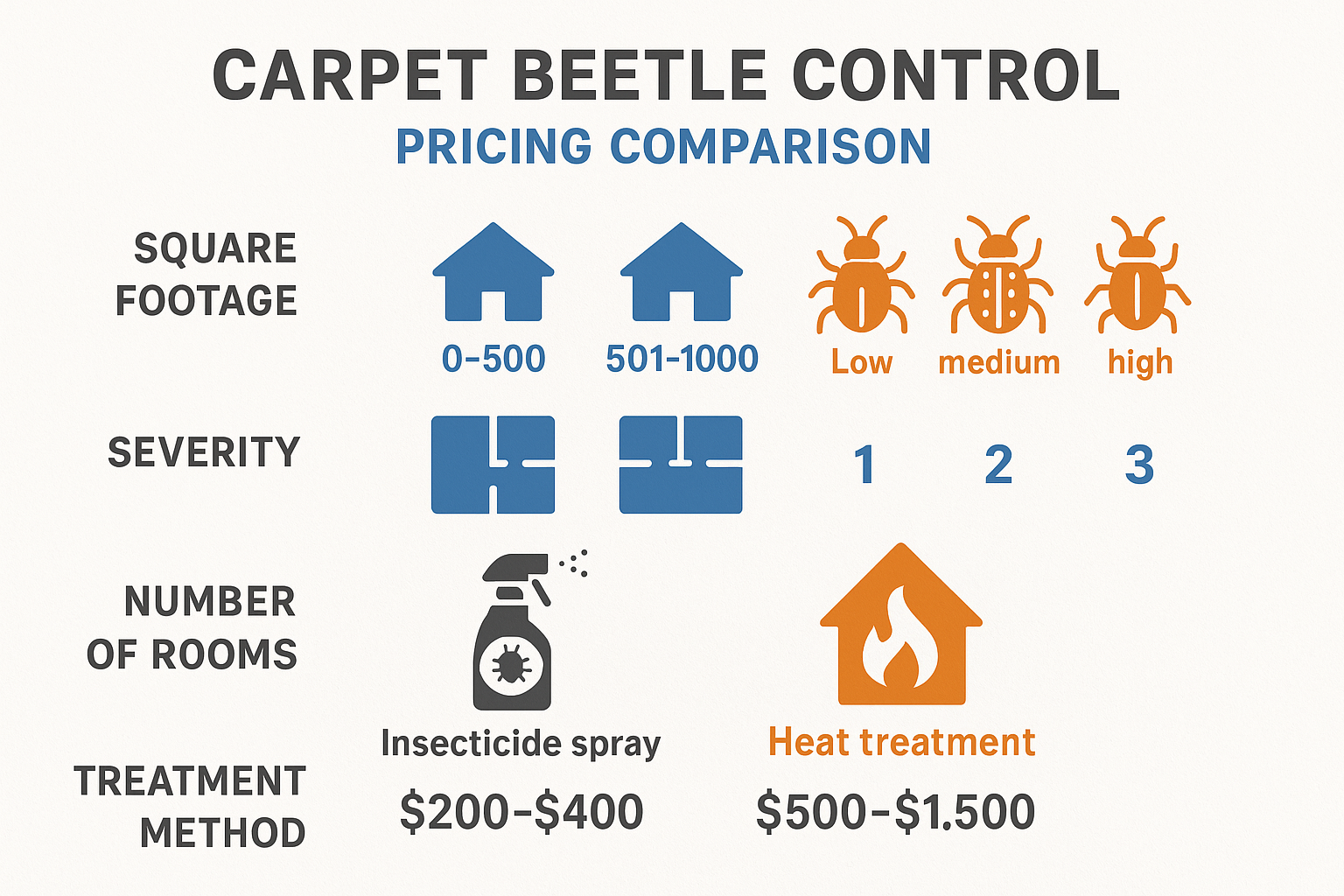
The graphic above breaks the pricing into three severity tiers (low, medium, high) across three square‑footage bands (under 1,500 sq ft, 1,500‑2,500 sq ft, over 2,500 sq ft). Roughly speaking, low‑severity jobs start around $150 for a small home and climb to $350 for a large property. Medium severity typically lands between $250 and $500, while high‑severity treatments can range from $400 up to $800 or more, depending on the method selected.
DIY kits vs. professional service
Do‑it‑yourself kits are appealing because they start at $30‑$60 for a single‑room spray. However, they rarely cover the full footprint of a typical house and often require repeat applications. Professional services, on the other hand, bundle inspection, treatment, and a follow‑up visit. In Woodstock, GA, a full‑service professional job usually falls between $250 and $600, delivering comprehensive coverage and a warranty.
How Anthem Pest Control structures its pricing
Anthem believes in transparent quotes. You receive a written estimate that lists every line item—product cost, labor, travel fee (if any), and disposal. There are no surprise add‑ons after the work is done. The company also offers a “no‑hidden‑fees” guarantee, meaning the price you see is the price you pay.
Tips for getting the best value
- Bundle carpet beetle treatment with other pest services (ants, spiders, or rodent control) to unlock multi‑service discounts.
- Schedule during the off‑season (late fall or early winter) when demand is lower and seasonal promotions are common.
- Enroll in a maintenance plan; a quarterly visit can keep beetles at bay for a fraction of a one‑time intensive treatment.
- Ask for a free, customized quote that reflects your home’s exact size and infestation level.
Ready to see a clear, upfront number? Call Anthem Pest Control at 877‑371‑8196 or visit anthempest.com for a free, personalized estimate.
Protect Your Home Today with Anthem Pest Control
Carpet beetles may seem harmless, but they silently chew through wool, silk, and even stored food, leaving damage that’s often only noticed after the infestation has spread. Early detection—spotting shed skins, tiny larvae, or unusual lint—lets you stop the problem before it reaches carpet, clothing, or upholstery. Acting fast protects both your belongings and your peace of mind.
Effective Treatment Methods & Timing
The most reliable treatments combine a thorough inspection with targeted applications of EPA‑approved insecticides. In Woodstock, the optimal window is early spring, when beetles emerge from winter hiding, and again in late summer before they lay a new generation of eggs. A professional service typically includes:
- Pre‑treatment vacuuming and steam cleaning
- Spot‑on or whole‑home spray of residual insecticide
- Follow‑up monitoring and retreat if needed
Delaying treatment allows beetles to complete their life cycle, which can lead to a full‑blown infestation within weeks. By acting during the identified spring and late‑summer windows, you cut the population before eggs hatch, saving time, money, and the hassle of extensive remediation.
Anthem Pest Control brings more than a decade of local experience to every carpet‑beetle job in Woodstock. Technicians are trained to identify the species, locate breeding sites, and apply treatments that are both safe for children and pets and effective against resistant beetles. Because we believe pricing should be crystal clear, each quote breaks down labor, product, and any follow‑up visits, so you never face surprise fees.
Ready to protect your home before the next beetle generation takes hold? Call us today for a free, no‑obligation quote and let our specialists assess your specific situation. We’ll walk you through the recommended plan, schedule the treatment at a convenient time, and answer any questions you have about safety or warranty.
For a professional, safe, and affordable solution to carpet beetle infestations, call Anthem Pest Control now at 877‑371‑8196 or visit Anthem Pest Control for your free quote. We look forward to keeping your home clean, comfortable, and beetle‑free.