Understanding Centipedes in Kennesaw, GA
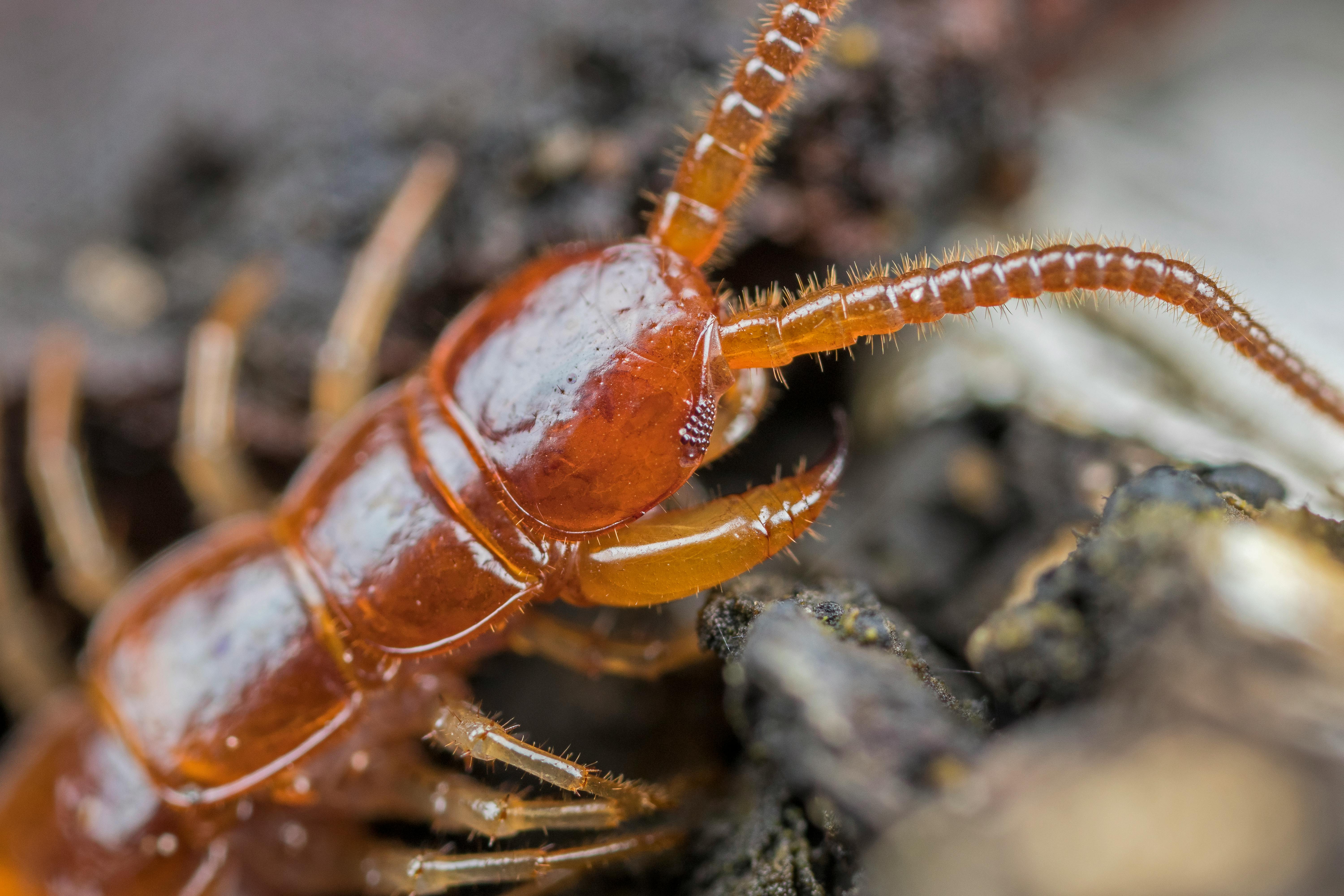
Centipedes are elongated, many‑legged arthropods that most homeowners notice when they scuttle across a kitchen floor at night. In Kennesaw, the most common visitor is the brown centipede (Scolopendra morsitans), which typically measures 2‑4 inches long, sports a reddish‑brown body, and bears 21 pairs of legs. Unlike insects, centipedes have a single pair of legs per body segment and a pair of venom‑filled claws (forcipules) used to subdue prey. Their fast, zig‑zag movement and shiny exoskeleton can make them look unsettling, even though they’re generally harmless to people.
These predators thrive in the moist, organic‑rich environments that Georgia’s climate provides. You’ll find them burrowed in garden soil, under leaf litter, and within the cool, damp spaces of basements, crawl spaces, and even under bathroom tiles. The combination of warm temperatures and high humidity creates an ideal habitat for centipedes to hunt insects, spiders, and other small arthropods that share the same niche.
When the conditions inside a home mimic their natural habitat—think leaky pipes, condensation, or poor ventilation—centipedes will venture indoors in search of moisture and food. Cracks around foundations, gaps under doors, and openings around utility lines serve as highways for these tiny hunters. Once inside, they often linger in kitchens, bathrooms, and laundry rooms where water sources and prey are abundant.
It’s a common myth that centipedes are purely destructive pests. In reality, they act as natural pest controllers, feeding on ants, cockroaches, and other insects that homeowners typically dread. However, a sudden surge in their numbers can become a nuisance, especially if they’re spotted in living areas or if a homeowner has a phobia of multi‑legged creatures. Understanding their role helps you decide when a professional inspection and targeted treatment—like those offered by Anthem Pest Control—are the best steps to keep your home comfortable and pest‑free.
Health Risks and Warning Signs of Centipede Infestations
Even though centipedes are generally shy and prefer to stay hidden, a growing population inside your home can create health‑related problems you don’t want to ignore. Knowing the risks and the visual clues will help you decide when it’s time to call a professional.
Bite Risks
Centipede bites are rare because these predators usually retreat when disturbed. If a centipede feels trapped, it can deliver a sharp, burning sting that lasts a few minutes. Most people see only mild redness and swelling, but children, seniors, or anyone allergic to insect venom may develop itching, hives, or, in extreme cases, anaphylaxis. Seek medical help if swelling spreads, breathing becomes difficult, or a rash worsens.
Contamination Concerns
Living in soil and leaf litter, centipedes can pick up bacteria and fungi. When they wander onto kitchen counters, they may transfer these microbes to food‑preparation surfaces, raising the chance of contamination. Though serious infection is uncommon, their presence often indicates moisture problems that invite other health‑related pests.
Warning Signs to Watch For
- Night‑time sightings near lights or baseboards.
- Shedding of translucent exoskeletons after a molt.
- Activity around sinks, bathrooms, or any damp area.
- Small dark droppings that look like grainy specks.
How to Differentiate Centipedes from Similar Pests
- Spiders: two body segments and eight legs; centipedes have many segments with one leg per segment.
- Millipedes: slow, coil when disturbed, two legs per segment; centipedes are fast, one leg per segment.
- Centipedes are pale with long, outward‑facing legs, giving a scissor‑like silhouette.
- Exoskeletons are silvery‑gray; spiders leave webs, millipedes leave slime.
When you start noticing any of these signs, especially a combination of bites, droppings, and moisture‑related activity, it’s a clear indicator that a professional inspection is warranted. Prompt treatment not only protects your family’s health but also stops the infestation from spreading to other parts of the house.
Effective Treatment Methods for Centipedes
Prevention First
Before you reach for any spray or powder, think of prevention as your first line of defense. Centipedes thrive in damp, dark places, so the most reliable way to keep them out is to make your home less inviting.
- Reduce moisture by fixing leaky pipes, using dehumidifiers in basements, and ensuring proper drainage around the foundation.
- Seal cracks and gaps in foundations, windows, and door frames with caulk or weather‑stripping.
- Eliminate clutter such as piles of firewood, cardboard boxes, or stored laundry where centipedes can hide.
DIY Options
If you prefer a hands‑on approach, several over‑the‑counter products can curb a centipede invasion when used correctly.
- Boric acid – Sprinkle a thin layer along baseboards and under appliances. The tiny particles stick to the centipede’s legs, disrupting its digestive system.
- Diatomaceous earth – A food‑grade powder that abrasively damages the exoskeleton. Apply it in dry spots where moisture has been reduced.
- Sticky traps – Place them near entry points or under sinks. They provide instant visual confirmation of activity and help you gauge the severity of the problem.
When using any DIY product, wear gloves, keep children and pets away, and follow the label’s application instructions. Apply in thin, even layers and re‑apply after heavy cleaning or rain.
Professional Treatments
When the infestation is beyond the scope of DIY methods, a licensed technician brings tools and expertise that homeowners typically lack.
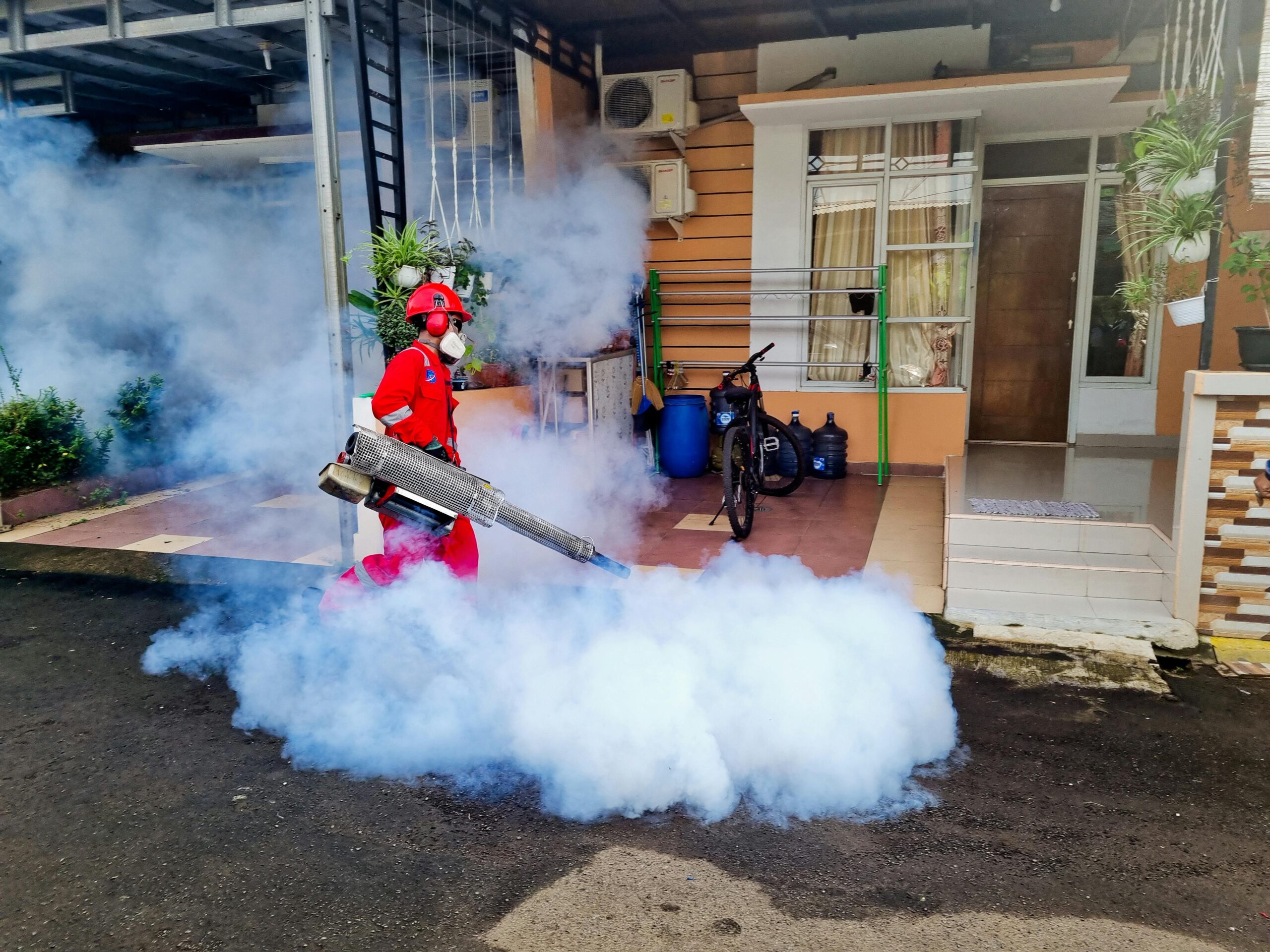
- Perimeter sprays – A residual insecticide is applied around the exterior foundation, creating a chemical barrier that kills centipedes before they enter.
- Crack‑and‑crevice applications – Specialized nozzles deliver a fine mist directly into wall voids, baseboard gaps, and other hidden pathways.
- Bait stations – Professionally formulated baits are placed in discreet locations; centipedes carry the poison back to their nest, reducing the population from the inside out.
Role of the Technician

A qualified Anthem Pest technician starts with a thorough property assessment. They identify moisture sources, locate structural cracks, and determine the most effective product based on the home’s layout and the resident’s safety concerns. By selecting the right formulation—whether a low‑odor residual spray or a targeted bait—the technician maximizes efficacy while minimizing exposure to family members and pets.
Follow‑Up Visits and Monitoring
Centipede control isn’t a one‑time event. After the initial treatment, technicians schedule follow‑up visits to inspect for new activity, re‑apply residual products, and adjust the prevention plan as needed. Ongoing monitoring helps catch early re‑infestations, ensuring that a single treatment translates into long‑term peace of mind.
Centipede Control Pricing Options in Kennesaw
When it comes to keeping centipedes at bay, Anthem Pest Control offers three straightforward pricing tiers that fit most homeowner budgets. A single treatment typically runs between $80 and $120, perfect for a one‑off infestation or a quick check after a rainy spell. If you prefer regular protection, the quarterly plan costs between $250 and $300 and includes four visits spread throughout the year. For the most comprehensive coverage, the annual plan is priced between $450 and $550, delivering eight visits and a full‑year warranty.
What’s Included in Each Plan?
All three options share a core set of services: a thorough inspection, targeted chemical or low‑dose heat treatment, and a follow‑up assessment to ensure the centipedes are gone for good. The single treatment gives you one full visit and a 30‑day guarantee. The quarterly plan adds three additional visits, each timed to target the peak centipede seasons (late spring, midsummer, early fall, and winter). The annual plan doubles the quarterly visits, providing eight touch‑points, a year‑long warranty, and a complimentary perimeter barrier that helps keep other pests out as well.
Price Comparison Chart
| Plan | Visits per Year | Typical Price Range | Key Inclusions |
|---|---|---|---|
| Single Treatment | 1 | $80 – $120 | Inspection, one‑time treatment, 30‑day guarantee |
| Quarterly Plan | 4 | $250 – $300 | Four inspections, seasonal treatments, 90‑day warranty |
| Annual Plan | 8 | $450 – $550 | Eight inspections, year‑long barrier, full‑year warranty |
Factors That Can Shift the Price
While the ranges above give a solid baseline, a few variables may push the final bill up or down. Larger properties require more product and longer labor time, so square‑footage directly influences cost. A severe infestation—multiple entry points, deep‑soil nests, or night‑time activity spikes—may need extra treatment cycles. Finally, timing matters: scheduling during the peak centipede season can be slightly more expensive due to higher demand, whereas off‑season appointments often enjoy discounted rates.
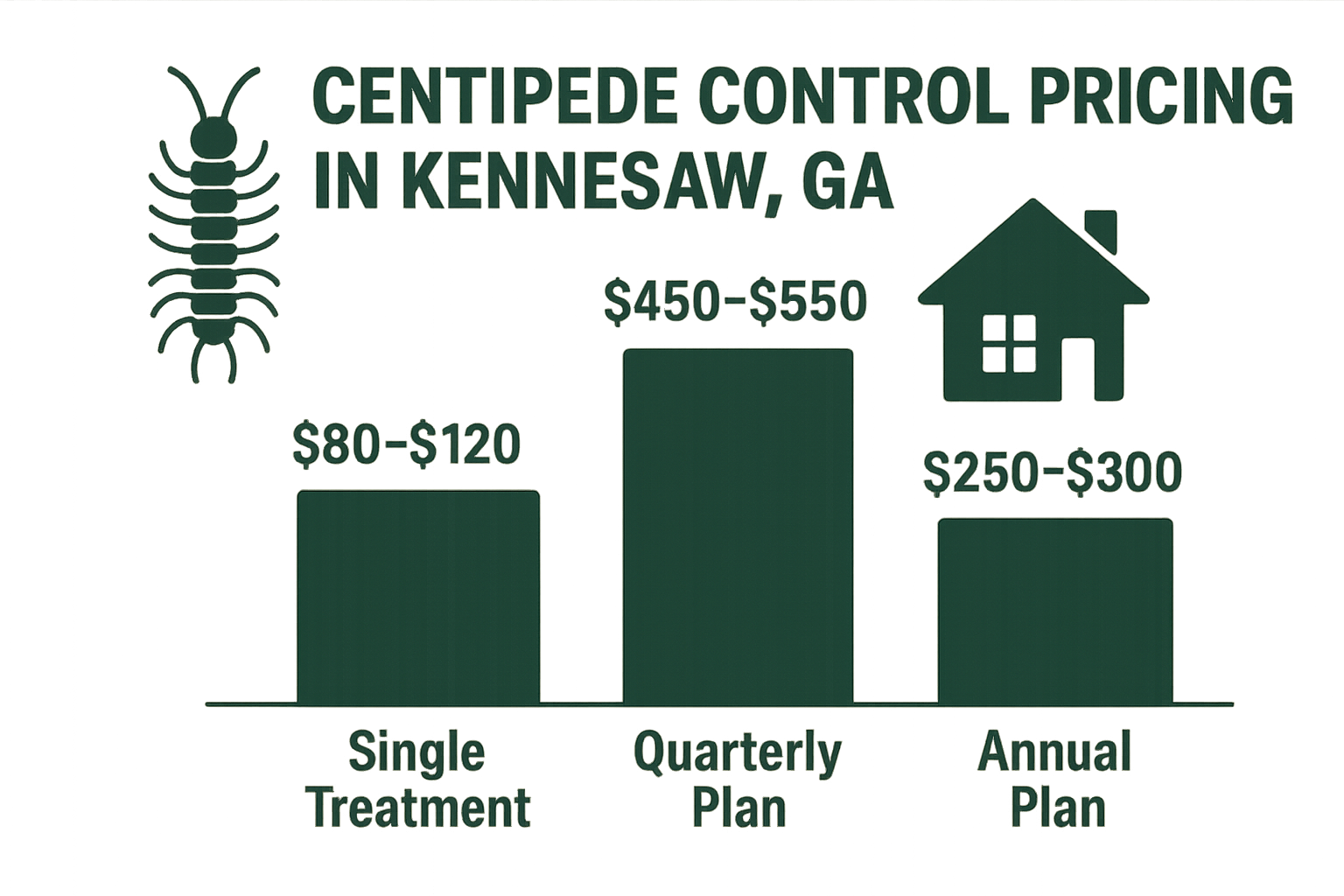
For the most up‑to‑date pricing verification, you can review Anthem Pest’s detailed cost breakdown here: Anthem Pest Control centipede pricing. This transparency helps you compare plans side by side and choose the option that delivers the best value for your home.
Seasonal Activity Patterns of Centipedes in Georgia
Centipedes in Georgia follow a distinct life cycle that is tightly linked to temperature and moisture. Eggs hatch in late summer, and juveniles mature through the cooler months. When soil and indoor humidity rise above 60 % and temperatures stay between 68 °F and 80 °F, centipedes become far more mobile, hunting for insects and seeking shelter in homes. This environmental trigger explains why their presence spikes during specific seasons.
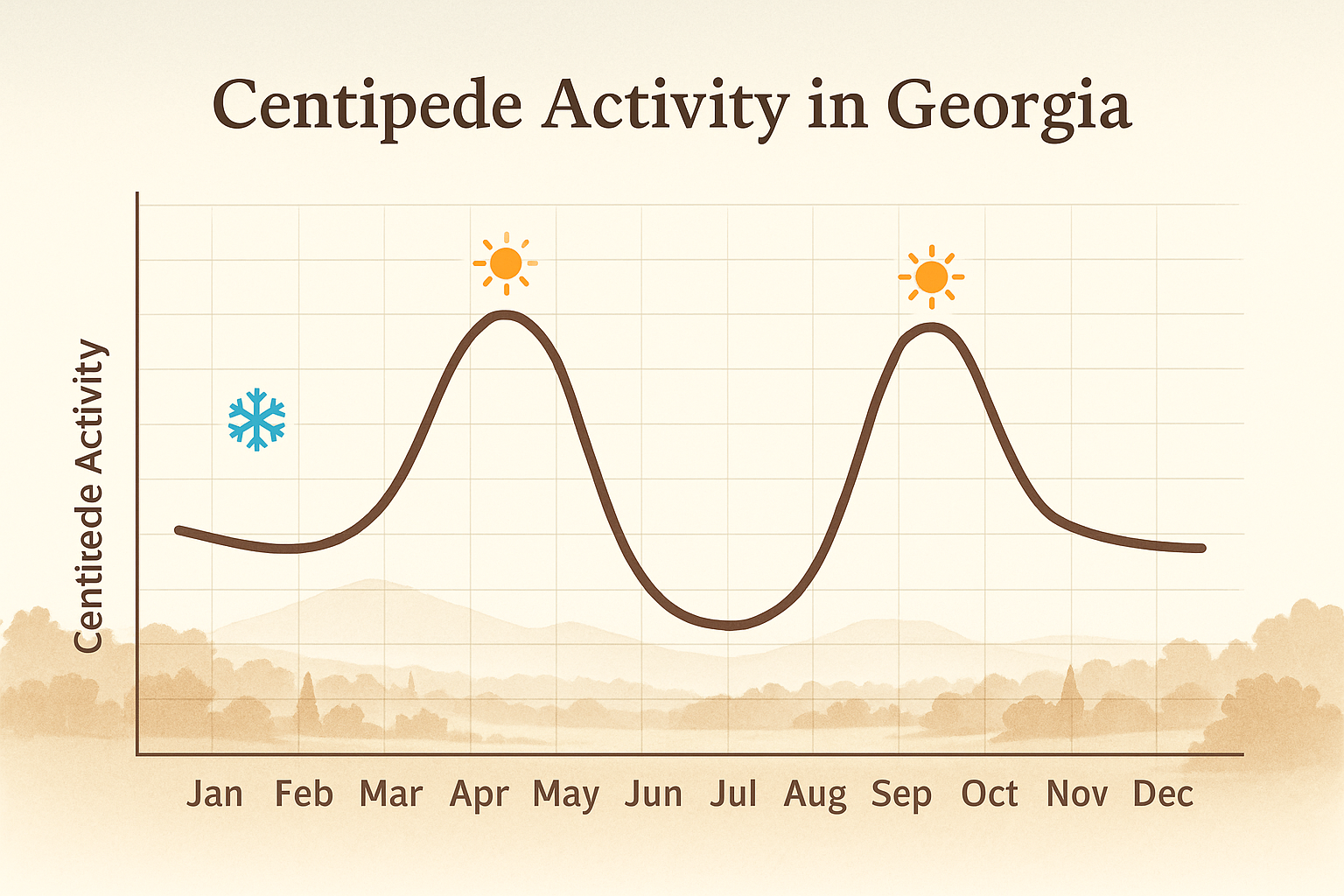
The seasonal activity chart above visualizes those trends. Activity is low during the hot, dry midsummer (June–August) and again in the cold winter months (December–February). Peaks occur in spring—April and May—when rains increase ground moisture, and again in early fall—September and October—when lingering warmth meets higher humidity. Those six months represent the window when homeowners most often encounter centipede sightings.
| Month | Activity Level |
|---|---|
| January | Low |
| February | Low |
| March | Moderate |
| April | High |
| May | High |
| June | Low |
| July | Low |
| August | Moderate |
| September | High |
| October | High |
| November | Moderate |
| December | Low |
Because the peaks are predictable, the smartest strategy is to treat pre‑emptively. Schedule a professional centipede control service in late March, before the April surge, and repeat in late August to blunt the September‑October spike. A follow‑up inspection two weeks after each treatment confirms that residual barriers remain effective, reducing the chance of a post‑peak resurgence.
Even without chemicals, simple seasonal maintenance can make your home less inviting. Clean gutters and downspouts to prevent water pooling near foundations, trim back mulch and leaf litter that retain moisture, and repair any cracks that allow damp soil inside. Installing a dehumidifier in basements and crawl spaces during the humid months further lowers indoor humidity, cutting off one of the centipedes’ favorite habitats.
Protect Your Home with Professional Centipede Control
Quick Recap
Centipedes are easy to spot by their long, many‑legged bodies and rapid movements. While they rarely bite humans, they can damage fabrics, crawl into food, and signal a larger moisture or pest problem. We covered the most common treatment options—from targeted spot‑applications and perimeter sprays to comprehensive indoor fogging—so you can match the method to the severity of the infestation. Pricing in Kennesaw typically ranges from a modest one‑time service fee to bundled seasonal plans that keep centipedes at bay year‑round. Remember, the best time to act is early spring or late summer, when centipedes are most active and before they seek shelter inside your home.
Why Choose a Licensed Expert?
Partnering with a fully licensed, experienced provider ensures the chemicals are applied safely, protecting children, pets, and indoor air quality. Professional crews guarantee results, offering follow‑up visits and a written service agreement that backs every treatment. Ongoing support means you’ll receive seasonal reminders, inspection reports, and advice on moisture control—key steps to prevent future invasions.
Take the Next Step
Ready for a pest‑free home without the guesswork? Request a free, no‑obligation quote to assess your specific situation. Call us today at 877‑371‑8196 or email our friendly team. We’ll walk you through the options, answer any questions, and schedule a convenient appointment.
For more information, Visit Anthem Pest Control and discover how our transparent pricing and local expertise keep Kennesaw homeowners protected.