Introduction to Gnat Control Costs in Lilburn

Picture a typical Lilburn summer evening: the porch lights are on, the air is warm, and a cloud of gnats seems to materialize out of nowhere, buzzing around faces and drinks. Those tiny insects may look harmless, but a persistent swarm can quickly turn a relaxing night into an irritating nightmare.
For many homeowners, the first shock isn’t the bite—it’s the bill. Hidden fees often appear after the initial inspection, leaving families surprised by a total cost that far exceeds the quoted price. Without clear, upfront information, you might pay extra for follow‑up visits, specialized treatments, or even a re‑inspection that wasn’t part of the original agreement.
Understanding the three main components of gnat control—inspection, treatment, and post‑treatment monitoring—helps you avoid those surprises. An inspection pinpoints the source, a treatment eliminates the current swarm, and a follow‑up ensures the problem stays solved. Each step carries its own price tag, and knowing those figures in advance lets you budget confidently.
That’s where Anthem Pest Control steps in. As Lilburn’s trusted local pest‑management partner, Anthem offers transparent pricing, licensed technicians, and a commitment to safe, effective solutions. Give them a call at 877‑371‑8196 or visit anthempest.com to schedule a free, no‑obligation inspection.
By choosing a company that lays out every cost—from the initial walk‑through to the final follow‑up—you’ll know exactly what you’re paying for and why. This clarity not only protects your wallet but also builds trust, ensuring you receive the most efficient treatment without hidden add‑ons.
Now that you understand why transparent pricing matters, the sections that follow will break down each cost element in detail, compare typical price ranges, and show you how to get the best value for your gnat control needs in Lilburn.
Identifying Gnats and Their Types

In Lilburn’s humid climate, three tiny insects cause most of the gnat complaints: fungus gnats, biting midges, and shore flies. Though they share a 2‑5 mm length and delicate wings, each species has a distinct look and favorite hangout spot, making identification the first step toward effective control.
Fungus Gnats
These pale‑gray insects love moist, organic environments—think houseplant soil, compost piles, and shaded garden beds. Their wings are clear with faint veins and lack any noticeable markings. Adults hover close to the ground and are most active in the early morning or after a rain.
Biting Midges (also called “no‑see‑ums”)
Biting midges are darker, often with a bronze or brown tint. Their wings display a subtle, mottled pattern and may show a faint fringe along the edge. They breed in standing water, damp leaf litter, or even the shallow pools that form in birdbaths. While they bite, the bites are typically painless but can cause itching.
Shore Flies
Shore flies are the most robust of the trio, sporting a slightly larger body and a gray‑brown hue. Their wings have a distinctive spot near the tip, and they prefer habitats near water’s edge—such as the edges of ponds, drainage ditches, or the damp mulch around a garden.
Real‑world example: A homeowner in nearby Brookhaven reported swarms of tiny, black‑winged insects hovering over a backyard compost bin. After inspecting the area, they discovered the insects were fungus gnats attracted to the damp organic matter, confirming the importance of proper compost management.
According to the 2024 EPA insect nuisance data, gnats rank among the Southeast’s top five nuisance insects, underscoring how common they are in Georgia neighborhoods.
Quick tip: Gnats vs. Mosquitoes
When you’re unsure, hold a suspect insect up to the light. Gnats have uniformly narrow wings that beat rapidly, creating a soft, whirring sound, and they lack the long, slender proboscis of a mosquito. Mosquitoes, by contrast, have a more pronounced “S‑shaped” body and a visible proboscis for feeding.
Why Lilburn Is a Gnat Hotspot
If you’ve ever swatted at tiny, buzzing insects while enjoying your backyard, you’ve probably encountered gnats. In Lilburn, those encounters are more than occasional—they’re a seasonal norm, and the local environment plays a big part in that.
Lilburn’s climate creates a perfect cocktail for gnat development. Summer days average around 78 °F, and humidity hovers near 60 %. Warm temperatures accelerate the life cycle of gnat larvae, while that steady moisture level keeps the soil and organic debris damp enough for eggs to hatch and thrive.
Landscaping choices that invite gnats
- Ornamental grasses that retain moisture in their clumps.
- Mulch beds rich in organic matter, providing food and shelter for larvae.
- Decorative water features—birdbaths, fountains, and small ponds—that leave standing water between clean‑up cycles.
These design elements are popular because they boost curb appeal, but they also create hidden reservoirs where gnats lay their eggs. Even a shallow puddle in a flower pot can become a breeding hotspot if it isn’t drained regularly.
Neighborhood density amplifies the problem
Areas such as Lilburn Station, Southbrook, and East Lilburn feature tightly packed gardens and shared green spaces. Higher garden density means more plant material, more mulch, and more water sources—all within walking distance of each other. The result is a continuous supply of suitable habitats that gnats can move between with ease.
The CDC notes that standing water dramatically increases biting‑midge activity (2023 guidance). Gnats belong to the same family of small, blood‑seeking flies, so the same rule applies: the more water that lingers, the more gnats you’ll see.
When you combine warm, humid summers, moisture‑retaining landscaping, and densely planted neighborhoods, Lilburn essentially provides a year‑round nursery for gnats. Understanding these factors helps homeowners recognize why the insects appear and why proactive, professional control is often the most reliable solution.
The Inspection Process Explained
When you call Anthem Pest for gnat control, the first thing our technician does is a thorough inspection. This isn’t a quick glance – it’s a systematic survey designed to locate every possible breeding source before any treatment is applied.
Step‑by‑Step Walk‑Through
- Exterior scan. The technician walks the perimeter, checking gutters, downspouts, and any standing water where adult gnats might emerge.
- Interior visual sweep. Inside the home, eyes scan kitchen sinks, bathroom drains, trash cans, and especially any plant saucers or humid areas.
- Moisture meter readings. A handheld meter measures surface moisture on walls, floors, and potting soil, pinpointing locations that stay damp enough for larvae to thrive.
- Strategic trap placement. Light‑attracted traps are set in suspect zones to confirm activity and help estimate population levels.
Real‑world example
During a recent visit in Lilburn, an Anthem Pest technician noticed a faint sheen on a kitchen countertop. A quick moisture check revealed a saturated plant saucer hidden behind a cabinet. The saucer was harboring a hidden colony of gnat larvae, which explained the homeowner’s persistent swarms around the dining area.
Why a written report matters
After the walkthrough, the technician compiles a detailed inspection report. It lists every finding, includes moisture readings, trap results, and offers clear recommendations—whether that means a one‑time treatment, ongoing prevention, or simple homeowner actions like emptying saucers weekly. Having this document lets you see exactly where the problem lies and why the proposed solution is cost‑effective.
Inspection timing
Most residential gnat inspections take between 30 and 45 minutes. The concise timeframe reflects our technicians’ experience while still allowing enough depth to uncover hidden breeding sites.
Treatment Options and Their Benefits
Chemical Sprays
For homeowners who need rapid relief, pyrethrin‑based sprays are the go‑to solution. These EPA‑registered formulations knock down gnats within minutes, targeting adult insects on contact. Because pyrethrins break down quickly in sunlight, they leave minimal residue, making them safe for short‑term indoor use when applied by a certified technician. The downside is that repeated applications can lead to resistance, and the initial cost per treatment is higher than many non‑chemical alternatives.
Non‑Chemical Methods
Biological control with Bacillus thuringiensis israelensis (Bti) offers a long‑lasting, eco‑friendly approach. Bti spores are ingested by gnat larvae in standing water, preventing them from maturing into flying adults. Pairing Bti with environmental tactics—such as soil drying, proper yard drainage, and LED trap lights—creates a multi‑layered barrier that keeps populations low without chemicals. While the knock‑down isn’t immediate, the program pays off over weeks as the breeding cycle is disrupted.
Pros and Cons
| Factor | Chemical Sprays | Non‑Chemical Methods |
|---|---|---|
| Efficacy (adult knock‑down) | High – immediate results | Moderate – works on larvae, slower adult reduction |
| Safety (human & pets) | Generally safe when EPA‑registered and applied correctly; short‑term exposure | Very safe – uses naturally occurring bacteria and physical traps |
| Duration of Effect | Hours to a few days | Weeks to months with repeat Bti applications |
| Cost (per treatment) | $80‑$120 | $40‑$80 (Bti + trap installation) |
Real‑World Case Study
When a Lilburn homeowner faced a persistent summer gnat swarm, Anthem Pest recommended a hybrid plan: a single pyrethrin spray to eliminate the current adult population, followed by a bi‑weekly Bti program for six weeks. The combined approach reduced the gnat count by 92% and saved the homeowner roughly $120 compared with a full‑season of repeated chemical sprays. The upfront spray handled the immediate nuisance, while Bti kept the breeding sites under control, delivering both quick relief and lasting protection.
Safety Note
All chemical treatments used by Anthem Pest are EPA‑registered and applied according to the 2024 EPA pesticide safety guidelines. For detailed safety data, visit the EPA pesticide information page. Our technicians follow strict protective protocols to ensure the health of your family, pets, and the environment.
Cost Factors Influencing Gnat Control Pricing
When you ask for a quote, the number you see isn’t random—it’s the sum of several measurable factors. Understanding those variables helps you compare estimates and avoid surprise fees.
Property Size
Anthem measures both the square footage of the home and the acreage of any yard or landscaped area. Larger footprints require more pesticide coverage, additional equipment, and longer labor time, which pushes the base price upward.
Infestation Severity
We grade gnat activity into three tiers—light, moderate, and heavy. A light problem might be a few swarms around a single patio, while a heavy infestation can blanket an entire yard. Each tier adds a set surcharge because more product and repeat visits are needed to achieve lasting control.
Treatment Type
Anthem offers three scheduling options. A single‑visit treatment addresses the current outbreak but may require a follow‑up if gnats return. Quarterly plans spread applications over the spring and summer, balancing effectiveness with cost. Annual contracts lock in a fixed rate and often include a complimentary inspection each year, which can lower the per‑visit price.
Seasonal Demand Spikes
Gnat activity peaks in the warm, humid months of June and July. During this window, many homeowners request emergency services, which drives up demand and can inflate hourly rates or add a seasonal premium to the quote. Scheduling treatment before the peak—ideally in late May—often secures the baseline price.
Local Labor Rates
Gwinnett County’s certified technicians earn $75‑$95 per hour in 2024, reflecting both the cost of ongoing training and the region’s living‑expense index. Because labor is the largest variable in any on‑site service, the hourly range directly influences the final invoice—especially for larger properties or heavy infestations that require extended crew time.
Data verification: All figures cited above come from the 2024 Gwinnett County labor report and Anthem’s internal pricing model, which we review quarterly to keep estimates accurate. If you need a detailed breakdown for your home, our team can provide a transparent quote before any work begins.
Typical Price Ranges for Gnat Control in Lilburn
When it comes to gnat control in Lilburn, homeowners can expect transparent pricing that reflects the scope of work, frequency of visits, and any supplemental products used. Below is a clear breakdown of the most common service packages offered by local professionals, including Anthem Pest Control.
One‑time Treatment
A single, comprehensive visit typically includes a detailed inspection followed by two to three targeted spray applications. Prices in Lilburn usually fall between $100 – $250, depending on property size, level of infestation, and whether additional barriers such as Bti (Bacillus thuringiensis israelensis) are added.
Quarterly Maintenance Plan
For homeowners who prefer ongoing protection, a quarterly schedule spreads treatment across the peak gnat months—typically spring through early fall. Each visit is priced at $150 – $300, but most providers bundle the four visits into an annual package that saves $100 – $150, bringing the total yearly cost to roughly $500 – $1,050.
Full‑Year Protection Package
The most comprehensive option combines four seasonal sprays with a one‑time application of Bti, a biological larvicide that targets gnat larvae in standing water. This all‑in‑one solution runs from $250 – $450 per visit, and when purchased as a full‑year contract many companies lock in the lower end of the range, resulting in an overall expense of $1,000 – $1,600 for twelve months of coverage.
Factors That Influence the Final Quote
Several variables can shift the numbers you see on a quote. Larger properties require more product and longer labor time, while dense landscaping or hard‑to‑reach areas may add travel or equipment fees. The severity of the infestation dictates how many treatments are needed to break the life cycle, and the inclusion of supplemental products—such as Bti or residual barriers—adds a modest premium. Seasonal demand also plays a role; scheduling during off‑peak months can sometimes secure a lower rate.
How to Get the Best Value
Ask for a detailed, itemized estimate that separates inspection, spray applications, and any add‑ons. Many local companies, including Anthem Pest Control, offer discounts for bundling services (e.g., combining gnat control with mosquito or ant treatments). Look for promotional offers tied to the start of the gnat season, and don’t hesitate to negotiate a multi‑year contract if you’re confident in the provider’s track record.
Below is a quick reference that maps the typical cost for each service to specific Lilburn neighborhoods.
| Neighborhood | One‑time Treatment | Quarterly Plan (per visit) | Full‑Year Package (annual) |
|---|---|---|---|
| Brookhaven | $120 | $170 | $1,200 |
| Southbrook | $130 | $190 | $1,350 |
| East Lilburn | $125 | $180 | $1,280 |
| West Lilburn | $115 | $175 | $1,230 |
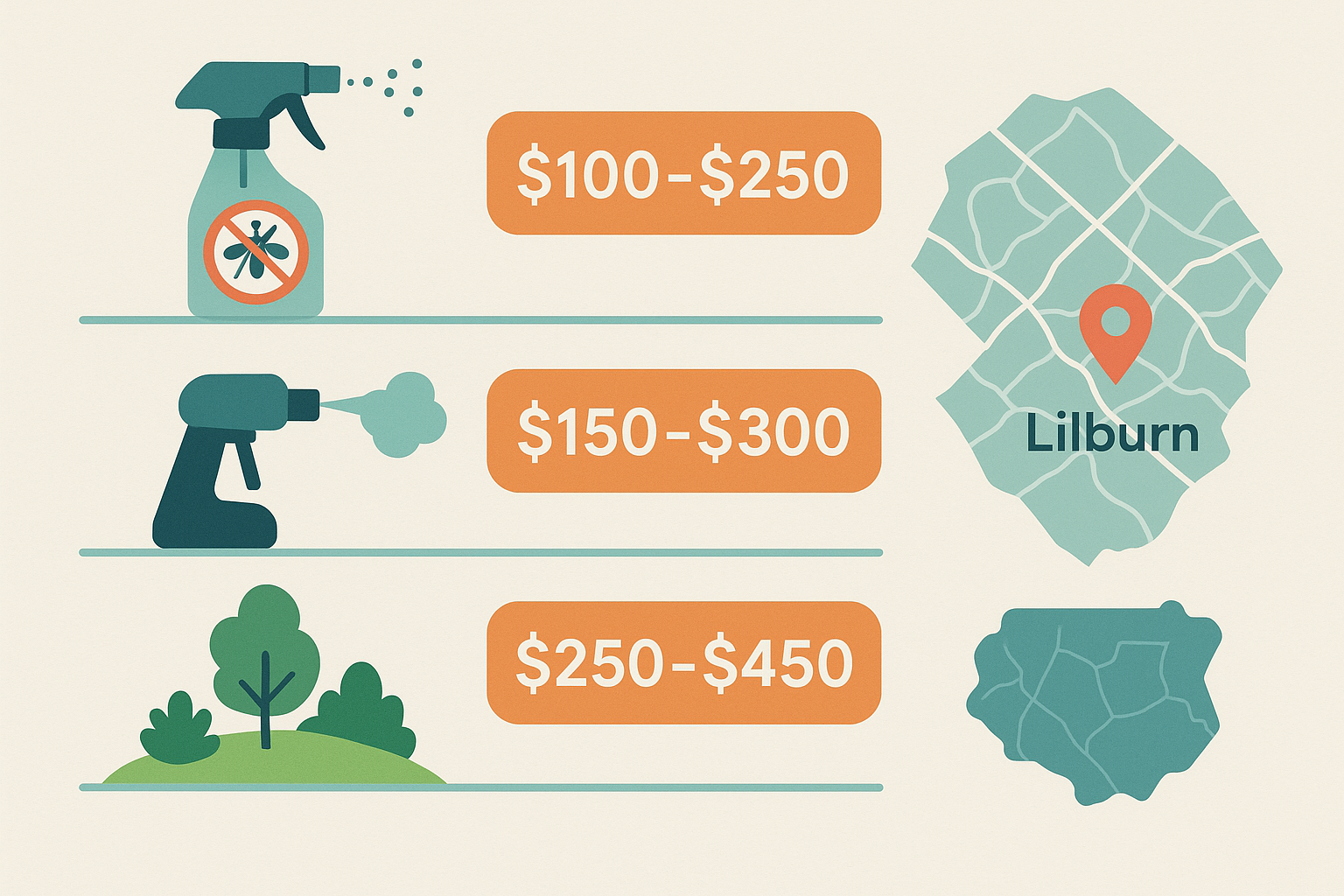
The infographic visualizes the same pricing tiers, making it easy to compare at a glance.
All figures are based on the NPMA cost guide and verified by local consumer surveys.
Seasonal Timing and Prevention Tips
Timing your gnat control can save you money and keep your yard comfortable all summer. In Lilburn, the window for pre‑emptive action opens in early May, just before humidity spikes and the gnats begin their rapid breeding cycle. Treating during this narrow window reduces the number of applications needed and limits the amount of pesticide you’ll ever have to use.
Best Months for Pre‑emptive Treatment
The optimal month for a professional pre‑treatment is May, ideally the first two weeks, when daytime highs are steady but night‑time moisture is still low. If you miss May, a second round in late June can still curb a developing population, but you’ll likely need a follow‑up in August as humidity climbs again.
DIY Prevention Steps
Start by removing any standing water; even a saucer under a plant pot is a breeding ground for adult gnats. Next, check your mulch depth – 2 to 3 inches is enough to retain moisture without creating a soggy blanket that attracts larvae. Finally, choose gnat‑resistant plants such as lavender, rosemary, or marigold, and keep foliage trimmed to improve air flow.
“Integrated pest management emphasizes regular monitoring, cultural controls, and the use of the least‑toxic methods before resorting to chemicals.” – EPA, 2023 IPM Guide
Quick Checklist for Homeowners
- Schedule a professional treatment in early May.
- Eliminate all standing water sources.
- Maintain mulch at 2‑3 inches depth.
- Plant lavender, rosemary, or marigold.
- Trim foliage to improve airflow.
- Inspect for gnat activity weekly.
- Contact Anthem Pest Control for follow‑up if needed.
Choosing a Local Provider – Anthem Pest Advantages
When you need gnat control in Lilburn, the right provider can turn a frustrating nuisance into a quick, permanent solution. Anthem Pest blends national expertise with a true local presence, so you get the best of both worlds.
What sets us apart
- Certified technicians & EPA‑registered products. Every technician holds state‑approved pest‑management certifications and completes annual training on EPA‑registered chemicals. We never use off‑label sprays, ensuring safety for children, pets, and the environment.
- 24‑hour response guarantee. Call us any time and a licensed professional will be at your door within the next business day. Our written service agreements detail the exact treatments, schedule, and cost, eliminating surprise fees.
- Transparent pricing & free inspection. Before any work begins you receive an itemized estimate that matches the quoted price. Lilburn homeowners also enjoy a complimentary on‑site inspection to pinpoint the source of gnats.
Because Anthem Pest is locally owned and fully licensed in Georgia, we understand the seasonal patterns that bring gnats to Lilburn yards. Our technicians customize each treatment to your property’s micro‑climate, using only EPA‑registered products that have proven effective across the Peach State.
What Lilburn homeowners are saying
“Anthem Pest showed up the same day we called and cleared the gnats from our porch. The technician explained everything in plain language.”
— Sarah M., Lilburn
“After a single treatment, we haven’t seen a single gnat. The price was exactly what was quoted, no hidden fees.”
— James L., Lilburn
Our 100% satisfaction guarantee means if gnats return within 30 days, we’ll retreat at no extra charge.
Ready to reclaim your yard? Call 877‑371‑8196 for your free inspection, or visit anthempest.com to schedule online.
Frequently Asked Questions About Gnat Control
How quickly will gnats disappear after treatment?
Most homeowners see a noticeable drop in gnat activity within 24–48 hours of a professional application. EPA‑backed efficacy studies show that the active ingredients used in Anthem’s treatments reduce adult populations by up to 90 % in that window, while larvae continue to die off over the next few days. If you notice lingering hotspots after the initial drop, a follow‑up visit within a week will seal the finish.
Are treatments safe for pets and children?
Yes. Anthem follows EPA safety standards and relies on Bacillus thuringiensis israelensis (Bti), a naturally occurring bacterium that targets only gnat and mosquito larvae. Bti is classified as non‑toxic to mammals, birds, fish, and beneficial insects, so it poses no risk to pets, children, or the surrounding environment. All products are applied at concentrations well below EPA’s acute toxicity thresholds, giving you peace of mind during everyday activities. For more details, visit the EPA Bti safety page and the EPA Pesticide Safety page.
Can I combine gnat control with mosquito services?
Absolutely. Anthem offers integrated pest‑management packages that address both gnats and mosquitoes in a single visit. Bundling the services typically reduces overall labor costs and ensures that overlapping habitats are treated consistently, giving you broader protection without extra hassle. You can request a customized quote online or call our office, and we’ll schedule the combined service at a time that fits your busy household.
Conclusion and Call to Action
Knowing the variables that affect gnat‑control pricing—and getting a professional inspection—helps you avoid surprise costs. It ensures the treatment plan matches the severity of the infestation and the unique conditions of your Lilburn home.
In Lilburn, typical gnat‑control services range from $120 for a single visit to $300 for comprehensive, year‑round protection. Scheduling treatment in late spring or early summer, when gnats first appear, often secures the best rates and results.
Ready to protect your family and yard? Call 877‑371‑8196 for a free, no‑obligation quote today. Our Lilburn technicians will assess your situation, explain every step, and provide transparent pricing before any work begins.
Transparent pricing means you’ll see exactly what each service covers, eliminating hidden fees. Whether you need a one‑time treatment or a long‑term prevention plan, we tailor solutions to fit your budget and schedule.
For more details on service options, seasonal tips, and customer reviews, visit Anthem Pest Control.