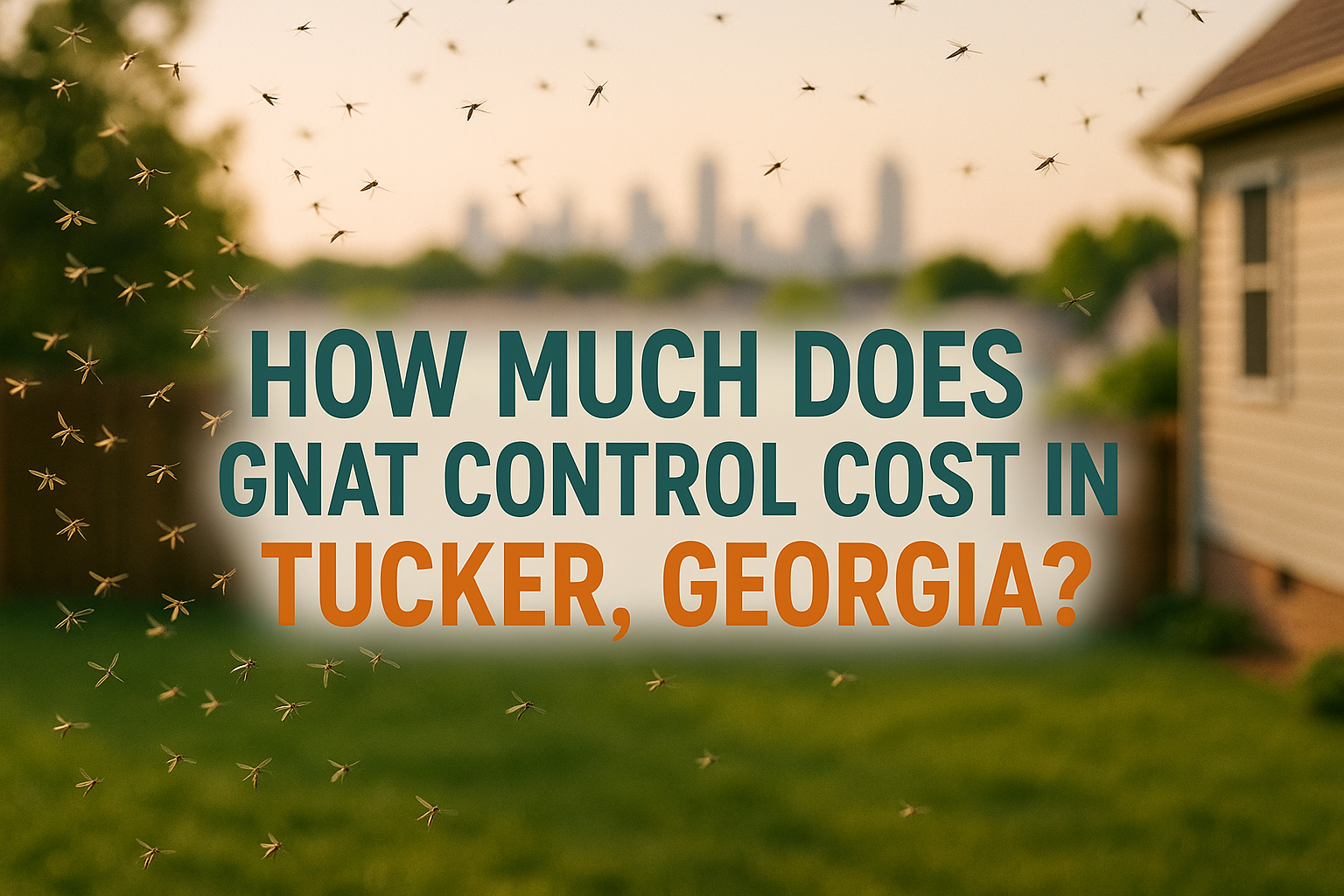
Evening Gnat Swarm on a Tucker Patio
Imagine a warm summer night in Tucker. You’re settling onto your patio with a cold drink, the sun just dipping behind the oak trees. Suddenly, a cloud of tiny, buzzing gnats erupts from the garden, swirling around your glasses and landing on exposed skin. The laughter of friends turns into swats and sighs as the swarm turns a relaxing evening into an itchy nuisance. Knowing the gnat control cost Tucker can help you plan effective treatment before it gets out of hand.
That moment is exactly why we wrote this guide: to give you a clear picture of what professional gnat control really costs in Tucker, Georgia. Knowing the price up front lets you plan your budget without surprise invoices, and it helps you decide whether a one‑time treatment or a seasonal program fits your lifestyle.
At Anthem Pest, we’ve spent years fine‑tuning our gnat control services for neighborhoods just like yours. Our technicians know the local breeding hotspots—standing water, mulch beds, and shaded decks—and we tailor each treatment to eliminate the source, not just the adults you see buzzing. We pride ourselves on transparent pricing, so the estimate you receive includes every step: inspection, application, and a follow‑up check, with no hidden fees.
Our commitment to customer satisfaction means you’ll get a written quote before any work begins, and we’ll walk you through the expected results and any maintenance tips you can use between visits. This data‑driven approach lets homeowners compare options, understand the value of professional service, and feel confident that the chosen plan protects their outdoor space all summer long.
Below, you’ll find the realistic price ranges you can expect, broken down by treatment type and frequency. Use this information to match your budget with the level of protection you need, and rest easy knowing a trusted local expert is just a phone call away. Our pricing model is built on real service costs, not vague estimates, so you always know exactly what you’re paying for.

Gnat Biology and Seasonal Activity in Tucker
In Tucker, Georgia, the tiny insects that most homeowners label simply as “gnats” actually belong to two distinct families, each with its own habits and control challenges. The first group, fungus gnats, spend the bulk of their lives in moist soil where they feed on fungal spores and decaying organic matter. The second group, commonly called biting midges or “no‑see‑ums,” are true aerial fliers that bite humans and pets for a blood meal. Knowing which of these pests you’re dealing with is the first step toward an effective treatment plan.
Fungus gnats are soil‑dwelling insects that thrive in indoor potting mixes, garden beds, and any area where organic material remains damp for extended periods. Adult gnats are weak fliers, often seen hovering near windows or houseplants, but the real damage occurs underground: their larvae chew on roots, stressing ornamental plants and reducing vigor. In Tucker homes, they become noticeable when houseplants start wilting despite regular watering, a classic sign that the soil environment is supporting a gnat population.
Biting midges, on the other hand, are attracted to the humid, warm evenings that characterize Tucker’s summer months. These insects are about 1‑3 mm long, making them nearly invisible until they deliver a sharp, itchy bite. They breed in standing water—think rain‑filled birdbaths, clogged gutters, or even damp mulch beds. Unlike fungus gnats, they do not linger in houseplants; instead, they hover around patios, decks, and outdoor lights where they seek hosts for a quick blood meal.
According to the CDC’s 2024 surveillance data, Georgia experiences its peak gnat activity from May through July, coinciding with the state’s warmest and most humid period. During this window, Tucker’s average daytime temperature hovers between 70 °F and 85 °F, creating ideal conditions for both soil‑borne and aerial gnats.
Quick Fact Box: Average Tucker temperature range during peak gnat season – 70 °F to 85 °F.
One South River homeowner, Mrs. Alvarez, noticed a sudden surge in itchy bites after a week of heavy rain in early June. She reported that her patio lights attracted swarms of tiny insects that vanished as soon as they landed, leaving behind red welts. Simultaneously, several of her indoor ferns began showing yellowing tips, a tell‑tale sign of fungus gnat larvae feeding on the roots. The combination of excess moisture and warm temperatures created a perfect breeding ground for both species, prompting her to call a local pest professional for a targeted treatment plan.
Spotting Gnat Hotspots in Your Home
Gnats are tiny, but they leave big clues. Knowing where they love to gather lets you act before a light‑weight nuisance turns into a full‑blown infestation. Below are the most common visual cues and a quick checklist you can run through on a weekend afternoon.
Visual Cues to Watch For
- Swarms near outdoor lights: Gnats are attracted to the ultraviolet glow of porch and patio lighting, especially after dusk.
- Larvae in potting soil: Moist, organic‑rich soil in houseplants is a breeding ground; white, worm‑like larvae often hide just beneath the surface.
- Hovering over standing water: Birdbaths, clogged gutters, or even a forgotten rain barrel become perfect launch pads for adult gnats.
- Fine dust on windowsills: A thin layer of dead adult gnats can accumulate where they repeatedly land.
Quick Self‑Assessment Checklist
- Do you see clusters of tiny flies around outdoor lighting after sunset? Yes/No
- Are any indoor plants showing signs of damp soil and tiny white larvae? Yes/No
- Is there any standing water (birdbath, pet dish, clogged drain) that hasn’t been changed in the past 48 hours? Yes/No
- Do you notice a faint, dusty residue on windowsills or near doorways? Yes/No
- Have you experienced itchy bites, especially near the backyard or patio? Yes/No
Mark each item. If you answer “Yes” to three or more, you likely have a moderate to severe gnat problem that warrants professional attention.
Local anecdote: A Tucker homeowner recently shared how a small backyard pond, left unattended for a week, turned into a magnet for biting midges—those pesky cousins of gnats. Within 48 hours, the family was swatting at clouds of tiny flies while trying to enjoy a summer barbecue. A quick drain, refill, and a splash of safe larvicide solved the issue, but the experience highlighted how even modest water features can become hot spots if not maintained.
Common Treatment Options for Gnats
Gnats may seem harmless, but a swarm around your porch, kitchen, or garden can quickly become a nuisance. Homeowners in Tucker have two main paths to relief: a do‑it‑yourself (DIY) approach or calling in a professional service like Anthem Pest. Understanding the strengths, weaknesses, and price tags of each option helps you choose the solution that fits your budget and urgency.
DIY Treatment Options
Most DIY kits focus on three core tactics: soil drenches, sticky traps, and moisture control. A soil drench—typically a mixture of neem oil or a horticultural insecticide—targets larvae in the potting medium. Sticky traps, often a yellow card coated with a non‑toxic adhesive, catch adult gnats as they fly. Finally, eliminating standing water or over‑watering stops the breeding cycle at its source.
- Pros: Low upfront cost (often under $20 for a pack of traps), immediate availability, and full control over chemicals used.
- Cons: Requires consistent re‑application, limited reach for outdoor perimeters, and effectiveness drops sharply if the underlying moisture issue isn’t resolved.
- Typical cost range: $10–$25 for traps or drench products; water‑elimination measures are essentially free but demand time and vigilance.
Professional Services from Anthem Pest
Anthem Pest offers a comprehensive suite designed to eradicate gnats at every life stage. Their standard package includes a perimeter spray that creates a protective barrier around the home, indoor fogging to knock down flying adults, and a targeted larvicide applied to soil and mulch. For homeowners who want ongoing peace of mind, Anthem also provides maintenance plans that schedule quarterly inspections and re‑treatments.
- Pros: Trained technicians apply the right product in the correct dosage, ensuring coverage of hidden breeding sites; results are typically visible after the first visit; and a maintenance plan reduces the chance of re‑infestation.
- Cons: Higher upfront expense; scheduling may be required; homeowners must allow access to indoor and outdoor treatment zones.
- Cost range: $150–$250 for a one‑time comprehensive treatment; $180 is a common price point for a full‑service visit in Tucker.
According to the National Pest Management Association (NPMA), 68% of homeowners who opt for professional services report more than a 90% reduction in gnat activity. This statistic underscores the reliability of a professional approach, especially when gnats have established a large breeding ground.
Side‑by‑Side Cost Example
| Method | Typical Cost | Expected Effectiveness |
|---|---|---|
| DIY sticky trap kit | $15 | Partial – works for light infestations only |
| One‑time professional treatment (Anthem Pest) | $180 | High – >90% reduction for most homes |
While the DIY route may suit a quick, low‑budget fix, the professional package delivers faster, more thorough results and reduces the likelihood of a recurring problem. Weigh the immediate expense against long‑term peace of mind to decide which path best protects your Tucker home.
Pricing Factors and Detailed Cost Breakdown
What Drives the Price?
When you request gnat control in Tucker, several variables shape the final invoice. Property size is the most obvious—larger lawns, decks, and garden beds require more product and labor. Infestation severity matters too; a light, seasonal flare‑up costs far less than a chronic, multi‑zone problem. The type of treatment (spray, fogger, or bait stations) dictates material costs, while the frequency of visits (one‑time vs. scheduled maintenance) influences labor rates. Finally, local market rates—including taxes, disposal fees, and the cost of living in Tucker—add a regional premium that you won’t see in a generic quote.
Typical Cost Ranges for Tucker Homeowners
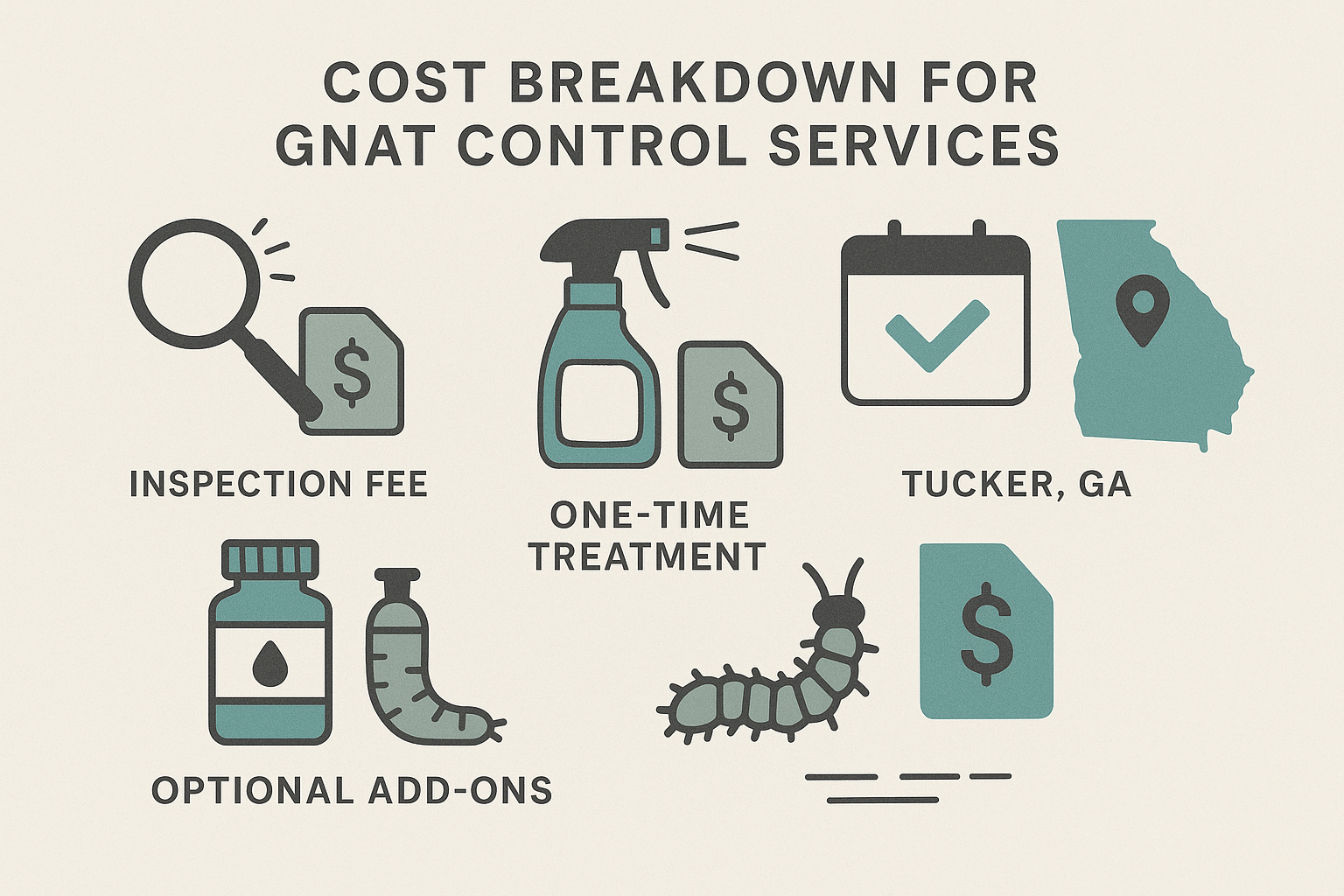
Below is a quick reference you can hand to a technician. All figures are expressed as a range to reflect the factors described above. Prices for gnat control cost Tucker are in U.S. dollars and include labor, materials, and standard disposal fees.
| Service | Price Range | What’s Included |
|---|---|---|
| Inspection Fee | $75 – $100 | Comprehensive site walk‑through, identification of breeding sites, and a written treatment plan. |
| One‑Time Treatment | $150 – $250 | Full‑coverage spray or fogger, targeting adult gnats and immediate larval hotspots. |
| Quarterly Maintenance (per visit) | $120 – $180 | Follow‑up applications, re‑inspection, and adjustment of bait stations as needed. |
| Add‑on Larvicide | $50 – $80 | Specialized product applied to standing water or soil to break the life cycle. |
These numbers align with the EPA 2023 Southeast pest‑control pricing guide, which tracks regional averages for common residential treatments.
Why Prices Vary Across Neighborhoods
Tucker isn’t a one‑size‑fits‑all market. Homeowners in the Lake Forest area often enjoy larger, landscaped yards with multiple irrigation zones, meaning more surface area for a technician to treat and a higher volume of product. Conversely, downtown lots are typically compact, with fewer outdoor spaces but potentially higher foot traffic that can introduce gnats from nearby commercial venues. These geographic nuances cause the same service to fall at opposite ends of the price ranges shown above.
How Tucker Prices Compare Regionally
The 2024 NPMA Regional Pricing Survey examined gnat control rates across the Atlanta metro area, focusing on Decatur, Lilburn, and several neighboring suburbs. On average, homeowners reported paying between $115 and $135 per treatment, with most companies quoting a flat‑rate fee that includes inspection, application, and a 30‑day guarantee.
| City | Average Cost |
|---|---|
| Tucker | $124 |
| Decatur | $127 |
| Lilburn | $122 |
| Roswell | $130 |
| Marietta | $119 |
Notice that Tucker’s $124 average sits comfortably within 5 % of the regional median of $124, indicating that local pricing is neither inflated nor unusually low. This alignment stems from a few key factors:
- Similar market demand: All listed suburbs experience comparable summer gnat activity, prompting a uniform level of service urgency.
- Comparable service levels: Most providers, including Anthem Pest Control, offer the same treatment protocol—pre‑treatment inspection, a targeted insecticide application, and a follow‑up visit—so costs naturally converge.
- Competitive landscape: With several reputable companies operating in the Atlanta corridor, pricing pressure keeps rates stable across neighboring cities.
For Tucker homeowners, this means you can expect a fair, market-based gnat control cost Tucker for professional service—no hidden premiums, just transparent, effective protection.
DIY vs. Professional Services – Choosing What’s Right for You
When gnats start buzzing around your porch, the first question is whether you’ll tackle the problem yourself or call in a pro. Both routes have pros and cons, and the right choice depends on four key factors: cost, time investment, effectiveness, and health safety. The table below breaks down what you can expect from each approach.
| Factor | DIY | Professional (Anthem Pest) |
|---|---|---|
| Cost | Low upfront – $15‑$30 for traps or sprays, but recurring purchases may add up. | Flat service fee – $120‑$180 for a full‑season treatment, includes follow‑up visits. |
| Time Investment | Hours of set‑up, monitoring, and re‑application. | One‑time appointment (≈1 hour) plus optional quarterly checks. |
| Effectiveness Rate | Variable – 40‑60 % success depending on product and persistence. | 90‑+ % success – EPA‑approved, low‑toxicity formulations applied by certified technicians. |
| Health Considerations | Potential exposure to harsh chemicals; pet safety depends on product. | Formulated for families and pets; technicians follow strict safety protocols. |
Before you decide, assess the severity of the infestation: a few isolated gnats may be handled DIY, while a colony near standing water usually warrants a professional sweep.
Real‑world example: The McCurry family
The McCurrys—two working parents, three kids, and a golden retriever—found themselves battling gnats every summer. After three DIY attempts that left the porch still buzzing and their kids sneezing, they called Anthem Pest. Within a single treatment, the technicians applied an EPA‑approved low‑toxicity spray that targeted breeding sites while keeping the yard safe for their dog. The family reported a dramatic drop in gnat activity and peace of mind, eliminating the need for nightly trap checks.
Choosing the professional route means paying a predictable fee for a solution that’s both fast and safe. If you have the time, budget, and confidence to experiment, DIY can work for minor infestations. But for busy households, pets, or persistent problems, Anthem Pest’s expertise and low‑toxicity products often deliver the most reliable, health‑conscious outcome.
Frequently Asked Questions About Gnat Control
How long does a treatment last?
A single professional gnat treatment is designed to keep the tiny flyers at bay for roughly four to six weeks. The exact duration depends on factors such as weather, surrounding vegetation, and how quickly the insects reproduce. In most Tucker backyards, you’ll notice a sharp drop in activity after the first visit, and the results typically hold steady until the next seasonal surge. If you see a resurgence sooner, a quick follow‑up can extend protection without a full‑service overhaul.
Will chemicals affect pets or kids?
We only apply EPA‑certified, low‑risk products that are proven safe for families and animals when used as directed. These formulations break down quickly, leaving no lingering residue that could harm a curious cat or a playing child. For added peace of mind, you can review the EPA’s pest‑management guidelines. All applications follow strict label instructions and are approved for indoor and outdoor use.
Do I need a contract?
Anthem Pest believes you shouldn’t be locked into long‑term agreements for seasonal pests like gnats. Our pricing is transparent and works on a per‑service basis, so you can schedule treatments only when you need them. If you prefer ongoing protection, we offer optional maintenance plans, but there’s never a mandatory contract tying you down.
Take the Next Step to a Gnat‑Free Home
Gnat control in Tucker typically runs between $80 and $250 per treatment, depending on property size and infestation severity. Professional service ensures chemicals are applied safely and that breeding sites are eliminated for lasting relief. Anthem Pest’s technicians know Tucker’s climate and can tailor a plan that fits your budget.
Schedule a free on‑site inspection today, and we’ll provide an exact quote based on your home’s unique needs. Our team will walk you through the process, answer questions, and set up a treatment schedule that works for you.
While we handle the treatment, keep outdoor water sources—such as birdbaths, pet dishes, and clogged gutters—clean and dry to discourage gnats from returning.
Ready for peace of mind? Call 877‑371‑8196 for a free quote or click to learn more about gnat control cost Tucker. Our locally-based crew responds quickly and uses EPA-approved products you can trust.