Why Gnat Problems Hit Woodstock Homeowners

Gnats are tiny, soft‑bodied flies that thrive in moist environments. Their life cycle moves quickly: eggs hatch into larvae in damp soil or organic matter, larvae develop into pupae, and adults emerge in just a few weeks. Typical habitats include compost piles, over‑watered lawns, and the shaded understory of gardens. Because they are so small—often less than a quarter‑inch long—they can slip through window screens and settle wherever moisture lingers.
Woodstock’s climate creates a perfect breeding ground for these insects. Summer humidity regularly climbs above 70 %, and the town’s many ornamental ponds, rain‑garden features, and well‑kept flower beds hold the moisture gnats love. The region’s mild winters rarely freeze the soil deep enough to interrupt their development, allowing populations to build steadily from early spring through late fall. Homeowners who enjoy lush, green landscaping often unwittingly provide the ideal micro‑habitats that keep gnats thriving year after year.
Most residents first notice gnats when they gather on outdoor lights or hover around patio furniture. Swarms can appear as a faint, hazy cloud that seems to follow you from the kitchen doorway to the deck. In addition to the visual nuisance, some species bite, leaving tiny, itchy welts on exposed skin. Gardeners may also spot gnats feeding on the tender foliage of host plants, which can stunt growth and, in severe cases, cause leaf discoloration or wilting.
The presence of gnats can quickly turn a pleasant evening outdoors into an irritating experience. Constant buzzing near dining tables or around children’s play areas distracts from relaxation and can even trigger allergic reactions in sensitive individuals. While gnats are not known carriers of serious diseases, their bites can cause localized swelling and, for those with asthma or eczema, exacerbate skin irritation. The cumulative effect is a reduced enjoyment of one of Woodstock’s greatest assets—its beautiful, outdoor living spaces.
Many homeowners attempt DIY fixes such as homemade sugar‑vinegar traps, citronella candles, or frequent lawn watering adjustments. Although these methods may catch a few insects, they rarely address the root cause: persistent moisture and organic debris where larvae develop. DIY solutions also lack the consistency and coverage needed to keep a population in check, often leading to a frustrating cycle of temporary relief followed by another surge of gnats.
Because gnats reproduce so rapidly and hide in hard‑to‑reach spots, a systematic, professional approach is essential. Licensed technicians can identify the exact breeding sites, apply targeted treatments that penetrate soil and plant material, and advise on long‑term landscape practices that reduce moisture buildup. Partnering with a local expert ensures that gnats are not just reduced, but effectively managed—so Woodstock homeowners can reclaim their backyards without the constant hum of tiny winged invaders.
Tracking Gnat Activity Through the Seasons
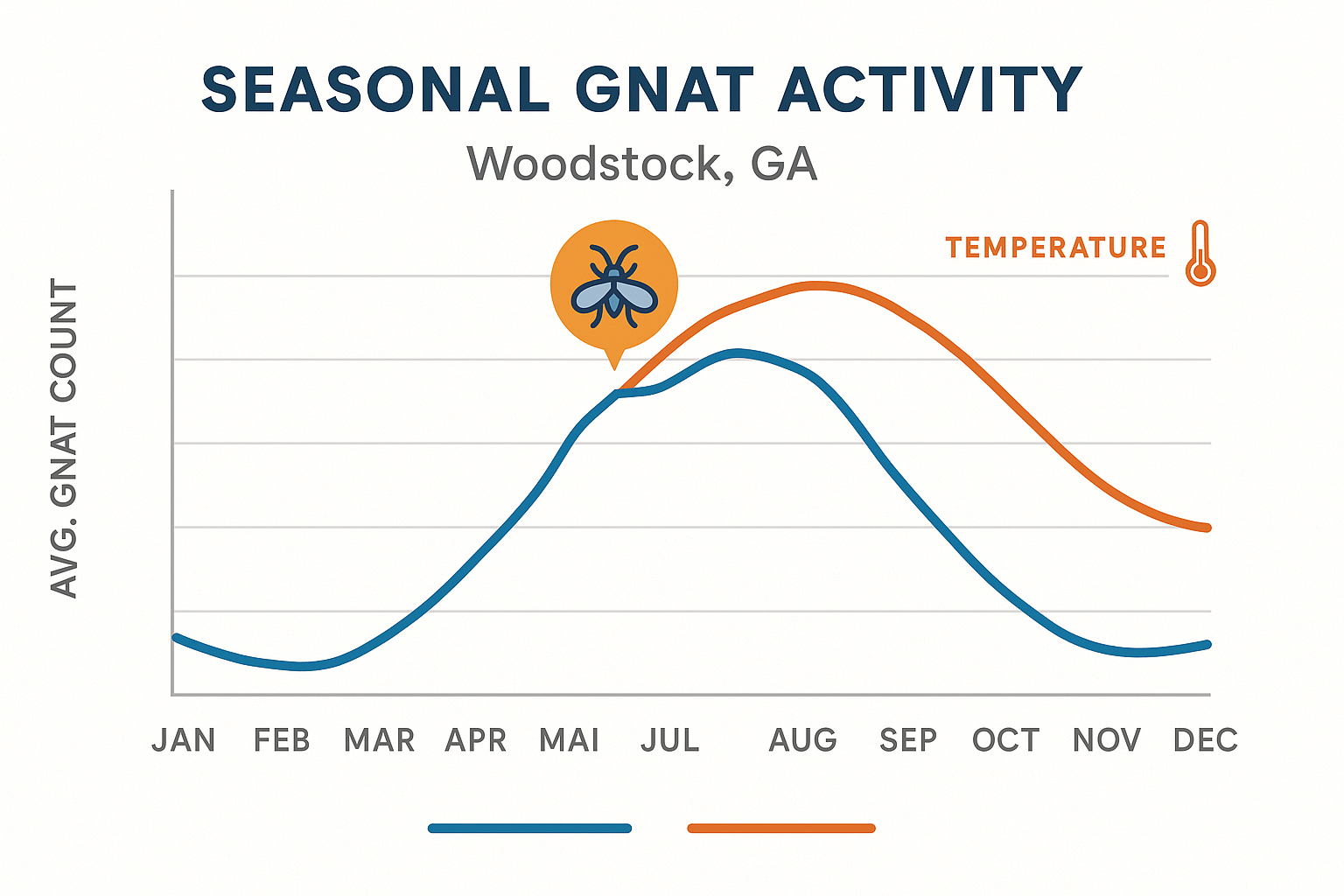
Understanding when gnats are most active in Woodstock helps you plan the right moment to intervene. The seasonal infographic above plots two critical variables: the average monthly gnat count (blue line) and the corresponding temperature trend (red line). Notice how the two lines rise and fall together—temperature and humidity are the twin engines that drive gnat population booms.
Peak Months: Late Spring Through Early Fall
In Woodstock, the gnat surge typically begins in late April, peaks in July, and tapers off by early October. During this window, daily highs hover between 78°F – 90°F, and relative humidity often exceeds 65 %. Warm, moist air accelerates the life cycle of gnats: eggs hatch faster, larvae develop more quickly, and adults emerge in greater numbers.
Because gnats thrive in these conditions, you’ll notice more of them around outdoor lighting, damp mulch, and any standing water in your yard. The combination of heat and humidity also shortens the time between treatment applications, meaning a single spray in June may lose effectiveness by August if the weather stays favorable for the insects.
Low‑Activity Periods: Winter and Early Spring
From November through March, gnat activity drops dramatically. Temperatures dip below 55°F, and the humidity level falls, slowing or halting the breeding cycle. While adults become scarce, eggs and pupae can linger in protected micro‑habitats such as leaf litter or under deck boards. This lull is an ideal window for preventive measures because treatments have a longer window to act before the next warm spell.
Skipping this quiet season can leave hidden reservoirs that explode once the weather warms again. A well‑timed pre‑season service helps eradicate those lingering stages, reducing the size of the upcoming population spike.
Quick Tip: Schedule Inspections Before the Peak
- Book a professional inspection in early May, before gnats reach their summer apex.
- Ask the technician to focus on moisture‑prone zones: garden beds, gutters, and any standing water.
- Implement a targeted barrier treatment that targets both adult gnats and their immature stages.
By acting early, you create a defensive barrier that curtails the breeding cycle, keeping gnats from reaching nuisance levels later in the season.
For detailed regional trends, Anthem Pest references data compiled by Dixie Pest, which tracks gnat reports across Woodstock and the surrounding Fulton County area. Their monthly logs align closely with the temperature‑driven pattern shown in the infographic, confirming that timing is the single most effective lever in gnat management.
Understanding Treatment Costs and Service Plans

When it comes to gnat control in Woodstock, Georgia, the price you pay is often a reflection of the service model you choose. Homeowners typically weigh a one‑time spray against ongoing maintenance plans, and the right choice hinges on budget, severity of the infestation, and long‑term peace of mind. Below, we break down the most common service structures so you can see exactly where your money goes and how each option protects your home throughout the gnat season.
Typical Service Models
- One‑time spray: A single application targeting the current gnat population.
- Quarterly maintenance: Four visits spread across the active months, keeping gnats at bay before they become a nuisance.
- Full‑season contract: Continuous coverage from early spring through late fall, often including extra visits for unexpected spikes.
Cost Ranges for Each Model
| Service Model | Typical Cost per Application | Typical Annual Cost |
|---|---|---|
| One‑time spray | $80 – $120 | $80 – $120 |
| Quarterly maintenance | $60 – $90 per visit | $250 – $350 |
| Full‑season contract | $55 – $80 per visit (6‑8 visits) | $350 – $500 |
What’s Included in the Price?
Every Anthem Pest Control package includes a thorough inspection, professional‑grade treatment materials, and a follow‑up visit to verify results. For quarterly and full‑season plans, the follow‑up is built into the schedule, ensuring that any new breeding sites are addressed promptly. Homeowners also receive a detailed report outlining where gnats were found, what actions were taken, and recommendations for preventing future invasions.
Transparent Pricing Promise
Anthem Pest Control prides itself on a no‑surprise billing policy. The quoted range you see on the chart is the exact amount you’ll pay—no hidden fees, no extra service charges for “special equipment.” If a property requires additional work beyond the standard scope, our technicians discuss the need and cost before proceeding, so you stay in control of your budget.
DIY Products vs. Professional Service Value
Do‑it‑yourself sprays and traps can be tempting, often costing $15‑$30 per bottle. While a single product may knock down a few gnats, it rarely addresses the root cause—breeding sites hidden in soil, mulch, or drainage areas. Professional treatment, on the other hand, combines targeted chemicals with strategic placement and follow‑up visits, delivering a comprehensive solution that typically saves homeowners time, repeated purchases, and the frustration of recurring infestations. In most cases, the long‑term savings and peace of mind from a professional plan outweigh the upfront cost of a DIY kit.
By comparing these models, costs, and inclusions, you can match a gnat control strategy to your household’s needs and budget. Whether you opt for a quick fix or a season‑long shield, Anthem Pest Control’s transparent pricing ensures you know exactly what you’re paying for—and why it’s worth every penny.
Comparing Gnat Control Methods and Effectiveness
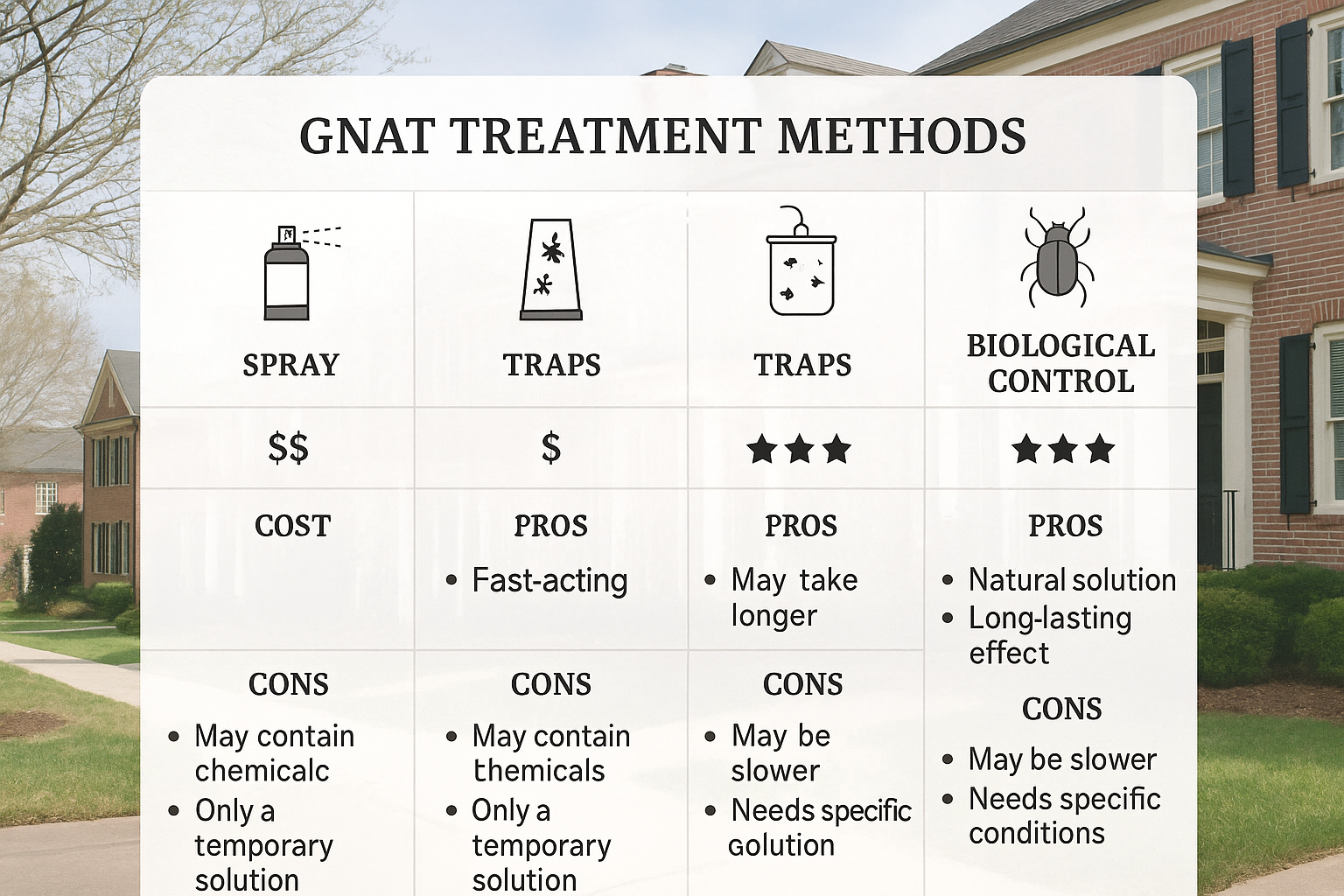
When gnats start buzzing around your porch or kitchen, the first instinct is to reach for the quickest fix. Yet the most cost‑effective, long‑lasting solution often depends on the method you choose, the time of year, and how comfortable you are with chemicals. Below is a side‑by‑side look at the three most common treatments, so you can match a strategy to your budget and your peace of mind.
Chemical Spray
Professional-grade chemical sprays work by delivering a residual insecticide that kills gnats on contact and continues to protect treated surfaces for several weeks. In Woodstock, a single‑application spray typically runs between $80 and $130 for an average 1,500‑sq‑ft home.
Effectiveness rating: 8/10. Sprays provide rapid knock‑down, often eliminating visible gnats within hours of application.
- Pros: Immediate results; covers large outdoor and indoor areas; reduces adult populations quickly.
- Cons: May require re‑application after heavy rain or during peak season; potential safety concerns for pets, children, and indoor air quality; some homeowners prefer lower‑chemical options.
Traps (Sticky, UV)
Sticky and UV light traps lure gnats with a combination of light, heat, and sometimes a scent lure, then capture them on an adhesive surface. A set of two to three traps costs roughly $30–$70, and they can be placed in kitchens, bathrooms, or near outdoor lighting.
Effectiveness rating: 6/10. Traps excel at reducing localized populations but rarely eradicate an infestation on their own.
- Pros: Low chemical exposure; easy DIY installation; provides visual confirmation of activity levels.
- Cons: Limited coverage area; requires regular cleaning or replacement of sticky pads; less effective in windy or heavily humid conditions.
Biological Control (Bti, Predatory Nematodes)
Biological agents such as Bacillus thuringiensis israelensis (Bti) or predatory nematodes target gnat larvae in the soil or standing water, interrupting the life cycle before adults emerge. Application costs in Woodstock range from $100 to $150 for a residential treatment, depending on the size of the breeding site.
Effectiveness rating: 7/10. While not instant, these options can suppress populations for months when used correctly.
- Pros: Environmentally safe; minimal impact on non‑target insects, pets, and humans; compatible with organic landscaping.
- Cons: Slower action—usually 5–10 days before noticeable decline; requires accurate identification of breeding sites; may need repeat applications for heavy infestations.
Seasonal timing matters as much as the method itself. In Woodstock, apply a chemical spray in early spring before gnats hit their peak, set up traps during the height of summer when adults are most active, and introduce biological controls in late summer or early fall to keep the larval reservoir low through winter.
All three strategies fit within an EPA Integrated Pest Management (IPM) framework, which encourages using the least hazardous method first and layering tactics for maximum impact. For additional safety guidelines, the CDC’s mosquito and gnat control recommendations reinforce the importance of source reduction, proper product use, and community coordination.
Protect Your Woodstock Home with Professional Gnat Control
Gnats flare up each spring and early summer in Woodstock, turning backyards, decks, and indoor spaces into buzzing irritants. Their life cycle is rapid—adults can lay hundreds of eggs in a single week—so a small problem can swell into a full‑blown nuisance before you know it. Acting early, before the population spikes, is the smartest way to keep your home comfortable and your family’s outdoor enjoyment uninterrupted.
Why Anthem Pest Control Is Your Best Ally
Anthem Pest brings a uniquely local edge to gnat management. Our technicians are trained right here in the Woodstock area, so they understand the specific habitats and weather patterns that drive gnat activity in our community. We employ EPA‑approved treatments that target both adult gnats and their breeding sites, ensuring a comprehensive knock‑down without compromising indoor air quality.
Transparency is built into every step of our service:
- Clear pricing: No hidden fees—just a straightforward quote that matches the scope of work.
- Satisfaction guarantee: If gnats return within the warranty period, we’ll re‑treat at no extra cost.
- Locally sourced data: Our treatment plans are calibrated to Woodstock’s seasonal trends, maximizing effectiveness while minimizing chemical use.
Safety and Convenience for Your Family
We know that homes in Woodstock often host children, pets, and outdoor gatherings. That’s why every product we apply is vetted for safety around mammals and birds. Our low‑odor, fast‑dry formulas let you resume normal activities within minutes of treatment. Plus, our scheduled maintenance plans take the guesswork out of pest control—regular visits keep gnats at bay year after year, so you never have to wonder when the next outbreak will hit.
Take the First Step—Free Inspection
Ready to reclaim your porch and patio from those pesky flyers? Anthem Pest offers a complimentary, no‑obligation inspection and quote. One of our certified technicians will assess your property, pinpoint breeding hotspots, and walk you through a customized action plan—all without any pressure to commit.
Get in Touch
Give us a call today at 877‑371‑8196 to schedule your free inspection. Or, if you prefer, click the link below to learn more about our gnat control services and book online at your convenience.