Introduction – Why Millipede Costs Matter in Norcross

Imagine stepping out onto your front porch after a night of heavy rain, only to find a slow‑moving river of millipedes spilling over the walkway, under the deck, and into the garden beds. It’s a scene that’s becoming all too familiar in many Norcross neighborhoods during the wet season. While these many‑legged critters aren’t dangerous, their sudden appearance can feel like an unwelcome surprise—especially when you have to call a professional on short notice.
Unexpected pest treatments can quickly dent a household budget. One emergency call for millipede control often includes not just the chemical application, but also travel fees, inspection time, and follow‑up visits. For a homeowner who’s already juggling mortgage payments, school expenses, and routine maintenance, that surprise cost can feel like a financial sting. Knowing the typical price range for millipede control in Norcross lets you plan ahead, allocate funds, and avoid the stress of last‑minute decisions.
In this guide we’ll walk you through everything you need to budget confidently for millipede management:
- Identification: How to confirm you’re dealing with millipedes, not centipedes or other bugs.
- Local risk factors: Why Norcross’s climate and landscaping choices attract these pests.
- Cost drivers: What influences the price—treatment type, property size, and infestation level.
- Pricing breakdown: Typical per‑visit fees, product costs, and any optional add‑ons.
- Regional comparison: How Norcross rates against nearby counties in Georgia.
- Prevention tips: Simple steps you can take now to keep millipedes out of your home.
- Provider selection: What to look for in a local pest‑control partner, and why Anthem Pest Control stands out.
- FAQs: Answers to the most common questions homeowners ask about millipede control.
All of this information is tailored specifically for Norcross, GA homeowners, because local expertise matters. The Environmental Protection Agency’s pest‑complaint data shows that millipedes, while still a minor concern, are on the rise in our region (EPA). Understanding that trend helps you stay one step ahead.
By the end of this article you’ll have a clear picture of what a millipede treatment will cost, why those costs vary, and how to choose a trustworthy provider without breaking the bank. Let’s dive in and take the guesswork out of your pest‑control budgeting.
Identifying Millipedes in Your Yard
Before you can choose the right treatment, you need to know exactly what you’re looking at. Millipedes have distinct features that set them apart from other yard pests.
Anatomy Overview
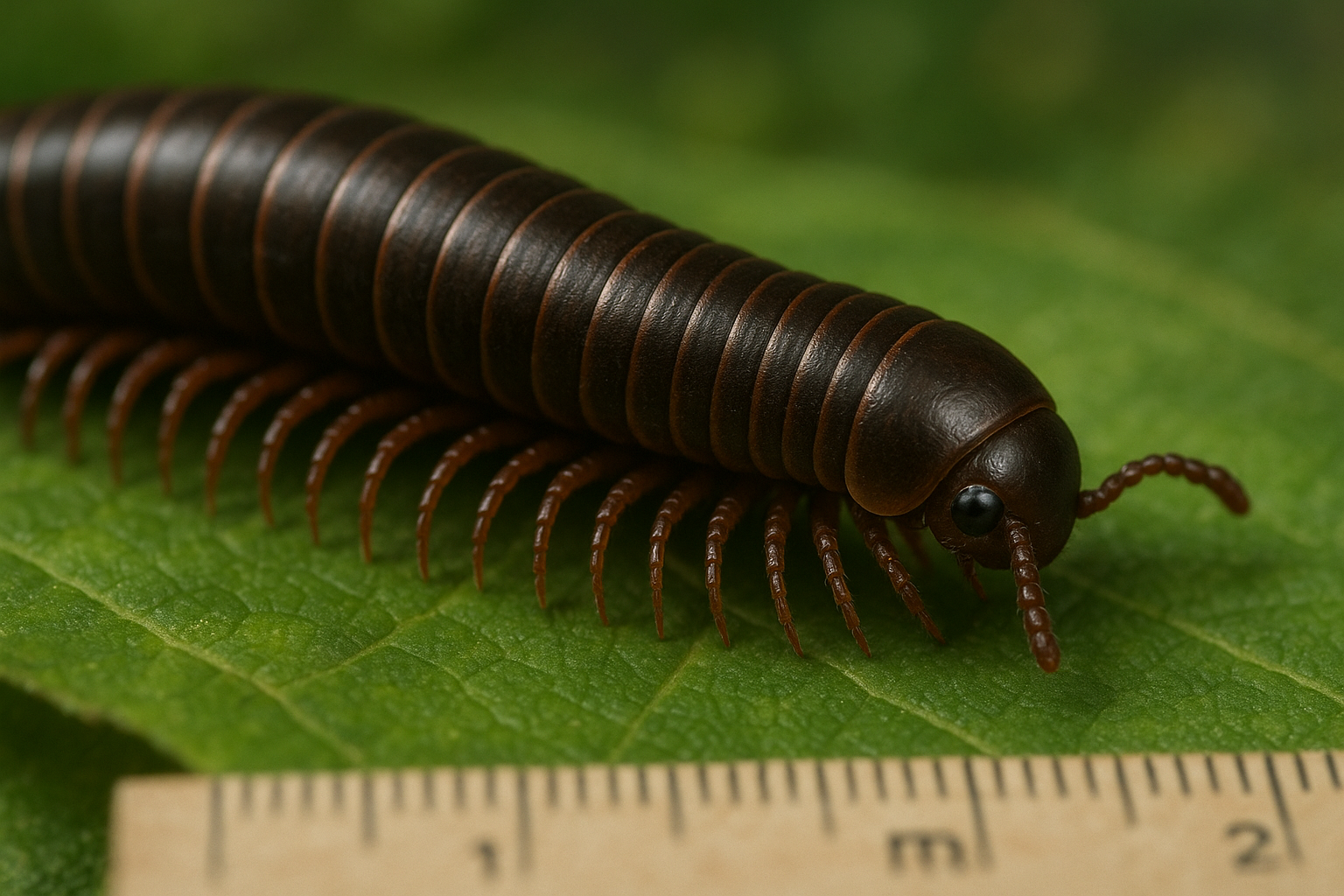
Millipedes are instantly recognizable by their long, cylindrical bodies made up of dozens of tiny, ring‑like segments. Each segment bears two pairs of legs, giving the appearance of “many‑legged” creatures. Unlike centipedes, which have one pair of legs per segment and a flattened, predatory body, millipedes move slowly and curl into a tight coil when disturbed.
Common Georgia Species
In the Norcross area, the most frequently encountered species is Narceus americanus, often called the North American millipede. It sports a glossy brown‑black exoskeleton and can grow up to 6 inches long. You’ll also see smaller, lighter‑colored varieties such as the “garden millipede,” which prefers the moist micro‑climates found under flower beds.
How Often Do Millipedes Show Up?
According to 2024 EPA residential pest‑complaint data, millipedes account for less than 5 % of all reported pest issues nationwide. That low figure doesn’t mean they’re harmless; large congregations can overwhelm mulch, block drainage, and create an unsightly “rain‑storm” of tiny legs on sidewalks.
Real‑World Example
One homeowner in the historic district of Norcross reported spotting dense clusters of millipedes under freshly laid mulch after a heavy rainstorm. The insects emerged at night, forming a shimmering carpet that stretched from the garden border to the foundation wall. The homeowner’s quick identification prevented unnecessary treatment for ants or termites and allowed a targeted, eco‑friendly approach.
Behavior Notes
- Nocturnal activity: Millipedes emerge after sunset when humidity spikes.
- Moisture‑loving: They gravitate toward damp leaf litter, compost piles, and the shady side of foundations.
- Social congregations: When conditions are ideal, they gather in large numbers, especially under mulch, stone walls, and garden debris.
- Defensive secretions: If disturbed, many species release a mild, oily liquid that can stain surfaces.
Further Reading
For a deeper dive into identification, life cycle, and control options, consult the National Pest Management Association’s comprehensive millipede guide: NPMA Millipede Guide.
Local Climate and Landscape Factors
Norcross sits squarely in a humid subtropical zone, meaning the area enjoys about 50 inches of rain each year, warm, humid summers, and only a handful of frost days in winter. Those moisture‑rich conditions keep the soil damp for most of the year, creating a perfect breeding ground for millipedes, which thrive in moist, decaying organic matter.
Landscape traits that invite millipedes
Neighborhoods such as Peachtree Corners and Duluth are known for their lush, shaded lawns and abundant foliage. Homeowners often use dense mulch beds to retain soil moisture and enhance curb appeal. While mulch looks great, it also provides the dark, damp refuge millipedes love. In contrast, rock gardens or areas with well‑draining soil tend to stay drier, making them far less attractive to these pests.
Seasonality data from the Georgia Department of Agriculture
The 2024 GDAG pest‑seasonality calendar highlights millipedes as an “early‑summer concern” across the state. Peak activity is recorded from May through July, coinciding with the period of highest rainfall and warm temperatures in Norcross. This data reinforces why homeowners see a surge in millipede sightings just as they’re planning summer landscaping projects.
Comparative example: mulch vs. rock garden
Imagine two adjacent streets. One side is lined with a deep layer of wood mulch, constantly damp from recent rains. The other side features a rock garden with good drainage and minimal organic debris. Within weeks, the mulched side often reports multiple millipede clusters scurrying across sidewalks, while the rock‑garden side remains largely untouched. The difference boils down to moisture retention and the availability of decaying material—both key attractants for millipedes.
Homeowner association (HOA) influence
Many HOAs in the Norcross area have landscaping guidelines that favor mulch for aesthetic reasons. While mulch can be beautiful, it also unintentionally encourages millipedes. Homeowners can work with their HOA to explore alternative groundcovers—such as decorative stone or permeable pavers—that maintain curb appeal without providing the perfect habitat for these pests.
Understanding how Norcross’s climate and common landscaping choices create a welcoming environment for millipedes helps homeowners anticipate problems before they become noticeable infestations. By adjusting moisture‑retaining practices and selecting drainage‑friendly materials, you can reduce the likelihood of millipede activity and keep your yard comfortable year‑round.
What Influences the Price?
When you ask for a quote, you’ll hear numbers that reflect more than just a flat rate. Understanding the variables that shape millipede control pricing helps you compare offers confidently and choose a plan that matches your home’s needs.
Property size (square footage)
The larger the footprint, the more product and labor are required. A 1,500‑sq‑ft townhouse typically needs fewer gallons of barrier spray than a 3,000‑sq‑ft ranch, so the base price scales with the area you want protected.
Infestation level
Technicians assess the density of millipedes and categorize it as light, moderate, or severe. Light infestations may be handled with a single perimeter spray, while severe cases often demand multiple applications and a higher concentration of active ingredients, driving up the cost.
Treatment type
- Chemical barrier: A continuous line of insecticide around the home’s exterior.
- Perimeter spray: Targeted spots where millipedes are most likely to enter.
- Indoor fogger: A short‑term aerosol that reaches cracks, crevices, and interior hiding places.
- Integrated approach: Combines barrier, perimeter, and fogger for comprehensive control, usually at a premium.
Frequency of service
One‑time treatments are ideal for a sudden surge, but many homeowners opt for quarterly maintenance plans. Regular visits keep the barrier active, reduce re‑infestation risk, and often lower the annual cost per service compared with repeat one‑off jobs.
Additional landscaping preparation
Features such as mulch beds, dense shrubbery, or poor drainage create perfect habitats for millipedes. Removing excess mulch, trimming vegetation, or improving drainage can reduce the amount of product needed, but the prep work itself adds labor charges.
Sample calculation
For a typical 2,000‑sq‑ft home with a moderate infestation, a single integrated treatment might run between $120 and $180. If you choose a quarterly maintenance plan, the yearly expense usually falls in the $350‑$500 range, reflecting four visits and the added value of ongoing protection.
Local pricing benchmarks
Our 2024‑2025 pricing surveys of licensed Norcross providers—including Anthem Pest, Terminix, and several independent operators—show a consistent band:
- Baseline barrier spray: $0.06‑$0.09 per square foot.
- Integrated indoor/outdoor packages: $0.08‑$0.12 per square foot.
- Quarterly maintenance add‑on: $80‑$120 per visit.
These figures confirm that Anthem Pest’s transparent rates sit comfortably within the market range while delivering the safety and expertise homeowners expect.
Millipede Control Cost Breakdown for Norcross Homeowners
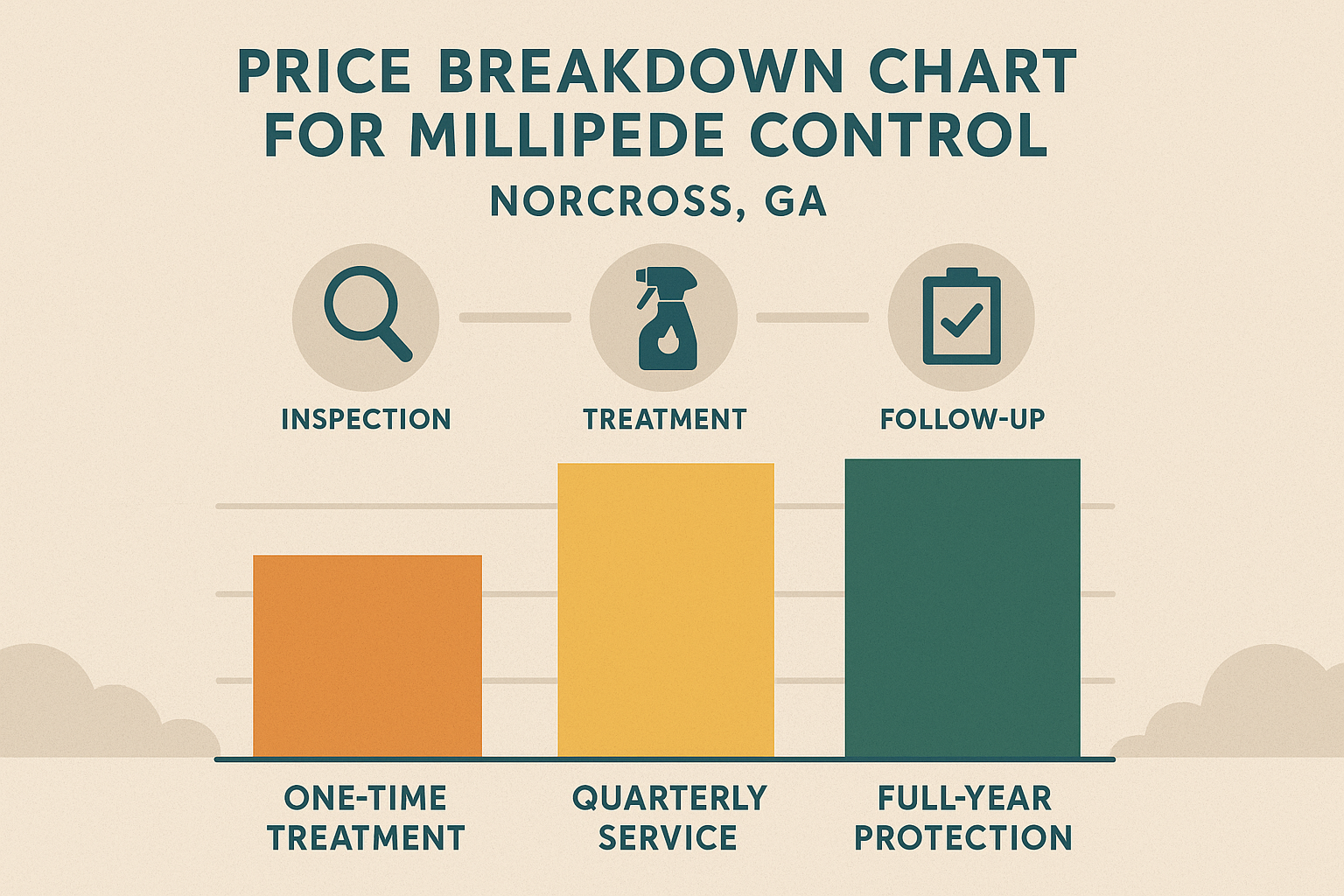
When you’re weighing pest‑control options, the numbers on the invoice matter as much as the effectiveness of the treatment. Below is a clear, side‑by‑side view of the typical expenses you’ll encounter for millipede control in Norcross, Georgia. These figures reflect what most local companies charge, and they give you a solid baseline before you compare quotes.
- Inspection fee (often free) – $0‑$40
- One‑time exterior barrier – $120‑$200
- Interior fogging – $80‑$150
- Quarterly maintenance package – $350‑$500 annually
- Landscaping prep (mulch removal, drainage adjustments) – $50‑$150
Among these options, Anthem Pest’s entry‑level “Protect‑Your‑Home” package is designed to give you the most bang for your buck. The first treatment starts at $149, covering an exterior barrier plus a follow‑up interior fogging. This bundled price often undercuts the combined cost of separate services, especially when you factor in the free initial inspection.
For context, a few Norcross competitors list a standalone exterior barrier at $180‑$250 and interior fogging at $120‑$180. Their quarterly maintenance plans can climb to $600‑$750 per year, largely because they bundle additional landscaping work that many homeowners already handle themselves. By choosing Anthem Pest, you avoid hidden fees and receive transparent, all‑in‑one pricing.
If you’re ready to lock in a price that protects your home without breaking the bank, explore the full details of the “Protect‑Your‑Home” offering on Anthem’s dedicated millipede service page: Anthem Pest – Millipede Control. The site breaks down what’s included in each treatment, the frequency of follow‑ups, and the guarantees that keep your yard and foundation millipede‑free all year long.
How Norcross Prices Stack Up Against Neighboring Areas
When you’re budgeting for millipede control, it helps to see where Norcross fits within the broader regional landscape. The National Pest Management Association’s (NPMA) 2024 regional cost report offers a clear snapshot of what homeowners in the surrounding suburbs are paying for a single‑treatment millipede service.
Regional Averages from the NPMA Report
| City | Average Price (USD) |
|---|---|
| Duluth | $130 |
| Suwanee | $140 |
| Lawrenceville | $125 |
| Norcross | $135 |
According to the data, Duluth’s average sits at $130, Suwanee edges slightly higher at $140, and Lawrenceville is the most economical at $125. Norcross lands comfortably in the middle with an average of $135 per treatment, positioning it as “on‑par” with its neighbors.
Why Those Small Differences Exist
Even a $10‑$20 swing in price can feel significant, but the reasons behind the variation are largely environmental rather than a sign of inflated fees. Here are the key factors that nudge the numbers up or down:
- Soil composition: Sandy or loamy soils, common in Duluth, allow millipedes to move more freely, sometimes requiring a slightly higher chemical load.
- HOA mulch policies: Suwanee’s many homeowners’ associations favor decorative mulch, which can create a moist micro‑habitat that encourages millipede activity, prompting a modest price increase.
- Drainage infrastructure: Lawrenceville benefits from older, well‑drained street grids that naturally limit moisture buildup, reducing the intensity of treatments needed.
Norcross shares a mix of these characteristics—moderate soil moisture, a blend of HOA and non‑HOA neighborhoods, and a drainage system that’s solid but not flawless. That balance explains why its average sits right between the low end of Lawrenceville and the high end of Suwanee.
Bottom Line for Homeowners
The takeaway is simple: regional price differences usually fall within a $10‑$20 range. In real terms, that variance translates to a few extra dollars per treatment—hardly a budget‑breaker for most homeowners. Whether you’re in Norcross or a neighboring city, you can expect transparent, competitive pricing from Anthem Pest Control, backed by the same safe, effective approach to millipede management.
DIY Prevention Tips to Keep Millipedes at Bay
Millipedes love damp, dark places, so the simplest way to make your home less inviting is to eliminate the moisture they thrive on. Below are low‑cost, homeowner‑friendly steps that can cut the need for professional treatments by up to half.
1. Drain the moisture
Start by fixing any leaky gutters or downspouts. Water that pools along the foundation creates the perfect habitat for millipedes. If your yard slopes toward the house, re‑grade the soil so water runs away at least six inches from the foundation. Also, clean out debris from downspouts twice a year to keep flow unobstructed. For more persistent problems, consider installing a French drain. While a typical system costs $800‑$1,200, the CDC’s 2024 home pest prevention guide notes that proper drainage can reduce pest‑related treatments by roughly 50 %.
2. Swap mulch for stone
Wood mulch retains moisture and provides shelter for millipedes. Replacing it with gravel or river rock creates a dry barrier that discourages these critters from venturing close to your home’s perimeter. Stone also reflects sunlight, helping the soil stay drier. A bag of landscaping stone runs about $30‑$50 and lasts for years.
3. Seal entry points
Inspect the foundation for cracks and gaps around utility penetrations. Use a high‑quality exterior caulk or hydraulic cement to seal openings. Apply silicone caulk around windows and where pipes enter the foundation for extra protection. Installing door sweeps on all exterior doors adds an extra layer of protection, preventing millipedes from slipping inside on damp evenings.
4. Trim vegetation
Keep shrubs, vines, and garden beds at least two feet away from the house. Overhanging foliage creates a bridge for millipedes to cross from the soil to your siding. Regular pruning not only reduces that bridge but also improves airflow, drying out the soil around your home. Avoid using heavy mulch near the base; if you must, keep it thin and well‑drained.
CDC. “Home Pest Prevention Guidance.” 2024. https://www.cdc.gov
Quick Cost‑Benefit Comparison
The table below summarizes typical DIY costs and the percentage of treatment reduction you can expect.
| DIY Upgrade | Approx. Cost | Estimated Reduction in Treatment Frequency |
|---|---|---|
| Gutter repair & proper downspout routing | $150‑$300 | 30‑40 % |
| Yard re‑grading (DIY with soil) | $200‑$400 | 20‑30 % |
| French drain installation | $800‑$1,200 | ≈50 % |
| Replace wood mulch with gravel | $30‑$50 per bag | 15‑25 % |
| Foundation sealing & door sweeps | $100‑$250 | 20‑35 % |
| Vegetation trimming (tools & labor) | $50‑$150 | 10‑20 % |
Schedule a semi‑annual walk‑around of your property. Look for new cracks, standing water, or overgrown plants, and address them promptly. Small fixes now prevent larger, costlier infestations later.
By tackling these simple projects yourself, you not only protect your home from millipedes but also lower the long‑term cost of professional pest control. A modest upfront investment in moisture control often pays for itself after just one or two treatment cycles.
Choosing the Right Service Provider – Why Anthem Pest Stands Out
When a millipede invasion threatens the comfort of your Norcross home, the company you call can make the difference between a quick fix and ongoing headaches. Anthem Pest brings a blend of local know‑how and national standards that keeps homeowners feeling safe and informed.
- Local presence. Our Norcross office sits just minutes from most neighborhoods, enabling a 24‑hour response window. If you spot a swarm at dusk, a technician can be at your door before the next morning.
- EPA‑registered products. Every treatment uses chemicals approved by the Environmental Protection Agency and applied according to strict safety protocols, protecting children, pets, and the surrounding environment.
- Transparent “Protect‑Your‑Home” pricing. Plans start at $149, with a clear itemized breakdown so you never wonder where your money went.
- Satisfaction guarantee. We stand behind our work; if millipedes return within the warranty period, we’ll retreat at no extra charge.
- Free on‑site inspection. A licensed technician evaluates your property, provides a written estimate, and explains the recommended steps before any work begins.
Beyond millipedes, Anthem Pest manages termites, mosquitoes, rodents, cockroaches, ants, bed bugs, and many other common invaders. This breadth of expertise means the same trained professionals who know how to seal entry points for ants can also apply proven barriers against millipedes, giving you a single point of contact for all pest concerns.
“Anthem Pest arrived on time, explained every step, and my yard has been millipede‑free for weeks. The pricing was exactly what was promised—no hidden fees.” – Homeowner, Norcross, GA
Anthem Pest also invests in ongoing technician training and uses integrated pest management (IPM) strategies that prioritize prevention over chemicals, reducing the need for repeat visits.
Ready to protect your home? Call us at 877‑371‑8196 or visit anthempest.com to schedule your free inspection. With Anthem Pest, you get a locally responsive team, EPA‑approved solutions, and the confidence that comes from a company that treats every home as its own.
FAQs About Millipede Control Costs
Do I need interior treatment if millipedes are only outside?
Even when millipedes seem confined to your yard, heavy rain or saturated soil can force them indoors in search of dry shelter. A single exterior spray may reduce the outdoor population, but without a light interior barrier, the insects can re‑enter through cracks, vents, and foundation gaps. Anthem recommends a combined approach—outdoor perimeter treatment plus a low‑volume interior application—to block migration and keep your home millipede‑free year‑round.
Are the chemicals safe for pets and children?
All products we use are EPA‑registered and applied according to strict label directions. When applied by certified technicians, the residue levels are well below harmful thresholds for humans and animals. We also follow a safety protocol that includes keeping pets and children out of treated zones for the recommended waiting period—typically 30 minutes to a few hours, depending on the product.
How often should I schedule treatments?
Millipedes are most active during the wet seasons of spring and fall. To stay ahead of the surge, Anthem advises quarterly treatments—once in early spring, once in late spring, once in early fall, and once in late fall. This schedule maintains a protective barrier, reduces the chance of indoor invasions, and aligns with the life cycle of the pest, ensuring consistent control at a predictable cost.
Can I get a discount for multiple services (ants, termites)?
Absolutely. Anthem offers a Multi‑Pest Plan that bundles millipede control with other common services such as ant, termite, or mosquito treatments. By consolidating services, homeowners typically save 10‑15% on each individual program and benefit from a single annual inspection schedule. Call us at 877‑371‑8196 or visit anthempest.com to discuss a customized bundle that fits your budget.
Take Action – Protect Your Home with Anthem Pest
In Norcross, a typical millipede control job costs between $120 and $200 for a one‑time treatment, while an annual maintenance plan runs roughly $350 to $500. Those figures reflect the region’s humid climate, frequent rainstorms, and the extra effort required to keep millipedes from seeking shelter in your foundation. DIY prevention—like removing leaf litter and sealing cracks—helps, but Anthem’s transparent pricing means you know exactly what you’re paying for before any work begins.
Addressing the problem early, before the next heavy rain, gives you a clear budgeting advantage. Early treatment prevents a sudden infestation that could force emergency service calls, which often carry premium fees. By scheduling a proactive visit now, you lock in the lower seasonal rate and avoid the hidden costs of property damage, water intrusion, or extensive chemical applications later in the year.
Anthem Pest brings years of local expertise to every millipede job in Norcross. Our technicians know which treatment products work best against the species that thrive in Georgia’s damp soils, and we apply them using environmentally‑responsible methods that protect pets and children. Every service includes a written guarantee: if millipedes return within the warranty period, we’ll re‑treat at no extra charge. That level of accountability is why homeowners trust our transparent, affordable approach over generic, off‑price alternatives.
Ready for a free, no‑obligation inspection? Call 877‑371‑8196 or visit our website for a personalized quote. Our local technicians will assess your property, explain the treatment plan, and provide a written estimate—so you can make an informed decision without surprise charges.
Take the first step toward a millipede‑free home today. Visit Anthem Pest Control to schedule your inspection and protect your property before the next storm arrives.