Why Mosquitoes Are a Growing Concern in Kennesaw, GA
Climate and geography that invite mosquitoes
Kennesaw sits in the foothills of the Appalachian Plateau, where rolling hills, dense hardwood forests, and a network of creeks create a perfect patchwork of breeding sites. The region’s humid subtropical climate brings hot, sticky summers with average highs in the low 90s °F and nightly temperatures that rarely dip below 70 °F. Those warm nights keep water in storm‑drain basins, birdbaths, and even forgotten flower‑pot saucers from evaporating, providing mosquitoes with the standing water they need to lay eggs. Add to that the annual rainfall of 50 inches, and you have a relentless supply of moisture that sustains mosquito populations from May through October.
Health risks that come with every bite
Every time a mosquito lands on a homeowner’s arm, there’s more than just an itchy bump at stake. In Georgia, the primary disease vectors are the Culex species, which can transmit West Nile virus, and the Aedes species, known carriers of Zika, dengue, and chikungunya. While severe cases are rare, the potential for neurological complications from West Nile or pregnancy‑related birth defects from Zika makes even a single bite a public‑health concern. Moreover, the constant exposure to mosquito saliva can trigger allergic reactions in sensitive individuals, turning a simple backyard dinner into an uncomfortable experience for the whole family.
Economic and lifestyle toll on homeowners
Beyond health, mosquitoes erode the quality of life and even the financial value of a property. Outdoor recreation—whether it’s grilling on the patio, playing catch with the kids, or tending a garden—becomes a gamble when swarms hover nearby. Homeowners often invest in costly repellents, citronella torches, or DIY foggers that provide only temporary relief. Those short‑term fixes can add up to hundreds of dollars each season, diverting funds that could be better spent on home improvements. In neighborhoods where mosquito complaints are frequent, real‑estate agents report slower sales cycles and modestly lower appraisal values, as prospective buyers factor in the ongoing nuisance and potential health risks.
Local data shows the problem is getting worse
City‑wide service logs and neighborhood watch reports paint a clear picture: mosquito‑related complaints in Kennesaw have risen by roughly 38 % over the past five years. The Georgia Department of Public Health’s weekly surveillance maps indicate a steady increase in West Nile-positive mosquito pools in Cobb County, with the highest concentrations consistently recorded in the Kennesaw area. Local homeowners’ associations have responded by filing more requests for municipal fogging and by allocating additional budget for community‑wide larvicide treatments. This upward trend underscores the urgency for proactive, professionally managed mosquito control rather than reactive, piecemeal measures.
Understanding Mosquito Activity Throughout the Year
Mosquitoes follow a four‑stage life cycle—egg, larva, pupa, and adult—that is tightly linked to the climate. In Kennesaw, warm days and humid nights accelerate each stage, allowing populations to explode in just a few weeks. When temperatures consistently stay above 68 °F (20 °C) and humidity hovers around 70 %, eggs hatch faster, larvae develop in standing water, and adults emerge in greater numbers. Conversely, cooler, drier months slow development, forcing mosquitoes into a dormant state or limiting breeding sites.
Temperature isn’t the only driver; moisture is equally critical. A single rainstorm can create dozens of temporary pools—birdbaths, clogged gutters, or even a forgotten flowerpot saucer—each serving as a nursery for larvae. As the summer heat intensifies, those pools evaporate quickly, prompting mosquitoes to seek new water sources, which often leads to higher activity around homes. Understanding this temperature‑humidity dance helps you predict when the insects will be most aggressive.
Below is a month‑by‑month snapshot of typical mosquito activity in Kennesaw, based on historical climate data and local monitoring reports.
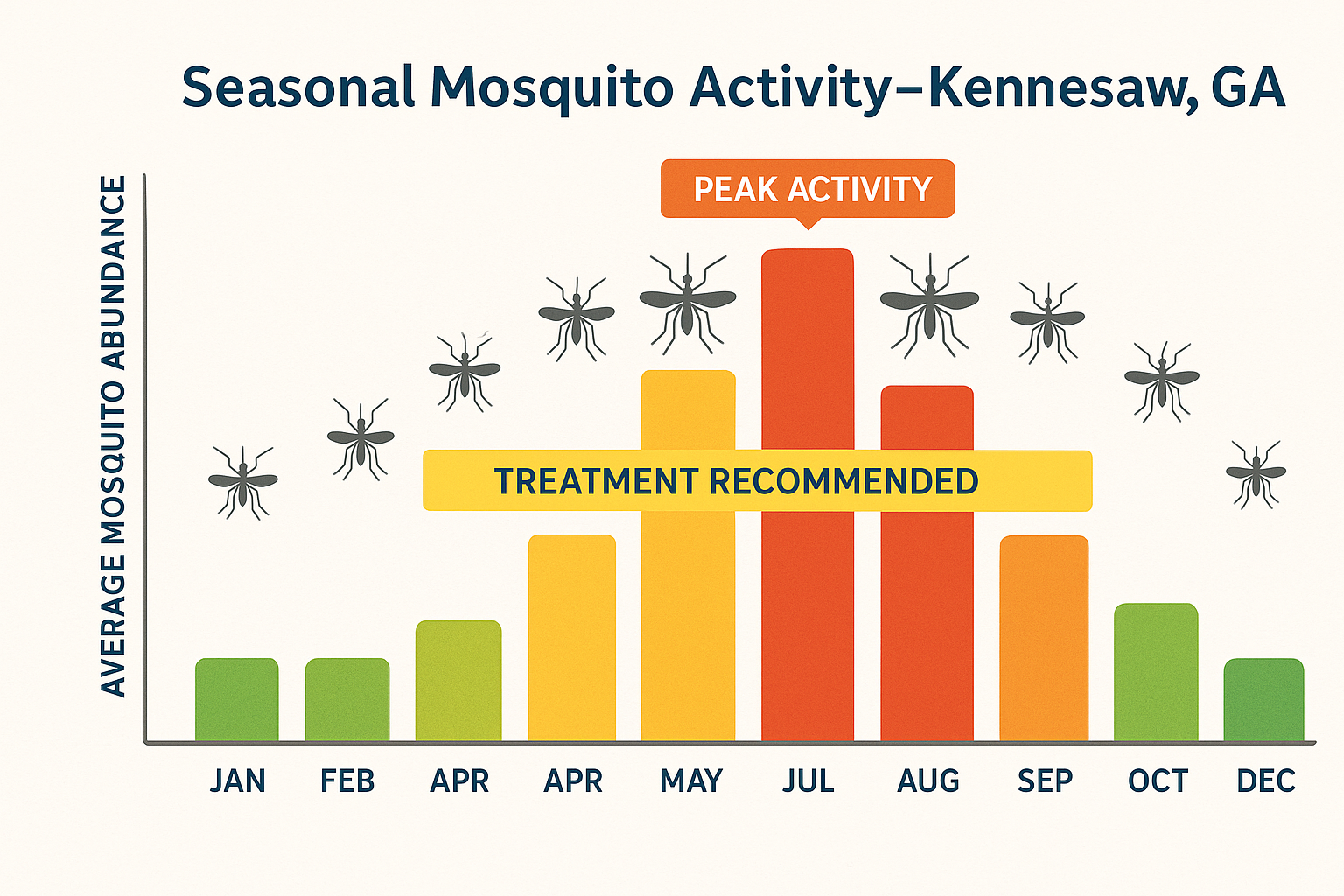
| Month | Activity Level | Recommended Treatment Window |
|---|---|---|
| January | Low | Monitor only; treat if standing water persists |
| February | Low‑Moderate | Pre‑emptive barrier if early warmth appears |
| March | Moderate | First full treatment—focus on perimeter |
| April | High | Second treatment—target breeding sites |
| May | High | Maintenance spray every 4‑6 weeks |
| June | Very High | Continue regular applications; inspect water sources weekly |
| July | Very High | Mid‑season boost—focus on shaded, damp areas |
| August | High | Final summer round; reduce breeding habitats |
| September | Moderate | Wrap‑up treatment before cooler nights set in |
| October | Low‑Moderate | Optional spot treatment if rain is abundant |
| November | Low | Inspect and clean gutters; no chemical treatment needed |
| December | Very Low | Only monitor for unexpected pools of water |
From the chart you can see that the sweet spot for proactive mosquito control in Kennesaw is March through August. The first full‑season treatment in early March establishes a protective barrier before the first wave of adults appears. Follow‑up applications in April and May knock down the emerging population, while a mid‑summer boost (July) tackles the peak “very high” period. By September, a final round helps suppress any late‑season survivors, preventing them from overwintering in hidden water sources.
Quick Tips for Homeowners
- Inspect weekly. Walk your property every 7‑10 days and empty any containers that can hold water—birdbaths, plant trays, pet dishes.
- Clear gutters. Leaf buildup creates stagnant pools; a clean gutter means fewer larval habitats.
- Use a larvicide. If you have a pond or decorative water feature, apply an EPA‑approved larvicide to stop larvae before they become adults.
- Watch the forecast. A stretch of three or more rainy days signals a potential surge; schedule an extra treatment within a week of the rain.
- Partner with professionals. Anthem Pest Control can conduct a thorough site assessment, identify hidden breeding spots, and apply targeted treatments precisely when they’re most effective.
DIY Mosquito Control: What Homeowners Can Do

Identify and Eliminate Breeding Sites
Mosquitoes need only a few ounces of standing water to complete their life cycle. Walk your property each week and look for hidden reservoirs: old tires, plant saucers, clogged gutters, and even birdbaths that haven’t been refreshed in a few days. Empty, scrub, and dry these containers, or turn them upside‑down so water can’t collect. If you have a pond or decorative water feature, add a biological larvicide or a surface film that breaks surface tension, preventing larvae from breathing.
Physical Barriers: Screens, Fans, and Landscape Grading
Keeping mosquitoes out of your living spaces starts with simple barriers. Ensure all windows and doors have tight-fitting screens—repair tears promptly to stop insects from slipping through. Outdoor fans create a breeze that mosquitoes find difficult to navigate; placing a fan on a patio or deck can reduce bites by up to 85 % in that zone. Finally, grade your yard so water flows away from the house. A gentle slope of 2–3 % prevents puddles from forming near foundations, eliminating another potential breeding ground.
Homeowner‑Grade Larvicides and Adulticides
When water cannot be removed, targeted chemicals are the next line of defense. Larvicides such as BTI (Bacillus thuringiensis israelensis) come in granule or liquid form and are safe for pets and humans when applied as directed. Sprinkle granules around the rim of a water feature or mix the liquid with a garden sprayer, following the label’s dosage chart.
Adulticides—typically pyrethrin‑based sprays—are best applied at dusk when mosquitoes are most active. Use a low‑pressure pump sprayer to coat vegetation, shaded areas, and the undersides of eaves. Always wear protective gloves, long sleeves, and eye protection, and keep children and pets indoors until the spray has dried.
Recommended Products and Protective Gear
- Larvicide: Mosquito Dunks (BTI) – granules that dissolve in standing water.
- Liquid Larvicide: Summit Mosquito Control (spinosad) – ideal for birdbaths and rain barrels.
- Adulticide Spray: Ortho Home Defense Insect Killer – ready‑to‑use aerosol for perimeter treatment.
- Protective Gear: Nitrile gloves, long‑sleeve work shirt, safety goggles, and a dust mask (N95 or higher).
Limitations of DIY Methods and When to Call a Professional
Even the most diligent DIY effort can fall short in high‑density neighborhoods or during peak mosquito season (late spring through early fall). If you notice persistent swarms despite regular source elimination, or if you’re dealing with disease‑carrying species such as Aedes albopictus, it’s a clear sign that professional treatment is needed. Experts can apply barrier sprays that penetrate deep into vegetation, treat large water bodies with truck‑mounted misters, and provide ongoing monitoring to keep populations below nuisance levels.
Additionally, homeowners should watch for these warning signs: a sudden increase in bite frequency, visible larvae in multiple water sources, or complaints from neighbors about mosquito activity. In those cases, contacting a licensed pest control provider—like Anthem Pest Control—ensures a comprehensive, EPA‑registered solution that protects both your family and the environment.
Professional Mosquito Barrier Treatments Explained

How Barrier Spray Technology Works
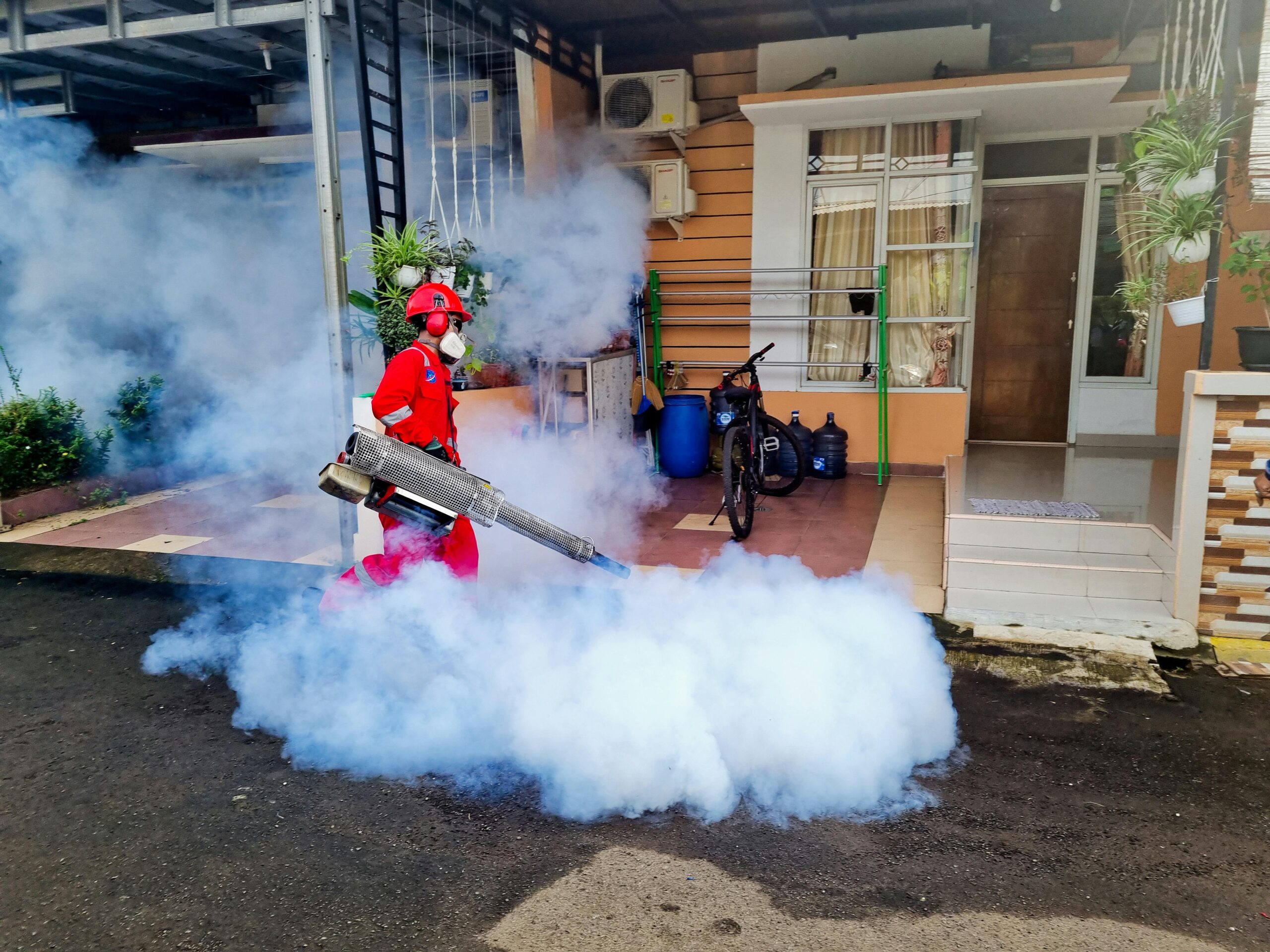
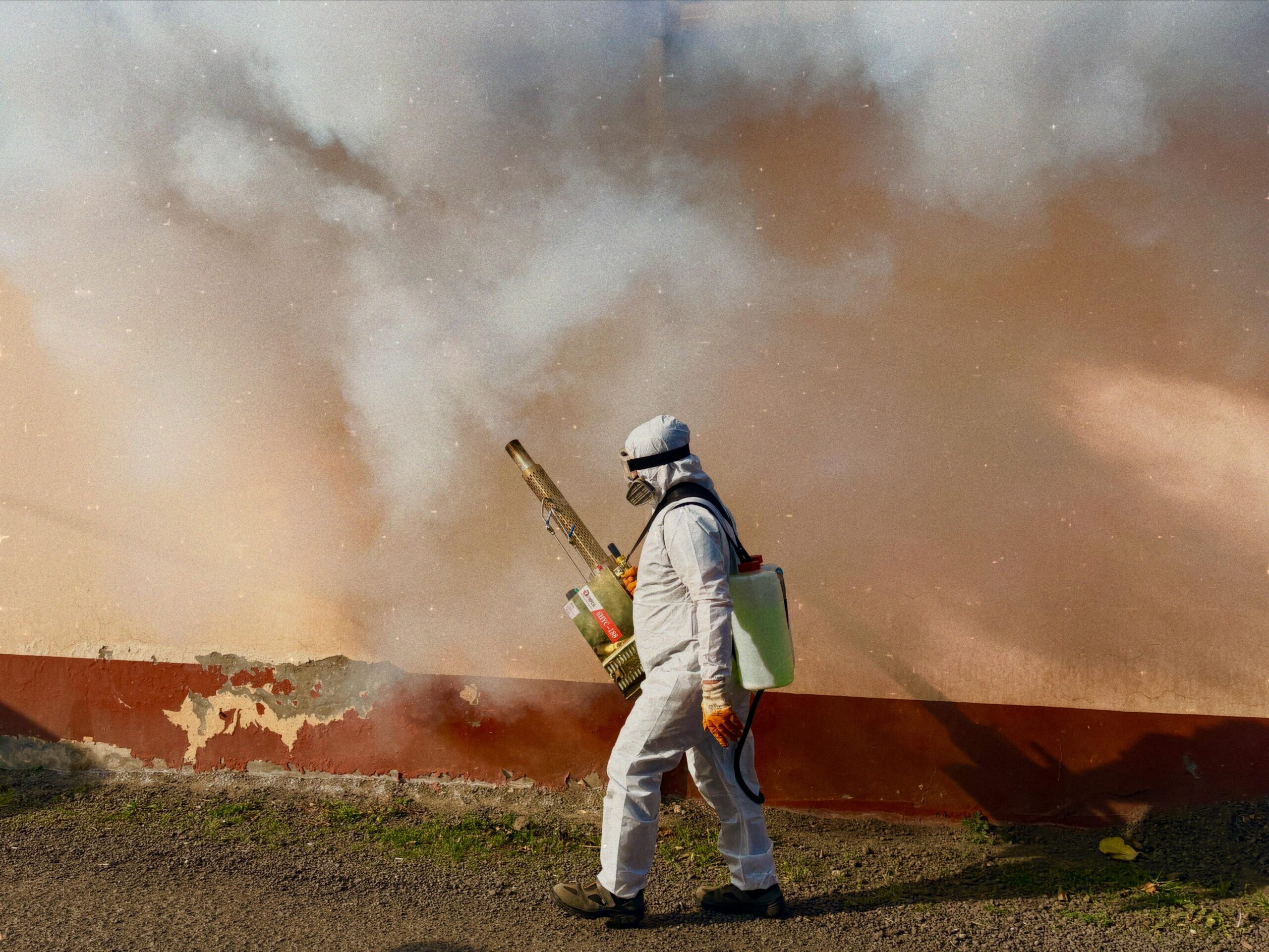
Licensed technicians use residual insecticides that cling to surfaces such as grass, shrubs, and hardscape. These products remain active for weeks, creating an invisible “wall” that kills mosquitoes on contact. In many cases, the application is delivered through Ultra‑Low Volume (ULV) foggers, which produce a fine mist that penetrates dense foliage and hard‑to‑reach corners where mosquitoes rest.
What Professionals Look at Before Spraying
Every property is unique, so a one‑size‑fits‑all approach won’t cut it. Our technicians start with a quick on‑site assessment that includes:
- Property size: Measuring square footage of lawn, garden beds, and perimeter zones.
- Vegetation density: Identifying tall grasses, hedges, and trees that serve as mosquito harborage.
- Micro‑climates: Spotting low‑lying, damp areas that retain moisture longer—prime breeding spots.
These data points guide the choice of product concentration, spray pattern, and coverage depth, ensuring the treatment is both efficient and effective.
Typical Treatment Schedule and Coverage
Most homeowners in Kennesaw see the best results with a monthly treatment during peak mosquito season (late spring through early fall). In milder years, a bi‑monthly schedule may suffice. Each application typically covers up to 10,000 square feet of residential space, though larger yards may require two passes.
Safety First: EPA‑Approved Products and Protocols
We only use insecticides that have earned EPA registration for mosquito control. Before any spray, technicians:
- Wear EPA‑approved personal protective equipment (PPE).
- Notify occupants of the treatment area and advise a brief 30‑minute re‑entry window.
- Apply the product at the recommended dilution rates to avoid over‑application.
- Document the product name, batch number, and application date for full traceability.
This rigorous protocol protects pets, children, and the environment while delivering a consistent kill rate.
Cost‑Benefit Comparison: Professional vs. DIY
| Factor | Professional Service | DIY Approach |
|---|---|---|
| Initial Investment | $90‑$130 per treatment (includes labor, EPA‑approved product, and warranty) | $30‑$60 for a can of over‑the‑counter spray |
| Coverage Area | Up to 10,000 sq ft per visit | Typically 1,500‑2,000 sq ft per can |
| Effectiveness | Residual control lasting 3‑4 weeks | Short‑term knock‑down, re‑application needed weekly |
| Time Commitment | Less than 30 minutes of homeowner involvement | Multiple hours of mixing, spraying, and cleanup |
| Safety Assurance | Licensed techs follow EPA safety protocols; warranty covers accidental exposure | No formal safety oversight; risk of over‑application or improper handling |
| Warranty & Follow‑Up | 30‑day guarantee; free re‑treatment if mosquitoes persist | None; any extra product is an additional cost |
Why the Professional Edge Pays Off
Choosing a licensed service like Anthem Pest Control translates into measurable savings over time. While the upfront cost is higher than a single DIY can, the extended residual action reduces the number of applications you’d need to make yourself. Fewer applications mean less product waste, lower risk of accidental exposure, and more consistent protection throughout the season.
Moreover, our technicians bring local expertise—knowing exactly which mosquito species thrive in Kennesaw’s humid micro‑climates and which products target them most effectively. That knowledge, combined with a documented warranty, offers peace of mind that a DIY spray simply can’t match.
What to Expect on Your First Service
When you schedule a barrier treatment, expect a brief phone consultation to confirm your property details. Our technician will arrive on time, conduct the on‑site assessment, and explain the product’s active ingredients. After the spray, you’ll receive a treatment card summarizing the coverage area, next service date, and safety tips for re‑entry.
With a professional barrier in place, you’ll notice fewer mosquito bites, a calmer outdoor environment for family gatherings, and the confidence that your yard is protected by EPA‑approved science—not just a quick fix.
Comparing Mosquito Control Pricing in Kennesaw
When it comes to protecting your yard from buzzing nuisances, Kennesaw homeowners have four primary options: Mosquito Joe, Community Pest Solutions, Mr. Mister, and Mosquito Authority. Our figures are drawn from a recent local market survey and cross‑checked with the pricing overview on HomeYou. Below you’ll see a side‑by‑side snapshot that breaks down each company’s service type, price range, treatment schedule, and whether they carry eco‑friendly certifications.
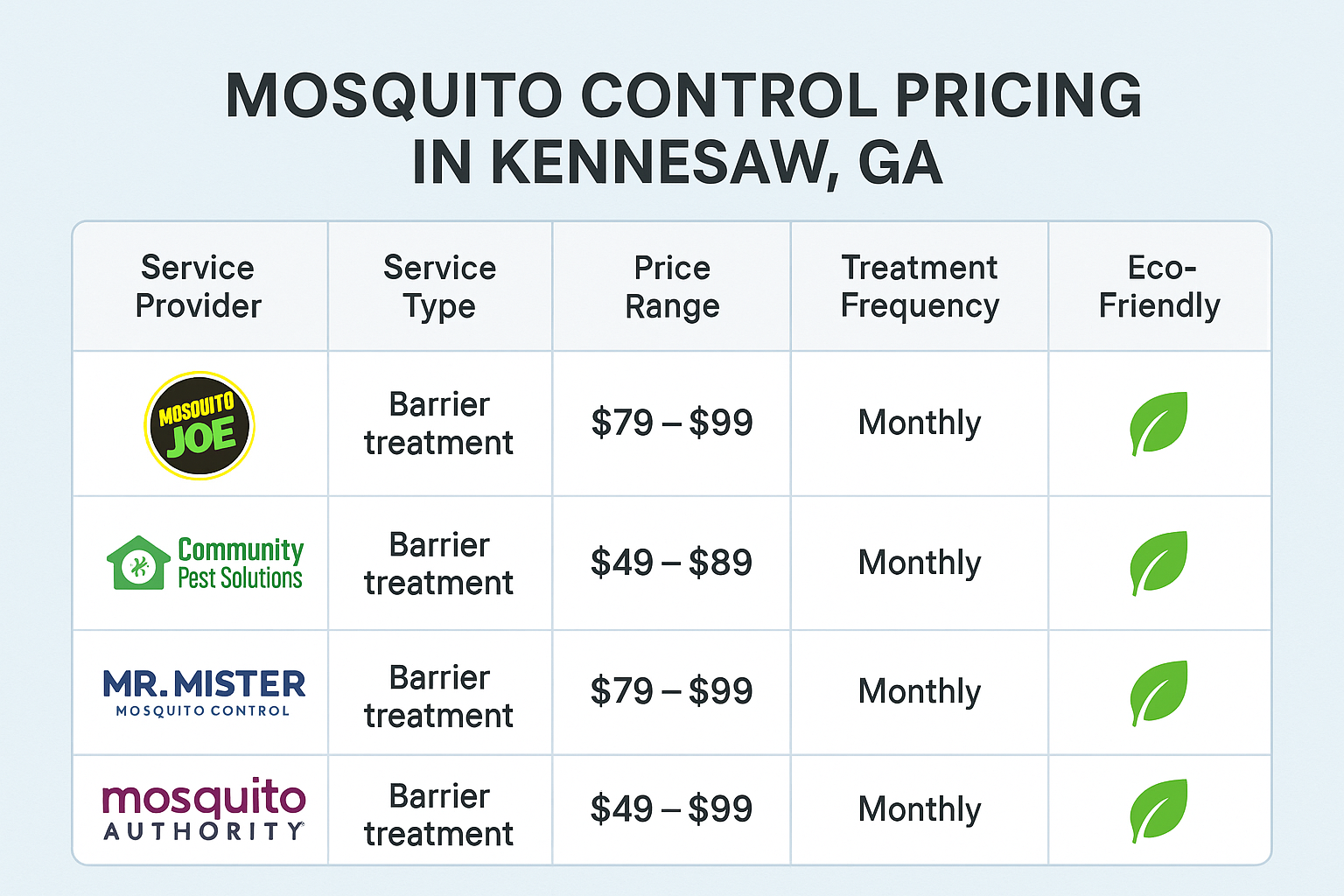
| Provider | Service Type | Price Range (per season) | Treatment Frequency | Eco‑Friendly Certification |
|---|---|---|---|---|
| Mosquito Joe | Seasonal barrier | $150 – $250 | Every 2‑3 weeks (6‑8 treatments) | EPA‑approved low‑toxicity |
| Community Pest Solutions | Single‑treatment + optional add‑ons | $120 – $180 | One‑time application (optional quarterly boost) | Certified Organic® |
| Mr. Mister | Seasonal barrier + larvicide | $180 – $300 | Every 2 weeks (7‑9 treatments) | GreenSeal® approved |
| Mosquito Authority | Customizable plan (barrier + spot‑treat) | $200 – $350 | Weekly during peak season (8‑10 treatments) | None listed |
How to read the infographic
Service type indicates whether the company relies on a single, all‑in‑one spray (ideal for occasional bites) or a seasonal barrier that builds a protective “wall” around your property. Price range reflects the typical cost for a full summer season, not accounting for any promotional discounts. Treatment frequency tells you how often a technician will return—more visits usually mean tighter control but also a higher bill. Finally, eco‑friendly certification highlights any third‑party validation that the products meet reduced‑toxicity or organic standards.
Which provider fits which budget?
If you’re watching every dollar, Community Pest Solutions offers the lowest entry point with a single‑treatment model that can be bolstered later if mosquitoes persist. Homeowners who prefer a “set it and forget it” approach may gravitate toward Mosquito Joe or Mr. Mister, both of which deliver regular barrier applications; the latter adds a larvicide for standing water, a smart move if you have a pond or rain‑filled depressions.
For eco‑conscious families, Community Pest Solutions’ Certified Organic® label and Mosquito Joe’s EPA‑approved low‑toxicity formula are the only options that explicitly guarantee reduced environmental impact. Mosquito Authority commands the highest price but compensates with a highly customizable schedule—perfect for large properties or neighborhoods where mosquito pressure spikes early in the season.
Hidden fees and contract nuances
All four companies typically require a service agreement that locks you in for the entire season. Watch for:
- Setup or activation fees—some providers add a $30‑$50 start‑up charge that isn’t reflected in the headline price.
- Cancellation penalties—early termination can cost anywhere from $75 to a full season’s price.
- Additional treatments—if you request spot‑treatments outside the standard schedule, expect a per‑visit surcharge of $20‑$40.
Reading the fine print before you sign ensures you won’t be surprised by an extra line item on your invoice. In the end, the best choice balances cost, frequency, and environmental peace of mind—just the way a responsible Kennesaw homeowner would expect.
How to Choose the Right Mosquito Control Provider
Finding a mosquito‑control partner isn’t just about the lowest price tag. It’s about trusting a company that can protect your family, pets, and outdoor spaces while respecting the environment you live in. Below is a practical decision‑making framework that lets you compare providers side‑by‑side, spot red flags, and feel confident in your final choice.
Checklist of Key Criteria
- Licensing & insurance: Verify that the company holds a valid Georgia pest‑control license and carries liability insurance. This protects you if an accident occurs during treatment.
- EPA‑approved products: Look for firms that use chemicals registered with the Environmental Protection Agency. EPA approval ensures the products have been evaluated for human safety and effectiveness against local mosquito species.
- Customer reviews & reputation: Scan Google, Yelp, and the Better Business Bureau for consistent five‑star feedback. Pay attention to comments about punctuality, thoroughness, and follow‑up service.
- Guarantee policies: A reputable provider will stand behind their work with a clear warranty—often a “re‑treat if mosquitoes return within 30 days” guarantee.
- Transparent pricing: Look for detailed quotes that break down labor, products, and any optional add‑ons. Hidden fees are a major warning sign.
Questions to Ask During a Consultation
- What specific treatment plan will you customize for my property?
- How many follow‑up visits are included, and what do they cover?
- Can you explain the safety precautions you take for children and pets?
- Do you offer a written service agreement that outlines the schedule and warranty?
- How do you monitor treatment effectiveness over the season?
Why Local Expertise Matters in Kennesaw
Kennesaw’s climate and landscape create a perfect breeding ground for several mosquito species, including Aedes albopictus (the Asian tiger mosquito) and Culex quinquefasciatus. A company that knows the area will:
- Identify the most common breeding sites—such as storm‑drain catch basins, standing water in birdbaths, and shaded lawn edges.
- Tailor treatment timing to the local peak activity months, typically late spring through early fall.
- Recommend habitat‑modification steps specific to Kennesaw neighborhoods, like proper irrigation management and vegetation trimming.
Red Flags to Watch For
- Overly low quotes: Prices that seem too good to be true often mean sub‑standard products or shortcuts in application.
- Lack of a written contract: Verbal agreements leave room for misunderstandings about service frequency, guarantees, and total cost.
- Pushy sales tactics: If a technician pressures you into “extra” services you didn’t request, it’s a sign they prioritize revenue over your actual needs.
- No clear answer about EPA‑approved chemicals: Reluctance to discuss product safety indicates they may be using unregistered or outdated treatments.
How Anthem Pest Control Meets and Exceeds These Criteria
Anthem Pest Control ticks every box on the checklist. All technicians are fully licensed in Georgia and carry comprehensive insurance, giving you peace of mind during each visit. The company exclusively uses EPA‑approved larvicides and adulticides that have been proven effective against Kennesaw’s dominant mosquito species while posing minimal risk to children and pets.
Customer satisfaction is at the core of Anthem’s approach. Their online reviews consistently highlight punctuality, thoroughness, and courteous service. Each homeowner receives a written service agreement that outlines a customized treatment plan, includes a minimum of three follow‑up visits per season, and guarantees a re‑treatment if mosquito activity persists within 30 days.
Because Anthem’s technicians are based in the Atlanta metro area, they possess intimate knowledge of Kennesaw’s micro‑habitats. They’ll walk your yard, pinpoint stagnant water sources, and advise on simple landscaping tweaks that dramatically reduce mosquito breeding potential. Their transparent pricing model breaks down every cost component, so you never encounter surprise fees on your final bill.
Choosing a mosquito control provider can feel overwhelming, but by applying this checklist, asking the right questions, and staying alert to red flags, you’ll quickly narrow the field to companies that truly care about your safety and comfort. With Anthem Pest Control, you get a partner that not only meets the essential criteria but also brings local expertise and a customer‑first mindset to every treatment.
Take Action with Anthem Pest Control Today
Dealing with relentless mosquitoes in Kennesaw can feel like an endless summer battle. While DIY sprays and neighborhood foggers offer temporary relief, they rarely address the breeding sources hidden in your yard or behind your home’s foundation. Kennesaw’s warm, humid summers create perfect breeding conditions, and standing water after a rainstorm can turn a backyard into a mosquito nursery within hours. Professional mosquito control, on the other hand, combines scientific monitoring, targeted barrier treatments, and follow‑up inspections to keep the pests away season after season. That reliability is why savvy homeowners choose a licensed specialist.
Anthem Pest Control builds that reliability on a foundation of safety and transparency. All products are EPA‑registered and applied by certified technicians who respect your family, pets, and the environment. Pricing is presented up front—no hidden fees, no surprise add‑ons. Whether you prefer a standard barrier or an eco‑friendly formulation, the cost is laid out in a clear, itemized estimate, so you know exactly what you’re paying for. Plus, every service comes with a satisfaction guarantee that backs our work.
Ready to experience that peace of mind? Anthem offers a free, no‑obligation quote that outlines the exact treatment plan for your property. Simply call 877‑371‑8196 or fill out the short request form on our website, and a local specialist will schedule a site visit at a time that fits your calendar.
Choosing Anthem means you get more than just a spray. Our technicians:
- Identify and eliminate mosquito breeding hotspots.
- Apply a protective barrier that lasts up to three weeks.
- Provide a satisfaction guarantee—if you’re not happy, we’ll re‑treat at no extra charge.
- Offer ongoing monitoring to adjust treatment as weather patterns shift.
Take action now—protect your home and family from mosquito bites with a trusted partner. Anthem Pest Control delivers customized barrier treatments, eco‑friendly options, and a satisfaction guarantee, all at clear, affordable rates. Call us today at 877‑371‑8196 for your free quote, or visit Anthem Pest Control to learn more. Our online portal lets you book the service in just a few clicks.