Why Mosquitoes Are a Growing Concern in Woodstock, GA
Woodstock sits in the foothills of the Blue Ridge Mountains, where rolling hills, dense woodlands, and numerous water features create a picture‑perfect Southern suburb. Yet those very attributes also make the town a prime breeding ground for mosquitoes. Warm, humid summers combined with the area’s many ponds, creeks, and storm‑drain retention basins provide the perfect standing‑water habitats that female mosquitoes need to lay eggs. Even the occasional misty mornings in the higher elevations keep humidity levels high enough for larvae to develop quickly.
Over the past five years, local weather data and Georgia Department of Public Health reports have shown a noticeable uptick in mosquito activity. Average summer temperatures in Woodstock have risen by roughly 2‑3 °F, extending the season in which mosquitoes can reproduce. At the same time, precipitation patterns have shifted: the town now experiences more frequent heavy rain events, leaving backyard pools, birdbaths, and even clogged gutters full of stagnant water for longer periods. These climate trends translate directly into larger mosquito populations, and residents are reporting more bites earlier in the season and throughout the fall.
For homeowners, the impact goes far beyond an itchy nuisance. Outdoor living spaces—patios, decks, and fire pits—are central to the Woodstock lifestyle, especially during the warm months when families gather for barbecues and neighborhood events. A surge in mosquitoes can force those gatherings indoors, reducing the enjoyment of one of the region’s biggest quality‑of‑life perks. Moreover, persistent mosquito problems have been linked to lower curb appeal, which can affect property values when it comes time to sell. Buyers often view a well‑managed yard as a sign of overall home maintenance, and a visible mosquito issue can raise red flags.
Health concerns add another layer of urgency. While most bites cause only mild irritation, mosquitoes are vectors for diseases such as West Nile virus, Zika, and, in rare cases, Eastern equine encephalitis. The Georgia Department of Public Health has recorded a modest increase in West Nile cases in Cherokee County over the last two years, underscoring that the risk is not merely theoretical. For families with children, seniors, or pets, the stakes are even higher, making proactive control a sensible investment in community well‑being.
What Comes Next?
Understanding the problem is the first step. In the sections that follow, we’ll walk you through:
- Identification: How to recognize the most common mosquito species in Woodstock and what their breeding habits look like.
- Prevention: Simple, homeowner‑friendly actions—like proper yard drainage and strategic landscaping—that cut down breeding sites before they become an infestation.
- Professional Solutions: When DIY measures aren’t enough, how Anthem Pest Control’s targeted treatments and transparent pricing can protect your home and restore your outdoor comfort.
By the end of this guide, you’ll have a clear roadmap for keeping your yard mosquito‑free, protecting your family’s health, and preserving the outdoor lifestyle that makes Woodstock such a wonderful place to call home.
Understanding Mosquito Biology and Health Risks

Life Cycle: Where Control Can Strike
Every mosquito begins as a tiny egg, usually laid on the surface of standing water. Within a few days the egg hatches into a larva, often called a “wiggler,” that feeds on organic matter and microorganisms in the water. The larva then transforms into a pupa, a non‑feeding stage that looks like a tiny mosquito silhouette drifting near the water’s surface. Finally, the adult mosquito emerges, ready to seek a blood meal and reproduce.
Each stage presents a unique control opportunity. Removing or treating stagnant water eliminates breeding sites for eggs and larvae. Biological larvicides or bacterial agents such as Bacillus thuringiensis israelensis (Bti) can target larvae before they become flying adults. Adult control—sprays, foggers, or barrier treatments—focuses on the last stage when mosquitoes are actively seeking hosts.
Common Mosquito Species in Georgia
Georgia’s climate supports three primary genera that homeowners should recognize:
- Aedes – Often called “day biters.” They have black and white markings on their legs and thorax. Aedes albopictus (Asian tiger mosquito) thrives in suburban yards, especially near containers.
- Culex – Known as “night biters.” They are typically brownish with a distinct, blunt abdomen. Culex quinquefasciatus prefers polluted water and is most active from dusk to dawn.
- Anopheles – The “river mosquitoes.” They have long, slender bodies and rest at an angle on surfaces. Though less common in urban Woodstock, they can appear near marshy areas.
Identifying the species helps tailor treatment. For example, Aedes control emphasizes eliminating small containers, while Culex control often requires treating larger, shaded water bodies.
Health Threats Linked to Mosquitoes
Mosquitoes are more than a nuisance; they are vectors for serious diseases. In Georgia, the most relevant threats include:
| Disease | Primary Mosquito Vector | Local Prevalence |
|---|---|---|
| West Nile Virus | Culex quinquefasciatus | Annual cases reported by the Georgia Department of Public Health, with peaks in late summer. |
| Zika Virus | Aedes aegypti & Aedes albopictus | Rare but possible; travelers returning from endemic regions can introduce the virus. |
| Dengue Fever | Aedes aegypti & Aedes albopictus | Occasional travel‑related cases; local transmission is low but monitored. |
While severe outbreaks are infrequent, the presence of competent vectors means the risk is never zero. Prompt control reduces the chance that an infected mosquito will bite a family member.
Bite Patterns: When and How Mosquitoes Attack
Each species has its own feeding schedule. Aedes mosquitoes are most aggressive during daylight hours, especially early morning and late afternoon. Culex species prefer the darkness of dusk and night, often entering homes through open doors or windows. Anopheles tend to bite in the evening, targeting exposed skin while people are outdoors.
Understanding these patterns helps homeowners anticipate bites. For instance, wearing long sleeves during dusk can deter Culex, while eliminating daytime standing water curbs Aedes activity.
Personal Protection: The First Line of Defense
Even with professional treatments, personal protection remains essential. Effective measures include:
- Applying EPA‑registered repellents containing DEET, picaridin, or oil of lemon eucalyptus to exposed skin.
- Wearing light‑colored, tightly woven clothing that covers arms and legs.
- Using window and door screens in good repair to keep adult mosquitoes out of the home.
- Avoiding scented lotions or perfumes that can attract hungry females.
These steps work hand‑in‑hand with Anthem Pest Control’s treatment plans, creating a layered defense that minimizes both nuisance bites and disease risk.
Identifying and Eliminating Mosquito Breeding Hotspots
Mosquitoes need just a few millimeters of still water to complete their life cycle. A single cup of rain‑filled debris can become a nursery for hundreds of larvae, and those larvae turn into the buzzing, itchy pests that drive homeowners to the patio with a swat. By removing or treating these micro‑habitats, you cut the population at its source—before the adults even have a chance to bite.

Why Standing Water Is the Primary Breeding Ground
Female mosquitoes lay their eggs on the surface of stagnant water. The eggs hatch within 24‑48 hours, and the larvae feed on organic matter, bacteria, and algae. In as little as a week, a single female can produce 100–200 offspring. Because the larvae are aquatic, any container that holds water for longer than 48 hours becomes a potential hatchery. That’s why even the smallest puddle, a forgotten flower‑pot saucer, or a clogged gutter can turn your yard into a mosquito factory.
Top Five Residential Hotspots
- Birdbaths – Often refilled without changing the water, they provide a perfect shallow basin.
- Clogged gutters – Leaves and debris trap rainwater, creating hidden pools along the roofline.
- Flower‑pot saucers – Water that accumulates under pots can go unnoticed for weeks.
- Pool covers – When a pool is covered for the off‑season, rain collects underneath.
- Backyard ponds – Decorative ponds are beautiful, but without circulation they become breeding hotspots.
Weekly Inspection Checklist
- Walk the perimeter of your home and note any depressions where water pools after a rain.
- Check birdbaths, pet water dishes, and kiddie pools; empty and scrub them with a brush.
- Inspect gutters and downspouts; clear leaves and ensure water flows freely.
- Lift all plant saucers, flower pots, and trays; dump standing water and rinse them.
- Examine pool covers and pond liners for trapped water; remove excess moisture or add a pump.
- Look under decks, porches, and patio furniture for hidden puddles; dry or level the area.
- Record any persistent spots and schedule a deeper treatment if they reappear.
DIY Water‑Treatment Options
| Product | How It Works | Safety Notes |
|---|---|---|
| BTI (Bacillus thuringiensis israelensis) tablets | Releases a bacterium that kills mosquito larvae but is harmless to fish, pets, and humans. | Follow label dosage; keep tablets dry until use. |
| Liquid larvicides (e.g., methoprene) | Disrupts larval development, preventing them from maturing into adults. | Wear gloves; avoid direct contact with skin and eyes. |
| Natural oils (e.g., citronella, neem) | Creates a thin film that suffocates larvae. | May need re‑application after heavy rain; test on small area first. |
For birdbaths, a single BTI tablet per 5‑gallon container is usually sufficient. Apply liquid larvicides to larger ponds according to the product’s instructions, and stir gently to distribute. Natural oils work best in shallow saucers where a thin coating can cover the entire surface.
When to Call a Professional
DIY methods are effective for containers under 10 gallons, but larger or hard‑to‑reach water features demand professional attention. Call Anthem Pest Control if you notice any of the following:
- Standing water deeper than 2 inches that cannot be drained manually.
- Complex pond systems with fish, waterfalls, or filtration equipment.
- Persistent mosquito activity despite regular DIY treatments.
- Gutter systems that require ladder work or roof access for thorough cleaning.
- Any situation where you’re unsure about the safety of chemical applications.
Our technicians bring EPA‑approved larvicides, specialized pumps, and the expertise to treat large surfaces without harming your landscaping or pets. A professional visit not only eliminates existing larvae but also establishes a long‑term barrier, giving you peace of mind throughout the mosquito season.
Comparing Professional Mosquito Control Options and Pricing
When it comes to keeping your Woodstock yard mosquito‑free, most homeowners quickly discover that DIY sprays and home‑made traps rarely match the consistency of a professional service. Trained technicians know the right time of day to apply treatments, can target hidden breeding sites, and use EPA‑approved products that protect pets and children while delivering lasting results. In short, a licensed provider offers both higher efficacy and greater safety than a do‑it‑yourself approach.
Side‑by‑Side Provider Comparison
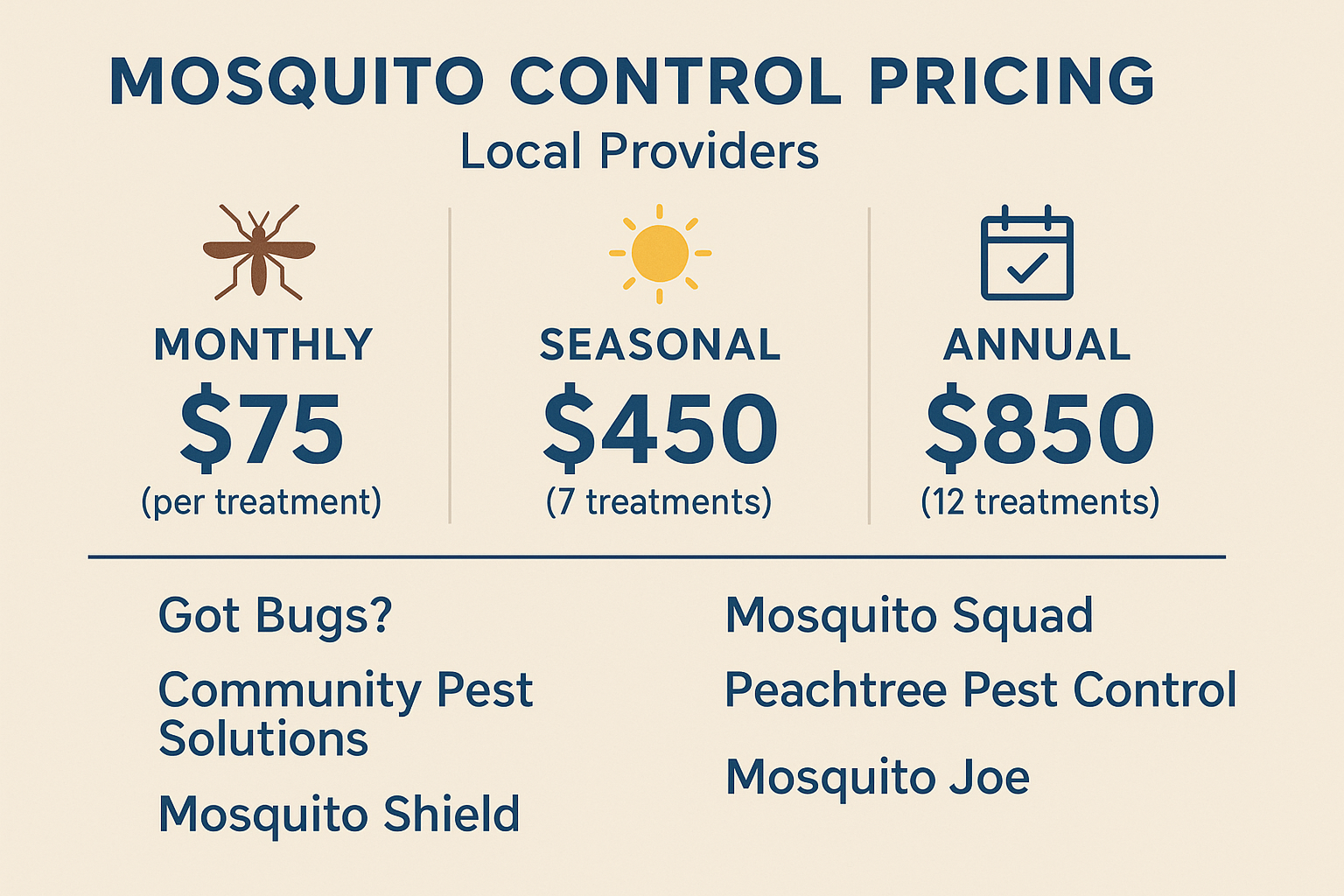
| Provider | Pricing (Monthly / Seasonal / Annual) | Application Frequency | Core Treatment Technology |
|---|---|---|---|
| Got Bugs? | $45 / $180 / $650 | Monthly (April–October) | Barrier spray + larvicide |
| Community Pest Solutions | $55 / $210 / $750 | Bi‑monthly (May–Sept) | Barrier spray only |
| Mosquito Shield | $60 / $240 / $860 | Monthly (April–Nov) | Barrier spray + misting system |
| Mosquito Squad | $50 / $190 / $700 | Monthly (May–Oct) | Barrier spray + larvicide |
| Peachtree Pest Control | $48 / $185 / $680 | Bi‑monthly (April–Sept) | Barrier spray only |
| Mosquito Joe | $52 / $200 / $720 | Monthly (May–Oct) | Barrier spray + misting system |
Provider Snapshots
Got Bugs?
Pros: Competitive monthly rate, includes both barrier spray and targeted larvicide, strong online reviews for prompt service. Cons: Seasonal package can be pricey for short‑term homeowners; limited coverage for larger properties.
Community Pest Solutions
Pros: Bi‑monthly schedule reduces chemical exposure, good reputation for friendly technicians. Cons: No larvicide component, which may leave hidden breeding sites untreated; slightly higher annual cost.
Mosquito Shield
Pros: Offers a misting system for continuous protection, highest coverage area, excellent customer satisfaction scores. Cons: Premium price reflects advanced equipment; installation may require a one‑time setup fee.
Mosquito Squad
Pros: Consistent monthly visits, includes larvicide, widely available across Georgia, solid 4‑star rating. Cons: Seasonal pricing can spike during peak summer months; some customers note occasional missed appointments.
Peachtree Pest Control
Pros: Affordable bi‑monthly plan, straightforward barrier spray, responsive customer service. Cons: Lacks larvicide or misting options, which may be less effective in heavily wooded yards.
Mosquito Joe
Pros: Combines barrier spray with misting for layered protection, transparent pricing, strong local brand recognition. Cons: Monthly visits can feel frequent for smaller yards; price sits in the mid‑range, not the lowest.
How Anthem Pest Control Stacks Up
Anthem Pest Control takes a slightly different approach by offering transparent, customizable plans that let homeowners choose exactly how many applications they need per season. Our standard Seasonal Shield package starts at $49 per month (or $180 for the full April‑October window), which includes a barrier spray paired with a low‑dose larvicide—mirroring the most effective combos from the competition while keeping the price below the market average.
What sets Anthem apart is the flexible scheduling. If you own a smaller property, you can opt for bi‑monthly visits and still receive full coverage, saving up to 20 % compared with a strict monthly plan. Our technicians also perform a brief property assessment during the first visit, identifying any standing water or dense vegetation that could serve as breeding hotspots. This proactive step is often omitted by larger chains, resulting in fewer “surprise” mosquito spikes later in the season.
Customer feedback consistently highlights our clear communication and no‑hidden‑fees policy. Unlike some providers that tack on extra charges for “premium” treatments, Anthem’s quote includes all necessary products and labor. For homeowners who value both effectiveness and budgeting peace of mind, our model delivers a balanced blend of coverage, safety, and affordability.
For a deeper look at one of the competitors, visit the Got Bugs? pest control Woodstock page, which was used as a reference for the pricing data above.
Seasonal Mosquito Activity in Woodstock and Timing Your Treatment
Woodstock sits in a transitional climate zone where hot, humid summers meet mild, damp springs. Those temperature swings are the engine that drives mosquito populations. When daytime highs consistently climb above 70°F (21°C) and nighttime humidity stays above 60%, female mosquitoes begin laying eggs at a rapid pace. Conversely, a sudden cold snap or prolonged dry spell can stall development, causing the familiar “boom‑and‑bust” pattern you notice each year.
Understanding the Local Mosquito Calendar
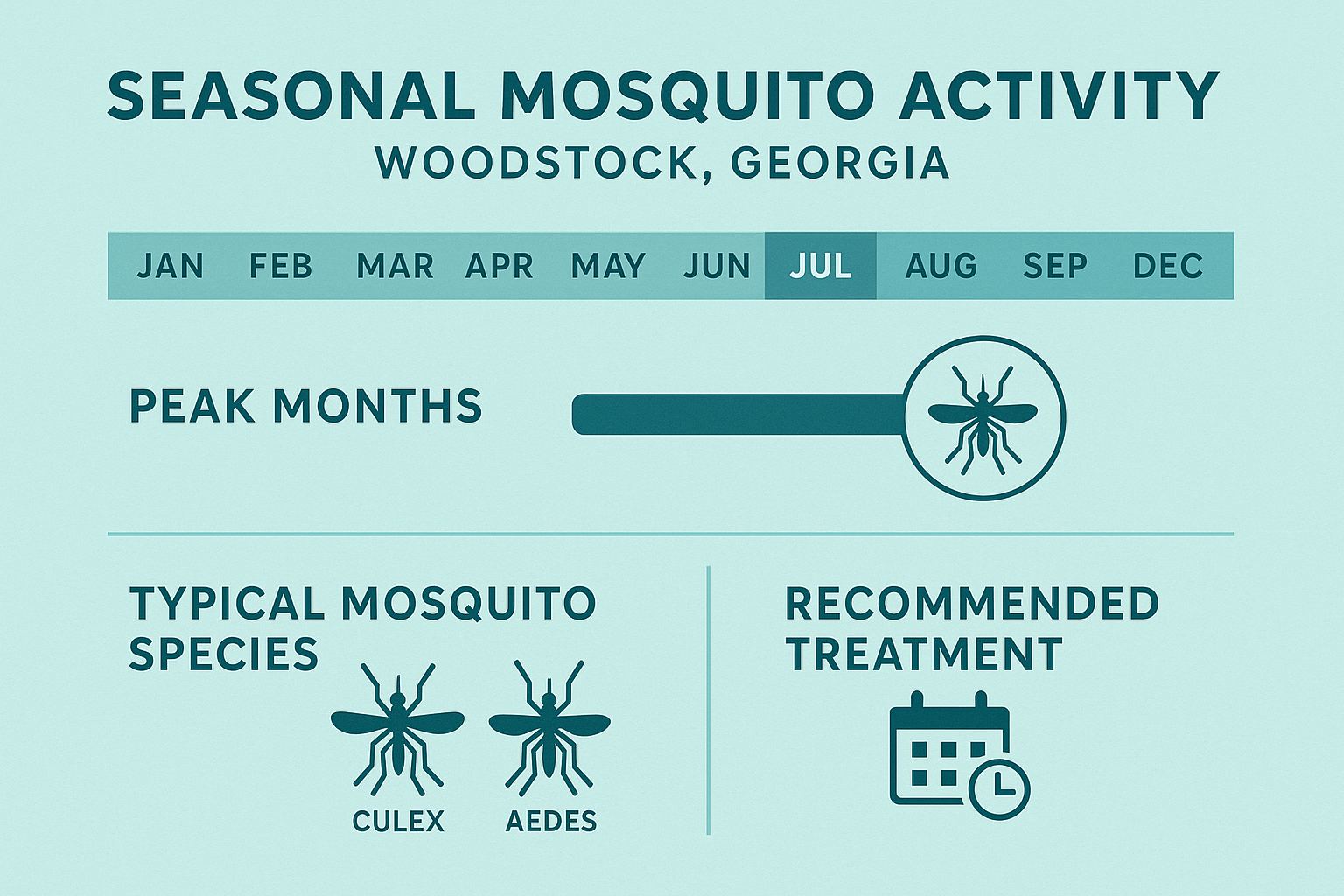
| Month | Dominant Species | Peak Activity | Recommended Treatment Window |
|---|---|---|---|
| March–April | Aedes albopictus (Asian tiger) | Low‑moderate | Late March – Early May |
| May–June | Culex quinquefasciatus (Southern house) | Rising | Mid‑May – Early July |
| July–August | Aedes vexans (Northern house) | High | Mid‑July – Late August |
| September–October | Culex pipiens (Northern house) | Moderate | Early September – Mid‑October |
| November–February | Overwintering adults | Very low | No routine treatment needed |
The chart above condenses years of local monitoring into a simple visual guide. Notice how Aedes species dominate the early spring, while Culex mosquitoes take over once the heat settles in. This shift matters because each group has a slightly different breeding habitat and bite timing, which influences when a professional treatment will hit hardest.
Why Early‑Season Treatment Pays Off
Applying a larvicide or barrier spray in late spring—just as the first Aedes eggs begin to hatch—creates a “head‑start” against the summer surge. Early‑season products target mosquito larvae in standing water before they become biting adults. By the time July rolls around, you’ll already have a reduced adult population, meaning fewer bites for your family and less pressure on your backyard ecosystem.
Another benefit is cost efficiency. Most pest companies, including Anthem Pest Control, bundle early‑season applications with a follow‑up in midsummer. Treating early often reduces the number of total visits required, translating to a lower overall bill without sacrificing protection.
Adjusting Frequency in Wet or Dry Years
Woodstock’s rainfall can be a wild card. In an unusually wet spring, temporary pools appear in yards, parks, and storm drains, giving mosquitoes extra breeding sites. In those cases, a second early‑season treatment—typically two weeks after the first—helps keep larval numbers in check. Conversely, a dry spring limits natural water sources, so a single early application may be sufficient, with a focus on targeted “hot spots” like pet water bowls or clogged gutters.
Monitoring local weather reports is a simple way to stay ahead. If the forecast predicts more than 1 inch of rain per week for three consecutive weeks, schedule a supplemental visit. If you’re in a drought, concentrate on eliminating standing water yourself and let the professional barrier last a bit longer before the next scheduled service.
Coordinating Homeowner Prevention with Professional Schedules
Professional treatments work best when you do a little prep work. Before the technician arrives, empty or treat any bird baths, wading pools, and plant saucers. Trim overgrown vegetation that can shelter adult mosquitoes. These steps not only improve the efficacy of the chemicals but also reduce the amount of product needed, keeping costs down.
After each service, keep a short log of any new standing water you notice and share it with your pest control provider. Anthem’s technicians can then adjust the next visit’s focus—whether that means a spot‑treatment in a backyard low‑lying area or an extra perimeter spray around a newly installed deck.
By aligning the natural rhythm of Woodstock’s mosquito life cycle with timely, data‑driven treatments, you’ll enjoy a bite‑free summer without surprise expenses. Remember: the earlier you act, the easier it is to stay ahead of the swarm.
Protect Your Home with Anthem Pest Control
Woodstock’s warm, humid summers create the perfect breeding ground for mosquitoes, turning a simple evening on the patio into a battle against itchy bites and the risk of diseases such as West Nile virus and Zika. Beyond the health concerns, swarms of buzzing insects can ruin outdoor gatherings, keep you inside, and even affect sleep when they find their way indoors. That’s why taking mosquito control seriously isn’t a luxury—it’s a necessary step to protect your family’s comfort, health, and peace of mind.
The Three Pillars of Effective Mosquito Management
Successful mosquito control rests on a straightforward, three‑step framework. By following these pillars, you eliminate the problem at its source rather than merely masking the symptoms.
- Identification: Knowing which mosquito species are present helps determine their breeding habits and the most vulnerable times of day.
- Source Elimination: Removing standing water, clearing clogged gutters, and trimming overgrown vegetation cut off the places where mosquitoes lay eggs.
- Professional Treatment: Targeted applications of EPA‑approved, low‑toxicity products create a protective barrier that lasts weeks, keeping adult mosquitoes from returning.
Why Choose Anthem Pest Control?
When it comes to safeguarding your Woodstock home, Anthem Pest Control brings a blend of expertise, safety, and transparency that few competitors can match.
- Safe, EPA‑registered products: Our treatments are formulated to protect people, pets, and the environment while delivering proven mosquito kill rates.
- Transparent pricing: No hidden fees—just a clear, upfront quote that outlines exactly what you’ll receive, whether you opt for a single seasonal spray or year‑round coverage.
- Locally trained technicians: Our crew members live and work in the Woodstock area, so they understand the unique climate patterns and common breeding sites that affect our community.
- Satisfaction guarantee: If you’re not happy with the results, we’ll re‑treat at no extra cost, because your peace of mind is our top priority.
Take the First Step Toward a Mosquito‑Free Summer
Imagine stepping onto your porch at dusk, hearing the crickets, not the relentless buzz of mosquitoes. With Anthem’s flexible plans—whether you need a single pre‑season treatment, a series of summer sprays, or comprehensive year‑round protection—you can tailor a program that fits your budget and lifestyle. Our free, no‑obligation quote lets you see exactly how we’ll protect your home, so you can make an informed decision without any pressure.
Ready to enjoy your backyard without the buzz? Call Anthem Pest Control today at 877-371-8196 for a free quote and discover how our expert team can keep mosquitoes—and other pests—out of your home. Visit Anthem Pest Control to learn more about our seasonal and year‑round plans.