Hidden Damage: Why Moth Control Matters in Lawrenceville

Imagine opening your pantry to find a sack of flour speckled with tiny, web‑like tunnels, the sweet scent replaced by a faint, musty odor. Or pull a favorite sweater from the closet, only to discover dozens of irregular holes where a carpet moth has feasted on the fibers. Those silent invasions turn everyday staples into waste and cherished garments into trash.
Beyond the obvious loss, unchecked moths can contaminate food, inviting bacterial growth that threatens your family’s health. A single infestation can force you to discard dozens of pantry items, costing hundreds of dollars, while moth‑damaged upholstery may require costly re‑upholstering or replacement. The hidden expense quickly adds up, turning a minor nuisance into a serious financial and health burden.
Our purpose here is simple: give Lawrenceville homeowners a clear, data‑driven cost guide for every moth‑control option, so you can weigh the price of prevention against the price of damage.
In the pages that follow we’ll walk you through:
- How to identify pantry and clothing moths
- Seasonal activity patterns in Lawrenceville
- Treatment options – chemical, non‑chemical, and preventive
- Detailed cost breakdown for each method
- DIY versus professional services
- Frequently asked questions
- Anthem Pest’s proven process
- Tips for choosing the right provider
- Next steps and a quick quote invitation
Stay with us, and you’ll see the exact numbers—average treatment fees, per‑square‑foot estimates, and hidden costs—so you can make an informed decision before the next moth season hits your home.
Know the Enemy: Pantry vs. Webbing Moths
Indian Meal (Pantry) Moth
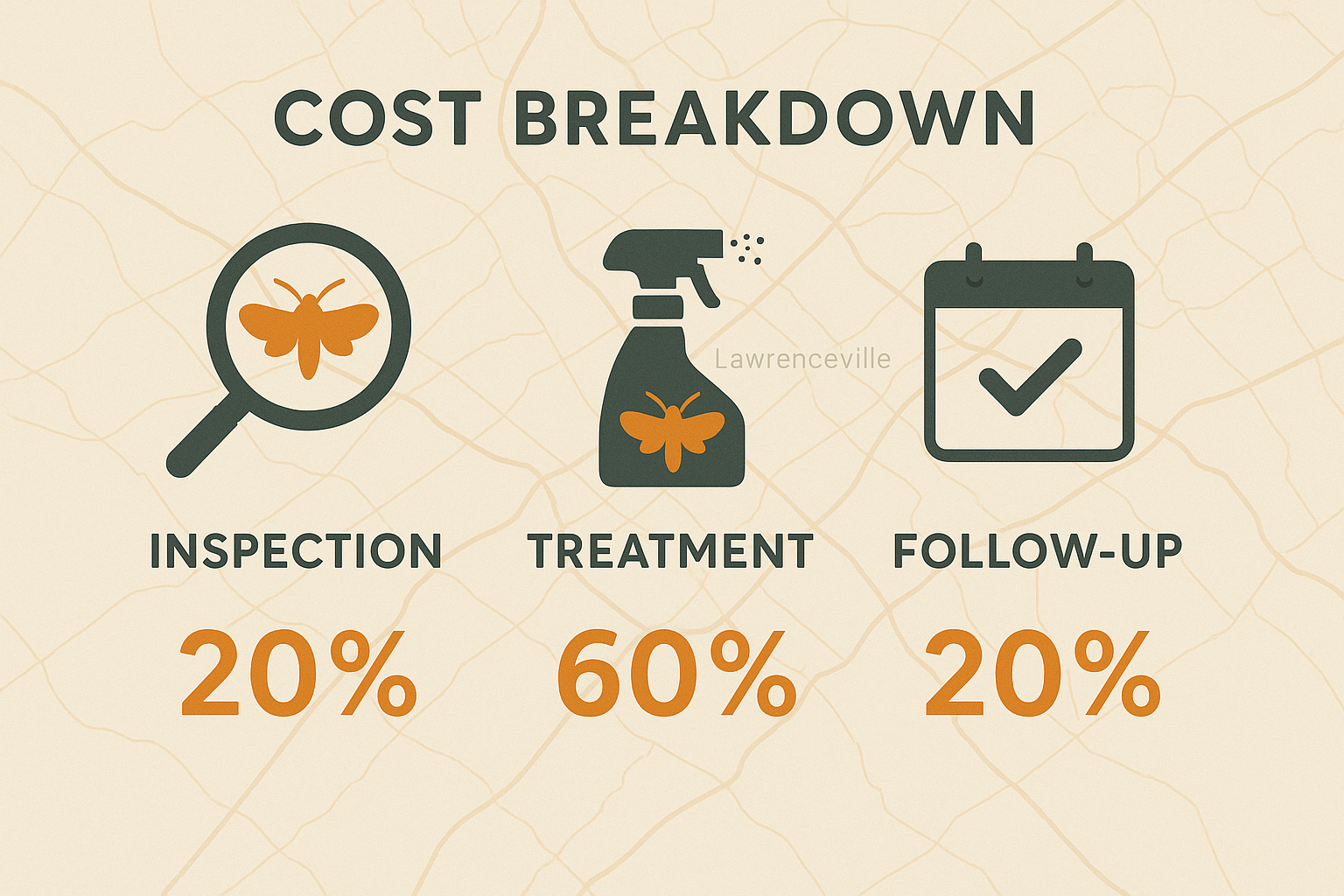
The Indian meal moth (Plodia interpunctella) thrives in the warm, dark corners of kitchens. Its life cycle is rapid: an adult lives only a week to mate, then lays 100‑300 eggs on food surfaces. Within 2‑3 weeks the eggs hatch into creamy‑white larvae that spin silken tunnels as they chew through grains, cereals, nuts, and dried fruit. You’ll often see the tell‑tale webbing coating the tops of flour bags or the edges of cereal boxes, and tiny caterpillars lurking inside the product.
Typical signs of an infestation include:
- Fine, white webbing on pantry shelves or inside packaging.
- Larvae or “caterpillars” moving in the food.
- Small, tan‑brown moths fluttering near open food containers.
Webbing Clothes Moth
Unlike its pantry cousin, the webbing clothes moth (Tineola bisselliella) prefers natural fibers—wool, cashmere, fur, and even feathers. Adults are tiny, about 1 cm long, and are attracted to darkness, where they lay eggs directly on fabric. The larvae, which are the real culprits, spin silk tubes that look like tiny white tunnels on the surface of garments. As they feed, they leave irregular, round holes and a faint, greasy odor.
Key indicators of a clothes‑moth problem are:
- Silk tubes or “cocoons” on sweaters, blankets, or stored fabrics.
- Small, irregular holes in natural‑fiber clothing.
- Adult moths fluttering near closets or drawers, especially in cooler months.
According to the EPA, roughly 12 % of Georgia homes encounter pantry moths each year, making early detection essential for homeowners in Lawrenceville.
Real‑World Example
When the Martinez family in nearby Brookwood opened a new bag of flour, they noticed tiny, moving specks and a faint web on the bag’s rim. A quick inspection revealed dozens of larvae crawling through the flour. Concerned about spreading the infestation, they called Anthem Pest Control. Our technician confirmed a pantry moth outbreak, treated the affected area with a targeted, low‑toxicity aerosol, and provided a preventive plan that included airtight storage containers and a follow‑up inspection.
Quick tip: What to look for in your pantry and closets
- Pantry: White webbing on grain products, larvae in flour or cereal, adult moths near food.
- Closets: Silky tubes on wool items, small holes in fabrics, moths attracted to dark corners.
- Action: Seal food in glass or heavy‑plastic containers; store off‑season clothing in airtight bags; vacuum regularly and discard any infested items.
When and Where Moths Strike in Lawrenceville
Peak Season
In Lawrenceville, moth activity reaches its zenith from June through September. The town’s warm, humid summers create the perfect breeding ground for pantry and carpet moths, allowing eggs to hatch and larvae to feed rapidly. During these months you’ll notice an uptick in webbing, shed skins, and the faint, musty odor that signals an infestation. The trend aligns with the NPMA 2023 Southeast seasonal trend chart [NPMA 2023], which shows a distinct summer spike for moths across the region.
Geographic Hotspots
Not every neighborhood experiences the same level of pressure. Homeowners in Brookwood, East Lake, Downtown Lawrenceville, and the historic West Lawrenceville district report the highest number of moth sightings each summer. These areas share two common factors: older housing stock with more wood‑frame construction and a higher concentration of food‑storage spaces that attract pantry moths. If you live in one of these pockets, it’s wise to schedule a pre‑summer inspection before the first heat wave arrives.
Case Study: East Lake
One East Lake family faced a repeat infestation that threatened their pantry staples. After spotting a few tiny moths in late May, they called Anthem Pest Control for an early‑season assessment. Our technician identified hidden larval nests in the pantry ceiling and installed targeted pheromone traps while recommending airtight storage practices. By catching the problem early, the family avoided a full‑scale loss of flour, grains, and spices—saving both money and the frustration of a contaminated kitchen.
These patterns underscore the importance of timing and location when planning moth control. Homeowners in the identified hotspots should consider a proactive treatment window in late May or early June, just before the seasonal surge. Remember, data can shift year to year, so always verify the latest 2024 figures from NPMA before finalizing your pest‑management calendar.
From Traps to Targeted Sprays: Your Treatment Toolbox
Pheromone Traps
Pheromone traps are the “fly‑paper” of moth control—except they lure adult moths with a scent that mimics a female’s mating signal. Once the male follows the pheromone, it flies into a sticky surface and can’t escape. For best results, place traps where moths are most active: near closets, pantry shelves, and along baseboards. A good rule of thumb is one trap per 150 sq ft of living space, positioned at eye level and away from direct sunlight or strong air currents. Homeowners typically see a 60‑70 % reduction in adult activity after a two‑week period, especially when traps are checked and replaced weekly.
Residual Insecticide Sprays
When moths have already infested fabrics or stored food, a residual spray can provide the knockout punch that traps alone can’t deliver. EPA‑approved products such as bifenthrin or permethrin are formulated to cling to surfaces for weeks, creating a protective barrier that kills moths on contact. Coverage rates average about 1 gal per 1,000 sq ft, so a standard 1‑gallon can treat roughly a 2‑bedroom apartment. When combined with pheromone traps, these sprays achieve >85 % success in eliminating a population, according to the CDC data sheet. Apply the spray to cracks, crevices, baseboards, and the undersides of shelving—areas where larvae hide.
Integrated Pest Management (IPM)
IPM is the smart, long‑term strategy that stitches together monitoring, sanitation, traps, and selective sprays. Start with a thorough inspection to locate breeding hotspots. Reduce food sources by vacuuming crumbs, storing dry goods in airtight containers, and laundering infested fabrics in hot water. Deploy pheromone traps to monitor adult activity, then follow up with a targeted residual spray in the most affected zones. By rotating methods and keeping the environment hostile to moths, IPM often prevents re‑infestation for six months or more, while minimizing chemical use.
Safety Considerations
- Pet‑friendly options: Look for products labeled “low toxicity” or “pet safe.” Many pyrethroid‑based sprays are safe for cats and dogs when dry, but always keep pets out of treated rooms for at least two hours.
- Child‑safe application times: Schedule treatments when children are away from home—ideally during school hours or early evenings. Allow a 30‑minute ventilation period before re‑entering.
- Required PPE for homeowners: Wear disposable gloves, a dust mask (N95 or higher), and long sleeves when handling sprays. If you’re uncomfortable applying chemicals yourself, call a licensed technician from Anthem Pest Control to ensure proper application and compliance with local regulations.
Breaking Down the Bill: What You Pay For
When you call Anthem Pest Control for moth treatment in Lawrenceville, the last thing you want is a surprise on the invoice. That’s why we lay out every charge before we lift a single spray can. Understanding the individual line items helps you compare quotes, budget for a seasonal plan, and feel confident that you’re getting exactly what you need for your home.
Typical Fees You’ll Encounter
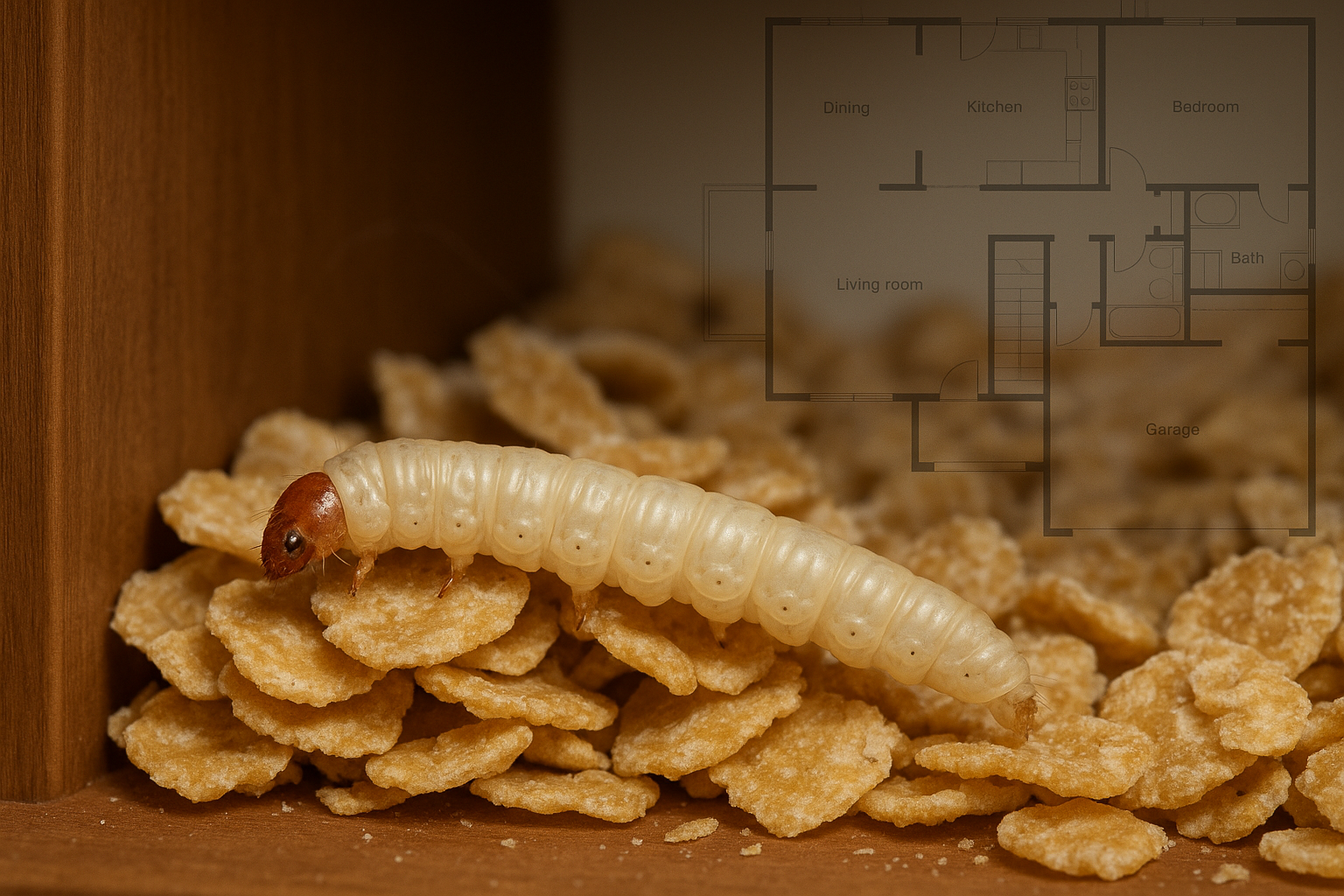
- Initial inspection: $75‑$120 – A certified technician evaluates the extent of the infestation, identifies hotspots, and recommends a treatment strategy.
- Standard treatment (per 1,000 sq ft): $150‑$250 – Includes application of EPA‑registered moth‑control products, safety equipment, and labor.
- Follow‑up visit: $80‑$130 – Ensures the treatment took hold, addresses any remaining activity, and answers homeowner questions.
- Optional annual preventive contract: $300‑$500 – Locks in a yearly schedule, often at a discounted rate, and provides priority service for any future outbreaks.
These ranges reflect local market conditions, the severity of the problem, and whether you choose a one‑time fix or an ongoing protection plan. For example, a larger home may need two treatment passes per visit, which can push the per‑thousand‑square‑foot cost toward the higher end of the spectrum.
Sample Cost Table for a 1,800‑sq‑ft Home
| Service | Quantity | Unit Cost (range) | Estimated Cost |
|---|---|---|---|
| Initial inspection | 1 | $75 – $120 | $97.50 |
| Standard treatment | 2 × (1,800 sq ft ÷ 1,000 sq ft) = 3.6 units | $150 – $250 per unit | $540 – $900 |
| Follow‑up visit | 1 | $80 – $130 | $105 |
| Total Estimated Cost | $742.50 – $1,097.50 | ||
The table uses mid‑range figures for the inspection and follow‑up, while the treatment column shows the full possible span. Homeowners who opt for the lower end of the treatment range (often when only a single moth species is present) could see a total near $740. Those dealing with multiple species or heavily infested areas may approach $1,100.
Our pricing aligns with national benchmarks. The EPA’s moth‑control cost guide and the National Pest Management Association (NPMA) average pricing both cite similar ranges for inspection, treatment, and follow‑up services across the United States.
Because regional factors—such as local labor rates and Georgia‑specific regulations—can shift numbers slightly, we always encourage homeowners to verify the 2024 Georgia average moth‑control cost from the NPMA before signing a contract. Doing so ensures you’re comparing apples to apples and getting the best value for your peace of mind.
DIY Kits vs. Pro Exterminators: Which Saves Money?
Deciding whether to grab a shelf‑stable kit from the hardware aisle or call a licensed exterminator is more than a simple price check. The upfront numbers can look similar at first glance, but the hidden costs—repeat applications, missed infestations, and potential damage—often tip the scales.
DIY moth‑control kits typically sit between $20 and $60 per package. They usually contain a pheromone trap, a spray concentrate, or a powder that you mix and spread yourself. Professional services, on the other hand, start around $300 for a basic treatment of a small home and can climb to $800 for larger properties or comprehensive plans that include monitoring and preventative barriers.
When it comes to getting the moths out, the numbers are stark. Industry data from the National Pest Management Association shows DIY attempts succeed roughly 45 % of the time, while a trained technician with a licensed product hits the mark about 90 % of the way.
The comparison at a glance:
| Option | Price range (per treatment) | Success rate | Warranty |
|---|---|---|---|
| DIY kit | $20 – $60 | ~45 % | None |
| Professional service | $300 – $800 | ~90 % | 12‑month retreatment guarantee |
Consider a typical 1,800‑sq‑ft home in Lawrenceville. Buying a $45 DIY kit and re‑applying it twice a year costs $90, but with only a 45 % success rate the infestation often returns, leading to another purchase or a call to a pro—adding $150‑$200 in extra chemicals and labor. A single professional treatment at $550 includes a 12‑month warranty, a follow‑up visit if moths reappear, and a guarantee that the technician will address any residual damage. Over a year, the pro option can save $150‑$250 when you factor in fewer repeat purchases and the peace of mind from a backed‑by‑contract service.
Warranty coverage is another differentiator. Most DIY kits offer no guarantee; if the product fails, the homeowner bears the full cost of a second purchase. Professional plans typically include a written warranty covering retreatment at no extra charge within a specified period, often 30‑day or 12‑month windows. Follow‑up visits are scheduled proactively, allowing the technician to spot early signs of reinfestation before it spreads to clothing, stored food, or structural wood.
Liability also leans toward the pro side. A homeowner applying chemicals without proper training risks inhalation, skin irritation, or accidental damage to furnishings. Licensed technicians are insured and follow state‑mandated safety protocols, shifting the risk away from you. In short, while the DIY price tag looks attractive, the lower success rate, lack of warranty, and potential health liabilities often erode any initial savings.
Your Moth‑Control Questions Answered
Are treatments safe for pets?
All Anthem Pest Control moth‑control products carry an EPA‑approved safety rating for indoor use. We select formulations that are low‑toxicity and specifically labeled “pet‑safe when used as directed.” After an application, we advise keeping cats, dogs, and other indoor pets out of the treated area for at least 2 hours (or the interval listed on the product label). This short pet‑free window ensures the chemicals have settled and any residual vapors are well below harmful levels.
How long before results are seen?
Most homeowners notice a reduction in adult moth activity within 3‑5 days of the initial treatment. The active ingredients target both the adult insects and their larvae, breaking the life cycle quickly. If you still spot a few moths after the first week, it’s usually because the infestation was larger than expected; a follow‑up visit will finish the job.
How often should I schedule follow‑ups?
During the peak moth season (late spring through early fall), we recommend a maintenance visit every 3‑6 months. This interval keeps any new eggs or larvae from establishing a fresh population. If you discover a new infestation—say, after moving in or after a pantry clean‑out—schedule a targeted retreat as soon as possible, then resume the regular 3‑6‑month schedule.
Do I need to discard infested food?
Yes. Moths lay eggs directly on food sources, and larvae can contaminate the product from the inside out. Discard any grains, cereals, flour, nuts, or dried fruit that show signs of webbing, larvae, or adult moths. Seal untouched, uninfested items in airtight containers to prevent future invasions. Properly disposing of compromised food removes the primary food source and speeds up the effectiveness of our treatment.
Local Expertise: Anthem Pest’s Proven Process
When a moth infestation threatens your closets or pantry, Lawrenceville homeowners need a solution that’s fast, safe, and backed by local knowledge. Anthem Pest delivers exactly that with a three‑step protocol that has been refined for the Georgia climate and the specific species that linger in our homes. Moth damage can be costly, especially when it silently eats through fabrics and stored grains.
Step 1 – Thorough Inspection
Our certified technicians start with a detailed walk‑through of your property. Using flashlights, moisture meters, and a keen eye for tell‑tale signs—such as webbing, larvae, or damaged fabric—they pinpoint where moths are breeding and identify any structural conditions that encourage them. Because we’re licensed in Georgia, we understand the local building styles that can trap humidity and create perfect hatcheries for pantry and clothing moths.
Step 2 – Targeted EPA‑Approved Treatment
Once the hotspots are mapped, we apply a concentrated, EPA‑approved formulation that attacks both adult moths and their larvae without endangering your family or pets. Our products are selected for effectiveness against the Plodia interpunctella (Indian meal moth) and Tineola bisselliella (common clothes moth) that are most common in Lawrenceville. The treatment is confined to the identified areas, minimizing exposure while delivering rapid knock‑down. We also seal entry points and advise on proper ventilation to reduce future infestations.
Step 3 – Preventive Monitoring with Quarterly Visits
Elimination is only half the battle; prevention is the other. We schedule quarterly follow‑up visits to re‑inspect, re‑treat if needed, and advise on simple homeowner habits—like proper food storage and regular vacuuming—that keep moths at bay. Our 30‑day guarantee means if you see activity again within a month, we’ll return at no extra charge.
“Anthem Pest showed up on time, explained every step, and had my pantry moths gone within a day. The techs were friendly, and I felt safe knowing they used EPA‑approved chemicals.” – Jenna L., West Lawrenceville
Ready to protect your home with a trusted local partner? Call us now at 877‑371‑8196 or visit our moth‑control service page to schedule your inspection.
What to Look for in a Moth‑Control Contractor
When you’re ready to protect your home from moth damage, the right contractor can make all the difference. Use the checklist below to separate seasoned professionals from fly‑by‑night operators.
1. State licensing
Georgia requires all pest‑management firms to hold a valid license from the Georgia Department of Agriculture. Ask to see the license number and verify it on the agency’s online portal. A licensed technician signals that the company meets state‑mandated training and safety standards.
2. Insurance and BBB rating
Proper liability insurance protects you if a treatment causes accidental damage. Request a certificate of insurance and confirm it’s current. Additionally, check the contractor’s Better Business Bureau profile; a rating of A‑ or higher, with few unresolved complaints, adds a layer of credibility.
3. Online reputation
Read recent reviews on Google, Yelp, and the company’s own testimonial page. Look for consistent praise about punctuality, thoroughness, and follow‑up service. Beware of a pattern of negative feedback about hidden fees or ineffective treatments.
4. Transparent pricing and written agreements
Reputable firms provide a detailed quote before any work begins. The estimate should list labor, product costs, and any optional add‑ons. Insist on a written service agreement that outlines the scope of work, payment schedule, and cancellation policy.
5. Warranty, follow‑up, and EPA‑approved products
Ask about the length and coverage of the warranty—most quality moth‑control plans include a 30‑day guarantee on effectiveness. A solid contractor will schedule a follow‑up inspection to ensure the infestation is gone. Finally, confirm that all chemicals used are registered with the EPA and approved for residential use in Georgia.
By ticking each item off this list, you’ll feel confident that the contractor you choose will deliver safe, effective, and lasting moth control for your Lawrenceville home.
Take Action Today – Secure Your Home with Anthem Pest
Quick Recap
- Moth identification: Small, fuzzy insects often seen near pantry items or in closets, leaving silken webs and tiny holes in fabrics.
- Seasonal risk: Populations surge in warm summer months and linger into early fall, especially in Lawrenceville’s humid climate.
- Treatment options: DIY traps and pheromone lures work for minor sightings, but professional baiting, structural sprays, and targeted fabric treatments deliver lasting control.
- Realistic cost expectations: Expect a professional moth‑control service to range from $150 to $300 for a typical single‑family home, with variations based on infestation size and treatment complexity.
Acting quickly with a licensed technician stops moths before they turn pantry staples into waste and delicate clothing into ragged holes. A timely professional intervention saves you from the hidden expense of food loss, fabric replacement, and the hassle of repeated DIY attempts.
If you’re ready for a hassle‑free, guaranteed solution, let Anthem Pest handle the work for you. Our local experts understand Lawrenceville’s unique challenges and will tailor a plan that fits your budget while protecting both food stores and wardrobes.
Call us today at 877‑371‑8196 for a free, no‑obligation estimate and discover how affordable peace of mind can be.