Understanding Mouse Infestations in Cumming, GA

When you hear the faint squeak of a mouse at night, it’s often a sign that Mus musculus—the common house mouse—has found a foothold in your home. This tiny rodent is a master of adaptation, thriving in environments that offer shelter, warmth, and easy access to food. In Cumming, Georgia, those conditions are practically built into the landscape, making mouse infestations a frequent homeowner concern.
Why Cumming Is a Mouse Magnet
The climate in Cumming is mild enough to keep indoor temperatures comfortable year‑round, eliminating the harsh winters that push many rodents farther south. Combine that with the region’s abundant food sources—outdoor grills, bird feeders, pet dishes, and even improperly stored pantry items—and you have a veritable buffet for mice. Additionally, many neighborhoods feature older housing stock with gaps around foundation walls, utility penetrations, and aging siding. Those tiny entry points are perfect for a mouse that can squeeze through openings as small as a dime.
Health Risks You Can’t Ignore
Beyond the nuisance factor, mice pose genuine health threats. The U.S. Environmental Protection Agency (EPA) warns that rodents can contaminate surfaces with urine, feces, and saliva, creating pathways for bacteria and viruses. The Centers for Disease Control and Prevention (CDC) specifically cites diseases such as Hantavirus, salmonellosis, and leptospirosis that are directly linked to mouse exposure. Even a brief encounter can trigger allergic reactions or asthma attacks in sensitive individuals.
Property Damage That Adds Up Fast
Mouse damage often goes unnoticed until it becomes costly. Their relentless gnawing habit targets:
- Electrical wiring—raising the risk of short circuits or fires.
- Insulation and drywall—creating gaps that reduce energy efficiency.
- Stored food and pantry items—leading to spoilage and waste.
- Structural components such as joists and beams—compromising the integrity of your home over time.
Because mice chew continuously to keep their teeth from overgrowing, the damage can spread quickly throughout concealed spaces, turning a small problem into a major repair bill.
The True Cost of Doing Nothing
Procrastination doesn’t just keep the mice around—it multiplies the expense. An unchecked infestation can lead to escalating repair costs: replacing chewed wiring, fixing insulation gaps, and restoring contaminated food storage areas. Moreover, if a mouse‑borne disease spreads to family members or guests, liability concerns emerge, especially for landlords or homeowners who rent out part of their property. In short, the price of inaction often far exceeds the modest investment in professional mouse control.
Understanding why mice are drawn to Cumming and recognizing the health and property risks they bring is the first step toward a proactive solution. By addressing the problem early, homeowners can protect both their family’s well‑being and their wallet.
Spotting Mice – Identification and Warning Signs

What a house mouse looks like
The most common rodent invading homes in Cumming is the house mouse (Mus musculus). Adults measure 2.5–4 inches from nose to tail tip, with a body length of about 2–3 inches and a tail roughly the same length as the body. Their fur ranges from light gray to brown, often with a faint pinkish hue on the ears and nose. The ears are large and rounded, and the whiskers extend well beyond the snout, giving them a keen sense of touch.
Key signs of mouse activity
Even if you haven’t seen a mouse, the evidence it leaves behind is hard to miss. Look for the following clues:
- Droppings: Small, dark, rice‑shaped pellets about ¼ inch long. Fresh droppings are glossy; older ones become dull and crumbly.
- Gnaw marks: Parallel grooves on wood, plastic, or wiring. Mice gnaw constantly to keep their teeth from overgrowing.
- Shredded paper and nesting material: Mice collect soft fibers, tissue, or insulation to build nests in hidden corners.
- Faint squeaking: A high‑pitched, intermittent squeak is often heard at night when mice are active.
- Odor: A musky, ammonia‑like smell may develop in severe infestations.
Locating entry points
Preventing future invasions starts with sealing the ways mice slip inside. Common entry points include:
- Gaps around utility pipes and cables, especially where they penetrate walls.
- Openings around vents, exhaust fans, and dryer ducts.
- Cracks in the foundation or brickwork, even those as small as a pencil width.
- Improperly fitted door sweeps or missing weather‑stripping on exterior doors.
Use a flashlight and a thin piece of cardboard to probe suspicious seams; a slight scrape or movement indicates a potential opening.
Seasonal surge periods
Mouse activity spikes during the cooler months of October through March when rodents seek warmth and food inside homes. The increased visibility during these periods makes early detection even more critical. For a deeper dive into seasonal patterns, see Part 3.
Quick self‑assessment checklist
Use this short checklist to gauge whether you might have a mouse problem:
- Do you notice droppings in cupboards, pantry shelves, or under appliances?
- Are there gnaw marks on furniture, wiring, or stored boxes?
- Is there shredded paper or fabric tucked away in corners?
- Do you hear faint squeaks, especially at night?
- Have you inspected exterior walls, pipe penetrations, and door sweeps for gaps larger than ¼ inch?
If you answered “yes” to two or more items, it’s time to call a professional. Anthem Pest Control can confirm the infestation, locate hidden entry points, and design a safe, affordable treatment plan tailored to Cumming homeowners.
Seasonal Patterns and Prevention Tips for Cumming
Our local mouse‑activity chart shows a clear rhythm: numbers climb steadily from July, peak between September and November, then dip sharply as temperatures freeze. The surge in late summer and early fall reflects mice taking advantage of abundant outdoor food and warm, dry conditions, while the brief lull in deep winter is a false sense of security—mice simply retreat indoors, ready to repopulate when the thaw arrives.
Monthly Activity Trends
During July and August, mice are busy foraging in gardens and compost piles, often slipping through small gaps in siding or foundation. September brings the first wave of indoor migrations as daylight shortens and food sources become scarcer outdoors. October and November are the hottest months for indoor nesting; you’ll hear more scurrying in walls, attics, and crawl spaces. By December, activity slows, but hidden colonies remain, waiting for the spring melt to expand again.
Spring: Cracks Open
As snow melts and the ground thaws, foundation cracks widen and new gaps appear around utility penetrations. Mice exploit these openings to move from the yard into basements and crawl spaces.
- Inspect the foundation for hairline cracks; seal with a high‑quality silicone or polyurethane caulk.
- Check and repair any gaps around pipe sleeves, vent pipes, and electrical conduits.
- Move firewood and stored items at least 18 inches off the ground to discourage sheltering.
- Trim back any low‑lying shrubs that touch the house, eliminating bridge pathways.
Summer: Food Hunt
Warm nights and abundant outdoor food draw mice into decks, sheds, and garages. Open doors, uncovered trash cans, and loose screens become invitation cards.
- Store pet food, birdseed, and garden produce in airtight containers.
- Keep garbage cans tightly sealed and clean lids regularly.
- Repair or replace damaged window screens and door sweeps.
- Maintain a clean yard by removing fallen fruit, nuts, and spilled birdseed.
Fall: Harvest & Attic Access
With the first frosts, mice rush to secure warm shelter. Attic vents, soffit gaps, and roof eaves become prime entry points.
- Seal attic vents with mesh screens that are small enough to block rodents.
- Inspect soffits and roof overhangs for gaps; use steel wool backed with caulk for a durable seal.
- Clear leaf piles, mulch, and debris away from the house foundation.
- Store seasonal decorations in sealed containers, not under the eaves.
Winter: Indoor Survival
When temperatures plunge, mice settle deep inside walls, basements, and crawl spaces, feeding on stored pantry items and insulation.
- Conduct a thorough pantry sweep: discard cracked jars, store dry goods in glass or heavy‑plastic containers.
- Install door sweeps on all exterior doors to block low‑level entry.
- Check basement and crawl‑space vents; cover with fine metal mesh.
- Run a quick visual inspection of insulation for gnaw marks; replace compromised sections promptly.
Early intervention is key. Addressing vulnerabilities before the September surge can cut the mouse population in half, saving you time, stress, and costly treatment later. A proactive approach—sealing, cleaning, and landscaping—creates a hostile environment that discourages mice from ever setting foot inside your home.
For a visual snapshot of these seasonal trends, refer to the infographic below. It’s a handy checklist you can print and post in your garage or utility room.
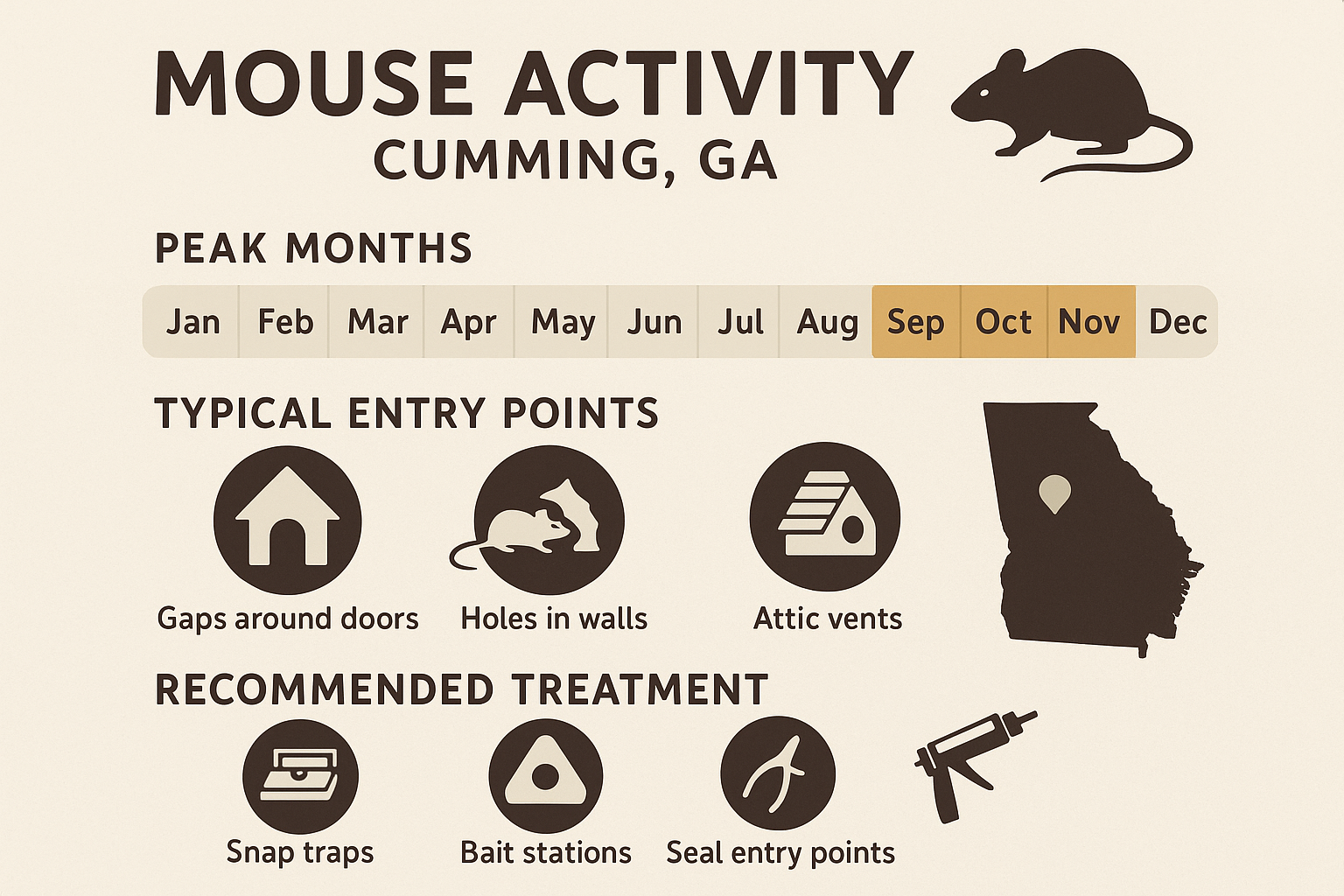
Need a quick reference? View the Seasonal Mouse Activity Infographic and keep it handy during each season’s inspection.
Treatment Options and Pricing for Mouse Control
What’s on the menu?
When it comes to mouse control in Cumming, Georgia, homeowners typically choose between three main pathways: a one‑time professional extermination, a quarterly maintenance plan, or a DIY trap kit. Each route tackles the problem from a slightly different angle—some focus on immediate knock‑down, while others aim for long‑term prevention. Understanding the strengths and trade‑offs of each option helps you match the service to your budget, comfort level, and the severity of the infestation.
One‑time professional extermination
A single visit from a licensed pest‑control technician usually includes a thorough inspection, strategic placement of baits, and targeted treatment of entry points. This method is ideal for severe infestations that demand rapid results.
- Effectiveness: High—technicians use EPA‑approved baits and can access hidden voids that DIY solutions miss.
- Labor: Minimal for you; the pros handle all setup and follow‑up.
- Safety: Professional handling reduces risk of accidental exposure to toxic baits.
- Long‑term results: Good, but without a follow‑up plan, mice may return once the bait depletes.
- Cost: Typically $150‑$300 for a single treatment in the Cumming area.
Quarterly maintenance plans
These contracts spread treatment over four visits a year, combining regular inspections with replenished bait stations and trap checks. They are perfect for homeowners who want peace of mind and a proactive shield against future invasions.
- Effectiveness: Very high—continuous monitoring catches new activity before it escalates.
- Labor: Low; you only need to grant access for scheduled visits.
- Safety: Ongoing professional oversight ensures baits are placed safely and replaced as needed.
- Long‑term results: Excellent; the recurring nature builds a lasting barrier.
- Cost: Usually $350‑$500 annually, which averages $87‑$125 per visit.
DIY trap kits
Do‑it‑yourself kits are sold at hardware stores and online, featuring snap traps, live‑catch traps, and glue boards. They appeal to budget‑conscious homeowners who prefer a hands‑on approach.
- Effectiveness: Variable—depends on proper placement and consistent monitoring.
- Labor: High; you must set, check, and replace traps regularly.
- Safety: Requires careful handling of snap traps and potential exposure to poison baits.
- Long‑term results: Moderate; without professional insight, gaps in coverage often remain.
- Cost: $20‑$80 for a starter kit, plus ongoing expense for bait and trap replacement.
Pricing snapshot for Cumming, GA
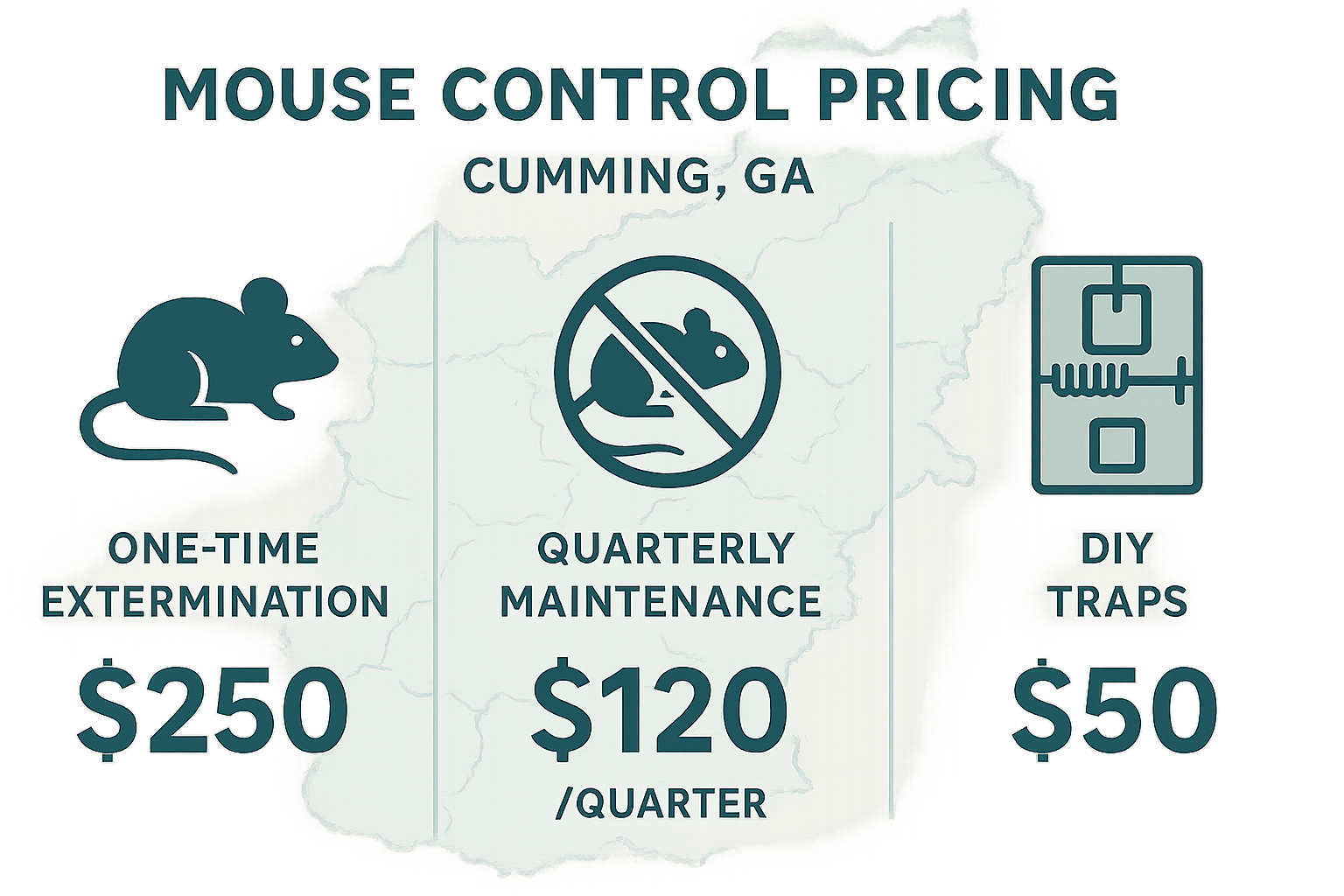
The infographic above reflects the NPMA 2023 cost survey for the Cumming market. For quick reference, the table below breaks down the typical price ranges you’ll encounter.
| Service type | Typical cost (per visit) | Average annual cost |
|---|---|---|
| One‑time professional extermination | $150‑$300 | — |
| Quarterly maintenance plan | $87‑$125 | $350‑$500 |
| DIY trap kit (initial purchase) | $20‑$80 | $50‑$150 (replenishment) |
How to choose the right approach
Start by assessing infestation severity. A single mouse sighting may be handled with a DIY kit, but multiple droppings, gnaw marks, or audible activity usually signal a larger problem that benefits from professional intervention. Next, weigh your comfort with handling traps and baits. If you prefer to leave chemicals in the hands of certified technicians, a one‑time extermination or a maintenance plan is the safer bet. Finally, consider long‑term budgeting: an upfront $250 professional job might look steep, but spreading $400 over a year via a maintenance plan often delivers better value and fewer surprise re‑infestations.
Safety first
Whether you’re buying a snap trap or hiring a crew, safety should never be an afterthought. Always read label instructions on rodent baits, keep them out of reach of children and pets, and wear gloves when handling traps. Professionals follow Integrated Pest Management (IPM) principles—using the lowest‑risk products, sealing entry points, and only applying chemicals where necessary. If fumigation is ever recommended, ensure the provider is fully licensed and that you follow post‑treatment ventilation guidelines to protect your household.
Next steps
For a tailored solution that matches your home’s layout, mouse activity level, and budget, reach out to a licensed Cumming pest‑control provider. Most companies, including Anthem Pest Control, offer a free, no‑obligation quote and can design a customized plan—whether you need a swift knock‑down or an ongoing shield.
Protect Your Home with Professional Mouse Control
Mice may seem harmless, but they chew wiring, contaminate food, and spread disease. Spotting droppings, gnaw marks, or a fresh nest early can prevent a small problem from becoming an infestation, especially during the cooler months when rodents seek shelter inside.
Why Choose a Professional Service?
- Safe, EPA‑approved products that protect your family and pets while eliminating the pests.
- Guaranteed results backed by follow‑up visits and a satisfaction guarantee.
- Ongoing monitoring to catch any new activity before it spreads.
Anthem Pest Control brings nationwide rodent‑management expertise to Cumming, Georgia, with local technicians who understand the area’s seasonal patterns. Our transparent pricing means you know exactly what you’re paying for—no hidden fees, just effective protection.
Take the Next Step
Ready to safeguard your home? Call us at 877‑371‑8196 or visit Anthem Pest Control for a free, no‑obligation quote. Our team will assess your property, recommend a tailored plan, and schedule treatment at a time that fits your busy schedule.
Don’t let mice compromise your comfort and safety. Visit Anthem Pest Control today and take the first step toward a mouse‑free home.