Understanding the Mouse Problem in Kennesaw, GA

Kennesaw’s Climate and Housing Layout Invite Mice
Kennesaw enjoys mild winters and warm, humid summers—conditions that create an ideal year‑round food source for house mice (Mus musculus). The city’s mix of older bungalows, newer subdivisions, and sprawling yards provides plenty of shelter, from dense shrubbery to crawl spaces under decks. When temperatures dip, mice seek the warmth of homes, making the local climate a silent invitation.
How Mice Slip Inside
Most mouse invasions begin with tiny gaps that are easy to overlook. Foundations with cracks, unsealed vent openings, and utility penetrations for electricity or plumbing can be as narrow as a pencil. Because mice can squeeze through openings as small as ¼ inch, even well‑maintained homes can become entry points if these gaps aren’t sealed promptly.
Health Risks You Can’t Ignore
House mice are carriers of more than a dozen diseases, including Hantavirus, Salmonella, and Leptospirosis. Their droppings and urine contaminate countertops, pantry items, and pet food, turning a simple snack into a potential health hazard. For families with children or immunocompromised members, the risk escalates dramatically, turning a nuisance into a serious medical concern.
Property Damage That Adds Up
Beyond health, mice chew through insulation, wiring, and even drywall. A single gnawed wire can trigger electrical shorts, increasing fire risk, while damaged insulation forces homeowners to spend on energy‑inefficient heating and cooling. Over time, these seemingly minor bites become costly repairs that erode a home’s value.
What It Costs Homeowners
The economic impact of a mouse infestation is often hidden until damage surfaces. Homeowners may spend anywhere from $200 to $1,500 on repairs for chewed wires, ruined food, and structural fixes. Add to that the price of lost groceries—up to $100 per month in a typical household—plus the intangible cost of peace of mind.
How Common Is the Issue?
According to the Georgia Department of Public Health, approximately 1 in 3 households in the Atlanta metropolitan area, which includes Kennesaw, reports at least one mouse sighting each year. This statistic underscores that mouse problems are not isolated incidents but a pervasive challenge for local homeowners.
Identifying Mice and Warning Signs for Homeowners

What a Typical House Mouse Looks Like
The most common rodent you’ll encounter in Kennesaw homes is the house mouse (Mus musculus). Adults measure about 2.5–4 inches from nose to the base of the tail, with a tail roughly the same length as the body. Their fur ranges from light gray to brown, often with a slightly pinkish belly. The ears are proportionally large and the whiskers long—features that help them navigate tight spaces.
Visual Clues That Mice Have Invaded
Spotting a mouse isn’t always about catching the critter in the act; it’s about reading the evidence it leaves behind. Look for these tell‑tale signs:
- Droppings: Small, dark, rice‑shaped pellets about ¼ inch long. Fresh droppings are glossy; older ones become dry and crumbly.
- Gnaw marks: Mice chew on wood, plastic, and even wiring. The bite holes are usually clean‑cut, about the size of a pencil tip.
- Rub marks: As they travel along walls, mice leave dark, oily streaks from their fur and scent glands.
- Nesting material: Shredded paper, fabric fibers, or dried plant matter tucked into corners, under appliances, or inside wall voids.
Sounds That Signal a Hidden Problem
Because mice are nocturnal, the most reliable auditory clues appear after dark. Listen for faint scratching or scurrying behind baseboards, in the attic, or within walls. A sudden, rapid rustling that stops when you shine a light is a classic “mouse in the walls” cue.
Smell: The Unwelcome Musky Aroma
When a colony grows, a faint, musky odor can develop. The scent comes from mouse urine and glandular secretions. If you notice an unusual, lingering smell in storage areas or near food pantries, it’s worth investigating further.
Conducting a Quick, DIY Inspection
A systematic walk‑through can reveal hidden activity before it becomes a full‑blown infestation. Follow these steps:
- Start at the kitchen. Check under the sink, behind the refrigerator, and inside pantry boxes for droppings or gnaw marks.
- Move to the living spaces. Inspect baseboards, behind picture frames, and inside furniture cushions.
- Head upstairs. Examine attic insulation, rafters, and any stored items for nesting material.
- Don’t forget the basement and garage. Look around utility boxes, water heaters, and shelving units.
- Use a flashlight. Shine it into dark corners and crawl spaces; the beam often makes droppings and rub marks pop into view.
When to Call a Professional vs. DIY
While a homeowner can handle minor sightings, certain scenarios call for expert intervention:
- Multiple entry points. If you locate more than two potential gaps or holes, a pest‑pro professional can seal them safely.
- Electrical gnawing. Chewed wiring poses fire hazards; only licensed technicians should address it.
- Persistent odor or large numbers of droppings. This often indicates a well‑established colony that requires baiting and trapping strategies beyond DIY kits.
- Allergy or health concerns. If anyone in the household has respiratory issues, professional removal minimizes exposure to allergens and pathogens.
For isolated incidents—like a single mouse sighting or a few droppings—setting snap traps or using sealed bait stations can be effective. Just remember to place traps along walls, near suspected runways, and to wear gloves when handling any evidence.
Detecting a mouse problem early saves you time, money, and stress. By familiarizing yourself with the mouse’s physical traits and the subtle signs it leaves behind, you’ll be equipped to act fast—whether that means a quick DIY fix or calling Anthem Pest Control for a thorough, guaranteed solution.
Seasonal Activity Patterns and Timing for Treatment
In Kennesaw, Georgia, mice don’t hibernate – they simply shift where they live and when they breed. Understanding these seasonal swings helps you plan inspections and treatments before a small problem becomes a full‑blown infestation.
What the calendar looks like for mice
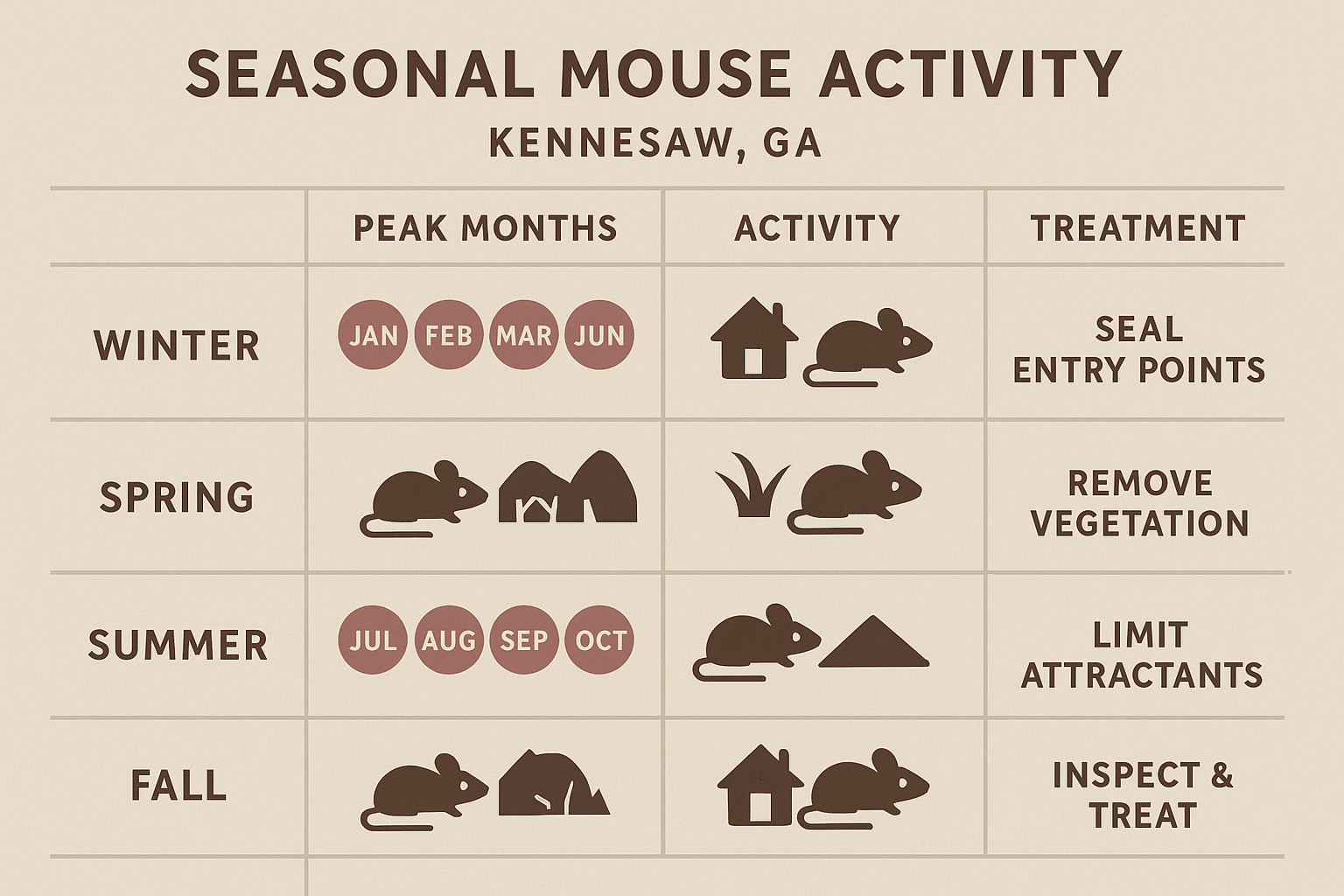
During the warm months (April through September) mice spend most of their time outdoors, foraging for seeds, insects, and fallen fruit. As temperatures dip in October, they start scouting for warm, dry shelter inside homes. By November and December, indoor activity spikes as families cluster in walls, attics, and crawl spaces to escape the chill.
Why the shift matters: indoor environments provide consistent warmth, protection from rain, and easy access to stored food. Once a mouse finds a comfortable nest, it can quickly recruit relatives, turning a single entry point into a bustling colony.
Peak months at a glance
| Month | Indoor Activity | Outdoor Foraging | Breeding Cycle |
|---|---|---|---|
| January | High | Low | Peak |
| February | High | Low | Peak |
| March | Medium | Medium | Declining |
| April | Medium | High | Low |
| May | Low | High | Low |
| June | Low | High | Low |
| July | Low | High | Low |
| August | Low | High | Low |
| September | Medium | Medium | Rising |
| October | High | Medium | Rising |
| November | High | Low | Peak |
| December | High | Low | Peak |
Notice the clear rise in indoor activity during the cooler months and the surge in outdoor foraging when the weather warms. These patterns guide when you should focus on sealing the exterior versus setting traps inside.
Why timing matters for treatment effectiveness
Targeting mice when they’re most active maximizes bait uptake and trap success. Treating too early in the spring may miss a late‑season breeding wave, while waiting until deep winter can allow an already‑established indoor colony to multiply unchecked. A proactive schedule aligns your actions with the mouse life cycle, reducing the number of visits needed and keeping costs predictable.
Season‑by‑season action plan
- Fall (September‑November): Inspect the foundation, roofline, and utility openings. Seal gaps larger than ¼ inch with steel wool and caulk. Begin setting snap traps or live‑catch traps in attic corners and near known entry points before mice move indoors.
- Winter (December‑February): Keep traps active and check them weekly. Replace bait with high‑fat options like peanut butter, which remains attractive in cold weather. Reduce clutter in basements and garages where mice like to nest.
- Spring (March‑May): Conduct a thorough exterior sweep. Trim vegetation away from the house, remove leaf litter, and store firewood at least 18 inches off the ground. This removes outdoor food sources and makes it harder for mice to travel from the yard to your walls.
- Summer (June‑August): Focus on sanitation. Secure compost bins, clean pet food dishes after meals, and keep garbage cans tightly sealed. If you notice increased outdoor activity, consider perimeter bait stations placed out of reach of children and pets.
Weather, breeding cycles, and population spikes
Mouse breeding is temperature‑driven. When daily highs consistently stay above 70 °F, females can produce a new litter every three weeks. A single pair can generate up to 60 offspring in a year if left unchecked. Rainy spells in early spring push foraging mice closer to homes, while mild winters delay the usual indoor migration, extending the period of dual‑habitat activity.
Year‑round tips for a mouse‑free home
- Maintain a tight seal around all exterior openings; even a tiny crack can become a highway for a determined mouse.
- Store pantry items in glass or heavy‑wall containers; avoid open boxes of cereal or pet food.
- Keep the yard tidy: remove fallen nuts, fruits, and birdseed that attract foragers.
- Schedule a professional inspection with Anthem Pest Control at least twice a year—once in early fall and once in late spring—to catch hidden activity before it escalates.
- Monitor for signs such as gnaw marks, droppings, or a faint “cheesy” odor, and act immediately when you see them.
- Use motion‑activated lights in crawl spaces and garages; mice are wary of sudden illumination and may avoid those areas.
By syncing your prevention steps with the natural rhythm of mouse behavior, you’ll stay one step ahead of the rodents and keep your Kennesaw home comfortable all year long.
Mouse Control Options and Pricing in Kennesaw
When mice start making a home in your Kennesaw house, the first step is choosing a control method that fits your comfort level, budget, and the severity of the infestation. Below is a quick guide to the most common approaches, their advantages and drawbacks, and how local pest‑control firms package these services.
Snap Traps
Snap traps are the classic, mechanical solution that delivers an instant kill. They’re inexpensive—often under $5 per unit—and require no chemicals.
- Pros: Low cost, immediate results, no poison risk to pets when placed correctly.
- Cons: Requires careful placement, can be unsettling to see, and may need frequent resetting.
Live Traps
Live traps capture mice unharmed, allowing you to release them far from your property. They’re a humane alternative favored by pet owners.
- Pros: No killing, reusable, good for small, isolated sightings.
- Cons: Must check traps daily, legal restrictions on release in some counties, and may not reduce a larger population quickly.
Bait Stations
Bait stations contain rodenticide in a tamper‑proof box, attracting mice while keeping the poison away from children and pets.
- Pros: Effective for moderate to heavy infestations, requires fewer visits.
- Cons: Involves chemicals, must be serviced regularly, and some homeowners prefer non‑chemical options.
Exclusion
Exclusion focuses on sealing entry points—gaps, cracks, vents, and utility openings—so mice can’t get in.
- Pros: Long‑term prevention, reduces need for repeated treatments.
- Cons: Requires a thorough inspection, may involve minor construction, and works best when combined with other methods.
Eco‑Friendly Options
Eco‑friendly solutions blend natural repellents (like peppermint oil or ultrasonic devices) with non‑toxic traps. They appeal to homeowners who prioritize green living.
- Pros: No hazardous chemicals, safe around pets and kids.
- Cons: Generally less lethal, may need more frequent monitoring, and effectiveness varies.
Service Models Offered by Local Firms
Kennesaw pest‑control companies, including Anthem Pest Control, typically provide four service structures:
- One‑time treatment: Ideal for a single, isolated incident; you pay per visit.
- Monthly plan: Regular check‑ins and bait replenishment; helps keep a low‑level population in check.
- Quarterly plan: Visits every three months; balances cost with ongoing protection.
- Annual contract: Full‑year coverage with unlimited visits, often the most cost‑effective for chronic problems.

The infographic above breaks down typical price ranges for each service tier. A one‑time visit usually runs $120‑$180, covering trap placement and a basic inspection. Monthly plans hover between $45‑$65 per month, including bait station refills and a follow‑up visit. Quarterly services average $130‑$170 per quarter, while an annual contract can cost $480‑$620, bundling unlimited visits, exclusion work, and a comprehensive report.
For broader market context, This Old House cites a national average of $150‑$300 per treatment, confirming that Kennesaw pricing is competitive, especially when bundled into recurring plans.
Choosing the Right Plan
Start by gauging infestation severity: a single mouse sighting may only need a snap trap or a one‑time service, while multiple droppings, gnaw marks, or a history of repeats suggest a quarterly or annual program. Align this with your budget—if upfront cost is a concern, a monthly plan spreads expense while still delivering consistent monitoring. Finally, consider your comfort with chemicals; eco‑friendly or live‑trap solutions pair well with a preventive exclusion service.
By matching the control method to your home’s specific needs and selecting a service model that fits your financial rhythm, you can keep Kennesaw’s mouse population at bay without surprise invoices.
Take Action with Anthem Pest Control
Early detection and seasonal treatment are the cornerstones of keeping mice out of your Kennesaw home. By spotting the first signs—such as droppings, gnaw marks, or a faint rustling in the attic—you can intervene before a small family turns into a full‑blown infestation. Treating during the cooler months, when rodents are looking for warmth, gives you a strategic advantage and often reduces the number of follow‑up visits needed later in the year.
Anthem Pest Control brings more than a generic, one‑size‑fits‑all approach. Our technicians are trained specifically for the climate and building styles common in Kennesaw, from older bungalows to newer subdivisions. We use EPA‑approved rodenticides, low‑profile snap traps, and humane exclusion techniques that protect children, pets, and the environment while delivering fast results.
Pricing is straightforward and transparent. Our standard mouse‑control package starts at $149 for a comprehensive inspection, bait placement, and a follow‑up visit. For homeowners who prefer ongoing protection, we offer quarterly service plans starting at $99 per visit, which include monitoring, bait replenishment, and a detailed activity report. There are no hidden fees, and we provide a written estimate before any work begins.
If you’re ready to protect your pantry, walls, and peace of mind, simply request a free, no‑obligation quote. Our team will schedule a convenient time, walk you through the proposed treatment, and answer any questions you might have.
Take the next step toward a mouse‑free home today. Call Anthem Pest Control at 877‑371‑8196 for a complimentary assessment and personalized quote. Our certified technicians understand Kennesaw’s unique pest challenges and will tailor a solution that fits your schedule and budget.
Visit Anthem Pest Control for more information.
Whether you need a one‑time eradication or a long‑term prevention plan, Anthem Pest Control is the trusted local partner that delivers results without surprise costs.
All of our treatments comply with Georgia’s environmental regulations and are backed by a satisfaction guarantee. If you notice any mouse activity within 30 days of service, we’ll return at no extra charge to reassess and adjust the plan. This commitment to accountability is why Kennesaw residents trust Anthem Pest Control year after year.