Why Rats Are a Growing Concern in Kennesaw, GA

Common Rat Species in Northern Georgia
The two rat species that most homeowners in Kennesaw encounter are the Norway rat (Rattus norvegicus) and the Roof rat (Rattus rattus). Norway rats are larger, stockier, and prefer ground‑level habitats such as basements, crawl spaces, and dense vegetation. Roof rats are slimmer, excellent climbers, and are often found nesting in attics, eaves, and high‑up storage areas. Both species are prolific breeders, capable of producing several litters each year, which fuels rapid population growth once they find a suitable environment.
Kennesaw’s Climate and Geography Create Ideal Rat Havens
Kennesaw sits in a temperate zone with mild winters and warm, humid summers. This climate allows rats to remain active year‑round, especially when temperatures dip below freezing for only short periods. The city’s abundant tree cover, ornamental gardens, and well‑maintained lawns provide ample food sources—seeds, fruit, and insects. Moreover, many homes in the area were built in the 1970s‑1990s and feature crawl spaces, unfinished basements, and older utility chases, all of which offer sheltered pathways for rodents to move undetected.
Rising Rodent Complaints in the Marietta‑Kennesaw Corridor
Local pest‑service reports show a steady uptick in rat sightings over the past five years. According to the Fulton County Health Department, rodent‑related service calls increased by roughly 22 % between 2018 and 2023, with Kennesaw accounting for nearly 30 % of those calls in the metro area. Homeowners frequently cite nocturnal noises, gnaw marks on cabinetry, and droppings in kitchens as the first warning signs.
Health Hazards Linked to Rats
Rats are not just a nuisance; they are vectors for serious diseases. The CDC warns that exposure to rat urine, feces, or saliva can transmit Hantavirus, leptospirosis, salmonella, and even trigger allergic reactions in sensitive individuals. A single bite or inhalation of aerosolized particles from contaminated dust can lead to severe respiratory issues, fever, and, in rare cases, fatal outcomes.
Property Damage That Can Escalate Quickly
Beyond health concerns, rats can inflict costly damage on a home’s structure. Their incisors grow continuously, prompting them to gnaw on electrical wiring, which raises the risk of short circuits and house fires. They also chew through insulation, wooden framing, and drywall, compromising the integrity of walls and floors. In kitchens, rats contaminate stored food with urine and feces, leading to spoilage and the need for costly disposal of pantry items.
Why Early Detection Saves Money
Identifying a rat problem early is the most cost‑effective strategy for homeowners. Small infestations can be managed with targeted baiting and exclusion measures, typically costing a few hundred dollars. Once a colony establishes, treatment may require multiple visits, extensive sealing of entry points, and possible repairs to damaged wiring or structural components—expenses that can quickly climb into the thousands. Prompt action not only protects health and property but also keeps professional pest‑control fees within a predictable range.
Spotting the Early Warning Signs of a Rat Infestation

Rats are masters of stealth, but they can’t hide forever. By learning the tell‑tale clues they leave behind, you can catch an infestation before it spreads to walls, wiring, and your pantry. Below is a homeowner‑friendly guide to the visual, auditory, and physical evidence that signals a rat problem in Kennesaw.
Visual clues you can’t ignore
Fresh droppings are the most obvious sign. Look for small, dark pellets about ¼‑inch long with blunt ends—often found along baseboards, under appliances, and in hidden corners. If you spot a cluster that’s still shiny, it’s likely fresh. Urine stains appear as faint yellowish rings on wood or drywall, especially near food sources. Gnaw marks are another red flag: rats love to chew on wood, plastic, and even electrical wires. You’ll notice rough, uneven edges or shavings, sometimes accompanied by a faint, metallic scent.
Auditory clues that speak volumes
Rats are nocturnal, so the quiet of night can reveal their presence. Listen for scratching or scurrying sounds within walls, attics, or crawl spaces—especially after sunset. A rapid, light pattering often means a rat is moving across insulation or nesting material. If the noise is intermittent and seems to come from multiple locations, you’re likely dealing with more than one rodent.
Physical evidence beyond droppings
Dusty corners can preserve tiny footprints. Look for four‑toed tracks that lead to a hidden nest. Greasy smears along walls or ceiling joists are a result of rats rubbing their bodies against surfaces to mark territory. Nests are usually built from shredded paper, fabric, or insulation and appear as compact, ball‑shaped piles in secluded spots such as behind appliances, inside wall cavities, or in stored‑item piles.
Behavioral signs that affect your home
Rats are opportunistic eaters. An increase in food waste, spilt crumbs, or gnawed pet food containers can indicate they’re feeding nearby. Missing pet food or chewed‑up kibble often points to a hungry rodent. Unexplained holes in insulation, especially in attic spaces, suggest rats are creating pathways for movement and ventilation. These holes may be as small as a quarter inch but can quickly expand as the colony grows.
How to conduct a quick self‑inspection
Grab a flashlight and a notebook, then walk through each area using the checklist below. Keep an eye out for the clues we just covered. If you find multiple items on the list, it’s time to act.
- Living areas: Check baseboards, under sofas, and behind the TV for droppings and gnaw marks.
- Kitchen: Inspect countertops, pantry shelves, and behind the refrigerator for food residue and urine stains.
- Bathrooms: Look for droppings near plumbing and in cabinets.
- Attic & crawl spaces: Listen for night‑time noises, search for nests, greasy smears, and gnawed wiring.
- Garage, shed, and garden: Examine stored boxes, garden tools, and compost bins for tracks and droppings.
- Exterior: Scan the foundation for burrows, chew marks on siding, and holes near vents.
When to call a professional versus DIY traps
If you discover only a few droppings or a single gnaw mark, a well‑placed snap trap or live‑catch trap can be effective—just be sure to wear gloves and follow local disposal regulations. However, once you notice multiple signs—especially nests, extensive gnaw damage to wiring, or a persistent nighttime scurrying sound—DIY methods become risky. Electrical damage can lead to fire hazards, and an established colony reproduces quickly.
In those cases, reach out to Anthem Pest Control. Our technicians perform a thorough inspection, identify entry points, and apply targeted baiting and exclusion techniques that protect both your home and family. A professional assessment also gives you a clear cost estimate, so you can budget for a long‑term solution rather than endless temporary fixes.
Seasonal Rat Activity Trends in Kennesaw, GA
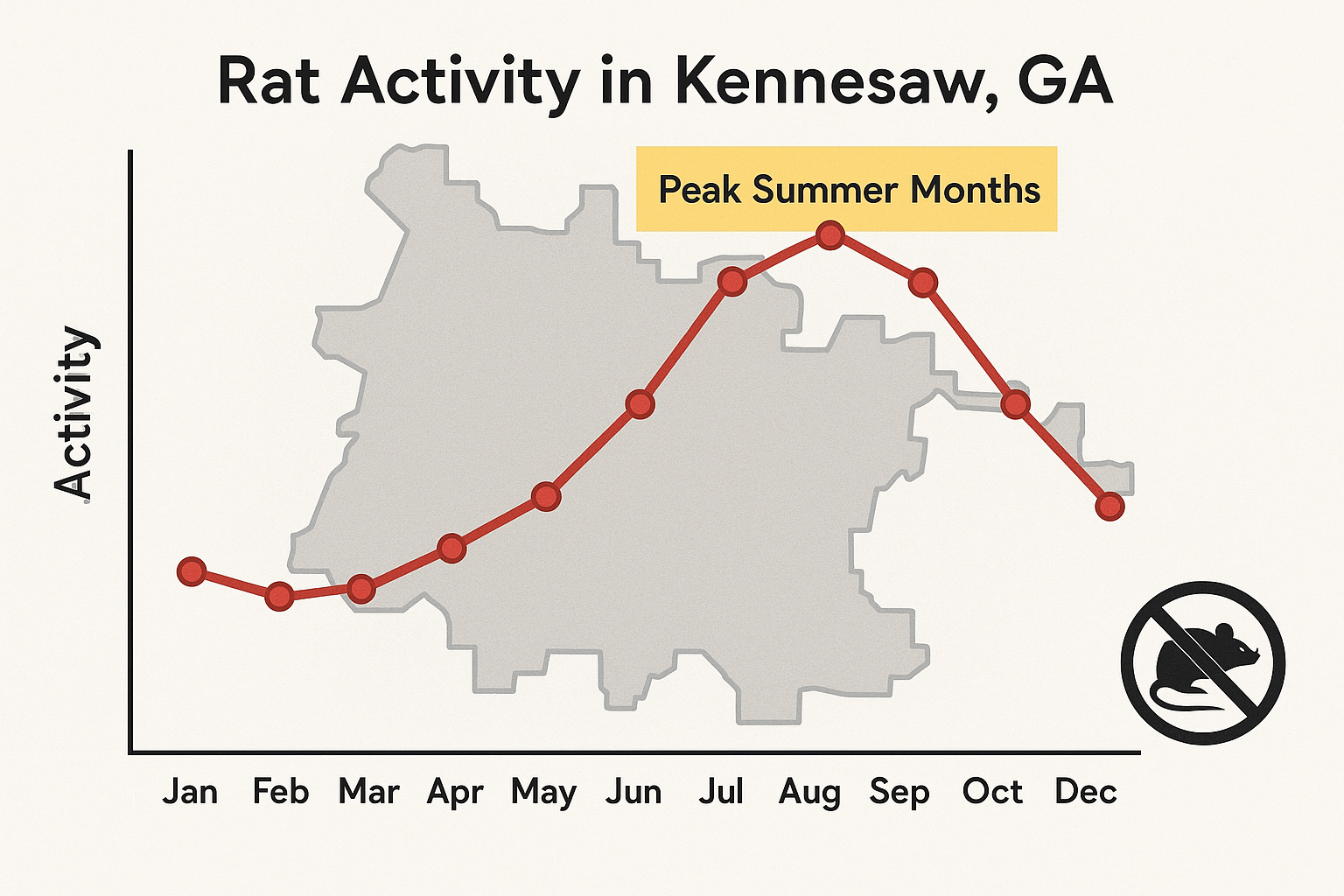
Our seasonal line chart paints a clear picture of when rats are most active in Kennesaw. The line climbs sharply during the warm summer months of July and August, indicating the highest population density and foraging activity. After the peak, activity tapers off as temperatures drop, reaching a low point in the coldest winter weeks. Understanding this rhythm helps homeowners anticipate problem periods and schedule preventative measures before rats become a noticeable nuisance.
Why Summer Sparks a Surge
Three key factors drive the summer spike:
- Warmer temperatures: Rats are ectothermic and thrive when the weather is mild. Heat accelerates their metabolism, making them more active in search of food and water.
- Abundant outdoor food sources: Barbecues, outdoor dining, and seasonal trash collection create a buffet of easy‑to‑access calories. Picnic leftovers, pet food left outside, and compost piles become magnets for foraging rodents.
- Breeding cycles: A female rat can produce a new litter every three weeks once she reaches sexual maturity. The summer months align perfectly with their reproductive peak, causing rapid population growth.
Timing Your Treatment for Maximum Impact
Because the chart shows activity climbing in early summer, the most effective window for preventive exclusion is late May to early June. During this period, you can seal cracks, install door sweeps, and set up bait stations before the rats are fully active. Acting early reduces the number of individuals that can establish nests inside your home.
Once the summer peak subsides, fall becomes a critical monitoring phase. Rats that survived the heat may seek shelter for the winter, often moving into attics, basements, or crawl spaces. A follow‑up inspection in September or October allows you to identify any new entry points, replace depleted bait, and reinforce exclusion measures before the colder months lock rodents inside.
Local Events That Temporarily Boost Activity
Kennesaw’s calendar adds its own twists to the seasonal pattern. The start of the university semester in late August brings a surge of student housing, cafeteria waste, and late‑night food deliveries—all of which generate extra refuse for rats. Similarly, outdoor festivals in spring and summer—such as the Kennesaw Mountain Festival—produce large volumes of disposable plates, cups, and leftover food that can be left in trash bins or on the ground.
These short‑term spikes often appear as minor blips on the line chart, but they can seed new infestations if waste isn’t promptly cleared. Homeowners near event venues should be especially vigilant about securing garbage cans and removing food debris after each gathering.
Seasonal Home Maintenance Checklist
To stay ahead of the rodent curve, follow this seasonal maintenance plan:
- Before Summer (April‑May): Conduct a thorough inspection of the building envelope. Seal gaps around utility penetrations, install mesh screens on vents, and trim vegetation that brushes against the foundation.
- Early Summer (June‑July): Deploy bait stations in strategic outdoor locations—under decks, near compost, and along the perimeter. Keep outdoor pet food indoors after dusk.
- Late Summer (August‑September): Remove any fallen fruit, nuts, or seeds from landscaping. Clean up after barbecues and ensure trash containers have tight‑fitting lids.
- Fall (October‑November): Clear leaf litter, wood piles, and other debris that can shelter rats. Re‑inspect previously sealed entry points for wear or new gaps caused by settling.
- Winter (December‑February): Maintain indoor cleanliness—store pantry items in sealed containers and keep countertops free of crumbs. Check heating vents for signs of gnawing.
Local Expertise You Can Trust
Both Total Animal Control and Got‑Bugs echo these observations, noting that Kennesaw’s climate and community events create a predictable rat rhythm. Their field technicians recommend scheduling a pre‑summer exclusion service with a licensed provider—like Anthem Pest Control—to lock out rodents before they exploit the seasonal bounty.
By aligning your home‑maintenance calendar with the natural peaks and troughs shown in the chart, you’ll reduce the likelihood of a surprise infestation, keep treatment costs predictable, and enjoy a rodent‑free home year‑round.
Effective Treatment Options for Rat Control
1. Initial Professional Inspection
A thorough inspection is the cornerstone of any successful rat‑control program. A certified technician will walk through your home and yard, looking for the tell‑tale signs of rodent activity: droppings, gnaw marks, and shredded insulation. More importantly, they identify entry points—tiny gaps around pipes, foundation cracks, and vent openings—that rats use to slip inside. By mapping nesting sites and activity hotspots, the professional can tailor a treatment plan that targets the problem where it starts, rather than merely reacting to sightings.
2. Trapping Methods
Traps are a direct way to reduce a rat population, and there are two main categories you’ll encounter.
- Snap traps – The classic, fast‑acting option. When placed along walls, behind appliances, and in dark corners, they deliver an immediate kill. Position them with the trigger side facing the wall so rats run into them head‑first.
- Live‑catch traps – Ideal for homeowners who prefer a humane approach. These cages capture rats alive, allowing you to release them far from your property (check local regulations first). Placement is similar to snap traps, but you’ll need to check them frequently to prevent stress or death.
Regardless of the trap type, success hinges on placement strategy. Rats travel along established runways; placing traps perpendicular to these pathways maximizes contact. Use bait such as peanut butter, dried fruit, or bits of meat, and wear gloves to avoid leaving human scent that can deter rodents.
3. Baiting Options
Bait stations provide a way to reach hidden rats that avoid traps. There are two primary formulations:
- Anticoagulant baits – These disrupt blood clotting, leading to death within a few days. They are highly effective but must be used with caution because secondary poisoning can affect pets and wildlife.
- Non‑anticoagulant baits – Typically contain bromethalin or cholecalciferol, offering a rapid kill without the clotting risk. They’re often preferred in homes with children or pets.
All baiting must comply with state and federal regulations. In Georgia, the EPA‑registered products are the only legal options, and they must be placed in tamper‑resistant stations. This protects curious kids and furry companions while keeping the poison out of the environment.
4. Exclusion Techniques
Even the best traps and baits won’t provide lasting peace of mind if rats can simply walk back in. Exclusion is the process of sealing every possible opening:
- Use steel wool or copper mesh to fill gaps around utility lines, then cover with caulk or expanding foam.
- Install door sweeps on all exterior doors to block the narrow space beneath the threshold.
- Fit vent covers and chimney caps with rodent‑proof mesh to stop climbs from the roof.
- Repair cracked foundation bricks and replace damaged weather‑stripping.
These measures are inexpensive, often a DIY weekend project, but they deliver the biggest long‑term return by removing the entry routes that rats exploit.
5. Integrated Pest Management (IPM)
IPM is a holistic, science‑based framework that blends several tactics for sustainable control:
- Monitoring – Regular inspections and the use of motion‑activated cameras or glue boards to track activity levels.
- Sanitation – Eliminating food sources by storing grain, pet food, and garbage in sealed containers, and promptly cleaning spills.
- Structural repairs – Addressing the exclusion points listed above, plus fixing leaky pipes that provide water.
- Targeted treatment – Applying traps or baits only where monitoring indicates a problem, reducing unnecessary chemical use.
By combining these elements, IPM not only lowers the current infestation but also makes your home less attractive to future invaders.
6. Benefits of Monthly Monitoring Programs
Many homeowners think a one‑time treatment will solve the issue forever. In reality, rat populations can rebound quickly, especially after seasonal changes. A monthly monitoring program offers:
- Early detection – Technicians spot the first signs of re‑infestation before it escalates.
- Cost savings – Treating a small, localized problem is far cheaper than a full‑scale eradication after a heavy infestation.
- Peace of mind – Knowing a professional is checking your property each month lets you focus on family life instead of pest worries.
7. Risks of DIY Chemical Use
While it may be tempting to purchase over‑the‑counter rodent poisons, DIY chemical applications carry significant hazards:
- Improper dosage can render the product ineffective, allowing rats to develop bait aversion.
- Non‑EPA‑registered products may lack safety data, increasing the risk of accidental poisoning for children, pets, and beneficial wildlife.
- Handling concentrates without protective gear can cause skin irritation or respiratory issues.
Professional pest technicians use EPA‑registered products in calibrated applicators, ensuring the correct amount reaches the target while minimizing exposure to non‑target organisms. This expertise is especially important in homes with small children or indoor pets.
Putting It All Together
The most reliable rat‑control strategy blends a meticulous inspection, targeted trapping or baiting, robust exclusion, and an ongoing IPM plan. Homeowners who rely solely on DIY traps often see temporary relief, but without sealing entry points and maintaining regular monitoring, the problem returns. By partnering with a trusted provider like Anthem Pest Control, you gain access to certified technicians, EPA‑approved products, and a structured monthly program that safeguards your home year‑round while keeping costs predictable.
How Much Does Professional Rat Control Cost in Kennesaw?
When you spot droppings, hear scurrying in the walls, or find gnaw marks on wiring, the first question on most homeowners’ minds is “How much will it cost to get rid of these rats?” In Kennesaw, professional rat control typically falls between $250 and $1,200+, depending on the scope of work and the level of service you choose. Below, we break down what drives those numbers and why a transparent pricing model matters.
Typical Price Ranges in Kennesaw
Most pest‑control companies in the area quote a base range that looks like this:
- Basic service: $250 – $400 – includes a one‑time inspection, a few snap traps, and a short‑term baiting plan.
- Standard package: $500 – $800 – adds trap installation throughout the property, exclusion work (sealing entry points), and a follow‑up visit.
- Comprehensive solution: $900 – $1,200+ – features extensive exclusion, structural repairs, and optional monthly monitoring to keep rats from returning.
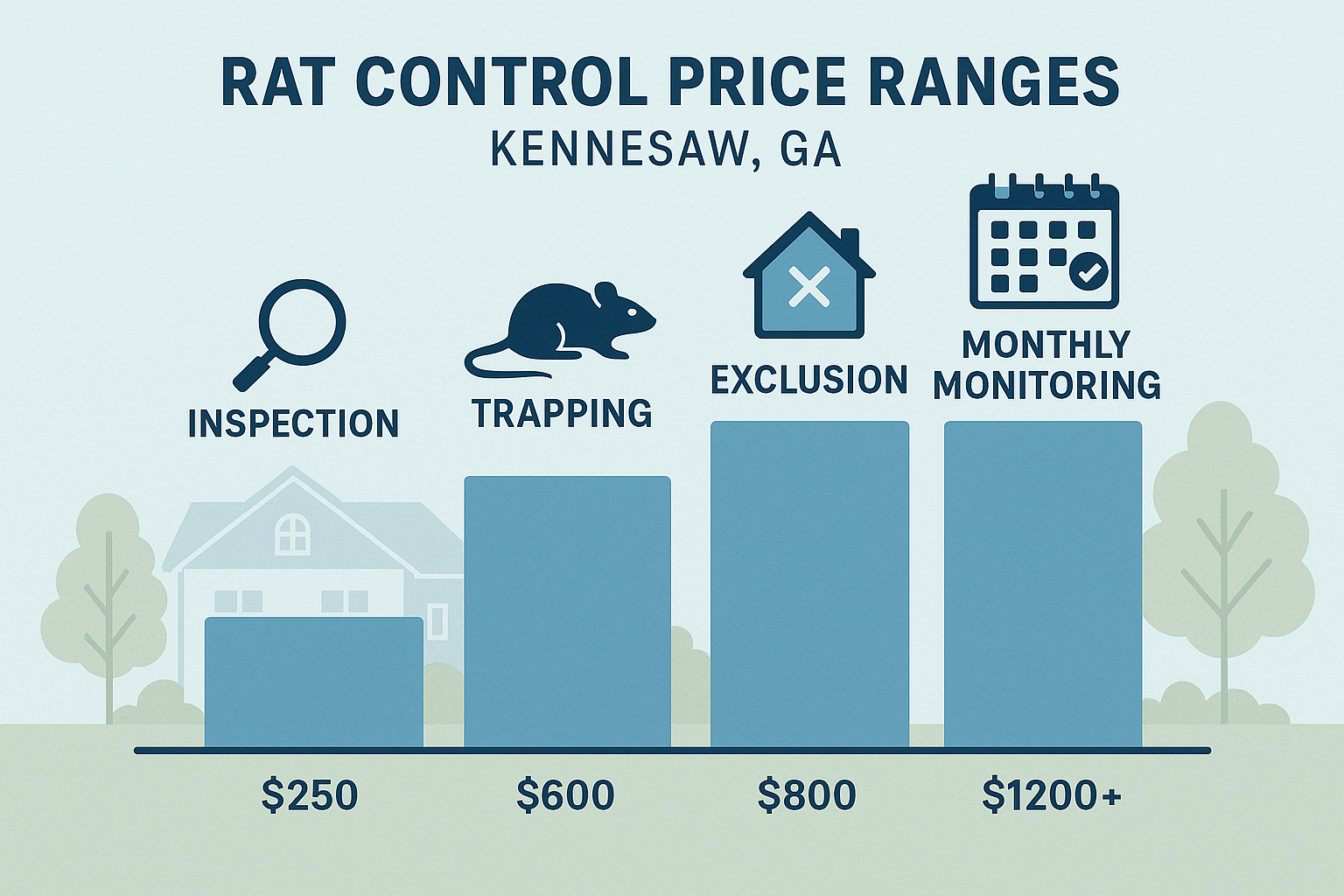
These tiers are visualized in the bar‑chart infographic below, giving you a quick reference for each cost component.
What the Bar‑Chart Shows
The chart is divided into four distinct bars, each representing a core service element:
- Inspection fee: A flat $75 – $125 covers a thorough walkthrough, identification of entry points, and a written report.
- Trap installation: $150 – $300 for setting snap, live‑catch, or electronic traps in high‑traffic zones.
- Exclusion work: $200 – $500, depending on how many gaps, vents, or cracks need sealing. This is the most variable line item because older homes often require more extensive repairs.
- Optional monthly monitoring: $50 – $100 per visit, ensuring traps stay baited and any new activity is caught early.
By looking at the chart, you can instantly see which component will have the biggest impact on your final bill.
Key Drivers Behind the Numbers
Several factors can push a quote toward the higher end of the spectrum:
- Property size: Larger homes or multi‑unit buildings need more traps and more exclusion points.
- Infestation severity: A light sighting may only require a few traps, while a full‑blown colony can demand extensive baiting and repeated visits.
- Structural repairs: Cracked foundations, damaged soffits, or open utility penetrations add labor and material costs.
- Service package: One‑time eradication is cheaper upfront, but ongoing monitoring can save money long‑term by preventing re‑infestation.
DIY vs. Professional: The Real Cost Difference
Attempting a DIY approach might look attractive on paper: a box of snap traps ($20‑$30), a few bait stations ($15‑$25), and a weekend of your own time. However, the hidden costs quickly add up:
- Time investment: Setting, checking, and resetting traps can take several hours each week.
- Safety risks: Improper bait placement can expose children or pets to poison.
- Effectiveness: Without proper exclusion, new rats will simply slip back in, rendering your effort moot.
- Warranty and guarantee: Professionals typically back their work with a service guarantee, something DIY solutions lack.
When you factor in expertise, liability protection, and the peace of mind that comes with a warranty, the professional price range often proves to be a smarter investment.
Anthem Pest Control’s Pricing Structure
Anthem Pest Control keeps the process straightforward:
- Flat‑rate inspection: $99, no surprises.
- Transparent service tiers: Choose from “Basic,” “Standard,” or “Comprehensive,” each with a clearly listed price and included services.
- No hidden fees: Exclusion work, trap placement, and follow‑up visits are all bundled in the tier you select.
- Warranty included: All treatments come with a 30‑day guarantee; if rats return, we’ll re‑treat at no extra charge.
This approach aligns with our brand promise of safe, effective, and affordable pest solutions, letting homeowners focus on the outcome—not the bill.
Tips for Getting an Accurate Quote
Before you call a technician, gather the following details to ensure you receive a precise estimate:
- Square footage of the home and any outbuildings.
- Number of floors and type of construction (e.g., slab, crawlspace).
- Visible signs of activity (droppings, gnaw marks, nests).
- Any recent repairs or renovations that might have created new entry points.
- Preferred service model—one‑time eradication or ongoing monitoring.
When you speak with a representative, ask specifically about:
- What’s included in the quoted price?
- Are there any additional fees for structural repairs?
- What guarantees or warranties back the service?
Armed with this information, you’ll be able to compare quotes confidently and choose the option that offers the best value for your home.
For a visual snapshot of the cost breakdown, refer back to the bar‑chart infographic above. It’s designed to help you see exactly where each dollar goes, so you can make an informed decision without any guesswork.
Protect Your Home Today with Anthem Pest Control
Rats aren’t just a nuisance in Kennesaw—they’re a health hazard and a structural threat. Their droppings can spread Hantavirus and salmonella, while gnawing on wiring, insulation, and wood can spark fires or cause costly repairs. Ignoring these signs lets the problem compound quickly.
Kennesaw’s climate creates two clear peaks for rodent activity: early spring, when new burrows emerge, and late summer, when food sources dwindle and rats seek shelter indoors. Acting before these peaks gives you the best chance to seal entry points and keep your home rat‑free.
Why choose Anthem Pest Control? Our technicians live and work in the Kennesaw area, so we understand the local building styles, common entry routes, and seasonal patterns. We use EPA‑registered solutions that are both effective against rats and safe for families and pets. Our pricing is transparent—no hidden fees—so you know exactly what you’re paying for.
Beyond a one‑time treatment, Anthem offers ongoing monitoring options. Regular inspections catch new activity early, allowing us to reinforce exclusions before a minor sighting turns into a full‑blown infestation.
When you choose Anthem Pest Control, you’re investing in peace of mind. Our certified technicians will assess your home, tailor a treatment plan, and ensure rats stay out for good—all at a price you can see up front.
Ready to protect your property? Call us today at 877‑371‑8196 for a free, no‑obligation quote. Our friendly team will walk you through the process, answer any questions, and schedule a visit at your convenience.
Don’t let rats wait until the next seasonal surge. Take the first step toward a healthier, safer home now.
Visit our website for more information: Anthem Pest Control