Why Spider Control Matters in Kennesaw, GA

Local Climate Creates a Spider‑Friendly Habitat
Kennesaw’s humid subtropical climate—warm summers, mild winters, and ample rainfall—offers the perfect conditions for spiders to thrive. The combination of moisture and abundant vegetation provides both shelter and a steady supply of insects, which are the primary food source for most spider species. As a result, homeowners often notice an increase in spider activity during the spring and fall, when insects are most active.
Separating Myth from Reality
Many residents assume that every spider found inside a home is harmless, but the reality is more nuanced. While common house spiders such as the American house spider (Parasteatoda tepidariorum) pose little threat, Kennesaw also sees occasional sightings of the Southern black widow and the Brown recluse. These species are not ubiquitous, yet their presence is enough to warrant vigilance and professional assessment.
Health Risks You Can’t Ignore
Venomous bites can range from a mild, localized sting to severe reactions. Pain, swelling, and redness are typical immediate symptoms. In rare cases, individuals with allergies may experience systemic effects such as muscle cramps, nausea, or even anaphylaxis. Prompt medical attention is essential if you notice unusual symptoms after a bite, especially in children or the elderly.
Property Concerns Beyond the Bite
Spiders may not chew through wood, but their webs can cause practical headaches. Webbing in gutters and downspouts reduces water flow, leading to overflow and potential water damage. In crawl spaces, dense webs can trap dust and debris, contributing to poor indoor air quality. Outdoor structures like decks and pergolas can become unsightly when covered in thick, silken sheets, diminishing curb appeal and possibly attracting other pests.
The First Step: A Professional Inspection
Identifying which species are present and where they’re nesting requires expertise. A qualified technician will conduct a thorough inspection, checking common entry points, dark corners, and exterior perimeters. This assessment forms the foundation of a targeted treatment plan that protects both your family’s health and your property’s integrity.
For a deeper dive into spider identification and control strategies specific to North Georgia, see the University of Georgia Extension guide on spider management. Leveraging local knowledge ensures you receive the most effective, region‑appropriate solutions.
Identifying the Most Dangerous Spiders in Kennesaw
When you hear “spider,” you probably picture a harmless eight‑legged visitor. In Kennesaw, however, two species deserve a closer look: the Black Widow (Latrodectus mactans) and the Brown Recluse (Loxosceles reclusa). Knowing how they look and where they hide can save you a painful bite and the cost of an emergency treatment.
Black Widow (Latrodectus mactans)
The female Black Widow is instantly recognizable by its glossy, jet‑black body and the iconic red hour‑glass on the underside of its rounded abdomen. Males are much smaller and lighter, often dismissed as harmless, but they can still bite if provoked. In Kennesaw, these spiders favor shaded, undisturbed areas such as woodpiles, garage corners, and under eaves. They spin irregular, tangled webs close to the ground, usually near a food source like insects attracted to outdoor lighting.
Brown Recluse (Loxosceles reclusa)
The Brown Recluse is a medium‑sized spider with a uniform brown or tan coloration. Its most distinctive feature is the violin‑shaped marking on the dorsal side of the cephalothorax—though the “violin” can be faint, especially on lighter individuals. Unlike the Black Widow, the Recluse prefers dry, undisturbed indoor spaces: closets, basements, attic corners, and even rarely used furniture. They rarely build webs; instead, they hunt silently on the floor or walls.
Quick Comparison of Bite Risks
| Species | Bite Symptoms | Typical Activity Time | Seasonal Peak |
|---|---|---|---|
| Black Widow | Sharp pain, muscle cramps, nausea, sweating; symptoms may spread systemically. | Nocturnal; most active at night. | Late summer to early fall (July‑October). |
| Brown Recluse | Initial mild bite, followed by necrotic lesion, fever, and possible systemic illness. | Crepuscular; active at dusk and dawn. | Spring through early summer (April‑June). |
Safe DIY Inspection Tips
- Use a bright flashlight to illuminate dark corners—spiders often hide where light doesn’t reach.
- Wear thick gardening gloves and long sleeves; never touch a spider with bare skin.
- Inspect undisturbed woodpiles, garage shelves, and storage boxes first, as these are prime habitats.
- For indoor checks, lift furniture carefully and look behind baseboards and in closet corners.
- If you spot a spider, capture a clear photo (without handling) for later identification.
When to Call a Professional
If you locate a Black Widow or Brown Recluse, don’t attempt to kill it yourself unless you’re absolutely certain you can do so safely with proper protective gear. A single missed bite can lead to severe medical complications. Call Anthem Pest Control when:
- Multiple spiders are present or you suspect an infestation.
- The bite produces intense pain, spreading cramps, or a necrotic wound.
- You’re uncomfortable entering the suspected area (e.g., a high attic or sealed crawl space).
- You need a long‑term prevention plan to keep these spiders out of your home.
For simple, single‑sightings in an easily accessible spot, a careful removal with tweezers (gloved) and immediate cleaning can suffice. However, always monitor the area for new activity, and don’t hesitate to reach out for a professional inspection if the problem persists.
Species details adapted from the Georgia Department of Public Health’s “Venomous Spider Identification Guide.”
Seasonal Spider Activity Trends in Kennesaw
Understanding when spiders are most active helps you plan inspections and treatments before a problem escalates. In Kennesaw, the two most concerning species—Black Widow (Latrodectus mactans) and Brown Recluse (Loxosceles reclusa)—follow a predictable annual rhythm that aligns closely with local temperature and humidity patterns.
Annual Cycle for Black Widow and Brown Recluse
Both species emerge from winter hideaways in early March. Black Widows begin building new webs, while Brown Recluse females start laying egg sacs. Activity peaks in late May through July, then tapers off as the heat becomes oppressive in August. By October, most adults seek shelter in cooler indoor spaces, and activity drops to a low level through December.
Why Spring and Early Summer See Spikes
Spring triggers mating rituals. Male Black Widows travel far from their webs in search of females, increasing the chance of accidental human encounters. Brown Recluse females, meanwhile, are busy producing egg sacs that contain up to 50 spiderlings each. The combination of heightened movement and new web construction creates a noticeable surge in sightings and bites during May and June.
Impact of Temperature and Humidity on Spider Behavior
Spiders are ectothermic; their metabolism speeds up as ambient temperature rises. Ideal activity temperatures in Kennesaw hover between 70°F and 85°F. When humidity climbs above 60 %, webs become more resilient, and prey insects are more abundant, giving spiders a richer food source. Conversely, extreme heat (>90°F) or dry spells (>30 % humidity) push both species to retreat indoors, where they seek stable micro‑climates.
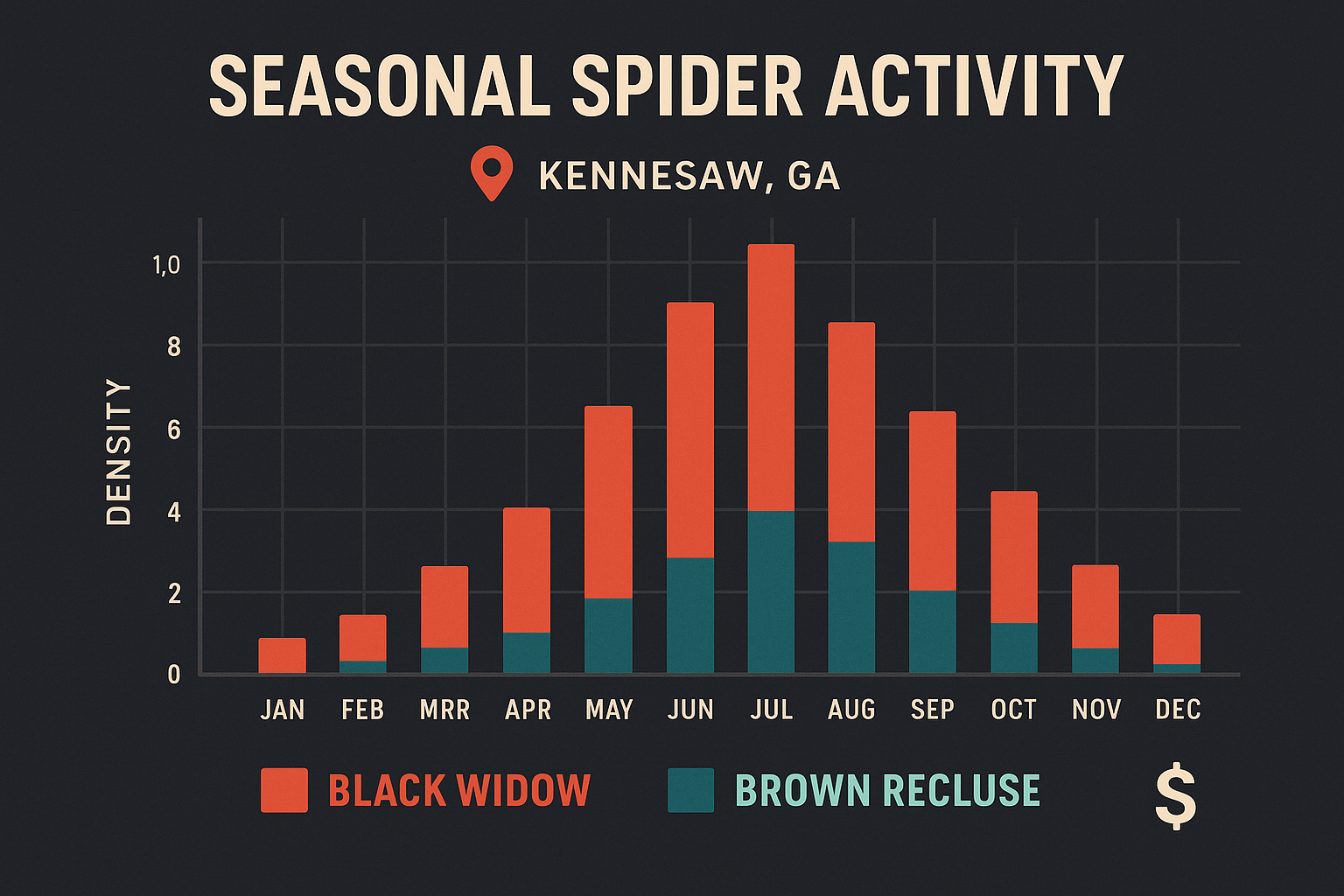
Reading the Seasonal Activity Bar Chart
The chart above breaks down monthly spider activity into three zones:
- Low (January–February, November–December): Minimal outdoor movement; most spiders are dormant or hidden.
- Moderate (March–April, August–October): Gradual increase as temperatures rise; early web building and occasional indoor forays.
- High (May–July): Peak mating, egg‑sac production, and web expansion. Expect the highest number of indoor sightings and bite reports during this window.
Notice the sharp rise in May, a plateau through June, and a slight dip in July as the heat peaks.
Recommendations for Scheduling Inspections
To stay ahead of the spike, book a professional inspection in late February or early March. This timing allows technicians to:
- Identify existing webs and hidden harborage spots before mating season begins.
- Apply a pre‑emptive barrier treatment that remains effective through the high‑risk months.
- Educate you on interior sealing and yard maintenance that reduces indoor migration.
If you missed the early window, a second inspection in early August can address any late‑season survivors before they seek refuge for winter.
How Seasonal Trends Affect Pricing and Warranty
Anthem Pest Control structures its pricing around the seasonal demand curve. Early‑season treatments often qualify for discounted packages because they require fewer follow‑up visits. As the peak months approach, the cost may rise slightly to cover additional labor and the need for more frequent monitoring. Most of our treatment plans include a 90‑day warranty that guarantees re‑treatment if spiders reappear during the same active season, giving you peace of mind without surprise fees.
What to Expect During a Professional Spider Inspection
Pre‑Inspection Preparation
Before the technician arrives, clear away any clutter that could hide spiders or obscure entry points. Move boxes, laundry baskets, and stored items from hallways, basements, and attics. Ensure exterior doors, garage doors, and windows are unlocked so the inspector can move freely. A quick sweep of the yard—removing debris, wood piles, and excess mulch—helps the technician spot outdoor harborage sites more efficiently.
Arrival & Identification
When the service vehicle pulls up, you’ll meet a fully uniformed Anthem Pest Control technician. Look for a name badge, company logo, and a certification card that confirms specialized training in arachnid identification and safe pesticide application. This professional appearance not only builds trust but also signals that you’re dealing with a licensed expert who follows state regulations.
Exterior Survey
The inspection begins outside your home. The technician examines the foundation for cracks, checks landscaping for dense vegetation that brushes against walls, and evaluates outdoor lighting that can attract insects—spider prey. They also inspect potential entry points such as vent covers, crawl‑space doors, and gaps around utility lines. By addressing these vulnerabilities, future spider invasions can be minimized.
Interior Survey
Inside, the inspector moves methodically through high‑risk zones: basements, crawl spaces, attics, closets, and any dark, undisturbed corners. They lift stored items, open cabinets, and peer behind appliances. This thorough walk‑through uncovers hidden webs, egg sacs, and the subtle signs of spider activity that most homeowners miss.
Tools of the Trade
- Flashlight: Illuminates dark crevices and reveals faint webbing.
- Moisture meter: Detects damp areas where cellar‑dwelling spiders thrive.
- Inspection mirror: Allows the technician to see into tight spaces without moving large objects.
- Protective gloves and masks: Ensure safety when handling potentially venomous species.
Documentation & Reporting
Every finding is recorded with photo evidence. The technician identifies the spider species—whether it’s a harmless house spider or a more concerning brown recluse—and notes the severity of the infestation. This data is compiled into a concise risk‑assessment report that outlines vulnerable spots, current activity, and the projected impact if left untreated.
Discussion of Findings & Treatment Plan
At the end of the inspection, the technician meets with you to review the report. They explain which species were found, why certain areas are problematic, and how their recommended treatment will address both existing spiders and future entry. Options may include targeted spot‑treatments, perimeter barrier applications, and preventive measures such as sealing cracks or adjusting outdoor lighting. All recommendations are presented with clear pricing, so you can make an informed decision without surprise costs.
Treatment Options and Pricing Tiers for Kennesaw Spider Control
Common Treatment Methods
Homeowners in Kennesaw have several proven ways to keep spiders at bay. The most popular choice is a chemical barrier spray applied around the exterior foundation, doors, and windows. Inside, technicians often use an indoor residual application that leaves a thin, long‑lasting film on walls, baseboards, and crawl spaces where spiders like to hide. For those who prefer a non‑chemical approach, glue traps placed in corners, closets, and along baseboards can catch wandering spiders without any pesticide exposure. Finally, many eco‑conscious families opt for eco‑friendly options such as botanical sprays or dusts that target spiders while minimizing impact on pets and beneficial insects.
Treatment Frequency and Repeat Applications
Spiders are opportunistic; a single treatment can knock back an active infestation, but new spiders constantly migrate from nearby vegetation. That’s why most professionals recommend a monthly or bi‑monthly schedule during peak seasons (late spring through early fall). Repeating applications ensures the barrier remains intact and that any newly hatched spiders are intercepted before they establish a permanent foothold.
Anthem’s Service Plans
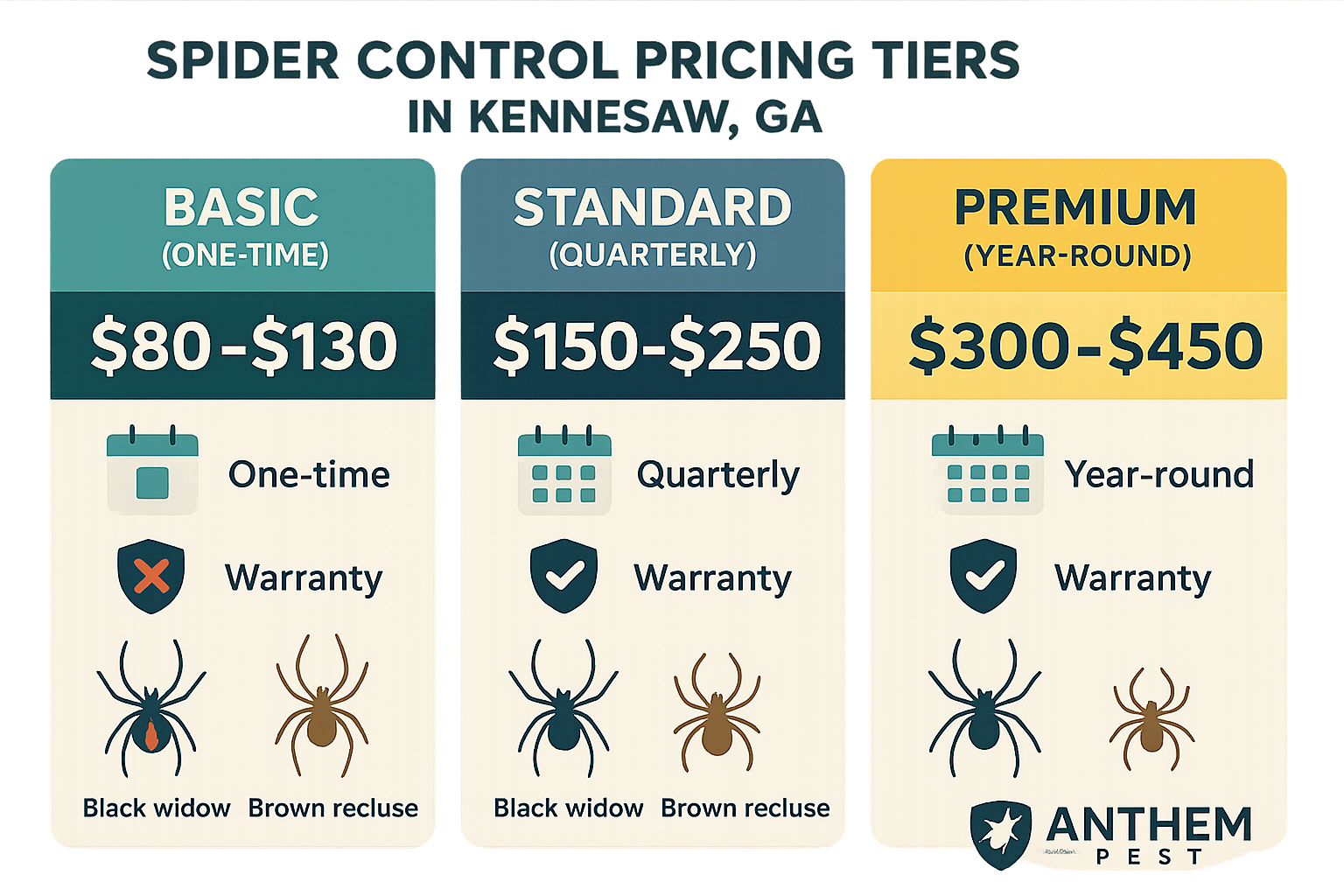
Anthem Pest Control simplifies decision‑making with three clearly defined service tiers. Each plan bundles frequency, warranty length, and species coverage so you know exactly what you’re paying for.
- Basic – One exterior spray per quarter, 30‑day warranty, covers common house spiders.
- Standard – Quarterly exterior spray plus a semi‑annual indoor residual, 60‑day warranty, adds coverage for venomous species like brown recluse.
- Premium – Monthly exterior barrier, quarterly indoor residual, 90‑day warranty, comprehensive coverage for all spider species plus optional eco‑friendly upgrades.
Cost‑Benefit Analysis: Short‑Term vs. Long‑Term Protection
At first glance, the Basic plan may seem the most affordable—often priced around $120 per visit. However, homeowners who experience frequent bites or have vulnerable family members can quickly accrue hidden costs: medical visits, allergy treatments, and lost productivity. In contrast, the Premium plan, typically ranging from $250 to $300 per visit, reduces the likelihood of bites by up to 90 % and can save families hundreds of dollars in medical expenses over a year.
Think of it like a health insurance policy. Paying a bit more each month protects you from a potentially costly emergency later. For spider control, the long‑term protection offered by higher‑tier plans often pays for itself within the first 6‑12 months, especially in homes with dense landscaping or older structures where spiders love to hide.
Customizing a Plan for Your Home
Every property is unique, so Anthem tailors each plan to fit size, infestation level, and budget. A small 1,200 sq ft. ranch with minimal foliage might thrive on the Standard plan, while a 3,000 sq ft. two‑story home surrounded by mature trees may need the Premium tier for full coverage. During the initial inspection, technicians assess spider hotspots, entry points, and any previous treatment history, then recommend the optimal frequency and product mix.
Additional Pricing Context
For a broader market perspective, you can compare Anthem’s rates with regional averages on the HomeAdvisor spider control pricing guide. This external resource breaks down typical costs by state and service type, helping you confirm you’re receiving a fair, transparent quote.
Protect Your Home Today with Anthem Pest Control
Living in Kennesaw means sharing your space with a surprisingly diverse spider population. From the bite‑risk Brown Recluse to the web‑spinning Black Widow, dangerous species can appear when temperatures rise, especially during the spring and summer spikes. Even the harmless house spiders can multiply quickly, crowding basements, attics, and crawl spaces, and their webs can damage stored items, create an unsightly appearance, and trigger anxiety for family members who fear eight‑legged intruders. In short, effective spider control isn’t just a nice‑to‑have—it’s essential for safety, comfort, and protecting the value of your property.
Why Anthem Pest Control Is Your Local Spider‑Control Partner
Anthem brings more than generic, one‑size‑fits‑all solutions. Our technicians are certified, Kennesaw‑trained professionals who understand the specific spider species that thrive in our climate and neighborhoods. We combine that local knowledge with industry‑leading, EPA‑approved products that target spiders while remaining safe for children, pets, and the environment. Each treatment plan is customized after a thorough inspection, ensuring we address entry points, breeding sites, and any underlying conditions that invite spiders back.
Transparent Pricing and Flexible Service Plans
- Clear, upfront quotes: No hidden fees—just a straightforward breakdown of what each service includes.
- Tailored packages: Choose from one‑time treatments, seasonal protection plans, or comprehensive pest‑management contracts that fit your budget and schedule.
- Money‑back guarantee: If spiders return within the guaranteed period, we’ll re‑treat at no extra cost.
Take the First Step—Free, No‑Obligation Quote
We know that inviting a pest‑control professional into your home is a big decision. That’s why Anthem offers a free, no‑obligation quote and inspection. Our friendly technician will walk you through the findings, explain the recommended treatment options, and answer any questions you have—no pressure, just clear information.
Ready to protect your home? Call us today at 877‑371‑8196 or visit Anthem Pest Control to schedule your complimentary inspection. Our team is standing by to help you reclaim your space from unwanted eight‑legged guests.
Don’t let another season go by worrying about spiders in your garage, basement, or bedroom. A quick call now can give you the peace of mind you deserve—knowing your home is safeguarded by experts who care about your comfort and safety.