Recognizing Termite Presence and Early Damage
In Holly Springs, Georgia, the warm, humid climate creates the perfect environment for termites to thrive. A single unnoticed colony can chew through a home’s structural wood before the homeowner ever suspects a problem. Spotting the early signs of activity is the fastest way to protect your investment and avoid costly repairs.
Why Termites Are a Major Threat in Holly Springs
The region’s average annual rainfall exceeds 50 inches, and the soil is often moist—both conditions that encourage termite colonies to establish themselves near or under residential foundations. Unlike insects that cause surface damage, termites work from the inside out, silently hollowing out beams, joists, and support posts. By the time you hear a “hollow” sound, the damage may already be extensive.
Common Termite Species in the Area
Homeowners in Holly Springs typically encounter two species:
- Subterranean termites: These build mud tubes to travel between the soil and wood, preferring damp, buried wood.
- Drywood termites: They live entirely within the wood they consume, leaving behind tiny, pellet‑like droppings called frass.
Both species can cause severe structural damage, but their signs differ enough that knowing what to look for can speed up detection.
Visual Cues of Infestation
Keep an eye out for these tell‑tale signs:
- Mud tubes—smooth, pencil‑thin tunnels on foundation walls, crawl‑space columns, or siding.
- Hollow‑sound wood—tap a beam; a dull, hollow thud often indicates internal galleries.
- Discarded wings—after a swarm, you’ll find light, translucent wings near windows or light fixtures.
- Frass—dry, wood‑shavings pellets that look like sawdust but are more uniform and often found near exit holes.
What the Macro Shot Shows
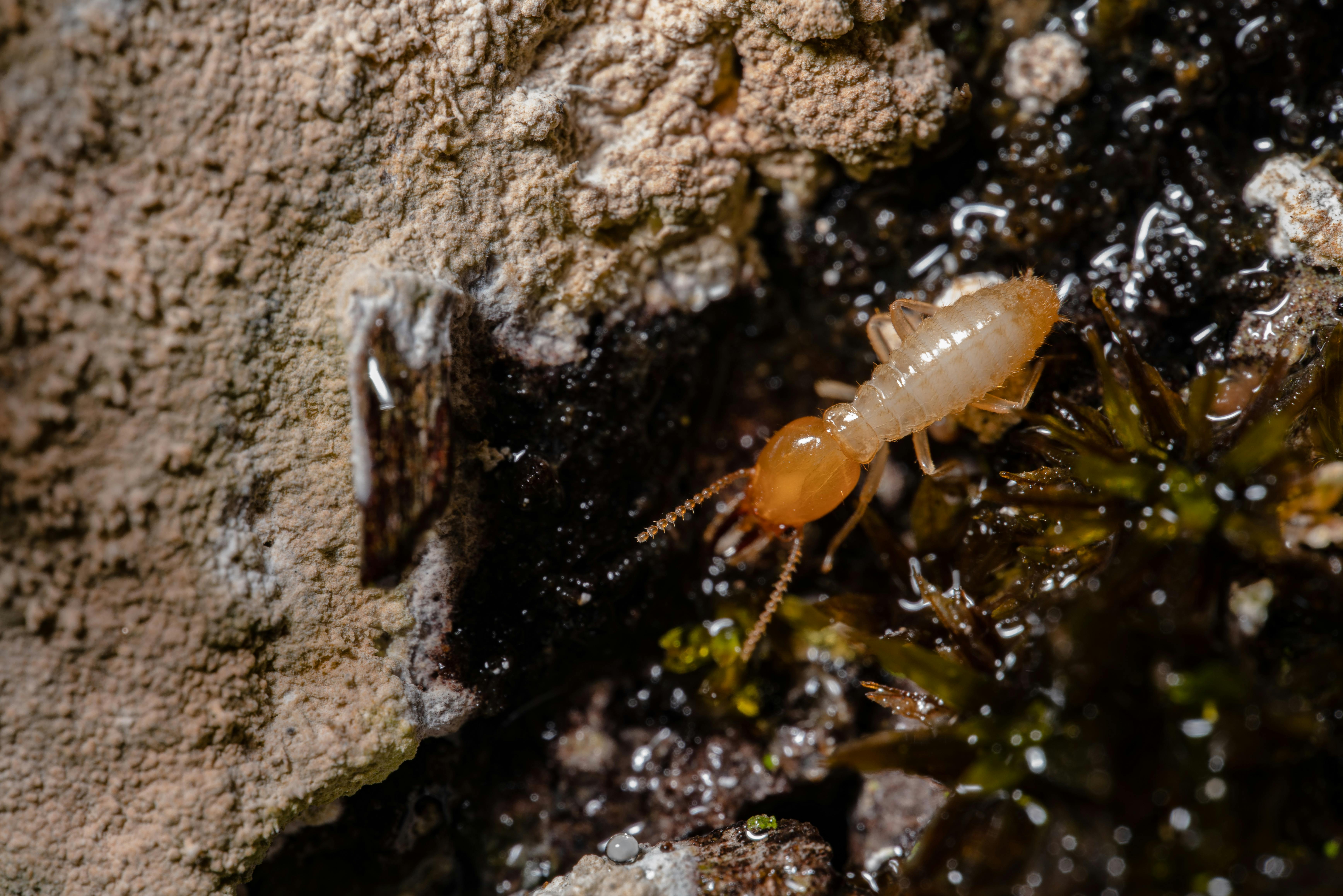
The macro image captures a lone termite perched on a damp wood surface. Notice the tiny bite marks along the grain—each mark represents a feeding site where the insect extracts cellulose. The surrounding wood appears slightly darker, a sign of moisture accumulation that attracts subterranean colonies. This close‑up illustrates two critical clues: active feeding and the presence of moisture, both of which accelerate damage if left unchecked.
Where to Inspect in Your Home
Termites don’t limit themselves to one spot. Conduct a quick visual sweep in these high‑risk areas:
- Foundations—look for mud tubes on concrete or brick walls, especially after rain.
- Crawl spaces—check joists, support beams, and any exposed wood for hollow sounds or frass.
- Wooden decks and porches—examine the undersides and joints where moisture can linger.
- Window frames and door thresholds—these are common entry points for drywood termites.
When you spot any of the visual cues listed above, document the location and contact a professional pest‑control service promptly. Early intervention can limit treatment to a localized area rather than a full‑home fumigation.
For a deeper dive into the science of termite management, review the EPA guidance on termite control basics. Understanding the biology and behavior of these pests empowers you to act decisively and keep your Holly Springs home safe.
Core Treatment Methods for Termite Eradication
When a termite infestation is confirmed, the most reliable solution is a professional termite management plan. While DIY sprays or home‑made traps can offer temporary relief, they rarely reach the colony’s heart, leaving the problem to rebound. Certified technicians bring calibrated equipment, regulated chemicals, and a systematic inspection that ensures every entry point and hidden tunnel is addressed.
Liquid Barrier Treatments
A liquid barrier creates an invisible chemical shield around a home’s foundation, slab, and crawl spaces. Technicians drill a series of shallow trenches—typically 4‑6 inches deep—then pump a termiticide that permeates the soil to a depth of 12‑18 inches. This depth blocks termites from crossing into the structure while the active ingredient remains effective for 3‑5 years, depending on soil conditions and product choice.
Bait Station Systems
Bait stations sit discreetly in the yard or along foundation walls. Each station contains a cellulose board laced with a low‑dose active ingredient (often noviflumuron). Foraging termites carry the bait back to the colony, where it spreads through trophallaxis, ultimately collapsing the population. Technicians monitor stations every 3‑6 months, replace depleted baits, and adjust placement based on activity reports.
Structural Fumigation (Tent Fumigation)
Fumigation is reserved for severe, widespread infestations or when structural wood is already compromised. The entire home is sealed under a gas‑tight tarp, and a fumigant—commonly sulfuryl fluoride—is released. Within hours, the gas penetrates every void, killing termites at all life stages. After a mandatory aeration period, the home is cleared for re‑entry. Because the process requires evacuation, coordination with neighbors and strict safety protocols are mandatory.

The Role of a Certified Technician
Before any treatment, a licensed pest‑control worker conducts a thorough property assessment. Using moisture meters, infrared cameras, and visual inspections, the technician maps termite pathways, identifies moisture hotspots, and gauges colony size. This data drives the decision—whether a liquid barrier, bait system, or fumigation best fits the home’s construction, the surrounding landscape, and the local climate in Holly Springs.
Pros and Cons in the Holly Springs Climate
| Method | Pros | Cons |
|---|---|---|
| Liquid Barrier | Long‑lasting (3‑5 years), protects all foundation types, minimal homeowner involvement after application. | Effectiveness can decline in highly saturated soils common after summer rains; requires professional equipment. |
| Bait Stations | Targets the colony directly, adaptable to changing termite activity, lower chemical exposure to occupants. | Requires regular monitoring; effectiveness may be delayed while colonies locate and consume baits. |
| Structural Fumigation | Eliminates termites in all wood components at once, ideal for severe infestations. | High upfront cost, temporary relocation needed, not a preventative solution for future invasions. |
According to the National Pest Management Association’s cost overview, homeowners in the Southeast typically spend $1,500‑$3,500 for a comprehensive liquid barrier, $1,200‑$2,400 for a bait‑station program, and $4,000‑$6,500 for full‑home fumigation. Selecting the right method balances initial expense, long‑term protection, and the specific moisture patterns that characterize Holly Springs’ humid subtropical climate.
Comparing Termite Control Costs in Holly Springs
When you start budgeting for termite protection, three variables dominate the price tag: the size of your home or lot, how deep the infestation runs, and the type of treatment you choose. A modest 1,500‑square‑foot ranch with a light, surface‑level infestation will cost far less than a sprawling 3,500‑square‑foot colonial battling hidden colonies in the soil and structural wood. Understanding these factors up front helps you compare quotes without getting lost in jargon.
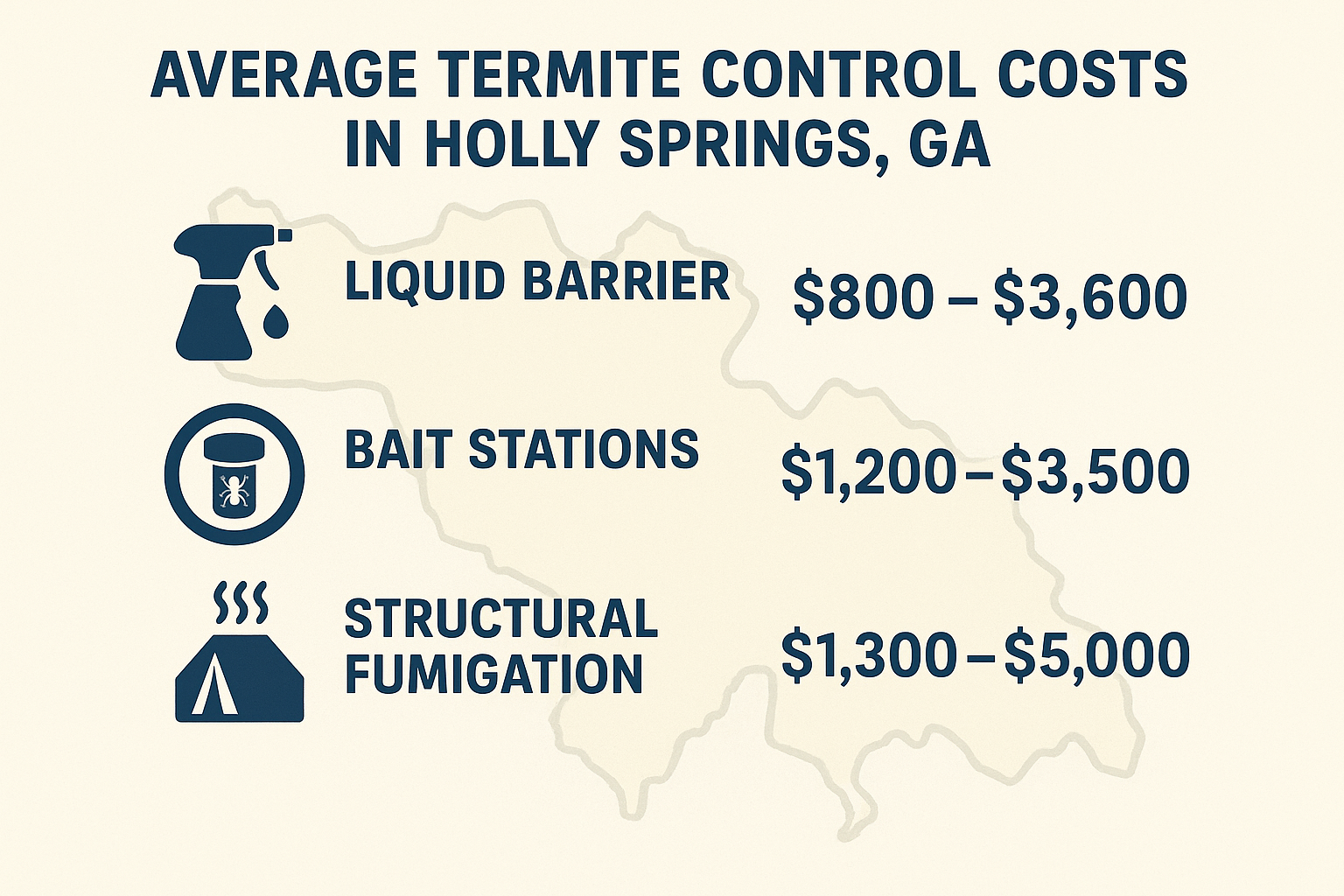
Below is the AI‑generated infographic that visualizes the typical price ranges for Holly Springs homeowners. It breaks down the three most common methods—liquid barrier applications, bait‑station programs, and structural fumigation—so you can see at a glance where each solution lands on the cost spectrum.
| Treatment Type | Average Cost (USD) | Typical Lifespan | Recurring Fees |
|---|---|---|---|
| Liquid Barrier (Termiticides) | $2,200 – $4,500 | 5 – 10 years (depending on product) | Annual inspection ($80‑$120) |
| Bait Station Program | $1,800 – $3,200 | 3 – 5 years (stations replaced as needed) | Quarterly monitoring ($100‑$150 per visit) |
| Structural Fumigation (Tent) | $4,500 – $7,800 | One‑time; no residual protection | Post‑treatment follow‑up (often free) |
The numbers in the table are averages drawn from local contractors, including Anthem Pest Control, and they illustrate why a single “price” rarely tells the whole story. A liquid barrier may appear cheaper than a full‑house fumigation, but you’ll still pay for yearly inspections to ensure the chemical barrier remains intact. Bait stations, while modest in upfront cost, require regular monitoring and occasional station replacement, which adds to the long‑term expense.
Why do these prices fluctuate? Soil composition is a major player—clay soils retain termiticides longer, allowing a longer lifespan, while sandy soils may leach chemicals faster, prompting earlier re‑applications. Accessibility also matters; homes with tight crawl spaces or extensive landscaping often incur higher labor costs. Finally, local regulations in Fulton County can dictate the type of chemicals permitted, sometimes limiting the use of certain termiticides and nudging homeowners toward bait stations or fumigation.
When you collect quotes, look beyond the headline number. A transparent estimate will itemize labor, product, and any mandatory permits. Pay special attention to warranties: most reputable companies offer a 5‑year guarantee on liquid barriers, provided you schedule the recommended annual inspections. For bait stations, a warranty typically covers the hardware and monitoring service, but not the labor for replacing stations that become ineffective.
Follow‑up inspections are another hidden cost that can become a value‑add. A thorough post‑treatment check confirms that the colony is truly eradicated and helps catch any new activity before it spreads. Companies that bundle these inspections into the original quote usually provide better overall protection than those that charge per visit.
For a deeper dive into the economics of termite control, the University of Georgia Extension publishes a comprehensive guide titled “Termite Management Economics.” The publication outlines cost‑benefit analyses for each treatment option and offers regional data that aligns closely with Holly Springs conditions. Referencing this resource can empower you to ask the right questions and negotiate a fair, transparent price.
Seasonal Activity Patterns and Prevention Strategies
Termites aren’t active year‑round; they march to the beat of temperature and humidity. In Holly Springs, the warm, moist months give colonies the energy they need to forage, while cooler, drier periods force them into a low‑profile mode. Understanding this cycle lets you time inspections and treatments when they’ll be most effective.
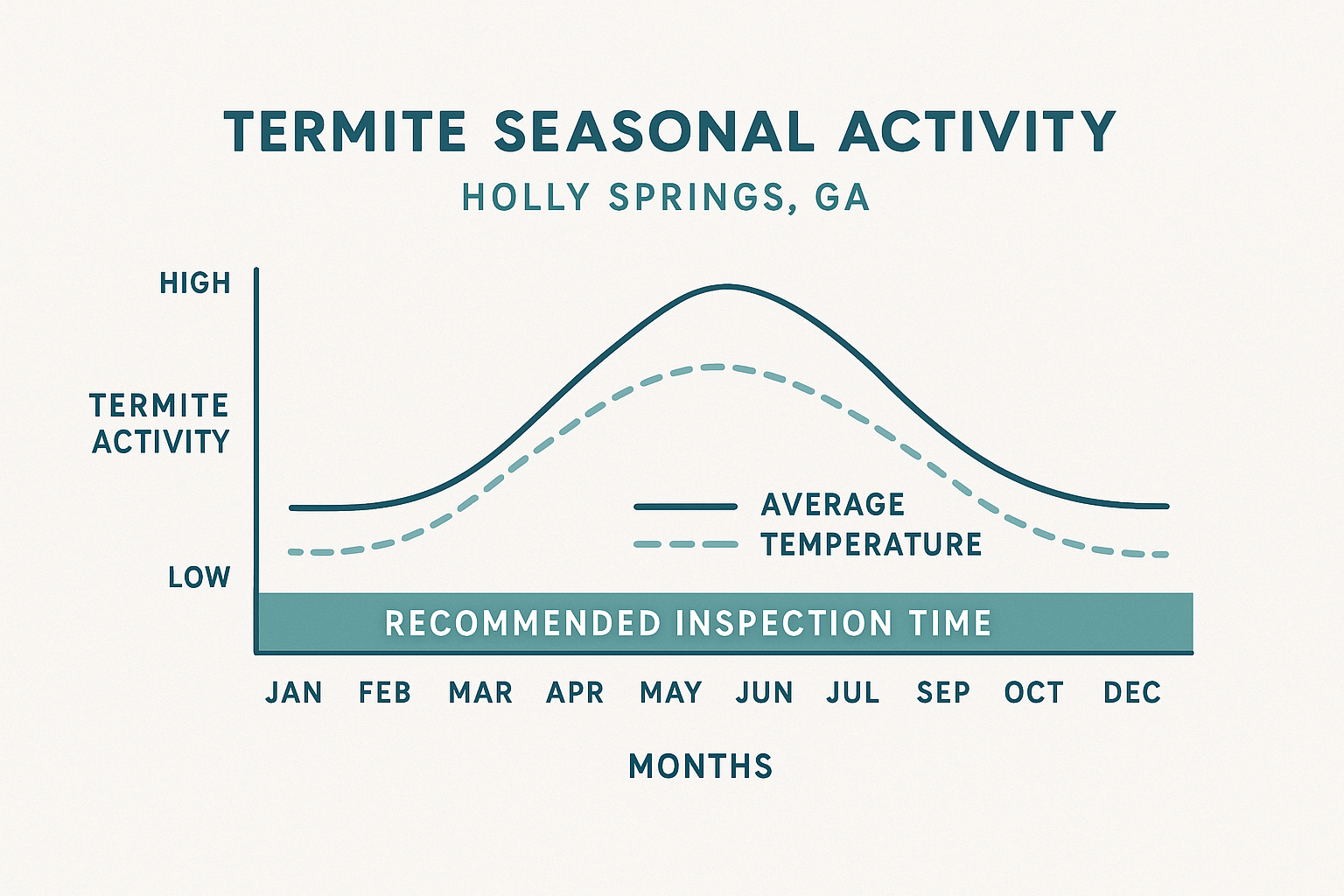
| Month | Activity Level |
|---|---|
| January | Low |
| February | Low |
| March | Medium |
| April | High |
| May | High |
| June | High |
| July | High |
| August | High |
| September | Medium |
| October | Low |
| November | Low |
| December | Low |
With the chart in hand, you can build an inspection calendar that mirrors the termites’ rhythm. A pre‑summer deep‑dive (late March to early April) catches colonies as they awaken, giving you a chance to treat any hidden infestations before they spread. A post‑summer follow‑up (mid‑September) verifies that treatments held up through the peak months. Finally, a brief winter check‑up (late November) ensures that any late‑season survivors are spotted before the next cycle begins.
Recommended Inspection Schedule
- Pre‑summer deep dive: March – April. Focus on foundation seams, crawl‑space vents, and any wood‑to‑soil contact.
- Post‑summer follow‑up: September – October. Re‑inspect treated zones and any new moisture‑prone areas.
- Winter check‑up: November – December. A quick visual sweep to confirm low activity and plan next year’s strategy.
Key Preventative Measures
- Moisture control: Fix leaky gutters, downspouts, and interior plumbing issues. Keep crawl‑space dehumidifiers running when humidity exceeds 60 %.
- Wood‑to‑soil clearance: Maintain at least a 12‑inch gap between any wooden structure (siding, decks, firewood) and the ground.
- Proper grading: Ensure the soil slopes away from the foundation by at least 5 % to divert water runoff.
- Regular professional inspections: A licensed technician can spot early signs—mud tubes, discarded wings, or subtle wood damage—that most homeowners miss.
Using the seasonal chart, you can align treatment timing with the termites’ most vulnerable phase. For example, a liquid barrier applied in early April has the advantage of penetrating the soil when termites are actively expanding their tunnels, creating a more durable shield. Conversely, a spot‑treatment in October targets foraging workers that have already exhausted the high‑activity window, reducing the chance of reinfestation.
For deeper guidance, the EPA’s seasonal termite control recommendations provide federal best practices, while the University of Georgia Extension offers localized tips specific to the Holly Springs climate.
By syncing inspections, moisture management, and professional treatments with the natural ebb and flow of termite activity, you create a proactive defense that keeps your home safe year‑round—without the surprise of a sudden infestation.
Protect Your Home with Expert Termite Services
By now you’ve learned how to spot the tell‑tale signs of a termite invasion, the variety of treatment routes available, what you can expect to pay in Holly Springs, and why timing matters. Let’s pull those pieces together so you can make a confident decision before the next swarm hits.
- Identification signs: mud tubes on foundations, hollow‑sounding wood, discarded wings, and sudden wood damage.
- Treatment options: liquid barrier applications, bait‑station systems, and localized foam or dust treatments for active colonies.
- Cost considerations: a one‑time inspection typically ranges from $75‑$150, while full‑service barrier treatments fall between $1,200‑$2,500 depending on home size and infestation severity.
- Seasonal timing: spring and early summer are peak activity periods, making pre‑season inspections the most cost‑effective strategy.
Understanding these four pillars helps you prioritize action. Recognizing mud tubes early stops a colony before it spreads; choosing the right treatment ensures long‑lasting protection; budgeting wisely prevents surprise expenses; and timing your service before summer maximizes effectiveness.
Choosing a licensed, locally‑experienced team means you get more than just a chemical spray. Our technicians know the soil composition, climate quirks, and building styles unique to Holly Springs, allowing them to tailor a solution that protects your foundation for years. That expertise translates into peace of mind—no more sleepless nights wondering if a hidden colony is chewing away at your home’s structural integrity.
Our Holly Springs team has serviced more than 2,000 homes in the county, giving us a deep map of high‑risk zones and the most effective product blends for local soil types. That track record means faster diagnosis and a treatment plan that fits your home’s construction and your budget.
If you suspect termites or simply want a preventive check, our specialists are ready to help. Call us today at 877‑371‑8196 for a free, no‑obligation quote. The conversation is straightforward: we’ll schedule a thorough inspection, explain any findings, and outline the most effective, budget‑friendly treatment plan.
Don’t wait for the next peak season to arrive. A proactive inspection now can stop termites before they establish a colony, saving you thousands in future repairs. Schedule your inspection before the summer surge and lock in the current pricing before demand drives rates up.
Visit Anthem Pest Control to learn more or to book your free quote online.