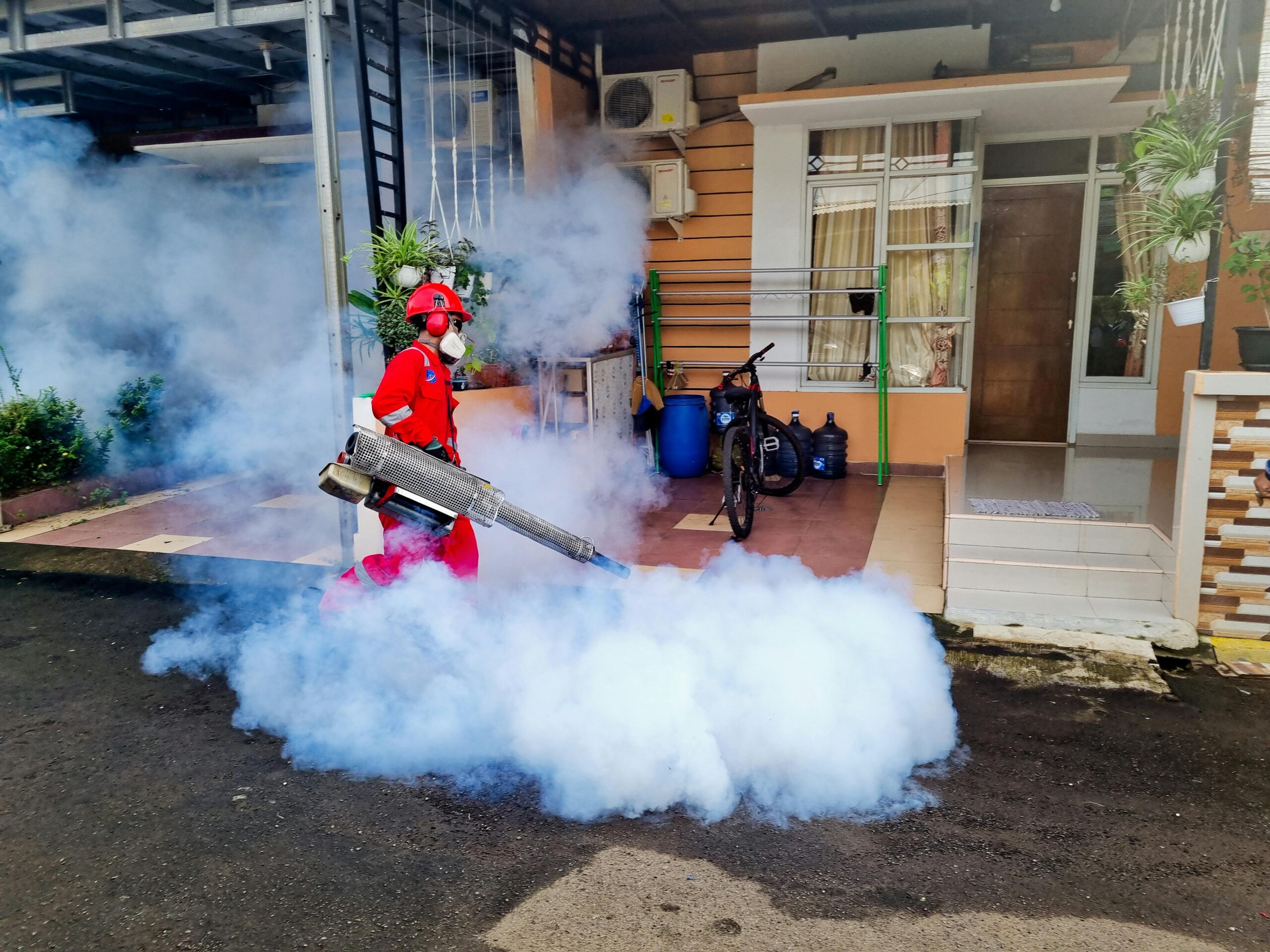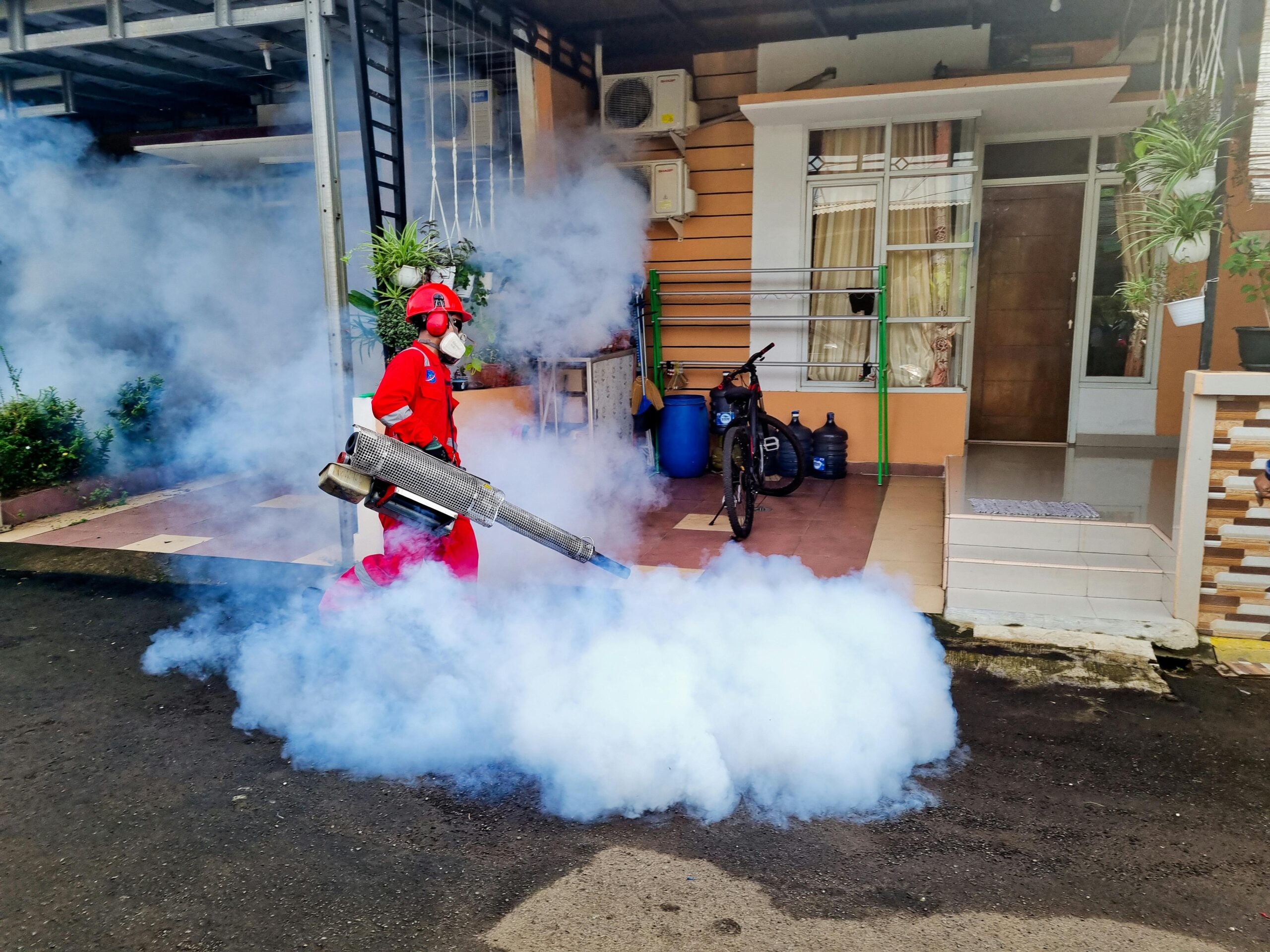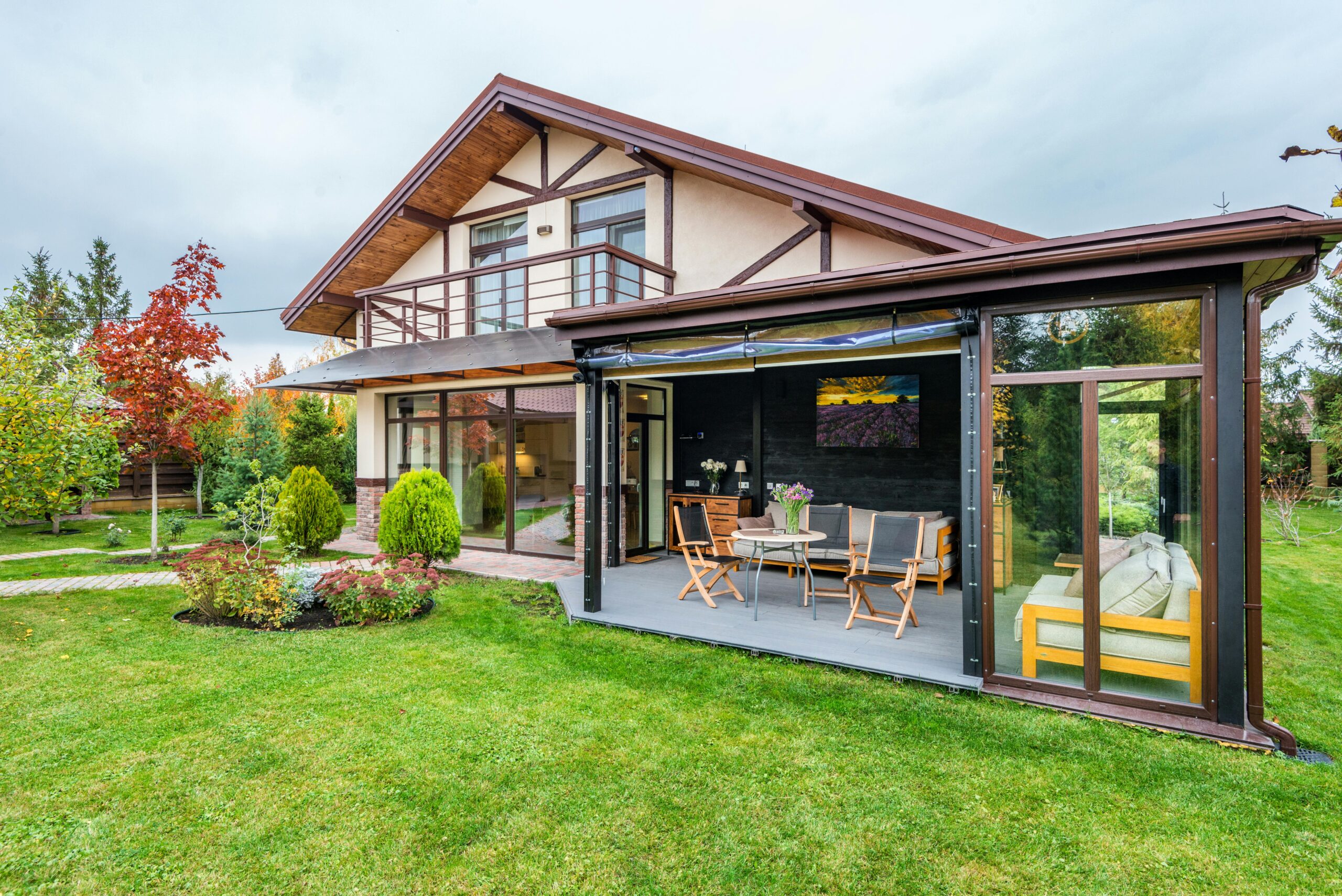
Understanding Termite Risks in Georgia Homes
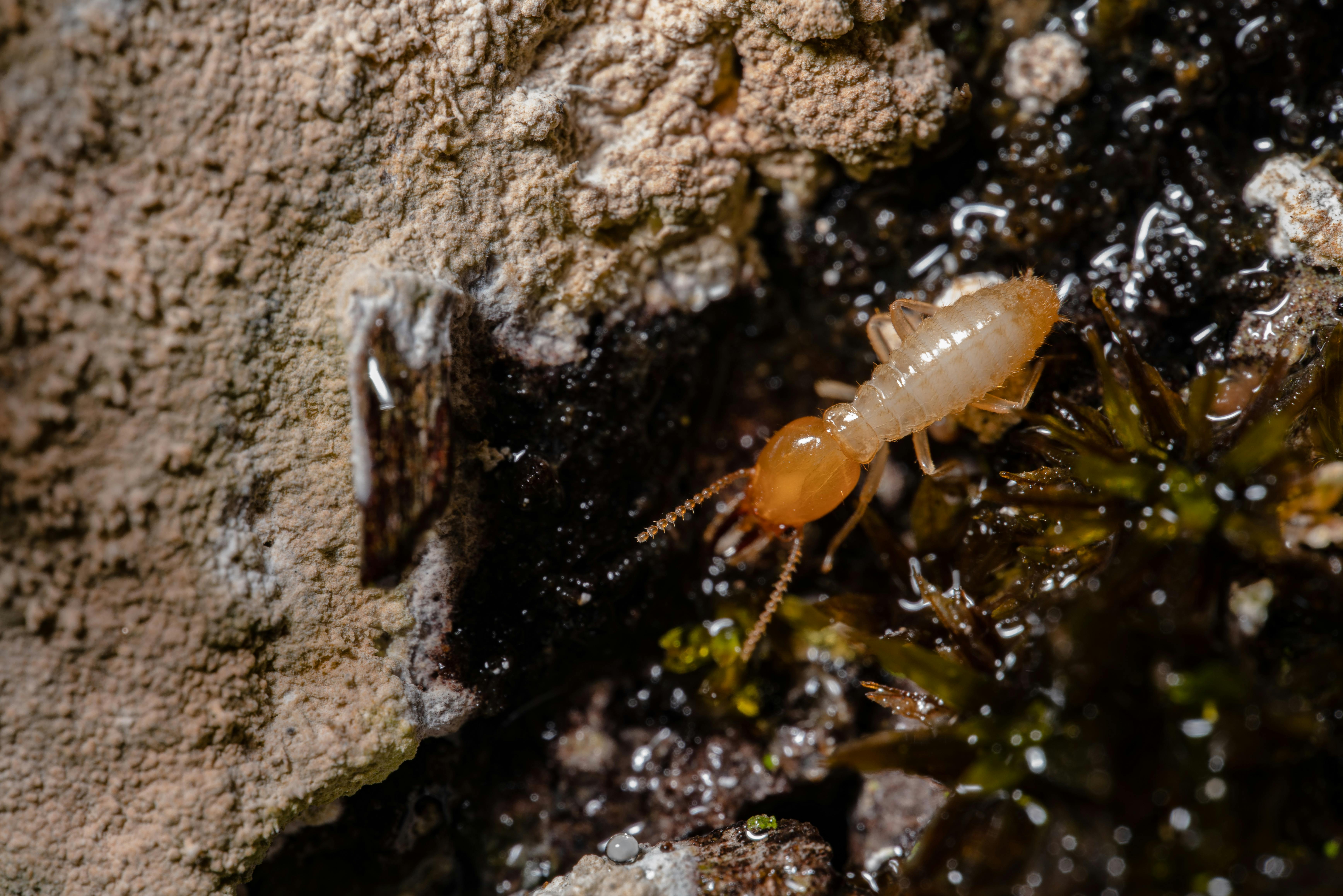
Georgia’s warm, humid climate creates an ideal playground for termites, and homeowners in Woodstock are no exception. Before you hear that unsettling click of a wood‑eating pest, it’s worth knowing which species are most likely to invade your home, how much damage they can cause, and the early clues that signal an infestation.
Common Termite Species in Georgia
The state’s two primary culprits are subterranean termites and drywood termites. Subterranean termites live underground, traveling through moist soil to reach the wooden structures above. They build protective mud tubes that you’ll often see on foundation walls or siding. Drywood termites, on the other hand, thrive directly inside the wood they consume, requiring no soil contact. They leave behind tiny, discarded wings after a swarm and can create hollowed‑out galleries that look like natural wood grain.
Cost of Damage and Frequency of Infestations
According to the University of Georgia’s Extension Service, termites cause over $300 million in residential damage each year across the state. In fact, roughly 1 in 5 homes in Georgia will experience a termite problem at some point. The average repair bill for a moderate infestation can range from $2,500 to $8,000, depending on the extent of structural damage and the treatment method required. These figures underscore why early detection isn’t just a nice‑to‑have—it’s a financial necessity.
Typical Signs of Termite Activity
Spotting termites early often comes down to recognizing a few tell‑tale signs. Look for any of the following during routine walk‑throughs of your property:
- Mud tubes: Pencil‑thin, mud‑filled tunnels on exterior walls, foundations, or crawl‑space walls.
- Discarded wings: Light, papery wings left near windows, doors, or light fixtures after a swarm.
- Wood damage: Hollow-sounding wood, blistered paint, or a “tunnel” pattern when you tap a wooden surface.
- Audible clicking: The faint sound of termites chewing or moving within wood—often heard when you listen closely to a wooden beam.
Why Woodstock’s Climate and Soil Make It a Hotspot
Woodstock sits in the foothills of the Appalachian Plateau, where the soil is a mix of loamy and clay textures that retain moisture—exactly what subterranean termites love. Summers regularly climb above 90°F with high humidity, while mild winters provide a long active season for both subterranean and drywood species. The combination of warm temperatures, abundant moisture, and abundant mature trees for nesting means termites can establish colonies quickly and remain active for most of the year.
The Importance of Regular Inspections and Early Intervention
Because termites operate silently and can cause hidden damage, a proactive inspection schedule is your best defense. A qualified technician from Anthem Pest Control can locate mud tubes, test wood moisture, and use infrared tools to detect hidden galleries without tearing down walls. Early intervention—whether it’s a targeted bait system, liquid barrier, or localized foam treatment—preserves structural integrity and saves you from costly repairs down the line.
In short, understanding the local termite landscape, recognizing the warning signs, and committing to routine professional inspections are the three pillars of protecting a Georgia home. When you partner with a trusted local expert like Anthem Pest Control, you gain the knowledge and tools needed to keep termites at bay, ensuring your Woodstock residence stays safe, sound, and financially secure.
Seasonal Pest Activity in Woodstock, GA
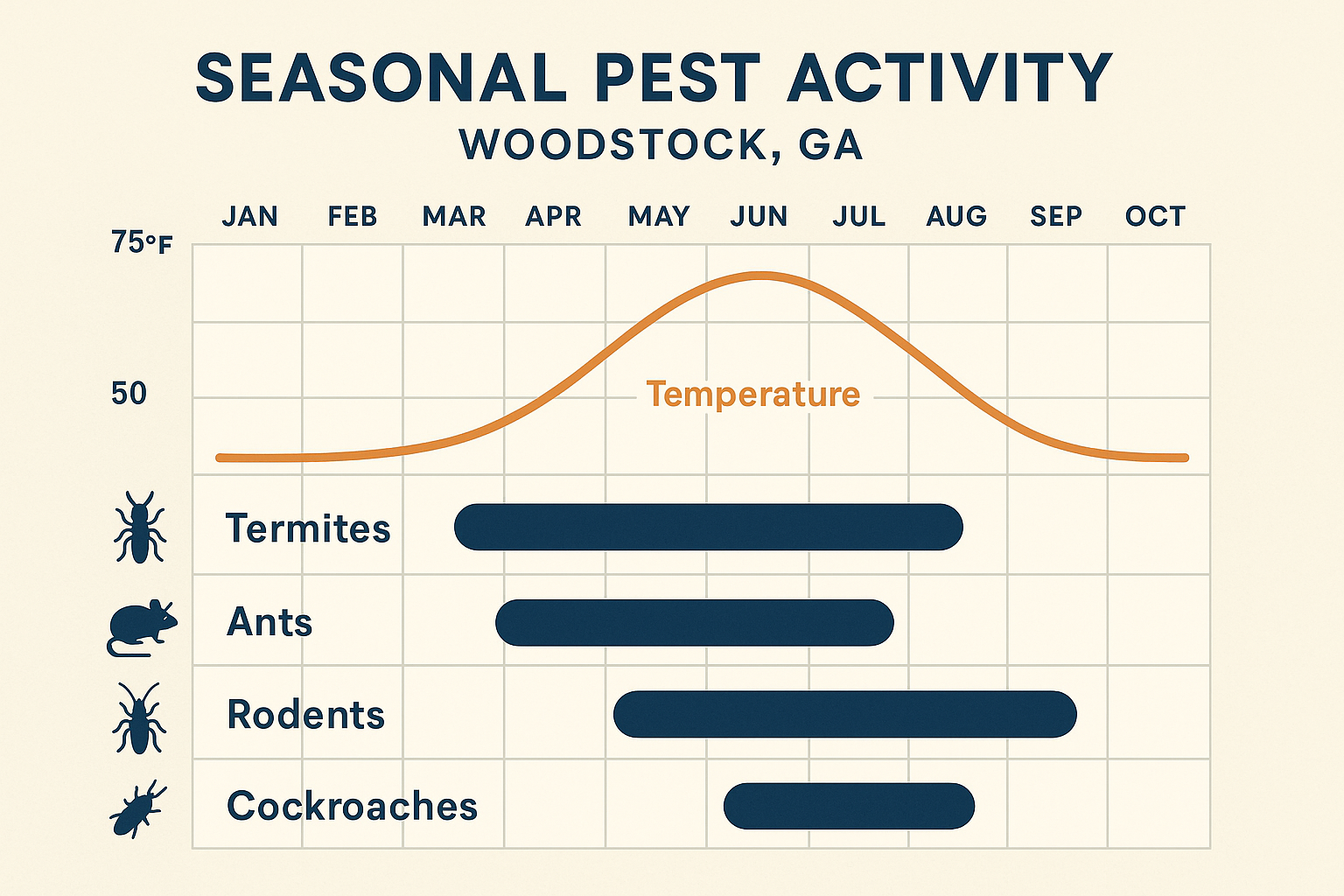
Understanding the rhythm of pest life cycles is the first step to staying one step ahead of unwanted guests. In Woodstock, the climate shifts throughout the year, and each change creates a window of opportunity for a different pest. By recognizing when termites, ants, rodents, and cockroaches are most likely to emerge, you can schedule inspections and treatments when they’ll be most effective.
Peak Months for Common Pests
The table below condenses local climate data into a quick‑reference guide. These months represent the height of breeding or foraging activity for each pest group in Woodstock.
| Pest | Peak Months | Key Behaviors |
|---|---|---|
| Termites | April – June | Swarm flights, colony expansion |
| Ants (carpenter & fire) | May – August | Foraging trails, nest building |
| Rodents (mice & rats) | September – November | Indoor nesting, food‑searching |
| Cockroaches | June – October | Rapid breeding, kitchen infiltration |
How Temperature and Humidity Drive Pest Behavior
Woodstock’s humid subtropical climate means warm temperatures and high moisture levels for much of the year. Termites, for example, need soil moisture above 15 % to maintain their colonies; that’s why they surge when spring rains raise ground humidity. Ants follow a similar pattern—warmer days accelerate brood development, and the extra moisture softens soil for easier nest excavation.
Rodents are a bit different. As cooler evenings arrive in late summer, food stores become scarcer outdoors, prompting mice and rats to seek shelter inside homes. Their activity spikes when nighttime temperatures dip below 65 °F, which is why you’ll hear more scurrying in September and October.
Cockroaches thrive in the hot, damp months of June through October. Their eggs hatch faster at temperatures above 80 °F, and the humidity in kitchens and bathrooms provides the ideal breeding ground. A sudden rainstorm can also drive outdoor roaches indoors seeking a dry refuge.
Practical Tips to Align Prevention with Peak Activity
- Termite barrier applications: Schedule a professional soil treatment in early March, before the April‑June swarm window. A pre‑emptive barrier gives the colony no foothold when the first swarms appear.
- Ant monitoring: Place bait stations in late April. By the time ant foraging peaks in May, the bait will already be attracting workers and delivering the active ingredient back to the nest.
- Rodent exclusion: Conduct a thorough exterior inspection in late August. Seal cracks, trim vegetation away from the foundation, and install snap‑trap or bait stations before rodents begin their indoor migration in September.
- Cockroach control: Initiate a deep‑cleaning and gel bait placement in early June. Follow up with a perimeter spray in July to knock down any outdoor harborage before the October peak.
- Seasonal inspection checklist: Walk your property each month, looking for moisture buildup, chewed wiring, or mud tubes. Early detection lets you act before pests become entrenched.
By pairing these actions with the visual guide in the chart above, you’ll have a clear, year‑long roadmap for protecting your Woodstock home. Remember, the most cost‑effective strategy is to stay proactive—treat before the pest pressure builds, and you’ll avoid expensive emergency calls later in the season.
Comparing Termite Treatment Options and Costs
When it comes to protecting a Woodstock home from termites, you essentially have three proven strategies: a liquid barrier that coats the foundation, a network of bait stations that lure termites away, and a full‑house structural fumigation that eradicates an existing infestation. Each method has a distinct price tag, level of invasiveness, and maintenance schedule. Below, we break down what you can expect from each approach so you can match the solution to your home’s age, construction type, and budget.
Liquid Barrier Treatments
A liquid barrier—often called a termiticide perimeter—creates a chemical shield in the soil around and beneath the foundation. Technicians drill small holes, inject the product, and then back‑fill, ensuring the chemical stays in contact with any termites trying to cross.
Typical cost in Georgia: $1,500 – $3,500 per treatment, according to Smart Solutions Pest Control. Prices vary based on lot size, soil type, and the specific termiticide used.
- Pros: Immediate protection, works on both subterranean and dry‑wood termites, and usually lasts 3‑5 years before retreatment is needed.
- Cons: Requires excavation around the foundation, which can be messy; effectiveness can diminish if soil conditions change; and it doesn’t address termites already inside the structure.
- Maintenance: Minimal—most homeowners only need an annual inspection to confirm the barrier remains intact.
Bait Station Systems
Bait stations are placed discreetly around the property, usually 10‑20 feet apart. Each station contains a cellulose substrate infused with a slow‑acting insecticide. Foraging termites carry the bait back to the colony, eventually eliminating it.
Typical cost in Georgia: $1,200 – $2,500 for installation and the first year of monitoring, per the same Smart Solutions source. Ongoing monitoring and bait replacement add roughly $150‑$300 per year.
- Pros: Low visual impact—stations are small and hidden in landscaping; effective against both subterranean and dry‑wood termites; and the system can adapt as colonies shift.
- Cons: Requires quarterly visits from a technician to check and replace bait; protection is only as strong as the colony’s exposure to the stations; and initial set‑up can be slower to show results.
- Maintenance: Ongoing—regular inspections are essential to keep the bait active and replace any stations that become compromised.
Structural Fumigation (Whole‑House)
Fumigation involves sealing the entire home and releasing a gas—typically sulfuryl fluoride—that penetrates wood, furniture, and hidden voids. It’s the most aggressive option and is usually reserved for severe infestations or when other methods have failed.
Typical cost in Georgia: $5,000 – $8,000 per treatment, based on data from Smart Solutions. The price reflects the labor‑intensive setup, the need to vacate the home for 24‑48 hours, and the specialized equipment required.
- Pros: One‑time, comprehensive eradication of all termites inside the structure; no need for ongoing monitoring; works on both subterranean and dry‑wood species.
- Cons: Highly invasive—home must be vacated; expensive; does not provide long‑term protection after the gas dissipates; and may require a follow‑up barrier or bait system to prevent re‑infestation.
- Maintenance: None for the fumigation itself, but most experts recommend a post‑treatment barrier or bait program to keep termites out.
Situational Recommendations
Older homes with extensive wood framing: A liquid barrier combined with bait stations often offers the best balance of cost and protection. The barrier stops new colonies from entering, while bait stations hunt down any that have already nested within the framing.
New construction or homes built on slab foundations: A liquid barrier alone may suffice, especially if the foundation is well‑sealed. The initial outlay is lower, and the protection can last several years without the need for visible stations.
Severe, active infestations: If termites have already caused visible damage—such as hollowed beams or extensive mud tubes—a structural fumigation may be the only way to eradicate the colony quickly. Follow up with a barrier or bait system to safeguard against future invasions.
Budget‑conscious homeowners: Start with a bait station program, which has the lowest upfront cost. Pair it with an annual inspection; if the bait proves effective, you may avoid the higher expense of a liquid barrier or fumigation.
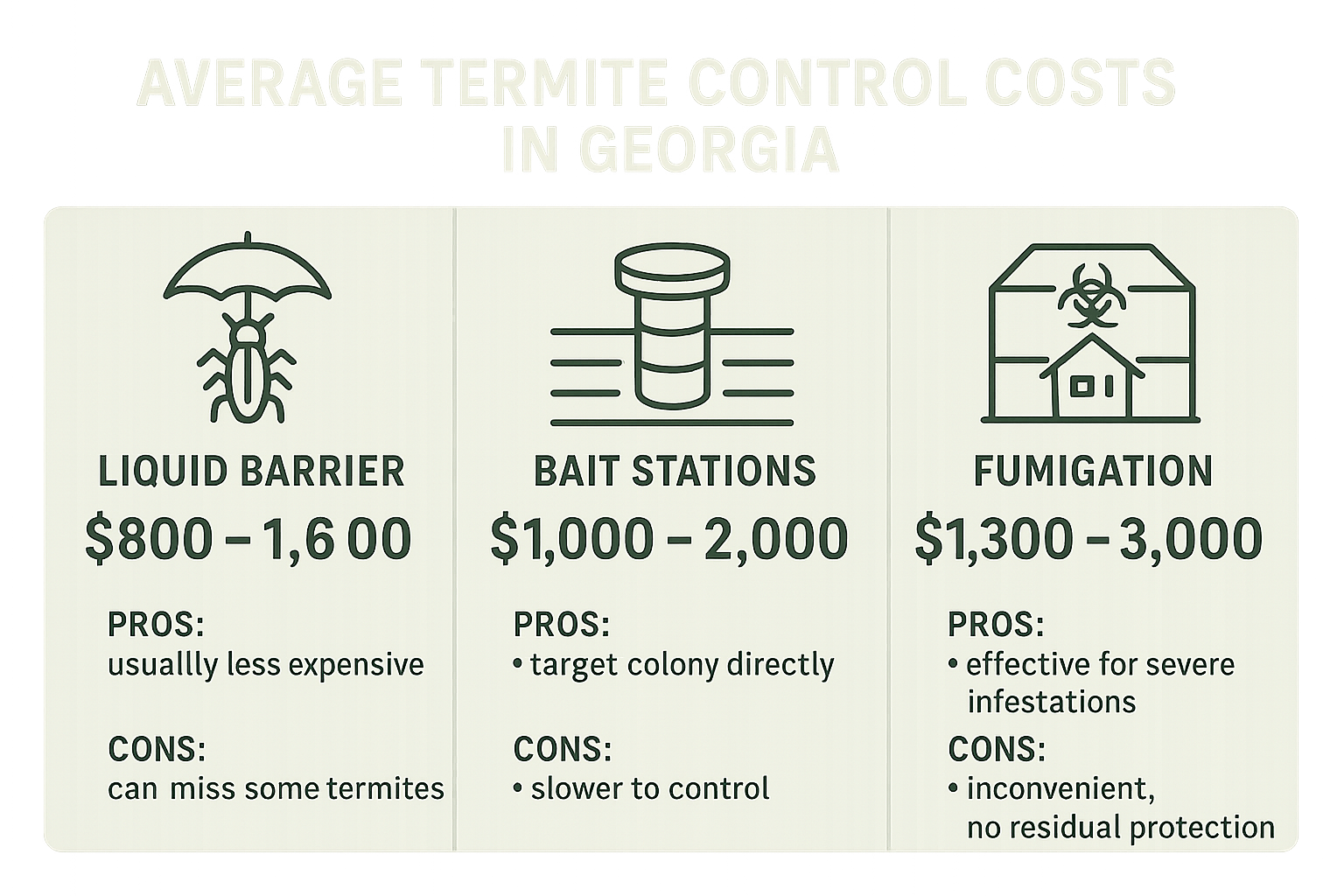
| Method | Typical Price Range | Protection Duration | Invasiveness | Maintenance Frequency |
|---|---|---|---|---|
| Liquid Barrier | $1,500 – $3,500 | 3‑5 years | Moderate (soil excavation) | Annual inspection |
| Bait Stations | $1,200 – $2,500 (first year) | Ongoing with monitoring | Low (discreet stations) | Quarterly visits |
| Structural Fumigation | $5,000 – $8,000 | Immediate, but no long‑term barrier | High (home vacated) | None (post‑treatment barrier recommended) |
Choosing the Right Pest Control Provider
Licensing, Certifications, and Insurance
Before you sign a contract, verify that the company holds a valid Georgia pesticide license and any relevant industry certifications (e.g., EPA‑registered applicator, National Pest Management Association (NPMA) credentials). Proper licensing proves the technicians have passed state‑mandated training and are legally permitted to apply chemicals. Insurance is equally important; a reputable provider should carry general liability coverage to protect your home and personal property should an accident occur during treatment.
Treatment Guarantees & Transparent Pricing
Look for companies that back their work with written guarantees. A solid guarantee outlines the duration of protection, what actions will be taken if pests return, and any exclusions. Transparent pricing means you receive a detailed estimate that breaks down labor, product costs, and any follow‑up visits. Avoid providers who give vague “call for a quote” answers without a clear itemized sheet.
Eco‑Friendly Products & Trained Technicians
Today’s homeowners expect pest solutions that safeguard families, pets, and the environment. Choose a provider that prioritizes low‑toxicity, EPA‑approved products and follows Integrated Pest Management (IPM) principles—using chemicals only when necessary and focusing on prevention first. Trained technicians should be able to explain why a particular product is chosen, how it works, and the safety steps they take before, during, and after application.
Local Knowledge Matters
Woodstock has a unique blend of suburban landscaping, mature trees, and historic homes, which creates specific pest hotspots. A company that has operated in the area for several years understands the seasonal surge of subterranean termites, the preferred harborage of German cockroaches in kitchen cabinets, and the rodent pathways along older utility lines. This local expertise translates into faster diagnosis, targeted treatments, and higher long‑term success rates.
What Anthem Pest Control Offers
Anthem Pest Control combines the criteria above into a single, homeowner‑focused service package:
- Termite inspections: Thorough visual and moisture‑meter assessments of foundations, crawl spaces, and wooden structures.
- Barrier installations: Professional-grade liquid termiticides applied to soil and structural voids, creating a long‑lasting shield against subterranean termites.
- Bait monitoring: Discreet, station‑based bait systems that attract foraging termites and allow technicians to adjust treatment levels based on real‑time activity.
- Broad‑spectrum pest management: Solutions for cockroaches, ants, rodents, mosquitoes, and bed bugs, all delivered with EPA‑approved, low‑impact products.
- Annual service plans: Predictable, upfront pricing that includes scheduled inspections, re‑applications, and warranty coverage.
Proven Track Record in Woodstock
Homeowners throughout Woodstock consistently report reduced pest sightings after partnering with Anthem. In neighborhoods with older homes, the company’s termite barrier program has lowered repeat infestation rates by over 40% compared to generic, non‑local providers. Similarly, the integrated cockroach and ant treatments have shown a 90% reduction in indoor activity within the first three months, thanks to targeted bait placement and regular monitoring visits.
These outcomes are not just numbers; they reflect a commitment to staying current with Woodstock’s evolving pest patterns. Anthem’s technicians attend quarterly training sessions that cover new product formulations, changes in local building codes, and emerging pest threats such as the Asian longhorned beetle, which has recently been spotted in nearby counties.
When you choose a pest control partner, the decision should rest on more than price alone. By vetting licensing, guarantees, eco‑friendly practices, and local knowledge, you protect your home from both current invasions and future surprises. Anthem Pest Control meets each of these benchmarks, offering Woodstock homeowners a reliable, transparent, and environmentally conscious solution for termites, cockroaches, ants, rodents, and the full spectrum of household pests.
Protect Your Home Today with Anthem Pest Control
Why Timely Treatment Matters
Termites are one of the most destructive pests in Georgia, silently chewing through wood, foundations, and support beams. A small colony can cause thousands of dollars in hidden damage before you even notice a sign. Professional treatment stops the infestation before it spreads, protects the structural integrity of your home, and preserves its resale value.
Seasonal Timing & Cost
In Georgia, termite activity peaks in the warm, humid months of late spring through early fall. Scheduling an inspection and treatment during these windows catches termites when they’re most vulnerable, often reducing the amount of product needed. Because Anthem offers transparent, flat‑rate pricing, you’ll know exactly what the service costs—typically ranging from $300 to $800 for a full termiticidal barrier, depending on home size and soil conditions.
Take the First Step
Don’t wait for visible damage. A free, no‑obligation inspection lets a certified technician pinpoint any activity and recommend the most effective plan for your property. Booking takes just a few clicks or a quick phone call, and you’ll receive a detailed report with no hidden fees.
Why Choose Anthem?
Anthem Pest Control combines industry‑leading, low‑toxicity products with a proven application process that safeguards both your family and the environment. Their technicians are locally trained, understand Woodstock’s unique soil and construction styles, and follow a transparent pricing model—so you never face surprise charges. The result is a safe, effective, and affordable solution that gives you peace of mind year after year.
Get in Touch
Ready to protect your home? Call Anthem Pest Control today at 877‑371‑8196 for a free quote, or visit Anthem Pest Control to schedule your inspection online. Your home deserves the best defense—let the experts handle the rest.