Why Millipedes Matter in Peachtree City Homes
Millipedes may look like tiny, many-legged toys, but they’re more than just a curiosity in your yard—a fact many homeowners discover during a millipede inspection Peachtree City professionals often recommend. These elongated arthropods typically measure 1-2 inches, sport a hard, segmented exoskeleton, and range in color from earthy brown to glossy black. Their life cycle begins as eggs tucked into moist soil, hatches into a juvenile that adds segments with each molt, and can take up to three years to reach adulthood. In their natural state they thrive in leaf litter, mulch, and the shaded, damp corners of gardens—exactly the environments many Peachtree City homeowners love to cultivate.
Common Misconceptions
It’s easy to label millipedes as “harmless detritivores” because they feed on decaying plant material and rarely bite. However, when they migrate indoors they become a nuisance. Large clusters can appear on windowsills, in basements, or under appliances, creating an unsettling visual and, in extreme cases, staining fabrics with their defensive secretions. Understanding the line between a benign garden helper and an indoor irritant is key to deciding when to act.
Why Peachtree City Attracts Millipedes
Peachtree City’s humid subtropical climate, abundant rainfall, and well‑maintained landscaping provide the perfect cocktail for millipedes. The city’s popular use of wood chips, mulch, and shaded flower beds retains moisture, creating year‑round shelter and food sources. Even mild winters rarely drop low enough to kill off the population, allowing them to emerge in spring and fall when temperatures are moderate and soil remains damp.
Key Warning Signs
- Visible clusters of millipedes near entry points, especially after rain.
- Disrupted mulch or leaf piles with tiny tunnels and shed exoskeletons.
- Frequent sightings in crawlspaces, basements, or under kitchen cabinets.
- A faint, oily residue on walls or fabrics caused by their defensive fluids.
What Comes Next
Now that you can identify millipedes and recognize the early signs of an indoor incursion, the rest of this guide will walk you through the details you need to stay ahead of the problem. We’ll cover:
- How to differentiate millipedes from similar pests.
- Seasonal activity patterns specific to Peachtree City.
- Step‑by‑step inspection tips for homes and yards.
- Typical pricing for professional evaluation and treatment.
- Effective, safe treatment options to keep your home millipede‑free.
Armed with this knowledge, you’ll know exactly when it’s time to call a pro and protect your home from an unwelcome, many‑legged invasion.
Spotting Millipedes and Assessing Home Damage
Millipedes are harmless to people, but their presence can signal moisture problems that may damage your home’s structure or landscaping. Knowing what to look for and where they like to hide gives you a head start on preventing costly repairs.
Visual Identification Guide
- Size: Typically 1–2 inches long, though some species reach 4 inches.
- Color: Shades of brown, black, or reddish‑brown; often uniform across the body.
- Leg count: Two pairs of legs per body segment, giving a “many‑legged” appearance.
- Antennae: Short, thin, and tucked close to the head.
- Body shape: Rounded, cylindrical segments that curl into a tight coil when disturbed.
Millipedes vs. Centipedes vs. Woodlice
Confusing these arthropods is easy, but the differences matter:
- Millipedes: Slow movers, harmless, feed on decaying organic matter, and have two pairs of legs per segment.
- Centipedes: Fast, predatory, possess one pair of legs per segment, and can bite if handled.
- Woodlice (pill bugs): Small, glossy, roll into a ball for defense, and live primarily in damp leaf litter.
Typical Entry Points
- Cracks in the foundation or slab walls.
- Gaps behind siding, especially where vinyl or wood panels meet.
- Unscreened crawlspace vents and utility openings.
- Improperly sealed door thresholds and window wells.
Potential Damage Overview
- Moisture‑related wood rot: Millipedes congregate in damp wood, accelerating decay that can compromise structural members.
- Concrete staining: Their bodies leave dark, oily marks on basement floors and exterior steps.
- Root chewing: In garden beds, large numbers may gnaw at tender plant roots, weakening seedlings and ornamental shrubs.
- Aesthetic issues: Swarms can create unsightly clusters on decks, porches, and indoor crawlspaces.

Quick Homeowner Inspection Tips
- Lift siding panels in a shaded area and look for small, coiled insects on the wood sheathing.
- Check basement corners and crawlspace joists for moisture stains and millipede clusters.
- Inspect mulch beds and garden borders; a thick layer of mulch retains moisture that attracts millipedes.
- Feel for dampness around window wells and vent covers—these are prime gathering spots.
- If you spot a few millipedes but no moisture, monitor the area; a sudden increase often signals a hidden leak.
Seasonal Millipede Activity in Georgia
Millipedes in Georgia follow a predictable rhythm that mirrors the state’s temperature and rainfall patterns, which is why a millipede inspection Peachtree City homeowners schedule at the right time can be especially effective. Eggs hatch in early spring when soil temperatures rise above 55 °F (13 °C). The juveniles mature through a series of molts, reaching peak adult numbers in the warm, moist months of late summer. As autumn brings cooler nights and frequent rains, adults seek shelter indoors, while winter’s cold and dry conditions force the population into a dormant state deep in the soil.
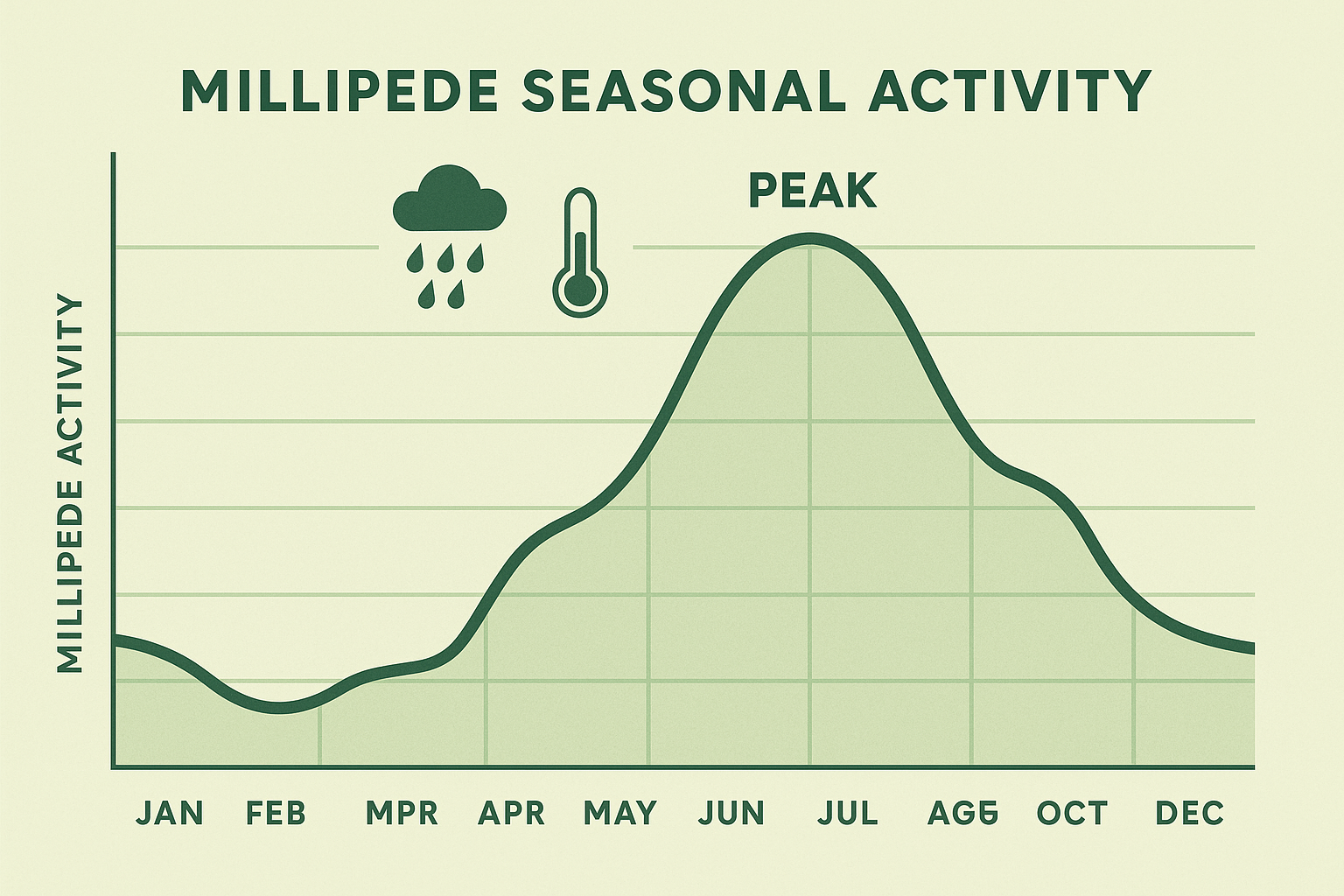
Reading the Seasonal Activity Chart
| Month | Activity Level | Typical Weather |
|---|---|---|
| January – February | Very Low | Cold, dry |
| March – April | Low‑to‑Moderate | Warming soil, occasional rain |
| May – June | Moderate | Warm, increasing humidity |
| July – August | High (Peak) | Hot, frequent thunderstorms |
| September – October | High | Humid, steady rain |
| November – December | Low | Cooling, drier |
The chart makes it clear: July and August are the peak months, while the winter period shows the least activity. Homeowners often notice the most indoor sightings after a heavy summer rain or during the humid fall, when millipedes scramble for dry shelter inside walls, basements, and crawl spaces.
Best Times to Schedule an Inspection
For proactive control, aim for early-spring inspections (late March to early April)—a timing most experts recommend during a millipede inspection Peachtree City homeowners rely on—before the population begins to surge, and a follow-up in late summer (mid-August) when the insects are most active but still manageable. Catching the infestation early lets technicians apply perimeter treatments when millipedes are still near the soil surface, improving efficacy and reducing the need for repeated visits.
Moisture‑Management Tips for Peak Months
- Clean gutters and downspouts regularly to direct water away from the foundation.
- Ensure proper grading around the house; the soil should slope at least 5 % away from the structure.
- Replace any broken or clogged drainage tiles promptly.
- Use a dehumidifier in basements and crawl spaces during humid spells.
- Trim vegetation that touches the house, as it can trap moisture against the exterior.
By aligning inspections with the millipede life cycle and keeping moisture under control, Georgia homeowners can dramatically lower indoor invasions and keep their homes comfortable year‑round.
Professional Inspection Process and What to Expect
Before the technician arrives, a quick pre-inspection preparation on your part can speed up the visit and improve accuracy during a millipede inspection Peachtree City homeowners schedule. Clear away any stored boxes, firewood, or garden debris that might hide millipedes or block access to crawlspaces. Jot down where you’ve seen the critters—near door thresholds, in the basement, or along the foundation—so the inspector can focus on those hotspots.
Once on site, the on‑site walkthrough begins with an exterior foundation check. The technician walks the perimeter, looking for cracks, gaps under siding, and signs of moisture that attract millipedes. A close‑up inspection of the crawlspace follows, where hidden moisture and organic debris often serve as a perfect breeding ground. The inspection also includes a gap assessment under siding and around utility penetrations, because even a quarter‑inch opening can become a highway for these nocturnal crawlers.

During the walkthrough, the technician relies on a set of specialized tools and techniques. A moisture meter pinpoints damp spots where millipedes congregate, while portable dehumidifiers or moisture‑reducing fans can demonstrate how quickly the environment can be dried. Visual surveys with high‑intensity flashlights expose hidden crevices, and in some cases a small video scope is slipped into tight crawlspace openings for a closer look.
- Moisture meter – detects hidden dampness
- Flashlight & video scope – reveals dark entry points
- Moisture‑reducing fans – assess drying potential
- Thermal camera (optional) – spots temperature differentials indicating moisture
At the end of the visit, you’ll receive a concise reporting format that includes:
- Findings Summary – a snapshot of observed millipede activity and any related pest signs.
- Risk Rating – low, moderate, or high, based on moisture levels, structural gaps, and infestation density.
- Recommended Action Plan – step‑by‑step treatments, moisture mitigation measures, and a timeline for follow‑up.
This inspection does more than just target millipedes. By examining the foundation, crawlspace, and surrounding envelope, the technician often uncovers other pest threats—like termites or rodents—and structural concerns such as settling cracks or inadequate drainage. Addressing these issues now protects your home from a cascade of future problems, keeping both your family and your investment safe.
Millipede Inspection Pricing and Service Options
When it comes to millipede control, knowing exactly what you’ll pay and what you’ll receive—often clarified during a millipede inspection Peachtree City professionals provide—helps you avoid surprise invoices. In our market, most homeowners spend between $90 and $160 for a one-time inspection and treatment, depending on the depth of service and the size of the property.
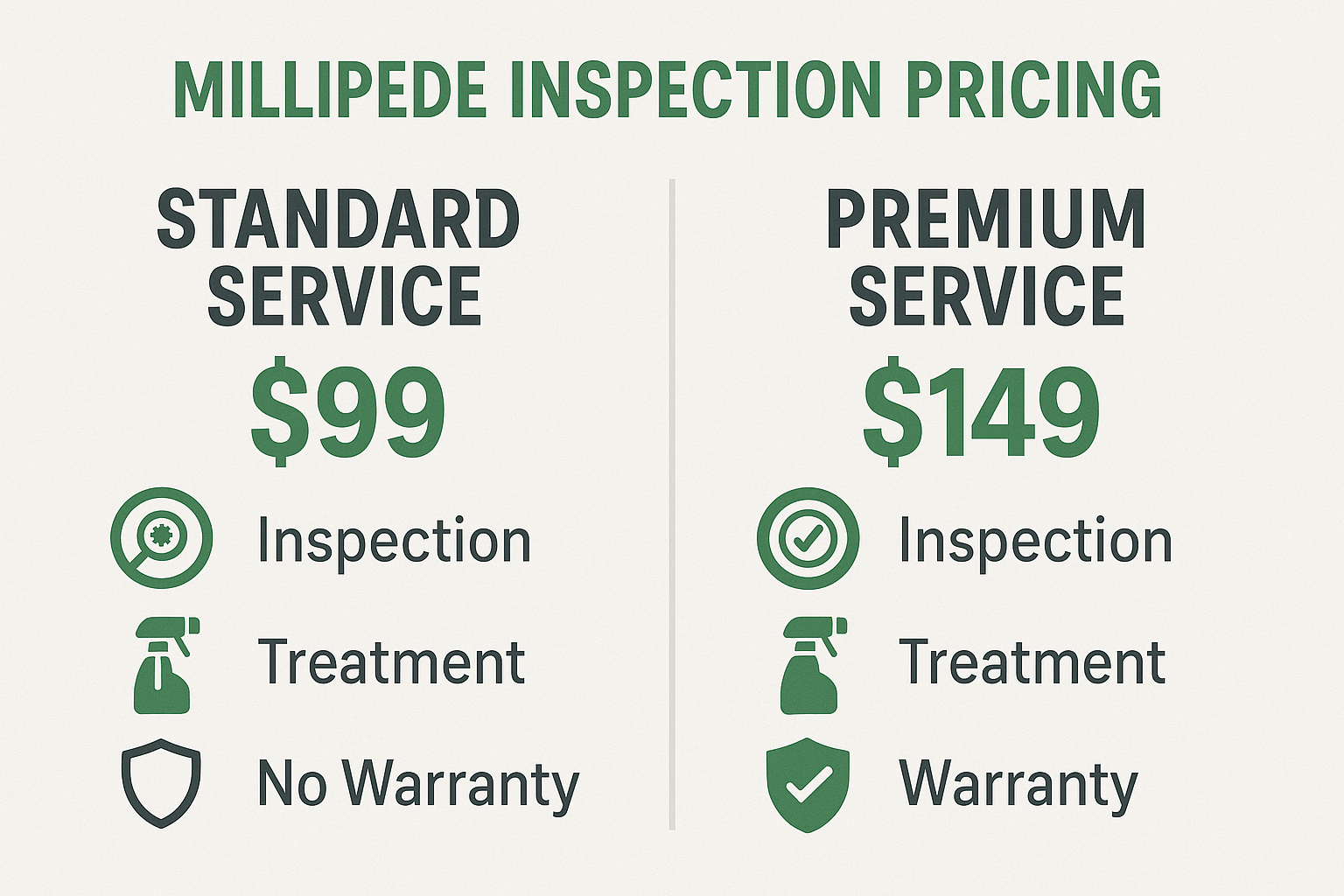
The infographic above breaks down the two most popular packages we offer: the Standard plan at $99 and the Premium plan at $149. Both start with a thorough visual inspection, but the level of treatment and warranty differ.
Standard Package – $99
- Full‑property visual inspection by a certified technician.
- Basic treatment targeting visible millipede congregations (spray or dust).
- 30‑day warranty covering re‑infestation in treated zones.
- One‑time service – no scheduled follow‑up visits.
Premium Package – $149
- Comprehensive inspection that includes soil sampling and perimeter assessment.
- Advanced treatment options such as a long‑lasting soil barrier or perimeter spray.
- 90‑day warranty that includes a complimentary follow‑up visit.
- Priority scheduling for seasonal spikes in millipede activity.
Choosing the right tier depends on three key factors: the square footage of your home, the severity of the current infestation, and how comfortable you are with DIY mitigation. Larger yards or homes with heavy mulch beds often benefit from the Premium package because the soil barrier protects hidden entry points. If you’ve only spotted a few millipedes near the foundation, the Standard option may be sufficient.
Seasonal timing also matters. Millipedes are most active in late summer and early fall, so locking in a Premium service before the first heavy rains can save you from a repeat invasion. Conversely, a quick Standard inspection in early spring can catch early activity before it spreads.
For the most up‑to‑date pricing verification, visit Anthem Pest Millipede Control Cost – Peachtree City, GA. Our transparent rates and clear service outlines make it easy to match your budget with the protection your home needs.
Protect Your Home Today with Anthem Pest Control
Millipedes may seem harmless, but when they swarm into basements, crawlspaces, or garden beds, they can create moisture‑related damage, attract other pests, and turn a tidy yard into a slippery mess. In Peachtree City’s humid climate, these arthropods thrive after heavy rains, and without early detection they can quickly become a nuisance that’s costly to control. Spotting the tell‑tale signs—tiny silk trails, clusters under mulch, or a sudden increase in numbers—lets you act before the problem spreads to structural wood or creates unsanitary conditions.
Anthem Pest Control stands out with crystal‑clear pricing and a team of technicians who know the local millipede habits inside and out. Our estimates include every step of the process, from inspection to follow‑up, so you never face hidden fees. Technicians are trained to identify the species, locate entry points, and apply targeted, environmentally responsible treatments that protect your family, pets, and the surrounding landscape.
Ready to take the next step? We invite you to schedule a complimentary, no‑obligation inspection. Our specialists will assess your property, explain the findings in plain language, and recommend a customized plan that fits your budget and timeline. Whether you need a one‑time treatment or an ongoing prevention program, we’ll tailor the solution to keep millipedes—and any secondary pests—out of your home.
For immediate assistance, call us today at 877‑371‑8196. Our friendly support staff is available to answer questions, book appointments, and guide you through the process.
Protect your home before the next rainstorm—visit Anthem Pest Control online to learn more and claim your free millipede inspection Peachtree City.