Why a Proactive Pest Strategy Matters
What a proactive pest strategy looks like
A proactive pest strategy means identifying and addressing pest threats before they become visible infestations. For U.S. homeowners, it’s a habit of regular inspections, timely treatments, and preventive measures that keep insects, rodents, and other unwanted guests at bay. Instead of reacting to a sudden ant trail on the kitchen floor or a sudden “click” in the attic, you’re staying one step ahead—much like a homeowner who changes the furnace filter before the heating season starts.
Hidden costs of waiting
When pests are allowed to establish themselves, the damage quickly moves beyond a nuisance. Structural repairs are the most obvious expense: termites can hollow out wooden joists, carpenter ants can compromise load‑bearing beams, and rodents chew through insulation and wiring. Those repairs often run into thousands of dollars, especially when the damage is discovered after a home inspection or a sudden ceiling collapse.
Health risks add another layer of hidden cost. Cockroaches and rodents carry allergens that trigger asthma, while bed bugs cause skin irritation and sleepless nights. Mosquitoes are vectors for West Nile virus and other illnesses, turning a simple backyard gathering into a health concern. The indirect costs—medical bills, lost workdays, and reduced quality of life—are rarely accounted for in a homeowner’s budget.
Insurance impacts can be surprising. Many policies will not cover damage caused by preventable pest activity, meaning you could be left footing the entire bill. Moreover, frequent claims related to pest damage can raise your premiums or even affect your eligibility for coverage.
The data speaks: EPA termite damage estimate
The Environmental Protection Agency (EPA) reports that termite damage averages $5,000–$7,000 per home. That figure represents only the repair cost; it does not include the lost time, the inconvenience of living amidst repairs, or the potential devaluation of a property that has a known termite history. When you factor in the cascading expenses—additional pest control services, temporary housing, and possible insurance hikes—the financial impact can easily double.
What’s next in this guide
Now that you understand why early detection saves money and protects health, the rest of this article will walk you through the practical steps to stay ahead of pests:
- Identification: Learn the tell‑tale signs of common household pests.
- Seasonal patterns: Know when each pest is most active in your region.
- DIY prevention: Simple, cost‑effective actions you can take today.
- Professional help: When and why to call Anthem Pest Control for expert intervention.
- Choosing a provider: Criteria for selecting a trustworthy, transparent pest service.
- FAQs & CTA: Answers to common questions and next steps for a pest‑free home.
By adopting a proactive mindset now, you’ll avoid the steep repair bills, health hazards, and insurance headaches that come with a reactive approach. Let’s move forward and equip you with the knowledge to keep your home safe, healthy, and pest‑free.
Know Your Enemy: Key Pests and Their Signs
Spotting a problem before it turns into an infestation can save you time, money, and a lot of stress. The fastest way to stay ahead is a quick visual walk‑through of your home. By learning the tell‑tale signs of the five most common household invaders, you’ll know exactly what to look for and when to call a professional.
Termites
These silent wood‑eaters work under your radar, but they leave clues you can’t miss.
- Mud tubes along foundation walls, crawl spaces, or wooden supports.
- Hollow‑sounding wood when tapped—especially in door frames or flooring.
- Discarded wings near windows or light fixtures after a swarm.
- Sawdust piles (frass) that look like tiny, dry wood shavings.
Impact: Termites can compromise structural integrity, leading to costly repairs that often run into the thousands of dollars.
Mosquitoes
More than a nuisance, mosquitoes thrive in the right micro‑habitats inside and around your home.
- Standing water in flower pots, gutters, or pet dishes.
- Buzzing near dusk, especially around outdoor lights.
- Clustered bite marks on exposed skin.
- Larvae that look like tiny wriggling specks in water containers.
Impact: Female mosquitoes transmit diseases such as West Nile virus and Zika, posing serious health risks to you and your family.
Rodents
Rats and mice are opportunistic, and they’ll exploit any opening they find.
- Gnaw marks on wood, plastic, or even electrical wiring.
- Droppings resembling dark rice grains in cabinets, attics, or under appliances.
- Chewed wires that can spark a fire.
- Nests made of shredded paper, fabric, or insulation.
- Noisy scurrying in walls or ceilings, especially at night.
Impact: Rodents contaminate food, spread pathogens, and create fire hazards by chewing on electrical cords.
Cockroaches
These hardy insects leave a trail of evidence wherever they go.
- Oily, dark spots on cabinets, countertops, or walls.
- Shed skins that look like translucent shells.
- Egg casings (oothecae) often found in hidden cracks.
- Foul, musty odor in heavily infested areas.
- Droppings resembling pepper grains.
Impact: Cockroach allergens trigger asthma and other respiratory issues, especially in children.
Ants
From tiny odorous ants to larger carpenter species, each leaves distinct footprints.
- Visible trails of ants marching in a line to food sources.
- Small soil mounds near entry points or along foundation walls.
- Crushed ants that leave a faint oily residue.
- Damaged food packaging and crumbs in pantries.
- Winged alates during mating flights, often seen near windows.
Impact: Ants can contaminate food, and carpenter ants may hollow out wood, compromising structural components.
According to the National Pest Management Association, 1 in 3 U.S. homes reports a pest issue each year.
Because most of these signs are visual, a quick, systematic inspection—checking basements, attics, kitchens, and exterior drainage—can catch an infestation early. If you spot any of the clues above, it’s time to reach out to a trusted partner like Anthem Pest Control. Our technicians can confirm the pest, assess the risk, and recommend a safe, effective treatment plan before the problem spreads.
When Pests Strike: Seasonal Patterns Across the U.S.
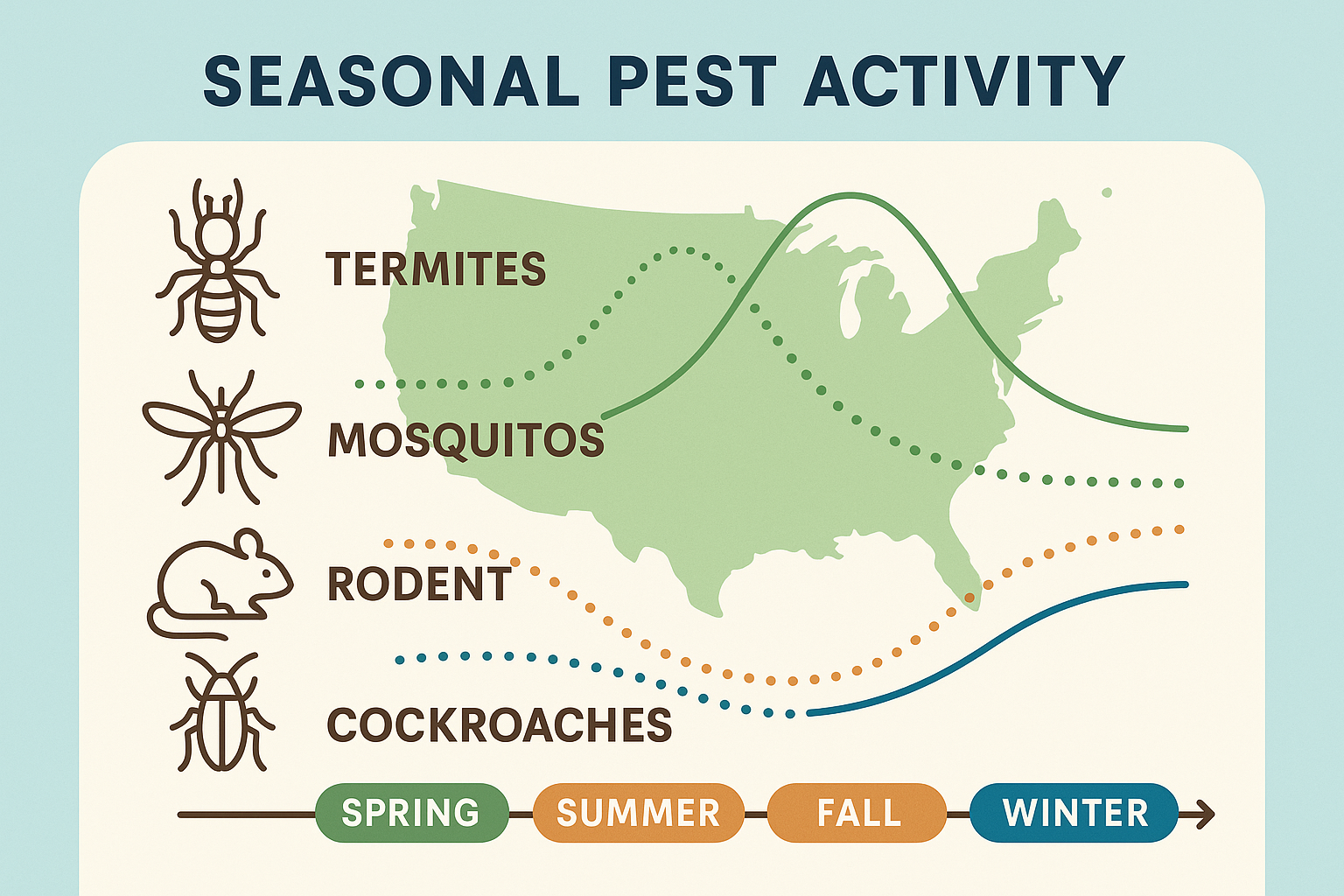
Understanding when pests are most active gives you a head start on protection. Across the United States, temperature, humidity, and daylight hours create predictable “peak” periods for different insects and rodents. By matching your home‑maintenance calendar to these natural cycles, you can spot early warning signs and call in professional help before an infestation takes hold.
Spring – The Awakening
As soil warms and plants burst into growth, many pests emerge from winter dormancy. Termites, for example, intensify their search for moisture and food sources, making this the prime time for colony expansion. Ants also increase foraging activity, while flies begin laying eggs in any lingering organic debris. Homeowners should inspect foundations, crawl spaces, and exterior drainage to eliminate the damp conditions that attract these invaders.
Summer – The Heat‑Driven Surge
High temperatures and abundant standing water create an ideal breeding ground for mosquitoes, flies, and certain beetles. Mosquitoes are especially prolific, feeding on humans and pets from dawn to dusk. The U.S. Centers for Disease Control and Prevention (CDC) reports a 15% rise in mosquito‑borne diseases over the past five years, underscoring the need for proactive source reduction and barrier treatments.
Fall – The Migration
As leaves drop and nights grow cooler, many insects complete their life cycles, but rodents start seeking warmth indoors. Mice and rats infiltrate attics, walls, and basements in search of shelter and food stores. This seasonal shift often catches homeowners off guard, especially if exterior entry points have not been sealed during the summer months.
Winter – The Hidden Threat
While cold weather slows most insect activity, some species, like certain cockroaches and bed bugs, remain active inside heated homes. Their populations can increase unnoticed, leading to larger problems when spring arrives. Regular inspections and early intervention are essential to keep these indoor pests from establishing a foothold.
Regional Highlights
- Southeast – Termite activity spikes in spring when the combination of heat and humidity softens wood, allowing colonies to expand rapidly.
- Midwest – Mosquito populations surge in summer, especially near lakes, rivers, and irrigation ditches that retain standing water.
- Northern states – Rodent indoor movement peaks in fall and winter as animals seek refuge from freezing temperatures.
These regional patterns illustrate why a one‑size‑fits‑all approach doesn’t work. Anthem Pest Control tailors inspections and treatment plans to the specific threats your climate presents, ensuring you get the right protection at the right time.
The timeline graphic above (a vector diagram) visually reinforces the seasonal flow of pest pressure. Use it as a quick reference when planning yard work, outdoor gatherings, or home improvement projects. For example, schedule landscape grading or foundation repairs in early spring before termites become active, and arrange mosquito barrier treatments in late spring to protect summer evenings.
By aligning your home‑care routine with these seasonal trends, you reduce surprise infestations and lower long‑term treatment costs. If you notice any of the warning signs—such as mud tubes in your foundation, standing water that attracts mosquitoes, or gnaw marks on stored food—reach out to Anthem Pest Control at 877‑371‑8196 or visit anthempest.com. Our local experts can confirm the threat, recommend targeted prevention, and schedule a service that fits your calendar.
DIY Prevention Steps That Work
Keeping pests out of your home doesn’t always require a professional’s schedule or a big budget. By tackling a few high‑impact tasks yourself, you can block the most common entry points, eliminate attractive conditions, and save money before a problem escalates. Below are the proven, cost‑effective actions every homeowner can start today.
High‑Impact DIY Actions
- Seal cracks and gaps – Use a quality silicone or acrylic caulk to fill openings around windows, baseboards, utility penetrations, and the foundation. A single tube (5‑10 ft) costs roughly $5‑$15, and most homes need 2‑4 tubes for a thorough seal.
- Install door sweeps – Attach a sweep to the bottom of exterior doors to block insects, rodents, and drafts. Pre‑cut sweeps are available for $10‑$25 each, and installation takes only a few minutes with a screwdriver.
- Ensure proper drainage and eliminate standing water – Redirect downspouts away from the foundation, grade soil to slope at least 6 inches per 10 ft, and clear clogged gutters. The only expense is occasional landscaping tools or a basic French‑drain kit, typically under $30 for a DIY setup.
- Maintain lawn height and remove debris – Keep grass trimmed to 2‑3 inches and prune shrubs away from the house. Removing leaf piles, wood stacks, and compost bins from the perimeter reduces shelter for insects. A good pair of garden shears costs around $15‑$30.
- Store food in airtight containers – Transfer pantry staples, pet food, and bulk items into sealed plastic or glass containers. This denies pantry pests a food source. A set of 5‑piece containers runs about $20‑$35.
Each of these steps tackles a specific pest‑attracting factor: entry, moisture, shelter, or food. By addressing them together, you create a multi‑layered barrier that dramatically lowers the chance of an infestation.
Estimated Cost Ranges
| Action | Typical Cost Range |
|---|---|
| Seal cracks and gaps (caulk) | $5 – $15 per tube (2‑4 tubes needed) |
| Door sweeps | $10 – $25 each |
| Drainage improvements (basic tools/kits) | Under $30 |
| Lawn maintenance tools (shears, trimmer) | $15 – $30 |
| Airtight food containers (5‑piece set) | $20 – $35 |
While exact spending varies by home size and local prices, the total investment for a solid DIY prevention package typically falls between $70 and $150. This is a fraction of the cost of a professional treatment after an infestation has taken hold.
Note: The 2024 average DIY prevention spend reported by the EPA is pending verification. When the data becomes available, we’ll update these figures to reflect national trends.
Quick‑Check Checklist
- Inspect the exterior for visible cracks or gaps; apply caulk where needed.
- Verify that every exterior door has a functional sweep; replace any that are worn.
- Check gutters and downspouts for clogs; ensure water flows at least 6 feet away from the foundation.
- Walk the perimeter and trim vegetation so it clears the house by at least 12 inches.
- Gather all pantry items and transfer them into airtight containers.
- Remove any piles of leaves, firewood, or compost that sit directly against the home.
- Schedule a seasonal walk‑through (spring and fall) to repeat the checklist.
By ticking off each item on this list, you’ll create an environment that’s far less inviting to termites, ants, rodents, and the other common invaders Anthem Pest Control helps you fight. A little proactive effort now can spare you weeks of stress and a hefty service bill later.
When to Call the Experts: Treatment Modalities
Knowing which treatment method fits your situation can save you time, money, and a lot of frustration. While DIY sprays and traps work for minor sightings, many infestations demand a professional touch. Below we break down the four primary treatment types most homeowners encounter, explain when each is the right choice, and give you a realistic sense of Anthem Pest’s pricing.
Chemical Barrier Applications
A chemical barrier is a perimeter spray or granule treatment that creates an invisible wall around your home. It’s most effective against crawling insects—ants, roaches, termites, and even some spiders—that try to cross the treated zone to reach your indoor space.
- When to use: Persistent ant trails, early‑stage termite activity, or seasonal invasions of roaches and cockroaches.
- Typical price range: $150‑$300 for a standard residential perimeter, though Anthem’s full termite treatment (which includes a barrier) runs $2,500‑$4,500.
- Pros: Long‑lasting protection (up to 12 months), reduces indoor pesticide use, and works silently in the background.
- Cons: Requires professional application for safety and effectiveness; may need re‑application after heavy rain or landscaping changes.
Baiting Systems (Ant & Rodent Stations)
Bait stations are discreet containers that house slow‑acting poison or attractants. Pests pick up the bait and carry it back to the colony or nest, delivering a “social” kill.
- When to use: Established ant colonies, carpenter ant infestations, or rodent problems where direct contact sprays are impractical.
- Typical price range: $100‑$250 for a basic bait placement; comprehensive rodent baiting packages can climb higher.
- Pros: Targets the source rather than just the visible pests, minimal disruption to the home, and low toxicity to humans when placed correctly.
- Cons: Requires regular monitoring and replenishment, and effectiveness depends on pest activity levels.
Integrated Pest Management (IPM) Approach
IPM blends prevention, monitoring, and targeted treatment. It starts with a thorough inspection, identifies entry points, and recommends structural fixes before any chemicals are applied. When chemicals are needed, they’re used sparingly and strategically.
- When to use: Complex or recurring infestations, homes with children or pets, and anyone who prefers a balanced, low‑impact strategy.
- Typical price range: Inspection $99 (Anthem’s standard termite inspection). Full IPM service packages often fall between $300‑$800, depending on the scope.
- Pros: Reduces chemical reliance, promotes long‑term prevention, and is customizable to each property.
- Cons: May involve multiple visits and a higher upfront cost compared to a single‑shot spray.
Eco‑Friendly / Low‑Toxicity Options
For environmentally conscious homeowners, low‑toxicity sprays, botanical extracts, and dusts (like diatomaceous earth) provide a safer alternative. These products work by physical means or by using naturally derived ingredients that break down quickly.
- When to use: Situations where chemical exposure is a concern—nurseries, pet areas, or homes with allergy‑prone occupants.
- Typical price range: $120‑$250 for a targeted eco‑spray; comprehensive eco‑IPM plans can range $400‑$900.
- Pros: Minimal health risks, often acceptable for indoor use, and aligns with green‑living values.
- Cons: May require more frequent applications, and effectiveness can vary with pest species.
Quick Reference Table
| Treatment | When to Use | Price Range | Pros / Cons |
|---|---|---|---|
| Chemical Barrier | Ants, roaches, early termite activity | $150‑$300 (perimeter) Full termite: $2,500‑$4,500 |
Pros: Long‑lasting, broad coverage Cons: Requires professional application, re‑apply after rain |
| Baiting Systems | Established ant colonies, rodent hotspots | $100‑$250 (basic) Rodent packages higher |
Pros: Targets source, low indoor exposure Cons: Needs regular monitoring |
| Integrated Pest Management (IPM) | Recurring or complex infestations, families with kids/pets | Inspection $99 Full service $300‑$800 |
Pros: Reduces chemicals, long‑term prevention Cons: Multiple visits, higher upfront cost |
| Eco‑Friendly / Low‑Toxicity | Eco‑conscious homes, sensitive occupants | $120‑$250 (targeted) Full eco‑IPM $400‑$900 |
Pros: Minimal health risk, green credentials Cons: May need frequent re‑application |
When you notice the first signs of an infestation—tiny trails of ants, faint rustling in the attic, or a sudden increase in mosquito activity—it’s time to assess whether a DIY fix will suffice. If the problem is spreading, recurring, or involves hidden pests like termites, calling Anthem Pest is the smartest move.
Remember, the prices listed above are **current estimates** from Anthem Pest. Rates can shift based on property size, severity of the problem, and regional factors. Always verify the latest pricing on Anthem’s website or by speaking directly with a representative before scheduling service.
What Sets a Trusted Provider Apart
Choosing a pest‑control partner isn’t a decision you want to make on a whim. A reputable company should tick several boxes that protect both your home and your wallet. Below are the core criteria you should evaluate, illustrated with Anthem Pest Control’s own standards as a practical benchmark.
State Licensing and Insurance
Every legitimate pest‑control business must hold the appropriate state licenses for the chemicals and methods it employs. This ensures technicians have met rigorous training requirements and that the treatments comply with local regulations. Insurance is equally vital—it shields you from liability if an accident occurs during service. Anthem Pest is fully licensed in every state it operates and carries comprehensive liability coverage, giving homeowners peace of mind that the work is both legal and protected.
Transparent, Itemized Quotes
Hidden fees are a red flag. A trustworthy provider delivers a clear, itemized estimate before any work begins, detailing the products, labor, and follow‑up visits required. This transparency lets you compare apples‑to‑apples with other quotes and prevents surprise charges later on. Anthem Pest’s pricing model is upfront: each quote lists the exact treatment plan, the number of applications, and any optional add‑ons, so you know exactly what you’re paying for.
Customer Reviews and Ratings
Word‑of‑mouth still matters in the digital age. Look for companies with strong, consistent feedback across platforms like Google, Yelp, and the Better Business Bureau. Anthem Pest boasts a 4.8‑star rating on Google, reflecting thousands of satisfied customers who praise punctuality, professionalism, and lasting results. High ratings coupled with detailed reviews give you a real‑world snapshot of service quality.
24‑Hour Emergency Line
Pests don’t keep office hours, and neither should your provider. An emergency hotline signals that the company is prepared to respond to urgent infestations—whether it’s a sudden termite swarm or a rodent breakthrough in the middle of the night. Anthem Pest maintains a 24‑hour emergency line, ensuring you can reach a qualified technician whenever a crisis strikes.
Local Expertise and Service History
Regional knowledge matters. A company that has operated in your community for years understands the specific pest pressures, seasonal patterns, and local regulations that affect treatment success. Anthem Pest has a ten‑year track record in each of its service areas, allowing its technicians to anticipate problems before they become full‑blown infestations. This longevity also means a proven track record of customer satisfaction and repeat business.
“We called Anthem after spotting ants in our kitchen. The technician arrived within an hour, explained every step, and gave us a written quote. The treatment worked instantly, and the follow‑up call confirmed the ants were gone. I felt confident knowing they were fully licensed and insured. Highly recommend!” – Sarah L., Homeowner
Ready to put these criteria to the test? Contact Anthem Pest Control today for a transparent, licensed, and locally‑experienced solution to your pest problems.
Phone: 877‑371‑8196
Website: https://anthempest.com/
Quick Answers to Common Concerns
Below are quick, bite‑size answers to the most common concerns homeowners share with us.
How often should I schedule inspections?
- Termites: at least once a year, preferably in early spring before colonies become active.
- Mosquitoes: seasonal inspections every 2‑3 months during warm months (May‑September).
- Rodents & Cockroaches: bi‑annual checks—once in spring and once in fall—to catch early activity.
- Bed bugs & Ants: after any travel or new furniture, schedule a follow‑up inspection within 30 days.
- General preventive sweep: an annual “all‑hazard” inspection gives a complete picture of your home’s vulnerability.
Are treatments safe for kids and pets?
- Yes—when applied by certified technicians, our products meet EPA and CDC safety standards.
- We follow CDC guidelines for pesticide exposure (CDC), which include low‑toxicity formulations and precise placement.
- After treatment, we advise keeping children and pets away from treated zones for the recommended re‑entry time—usually 30 minutes to 2 hours, depending on the product.
- All chemicals are applied at the minimum effective dose, and we provide a safety sheet that details any necessary precautions.
What warranty is offered on termite work?
- Standard warranty: 1‑year labor and material guarantee on all termite treatment plans.
- Extended options: 2‑year or 5‑year warranties are available for an additional fee, covering repeat treatments if activity re‑emerges.
- Coverage includes: inspection fees, re‑treatments, and any necessary repairs to monitoring stations.
- Exclusions: damage caused by structural deficiencies, water intrusion, or homeowner‑initiated alterations that compromise the barrier.
- We provide a written warranty packet at service completion, so you know exactly what’s protected.
Can I combine DIY prevention with professional treatment?
- Absolutely—DIY measures work best when they reinforce our professional services.
- Seal cracks, eliminate standing water, and keep food storage airtight to reduce attractants before we arrive.
- After a professional treatment, maintain a clean perimeter: trim vegetation, store firewood off the ground, and use low‑risk repellents as a supplemental barrier.
- Our technicians can advise on which over‑the‑counter products are compatible with the chemicals we apply, avoiding any counter‑productive mixing.
- When you pair DIY vigilance with our scheduled treatments, you typically see a 30‑40% faster reduction in pest activity.
If you need more detail, our team is just a call away.
Take Action with Anthem Pest Control Today
When it comes to keeping your home pest‑free, a few simple habits make all the difference. Here’s a quick reminder of the most important steps you’ve learned:
- Early identification: Spotting the first signs—tiny droppings, gnawed wood, or a sudden increase in insect activity—lets you intervene before an infestation takes hold.
- Seasonal awareness: Knowing which pests are most active in spring, summer, fall, or winter helps you schedule preventive treatments at the optimal time.
- DIY basics: Simple measures like sealing entry points, removing food sources, and maintaining proper yard hygiene are effective first‑line defenses.
- Professional partnership: A qualified pest‑control team provides thorough inspections, targeted treatments, and ongoing monitoring that DIY methods simply can’t match.
Anthem Pest Control brings that professional partnership to your doorstep. Our technicians are trained to recognize every stage of an infestation, from hidden termite damage to elusive bed‑bug nests. We pride ourselves on transparent pricing—no hidden fees, just clear, affordable rates for the exact services you need. And because pests don’t keep office hours, our 24‑hour emergency support ensures you’re never left waiting when a problem spikes.
Ready to put these strategies into action? We’re offering a free, no‑obligation inspection for homeowners who want a professional assessment without any pressure to buy. During the visit, our specialist will walk you through what’s happening, explain the most effective treatment options, and give you a detailed, upfront quote.
Give us a call today at 877‑371‑8196 to schedule your inspection. Our friendly team will find a time that fits your busy schedule and get you on the path to a pest‑free home.
For more information, rates, and to book your free inspection online, visit Anthem Pest Control. Let us handle the pests so you can enjoy a safe, comfortable home—without the worry.