Why Silverfish Matter to Homeowners
Silverfish 101
Silverfish (Lepisma saccharina) are slender, fish-shaped insects that measure about ½ to ¾ inch long and are commonly identified during a professional silverfish inspection Peachtree City homeowners request. Their bodies are covered in silvery scales, giving them a metallic sheen, and they move in a rapid, wavy motion that can startle anyone who spots them at night. These nocturnal foragers thrive in dark, damp places—think bathrooms, kitchens, basements, and laundry rooms—where they can find the starchy residues, mold, and paper fibers they love to eat.
How common are they?
Nationwide surveys estimate that roughly 5‑7 % of U.S. homes host a silverfish population at any given time. While many infestations remain unnoticed, the average homeowner who discovers a problem can face repair bills ranging from $150 for minor paper damage to over $1,000 when drywall or extensive fabric loss occurs. Those numbers may seem modest, but when you multiply them across millions of households, the economic impact becomes significant.
Health and structural risks
Silverfish are not disease vectors, but they can compromise the cleanliness of your pantry and pantry items. By feeding on grains, cereals, and even sugar, they can contaminate food supplies, prompting waste and potential allergic reactions. Their real menace lies in the damage they cause to household materials: they chew through book bindings, wallpaper, clothing, and even the gypsum core of drywall. Over time, this can weaken walls, create unsightly holes in treasured books, and increase humidity‑related mold growth, which poses its own health concerns.
Why Peachtree City homeowners should pay attention
Peachtree City’s humid subtropical climate creates an ideal environment for silverfish. The combination of warm summers, moist basements, and frequently used laundry rooms provides the perfect humidity levels (60‑80 % relative humidity) that these pests need to reproduce rapidly. If you’ve ever noticed a faint, musty odor or tiny, silvery fish‑like silhouettes darting across tile floors, you’re likely dealing with a local silverfish hotspot.
Spotting the signs
Before you call a professional, start by looking for the tell-tale clues often noted during a silverfish inspection Peachtree City homeowners may need: tiny shed skins near baseboards, small silvery specks on bookshelves, and irregular holes in paper or fabric. Recognizing these early warning signs can save you time, money, and the frustration of a full-scale infestation. In the next section, we’ll walk you through exactly how to confirm a silverfish problem and decide when it’s time to bring in the experts at Anthem Pest Control.
Spotting a Silverfish Infestation
Visual cues
Silverfish are slender, fish‑shaped insects that range from ½ to ¾ inch long. Their bodies are a silvery‑gray or light brown, covered in tiny scales that give them a shimmering appearance when they move. They dart in a quick, wavy motion, often disappearing into cracks the moment you notice them.
Common sighting locations
Because they thrive in humid, dark environments, you’ll most likely encounter silverfish in:
- Bathroom corners and behind tiles
- Kitchen cabinets, especially near stored grains or flour
- Laundry rooms where damp clothes pile up
- Basements and crawl spaces with poor ventilation
- Closets or dresser drawers that stay closed for long periods
Physical evidence
Even if you haven’t seen the insects directly, several tell‑tale signs point to a growing population:
- Droppings: Tiny, pepper‑like specks that are yellow‑brown in color, often found on shelves or near food packages.
- Silvery scales: Loose, iridescent flakes that look like crushed fish skin, usually collected near baseboards.
- Skin sheds: The “fish‑scale” skin left behind after a molt, resembling a translucent, paper‑thin fragment.
Damage examples
Silverfish are notorious for nibbling on starchy or protein‑rich materials. Typical damage you might discover includes:
- Notched or ragged edges on book pages and paper documents
- Small holes or peeling in wallpaper and painted walls
- Chewed fabric edges on clothing, curtains, or upholstery

The photo above illustrates the classic “fish‑scale” damage on a paperback’s interior pages—tiny, irregular notches that expand over time if the infestation isn’t addressed. Spotting these signs early can prevent costly repairs to books, wallpaper, and fabrics.
If you notice any combination of the visual cues, locations, or physical evidence described, it’s time to act. A professional inspection from Anthem Pest Control can confirm the extent of the problem and recommend a safe, effective treatment plan before silverfish cause further damage to your home.
How Much Does Professional Silverfish Control Cost?
What Drives the Price?
When you call a pest-control professional for a silverfish inspection Peachtree City homeowners rely on, the quote you receive isn’t a one-size-fits-all number. Several key factors shape the final cost:
- Severity of the infestation: A light, occasional sighting requires far fewer resources than a full‑blown colony spreading through walls and closets.
- Square footage: Larger homes or multi‑unit buildings need more product and longer labor times to achieve complete coverage.
- Treatment type: Options range from a simple chemical barrier to a multi‑step program that includes baiting, moisture control, and follow‑up visits. Each added step raises the price but also boosts long‑term protection.
- Location and access: Homes with difficult-to-reach crawl spaces or older construction may require specialized equipment, influencing labor costs.
Typical Service Packages
Most reputable companies, including Anthem Pest Control, bundle services into clear packages so homeowners know exactly what they’re paying for:
- Basic Inspection: A thorough visual check of kitchens, bathrooms, basements, and attics to confirm silverfish activity and identify entry points.
- Chemical Barrier: Application of low‑toxicity insecticide around perimeter cracks, baseboards, and moisture‑prone zones to create a protective wall.
- Baiting Program: Placement of gel or granular baits in hidden areas where silverfish hide; the bait is consumed and carried back to the colony.
- Follow‑Up Visits: One to three scheduled returns (usually 30‑60 days apart) to reassess, re‑apply treatment, and ensure the infestation is fully eradicated.
Cost Comparison: Silverfish‑Specific vs. General Pest Control
Below is a visual snapshot of average monthly costs based on recent market data. Silverfish‑focused programs tend to be slightly higher because they target moisture‑rich environments and often require baiting.
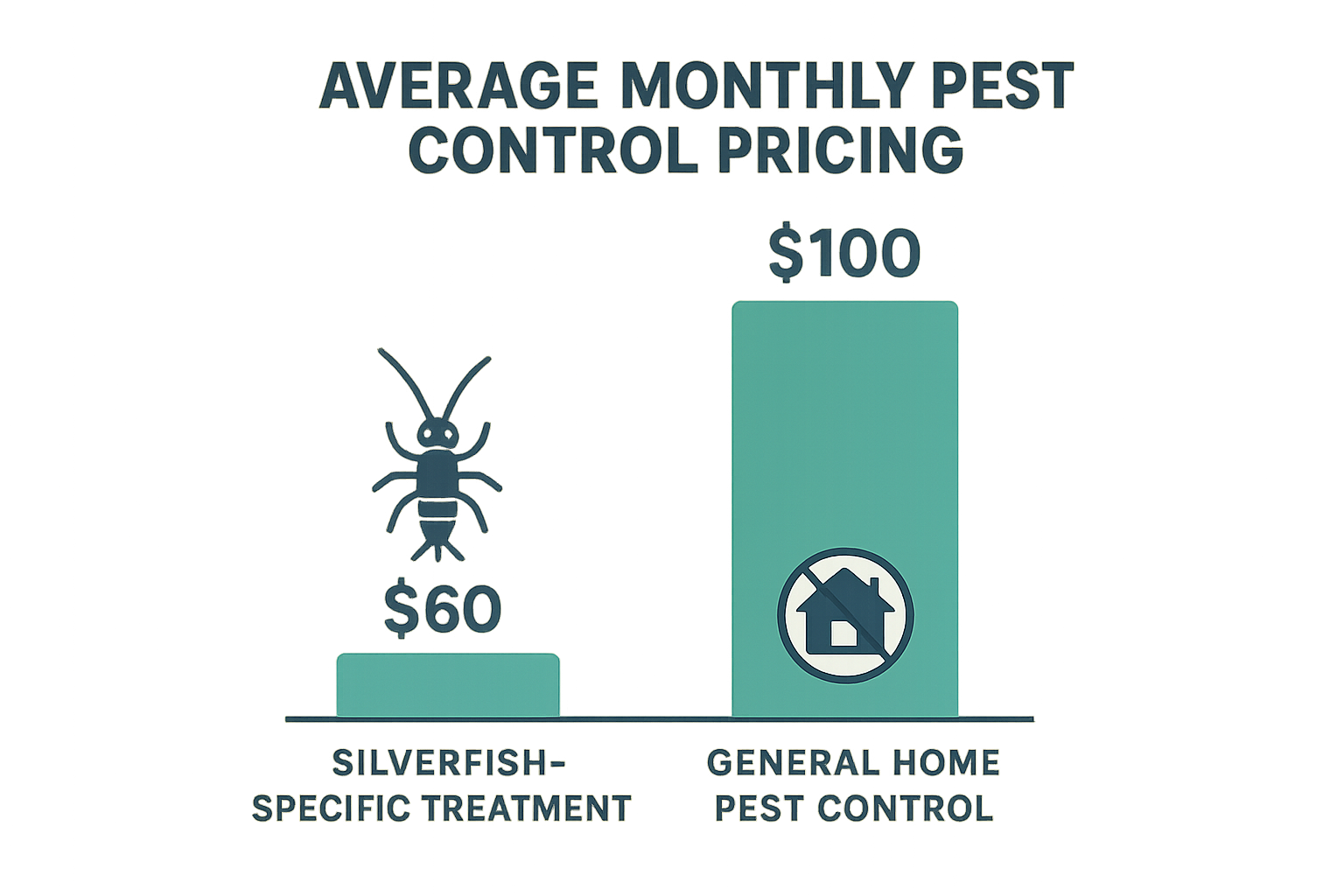
| Service Type | Low End | Typical | High End |
|---|---|---|---|
| Silverfish‑Specific Program | $45 | $80 | $120 |
| General Pest Control (all‑in‑one) | $30 | $55 | $90 |
Where to Find Up‑to‑Date Pricing
For the most current numbers, consult the HomeAdvisor Silverfish Control Cost Guide. This source aggregates quotes from dozens of local providers and updates quarterly.
Getting an Accurate Quote
To avoid surprises, ask for a detailed estimate that includes:
- Exact services covered (inspection, barrier, baiting, follow‑up).
- Number of treatment visits and any warranty period.
- Materials and labor breakdown.
- Any additional fees for moisture remediation or structural repairs.
When you call Anthem Pest Control at 877‑371‑8196 or request a free quote on our website, we’ll walk you through each line item so you can budget confidently and eliminate silverfish for good.
Effective Treatment Methods for Silverfish
Silverfish thrive in the dark, damp corners of a home, which is why issues are often uncovered during a professional silverfish inspection Peachtree City homeowners schedule. While DIY sprays can offer temporary relief, lasting control usually requires a combination of proven chemical and non-chemical tactics applied by a licensed technician. Below, we break down the most reliable options and why professional expertise makes all the difference.
Chemical Treatments: Residual Sprays and Dusts
Modern residual sprays contain insect growth regulators (IGRs) and neurotoxic agents that remain active for weeks on surfaces such as baseboards, under appliances, and inside wall voids. When a silverfish walks across a treated area, the chemicals either disrupt its molting cycle or incapacitate its nervous system, preventing further reproduction. Dust formulations—typically silica‑based or boric‑acid dust—can be puffed into cracks, crevices, and behind cabinets where liquid sprays might not penetrate. These dusts cling to the insect’s exoskeleton, desiccating it over time while staying out of sight of pets and children.
Non‑Chemical Options: Heat, Diatomaceous Earth, and IPM
Heat treatment raises interior temperatures to 120–130 °F for several hours, a range that is lethal to silverfish at all life stages. Because heat penetrates walls and floor voids, it eliminates hidden colonies without leaving residues. Diatomaceous earth, a natural powder made from fossilized algae, works mechanically: its microscopic edges abrade the silverfish’s outer layer, causing dehydration. When used alongside a structured Integrated Pest Management (IPM) program—regular sanitation, moisture control, and exclusion techniques—these non‑chemical tools reduce reliance on pesticides while delivering long‑term results.
The Role of a Pest Technician
A certified Anthem Pest technician begins with a thorough inspection, identifying breeding sites such as bathroom grout, pantry shelves, and leaky pipes. Using flashlights and moisture meters, the technician maps the infestation’s extent and selects the most appropriate treatment mix. Application is performed with precision equipment to ensure coverage in hard‑to‑reach spaces while protecting occupants’ belongings. The technician also provides a detailed action plan, outlining follow‑up visits and preventive measures tailored to the home’s layout.

Safety Considerations for Families and Pets
Even the safest products can pose risks if misapplied. Licensed technicians are trained to use the correct dosage, apply treatments only where silverfish hide, and seal off treated areas until residues dry. They also advise homeowners on ventilation, pet removal, and post‑treatment cleaning to minimize exposure. By entrusting the job to a professional, you protect children, pets, and valuable possessions while ensuring the silverfish problem is eradicated at its source.
Seasonal Prevention Tips to Keep Silverfish at Bay
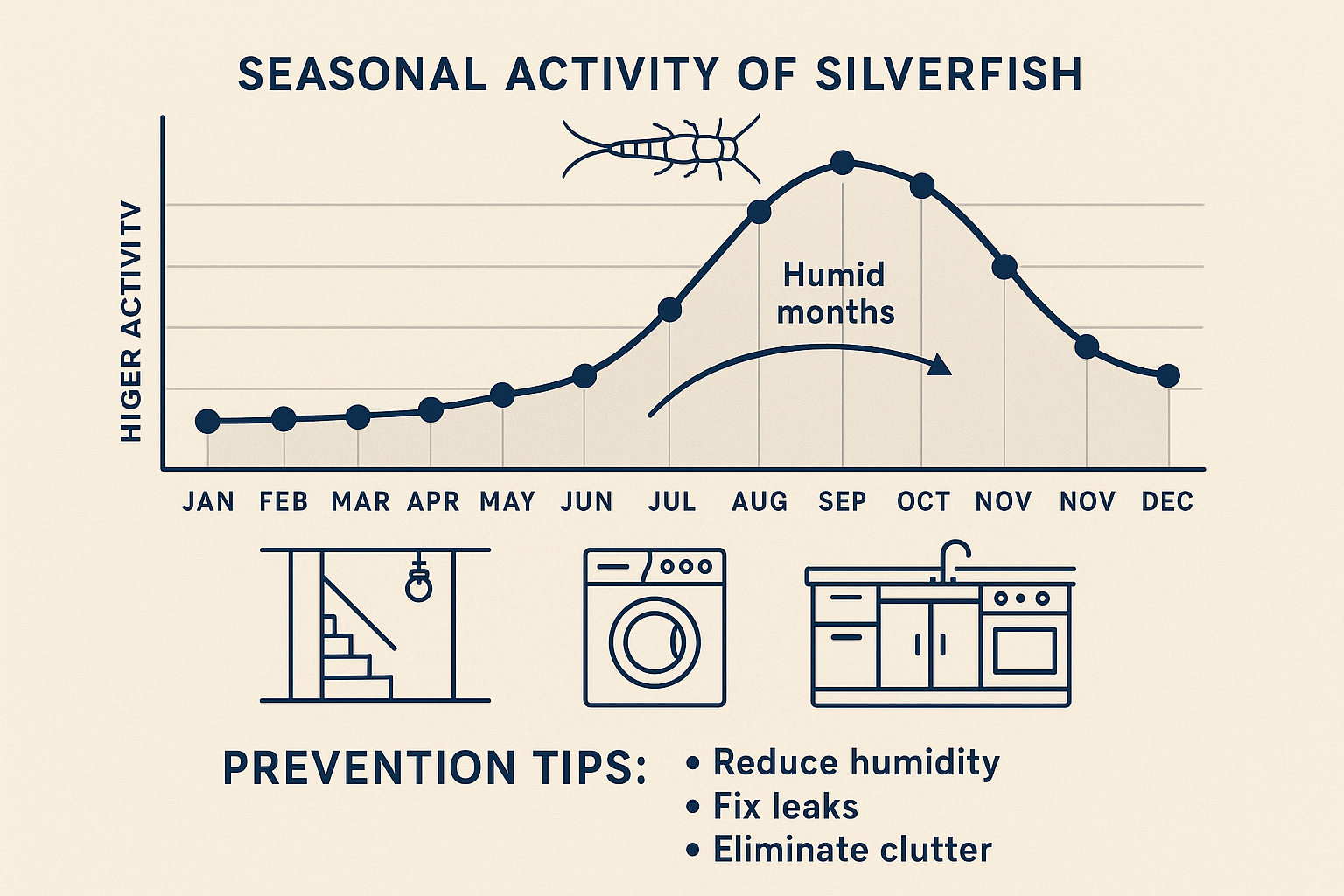
Why Humidity Fuels Silverfish
Silverfish thrive in moist environments because their thin, scale‑covered bodies lose water quickly in dry air. When humidity rises in spring and summer, the insects can move freely without the risk of dehydration, leading to noticeable spikes in activity. In Peachtree City’s warm months, indoor humidity often climbs above 60 %, creating the perfect breeding ground for these nocturnal pests.
Key Hotspots by Season
The line‑graph above highlights three areas where silverfish congregate most often:
- Basement: Cool, damp concrete floors retain moisture year‑round, but the summer heat amplifies humidity levels.
- Laundry room: Washing machines and dryers generate steam, especially during frequent spring cleaning cycles.
- Kitchen: Leaky sinks, dishwashers, and stored pantry items provide both moisture and food sources.
Actionable Prevention Steps
Implement these simple, season‑based habits to deny silverfish a foothold:
- De‑clutter: Remove piles of paper, cardboard, and clothing where silverfish can hide.
- Reduce moisture: Use a dehumidifier in basements and laundry rooms; fix leaky pipes promptly.
- Seal cracks: Apply caulk around baseboards, window frames, and pipe penetrations to block entry points.
- Proper food storage: Keep cereals, flour, and pet food in airtight containers.
- Regular vacuuming: Vacuum floors and corners weekly to eliminate eggs, scales, and food particles.
Quarterly Maintenance Schedule
Adopting a four‑step calendar keeps silverfish at bay all year:
- Winter (January‑March): Inspect for cracks, run a dehumidifier in the basement, and store seasonal items in sealed bins.
- Spring (April‑June): Conduct a thorough vacuuming session, clean dryer vents, and check for water pooling around foundations.
- Summer (July‑September): Monitor indoor humidity with a hygrometer; aim for 45‑55 % and schedule a professional inspection if levels stay high.
- Fall (October‑December): Seal any new gaps caused by temperature shifts, and perform a final deep‑clean of the kitchen and laundry areas.
If you notice silverfish despite these measures, it’s time to call a licensed professional. Early intervention prevents a small sighting from turning into a full‑scale infestation.
Long‑Term Benefits of Proactive Prevention
Consistent seasonal upkeep not only reduces silverfish sightings but also supports the results of a professional silverfish inspection Peachtree City homeowners rely on to protect structural materials, fabrics, and food supplies. By keeping humidity low and entry points sealed, you minimize the need for costly chemical treatments later on. A proactive approach also preserves the integrity of insulation and drywall, extending the life of your property while keeping your family’s health safe from potential allergens carried by these insects.
Protect Your Home with Anthem Pest Control
Catching silverfish before they turn a quiet corner into a pantry problem saves you time, money, and stress. Early detection lets us treat the source before an infestation spreads, while professional treatment ensures the chemicals are applied safely and effectively. Seasonal prevention—especially after the humid summer months—keeps the insects from re‑establishing themselves when conditions are perfect for breeding.
That’s where Anthem Pest Control steps in. With a nationwide network of certified technicians, we bring the same rigorous standards to Peachtree City that we use in every market we serve. Our solutions are EPA‑registered, low‑odor, and designed to protect families and pets, while our pricing stays transparent—no hidden fees, just a clear, affordable quote.
If you’ve spotted silverfish, notice the tell‑tale signs of moisture and tiny silvery trails, or simply want a year‑round prevention plan, our certified technicians are ready to help. Call us today at 877‑371‑8196 for a free, no‑obligation quote, and we’ll schedule an inspection that fits your calendar.
Here’s a quick snapshot of what you get when you partner with us:
- Comprehensive inspection that pinpoints hidden activity
- Targeted treatment using low‑toxicity products
- Follow‑up visits to verify results
- Seasonal monitoring plan to stay ahead of future invasions
- Transparent, upfront pricing with no surprise charges
Our team stays current with the latest research, so you benefit from proven methods that adapt to changing pest behavior. Whether you need a one‑time eradication or an ongoing protection schedule, we tailor the approach to fit your home’s unique layout and your family’s lifestyle.
We understand that every home is different, so we customize each plan to match your specific needs and budget.
Ready to protect your home? Visit Anthem Pest Control now to learn more about our silverfish inspection Peachtree City services and request your complimentary quote.