What House Flies Are and Why They Matter
The common house fly, Musca domestica, belongs to the order Diptera and is one of the most widespread insects on the planet. From bustling city apartments to quiet suburban kitchens in Suwanee, Georgia, these flies have adapted to live alongside humans, which is why house fly control Suwanee GA remains a common concern for local homeowners.
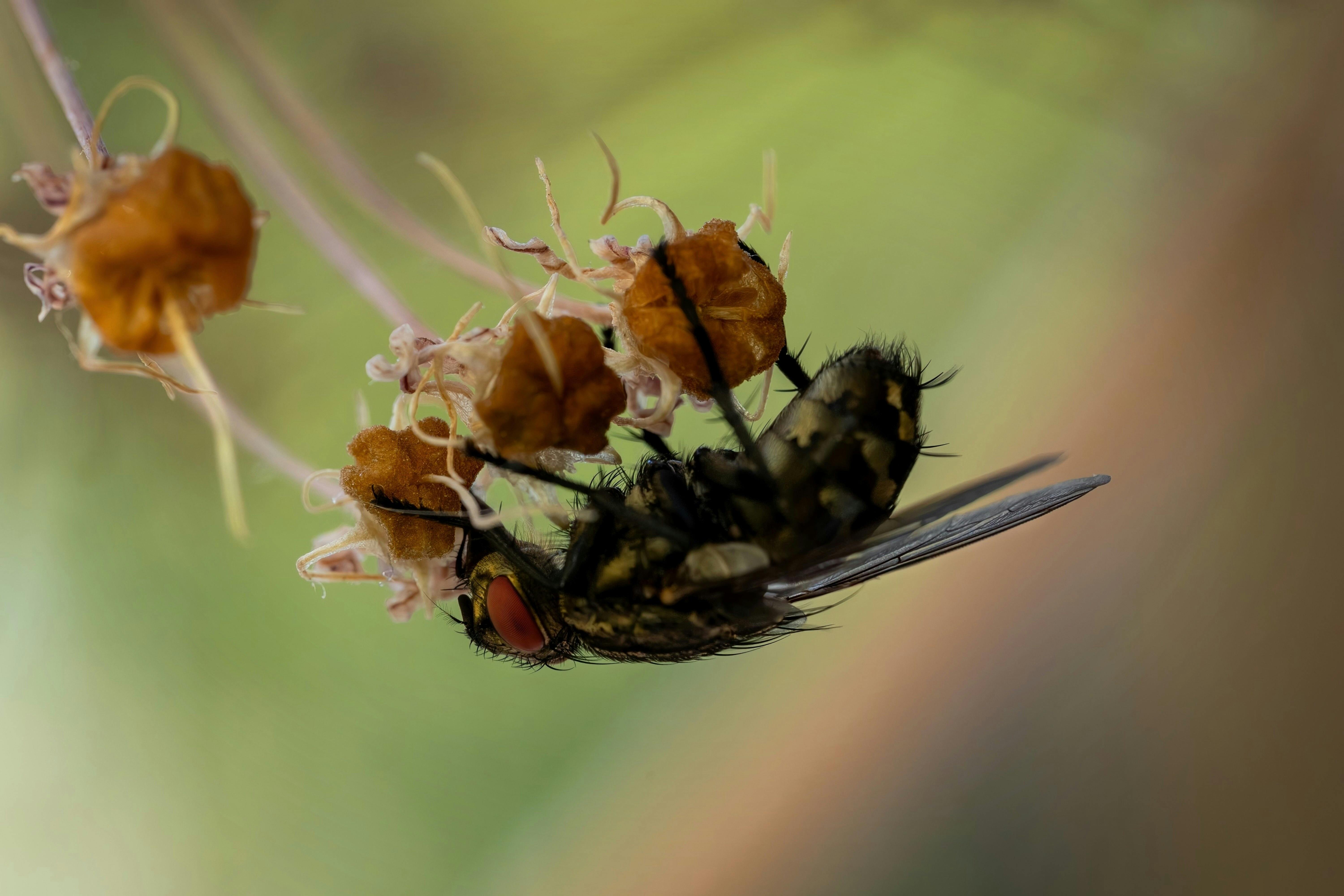
A typical house fly lives for about 15 to 30 days, but within that short window it can produce up to 500 eggs. Females lay their eggs in moist, organic matter—think garbage cans, compost piles, pet waste, or any decaying food source. The larvae (maggots) develop rapidly, turning the same waste into a breeding ground for the next generation. This cycle thrives in the warm, humid micro‑environments found in kitchens, dining areas, and outdoor patios where food scraps accumulate.
Beyond the nuisance factor, house flies are notorious mechanical vectors. As they hop from garbage to countertops, they pick up bacteria, viruses, and parasites on their hairy bodies and in their spittle. When they land on uncovered food or kitchen surfaces, they can transfer pathogens such as Salmonella, E. coli, and even the causative agents of dysentery. In a home setting, this means a direct threat to food safety and the health of family members.
| Characteristic | Detail |
|---|---|
| Size | 6–7 mm long; gray‑black body with four dark stripes on the thorax |
| Lifespan | 15–30 days (adult stage) |
| Reproduction Rate | Up to 500 eggs per female; life cycle can complete in 7–10 days under optimal conditions |
For homeowners, the presence of house flies isn’t just an eyesore. It compromises food safety, creates an uncomfortable indoor environment, and can damage a family’s reputation—especially when guests notice swarms hovering around meals or outdoor gatherings. Understanding the fly’s biology helps you spot the early signs of an infestation and take proactive steps, such as securing trash, maintaining clean pet zones, and scheduling professional fly control with a trusted provider like Anthem Pest Control.
Health Risks and Food Contamination From Flies
House flies may seem harmless, but they are efficient disease couriers. As they hop from trash to countertops, they pick up bacteria, viruses, and parasites on their legs, bristly mouthparts, and even in the vomit they regurgitate to liquefy solid food. This mechanical transmission means a single fly can deposit pathogens onto your dinner plate, kitchen sponge, or child’s snack within seconds.
Common Illnesses Linked to Fly Activity
Research consistently ties flies to several food‑borne illnesses, including:
- Salmonella – causes fever, abdominal cramps, and diarrhea.
- E. coli (especially O157:H7) – can lead to severe stomach pain and kidney complications.
- Dysentery – results in bloody stools and dehydration.
- Shigellosis – spreads quickly in households with children.
The CDC confirms that flies are vectors for food‑borne pathogens and that their presence in food preparation areas significantly raises the risk of outbreaks.
Real‑World Outbreaks
In 2019, a restaurant in Georgia traced a salmonella outbreak to inadequate fly control; flies had landed on raw chicken and later on ready‑to‑eat salads. A 2021 home‑cooking incident in the Midwest linked a family’s severe E. coli infection to flies that frequented an uncovered garbage bin near the kitchen. These cases illustrate that even a modest fly population can jeopardize health when food safety practices are lax.
Seasonal and Environmental Factors
Flies thrive in warm, humid months, and their numbers surge when waste is not properly managed. Open compost piles, uncovered trash cans, and pet waste attract flies, creating a continuous loop of contamination. In homes where doors and windows remain open without screens, flies can easily infiltrate food‑prep zones, amplifying the risk.
Quick Homeowner Checklist: Are You at Risk?
- Do you keep garbage cans sealed and dispose of waste daily?
- Are food items stored in airtight containers or refrigerated promptly?
- Is your kitchen free of standing water, pet food, or uncovered compost?
- Do you have functional window and door screens to block entry?
- Is your outdoor trash area at least 10 feet away from doors and windows?
- Do you regularly clean countertops, cutting boards, and utensils with hot, soapy water?
Checking these items weekly can dramatically cut the chance that a fly will turn your kitchen into a disease‑transmission hub. When you notice persistent fly activity despite good sanitation, it’s time to call a professional service like Anthem Pest Control. Our targeted fly treatments protect your family’s health while keeping your home clean and comfortable.
Spotting a Fly Infestation in Your Home

Visible signs you can’t ignore
When flies have made your home their playground, they announce themselves loudly. Look for swarms hovering near doors, windows, and trash cans. If you notice flies landing on food, utensils, countertops, or any clean surface, it’s a clear indicator that they’re searching for a food source and may be reproducing nearby.
Behavioral clues that signal a growing problem
Flies are most active during daylight, but a sudden surge of activity at dusk or night often means they’re seeking out artificial lights. Clusters of flies gathering around light fixtures, ceiling fans, or bathroom mirrors are typical “night‑time” behavior that points to a breeding hotspot inside the house.
Physical evidence: larvae and maggots
Finding small, white, wriggling maggots in garbage bins, compost piles, or pet waste is the most definitive sign of an infestation. These larvae thrive in decaying organic matter, so any foul‑smelling residue in kitchen corners, drains, or under appliances should be inspected closely.
Quick DIY inspection checklist
- Entry points: Scan window screens, door seals, and vent covers for gaps or tears.
- Waste areas: Ensure trash cans have tight‑fitting lids and are emptied daily.
- Pet feeding stations: Keep food bowls clean and store kibble in sealed containers.
- Moisture sources: Check under sinks and around dishwashers for standing water.
- Hidden crumbs: Sweep behind appliances and along baseboards where food particles accumulate.
When it’s time to call a professional
If you’ve tightened up sanitation, sealed obvious entryways, and still see regular fly sightings, the problem is likely deeper than a surface clean can solve. For homeowners considering house fly control Suwanee GA, persistent presence of maggots, frequent fly activity in high-traffic zones (kitchens, garages, patios), or a sudden increase in numbers despite your best efforts all warrant a professional inspection.
The role of an Anthem Pest Control technician
A certified technician will perform a thorough exterior and interior assessment. They’ll locate hidden breeding sites—such as damp crawl spaces, neglected pet waste, or improperly stored compost—then recommend a targeted treatment plan. This may include strategic bait placement, residual sprays, and preventive measures designed to break the life cycle and keep flies from returning.
Seasonal Patterns of House Fly Activity
Temperature, humidity, and the fly breeding cycle
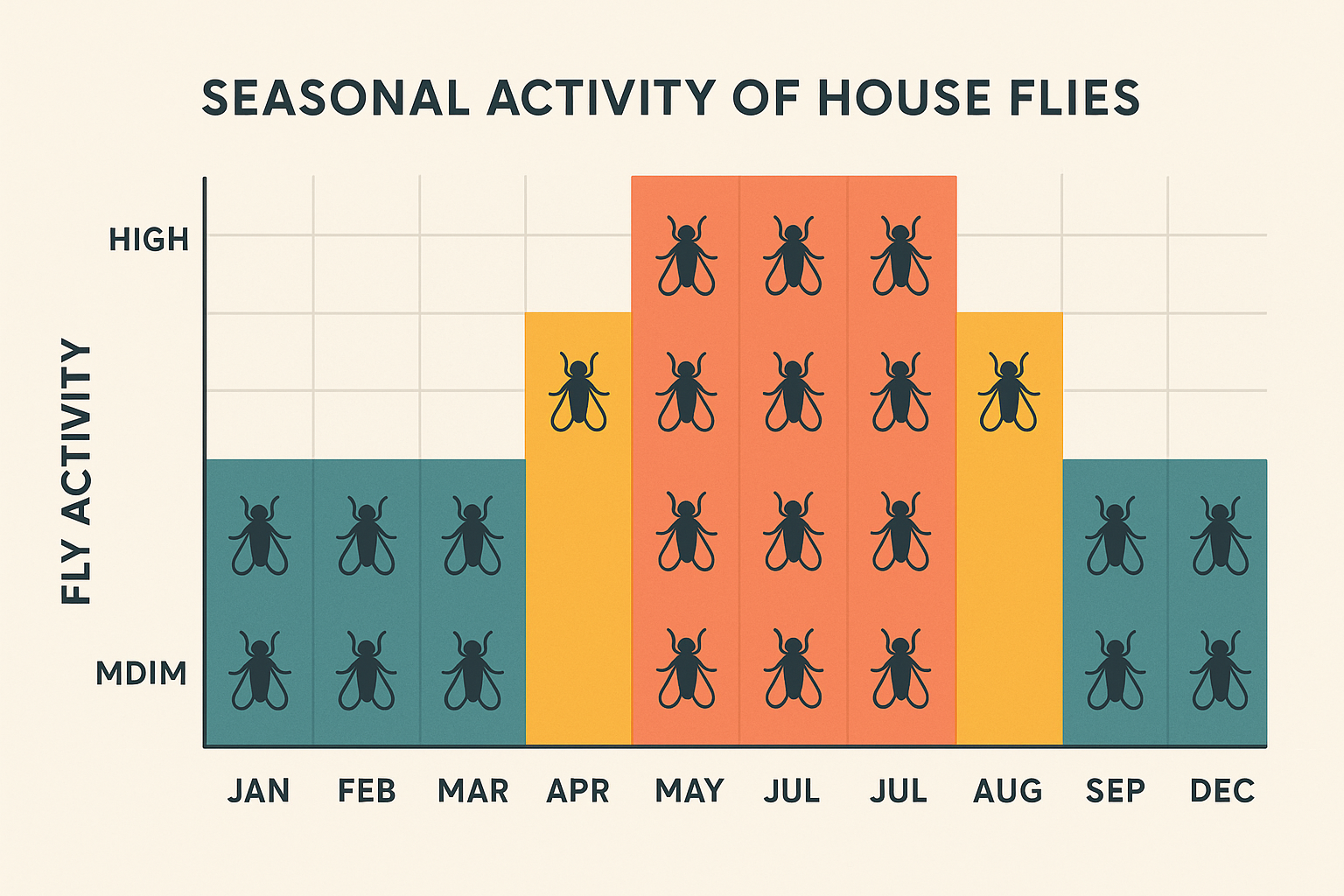
House flies thrive when warmth and moisture converge. When daytime highs consistently sit above 70°F (21°C) and relative humidity climbs above 60 %, female flies accelerate egg production and larvae develop in just a few days. Conversely, a sudden chill or dry spell stalls breeding, forcing flies to seek shelter and reducing outdoor populations.
Reading the seasonal activity chart
The chart below visualizes typical fly numbers in Suwanee, GA, from January through December. Notice a sharp rise in late April, a sustained plateau from June through August, and a gradual decline after September. The lowest counts appear in January and February, when cold snaps keep flies dormant.
Climate change is nudging the peaks
Warmer winters and longer hot periods are shifting the classic curve. In recent years, Suwanee has seen noticeable fly activity as early as March, while the traditional lull in October is shortening. This trend means homeowners can’t rely on “old‑school” calendars; they must stay alert to early‑season spikes and extended summer peaks.
Timing your prevention steps
Start intensifying sanitation in late spring—clean trash cans, seal compost bins, and eliminate standing water before the first major surge. For homeowners planning house fly control Suwanee GA, schedule a professional fly treatment in early May, giving the service a head-start before the June–August peak. If you notice an early rise (March–April), a supplemental treatment can keep numbers in check.
Outdoor gatherings and indoor fly surges
Barbecues, festivals, and neighborhood block parties create abundant food residues and warm, humid micro‑climates that attract flies. When guests move indoors, those flies follow, leading to sudden indoor infestations. To mitigate this, set up fly traps and keep food covered during events, and run a quick perimeter spray the day after a large gathering.
Treatment Options: DIY vs Professional Services
DIY Tools You’ll Find at Home
Many Suwanee homeowners start with the basics: sticky fly traps, bait stations, residual spray cans, and indoor foggers. These products are inexpensive, easy to set up, and can give you a quick visual reduction of adult flies buzzing around the kitchen or patio.
- Fly traps – adhesive ribbons or UV‑light traps that capture flies on contact.
- Bait stations – containers with attractant laced with a slow‑acting poison.
- Residual sprays – aerosol or pump‑spray chemicals that coat surfaces for days.
- Indoor foggers – aerosol bombs that fill a room with fine particles for short‑term knock‑down.
What DIY Can’t Fix
While these tools can lower numbers temporarily, they often miss the bigger picture. Flies breed in hidden, moist sites such as garbage cans, pet‑food dishes, or clogged drains. DIY chemicals may not reach those hotspots, leading to a “quick‑fix” that fizzles out within a week. Additionally, many over‑the‑counter sprays contain pyrethroids that can irritate skin, eyes, or pets if applied incorrectly. Without a systematic inspection, you risk re‑infesting the same area repeatedly.
Professional Pest‑Control Solutions
When you call Anthem Pest Control, a licensed technician conducts a thorough interior and exterior assessment. We apply EPA‑registered products that are formulated for fly control on surfaces, in cracks, and around breeding zones. Treatments may include:
- Targeted interior sprays on doorways, windows, and light fixtures.
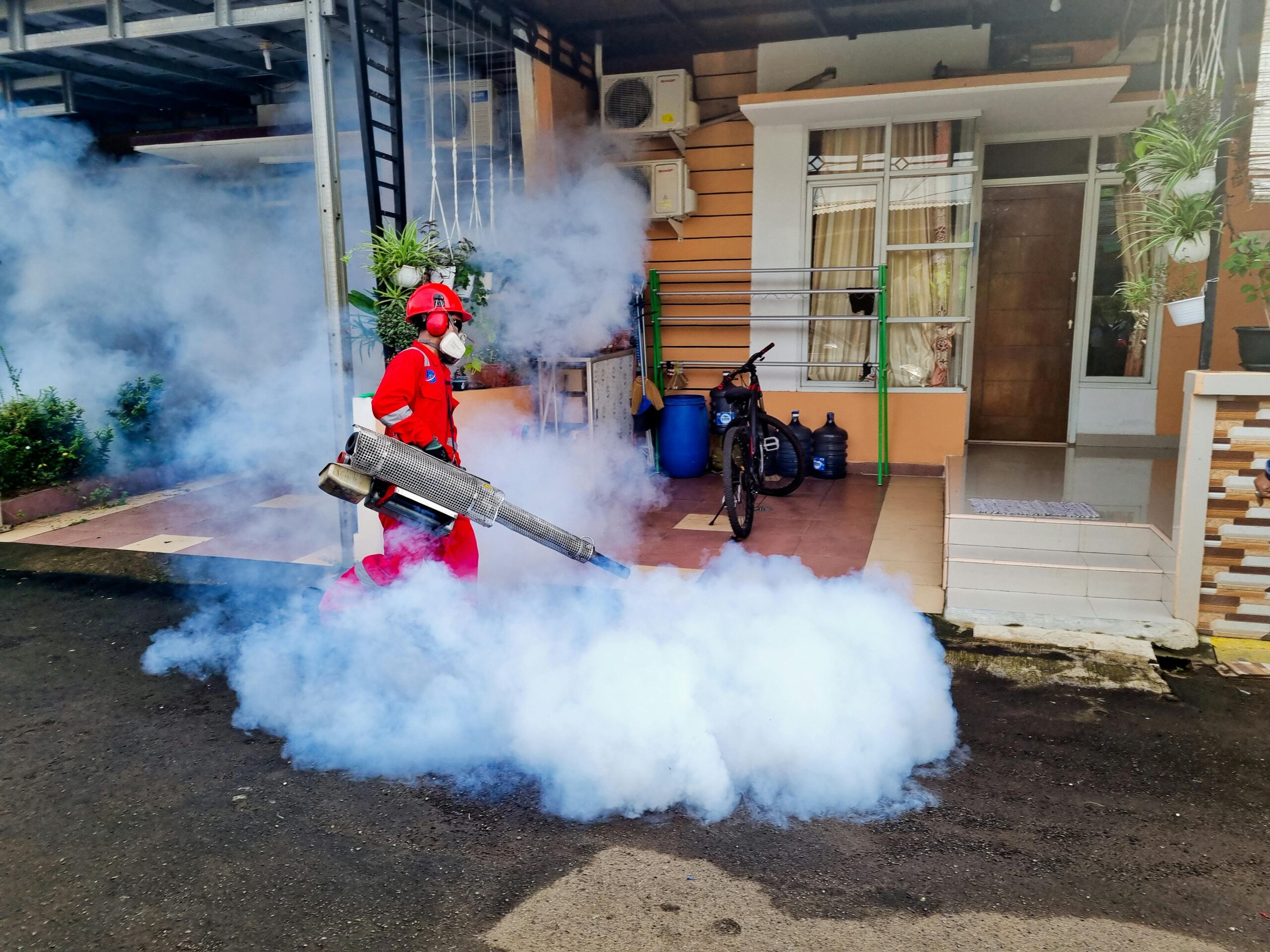
- Exterior perimeter fogging to create a barrier against incoming flies.
- Specialized bait stations placed in hidden locations.
- Follow‑up visits to monitor progress and retreat if needed.
Safety and Regulatory Edge
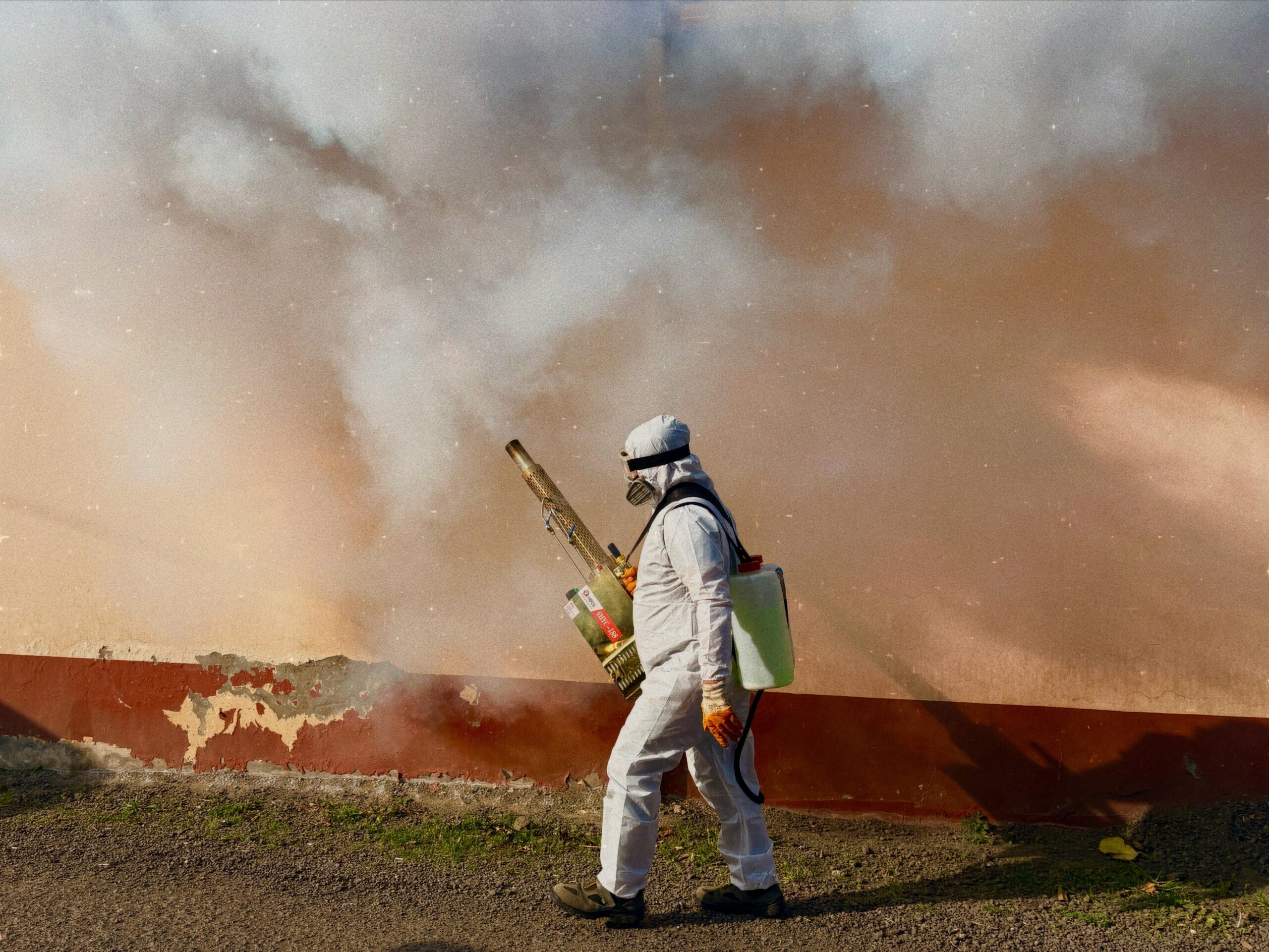
Professional applicators wear proper personal protective equipment (PPE) and follow strict state regulations. The products we use are vetted for indoor air quality and are safe around children and pets when applied as directed. By contrast, DIY users often lack training on dosage, ventilation, and disposal, which can lead to accidental exposure or ineffective treatment.
Case Study: Speedy Fly Drop‑Off
One Suwanee homeowner reported 150 flies per day in the kitchen. After a single professional service, fly counts dropped to fewer than five within 48 hours—a 96% reduction. A subsequent DIY approach the following month only achieved a 30% decline, highlighting the lasting impact of a thorough, licensed treatment.
Which Path Is Right for You?
Use the flowchart below to decide whether a DIY attempt or a professional call makes sense for your situation when considering house fly control Suwanee GA.
- Do you see flies only in one isolated area (e.g., a single trash can)? → Try a DIY trap for 7 days.
- After 7 days, are flies still abundant or spreading to other rooms? → Schedule a professional inspection.
- Do you have children, pets, or respiratory sensitivities? → Skip DIY chemicals; opt for a licensed service.
- Is the infestation linked to a known breeding site (rotting food, standing water)? → Eliminate the source first, then decide: DIY for minor cases, professional for extensive contamination.
- Are you comfortable handling pesticides and wearing PPE? → If not, choose professional treatment for safety and compliance.
Pricing Comparison for Fly Control Services
Typical Pricing Structures
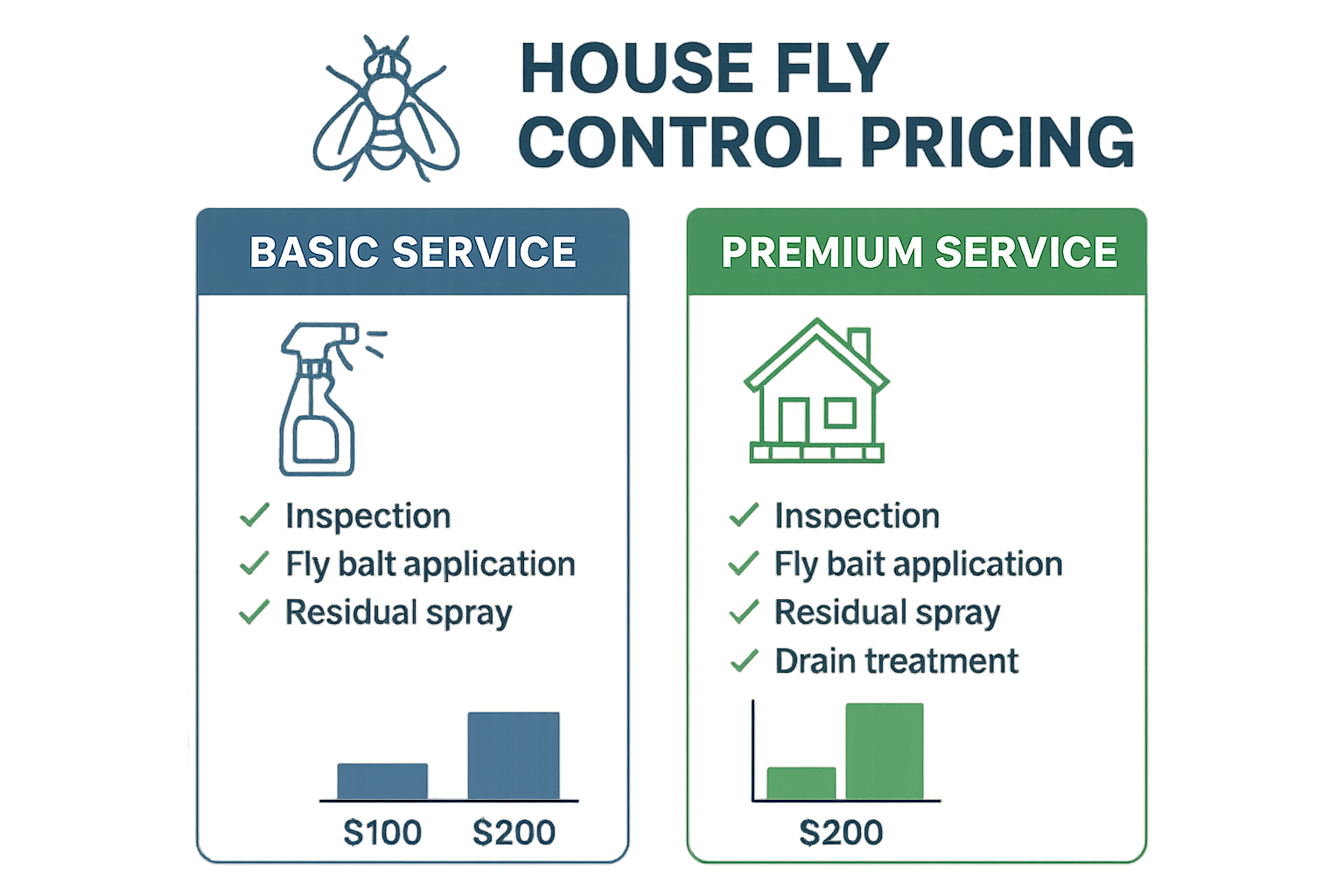
Most pest‑control companies in Suwanee break their fly‑management fees into tiers that reflect the depth of service. A flat‑rate inspection often precedes a per‑treatment charge, while some providers bundle everything into a single monthly or seasonal fee. Understanding these patterns helps you spot hidden costs and compare offers side by side.
Basic Service
The entry‑level package is designed for homeowners who need a quick fix without a long‑term commitment. It usually includes:
- One‑time interior inspection to locate breeding sites.
- Single interior spray targeting adult flies and larvae.
- A follow‑up call within two weeks to assess results.
Pricing for this tier typically ranges from $80 to $120 for a standard 1,500‑sq‑ft home. It’s a solid option if you’ve seen a minor surge and want immediate relief.
Premium Service
For households with recurring infestations or larger properties, homeowners seeking house fly control Suwanee GA will find that the premium tier delivers comprehensive protection:
- Full interior and exterior treatment, covering doors, windows, and outdoor gathering spots.
- Monthly monitoring visits to catch new activity early.
- One‑year warranty that includes a complimentary retreat if flies return.
This all‑inclusive plan usually falls between $180 and $250, reflecting the added labor, chemicals, and peace of mind.
Tips for Getting Accurate Quotes
When you call for a price estimate, have these details ready:
- Home size: Square footage and number of rooms.
- Infestation level: Light, moderate, or severe fly activity.
- Service frequency: One‑time, quarterly, or seasonal plans.
- Special areas: Garages, sheds, or outdoor patios that may need extra treatment.
Providing this information upfront lets technicians generate a precise quote and prevents surprise add‑ons.
Cost‑Effectiveness of Bundled Seasonal Plans
Many homeowners overlook the savings that come from grouping fly control with other pest services—like mosquito or ant treatments—into a seasonal bundle. A combined package can shave 10‑15% off the total cost while ensuring consistent protection across all common pests. Ask Anthem Pest Control about our Year‑Round Shield plan; it’s a smart way to lock in a low monthly rate and keep your home fly‑free all year long.
Prevention Strategies to Keep Flies Away Year‑Round
Sanitation Best Practices
Flies are drawn to anything they can feast on or lay eggs in. The simplest way to break that attraction chain is rigorous sanitation:
- Seal trash containers: Use bins with tight‑fitting lids and keep them away from doors and windows.
- Manage compost: Turn piles weekly, keep them covered, and store them at least 15 feet from the house.
- Pet waste removal: Scoop daily and dispose of waste in sealed bags; never leave droppings in the yard.
Structural Defenses
Even the cleanest yard can’t stop a fly that slips through a crack. Fortify the envelope of your home:
- Repair or replace damaged window screens; a single tear is a fly highway.
- Install door sweeps on all exterior doors to block the gap at the bottom.
- Apply weather‑stripping around frames and back doors to seal tiny openings.
- Check that door closers are functioning so doors shut promptly after use.
Landscape Tips
Outdoor habitats often set the stage for indoor infestations. Keep the perimeter hostile to flies:
- Eliminate standing water—bird baths, clogged gutters, and puddles are breeding grounds.
- Trim vegetation at least 2 feet away from foundations; overgrown plants provide shade and moisture.
- Promptly remove animal carcasses or dead insects; they become instant fly nurseries.
Seasonal Maintenance Checklist
Align your chores with the fly activity chart for Suwanee. When planning house fly control Suwanee GA, a quick, quarterly sweep keeps populations in check:
| Season | Key Tasks |
|---|---|
| Spring | Deep clean kitchens, sanitize trash areas, inspect screens, and start compost rotation. |
| Summer | Monitor door sweeps, keep gutters clear, and spot‑check standing water after rain. |
| Fall | Yard tidy‑up: trim foliage, remove fallen leaves, and store outdoor furniture. |
| Winter | Seal any new cracks from cold weather, keep indoor waste covered, and schedule a pre‑holiday professional inspection. |
Natural Repellents and Their Limits
Essential‑oil sprays (eucalyptus, peppermint, or citronella) and plant‑based barriers (marigolds, basil) can deter flies in high‑traffic zones. They work best when:
- Applied to door frames and window sills every 3‑4 days.
- Combined with strict sanitation; oils won’t eliminate eggs already laid.
Remember, natural options are supplemental—not a substitute for structural and sanitary measures.
When to Call a Professional
Even the most diligent homeowner benefits from a periodic expert touch. For long-term house fly control Suwanee GA, schedule preventive treatments:
- Pre‑summer: Before outdoor gatherings, have a technician apply residual fly control around entry points and patios.
- Pre‑holiday season: A quick service ahead of Thanksgiving or Christmas ensures flies don’t crash your indoor celebrations.
Anthem Pest Control offers affordable, EPA‑approved treatments that complement your DIY efforts, giving you confidence that flies stay out all year long.
Get Professional Fly Control from Anthem Pest Control
When house flies invade your kitchen, DIY sprays may knock a few out, but they rarely break the breeding cycle. A licensed professional brings a comprehensive approach—identifying entry points, eliminating larvae, and applying residual treatments that keep flies away for months.
Anthem Pest Control has trained technicians in every state, so no matter where you call—from Suwanee to Seattle—we bring the same rigorous standards. Our protocols prioritize low‑toxicity products, EPA‑approved formulas, and transparent pricing, ensuring the solution is both safe for children and affordable for any budget.
Our nationwide network means you benefit from the latest research and technology, whether it’s a seasonal fly surge or a persistent problem. We stay current with integrated pest management practices that protect the environment while delivering results.
We invite you to schedule a free, no‑obligation inspection. Our expert will walk through your home, pinpoint the sources of attraction, and present a customized treatment plan with a clear, upfront quote—so you know exactly what to expect before any work begins.
Give us a call today at 877‑371‑8196. Our friendly scheduling team is ready to set up a convenient time that fits your calendar, and there’s no pressure to commit until you’ve seen the proposed solution.
Imagine a kitchen where flies no longer buzz around food, where your family can enjoy meals without swatting insects, and where you sleep knowing the infestation is under professional control. That peace of mind is the true value of a job done right.
Ready to protect your home? For trusted house fly control Suwanee GA, visit Anthem Pest Control now and take the first step toward a fly-free environment.