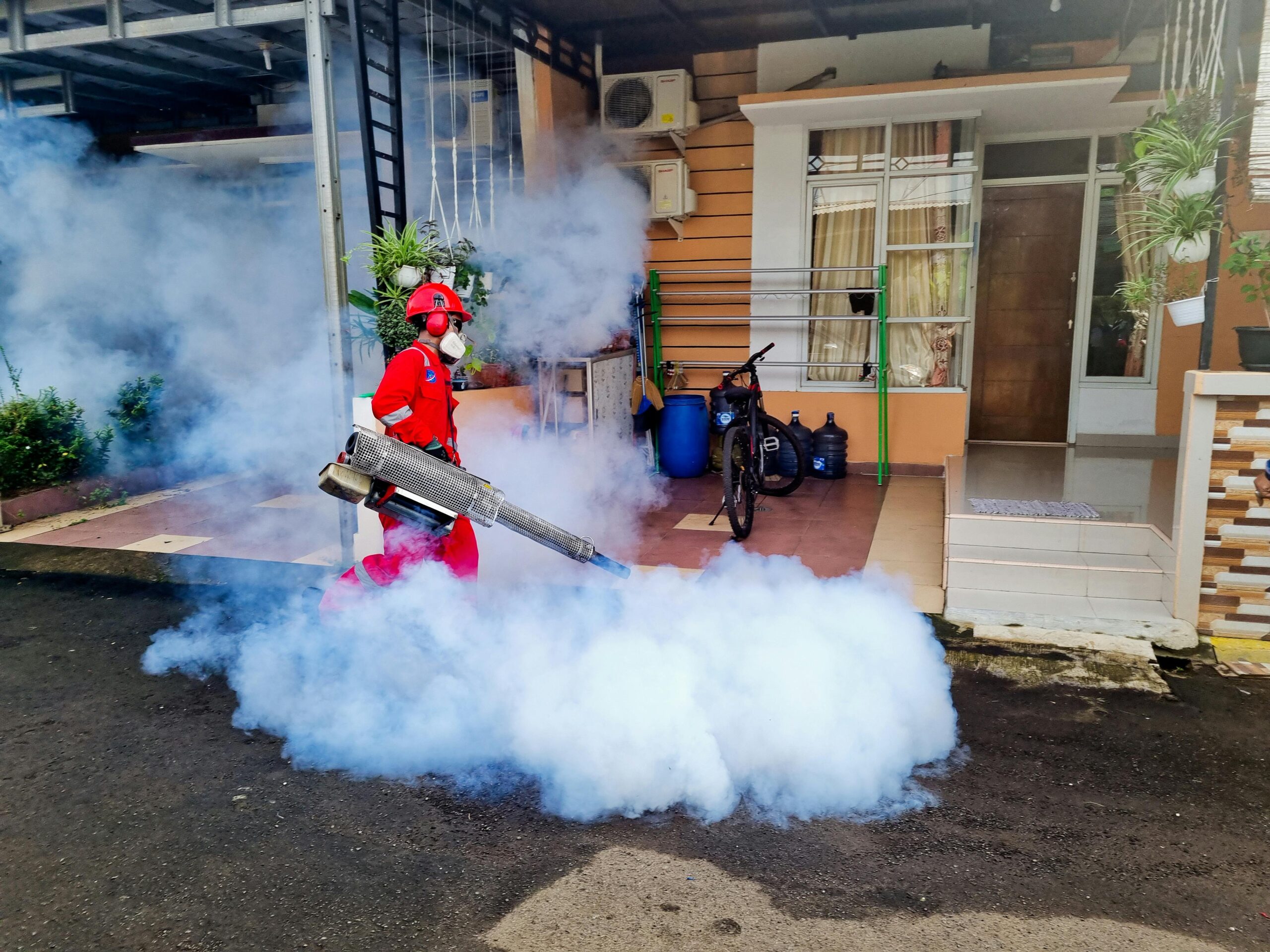
Why House Flies Matter in Suwanee, GA

When you hear that familiar buzz around your kitchen window, it’s not just an annoyance—it’s a sign of a potential problem. For homeowners concerned about house fly control Suwanee, the common house fly (Musca domestica) thrives in the warm, humid climate of the area, and its presence can quickly shift from harmless to harmful if left unchecked.
Life Cycle You Should Know
House flies complete their life cycle in as little as seven to ten days. A single female can lay up to 150 eggs on decaying organic matter, such as garbage, animal waste, or even rotting fruit. Those eggs hatch into maggots, which feed voraciously before pupating and emerging as adult flies ready to reproduce again. This rapid turnover means that a modest infestation can explode into a swarm within a week.
Regional Numbers Back the Concern
A 2023 study from the University of Georgia’s Pest Ecology & Quarantine Hub reported that fly populations in the Southeast are among the highest in the nation, driven by the region’s mild winters and abundant food sources. The study notes that fly activity peaks during the summer months in Suwanee, making early detection and control essential for homeowners.
Health Risks You Can’t Ignore
House flies are mechanical vectors—they pick up bacteria, viruses, and parasites on their legs and mouthparts and deposit them on anything they land on. This can lead to:
- Food contamination and food‑borne illnesses such as Salmonella and E. coli.
- Spread of pathogens that cause gastrointestinal upset.
- Allergic reactions for sensitive individuals, especially when flies die and decompose near living spaces.
Economic Impact on Your Home
Beyond health, flies eat away at your budget. Wasted groceries, extra cleaning supplies, and the cost of professional extermination add up quickly. Moreover, an outdoor patio plagued by flies can diminish the enjoyment of your yard, turning family barbecues into a frustrating battle against swarms.
Did you know? A single female house fly can lay up to 150 eggs in one sitting—enough to produce a full new generation in under two weeks.
Identifying Fly Hotspots and Warning Signs in Your Yard

What draws flies to your outdoor space?
Flies are opportunistic scavengers; they follow anything that promises a quick meal or a place to lay eggs. In a typical Suwanee yard, the most common attractants are:
- Uncovered trash – open bins let odors escape, turning your curbside waste into a buffet.
- Pet waste – fresh droppings release nitrogen‑rich compounds that flies love.
- Standing water – even a shallow puddle provides a moist environment for larvae.
- Decaying organic matter – compost piles, rotting fruit, or leftover food on grills become perfect breeding grounds.
Visual clues that flies are getting comfortable
Before a full‑blown infestation, flies give you subtle hints:
- Swarms near doors and windows – they’re seeking a way inside.
- Lingering on food surfaces – countertops, patio tables, or outdoor cooking areas become their landing pads.
- Increased activity on sunny days – warmth accelerates their life cycle, so a bright afternoon often brings larger numbers.
Quick inspection checklist for homeowners
Take a five‑minute walk around your property and ask yourself these questions:
- Are trash cans sealed with tight‑fitting lids?
- Is the compost bin covered and turned regularly?
- Do pet feeding stations have a clean, dry area underneath?
- Are outdoor dining surfaces wiped down after each use?
- Is there any standing water in flower pots, gutters, or after rain?
- Do grills and BBQ pits have leftover grease or food debris?
Sanitation: your first line of defense
Flies thrive on neglect. By keeping waste management tight and surfaces dry, you cut off their food supply and breeding sites. Empty trash daily, rinse pet bowls, and hose down grill grates after cooking. For compost, use a bin with a solid lid and turn the material weekly to speed up decomposition and reduce odor.
How bad is it? Assessing infestation severity
| Severity | What you’ll see | Recommended action |
|---|---|---|
| Few flies | Occasional single flies, no swarming | Improve sanitation; monitor for a week |
| Occasional swarms | Groups of 5‑10 flies near trash or food | Deep clean hotspots; consider a fly trap |
| Persistent swarms | Regular clusters of 20+ flies, especially on sunny days | Professional inspection; targeted treatment |
| Massive infestation | Constant buzzing, flies landing on people and pets | Immediate professional service; comprehensive control plan |
Spotting the signs early lets you act before flies become a nuisance. Simple daily habits—covering waste, wiping down surfaces, and eliminating standing water—can keep your yard fly‑free and protect your family’s comfort.
Seasonal Fly Activity in Suwanee – When to Act
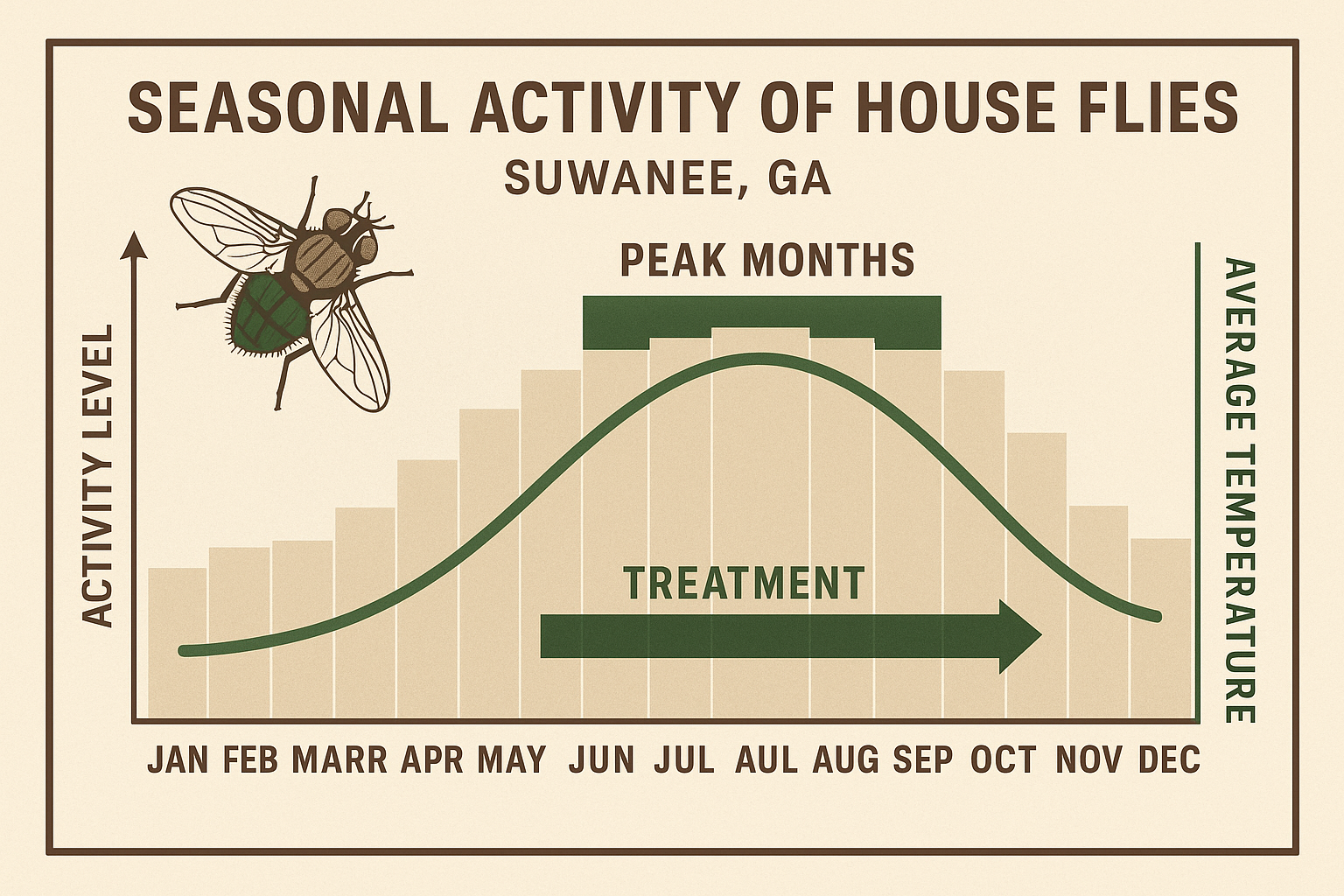
House flies in Suwanee follow a predictable seasonal rhythm that aligns closely with the region’s temperature swings. For homeowners planning house fly control Suwanee, the activity chart shows a sharp rise in numbers from early June through August, with a secondary bump in late September as the first warm nights return. Understanding this pattern lets you intervene before the insects become a nuisance inside your kitchen or living room.
Temperature Correlation
Flies are cold‑blooded, so their breeding speed hinges on ambient heat. When daily high temperatures consistently sit above 75 °F (23.9 °C), eggs hatch in 24 hours and larvae mature in just a few days. Below that threshold, development slows dramatically, and adult activity drops off. In Suwanee, the 75 °F mark typically arrives in mid‑April and lingers until early October, which explains the June‑August peak and the September resurgence.
Recommended Treatment Timing
The most effective schedule mirrors the fly’s calendar. For homeowners planning house fly control Suwanee, start with a pre-emptive treatment in late April, just as the first sustained warm days appear. This reduces the initial breeding sites before populations explode. Follow up with a second application in early June, timed to hit the first generation that survived the spring spray. Finally, a post-peak touch-up in September catches the late-season brood before cooler weather forces them indoors for overwintering.
Weather Anomalies
Unusual weather can shift the timeline. A sudden cold snap in May may delay egg‑laying, giving you a longer window before the June surge. Conversely, an early heat wave or heavy, unseasonal rain can accelerate breeding cycles, causing flies to appear weeks earlier than the chart predicts. Keep an eye on local forecasts: a stretch of three consecutive days above 80 °F or a week of heavy rain followed by warm temperatures often signals an imminent spike.
Quick Tip
Set a calendar reminder for the three key treatment periods—late April, early June, and September. Pair each reminder with a short checklist (inspect garbage cans, clean pet areas, and schedule a professional spray) so you never miss a critical window.
DIY vs. Professional Fly Control – Cost and Effectiveness Comparison
DIY Options Overview
Homeowners often start with three main do-it-yourself tools when considering house fly control Suwanee options: sticky fly traps, over-the-counter insecticidal sprays, and natural repellents such as essential-oil mixes or vinegar-based solutions. Traps capture adult flies, sprays knock down visible insects, and natural repellents aim to make the indoor environment less attractive.
Pros of DIY
- Lower upfront cost: A pack of traps or a spray bottle typically runs under $20.
- Immediate implementation: No waiting for appointments—just open the box and start.
- Control over chemicals: You decide exactly which ingredients enter your home, which is reassuring for families with pets or sensitivities.
Cons of DIY
- Limited residual effect: Most sprays lose potency after a few days, and traps need regular replacement.
- Frequent re‑application: To keep flies at bay you may end up buying new products every week during an infestation.
- Potential safety hazards: Improper mixing or over‑spraying can expose occupants to fumes, especially in poorly ventilated spaces.
Professional Services Overview
Anthem Pest Control’s professional approach includes three layers of treatment: a perimeter barrier applied to the building’s exterior, indoor residual sprays that cling to walls and ceilings for weeks, and a scheduled monitoring program that tracks fly activity and adjusts tactics as needed.
Pros of Professional Treatment
- Long‑lasting protection: Residual sprays can remain effective for 4‑6 weeks, reducing the need for constant re‑treatment.
- Expert identification: Technicians pinpoint the exact species and breeding hotspots, targeting the source rather than just the symptoms.
- Safety compliance: Licensed applicators use EPA‑approved products at concentrations that meet strict health standards.
- Warranty options: Many plans include a guarantee—if flies return, a follow‑up visit is covered at no extra charge.
Cons of Professional Treatment
- Higher initial cost: A single service visit often starts around $150‑$250, depending on property size.
- Scheduling required: You must coordinate a convenient time for the technician, which can be a minor inconvenience for busy households.
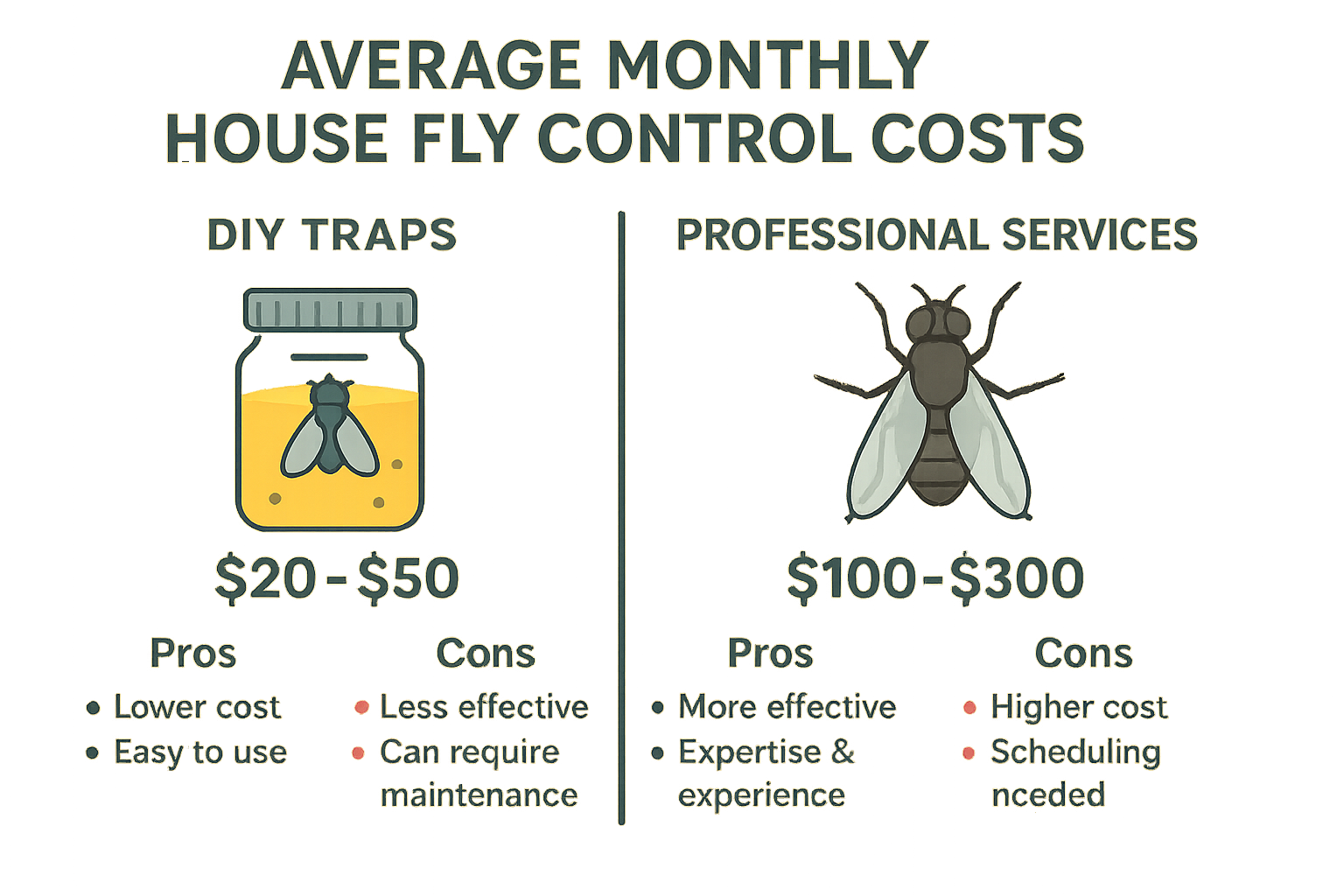
Infographic Breakdown
| Method | Average Monthly Cost | Typical Price Range | Key Advantages | Key Disadvantages |
|---|---|---|---|---|
| DIY (traps, sprays, repellents) | $5‑$15 | $10‑$40 (initial purchase) | Low upfront spend, immediate use, full chemical control | Short residual life, frequent re‑purchase, safety handling |
| Professional (perimeter + indoor residual) | $30‑$60 | $150‑$300 per service | Weeks‑long protection, expert targeting, warranty coverage | Higher up‑front cost, need to schedule visits |
Protect Your Home Today with Anthem Pest Control
House flies may seem like a minor nuisance, but in Suwanee they pose real health risks and can quickly turn a comfortable yard into an unsanitary zone. For homeowners prioritizing house fly control Suwanee, these insects thrive on exposed food, pet waste, and decaying organic matter, spreading bacteria such as E. coli and Salmonella to surfaces you touch daily. Their relentless buzzing also disrupts outdoor gatherings, making it harder to enjoy barbecues, family evenings, or simply a quiet moment on the porch.
Spring and early summer are the prime windows for fly activity in North Georgia. Warm temperatures and increased humidity create the perfect breeding ground, so treating your property before the population explodes is essential. Professional fly control not only targets adult flies but also eliminates the hidden larval stages in breeding sites, delivering longer‑lasting relief than DIY sprays that only provide a temporary knock‑down.
Anthem Pest Control brings a uniquely local perspective to fly management. Our technicians know the Suwanee climate, common attractants, and neighborhood-specific challenges, allowing us to design a plan that fits your home’s layout and lifestyle. We prioritize safe, effective, and affordable solutions—using EPA‑approved products that protect children and pets while staying within your budget. Transparent pricing means you’ll never encounter hidden fees, and our satisfaction guarantee ensures we’ll keep working until your yard stays fly‑free.
If you’re ready for a fly‑free yard, give us a call for a free, no‑obligation quote. Our certified technicians will assess your home, recommend the best plan, and schedule treatment at your convenience. Reach us at 877‑371‑8196—we’re ready to answer your questions and set up a service that fits your calendar.
Take the first step toward a healthier, more comfortable outdoor space today. For expert house fly control Suwanee, visit Anthem Pest Control for more information and to schedule your free quote.