Ant Infestations in Brookhaven – Why Homeowners Should Pay Attention
Brookhaven’s humid subtropical climate is a perfect breeding ground for ants. Warm summers, mild winters, and plentiful rainfall keep soil moisture levels high, creating an environment where colonies can thrive year‑round. The region’s abundant oak and pine trees drop leaf litter that decomposes into nutrient‑rich mulch—an ideal food source for many ant species. As a result, it’s not unusual to see ant trails marching along sidewalks, under decks, or inside kitchen cabinets during any season.
Why homeowners start noticing ants
- Food sources: Open pantry items, pet food bowls, and sugary spills attract foraging workers.
- Moisture: Leaky pipes, damp basements, and poorly ventilated crawl spaces provide the water ants need to survive.
- Structural gaps: Cracks in foundations, gaps around windows, and damaged screens act as highways into a home.
- Seasonal activity: Spring rains trigger nuptial flights, while hot summer nights push colonies indoors in search of cooler refuge.
While a few marching ants may seem harmless, an unchecked infestation can quickly become a costly problem. Carpenter ants, for example, excavate galleries inside wooden structures to expand their nests, compromising the integrity of beams, joists, and support columns. Over time, this hidden damage can weaken load‑bearing elements, leading to expensive repairs that could have been avoided with early intervention. Even non‑destructive species contaminate food surfaces with bacteria they carry, posing a health risk for families, especially those with young children or immune‑compromised members.
The economic impact extends beyond structural repairs. A single ant colony can consume hundreds of grams of food each month, prompting homeowners to replace pantry items more frequently. Moreover, ant activity often attracts secondary pests—such as spiders, beetles, or even rodents—that are drawn to the same food and moisture sources. The cumulative effect is a cascade of pest issues that can inflate treatment costs and increase the time required to restore a home to a pest‑free state.
Local surveys indicate that roughly 68 % of Brookhaven households report seeing ant activity at least once a year. Of those, about one‑third experience recurring problems that require professional intervention. These numbers reflect the pervasive nature of ant infestations in the area and underscore the importance of proactive monitoring. Homeowners who ignore early signs often face larger colonies that are harder to eradicate and more expensive to treat.
Because ant species vary widely in behavior, diet, and nesting preferences, accurate identification is the first step toward effective control. Spotting the size, color, and trail patterns of the ants can help determine whether you’re dealing with a moisture‑loving pavement ant, a wood‑damaging carpenter ant, or a sweet‑tooth odorous house ant. Early detection not only limits damage but also enables targeted treatments that are safer for pets and family members. In the next section, we’ll explore how to recognize the most common ant culprits in Brookhaven and why swift action makes all the difference.
Spotting the Culprits – Common Ant Species and Warning Signs
Carpenter Ants
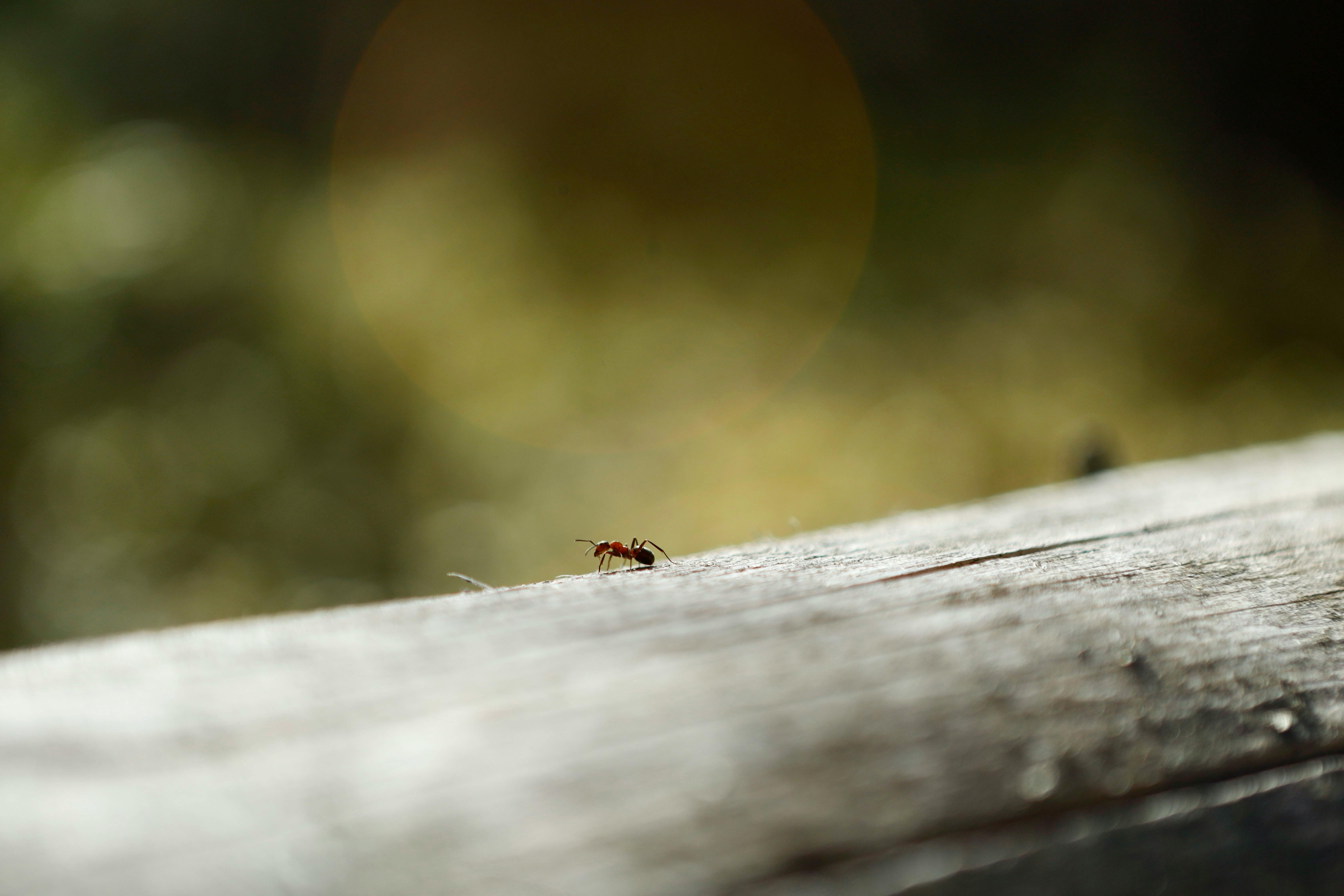
Carpenter ants are the largest indoor ants you’ll encounter in Brookhaven, typically ranging from ¼ to ½ inch in length. They are glossy black or dark brown, sometimes with a reddish tint on the thorax. Unlike termites, they don’t eat wood; they excavate it to build nests, leaving smooth, clean galleries inside structural timber. Their preferred habitats are damp, decaying wood—think rotting porch decks, window frames, or areas where water has seeped into the foundation.
Pavement Ants
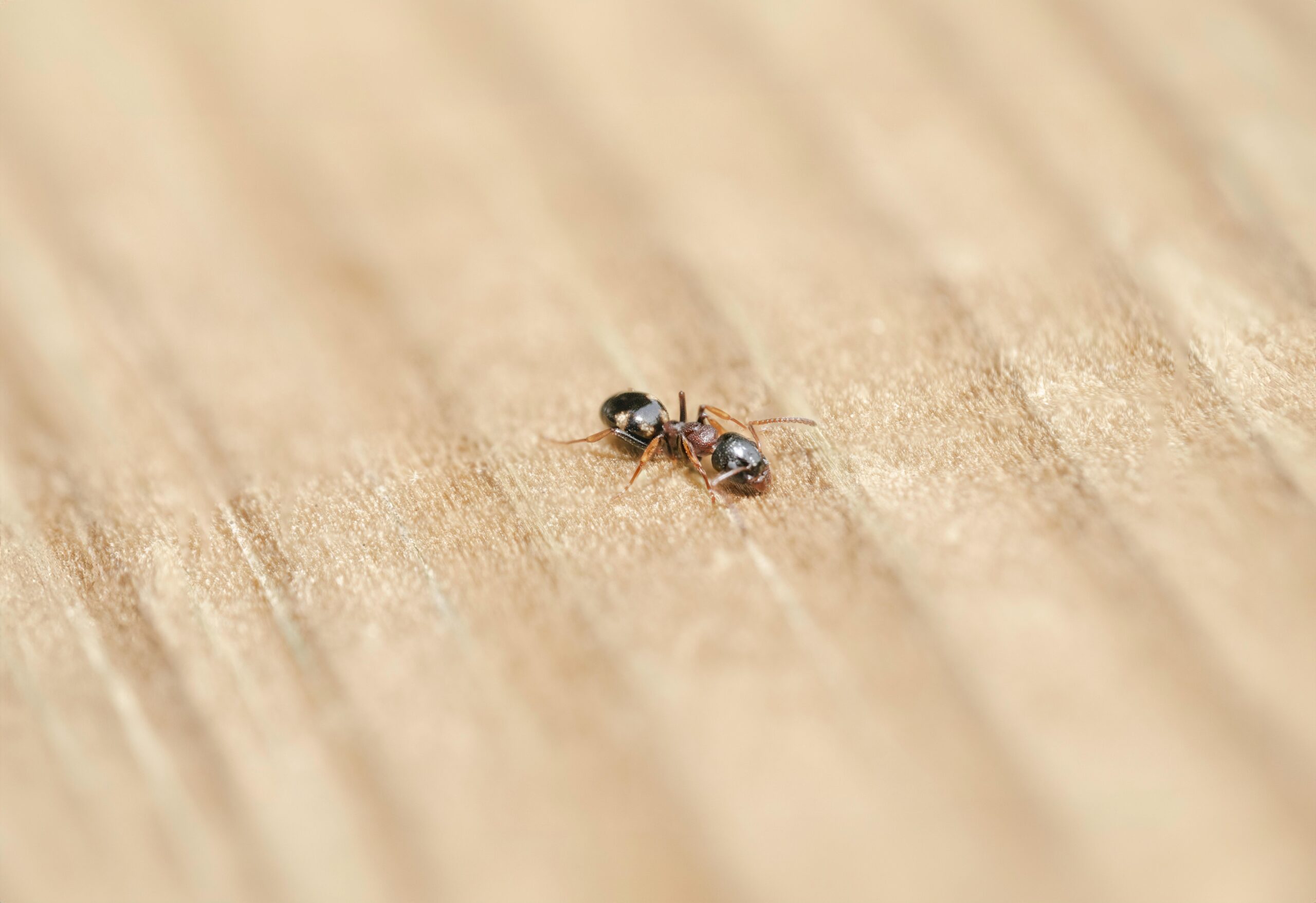
Pavement ants are smaller, about ⅛ inch long, and have a dark brown to black body with a slightly lighter abdomen. As their name suggests, they favor hard surfaces such as sidewalks, driveways, and the cracks of a concrete foundation. They establish satellite colonies under rocks, pavers, and even in garden mulch, making them the most common outdoor ant you’ll see marching along a baseboard.
Odorous House Ants
Odorous house ants measure roughly ¼ inch and are a light brown to tan color. When crushed, they emit a faint, sweet‑like odor—hence the name. These ants thrive in warm, moist environments and are often found nesting in wall voids, under kitchen cabinets, or near leaky pipes. Their ability to form large, fast‑moving trails makes them a frequent nuisance in kitchens and pantries.
Key Warning Signs
- Visible trails along baseboards, especially at night when workers are most active.
- Small piles of soil or sand near foundations—these are “ant hills” created by pavement ants.
- Frayed or hollow‑sounding wood, indicating carpenter ant excavation.
- Sweet‑smelling trails in kitchens, often leading from food sources to hidden nests.
Differentiating Ant Activity from Other Pests
While termites also damage wood, they leave a mud‑tube coating and a more powdery frass, whereas carpenter ants produce clean, sawdust‑like debris. Cockroaches, on the other hand, move faster, have a flatter body, and leave droppings that look like black pepper. Observing the size, color, and behavior of the insects, as well as the type of damage, will help you pinpoint whether you’re dealing with ants or another invader.
DIY Inspection Checklist
Before you call a professional, walk through your home with a flashlight and follow these simple steps:
- Exterior sweep: Examine the perimeter for ant hills, especially near cracks in the foundation, under pavers, and around mulch beds.
- Interior perimeter: Look for thin, continuous trails on baseboards, behind appliances, and inside cabinets.
- Wood inspection: Tap wooden beams and porch posts; a hollow sound may indicate carpenter ant activity.
- Moisture check: Identify any leaks under sinks, around the dishwasher, or in the basement—moisture attracts odorous house ants.
- Food source audit: Seal food containers, clean crumbs, and store pet food in airtight bins to break the trail’s incentive.
If you spot any of the above signs, document the locations with photos and note the species characteristics. This information will speed up the diagnosis when you reach out to a pest professional.
For a detailed visual guide to ant species in the area, visit the Ant Control Cost Brookhaven page, which offers reliable verification tools and additional prevention tips.
Ant Control Options and Pricing Overview
DIY Bait Kits
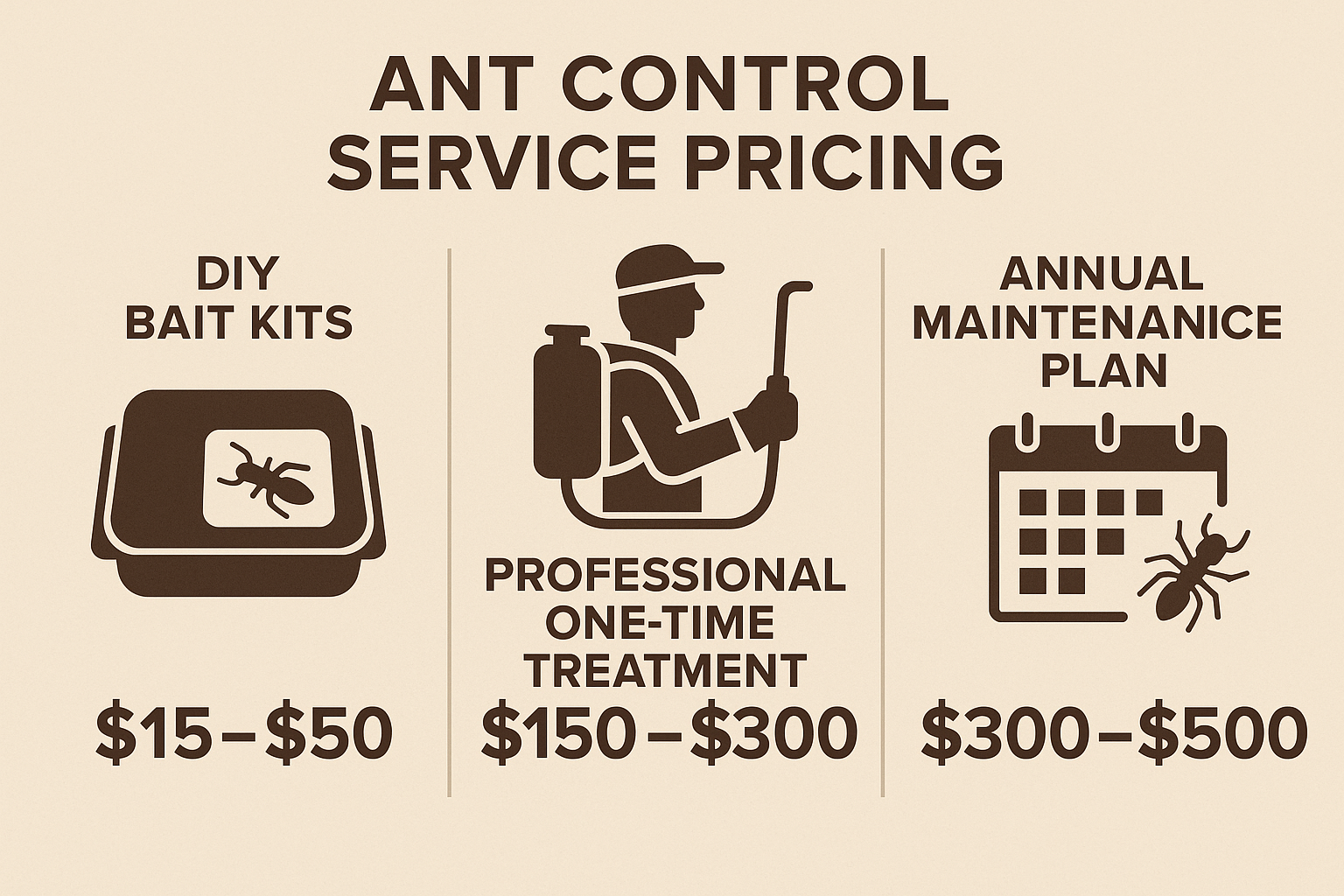
For homeowners who prefer a hands‑on approach, ant bait kits are the most budget‑friendly entry point. Most retail kits sell for $15‑$35 per box, and a single box typically covers 500 to 1,000 square feet. The bait contains a slow‑acting toxin that worker ants carry back to the colony, gradually eliminating the source.
Effectiveness hinges on proper placement—near trails, entry points, and food sources—and on the species you’re dealing with. Sugar‑attracted ants such as pavement or odorous house ants respond well, while protein‑preferring species like carpenter ants may ignore sweet baits. DIY kits work best for low‑level infestations that are confined to a few zones.
When a bait kit is appropriate: you’ve spotted only a handful of foragers, the infestation is recent, and you have the time to monitor and replace baits over a 2‑week period. If the problem persists beyond a month, it’s a signal to call a professional.
One‑Time Professional Treatments
A single service visit from Anthem Pest includes a thorough inspection, targeted spray or dust application, and a follow‑up check within 7‑10 days. Prices typically range from $120 to $250, depending on the size of the home and the ant species identified.
Pros: trained technicians can locate hidden nests, apply residual products that protect for weeks, and adjust the treatment to the specific ant type. Cons: the upfront cost is higher than a bait kit, and a single visit may not eradicate a large, established colony, requiring a second treatment.
This option shines when you need rapid relief—such as before a family gathering—or when the infestation spans multiple rooms, outdoor perimeters, or structural voids that DIY products can’t reach.
Annual Maintenance Plans
For long‑term peace of mind, many homeowners enroll in an annual plan that spreads treatment costs over four scheduled visits. A typical package costs $350‑$450 per year and includes: initial inspection, quarterly interior and exterior treatments, bait placement, and a priority‑call line for emergencies.
The recurring visits keep ant activity suppressed, especially during peak seasons in spring and summer. Over three years, the cumulative expense often undercuts the cost of two or three separate one‑time treatments, delivering a clear savings advantage.
Annual plans are ideal for properties with recurring ant problems, large square footage, or multiple structures (garage, shed, pool area) where continuous monitoring prevents colonies from re‑establishing.
Factors That Influence Price
Even within each category, several variables can shift the final bill:
- Infestation severity: A light trail may need only a bait, while a sprawling colony can require extensive spraying and multiple follow‑ups.
- Square footage: Larger homes or properties with extensive landscaping demand more product and labor.
- Ant species: Carpenter ants, fire ants, and pharaoh ants each require different chemicals and treatment strategies, affecting cost.
- Seasonality: Treating during peak activity (late spring to early fall) may be more expensive due to higher demand, but it also yields better results.
- Access challenges: Difficult-to-reach wall voids, attics, or crawl spaces increase labor time.
Understanding these factors helps you weigh the short‑term expense against the long‑term benefit.
A modest upfront investment in a professional plan often saves you from repeated DIY purchases and the hidden cost of ongoing ant damage.
Seasonal Ant Activity and Optimal Treatment Timing
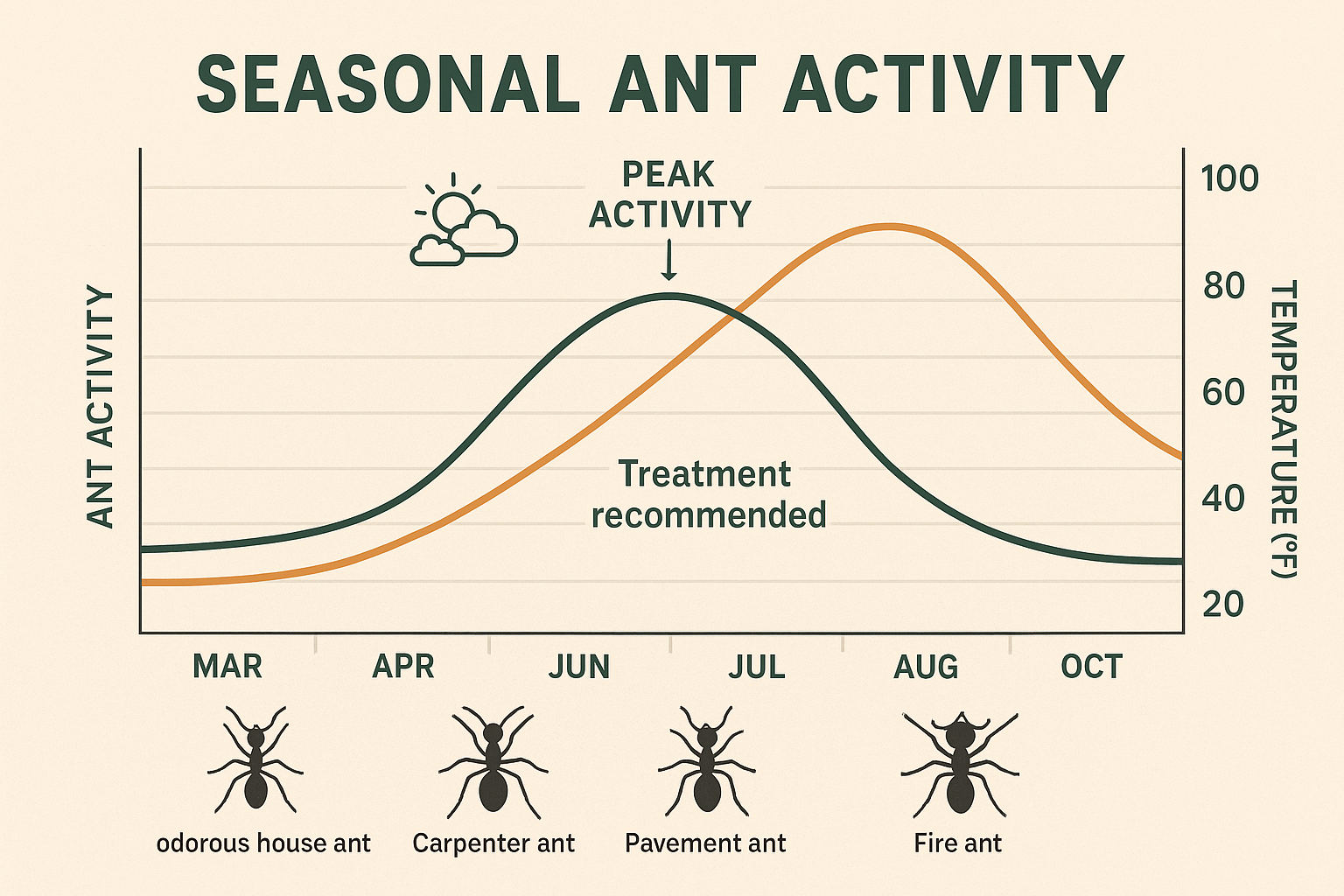
In Brookhaven, ant colonies follow a predictable rhythm that mirrors our climate. The seasonal activity chart below shows a clear surge from April through September, with the highest foraging numbers typically recorded in midsummer. Early spring (March) and late fall (October‑November) see a dip as colonies either prepare for the warm months or retreat to deeper nest chambers. Understanding these peaks helps you intervene before ants become a household nuisance.
Temperature, Humidity, and Foraging Behavior
Ants are ectothermic; their metabolism speeds up as temperatures rise above 60°F (15°C). Warm days boost worker activity, while nighttime humidity spikes trigger increased foraging as moisture aids trail pheromone stability. During a typical Georgia summer, daytime highs of 85‑90°F combined with 60‑70% relative humidity create ideal conditions for ants to scout for food and water. Conversely, a sudden cold snap or dry spell can slow movement, forcing colonies to conserve energy and stay closer to the nest.
Timing Your Control Methods
Matching treatment type to the season maximizes efficacy and keeps costs down. Below is a practical timeline for Brookhaven homeowners:
- Early Spring (March‑April): Schedule a pre‑emptive perimeter treatment. Applying a residual insecticide around the foundation before colonies emerge creates a chemical barrier that repels foragers and prevents new nests from establishing.
- Late Spring to Early Summer (May‑June): Conduct a targeted spot treatment on known entry points such as door thresholds, window sills, and utility penetrations. This is the period when workers are actively scouting, so a focused spray can intercept them before they recruit more ants.
- Mid‑Summer Peaks (July‑August): Use bait stations strategically placed along ant trails. High foraging activity means workers will quickly locate and transport the bait back to the colony, delivering a delayed poison to the queen.
- Early Fall (September‑October): Apply a long‑lasting barrier as temperatures begin to drop. This reinforces the perimeter after summer activity wanes, sealing off any residual foragers that survived earlier treatments.
The Cost of Ignoring Seasonal Peaks
Skipping treatment during the peak months often forces homeowners into a cycle of repeat applications. Ants that establish a strong summer population produce multiple satellite nests, each requiring its own treatment. The more nests you have, the higher the labor and product costs—sometimes up to 30% more than a single, well‑timed application. Moreover, late‑season infestations can push treatment into the colder months, when residual products lose potency faster, leading to reduced effectiveness and the need for re‑treatment.
Proactive Tips for Homeowners
Beyond professional services, simple yard maintenance can complement seasonal treatments. Keep mulch and leaf litter at least six inches away from the foundation, trim vegetation that touches the house, and fix any moisture leaks that create humid micro‑environments. By aligning these habits with the recommended treatment calendar, you create a hostile environment for ants year‑round, safeguarding your home while keeping expenses predictable.
Why Anthem Pest Control Is the Smart Choice for Ant Management
Nationwide Reach, Local Focus
Anthem Pest Control began as a family‑run operation in the Midwest and has grown into a nationwide network that serves homeowners in every corner of the United States, including Brookhaven, Georgia. While the brand benefits from the resources of a large company—centralized purchasing power, research labs, and a 24/7 support center—it still prides itself on a local‑first philosophy. Each service area has dedicated regional managers who understand the specific ant species that thrive in the local climate, the building styles common to the neighborhood, and the seasonal patterns that dictate when treatment is most effective. This blend of scale and locality means Brookhaven residents receive the same high‑quality, data‑driven solutions that larger markets enjoy, without sacrificing the personal touch of a neighborly technician.
Safe, EPA‑Approved Products Backed by Certified Technicians
When it comes to ant control, safety is non‑negotiable. Anthem exclusively uses EPA‑approved formulations that have passed rigorous toxicity testing for humans, pets, and the environment. The company’s product line includes low‑odor, low‑residue baits and barrier sprays designed to target carpenter ants, odorous house ants, and other common invaders while leaving indoor air quality untouched.
Every technician on the Anthem roster holds a certified pest‑control license and completes ongoing training modules covering the latest ant biology, resistance management, and integrated pest‑management (IPM) strategies. This certification ensures that each application follows best‑practice protocols, from proper placement of bait stations to calibrated spray patterns that maximize coverage and minimize waste.
Transparent Pricing Aligned with Professional Treatment Tiers
Homeowners often dread hidden fees, especially when dealing with pest emergencies. Anthem eliminates that anxiety by offering a clear, tiered pricing structure that mirrors the infographic used in our broader guide. The “Professional Treatment Tier” includes a full‑service ant eradication package—pre‑treatment inspection, bait deployment, perimeter spray, and a follow‑up visit—all for a single, upfront cost. No surprise add‑ons, no hourly rates, just a straightforward quote that matches the scope of work.
Because the pricing is standardized, Brookhaven residents can easily compare Anthem’s offering to local competitors and see the value of a comprehensive, science‑backed approach. The company also provides an online cost estimator, allowing homeowners to input their square footage and ant type to receive an immediate, accurate estimate before the technician even steps onto the property.
Customer‑Focused Features That Put Homeowners First
- Free on‑site inspection: A certified technician evaluates the infestation, identifies entry points, and explains the ant species’ behavior.
- Detailed treatment plan: Homeowners receive a written roadmap that outlines product types, application locations, and a timeline for expected results.
- 30‑day guarantee: If ants return within 30 days of the final visit, Anthem will re‑treat the property at no additional charge.
- Post‑treatment education: Clients get a concise “homeowner checklist” that covers sanitation tips, landscape adjustments, and maintenance schedules to keep ants at bay long after the service concludes.
Real‑World Success: A Carpenter Ant Eradication Story
“We noticed a steady stream of tiny holes in the wooden beams of our attic and heard the faint rustling of carpenter ants at night. After calling Anthem, the technician arrived within two days, performed a thorough inspection, and explained why our older home was a perfect playground for these pests. He set up targeted bait stations, applied a perimeter spray, and gave us a clear 30‑day guarantee. Two weeks later, the ant activity was gone, and the follow‑up visit confirmed that the colony had been completely eliminated. We felt confident knowing the products were safe for our kids and pets, and the transparent pricing meant we never felt blindsided by extra costs.” – Emily R., Brookhaven homeowner
Professional Expertise in Action

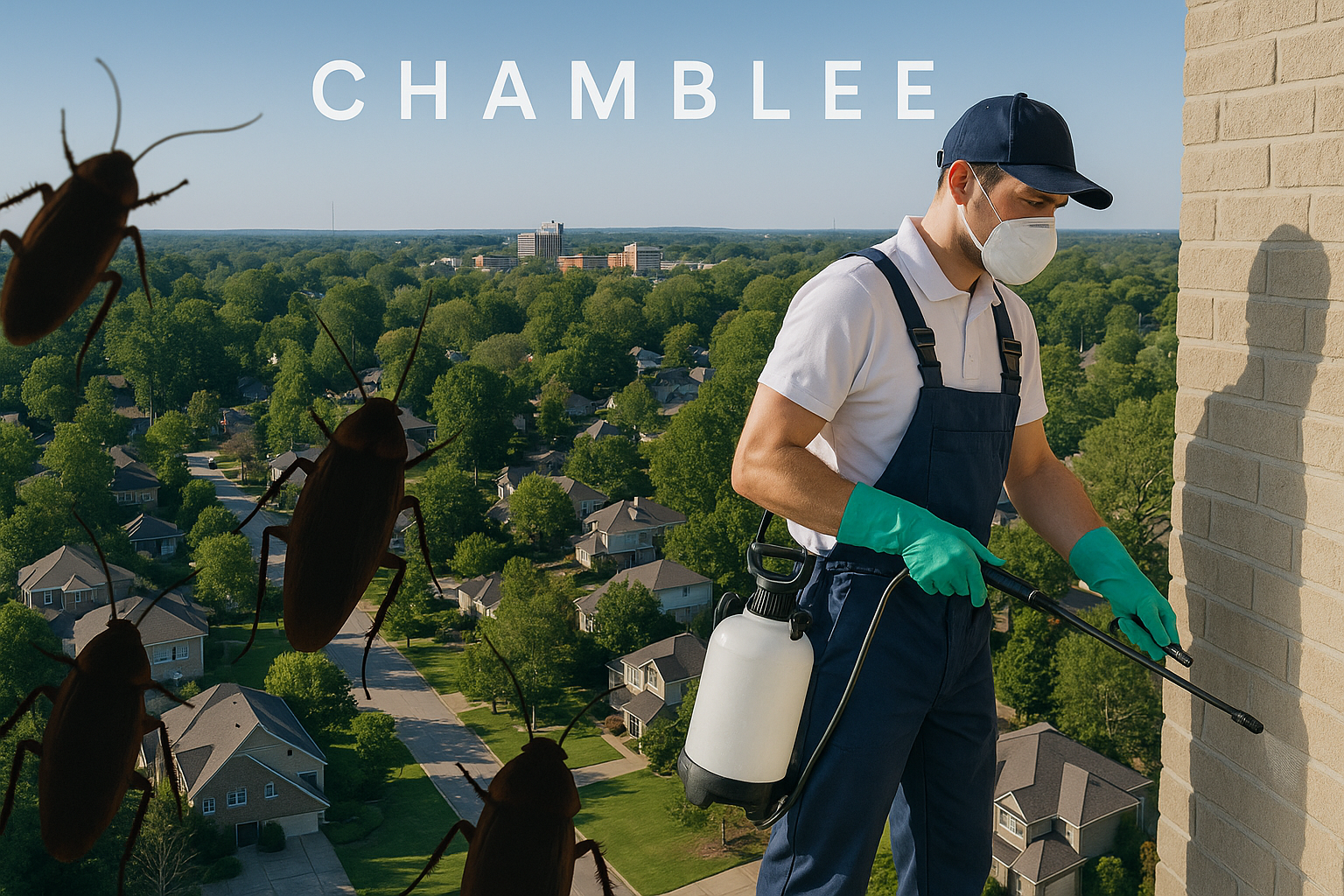
The image above captures a typical Anthem service call: a fully uniformed, EPA‑certified technician carefully applying a low‑odor spray to the foundation and entry points of a Brookhaven home. The deliberate technique—steady hand, precise nozzle, and measured coverage—illustrates the company’s commitment to both effectiveness and safety. When homeowners see a professional in action, they gain confidence that the ant problem is being handled with the highest standards of expertise.
Bottom Line for Brookhaven Homeowners
Choosing Anthem Pest Control means partnering with a company that blends national resources, scientific rigor, and a genuine dedication to homeowner peace of mind. From the moment the free inspection is scheduled to the final guarantee check, every step is designed to be transparent, safe, and results‑driven. For anyone battling carpenter ants, pavement ants, or any other stubborn species, Anthem offers a proven, hassle‑free path to a pest‑free home.
Take Action with Anthem Pest Control Today
Understanding exactly which ant species is invading your home, timing your treatment to match their seasonal activity, and trusting a certified professional are the three pillars of lasting ant control. When you correctly identify the culprit—whether it’s a tiny odorous ant marching along your kitchen baseboards or a stubborn carpenter ant nesting in your wooden structures—you can select the most effective treatment. Pair that knowledge with the right seasonal window (spring for early colonies, late summer for foragers) and you dramatically improve the odds of eradication. And because ant behavior varies by species and climate, a seasoned technician brings the expertise needed to adapt strategies on the fly, ensuring you don’t waste time or money on generic, ineffective solutions.
Cost‑Effective Options and Ongoing Protection
Anthem Pest Control offers a range of budget‑friendly solutions, from one‑time spot treatments for isolated trails to comprehensive colony elimination packages. Our transparent pricing lets you see exactly what you’re paying for, and many homeowners find that a single, well‑executed treatment resolves the issue for months. For those who want peace of mind year‑round, our annual maintenance plan bundles routine inspections, preventive barrier applications, and priority service calls at a discounted rate. This plan not only keeps ants at bay but also shields your home from other common invaders, delivering true value over the long term.
Schedule Your Complimentary Inspection
Ready to see how a professional assessment can change the game? We invite you to schedule a complimentary inspection with one of our trained technicians. During the visit, we’ll evaluate the extent of the infestation, pinpoint entry points, and provide a personalized quote tailored to your home’s layout and your budget. There’s no obligation—just clear, actionable information so you can decide the best next step.
Whether you’re dealing with a single trail or a full‑scale colony, our trained technicians are ready to protect your home with safe, effective solutions. We use EPA‑approved products applied with precision, minimizing exposure to pets and family while delivering rapid results. Our approach blends modern science with proven field techniques, ensuring that once the ants are gone, they stay gone.
Call us today at 877‑371‑8196 to book your free inspection and receive a customized quote. Our friendly staff will find a convenient time, answer any questions, and walk you through the process step by step.
For more details about our services, pricing, and customer testimonials, visit Anthem Pest Control. Let us put an end to the ant problem so you can enjoy a pest‑free home again.