Why Ants Invade Your Home and What to Look For
Ants may seem harmless, but when they set up a highway inside your house they’re actually looking for food, water, and shelter—just like any other pest. Understanding why these tiny insects target your home is the first step in effective ant control Decatur homeowners need to stop the problem before it becomes a full-blown infestation.
Ant biology and the search for shelter
All ant species live in colonies that operate like a single organism. Workers constantly scout for resources, leaving behind a chemical trail of pheromones that guides their nestmates. When a scout discovers a reliable source of food or a moist crack in a wall, the whole colony follows that trail back to the nest. Because ant colonies can contain thousands to hundreds of thousands of individuals, a single discovery can quickly turn into a bustling indoor traffic jam.
Most ants prefer environments that protect them from predators and extreme weather. In the heat of a Georgia summer, the cool, dry interior of a home offers an ideal refuge. Likewise, in winter they seek the warmth of heated rooms. This natural instinct to seek shelter is why they’re so eager to slip through even the tiniest opening.
Typical entry points
Ants are master infiltrators. Common gateways include:
- Doorways and sliding glass doors that aren’t sealed tightly.
- Cracks around windows, foundation walls, or baseboards.
- Utility penetrations—where electrical wires, plumbing, or HVAC ducts enter the house.
- Gaps around outdoor lighting fixtures and vent stacks.
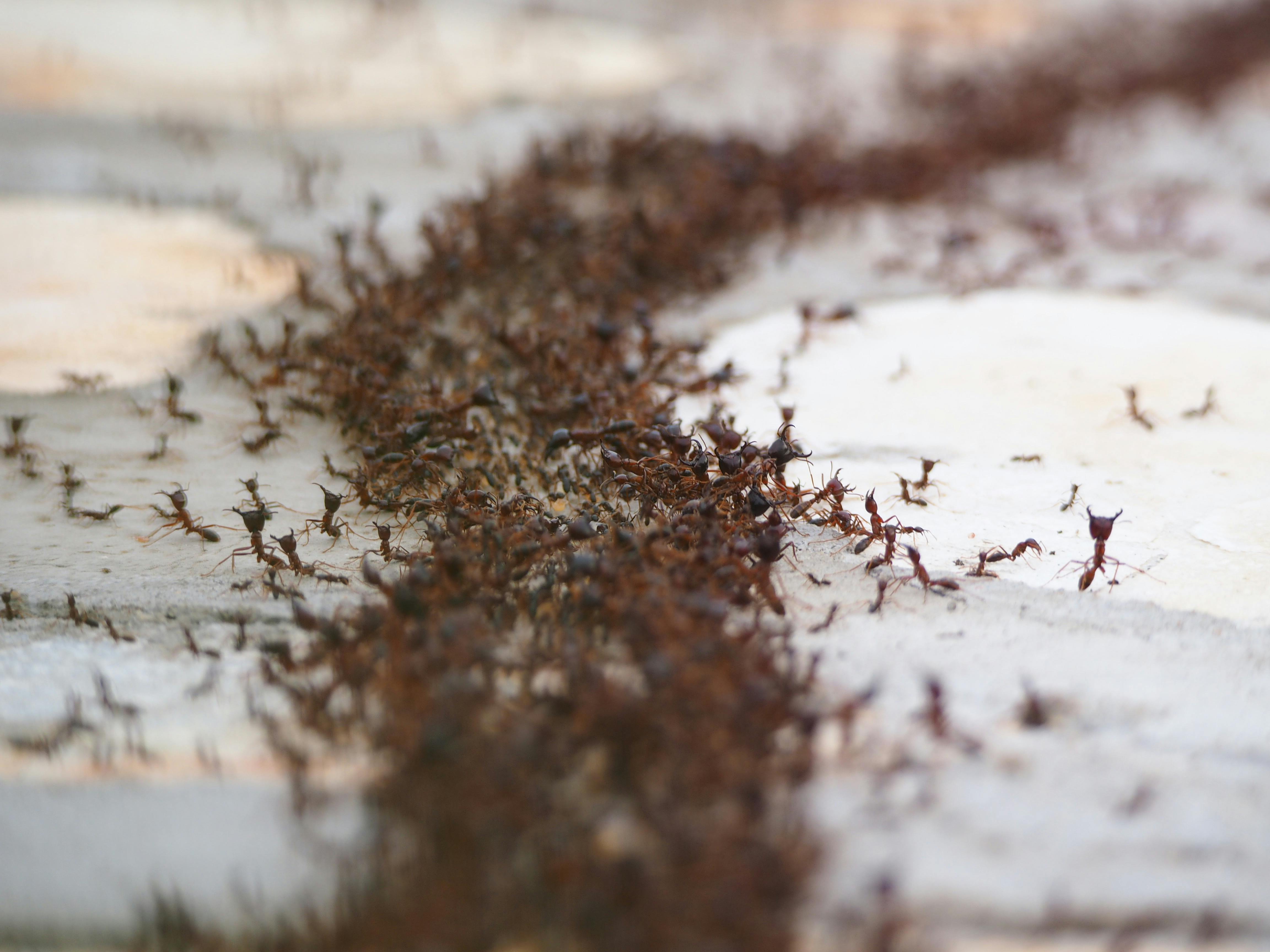
Once inside, they lay down a visible trail that can be seen as a faint line of tiny ants marching back and forth. The photo below captures a classic ant trail winding along a kitchen baseboard, illustrating how quickly they can map a route from an entry point to a food source.
Early signs of infestation
Spotting an ant problem early saves you time, money, and stress. Keep an eye out for these tell‑tale clues:
- Thin, irregular trails of ants moving along walls, countertops, or appliances.
- Small, pebble‑like piles of soil or sand near entry points—these are “satellite nests” that some species build.
- Increased ant activity around food storage areas, especially sugary or greasy items.
- Visible ants in the pantry, under sinks, or near trash cans.
- Occasional “swarms” of winged ants in late summer, indicating a mature colony looking to reproduce.
Health and property concerns
While most household ants are merely a nuisance, they can pose real risks. Foraging ants contaminate food with bacteria they carry on their bodies, potentially leading to food‑borne illnesses. Certain species—most notably carpenter ants—don’t eat wood but excavate it to expand their nests, which can weaken structural components over time if left unchecked.
In addition, ant colonies attract other pests. A steady flow of sugary crumbs can lure cockroaches, while moisture‑loving ants may coexist with mold‑producing fungi, creating a cascade of indoor‑environment problems.
Quick tip: Seasonal visual sweep
Make a habit of walking the perimeter of your home each season—spring, summer, and fall. Look closely at door frames, window sills, and any utility penetrations. If you spot a trail or a tiny soil mound, note the exact location and give Anthem Pest Control a call. Early detection allows us to target the entry point directly, preventing the colony from establishing a permanent foothold inside your home.
Identifying Common Household Ant Species
Ants are the most frequent uninvited guests in Georgia homes, but not all ants behave the same way. Knowing which species you’re dealing with is the first step toward an effective, targeted treatment. Below we break down the five ant species you’re most likely to encounter in Decatur households, highlighting what they look like, where they like to live, what they eat, and when they’re most active. Armed with this knowledge, you can spot the right trail, choose the proper control method, and avoid costly guesswork.
Odorous House Ant (Tapinoma sessile)
Physical traits: Workers measure 2–4 mm, are dark brown to black, and have a single node on their petiole. Their antennae are elbow‑shaped, and when crushed they emit a faint, sour‑like odor—hence the name.
Habitat & food: These ants nest both indoors and outdoors, often establishing colonies in wall voids, under appliances, or in soil under foundations. They thrive in moist environments and are attracted to sugary foods, greasy crumbs, and even pet food.
Seasonal cues: In the South, odorous house ants are most noticeable in late spring and early summer when they scout for new food sources. A sudden increase in kitchen ant activity during a warm, humid spell usually points to this species.
Pavement Ant (Tetramorium immigrans)
Physical traits: Workers are 2.5–3.5 mm long, reddish‑brown with a darker head, and possess a distinct, two‑segmented petiole. Their antennae are straight, and they have a noticeable “shoulder” behind the head.
Habitat & food: True to their name, pavement ants favor cracks in sidewalks, driveways, and building foundations. Indoors they nest in wall voids, under flooring, or in firewood piles. They prefer protein sources—think insects, dead bugs, and greasy kitchen waste.
Seasonal cues: These ants are active year‑round but become especially visible in early fall as they move indoors to escape cooler temperatures. If you notice a steady stream of ants marching along baseboards in September, pavement ants are likely the culprits.
Carpenter Ant (Camponotus pennsylvanicus)
Physical traits: The largest of the common house ants, workers range from 6–12 mm. They are black or dark brown with a glossy exoskeleton, and their antennae are long and segmented. The petiole is single‑node and rounded.
Habitat & food: Carpenter ants nest in damp, decaying wood—think rotting fence posts, window frames, or structural timber. They do not eat wood but excavate it to build galleries. Their diet includes sugary substances, honeydew from aphids, and protein from dead insects.
Seasonal cues: In Decatur, carpenter ant swarms typically appear in late spring, when winged reproductives emerge. Finding a trail of large, fast‑moving ants near a water‑damaged window sill is a strong indicator of a carpenter ant infestation.
Argentine Ant (Linepithema humile)
Physical traits: Workers are small (2–3 mm), light to dark brown, and have a smooth, uniform body with a single petiole node. Their antennae are short and clubbed.
Habitat & food: Originating from South America, Argentine ants thrive in warm, humid environments and often establish massive supercolonies that span multiple structures. They nest in wall voids, under potted plants, and in mulch. Their diet is highly opportunistic—sweet foods, proteins, and even other insects.
Seasonal cues: These ants are most aggressive during the hot summer months (June‑August). If you see a massive, uninterrupted line of tiny ants moving from the kitchen sink to the outside, you’re likely dealing with Argentine ants.
Pharaoh Ant (Monomorium pharaonis)
Physical traits: The smallest of the group, workers measure 1.5–2 mm, are light yellow to almost translucent, and have a two‑segmented petiole with a pointed node. Their antennae are short and straight.
Habitat & food: Pharaoh ants prefer indoor environments, especially hospitals, apartments, and homes with high humidity. They nest in wall voids, behind baseboards, and in electrical outlets. Their diet is diverse, ranging from sugary foods to greasy crumbs and even dead insects.
Seasonal cues: Unlike many other species, Pharaoh ants are active year‑round, especially in climate‑controlled interiors. A persistent, slow‑moving trail in a kitchen cabinet or bathroom, regardless of season, should raise a red flag.
Using Ant Trails to Pinpoint the Species
When you spot an ant trail, compare the size, color, and movement speed of the workers to the descriptions above. Odorous house ants leave a faint, irregular line, while Argentine ants create a thick, uniform stream. Carpenter ants move more deliberately and appear larger, whereas Pharaoh ants form a delicate, almost invisible trail. Matching these visual cues with the habitat clues—such as moisture‑rich areas for odorous house ants or dry, wooden structures for carpenter ants—will help you identify the species quickly and choose the right treatment strategy.
Further Reading
For deeper insight into ant biology and safe pesticide use, consult the EPA Pesticide Guide and the CDC Ant Health Information. These reputable sources provide up‑to‑date recommendations that complement professional services like those offered by Anthem Pest Control.
Seasonal Ant Activity and Timing Your Treatment
Ants in Decatur follow a predictable four-season rhythm, which directly impacts effective ant control Decatur homeowners need throughout the year. In winter, colonies retreat deep underground, and outdoor foraging drops to near-zero. As temperatures climb in early spring, workers emerge to scout for food, sparking the first noticeable uptick in activity. Summer brings the peak—warm days and high humidity create ideal foraging conditions, and colonies expand rapidly. Fall sees a gradual slowdown as cooler nights signal ants to store resources for the coming chill.
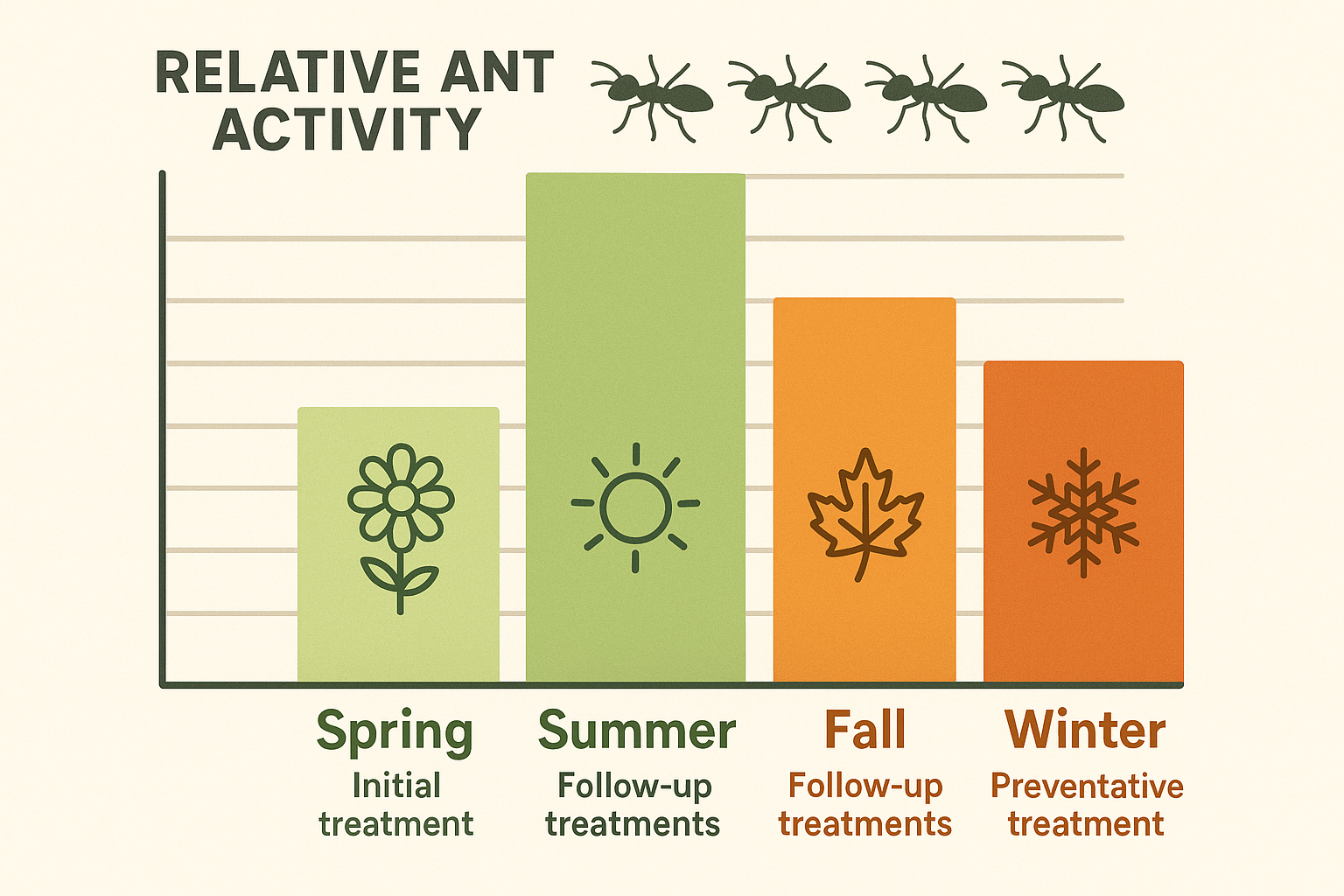
The bar chart above visualizes this cycle. The spring bar aligns with a recommended inspection—walk your perimeter, check for mud tubes, and note any early foraging trails. The summer bar is paired with baiting; this is when ants are most receptive to slow‑acting baits that workers carry back to the colony. The fall bar suggests a follow‑up treatment to mop up any survivors before winter. Finally, the winter bar reminds homeowners to keep indoor food sealed, even though outdoor activity is minimal.
Weather Triggers That Spark Foraging
Two key weather factors dictate when ants venture out:
- Temperature: Most ant species in Georgia become active when ground temperatures consistently reach 55‑60°F (13‑16°C). Below this, metabolism slows, and workers stay in the nest.
- Humidity: Moisture softens soil, making it easier for ants to build tunnels. A relative humidity above 60% encourages longer foraging trips, especially after a rain.
Because these thresholds often coincide with early‑spring days, that window becomes the sweet spot for preventative measures.
Why Early Spring Is the Most Cost‑Effective Window
Treating in early spring tackles ants before they’ve built extensive satellite nests or discovered your kitchen. A single preventative application can intercept the first wave of workers, reducing the need for multiple summer bait placements. Homeowners who act early typically see a 30‑40% reduction in total treatment cost, as fewer follow‑up visits are required.
Year‑Round Monitoring Tips for Homeowners
Staying ahead of ants doesn’t mean constant professional visits—just a few simple checks:
- Monthly visual sweep: Look for mud tubes along foundations, window sills, and under decks.
- Outdoor food sources: Keep pet food, fallen fruit, and compost bins sealed, especially after rain.
- Moisture control: Repair leaky gutters and ensure proper drainage to deter nests.
- Record observations: Note the date, location, and weather when you spot activity; this data helps schedule the next professional treatment.
By aligning inspections and treatments with the natural seasonal peaks shown in the chart, Decatur homeowners can keep ant invasions at bay while saving time and money. If you spot the first signs of activity in spring, give Anthem Pest Control a call at 877‑371‑8196 or visit our website to schedule a preventative service before the summer surge hits.
Ant Control Methods, Pricing, and What to Expect
Treatment Categories
Anthem Pest Control groups its ant-elimination solutions into four proven categories designed for long-term ant control Decatur homeowners can rely on. Chemical sprays provide rapid knock-down for visible trails and nests inside the home. Bait stations use slow-acting attractants that worker ants carry back to the colony, eradicating it from the source. Granular perimeter treatments create a protective barrier around the foundation, stopping foragers before they cross the threshold. Finally, Integrated Pest Management (IPM) blends these tools with habitat modification—reducing moisture, sealing entry points, and eliminating food sources—to keep ants away long-term.
Professional Inspection Determines the Best Approach
Our certified technician begins every job with a thorough visual inspection. By identifying the species, colony size, and entry routes, the inspector can match the problem to the most effective treatment category. For example, a carpenter ant infestation often requires a combination of bait stations and targeted spray, while pavement ants are best handled with a granular perimeter barrier. This data‑driven approach eliminates guesswork and maximizes ROI for the homeowner.
What a Typical Service Looks Like
- Initial Inspection – The technician maps ant activity, notes moisture hotspots, and records any structural vulnerabilities.
- Bait Placement – Strategically positioned bait stations are installed along trails and near suspected nests. Each station is calibrated for the specific species identified.
- Targeted Application – Depending on the inspection, a spray or granular product is applied to interior voids, wall voids, and the exterior perimeter.
- Follow‑Up Visits – One to two weeks later, the technician returns to assess bait consumption, replace stations if needed, and verify that the colony has collapsed.
- Final Walk‑Through – A quick walkthrough confirms that all treatment zones are covered and provides the homeowner with maintenance tips.
Pricing Packages
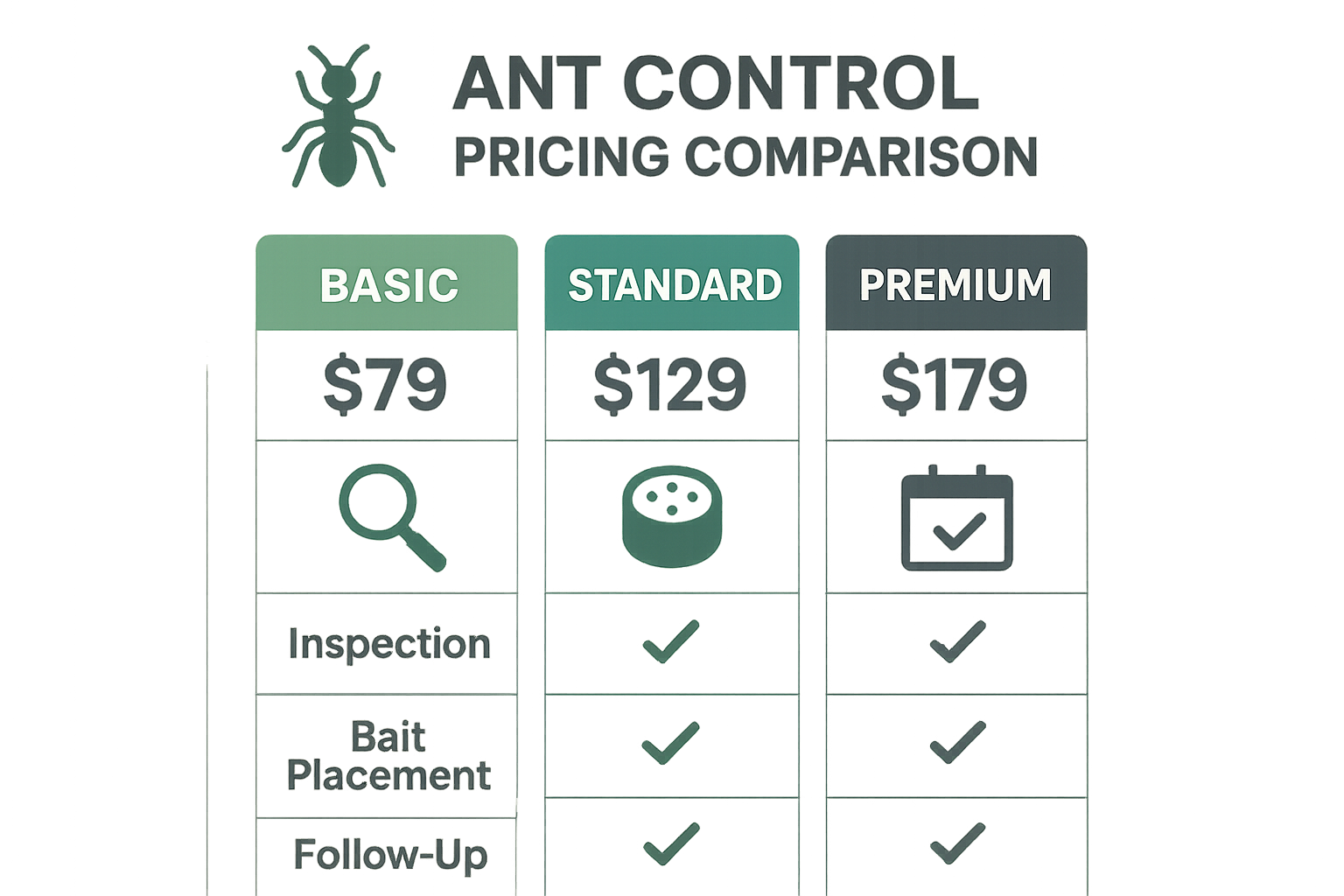
| Package | Price (USD) | Included Services |
|---|---|---|
| Basic | $149 | Inspection, one bait station set, single interior spray |
| Standard | $269 | Inspection, up to three bait stations, interior & exterior spray, one follow‑up visit |
| Premium | $429 | Full inspection, unlimited bait stations, granular perimeter treatment, two follow‑up visits, 12‑month warranty |
How Our Prices Compare Nationally
The National Pest Management Association’s 2023 price survey lists the average cost for residential ant control between $180 and $350 per treatment. Anthem’s Basic package sits just below the low end, while the Premium option, which includes a comprehensive IPM plan and a year‑long warranty, remains well under the national high‑end average. Homeowners in Decatur benefit from local expertise without paying a premium price tag.
Frequently Asked Questions
- How often will treatment be needed? Most infestations are resolved after two visits. For high‑traffic properties, we recommend quarterly checks during the peak ant season (April–September).
- Are the products safe for pets and children? Yes. All chemicals used are EPA‑registered and applied according to strict safety guidelines. Bait stations are placed out of reach, and granular treatments are formulated to be non‑toxic once set.
- What does the warranty cover? Our 12‑month warranty guarantees a free follow‑up visit if ants reappear within the covered period, provided the homeowner follows our preventive recommendations.
- Can I combine ant control with other pest services? Absolutely. Anthem offers bundled packages that include termite, mosquito, or rodent control, often at a discounted rate.
Protect Your Home Today with Anthem Pest Control

Early detection, timing your treatment to the season, and choosing the right method are the three pillars that keep ant colonies from turning your kitchen into a highway. Spotting a trail of workers in the spring, acting before colonies spread in summer, and applying a treatment that reaches the queen can stop an invasion before it becomes an expensive, recurring problem.
That’s exactly why Anthem Pest Control’s technicians focus on a science‑backed approach. Our crews are trained to identify the species you’re dealing with, assess the structure of your home, and recommend a solution that matches the life cycle of the pest. Because we operate in every state, we bring a nationwide knowledge base while still offering the local insight you expect from a neighbor‑level service.
Our transparent pricing model means you receive a detailed breakdown before any work begins, so you know exactly which services are included and why they matter. Whether you live in a historic Decatur bungalow or a modern suburb, our network of regional specialists shares the same training standards, ensuring consistent results across the country.
- Transparent pricing: No hidden fees—what you see in the quote is what you pay.
- Safe, effective products: EPA‑approved treatments that protect your family and pets.
- Full‑service guarantee: If ants return, we re‑treat at no extra cost.
Ready to see how easy an ant‑free home can be? We invite you to schedule a complimentary, no‑obligation inspection. One of our certified specialists will walk your property, explain the findings, and provide a detailed quote—all at zero cost to you.
Call us today at 877-371-8196 or visit anthempest.com to book your free inspection for professional ant control Decatur services. Our friendly team is standing by to answer questions, set up a convenient appointment, and guide you through every step of the process.
Take the first step toward an ant‑free home today.