Recognizing Ant Infestations in Your Home
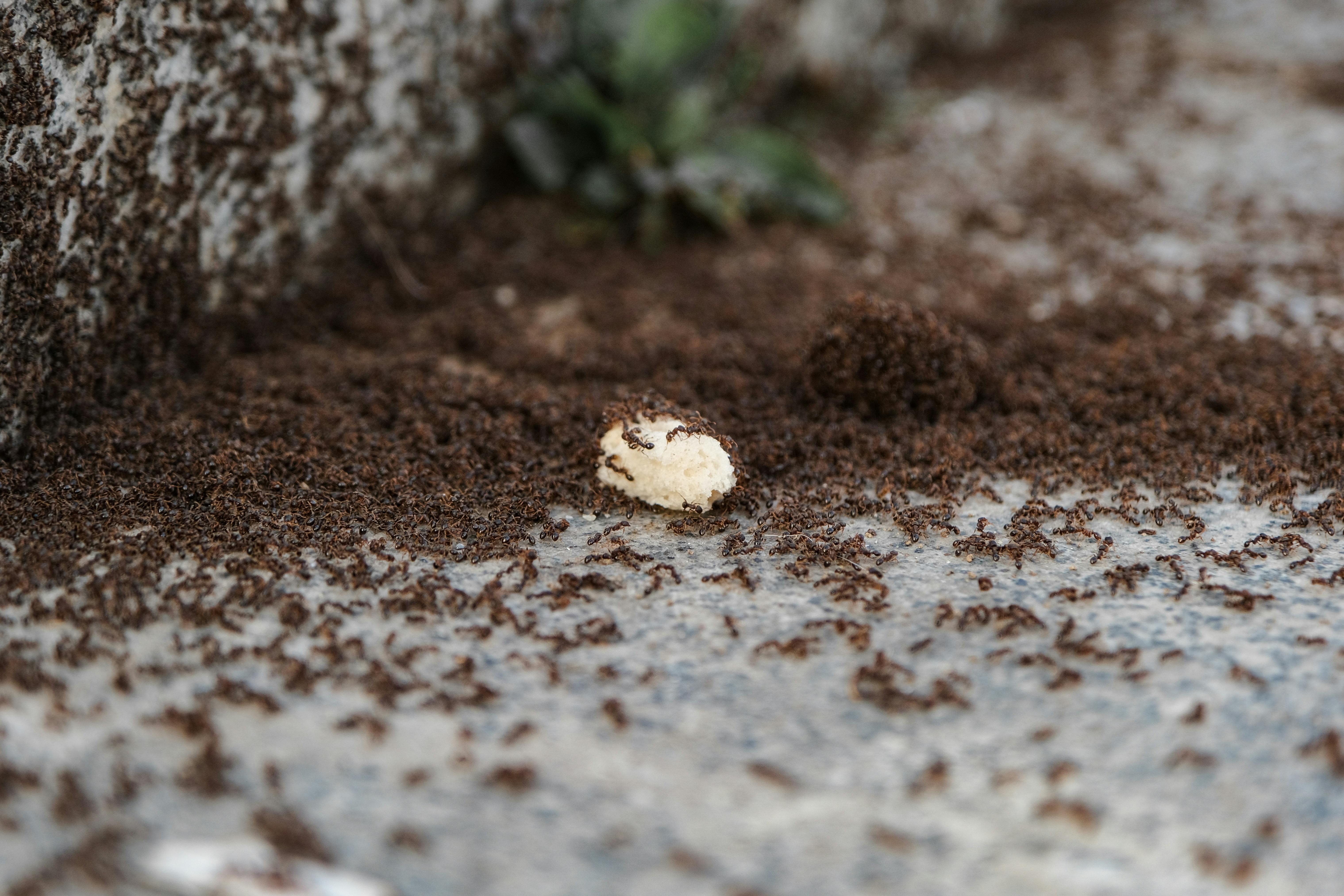
Ants are the silent invaders most homeowners overlook until they’ve already claimed a foothold. Spotting the problem early not only saves you from costly damage but also makes treatment far more straightforward. Below, we break down the most common ant species you’ll encounter in U.S. homes, the visual clues they leave behind, and how to tell ant activity apart from other pests.
Common Household Ant Species
- Carpenter ants – Large, black or reddish workers that favor damp wood. They don’t eat wood; they excavate it to build nests, which can weaken structural members.
- Odorous house ants – Small, dark brown ants that emit a sour, rotten‑egg smell when crushed. They thrive in moist environments and often nest in wall voids.
- Pavement ants – Light‑brown to black, about 2‑3 mm long. They prefer outdoor cracks and will venture indoors for food and water.
- Fire ants – Reddish‑brown, aggressive stingers that build conspicuous, dome‑shaped mounds outdoors. In the South, they sometimes enter homes seeking shelter.
Visual Cues That Signal an Ant Problem
Even before you see the insects themselves, they leave a trail of evidence:
- Ant trails – A thin, glossy line of pheromones along baseboards, countertops, or windowsills. Follow the trail to locate the entry point.
- Small mounds – Soil or sand piles near foundations, especially in sunny spots, often indicate fire ant colonies.
- Damaged wood – Hollowed or crumbling timber, especially in attics or crawl spaces, points to carpenter ants.
- Sweet residue – Sticky deposits near pantry shelves or pet feeding stations, left behind by ants that have been feeding on sugary foods.
Typical Entry Points & Why Kitchens Attract Ants
Ants are opportunistic explorers. They’ll slip through the tiniest cracks in siding, foundation walls, or around utility penetrations. Once inside, they gravitate toward:
- Food sources – Open containers of sugar, cereal, or pet kibble provide the high‑energy fuel ants need.
- Moisture – Leaky pipes, damp basements, and even condensation on windows create the humid micro‑climates many species love.
- Warmth – Kitchens and laundry rooms maintain a steady temperature, making them ideal staging grounds for foraging ants.
Distinguishing Ants from Other Insects
It’s easy to mistake ants for other tiny crawlers. Here’s how to avoid a misdiagnosis:
- Body shape – Ants have a distinct “pinched” waist (petiole) between the thorax and abdomen, unlike beetles or silverfish.
- Movement pattern – Ants travel in organized, straight lines, while flies or moths move erratically.
- Presence of wings – Some ant species produce winged reproductives (alates) during mating season. If you see a swarm of tiny, non‑stinging insects with two sets of equal wings, you’re likely looking at ants, not termites (which have longer, more uniform wings).
Quick “Self‑Check” Checklist
Use this short list to gauge the severity of an ant presence in your home. Mark each item that applies, then call a professional if you tick more than two.
- Visible ant trails leading to food or water sources.
- Discovery of ant nests or soil mounds inside or near the foundation.
- Evidence of wood damage (hollow or crumbling sections).
- Frequent sightings of ants in multiple rooms.
- Unexplained sweet residue or crumbs near countertops.
- Ants entering through cracks, gaps around windows, or utility openings.
Next Steps: EPA‑Recommended Identification & Initial Actions
The U.S. Environmental Protection Agency offers a solid foundation for ant identification and early‑stage control. Their Ant Control Tips guide homeowners through safe pesticide use, proper sanitation, and habitat modification. Following these best practices can dramatically reduce the need for aggressive chemical treatments later on.
By learning the tell‑tale signs of ant activity and acting quickly, you protect both the structural integrity of your home and the health of your family. When in doubt, a quick call to Anthem Pest Control (877‑371‑8196) connects you with local experts who can confirm the species and recommend a tailored, cost‑effective solution.
Seasonal Ant Activity Patterns in Druid Hills
Ants are ectothermic insects, meaning their activity level rises and falls with the temperature and moisture in their environment. In Druid Hills, the subtle swing between humid spring rains, scorching summer days, and cooler, drier fall evenings creates a predictable foraging rhythm. When the soil warms above 55°F (13°C) and humidity climbs, workers leave the nest in larger numbers to hunt for food. Conversely, a cold snap or dry spell forces colonies to retreat, conserving energy until conditions improve.
What the seasonal chart tells you
The chart below condenses years of local monitoring into a simple visual guide. It highlights the months when the three most troublesome ant species in our area reach peak activity.
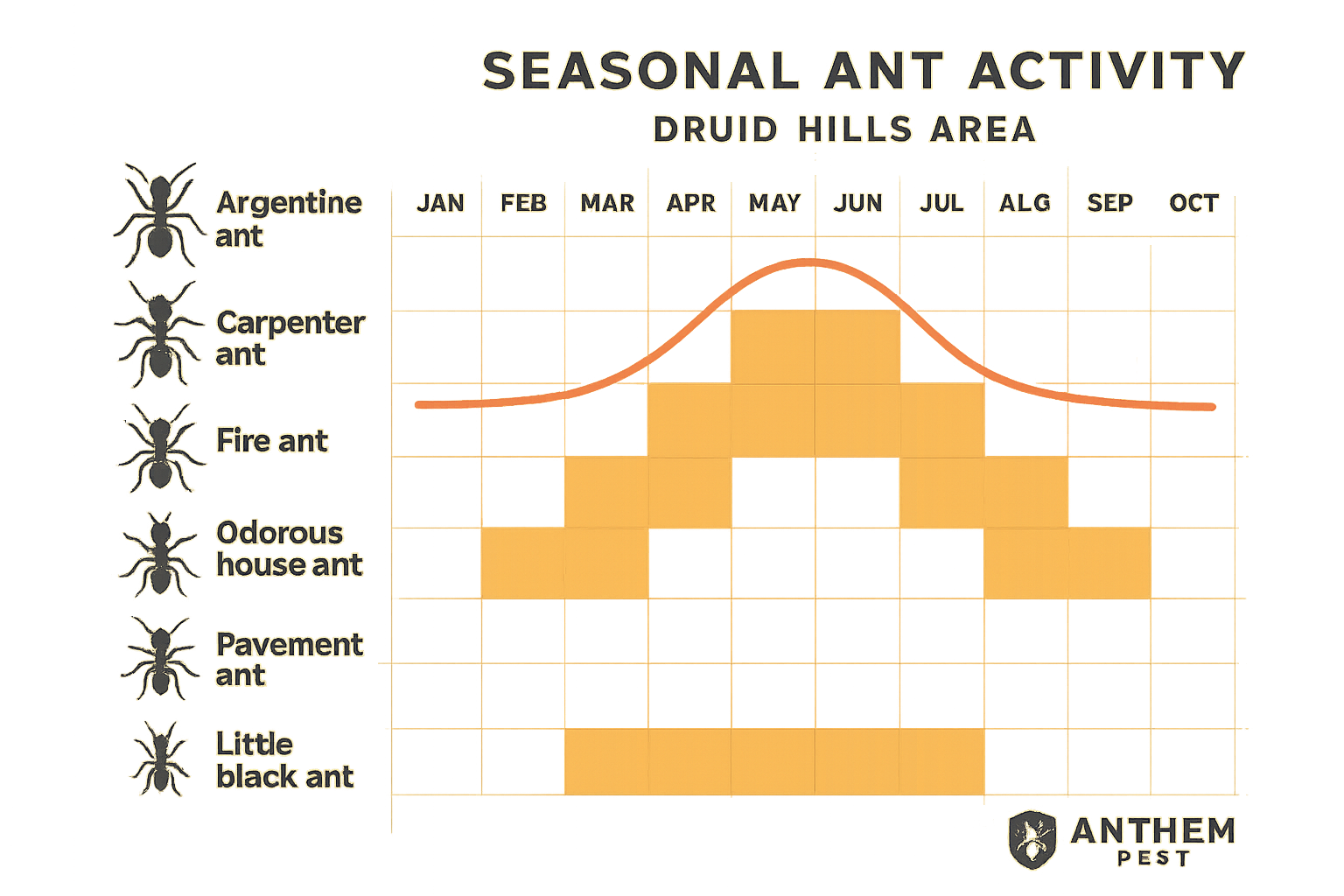
| Species | Peak Months | Typical Habitat |
|---|---|---|
| Carpenter Ants | March – May | Moist wood, tree stumps, interior voids |
| Pavement Ants | June – August | Sidewalk cracks, garden mulch, outdoor lights |
| Fire Ants | September – November | Open lawns, flower beds, low‑lying vegetation |
Indoor vs. outdoor infestations
During the spring thaw, carpenter ants often migrate from damp wood outdoors into the cooler interior of a home, seeking shelter for their developing brood. Summer heat pushes pavement ants to the shade of foundations, decks, and indoor crawl spaces. By late summer, fire ants thrive in the warm, moist soil of lawns; they rarely enter homes unless a food source beckons. Understanding where each species prefers to live helps you target inspections where they’re most likely to be found.
Seasonal inspection checklist
- Spring: Look for winged reproductives (swarmers) near windows, inspect wooden trim for small, smooth tunnels, and check for ant trails leading from mulch beds to the foundation.
- Summer: Scan sidewalks, driveways, and patio edges for pavement‑ant mounds; lift pavers to see if colonies are nesting underneath.
- Fall: Search lawn perimeters for fire‑ant mounds, especially after the first heavy rains; watch for increased activity around outdoor trash cans.
- Winter: Even though activity drops, inspect cracks and gaps that may have been sealed by snow melt; look for dead ants in entry points, a sign that a colony is hibernating nearby.
Preventive actions aligned with each season
- Before spring rains: Seal foundation cracks, repair damaged siding, and trim vegetation that touches the house. Reducing moisture in wood eliminates the invitation for carpenter ants.
- Summer maintenance: Remove debris, leaf litter, and excess mulch that retain water. Keep outdoor lighting away from the foundation to discourage pavement‑ant foraging.
- Late summer/fall: Aerate soil to improve drainage, then apply a thin layer of organic mulch to discourage fire‑ant mound formation. Treat lawn borders with a perimeter barrier if fire ants have been spotted.
- Winter preparation: Apply a silicone‑based sealant to window frames and door thresholds. A dry, airtight envelope makes it harder for any low‑activity colonies to re‑enter when temperatures rise again.
Why low‑activity periods are the sweet spot for treatment
When ant colonies are in a dormant or low‑foraging state—typically late winter and early spring—chemical baits and barrier sprays are absorbed more efficiently. Workers are fewer, but they travel farther to feed, spreading the product throughout the nest. Acting during these lull periods not only improves product performance, it also reduces the number of repeat visits you’ll need, saving you time and money.
By syncing your inspections and preventive steps with Druid Hills’ seasonal ant rhythm, you stay one step ahead of the infestation. If you spot signs of activity outside the expected windows, or if a treatment doesn’t seem to take, give Anthem Pest Control a call at 877‑371‑8196. Our local technicians know the exact timing that works best for each species, ensuring a swift, affordable solution.
Treatment Options – DIY Methods vs. Professional Services
DIY Tools You Can Find at Home
When an ant trail appears on your kitchen counter, the first instinct is often to reach for something you already have. Most homeowners rely on four basic categories of over‑the‑counter products:
- Bait stations – pre‑filled containers that attract foragers and deliver a slow‑acting insecticide.
- Granules – sprinkled around the perimeter of a house or garden, they release a low‑dose toxin that workers carry back to the nest.
- Sprays – contact killers that knock down ants on sight, useful for quick knock‑downs but offering no lasting control.
- Natural repellents – household items such as white vinegar, citrus peels, or diatomaceous earth that deter ants without chemicals.
How to Set Up a Bait Station – Step by Step
- Choose the right bait. Look for a product labeled for the specific ant species you’re seeing (carpenter, odorous house, etc.).
- Place stations strategically. Position one bait near each entry point, under appliances, and along the visible trail. Keep them at least 12 inches off the floor to avoid water damage.
- Secure the area. Remove food, crumbs, and sugary spills that could distract workers from the bait.
- Monitor daily. Check the station after 24 hours. If you see ants feeding, gently stir the bait to refresh the surface.
- Replace as needed. Most baits stay effective for 2–4 weeks. Swap out any empty or contaminated stations to maintain a steady poison supply.
Within a week, you should notice a reduction in traffic along the original trail. Patience is key—ant colonies rely on a single forager to bring the toxin back, so the visible results may lag behind the actual colony decline.
Why DIY May Fall Short
Even the most diligent homeowner can run into obstacles that limit the success of a do‑it‑yourself approach:
- Incomplete coverage. Ants can nest behind walls, under decks, or in soil pockets that are unreachable with surface‑only products.
- Resistance buildup. Repeated use of the same active ingredient can encourage tolerant colonies, rendering the bait ineffective.
- Safety concerns. Many over‑the‑counter sprays contain pyrethroids or other chemicals that pose risks to children, pets, and beneficial insects.
- Misidentification. Treating the wrong species often leads to wasted product and lingering infestations.
What Professionals Bring to the Table
Licensed pest‑management companies, like Anthem Pest Control, employ a broader toolbox designed for deep, long‑lasting control:
- Liquid barrier treatments. A calibrated sprayer creates a thin, invisible wall around the home’s foundation, killing ants before they cross the threshold.
- Integrated baiting programs. Technicians rotate active ingredients and place baits in hidden voids, ensuring colonies cannot develop resistance.
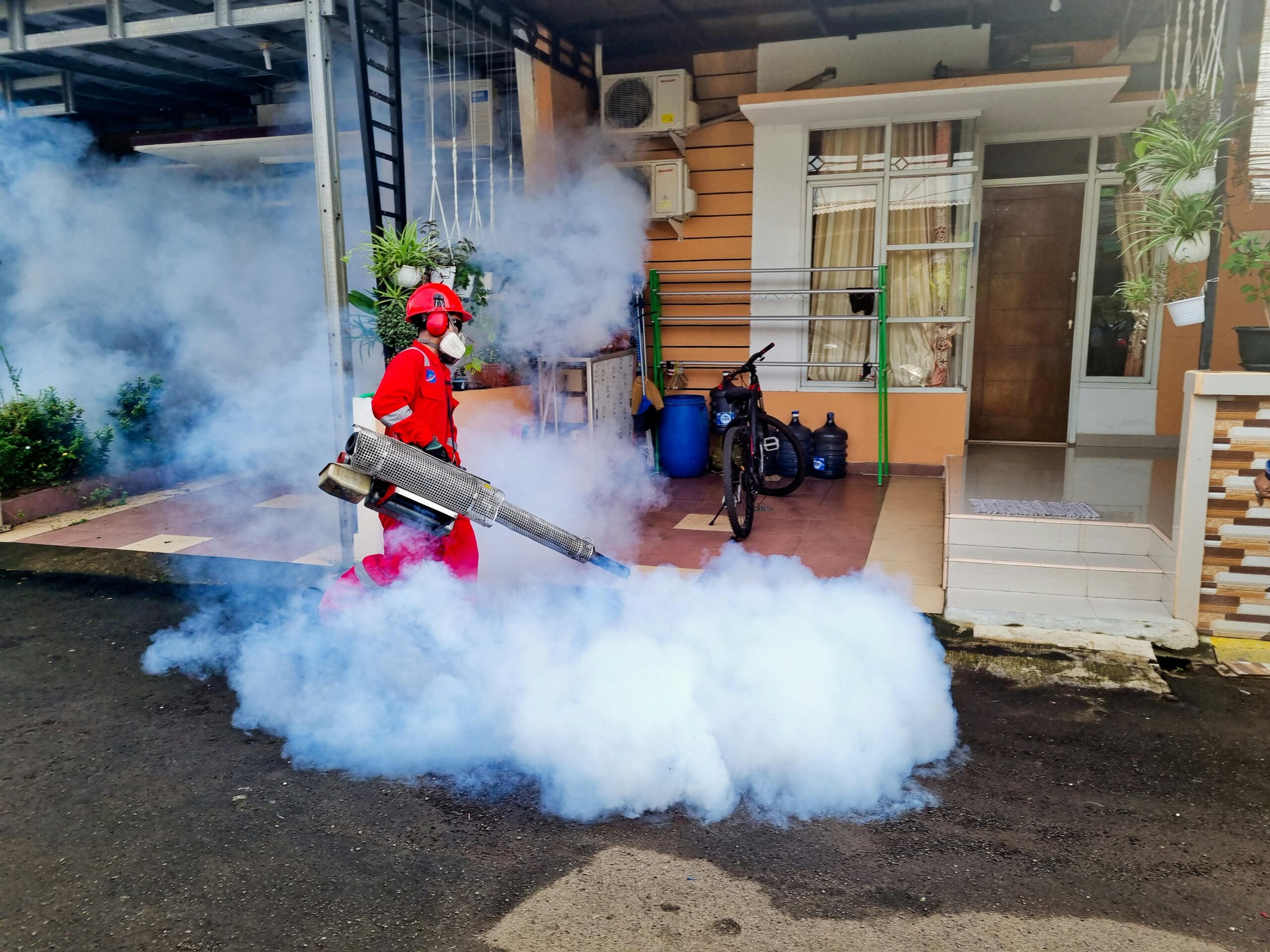
- Targeted smoke applications. Specialized smoke machines force air into cracks and voids, flushing out hidden nests for immediate treatment.
Assessing the Property – The Technician’s Playbook
A certified technician starts with a systematic inspection:
- Exterior sweep – identifying cracks, moisture sources, and vegetation that serve as ant highways.
- Interior probe – tracing trails back to possible entry points and checking for signs of satellite colonies.
- Species confirmation – using a magnifying lens and reference guide to determine the exact ant type.
- Treatment plan – selecting the optimal combination of barrier, bait, and smoke based on colony size and location.
Because the professional can see where the ants are nesting—under floorboards, inside wall voids, or within landscaping beds—the chosen method addresses the problem at its source rather than merely wiping out foragers.
Safety and Regulatory Edge of Licensed Pros
Hiring a certified provider offers several built‑in safeguards:
| Aspect | DIY Approach | Professional Service |
|---|---|---|
| EPA compliance | Often limited to consumer‑grade products | Uses registered, label‑approved chemicals with documented safety data |
| Exposure risk | Higher for children and pets if misapplied | Technician follows strict application protocols, reducing residual hazards |
| Effectiveness | Variable; depends on homeowner diligence | Targeted, colony‑level eradication with follow‑up monitoring |
| Warranty | None | Often includes guaranteed re‑treatment if ants return within a set period |
Real‑World Example: Smoke Penetrates Hidden Nests
During a recent service in Druid Hills, a technician noticed a faint ant trail leading to a baseboard crack. Instead of guessing, she deployed a handheld smoke machine. The dense, odorless smoke traveled deep into the wall cavity, forcing a concealed colony to emerge. Once visible, the technician applied a focused liquid treatment directly onto the nest, eliminating the source in a single visit.

Understanding Ant Control Costs and Choosing the Right Plan
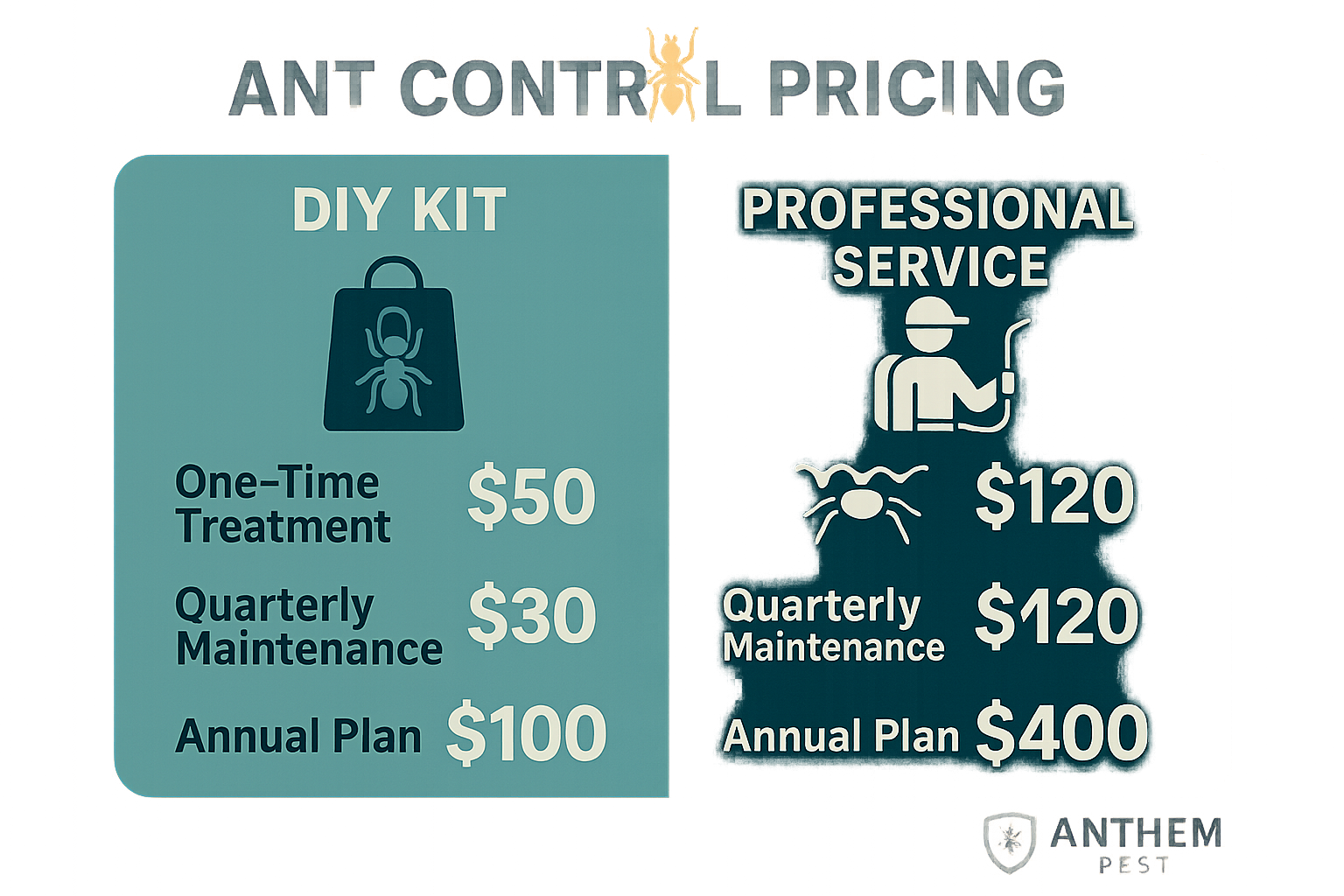
When you spot an ant trail on your kitchen counter, the first question is usually “how much will it cost to get rid of them?” The answer depends on the size of the problem, the type of service you choose, and how often you want protection. Below we break down the most common pricing structures so you can see where your money goes and decide what fits your budget.
Cost Comparison: DIY Kits vs. Professional Services
| Option | Typical Cost | What’s Included |
|---|---|---|
| DIY Ant‑Control Kit | $15 – $35 (one‑time purchase) | Gel or bait stations, application instructions, no follow‑up |
| Professional Single‑Visit Treatment | $120 – $250 | Inspection, targeted spray or bait, 30‑day guarantee, no future visits |
| Quarterly Maintenance Plan | $180 – $300 per year (four visits) | Four inspections, preventive treatments, priority scheduling, unlimited re‑treats within the year |
| Annual Full‑Service Plan | $300 – $450 per year | Eight visits (quarterly + two extra), comprehensive pest shield, free on‑site estimate, discounted add‑ons |
DIY kits are attractive for a quick fix, but they rarely address hidden colonies or structural entry points. A professional single‑visit can knock out an active infestation, yet without follow‑up you may see the ants return once the treatment wears off. Subscription plans spread the cost over the year while providing ongoing monitoring and early intervention.
Factors That Influence the Price
- Property size: Larger homes or multi‑unit buildings require more product and labor.
- Infestation severity: A few trails cost less to treat than a sprawling colony with multiple nests.
- Ant species: Carpenter ants, for example, often need wood inspections and may demand more intensive treatments.
- Treatment frequency: More frequent visits increase total cost but lower the risk of re‑infestation.
Why a Quarterly Maintenance Plan Pays Off
Think of quarterly visits as a health check‑up for your home. Technicians spot early signs—tiny scout trails or moisture issues—before they blossom into full‑blown colonies. This proactive approach reduces the need for costly emergency treatments, extends the life of your home’s structural components, and typically saves homeowners 15‑25 % compared to ad‑hoc services.
Anthem Pest’s Transparent Pricing
Anthem Pest aligns its pricing with homeowner budgets by offering a clear, no‑surprise quote before any work begins. All plans include a free on‑site estimate, so you know exactly what you’re paying for—whether it’s a one‑time knock‑out or a year‑long protection package. The company’s tiered options let you start small and scale up as your needs evolve, without hidden fees or mandatory long‑term contracts.
Quick Decision‑Making Matrix
| Situation | Recommended Approach |
|---|---|
| Isolated trail, < 5 ants, no structural damage | DIY kit – apply bait to trail, monitor for 2 weeks |
| Multiple trails, visible nests, or carpenter‑ant activity | Professional single‑visit treatment with targeted bait |
| Recurring issues, large property, or previous infestations | Quarterly maintenance plan – regular inspections & preventive treatments |
| Year‑round protection needed (e.g., humid climate, high‑traffic yard) | Annual full‑service plan – includes extra seasonal visits |
Use this matrix as a quick reference: if you’re dealing with a minor, isolated problem, a DIY kit may be enough. When colonies spread, damage appears, or you’ve faced ant issues before, professional help—especially a maintenance plan—offers the most cost‑effective, long‑lasting peace of mind.
Protect Your Home with Anthem Pest Control
When it comes to ant invasions, the difference between a quick fix and a lasting solution hinges on three critical factors: accurate identification, seasonal timing, and the right treatment method. Skipping any of these steps can let colonies rebound, leaving you to battle the same trails over and over.
- Accurate Identification: Knowing whether you’re dealing with carpenter ants, odorous house ants, or pavement ants determines the chemicals and strategies we deploy.
- Seasonal Timing: Ant activity peaks in spring and early summer, but some species thrive year‑round. Treating at the optimal moment stops the queen from expanding the nest.
- Proper Treatment: EPA‑approved products applied by trained technicians eradicate the colony while keeping your family and pets safe.
Our certified technicians take the guesswork out of pest control. By leveraging years of field experience and the latest, environmentally responsible products, we guarantee a thorough approach that a DIY spray simply can’t match. The result? A home that stays ant‑free long after the treatment is complete.
If you’ve spotted ant trails, noticed wood damage, or simply want peace of mind, our team is ready to step in. We start with a free on‑site inspection, during which we pinpoint the source, assess the extent of the infestation, and discuss the most effective, cost‑transparent plan for you.
Transparency is at the heart of our service. After the inspection, you’ll receive a clear, itemized quote—no hidden fees, no surprise add‑ons. This low‑risk step lets you decide with confidence, knowing exactly what you’re paying for and how it protects your home.
Don’t let ants turn a minor nuisance into a costly problem. Reach out today for a no‑obligation, free quote and take the first step toward a pest‑free home.
Contact Anthem Pest Control now:
Phone: 877‑371‑8196
Website: Anthem Pest Control
Get your free ant‑control quote today and protect your home with the expertise only Anthem Pest can provide.