
Why Centipedes Matter for Homeowners
What a Centipede Is
Centipedes are elongated, many‑legged arthropods that thrive in damp, dark places. In the United States, the most common household species are the house centipede (Scutigera coleoptrata) and a few smaller soil‑dwelling varieties. Adults range from 1 to 3 inches long, with long, graceful legs that allow them to sprint across tile, wood, or carpet. Their bodies are segmented, each segment bearing one pair of legs, giving them the characteristic “centi‑” (hundred) appearance, even though most have far fewer than a hundred legs.
Common Misconceptions
Many homeowners assume centipedes are either harmless allies or outright threats. The truth sits somewhere in the middle:
- Beneficial predators: Centipedes do eat flies, spiders, and other small insects, which can help keep minor indoor pest populations in check.
- Nuisance pests: Their rapid movements and occasional appearance in living spaces can be unsettling, especially for families with children or pets.
- Not disease vectors: Unlike cockroaches or rodents, centipedes do not carry pathogens that cause human illness.
Where They Slip Inside
Centipedes exploit the same pathways that moisture-loving pests use. Typical entry points and preferred habitats in a home include:
- Cracks around foundation walls, especially in basements and crawl spaces.
- Gaps around plumbing, HVAC ducts, and utility penetrations.
- Unsealed door thresholds and window frames that lead to damp outdoor soil.
- Bathrooms, kitchens, and laundry rooms where condensation creates a humid micro‑environment.
Once inside, they seek out cool, damp retreats—underneath appliances, behind baseboards, or within insulation—where they can hide during the day and hunt at night.
Health & Safety Considerations
Centipede bites are rare, but they can occur if the creature feels threatened. A bite typically feels like a mild pinprick followed by localized redness and swelling, which subsides within a day or two. Allergic reactions are uncommon, and there is no evidence linking centipedes to disease transmission. Nonetheless, the psychological discomfort of seeing a swift, many‑legged crawler can be significant for many homeowners.
The Value of Early Detection
Spotting a few centipedes early can prevent a larger, more visible infestation. Because they reproduce quickly in moist conditions, a small, unnoticed population can swell within weeks, leading to increased sightings and potential bites. Early detection also makes treatment more cost‑effective: localized interventions—such as sealing cracks, reducing indoor humidity, and applying targeted insecticide—are far less expensive than extensive structural treatments required for a full‑blown outbreak.
By understanding what centipedes are, where they hide, and why they matter, homeowners can take proactive steps to keep their homes comfortable and bite‑free.
Spotting a House Centipede – Visual Identification Guide
Key Identification Features
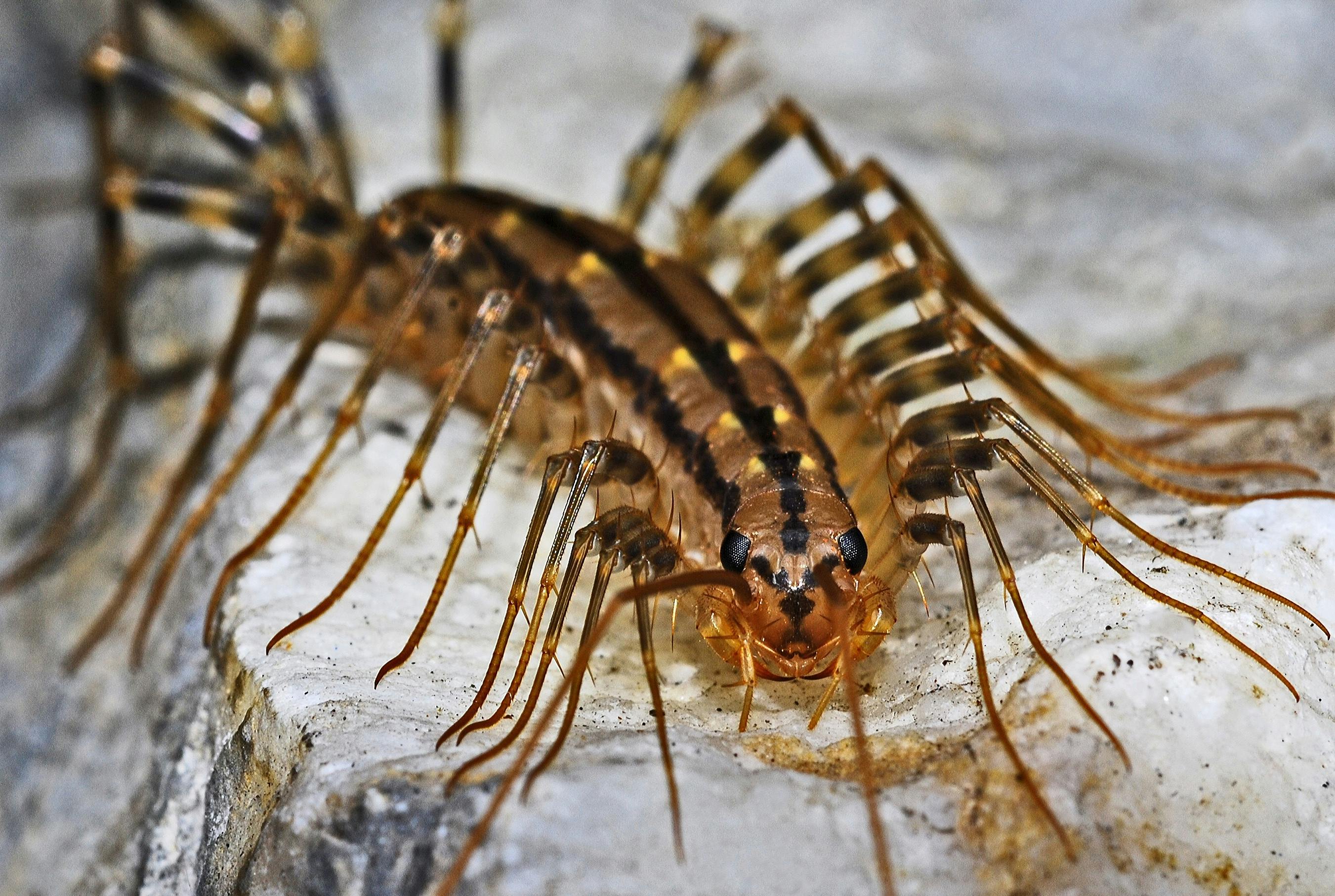
House centipedes are instantly recognizable by their dozens of long, slender legs that fan out from a flattened, elongated body. Most species display a distinctive striped pattern—alternating light and dark bands that run the length of each segment. When disturbed, they move with a rapid, almost spider‑like scuttle, darting across walls and floors in a matter of seconds.
Size Range and Species Variation
Adult house centipedes typically measure between 1 and 2 inches (2.5–5 cm) in length, though some regional varieties can be slightly larger or smaller. The number of leg pairs varies by species, ranging from 15 to 23 pairs, which can help differentiate one local form from another during a close inspection.
How They Differ From Look‑Alikes
- Spiders: Spiders have eight legs, a compact body divided into cephalothorax and abdomen, and usually spin silk. Centipedes have many more legs and lack silk glands.
- Millipedes: Millipedes boast two pairs of legs per body segment and move slowly, often curling into a tight coil when threatened. Centipedes have one pair per segment and are much faster.
- Earwigs: Earwigs are winged insects with a characteristic pair of forceps‑like cerci at the rear. Their bodies are more rounded, and they rarely exceed an inch in length.
Where You’re Most Likely to See Them
House centipedes love moisture. They’re commonly found in basements, bathrooms, and kitchens—especially under sinks, near leaky pipes, and around shower stalls. They also gravitate toward light sources, so you might spot them near windowsills, under lamps, or around night‑lights.
Quick DIY Inspection Tips
- Run a flashlight along baseboards and behind molding; centipedes hide in the shadows.
- Lift the doors of cabinets and closets—check the corners and the floor for tiny, fast‑moving silhouettes.
- Inspect under sinks and around plumbing fixtures; the damp environment is a perfect hideout.
- Leave a light on for a few minutes in a dark room; their attraction to light will draw them out for an easy visual confirmation.
What to Do If You See One
- Stay calm—house centipedes are harmless to humans and actually help control other pests.
- Gently capture it with a glass and a piece of paper, then release it outdoors away from your home.
- If you notice a recurring presence, check for excess moisture and seal cracks where they may be entering.
- Contact Anthem Pest Control at 877‑371‑8196 for a professional inspection and targeted treatment plan.
Preventing Centipede Intrusions Before They Start
Eliminate Excess Moisture
Centipedes thrive in damp environments, so the first line of defense is to dry out any moisture‑friendly zones in your home. Inspect kitchens, bathrooms, and basements for leaky pipes, dripping faucets, or condensation on windows. Repair all leaks promptly, and consider installing a water‑sensing alarm near vulnerable areas. In spaces that stay humid, such as basements, run a dehumidifier set to 45‑50°F (7‑10°C) to keep the air dry. Improve ventilation by adding exhaust fans in bathrooms and laundry rooms, and keep interior doors open when weather permits to promote airflow.
Reduce Clutter and Debris
Stacks of cardboard, firewood, or miscellaneous storage items create hidden shelters for centipedes and the insects they prey on. Keep closets, garages, and basements organized—store items on shelves rather than on the floor, and use sealed plastic containers for long‑term storage. Remove any piles of firewood that sit against the house; if you need to keep wood for heating, store it at least three feet away from the foundation and elevate it on pallets. Regularly sweep or vacuum corners where dust and debris accumulate, because a tidy space leaves fewer hiding spots.
Seal Entry Points
Even the smallest crack can become a centipede highway. Walk the perimeter of your home with a flashlight and locate gaps around baseboards, utility penetrations, and window frames. Apply a high‑quality silicone or acrylic caulk to seal these openings, and re‑caulk annually to maintain a tight seal. Install door sweeps on all exterior doors, ensuring they glide snugly against the threshold. Repair torn or missing window screens, and consider adding fine‑mesh screens over vents and crawl‑space openings. A well‑sealed envelope forces centipedes to look elsewhere for shelter.
Outdoor Landscaping Tips
The exterior of your property is an extension of your indoor defenses. Keep grass trimmed to a maximum of three inches, and avoid allowing it to touch the house siding. Mulch should be placed at least six inches away from the foundation; otherwise, it retains moisture and attracts insects that feed centipedes. Remove leaf litter, fallen branches, and garden debris weekly, especially after storms. If you have a compost pile, locate it far from the home and turn it regularly to discourage pest buildup.
Food Source Management
Centipedes are opportunistic hunters, feeding on silverfish, spiders, cockroaches, and other small insects. Reducing these secondary food sources cuts down the reason for centipedes to venture indoors. Keep kitchen countertops clear of crumbs, store pantry items in airtight containers, and fix any cracks that let ants or silverfish slip through. Use bait stations or low‑toxicity insecticides in crawl spaces and under sinks to keep the insect population in check without harming pets or family members. A balanced, low‑insect environment makes your home far less appealing to centipedes.
Seasonal Checklist for Pre‑Summer and Pre‑Winter Prevention
| Season | Task | Why It Matters |
|---|---|---|
| Pre‑Summer | Inspect and repair all plumbing leaks; run dehumidifiers in basements; trim vegetation away from the house. | Warm, moist conditions attract insects, creating a food supply for centipedes. |
| Pre‑Winter | Seal cracks and gaps; add door sweeps; store firewood away from the foundation; clear leaf litter. | Centipedes seek shelter from cold, so a sealed home eliminates easy entry points. |
Treatment Options – DIY vs. Professional Services
Centipedes are fast, nocturnal hunters that love the damp corners of a home. While a few stray legs in the bathroom might be a curiosity, a growing population can signal moisture problems and become a genuine nuisance. Homeowners in Decatur have two main paths to take: a hands‑on, do‑it‑yourself (DIY) approach or calling a licensed technician from Anthem Pest Control. Below we break down each option so you can decide what fits your situation, budget, and comfort level.

DIY Methods You Can Try at Home
When the infestation is light and you’re comfortable handling chemicals, a few over‑the‑counter solutions can keep centipedes at bay.
- Residual sprays: These are insecticides formulated to cling to surfaces for weeks, killing centipedes that walk over them.
- Bait stations: Gel or granule baits attract centipedes, which then carry the toxin back to hidden nests.
- Natural repellents: Diatomaceous earth creates a desiccating barrier, while essential oils such as peppermint, tea tree, or citrus can deter movement when sprayed in cracks and crevices.
Step‑by‑Step: Applying a DIY Spray Safely
- Gather protective gear: Wear long sleeves, gloves, eye protection, and a mask rated for pesticide fumes.
- Ventilate the area: Open windows and doors for at least 15 minutes before you begin; use a fan to circulate air if possible.
- Read the label: Follow the manufacturer’s dosage instructions, noting any restrictions for pets or children.
- Target high‑risk zones: Spray along baseboards, under sinks, behind appliances, and in any cracks where moisture collects.
- Allow drying time: Most residual sprays need 30 minutes to set before the room can be re‑occupied.
- Clean up safely: Dispose of empty containers according to local regulations and wash your hands thoroughly.
When DIY Falls Short
Even the most diligent homeowner can hit a wall with DIY methods. Consider professional help if you notice any of the following:
- Large numbers of centipedes emerging nightly.
- Evidence of hidden moisture—such as persistent condensation, leaking pipes, or soggy crawl spaces—that fuels their breeding.
- Repeated bites or allergic reactions, indicating that the insects are actively seeking you out.
- Inability to reach concealed voids where centipedes hide, like wall cavities or under foundation slabs.
In these cases, a targeted, high‑efficacy treatment applied by a trained technician can break the cycle faster and more safely.
Professional Treatment Options
Anthem Pest Control offers three core services for centipede control, each designed to address different stages of an infestation.
- Perimeter spray: A calibrated application around the exterior foundation creates a protective barrier that kills centipedes before they enter.
- Interior misting: Low‑volume foggers deliver insecticide into cracks, voids, and under flooring, reaching spots a spray bottle can’t.
- Targeted spot‑treatments: When a hot spot is identified, technicians apply a concentrated dose directly to nests or high‑traffic pathways.
Why Hire a Licensed Technician?
Professional pest control isn’t just about stronger chemicals; it’s about strategy, compliance, and peace of mind.
- Proper pesticide selection: Licensed technicians know which EPA‑registered products work best for centipedes while minimizing risk to humans, pets, and the environment.
- Warranty and follow‑up: Most service plans include a guarantee and a scheduled revisit to ensure the problem stays solved.
- Integrated approach: Professionals assess moisture sources, recommend structural fixes, and may combine chemical treatment with physical barriers for lasting control.
- Cost transparency: Use the EPA Pesticide Cost Guide as a benchmark; Anthem Pest Control provides clear, upfront pricing so you know exactly what you’re paying for.
Whether you start with a DIY spray or call in a certified expert, the key is to act early. Centipedes thrive in hidden moisture, so addressing the root cause—leaky pipes, poor drainage, or excess humidity—will keep future invasions at bay and protect your Decatur home for years to come.
Cost Comparison – Professional Spray vs. DIY Bait Station
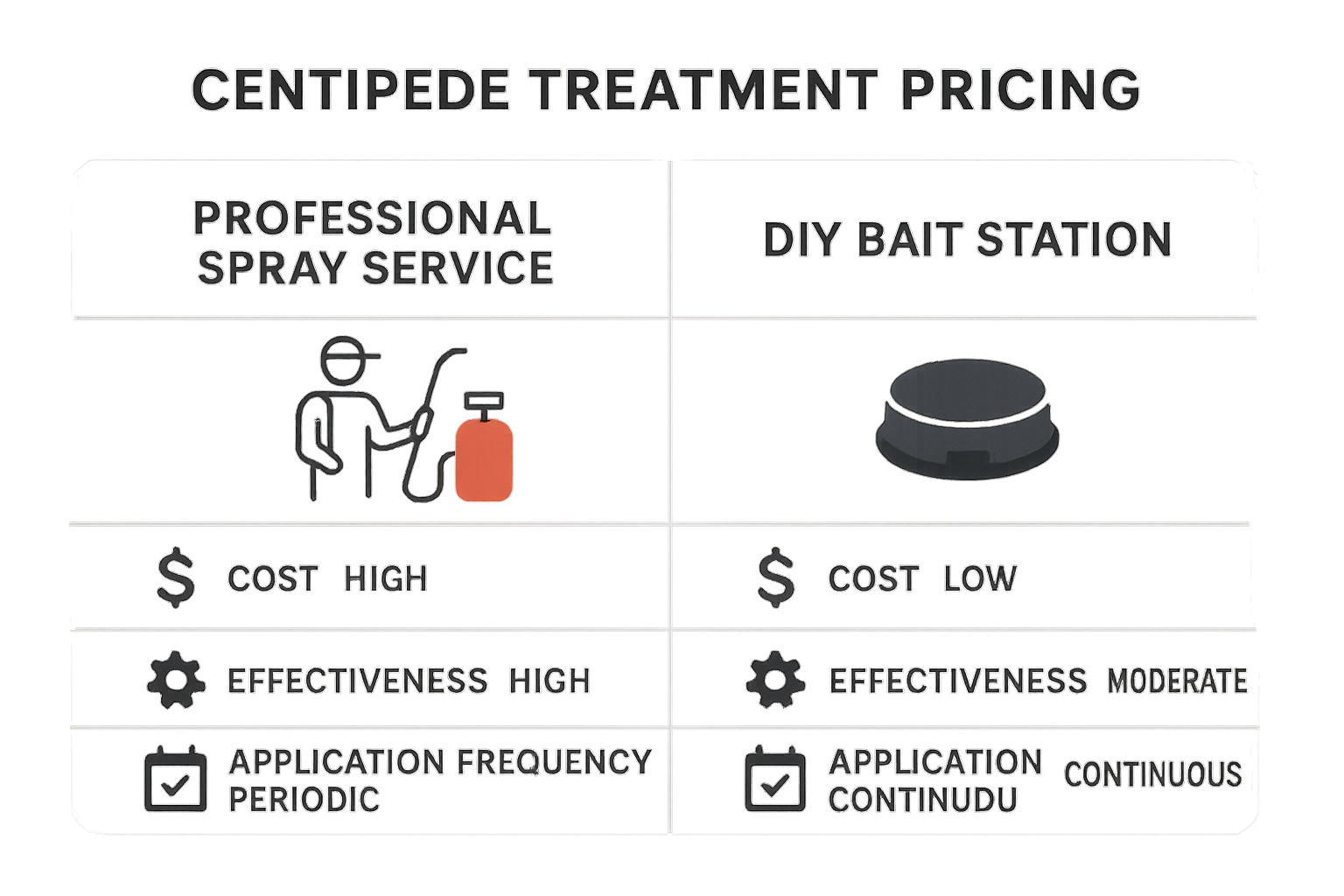
Below is a quick‑look infographic that visualizes the key financial and performance differences between hiring a professional spray service and tackling centipede control yourself with bait stations. It highlights average price brackets, effectiveness scores, and how often each method should be applied to keep your home centipede‑free.
Typical Cost Ranges
When you call a licensed technician, the average charge per visit runs between $120 and $250, depending on property size and the severity of the infestation. In contrast, a complete DIY bait‑station kit—usually containing 5‑10 traps—costs between $30 and $70 upfront.
| Method | Cost per Treatment | Effectiveness Rating | Recommended Frequency |
|---|---|---|---|
| Professional Spray | $120–$250 | High | Quarterly (4× per year) |
| DIY Bait Station Kit | $30–$70 | Medium | Monthly checks (12× per year) |
Effectiveness Rating
Field data collected from Decatur homes shows that professional sprays consistently achieve a high success rate because they target both visible centipedes and hidden breeding sites with residual chemicals. DIY bait stations rank medium—they work well when placed correctly, but placement errors or bait avoidance can lower overall impact.
Application Frequency Recommendations
Experts advise a quarterly professional service to maintain a protective barrier against seasonal surges. If you opt for bait stations, a monthly inspection and replenishment schedule is essential; missed checks can let a small population rebound quickly.
Long‑Term Value Considerations
Professional treatments may seem pricier at first glance, but they often prevent future infestations, reducing the need for emergency calls and costly property damage. DIY kits, while inexpensive up front, can become a recurring expense if you must replace bait every month and still experience occasional bites.
Quick tip: Call Anthem Pest Control for a free, no‑obligation quote. Knowing the exact price for a tailored spray plan lets you weigh the true cost‑benefit against a DIY approach.
Seasonal Activity in Decatur, GA – When Centipedes Are Most Active
Seasonal Overview
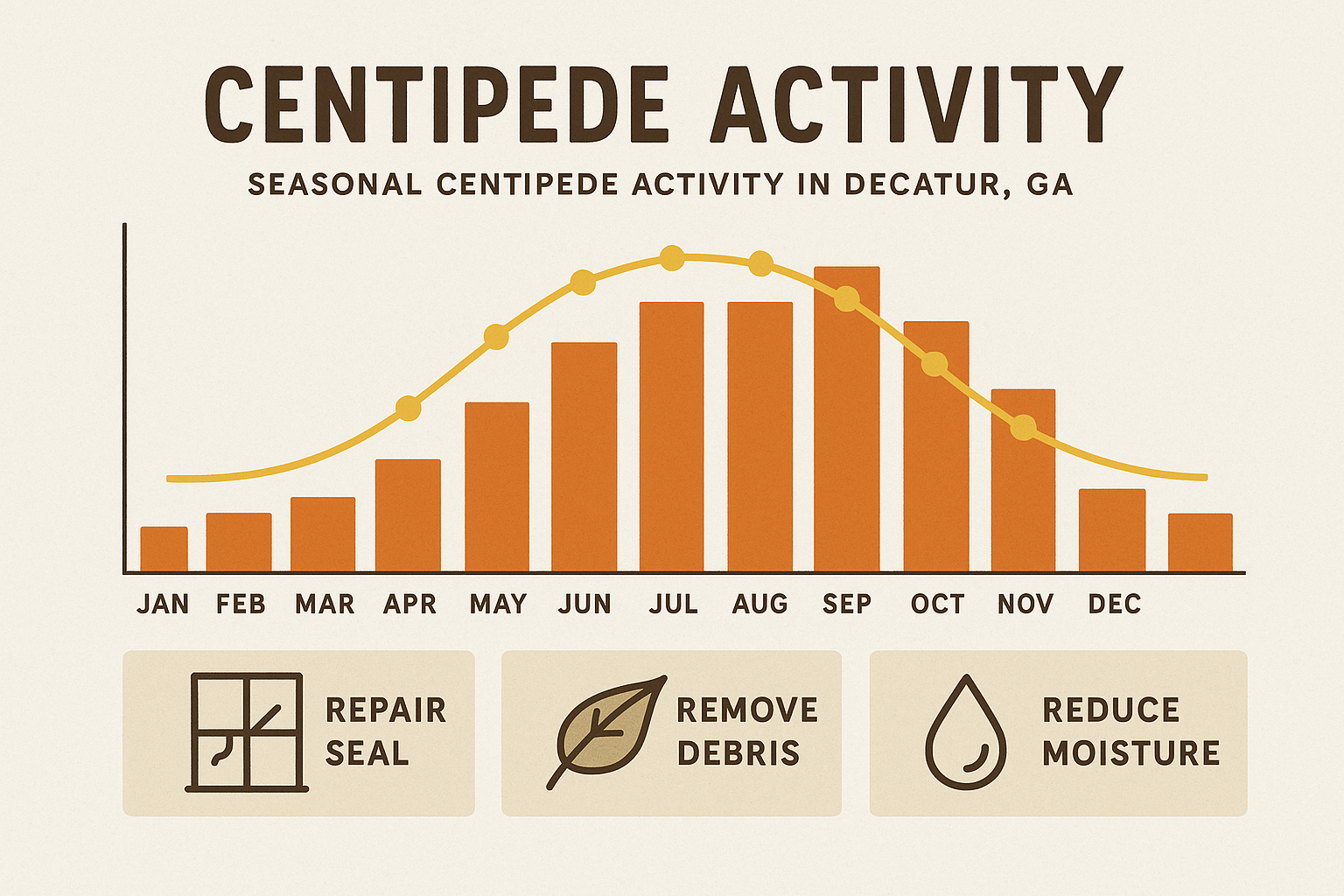
Centipedes in Decatur follow a predictable rhythm that aligns with the region’s warm, humid climate. The seasonal chart shows a clear peak from May through September. During these months, adult centipedes emerge from their underground hideouts to hunt for insects, and you’ll notice more sightings inside homes, especially after evening rains.
Temperature, Humidity & Centipede Behavior
Centipedes are ectothermic; they rely on external heat to stay active. When daytime highs climb above 70°F (21°C) and nighttime lows stay above 55°F (13°C), their metabolism speeds up, prompting increased movement. Humidity is equally critical—levels above 60 % keep the soil and leaf litter moist, providing the perfect breeding ground. A sudden rise in humidity after a summer thunderstorm can trigger a surge of centipedes venturing indoors in search of prey.
Preventive Actions by Season
| Season | Months | Key Preventive Steps |
|---|---|---|
| Spring | March – May |
|
| Summer | June – August |
|
| Fall | September – November |
|
| Winter | December – February |
|
Decatur Climate Quirks
Decatur’s proximity to the Chattahoochee River creates micro‑climates where low‑lying neighborhoods retain moisture longer than the city’s higher‑elevation areas. Homeowners in these pockets often see centipedes appear a month earlier, sometimes as early as late April. Additionally, the occasional “summer lull”—a stretch of cooler, dry days—can temporarily suppress activity, only for numbers to rebound once humidity spikes again.
Plan Ahead for Inspections
Because centipede activity ramps up quickly once conditions are right, scheduling a professional inspection before May gives Anthem Pest Control the chance to apply pre‑emptive treatments and address moisture sources. A timely visit not only reduces the likelihood of indoor sightings but also protects your home’s structural components from the moisture‑related damage centipedes often accompany.
Take Control of Centipedes with Anthem Pest Control
Throughout this guide we’ve shown you how to spot centipedes, keep them out, and eliminate an existing infestation. By learning the tell‑tale signs—such as fast‑moving, many‑legged crawlers in damp basements or near outdoor lights—you can confirm a problem early. Simple prevention steps like fixing leaks, sealing cracks, and reducing yard clutter cut off their entry points. When those measures aren’t enough, targeted chemical treatments and perimeter sprays provide fast, reliable knock‑down.
While DIY options can work for a small sighting, lasting control usually requires a trained professional. Certified technicians understand centipede biology, know which products remain effective year‑round, and can apply them safely around children and pets. Their expertise also means they can spot hidden hotspots that most homeowners miss, delivering results that stay in place long after the spray dries.
At Anthem Pest Control we turn that expertise into a three‑step service designed for Georgia homes. First, a thorough on‑site inspection pinpoints where centipedes are entering and breeding. Next, we craft a customized treatment plan—choosing the right residual spray, bait placement, or dust application based on your home’s layout and any pet considerations. Finally, we schedule follow‑up visits to verify that the population stays suppressed and to adjust the plan if needed.
Ready to put an end to those midnight crawlers? Give us a call at 877-371-8196 for a complimentary, no‑obligation assessment. Our friendly team will walk you through the findings, recommend the most effective solution, and provide a transparent quote before any work begins. You can also schedule your free evaluation online by visiting Anthem Pest Control.
By combining the knowledge you’ve gained with Anthem’s professional treatment, you’ll enjoy a centipede‑free home all year long—no more surprise guests in the kitchen or bathroom. Let us handle the science and the safety, so you can focus on what matters most: comfortable, worry‑free living.