Recognizing German Cockroaches in Your Home
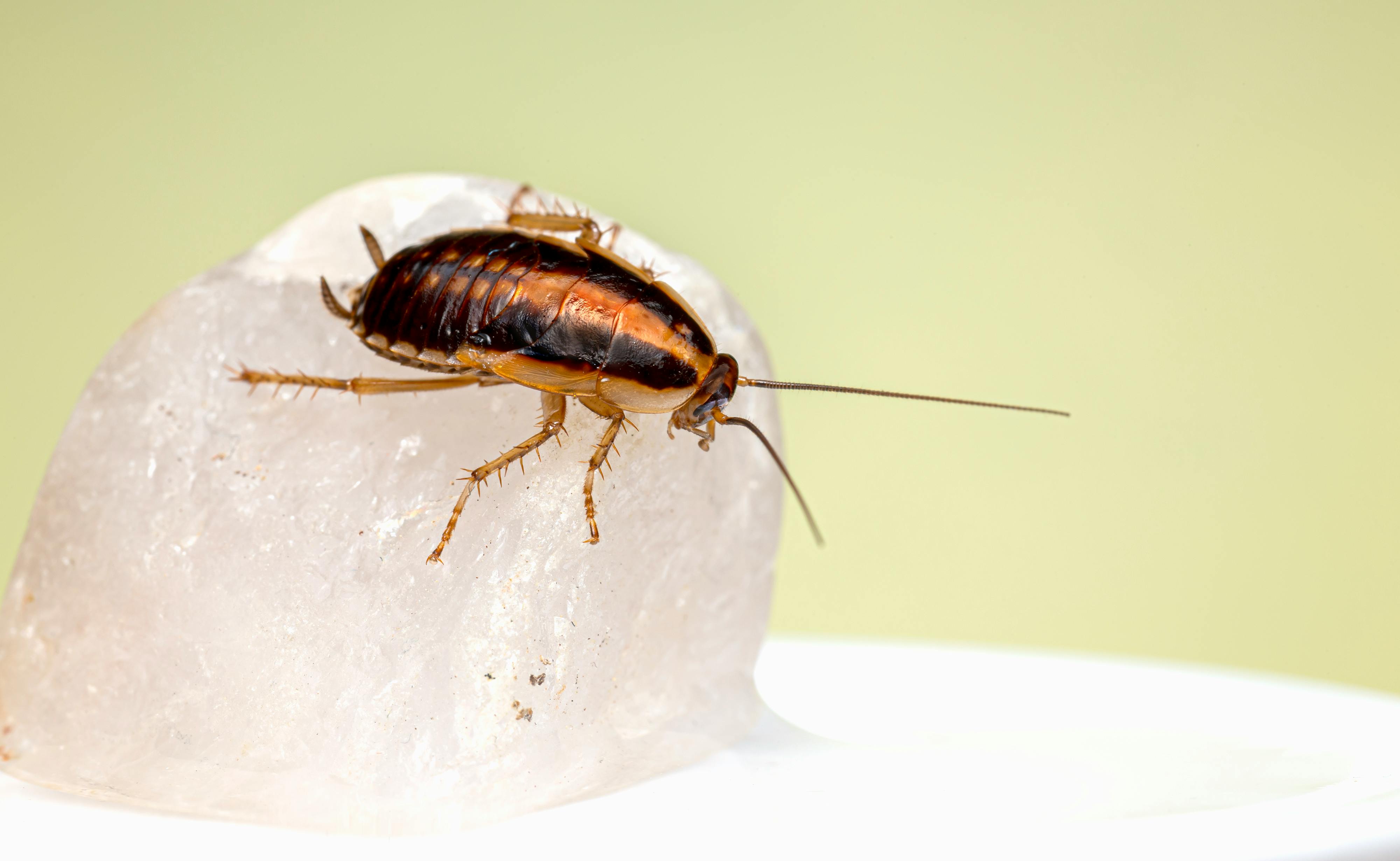
The German cockroach (Blattella germanica) is the most common indoor pest driving the need for cockroach control in Druid Hills, and its tiny stature makes it easy to overlook—until the infestation gets out of hand. An adult measures just 1/2 to 5/8 inch (12–16 mm) long, about the size of a paperclip. Its body is light tan to creamy-brown with two distinct, parallel dark stripes running from the head to the base of the wings. These “twin-stripe” markings are the quickest visual cue for homeowners scanning a kitchen counter or pantry shelf while assessing whether professional cockroach control Druid Hills services are needed.
Where German Cockroaches Hide
These roaches thrive in warm, moist environments where food is plentiful. The most common hiding spots include:
- Kitchen cabinets and pantry shelves, especially near cereal boxes, flour, or sugar.
- Cracks and crevices around baseboards, wall joints, and under appliances.
- Behind or beneath refrigerators, stoves, dishwashers, and microwaves.
- Inside garbage cans, especially if lids are not sealed.
- Sink drains, especially in the cabinet under the sink where moisture accumulates.
Visual Clues That Say “German Cockroach”
Even if you don’t spot a live bug, you can still confirm an infestation by looking for tell‑tale evidence:
- Egg casings (oothecae): Small, brownish‑orange capsules about ½ inch long, often tucked in dark corners or glued to the underside of appliances.
- Shed skins (exuviae): As nymphs molt, they leave translucent shells that look like tiny, empty shells of the adult.
- Droppings: Fine, pepper‑like specks that appear on countertops, in cabinets, or along baseboards. A fresh droppings trail may have a faint, musty odor.
Simple Visual Inspection—Step by Step
Armed with a flashlight and a magnifying glass, you can perform a quick sweep of your home in under 15 minutes:
- Turn on the lights and dim the room. A focused flashlight will highlight movement and shadows where roaches hide.
- Inspect all kitchen surfaces. Scan the tops and backs of cabinets, pantry shelves, and the underside of countertops.
- Check appliance gaps. Slide the flashlight into the narrow spaces behind the refrigerator, stove, and dishwasher. Use the magnifier to spot tiny oothecae or shed skins.
- Examine moisture zones. Look inside sink cabinets, under the sink, and around the dishwasher’s filter. Moisture attracts German cockroaches.
- Collect evidence. If you find egg casings or droppings, take a photo and note the location. This information speeds up professional treatment and helps you target prevention.
Spotting these details early can prevent a minor nuisance from turning into a full‑blown infestation. If you notice any of the signs above, it’s time to call Anthem Pest Control. Our local Druid Hills team offers fast, safe, and affordable treatment plans that eliminate German cockroaches before they multiply.
Health Risks and Allergies Linked to Cockroaches
When cockroaches set up camp in a kitchen, bathroom, or even a bedroom, the danger isn’t limited to the sight of a few unwelcome guests. Their waste, saliva, and shed skins contain potent allergens that can linger in dust, on surfaces, and in the air you breathe. Even a small number of roaches can release enough protein fragments to trigger reactions in sensitive individuals, especially children and those with pre‑existing respiratory conditions.
Allergens in Cockroach Debris
Every time a cockroach moves, it leaves behind microscopic particles of feces, saliva, and exoskeleton fragments. These particles are rich in proteins that act as allergens, similar to pollen or pet dander. When disturbed, they become airborne and can settle on furniture, bedding, or food preparation areas, creating a hidden source of irritation that’s hard to spot without a professional inspection.
Asthma and Allergic Reactions – A Direct Connection
Research from the CDC shows a clear link between cockroach exposure and increased asthma symptoms, particularly in children. In homes where roach allergens are present, children are up to three times more likely to experience asthma attacks, wheezing, and chronic coughing. The allergens can also provoke skin rashes, sneezing, and eye irritation in adults, making prompt eradication essential for household health.
Bacterial Contamination of Food Surfaces
Cockroaches are notorious carriers of pathogens such as Salmonella and E. coli. As they scuttle across countertops, dishes, and pantry shelves, they transfer these bacteria onto food and cooking utensils. Even a brief contact can contaminate a meal, leading to foodborne illness that manifests as nausea, vomiting, or severe gastrointestinal distress. The risk escalates in homes where food is left uncovered or where sanitation practices are inconsistent.
Impact on Indoor Air Quality
The combination of allergen particles and bacterial residues degrades indoor air quality. Over time, the accumulation of these microscopic contaminants can cause a persistent musty odor and increase the overall pollutant load in your living space. Poor air quality not only aggravates respiratory issues but also reduces overall comfort, making your home feel less safe and inviting.
Tips to Reduce Exposure While Waiting for Professional Treatment
- Seal food items. Store all pantry goods in airtight containers to deny roaches a food source and limit bacterial spread.
- Eliminate water sources. Fix leaky faucets and wipe down sinks nightly; cockroaches need moisture to survive.
- Deep clean surfaces. Vacuum floors and upholstery using a HEPA filter, then mop with a mild disinfectant to capture allergens.
- Reduce clutter. Clear out cardboard boxes, newspapers, and other hiding spots where roaches can lay eggs and shed skin.
- Use air purifiers. A purifier with a true HEPA filter can trap airborne allergen particles, improving breathing comfort.
- Limit ventilation of contaminated rooms. Keep doors closed and use exhaust fans to prevent allergens from circulating throughout the house.
Addressing these health risks early not only protects your family’s well‑being but also makes professional treatments more effective. By minimizing exposure now, you set the stage for a faster, cleaner eradication once Anthem Pest Control arrives.
Seasonal Activity Patterns of Cockroaches in Georgia
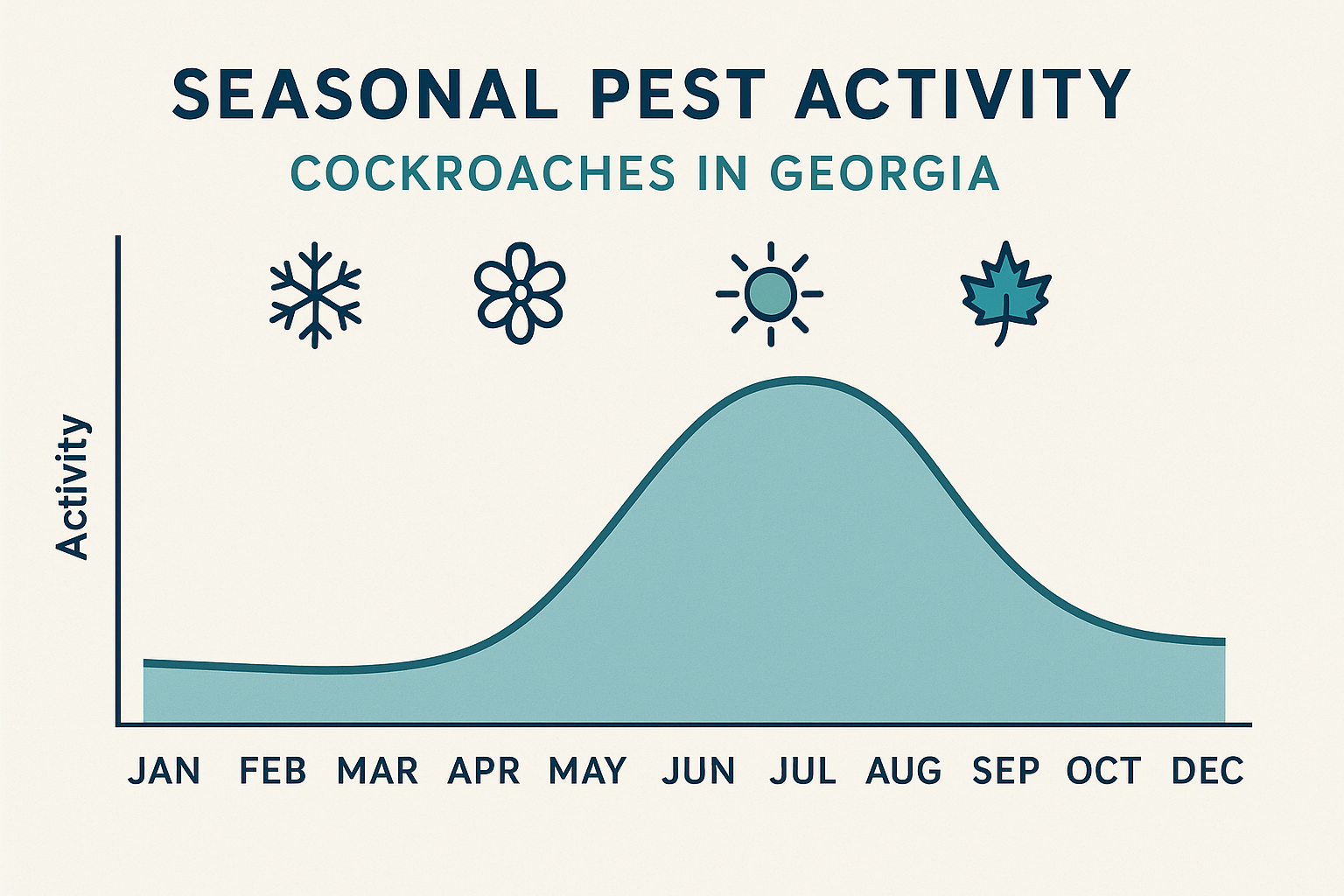
The recent line-graph of cockroach activity across the year shows a clear rise beginning in July, peaking through September, and tapering off as winter approaches. Those late-summer to early-fall months consistently record the highest trap counts in Druid Hills, making them the most critical window for cockroach control Druid Hills homeowners should not ignore. Targeting infestations during this peak period helps disrupt breeding cycles before roaches spread into kitchens, bathrooms, and wall voids.
Why Warm, Humid Conditions Drive Breeding
Cockroaches thrive when temperatures hover between 75°F and 85°F and relative humidity stays above 60%. Heat accelerates their metabolism, while moisture shortens egg‑case development from weeks to days. In Georgia’s summer, outdoor humidity often exceeds 70%, creating an ideal breeding ground that spills indoors.
Impact of Indoor Climate Control
Air conditioning and dehumidifiers can blunt the seasonal surge by lowering indoor temperature and moisture levels. Maintaining indoor humidity under 50% slows egg hatching and reduces the food‑seeking drive that pushes roaches into living spaces. However, simply cranking the AC isn’t enough—sealing entry points and eliminating water sources remain essential.
Seasonal Preventive Measures
Proactive steps before the summer surge can dramatically cut the number of roaches that establish a foothold inside your home. Follow these actions as the calendar turns:
- Deep clean kitchens and pantries in late May. Scrub countertops, mop floors, and empty pantry shelves to remove crumbs that attract roaches.
- Seal cracks and gaps. Apply silicone caulk around baseboards, pipe entries, and window frames before the first heat wave.
- Reduce indoor moisture. Run dehumidifiers in basements, bathrooms, and laundry rooms, especially during July and August.
- Trim vegetation. Keep shrubs and trees at least two feet away from the home’s exterior to limit outdoor harborage that can migrate indoors.
- Schedule a professional inspection. Book an Anthem Pest Control visit in early June so technicians can apply targeted baits and barriers before populations explode.
By aligning your cleaning routine, moisture management, and professional treatments with the documented activity curve, you stay one step ahead of the bugs. The infographic above serves as a visual reminder: act early, act often, and keep Georgia’s cockroach season from turning into a year‑round nuisance.
Treatment Options and How They Work
Chemical Approaches: Baits, Dusts, and Residual Sprays
Anthem Pest’s most common chemical tools for cockroach control Druid Hills homeowners rely on are cockroach baits, insecticidal dusts, and residual spray formulations. Baits contain a slow-acting toxin mixed with an attractant; roaches feed, return to their hideouts, and share the poison with nest mates—a process called secondary kill. Dusts such as silica-based or diatomaceous earth are applied in cracks, voids, and wall cavities where roaches travel; they abrade the exoskeleton and cause desiccation. Residual sprays create a thin, long-lasting barrier on baseboards, under appliances, and around entry points, targeting the insects’ walking and feeding behavior for weeks after application.
Non‑Chemical Options: Heat, Vacuuming, and Sanitation
When chemicals aren’t desirable, we turn to heat treatment and mechanical removal. Raising indoor temperatures to 120–130 °F for a few hours kills all life stages of cockroaches instantly, especially useful in sealed environments like kitchens or attics. A high‑efficiency shop‑vacuum can physically extract visible roaches and egg cases from crevices, reducing the population before any chemical step.
Sanitation is the backbone of any non‑chemical strategy. Eliminating food residues, fixing leaks, and storing waste in sealed containers removes the resources roaches need to thrive. Homeowners who maintain a clean, dry environment see a dramatic drop in re‑infestation rates.
Integrated Pest Management (IPM) Principles
Anthem Pest follows an IPM framework that blends inspection, monitoring, targeted action, and follow‑up. First, a certified technician conducts a thorough walkthrough, identifying harborage sites, food sources, and entry points. Sticky traps and monitoring stations are then placed to gauge activity levels. Based on the data, we select the most effective combination of chemical and non‑chemical tools, applying them only where needed. Finally, we schedule post‑treatment visits to assess progress and adjust the plan.
Typical Treatment Timeline
- Initial Visit (Day 0): Inspection, trap placement, and first round of treatment (baits, dusts, or heat).
- Follow‑Up Appointment (Day 7–10): Evaluate trap counts, replenish baits, apply residual spray if required, and reinforce sanitation recommendations.
- Second Follow‑Up (Day 30): Final inspection, confirm eradication, and provide a maintenance schedule for long‑term protection.
Homeowners are asked to keep food sealed, mop floors daily, and report any new sightings promptly. This collaboration shortens the eradication window and prevents future outbreaks.
Safety Considerations for Families and Pets
All products we use are EPA‑registered and applied at label‑specified rates, ensuring minimal risk when guidelines are followed. We prioritize low‑toxicity baits and dusts in occupied spaces and reserve broader residual sprays for cracks and voids out of direct reach. During heat treatments, we verify that all pets and children are removed from the treated area and that temperature sensors are monitored continuously.
For transparency, you can review the EPA pesticide cost and use data, which shows that residential cockroach products represent a small fraction of overall pesticide usage, underscoring their targeted, controlled application.

Pricing Overview for Cockroach Control in Druid Hills and Nearby Areas
Service Packages You’ll Typically See
Most pest-control companies offering cockroach control Druid Hills services break their treatment programs into three easy-to-understand tiers:
- Single‑Visit Treatment: One‑time application that targets the current infestation.
- Quarterly Maintenance Plan: Four visits per year, each reinforcing the previous treatment and adding preventative measures.
- Annual Comprehensive Plan: Twelve scheduled visits, unlimited re‑treatments, and a full‑service warranty for the entire year.
What the Numbers Look Like
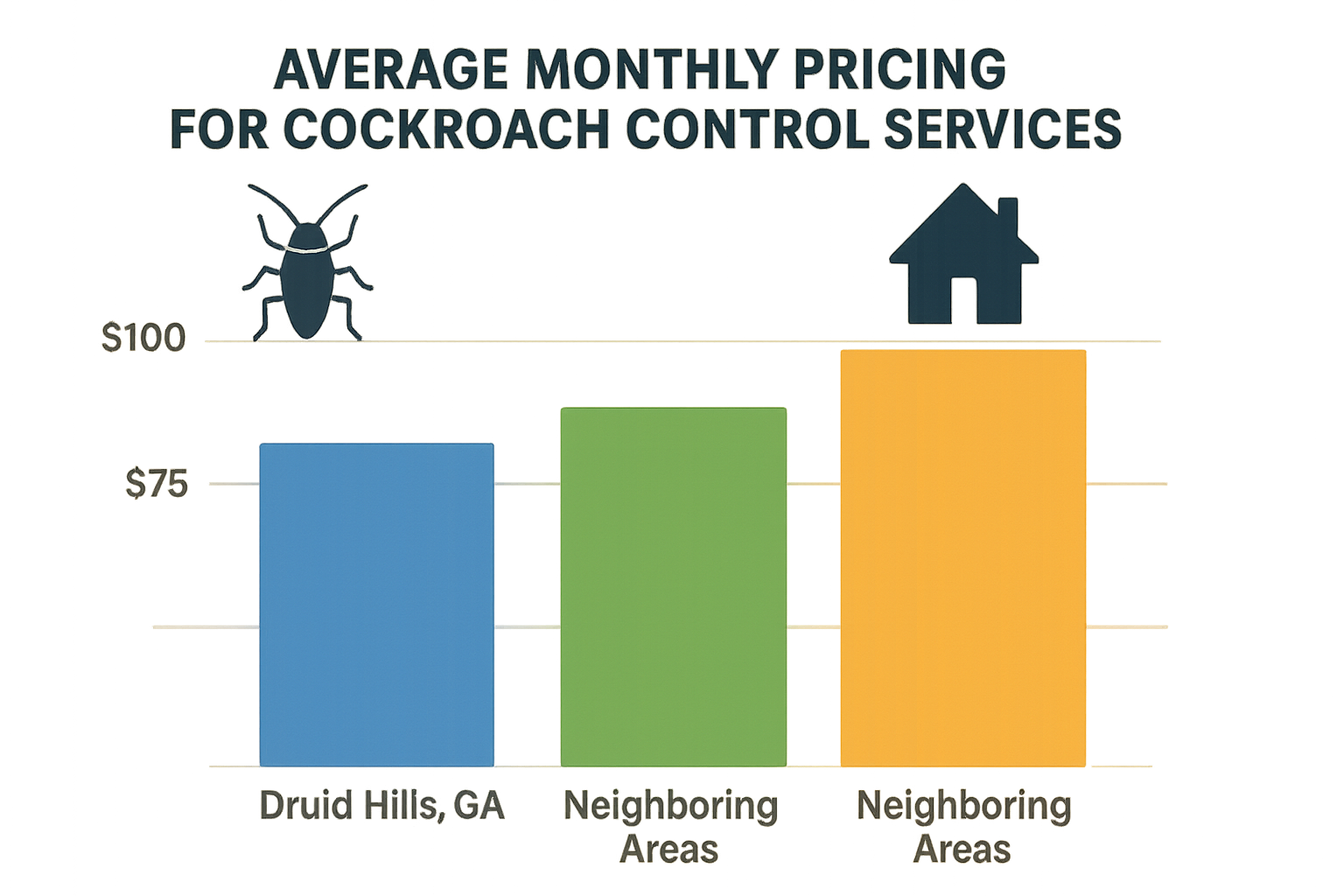
The bar‑chart above summarizes the average monthly cost ranges you’ll encounter in Druid Hills versus three nearby neighborhoods. All figures are based on typical market rates for the three service packages.
| Area | Single‑Visit | Quarterly Plan | Annual Plan |
|---|---|---|---|
| Druid Hills | $85–$120 | $45–$65 | $35–$50 |
| Decatur | $90–$130 | $48–$70 | $38–$55 |
| Brookhaven | $80–$115 | $43–$62 | $33–$48 |
| Avondale Estates | $95–$140 | $50–$75 | $40–$58 |
What Drives the Price?
Understanding the variables behind the dollar amount helps you budget more accurately:
- Infestation severity: Heavy, multi‑unit infestations demand more product and labor.
- Square footage: Larger homes or commercial spaces require broader coverage.
- Treatment type: Gel baits, dusts, and low‑dose foggers each carry different material costs.
- Warranty options: Plans that include a money‑back guarantee or free re‑treatments typically add a modest premium.
How Anthem Pest Control Aligns with Industry Standards
Anthem Pest Control publishes a transparent price sheet that mirrors the EPA’s national cost data for residential cockroach control (EPA, 2023). Our single‑visit fee in Druid Hills averages $105, while the quarterly and annual plans fall squarely within the $45–$65 and $35–$50 ranges shown above. No surprise “service fees” are tacked on after the job is done—what you see is what you pay.
Tips for Evaluating Quotes and Avoiding Hidden Fees
- Ask for a detailed breakdown: labor, chemicals, travel, and warranty.
- Confirm whether re‑treatments are included or billed separately.
- Check for “minimum service” charges that can inflate a low‑ball estimate.
- Verify that the quoted price covers the entire square footage of your home.
- Look for written guarantees that specify the duration and scope of coverage.
Take Action with Anthem Pest Control Today
Dealing with a roach invasion can feel overwhelming, but you’ve already taken the first step by learning what to look for. Here’s a quick refresher on the essentials we’ve covered:
- Identification: German, American, and Oriental cockroaches each have distinct habits and hideouts, from kitchen cabinets to bathroom cracks.
- Health risks: Cockroaches spread allergens, trigger asthma, and can contaminate food with bacteria.
- Seasonal timing: Warm, humid months in Druid Hills accelerate breeding, making early summer the optimal window for treatment.
- Treatment options: Professional baits, gel applications, and targeted sprays work together to eradicate nests and prevent reinfestations.
- Pricing transparency: We break down costs up front—inspection, treatment plan, and any follow‑up visits—so there are no surprise fees.
Anthem Pest Control brings nationwide expertise to every Druid Hills home, combining safe, EPA‑approved products with proven application techniques. Our technicians are trained to assess the unique layout of your property, choose the most effective treatment mix, and educate you on preventative steps that keep roaches at bay long after the job is done. Because we believe effective pest control should be affordable, we offer clear, flat‑rate pricing and flexible service plans that fit any budget.
Ready to reclaim your kitchen, bathroom, and living spaces? Scheduling a professional inspection is quick and risk‑free. Our team will walk through your home, pinpoint problem areas, and provide a customized action plan—all backed by a free, no‑obligation quote. There’s no commitment required, just a clear picture of what it will take to make your home roach‑free.
Take the next step toward a healthier, pest-free home with professional cockroach control Druid Hills services today. Call Anthem Pest Control at 877-371-8196 for your complimentary quote, or visit Anthem Pest Control to schedule your inspection online.