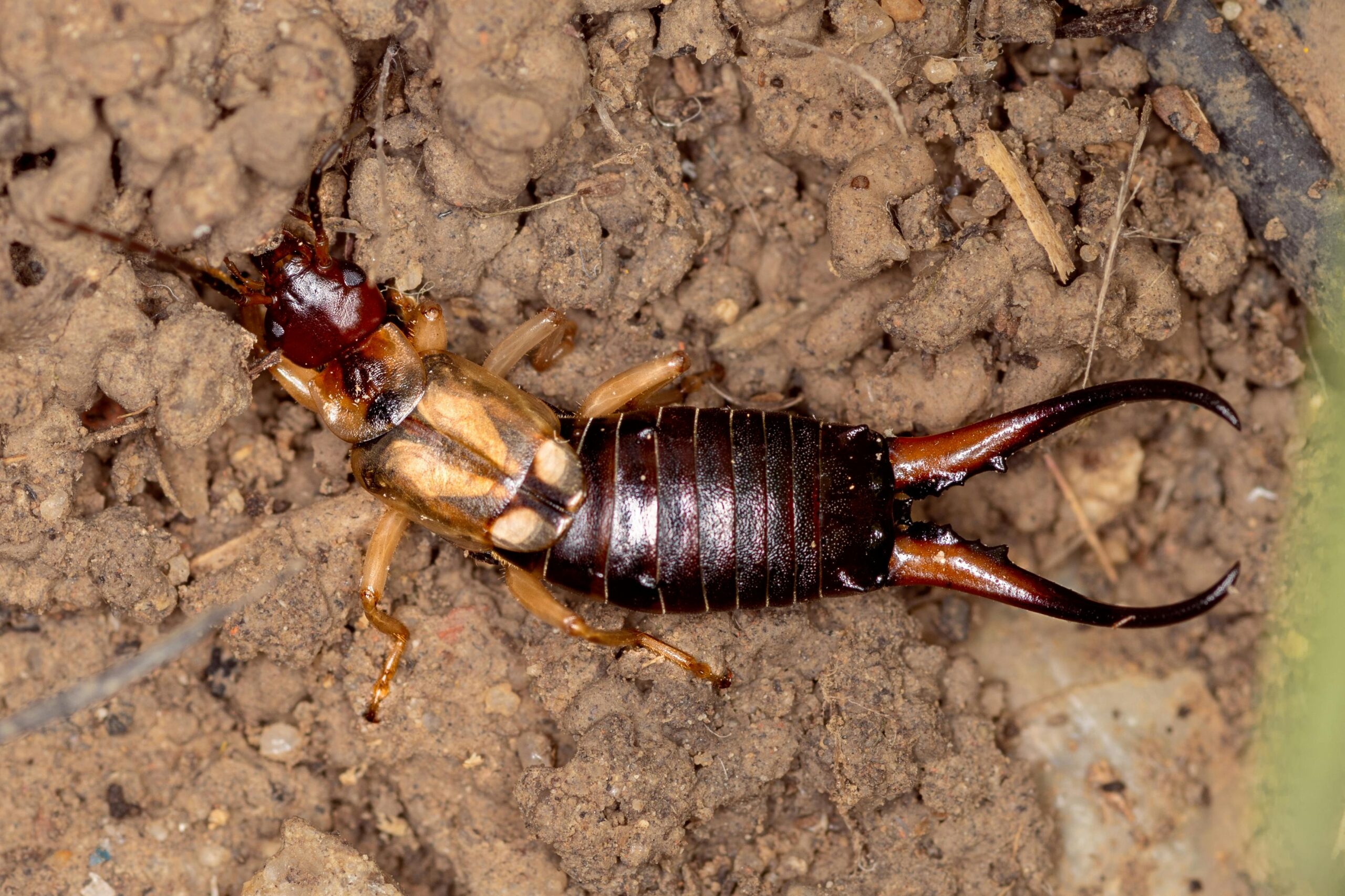
Recognizing Earwigs in Decatur Gardens
Earwigs may not be the most glamorous garden guests, but knowing what they look like and where they like to hide is the first step in effective earwig control Decatur homeowners rely on to keep their yards healthy. These insects belong to the order Dermaptera and are instantly recognizable by the pair of forceps-like cerci protruding from the rear of their elongated bodies. Most species measure ½ to 1 inch long, have a flattened, brown-to-black exoskeleton, and sport short, leathery wings tucked under short forewings. Their nocturnal habits mean you’ll usually only see them after dusk, when they emerge to hunt for small insects, plant material, or decaying organic matter.
Typical Neighborhood Hotspots
In a suburban setting like Decatur, earwigs gravitate toward moist, sheltered micro‑environments that protect them from predators and the dry Georgia heat. Below are the most common places you’ll encounter them around a home:
- Garden stones and pavers: The cracks and textured surfaces provide perfect daytime hideouts.
- Mulch beds: Decomposing organic matter retains moisture, creating a banquet for earwigs.
- Wood piles and firewood stacks: Dark, damp wood mimics their natural forest floor habitat.
- Under decks, porches, and siding: These shaded, humid zones are ideal for daytime refuge.
- Indoor entry points: Small gaps around windows, doors, or utility lines let earwigs wander inside, especially during rainy periods.

The stone texture shown above illustrates how earwigs slip into the tiniest crevices. If you notice a layer of fine dust or a faint sheen on your pavers, it could be the result of earwig activity as they groom their cerci before nightfall.
Signs That Earwigs Have Made Your Garden Their Home
Even if you haven’t seen an earwig directly, several tell‑tale clues can alert you to their presence:
- Shed skins (exuviae): As earwigs grow, they molt. These translucent shells often accumulate near the base of plants or under mulch.
- Pinching sounds: Late‑night “click‑click” noises can be the rapid movement of cerci as earwigs defend themselves.
- Occasional sightings: A quick flash of a brown, winged insect on a garden plant or indoor light is a classic earwig cameo.
- Feeding damage: Light, ragged edges on tender foliage, especially on seedlings, may indicate earwig nibbling.
Because earwigs are opportunistic feeders, a small population rarely causes serious plant damage. However, in a humid Decatur summer, numbers can swell quickly, and the cumulative feeding can stress young vegetables, ornamental shrubs, and even indoor houseplants.
Why Identification Matters for Homeowners
Accurate identification prevents unnecessary panic and helps you choose the right control strategy. Mistaking earwigs for more destructive pests like cutworms or beetles could lead to overly aggressive pesticide use, which is both costly and potentially harmful to beneficial insects. By recognizing earwigs early, you can implement targeted, low‑impact measures—such as removing excess mulch, fixing drainage issues, and sealing entry points—before the population reaches a level that warrants professional treatment.
For a deeper dive into earwig species that commonly appear in Georgia, consult the NPMA Earwig Guide. This authoritative resource outlines the life cycle, regional distribution, and best‑practice management tips that align with Anthem Pest Control’s commitment to safe, effective, and affordable solutions.
Earwig Activity Patterns Through the Year
In Decatur’s humid subtropical climate, earwigs march to the beat of temperature and moisture. When the air climbs above 70°F (21°C) and the soil stays damp, females lay eggs, nymphs hatch, and the whole colony buzzes with activity. As the mercury drops or a dry spell hits, the insects retreat, slow their metabolism, and hide in the coolest, most sheltered spots they can find.
Temperature and humidity are the master switches. Warm, moist conditions accelerate development, while cooler, drier nights signal earwigs to seek shelter—often inside our homes. This seasonal rhythm is why you’ll notice distinct peaks and lulls throughout the calendar year.
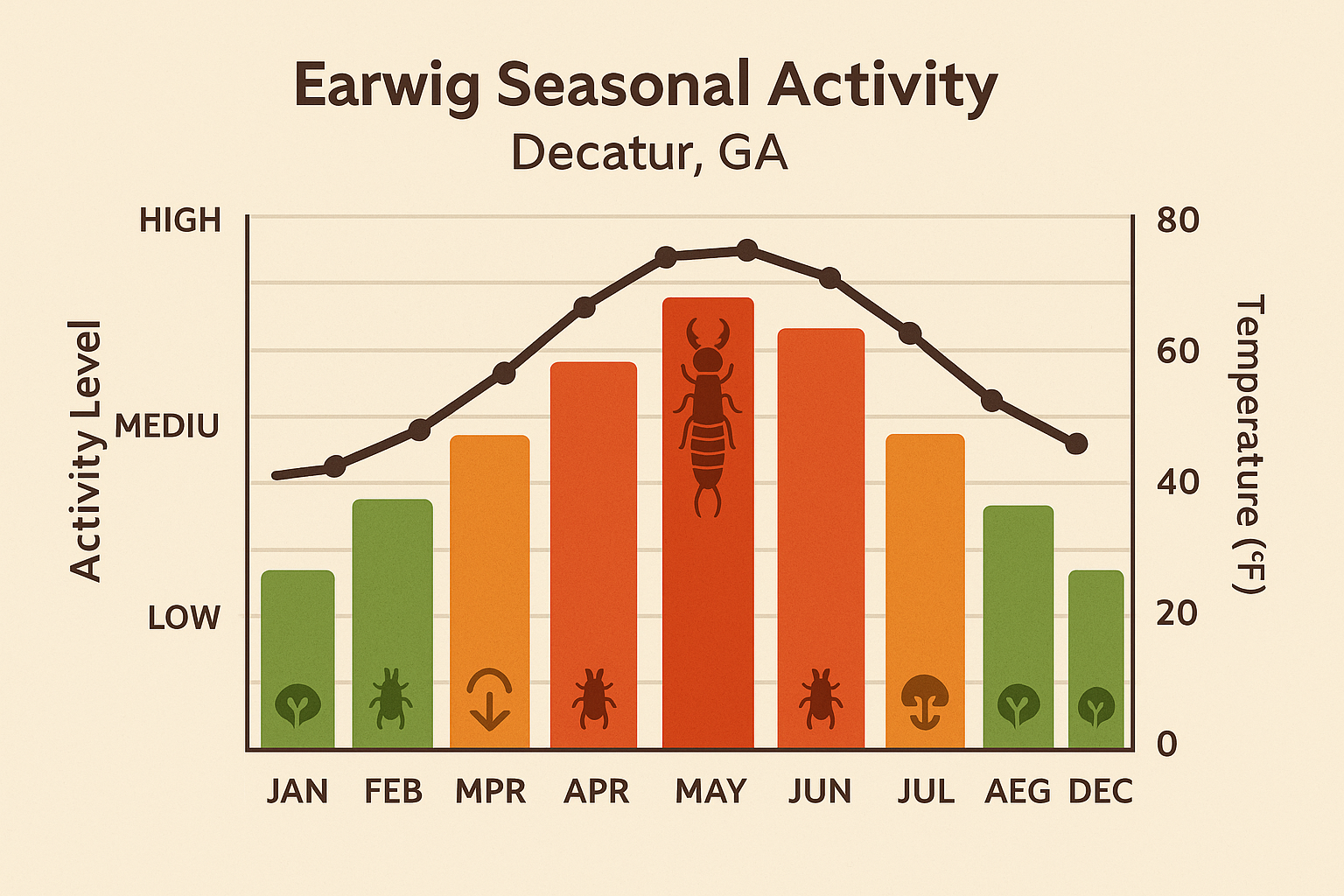
Monthly Activity Snapshot
- January–February: Activity is at its lowest. Earwigs remain deep in the soil or tucked away in wall voids, avoiding the chill.
- March–April: As daytime highs creep into the 60s°F (15‑20°C), you’ll see a modest uptick. Nymphs emerging from overwintering sites start to explore.
- May–June: Warmth and spring rains create ideal breeding conditions. Populations can double within weeks.
- July–August: Peak summer heat pushes earwigs to the shade, but the abundant moisture keeps numbers high.
- September–October: This is the golden window for earwig sightings. Temperatures hover in the comfortable 70‑80°F (21‑27°C) range, and humidity remains elevated, prompting a surge in foraging and mating.
- November–December: Cooler nights trigger a migration indoors. Earwigs look for cracks, basements, and crawl spaces where the temperature stays above freezing.
Notice how the chart aligns the highest activity bars with the warmest months, then shows a secondary rise in late fall as earwigs scramble for refuge. That secondary rise is the period most homeowners in Decatur report seeing earwigs inside their kitchens or bathrooms.
Why Earwigs Come Inside When It Gets Cooler
Earwigs are ectothermic—they can’t generate their own body heat. When outdoor temperatures dip below 55°F (13°C), the insects seek environments that stay above that threshold. Your home’s foundation, crawl spaces, and even the space behind appliances provide a stable micro‑climate. Additionally, the moisture that earwigs love is often more reliable indoors during dry autumn spells.
Once inside, they’re harmless but can become a nuisance. Their nocturnal habits mean you’ll mostly notice them after dark, scurrying across countertops or along baseboards. Understanding this behavior helps you set up a proactive monitoring plan before the indoor invasion begins.
Monitoring Tips for the Savvy Homeowner
Early detection saves you from a larger infestation later in the season. Here are three simple, low‑cost methods to keep tabs on earwig activity around your Decatur home:
- Sticky traps: Place yellow or white adhesive traps in dark corners, under sinks, and near exterior entry points. Check them weekly; a sudden increase signals that earwigs are moving indoors.
- Nighttime inspections: Grab a flashlight and sweep the perimeter of your home after sunset. Earwigs are most active then, and you’ll spot them before they find a hiding spot.
- Moisture checks: Use a moisture meter or simply feel the soil around foundation walls. If the ground stays damp longer than usual, it’s a green light for earwig breeding.
By aligning your monitoring routine with the seasonal trends outlined above, you’ll be able to anticipate peak activity, intervene early, and keep your home earwig‑free throughout the year. If you spot a growing problem, Anthem Pest Control’s local team is ready to tailor a treatment plan that respects both your budget and the environment.
DIY Prevention and Control Strategies
Landscape Hygiene
Earwigs love the dark, damp places you often find in a backyard that’s not well‑kept. Start by clearing away any leaf piles, rotting wood, or garden debris where they can hide during the day. Keep mulch no deeper than two inches and spread it evenly; a thin layer dries out faster, making it less inviting. Finally, walk the perimeter of your home and seal cracks in foundations, around windows, and beneath doors with caulk or weather‑stripping. A tight seal blocks the tiny entry points earwigs use to wander indoors.
Moisture Management
Moisture is the main magnet for earwigs. Inspect irrigation heads for drips and repair any leaks promptly. If water pools near your foundation, consider re‑grading the soil or installing a French drain to guide excess water away from the house. In basements and crawl spaces, run a dehumidifier to keep relative humidity below 50 %. Dry environments are far less appealing to these nocturnal insects.
Physical Barriers
Simple barriers can stop earwigs before they reach your doors and windows. Install fine‑mesh (¼‑inch) screens on all exterior vents, and make sure existing screens are free of tears. For garden beds, wrap the edges with copper tape; the metal’s slight electrical charge deters earwigs without harming plants. If you have a raised patio, line the underside with a sheet of hardware cloth to prevent them from crawling up from the soil.
Natural Repellents
When you prefer a chemical‑free approach, several household items work well as earwig repellents:
- Diatomaceous earth (DE): Sprinkle a thin layer around the foundation, under mulch, and in any cracks. DE’s microscopic sharp edges dehydrate insects on contact but are harmless to people and pets when used as directed.
- Neem oil: Mix one tablespoon of neem oil with a quart of water and a few drops of mild dish soap. Spray the solution on garden plants and the soil surface; the oil interferes with earwig feeding and reproduction.
- Citrus‑based sprays: Combine equal parts lemon juice and water, add a teaspoon of vinegar, and shake in a spray bottle. Lightly mist door thresholds and window sills; the acidic scent repels earwigs without leaving a strong odor.
Simple Trap Method
Trapping earwigs can reduce numbers quickly, especially in the early summer when they’re most active. Take a few sheets of newspaper or a piece of damp cardboard, roll them loosely, and place the rolls in a shady spot outside—under a deck, near a garden bed, or against the house. Leave them overnight; earwigs will crawl in for shelter. In the morning, collect the rolls, shake out the insects, and dispose of them in a sealed bag. Repeat every few nights until you notice fewer visitors inside.
Safety First: Handling DIY Products
Even “natural” solutions deserve respect. Wear disposable gloves when applying diatomaceous earth or neem oil, and consider a dust mask if you’re working in a confined space. Keep all DIY mixtures out of reach of children and pets, and store them in clearly labeled containers. If you experience skin irritation or respiratory discomfort, rinse the area with water and seek medical advice. Remember, a well‑ventilated workspace and proper protective gear are the cheapest insurance policies for a successful DIY pest‑control project.
Professional Treatment Options and Cost Comparison
Why Homeowners Turn to Professionals
When earwigs start invading basements, crawl spaces, or indoor lighting fixtures, many homeowners quickly realize that a DIY spray may not cut it for reliable earwig control Decatur residents need. Professional pest control companies bring a thorough inspection that uncovers hidden entry points, breeding sites, and moisture problems—issues that a quick visual scan often misses. With a licensed technician on the job, you also get guaranteed results backed by a service agreement, and you avoid the legal and safety headaches of handling restricted-use insecticides yourself. In short, the peace of mind, compliance with local regulations, and long-term effectiveness make hiring a pro a smart investment.
Typical Professional Methods
Anthem Pest Control relies on three core treatment strategies that work together to eradicate earwigs and keep them out:
- Targeted insecticide sprays—Applied directly to cracks, crevices, and known harborages, these low‑volume sprays create a residual barrier that kills earwigs on contact and prevents re‑infestation for weeks.
- Perimeter treatments—A broader spray around the foundation, doorways, and windows shuts down the “highway” earwigs use to cross from the yard into the home.
- Indoor fogging—For severe indoor invasions, a short‑duration fogger disperses a fine mist that penetrates wall voids and furniture, reaching insects that hide in hard‑to‑see spots.

Treatment Frequency and Follow‑Up
Most Decatur homeowners see lasting control after just one comprehensive service, but Anthem typically schedules a follow‑up visit 2–4 weeks later. This second appointment checks the treated zones, re‑applies residual spray if needed, and fine‑tunes any structural modifications (like sealing cracks). For properties with chronic moisture issues or large yards, quarterly perimeter treatments are recommended to stay ahead of the seasonal earwig surge in late summer.
Cost Comparison: DIY vs. Professional
Below is a side‑by‑side look at the typical out‑of‑pocket cost for a DIY earwig kit versus a full professional service from Anthem Pest Control. While the upfront price of a DIY kit appears lower, the long‑term efficacy and hidden labor costs often tip the balance toward professional treatment.
| Option | Typical Cost (One‑Time) | Expected Duration of Control | Efficacy Level |
|---|---|---|---|
| DIY Spray Kit | $25–$45 | 1–2 weeks (depends on application thoroughness) | Low to Moderate |
| Anthem Professional Service | $180–$250 | 4–6 weeks per treatment, with optional quarterly follow‑ups | High (99% reduction) |
When you factor in the time spent locating every crack, the risk of under‑dosing, and the likelihood of a second DIY purchase, the professional route often saves money over the course of a year.
What Drives the Price?
Several variables influence the final invoice for earwig control Decatur homeowners request:
- Property size—Larger homes or multi‑unit buildings require more product and labor.
- Infestation severity—A light, seasonal presence may need only a single perimeter spray, while a heavy indoor invasion calls for fogging and multiple follow‑ups.
- Treatment type—Targeted sprays are the baseline; adding perimeter or indoor fogging raises the cost but dramatically improves results.
- Seasonality—Treatments scheduled during peak earwig activity (late summer) may carry a slight premium due to higher demand.
Anthem Pest Control’s Transparent Pricing Model
Anthem believes homeowners deserve a clear, no‑surprise quote. The company breaks the estimate into three easy‑to‑understand components: inspection fee (often waived with a service contract), treatment charge (based on square footage and chosen method), and a fixed follow‑up fee if additional visits are required. There are no hidden mileage fees, no “service call” add‑ons, and every line item is explained before work begins. This transparency lets you compare the table above with confidence, knowing exactly what you’re paying for and why.
Protect Your Home with Anthem Pest Control
Earwigs are the slender, nocturnal insects you might spot scurrying across a porch light or hiding in damp corners of your basement. Their elongated bodies, forceps‑like pincers, and preference for cool, moist environments make them easy to identify when they do appear. In Decatur, the late summer heat followed by humid fall creates the perfect window for earwig activity, especially around outdoor lighting, mulch, and any cracks that let moisture seep inside. While a quick sweep with a vacuum or sealing a few cracks can reduce the occasional visitor, DIY methods alone rarely stop a growing population.
Why DIY Can Only Take You So Far
Homeowners often start with simple steps: removing debris, trimming vegetation, and applying over‑the‑counter sprays. These actions are valuable for early prevention, but they have limits. Over‑the‑counter products may not penetrate deep cracks or reach the hidden nesting sites earwigs favor. Moreover, using the wrong formulation can damage plants, pets, or indoor air quality—especially in homes with children or allergy‑prone occupants. Seasonal risks, such as the surge of earwigs after a rainy spell, can quickly overwhelm even the most diligent DIY effort.
Professional Treatment Gives You Peace of Mind
When certified technicians from Anthem Pest Control step in, you gain three critical advantages. First, they use EPA‑approved, low‑toxicity products that are safe for families and pets while remaining lethal to earwigs. Second, their training ensures they locate and treat the exact hiding places—whether behind foundation walls, inside crawl spaces, or beneath deck boards—so the infestation is eliminated at its source. Finally, Anthem backs its work with a guarantee: if earwigs return within the treatment window, they’ll re‑treat at no extra cost, giving you confidence that the problem is truly solved.
Anthem Pest Control: Your Local Expert with Nationwide Reach
Based in Decatur, Georgia, Anthem Pest Control understands the unique climate patterns that drive earwig activity in the region. The company’s technicians are familiar with local building styles, common entry points, and the seasonal timing that dictates the most effective treatment schedule. While they specialize in Decatur, Anthem’s network spans the entire United States, allowing them to draw on a wealth of experience from diverse environments and apply best‑practice solutions tailored to your home.
Ready for a pest-free home? Call us today at 877-371-8196 for a complimentary assessment and a free, no-obligation quote. Our affordable pricing, transparent service plan, and commitment to safe, effective treatments make us the trusted choice for earwig control Decatur homeowners can rely on year-round. Visit Anthem Pest Control to learn more about our year-round protection programs and schedule your service.