
Earwig Encounter in a Dunwoody Kitchen

Imagine it’s midnight in a typical Dunwoody home. You’re half-asleep when a faint rustle draws your eye to the kitchen counter. A line of slender, dark-gray earwigs scurries across the surface, their pincers flashing in the dim light. The sudden “creepy-crawl” sensation sends a chill down your spine, and you wonder how these garden critters slipped inside—and whether it’s time to call for professional earwig control Dunwoody homeowners trust.
Earwigs aren’t just a nighttime nuisance; they can become a genuine problem for homeowners. While they’re mostly harmless outdoors—feeding on decaying plant matter and occasionally nibbling on ornamental foliage—they’ll also chew tender leaves on garden vegetables, leaving holes and stunted growth. When they wander indoors, their presence can trigger anxiety, especially in kitchens where food prep occurs. The sight of their long antennae and forceps can make even the most stoic homeowner pause.
Georgia’s humid climate plays right into the earwig’s strengths. Warm, moist evenings provide the perfect breeding ground, allowing populations to explode from one season to the next. In Dunwoody, where summer humidity often hovers above 70 %, earwigs thrive in damp cracks, under porch steps, and behind kitchen cabinets. The moisture draws them indoors, especially when doors or windows are left open for a breath of fresh air.
This is where Anthem Pest Control steps in. Our technicians know the subtle nuances of Dunwoody neighborhoods—from the historic homes with brick foundations to the newer cul‑de‑sacs lined with lush landscaping. We’ve mapped the common entry points and understand how local weather patterns influence pest behavior. By combining that local knowledge with proven, safe treatment methods, we can stop earwigs before they turn a quiet kitchen into a night‑time surprise.
Now that you’ve met the unwelcome midnight visitor, stay tuned for the next sections where we’ll dive deeper into earwig biology, the specific risks they pose to your home and garden, and the most effective, affordable solutions Anthem Pest offers to keep your kitchen—and the rest of your house—earwig‑free.
Earwig Biology & Seasonal Activity in Metro Atlanta
What an Earwig Looks Like
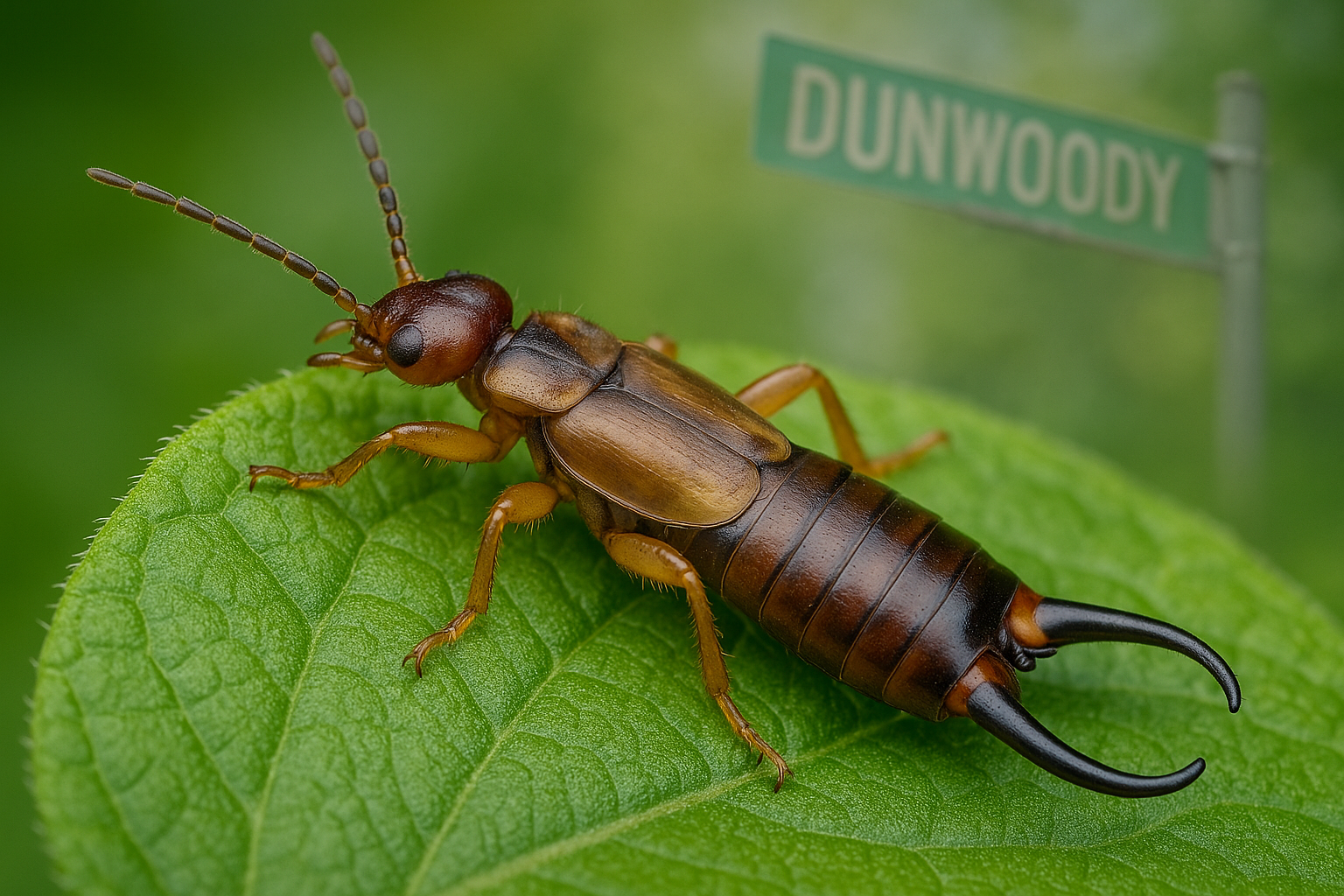
Most homeowners in Dunwoody will first notice the earwig’s unmistakable pair of force‑pushing pincers, or cerci, extending from the rear of its flattened, dark‑brown body. The most common species in the region is Forficula auricularia, a nocturnal insect that prefers the cover of night to hunt for small insects, plant material, and even decaying fruit. Their elongated antennae and leathery wing covers give them a sleek, almost beetle‑like silhouette, but the signature pincers set them apart.
One‑Year Life Cycle
In Georgia’s warm climate, earwigs complete their development in roughly twelve months. The cycle begins when a female deposits a clutch of 30‑50 eggs in a protected crevice, often within moist mulch or under a stone. After about two weeks, the eggs hatch into nymphs that look like miniature adults but lack fully formed wings and pincers. These nymphs molt five to six times over the spring and summer, gradually gaining size and the characteristic forceps. By late summer, the majority have reached adulthood, ready to reproduce before the cooler months slow their activity.
Where They Like to Hide
Earwigs are opportunistic hide‑seekers. In Metro Atlanta they gravitate toward:
- Moist leaf litter and garden mulch, where humidity stays high.
- Wood piles or stacked firewood that provide shelter and a steady food source.
- Foundation cracks, especially those that receive runoff from gutters.
- Underneath outdoor furniture and garden ornaments that retain dampness.
These micro‑habitats protect them from predators and the occasional dry spell.
Georgia’s Climate Fuels Their Growth
Atlanta’s average relative humidity hovers around 70 % year‑round, and summer brings frequent rainstorms that saturate the soil and organic debris. This combination creates an ideal environment for earwig eggs to stay moist and for nymphs to thrive. When humidity drops in the fall, earwigs retreat deeper into the ground or seek shelter inside homes, emerging again as temperatures rise.
Seasonal Peaks in Dunwoody
Research from the University of Georgia Extension confirms that earwig numbers surge during the late summer months. The study notes, “Earwig populations peak in late summer (July‑August) with up to a 30 % increase in suburban yards” [UGA Extension]. This spike aligns with the final molt to adulthood, when the insects are most active and visible.
Neighborhood Hotspots
Within the Metro Atlanta area, certain neighborhoods report higher earwig sightings due to their mature landscaping and abundant organic mulch. Homeowners in Brookhaven, Peachtree Park, and Lenox Park often notice more earwigs crawling along garden beds and foundation walls. The dense canopy in these areas retains moisture longer, extending the window of ideal conditions for earwig activity.
DIY vs. Professional Earwig Control
When earwigs start making their nightly forays into your kitchen or garden, the first instinct is often to grab a spray can or a handful of household remedies. While a quick do‑it‑yourself (DIY) fix can feel satisfying, it rarely delivers the lasting protection that a trained technician provides. Below we break down the most common DIY tactics, their shortcomings, and why a professional service from Anthem Pest Control usually ends up being the smarter, safer investment.
Common DIY Tactics
- Aerosol sprays: Over‑the‑counter insecticides marketed for “general indoor pests.” Most are formulated for short‑term knock‑down only.
- Homemade traps: Simple devices using rolled newspaper, damp cardboard, or a shallow dish of sugar water to lure earwigs into a sticky trap.
- Neem oil: A botanical oil applied to soil or plant foliage, touted for its “natural” insect‑repellent properties.
- Diatomaceous earth (DE): Fine silica powder spread around entry points and garden beds, intended to abrade the exoskeleton of crawling insects.
Limitations of DIY Approaches
Even the most diligent homeowner can run into three major roadblocks with DIY earwig control:
- Short residual activity: Most aerosol sprays lose potency within a few days, leaving new arrivals unchecked.
- Uneven coverage: Spot‑treating cracks, crevices, and hidden wall voids is nearly impossible without professional tools and training.
- Health risks: Improper handling of pesticides—especially in confined indoor spaces—can irritate skin, eyes, and lungs. Misapplication also jeopardizes pets and children.
For a clear reminder of the dangers, the EPA warns against improper pesticide use, emphasizing that untrained application can lead to ineffective control and unintended exposure.
Cost‑Benefit Comparison
Below is a quick snapshot of typical out‑of‑pocket expenses versus expected performance.
| Method | Typical Cost per Treatment | Effectiveness |
|---|---|---|
| DIY (sprays, traps, neem, DE) | $50 – $100 | Low to moderate; often requires repeat applications |
| Professional (licensed technician) | $150 – $300 | High; long‑lasting residual control and comprehensive coverage |
Liability Protection and Insurance
When you hire a licensed technician from Anthem Pest Control, you gain more than just a pesticide application. Our team carries full liability insurance and follows state‑mandated safety protocols, meaning any accidental exposure, property damage, or mishap is covered under our policy—not yours. This layer of protection is something no DIY kit can match, and it provides peace of mind that your home and family remain safe throughout the treatment process.
Why Professionals Deliver Longer‑Lasting Results
Professional earwig control Dunwoody homeowners rely on blends three critical elements: a thorough inspection, targeted application of EPA-registered products, and a follow-up plan that addresses reinfestation. Technicians know exactly where earwigs hide—behind baseboards, under insulation, and in garden mulch—and they apply products with residual action that persists for weeks, not hours. Additionally, Anthem Pest offers a guarantee on our work, so if earwigs return within the service window, we’ll re-treat at no extra charge. The result? A quieter home, a healthier garden, and the confidence that you’ve eliminated the problem at its source.
Anthem Pest’s Earwig Treatment Packages
When earwigs start invading your home, you need a solution that’s both effective and easy on the family. Anthem Pest offers three clearly‑tiered packages, each designed to match the severity of the infestation and your budget. All plans use EPA‑registered products, are performed by Georgia‑licensed technicians, and follow strict safety protocols to protect pets, children, and the environment.
Tier 1 – Basic Exterior Spray
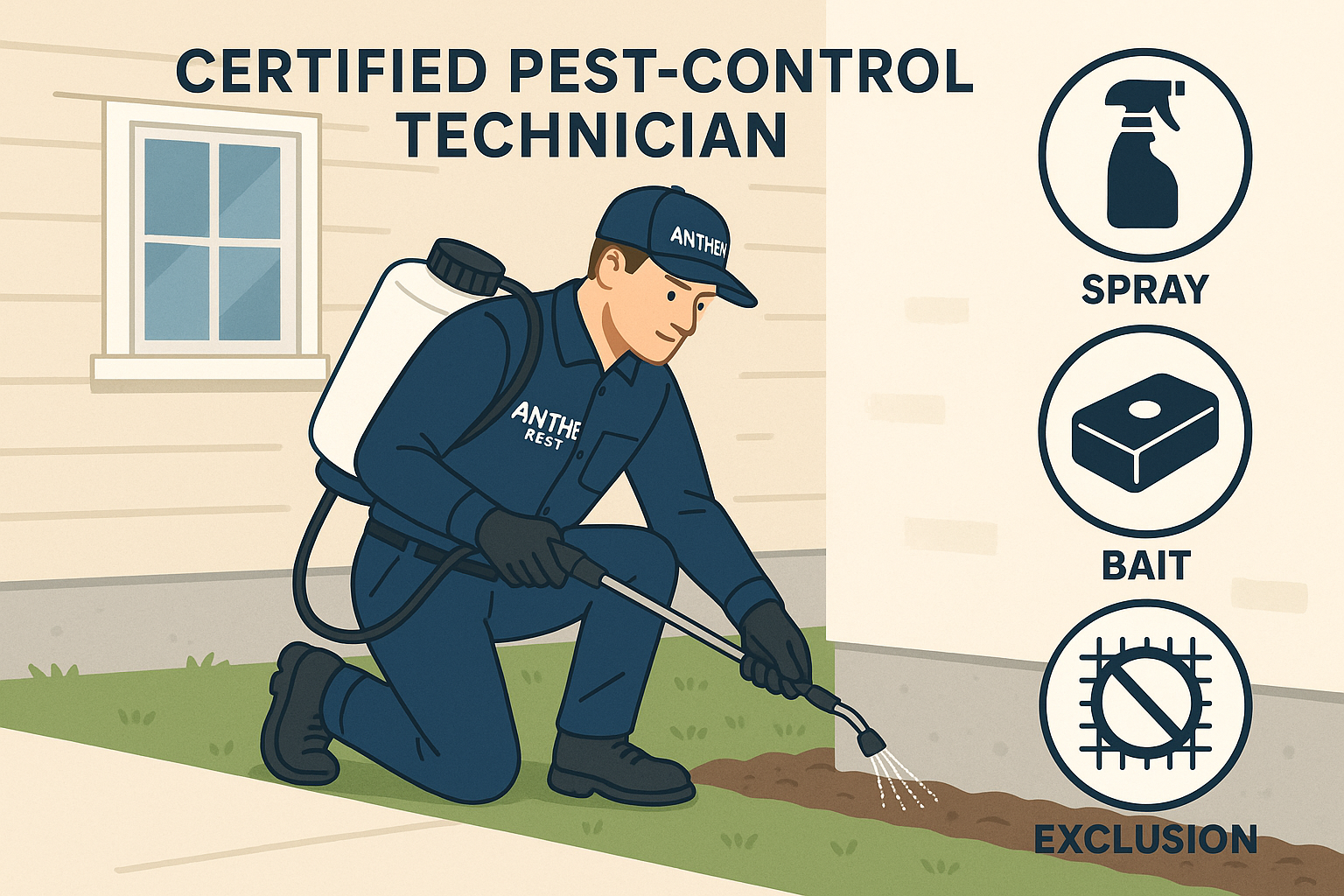
This entry‑level option focuses on the perimeter of your property, creating a barrier that keeps earwigs from crossing into your yard or slipping under doors. Technicians apply a fine mist of bifenthrin, a proven insecticide that disrupts the earwig’s nervous system while breaking down quickly in soil.
- Application zone: foundation, walkways, and outdoor lighting fixtures.
- Price range: $149 – $199 (one‑time service).
- Effectiveness: reduces outdoor activity by up to 85 % within 48 hours.
Tier 2 – Full‑Home Integrated Plan
For homeowners noticing earwigs inside kitchens, bathrooms, or closets, the Integrated Plan adds interior crack‑and‑crevice treatment to the exterior spray. In addition to bifenthrin, Anthem applies diatomaceous earth in low‑traffic, low‑toxicity spots such as under appliances and behind baseboards. The natural powder scratches the earwig’s exoskeleton, causing dehydration without chemical residue.
- Coverage: exterior perimeter + interior seams, baseboards, and voids.
- Price range: $229 – $279 (one‑time service).
- Safety boost: diatomaceous earth is non‑toxic to mammals, making it ideal for homes with pets and kids.
- Typical result: 90 % drop in indoor sightings after the first visit.
Tier 3 – Annual Protection Program
The most comprehensive option, the Annual Protection Program, delivers quarterly visits, ongoing monitoring, and a warranty that covers re‑treatment if earwigs return. Each visit includes a refreshed exterior spray, interior crack‑and‑crevice check, and a visual inspection of moisture sources that attract earwigs.
- Frequency: four scheduled visits per year.
- Price range: $399 – $449 per year.
- Includes: detailed service report, pest‑activity log, and a satisfaction guarantee.
- Best for: busy families who want “set‑and‑forget” protection without seasonal hassle.
Safety Certifications & Training
All Anthem Pest products are EPA‑registered, meaning they meet federal safety standards for human health and the environment. Technicians complete a rigorous training program that covers proper mixing, application techniques, and emergency response. Additionally, every technician holds a current Georgia state pest‑control license, ensuring compliance with local regulations.
Real‑World Success Story
Consider the experience of a Dunwoody homeowner in the Peachtree Corners neighborhood. After noticing earwigs crawling across kitchen counters, they opted for the Full‑Home Integrated Plan. Within two professional visits, indoor sightings fell by 92 %. The homeowner praised the discreet service—no strong odors, no visible chemicals, and no interruption to daily routines.
Minimal Disruption for Pets & Children
Anthem Pest designs each treatment with family life in mind. Bifenthrin is applied in a low‑volume mist that dries within minutes, while diatomaceous earth remains inert and safe for pets that may brush against treated surfaces. Technicians advise a brief 30‑minute window to keep children and animals away from freshly sprayed zones, after which normal activity can resume.
DIY Prevention Tips to Complement Professional Service
Trim Mulch and Remove Decaying Wood Near the Foundation
Earwigs love damp, sheltered spots where they can hide during the day. Mulch, wood chips, and rotting lumber left within two feet of your home’s foundation create the perfect underground refuge. By pulling back or completely removing these materials, you eliminate the dark, moist micro‑habitat earwigs use for nesting and foraging. This simple step also improves soil drainage, making the area less inviting for any moisture‑loving pest.
Seal Foundation Cracks Larger Than ¼ inch
Even a tiny gap can become a highway for earwigs seeking entry into your home. Inspect the perimeter for cracks, gaps around utility penetrations, and openings around windows or doors. Apply a bead of silicone caulk—flexible enough to move with seasonal expansion—to any opening wider than a quarter of an inch. A well‑sealed foundation not only blocks earwigs but also helps keep out ants, spiders, and drafts.
Switch to Yellow LED Outdoor Lighting
Earwigs are attracted to the ultraviolet glow of traditional white or blue‑rich bulbs. Replacing porch and landscape lights with yellow‑tinted LED fixtures dramatically reduces nocturnal draw. Yellow LEDs emit far less UV light, so earwigs are less likely to congregate around your home’s exterior, decreasing the chance they’ll wander inside while seeking a dark refuge.
Install Copper Tape or Mesh Around Garden Beds
Copper creates a mild electrical charge that deters many crawling insects, earwigs included. Wrap garden bed edges, raised planters, or the perimeter of flower boxes with copper tape or a fine copper mesh. The barrier is invisible to humans but uncomfortable for earwigs, prompting them to turn away before they can reach the soil or plant roots. This low‑cost, chemical‑free method works well alongside professional treatments.
Quick‑Stat: Proper mulch management can cut earwig presence by up to 45% (NPMA 2023 study). Source: NPMA
While these DIY steps are effective on their own, the greatest protection comes from pairing them with scheduled professional treatments from Anthem Pest Control. Our technicians target hidden earwig colonies with EPA‑approved products, then you reinforce the barrier with the simple, low‑cost measures above. Consistency is key—regularly inspect mulch, keep cracks sealed, and maintain yellow lighting to keep earwigs at bay year after year.
Optimal Seasonal Timing for Earwig Treatment
In Dunwoody, earwigs typically emerge from their winter hide-outs as temperatures climb in late spring. April and May are the sweet spot for proactive earwig control Dunwoody treatments because the insects are just beginning to forage for food and shelter. Applying a residual barrier spray during this window creates a protective shield before they infiltrate your home’s cracks, windows, and foundation.
By early fall—around September—a second generation of earwigs is on the move, seeking cooler places to overwinter. This window offers an ideal “booster” opportunity to knock down any survivors from the spring application and to protect against the upcoming winter surge. Treating at this time ensures that the residual chemicals remain effective throughout the colder months when earwigs tend to cluster inside walls and basements.
Summer treatments (June‑August) are generally less reliable. Dunwoody’s midsummer storms bring heavy rain that can wash away pesticide residues, dramatically reducing their longevity. Even a well‑timed spray can be rendered ineffective after a single downpour, forcing you to re‑apply and increasing overall costs.
Suggested Treatment Calendar
- April – First exterior barrier spray (focus on foundation, perimeter, and soil‑contact zones).
- May – Interior crack‑and‑crevice treatment (target baseboards, window frames, and door jambs).
- September – Follow‑up booster spray (both exterior and interior) to catch the second generation.
Designers can turn this list into a simple graphic calendar that highlights each month’s action item, making it easy for homeowners to visualize the schedule.
Local climate plays a key role in timing. Dunwoody averages about 70 % relative humidity and receives roughly 50 inches of rain per year, according to NOAA climate statistics for Dunwoody, GA. The high humidity supports earwig activity, while the rainfall patterns reinforce the need to avoid midsummer applications.
By aligning your earwig control plan with these seasonal windows, you’ll maximize treatment efficacy, reduce the likelihood of re‑infestation, and keep your home comfortable year‑round. Anthem Pest Control’s locally‑tuned approach ensures that every spray is timed for optimal results, giving you peace of mind without unnecessary expenses.
Why Dunwoody Homeowners Trust Anthem Pest
Earwig infestations can turn a quiet backyard into a nightly nuisance, and Dunwoody residents know they need a partner who understands both the pest and the community. Anthem Pest has built a reputation for reliability by combining local expertise with a national standard of service, giving homeowners the confidence that their homes are in safe hands.
Licensed technicians with Georgia state certification are the backbone of our service. Every field professional holds a current Georgia pest‑control license and participates in ongoing training programs that cover the latest treatment methods, safety protocols, and identification techniques. This continuous education ensures that the team can diagnose earwig problems quickly and apply solutions that are both effective and environmentally responsible.
When an earwig swarm appears after dark, you shouldn’t have to wait until morning for help. Our 24/7 emergency hotline (877‑371‑8196) connects you directly to a dispatch team ready to schedule an urgent visit. Whether it’s a sudden surge in your garden or a night‑time invasion inside the house, our rapid response minimizes damage and restores peace of mind without delay.
Word of mouth travels fast in neighborhoods like Brookhaven, Peachtree Park, and Lenox Park, and the online feedback reflects that. Residents consistently award Anthem Pest five‑star ratings, praising our punctuality, thoroughness, and courteous service. These positive reviews aren’t just numbers; they’re real stories of families who finally feel safe in their own yards after we’ve eliminated earwig hotspots.
Transparency is a core value at Anthem Pest. Our pricing structure is clear and upfront, with no hidden fees or surprise add‑ons. Every estimate includes a detailed breakdown of labor, products, and follow‑up visits, and we back every job with a satisfaction guarantee. If you’re not completely happy with the results, we’ll re‑treat the area at no extra cost.
“Anthem Pest cleared our yard in two visits – we finally feel safe again!” – Homeowner, Dunwoody, GA
Frequently Asked Questions About Earwigs
Below are answers to the most common questions we hear from Dunwoody homeowners about earwigs.
Are earwigs harmful to humans?
Earwigs do not transmit diseases or bite people under normal circumstances. If they feel threatened they may give a brief, harmless pinch that feels like a tiny brush of a feather. Their real nuisance is showing up in kitchens, bathrooms, or basements and leaving behind shed skins or small piles of debris. Because they are not vectors for pathogens, there is no health risk associated with their presence. Learn more.
How long does a treatment last?
When we apply a professional earwig treatment that contains bifenthrin, you can expect residual activity for roughly four to six weeks. The chemical binds to soil particles, cracks, and voids where earwigs hide, continuing to affect any new arrivals during that window. After six weeks the potency wanes, and a follow‑up visit is recommended if activity persists or if you notice a seasonal surge. For optimal protection we often schedule a second application in late summer, just as earwig populations begin to rise again. Learn more.
Will pets be affected?
Our pet‑friendly protocols prioritize low‑toxicity products and strict safety intervals. Bifenthrin, applied at the label‑approved rate, poses minimal risk to cats and dogs once the treated area has dried—typically 30 minutes to an hour. We also offer formulations that are specifically labeled as “pet safe,” and we advise keeping pets off treated surfaces until the label’s re‑entry time has passed. If you prefer a non‑chemical approach, we can discuss habitat modification and exclusion techniques that eliminate earwigs without any chemical exposure. Learn more.
Protect Your Dunwoody Home with Professional Earwig Control
When a licensed technician completes a professional earwig treatment, the nightly sightings that once startled you disappear, your garden plants stay untouched, and you gain a shield that lasts well beyond a single season. Our experts apply targeted, low‑impact products that travel into cracks, voids, and the soil where earwigs breed, breaking the life cycle and preventing reinfestation. The result is a quieter home, healthier foliage, and the peace of mind that you won’t have to chase these nocturnal nuisances around every night.
Anthem Pest’s Dunwoody team brings local knowledge to every job. We understand how Georgia’s humid springs and warm falls influence earwig activity, so we schedule treatments at the optimal moments—early spring before they migrate indoors and late summer when a new generation is emerging. To accommodate any budget, we provide three service tiers:
- Basic Protection: One‑time interior and perimeter treatment that eliminates current infestations.
- Standard Shield: Includes the Basic package plus a follow‑up visit and a preventative outdoor barrier.
- Premium Guard: All Standard benefits, quarterly inspections, and a year‑long warranty that covers any resurgence.
Each tier is backed by our transparent pricing and a satisfaction guarantee, so you know exactly what you’re paying for and that the job will be done right the first time. Whether you need a quick fix or a comprehensive, year‑round plan, our local specialists are ready to tailor the solution to your home’s unique layout and landscaping.
Ready to enjoy an earwig-free home? Call today for professional earwig control Dunwoody homeowners trust at 877-371-8196 or visit Anthem Pest Control for a free, no-obligation quote. Our friendly staff will walk you through the options, answer any questions, and schedule a convenient appointment—so you can get back to relaxing in a pest-free space.