Millipede Surge in Dunwoody – Why Homeowners Should Pay Attention
After the record-breaking summer storms that drenched Fulton County in July 2024, residents of Dunwoody have started noticing a familiar but unwelcome guest: thousands of millipedes marching across sidewalks, basements, and kitchen floors. As sightings surge, many homeowners begin searching for professional millipede control Dunwoody services to manage the sudden invasion. The heavy rains create the perfect breeding ground—moist leaf litter, soggy mulch, and flooded cracks become ideal shelters, prompting a population boom that can overwhelm even the most diligent homeowner.
Although millipedes are completely harmless to people and pets— they don’t bite, sting, or carry disease— their sudden indoor invasion quickly turns into a nuisance. A single adult can leave behind a trail of slime that stains carpets and countertops, while large numbers can clog bathroom drains, block gutters, and even trigger mild allergic reactions in sensitive individuals. The result is a messy, slippery environment that feels far from the tidy home most Dunwoody families strive to maintain.
When millipedes find their way indoors, they often seek out dark, damp corners—under sinks, behind appliances, or inside crawl spaces. In those hidden spots they can congregate in numbers that attract other pests, and the moisture they release encourages mold growth. Homeowners have reported clogged washing‑machine hoses and even short‑circuit warnings after large swarms settle near outlets.
That’s why this guide is essential. We’ll walk you through a data‑driven breakdown of what a professional millipede treatment costs in Dunwoody, compare DIY versus expert options, and outline practical, budget‑friendly prevention steps you can start today. By the end, you’ll know exactly how much to expect on your invoice, which treatment methods are most effective for the local climate, and how to keep future surges at bay.
First, let’s take a quick look at the biology of the common millipede species that thrive in our area, so you understand why they behave the way they do and how that knowledge informs the best control strategies.
Millipede Biology and National Trends
Taxonomy and Life Cycle
Millipedes belong to the class Diplopoda, a diverse group of arthropods distinguished by two pairs of legs per body segment. Their development proceeds through three primary stages: egg, larval (often called a “nymph”), and adult. Throughout these stages, they require a consistently moist environment to prevent desiccation, which is why you’ll commonly find them in leaf litter, under mulch, or near damp foundations.
Why Millipedes Invade Homes
When rainfall is heavy or soil moisture levels rise, millipedes migrate toward drier refuges. Residential structures act as attractive shelters because basements, crawl spaces, and even interior wall voids retain higher humidity than the outdoors during wet periods. As they seek moisture, they can inadvertently enter homes through cracks, vents, or gaps around utility penetrations, leading to the sudden indoor sightings many homeowners experience after a storm.
National Activity Snapshot 2024
The National Pest Management Association (NPMA) reported that 7 % of U.S. households observed millipede activity in 2024. Incidence peaked in regions with prolonged humidity—particularly the Southeast, Gulf Coast, and Pacific Northwest—while arid states reported markedly lower encounters. These figures underscore the strong link between regional climate patterns and millipede behavior.
| Region Type | % of Households Reporting Activity | Peak Season |
|---|---|---|
| Humid Suburbs (e.g., Georgia, Louisiana) | 12 % | Spring–Early Summer |
| Arid Regions (e.g., Arizona, Nevada) | 2 % | Late Summer after Monsoon Showers |
Linking National Trends to Dunwoody’s Climate
Dunwoody’s humid subtropical climate mirrors the “humid suburbs” profile shown above, meaning local homeowners can expect similar seasonal spikes. The combination of warm temperatures, frequent rain, and abundant organic debris creates an ideal breeding ground for millipedes. Understanding these broader patterns helps you anticipate when preventive measures—like sealing entry points and managing yard moisture—will be most effective, setting the stage for targeted treatment plans.
Dunwoody’s Climate and Neighborhood Hotspots
In Dunwoody, the average annual rainfall hovers around 50 inches, creating a consistently moist environment from early spring through late fall. Homeowners often take advantage of this precipitation by maintaining lush, well‑watered lawns and garden beds. The typical landscaping approach—deep mulch layers, organic compost, and frequent irrigation—keeps soil damp for weeks at a time, which is exactly what millipedes love.
Mulch, Moisture, and Millipedes
Mulch serves a dual purpose: it conserves moisture and provides a cool refuge for decomposing organic matter. When mulch depth exceeds 2–3 inches and irrigation schedules top up the soil, the micro‑habitat stays humid even during hotter summer days. Millipedes, being moisture‑dependent arthropods, gravitate to these cool, damp pockets. From there, they can easily wander onto foundations, crawl under siding, and eventually find their way inside homes seeking shelter from the heat.
Neighborhood Hotspots
Local pest reports show a clear pattern. North Dunwoody features many mature trees and extensive mulched beds, while Brookwood Estates is known for its ornamental gardens and frequent sprinkler use. The fringe area of Peachtree Corners also reports higher millipede activity, largely because new subdivisions often install deep mulch strips along sidewalks and driveways. These neighborhoods share a common thread: abundant organic debris combined with year‑round moisture.
According to the Georgia Extension 2023 report on residential millipedes, the combination of heavy rainfall, mulched landscaping, and irrigated gardens significantly raises the likelihood of indoor sightings across the state, with Dunwoody ranking among the top counties for reported encounters.
In short, Dunwoody’s wet climate, popular landscaping practices, and specific neighborhood layouts create a perfect storm for millipedes. The persistent moisture in mulch and soil draws them outdoors, while the proximity of homes provides easy entry points, leading to the frequent indoor invasions that homeowners in these areas experience.
Spotting Millipedes Inside Your Home
Millipedes that wander into a Dunwoody house are easy to recognize once you know what to look for. Adult eastern millipedes typically measure 1‑2 inches long, with a smooth, cylindrical body composed of two‑segmented rings. Their coloration ranges from dark brown to jet black, and each ring sports dozens of tiny legs that give them a “crawling carpet” appearance. Unlike insects, they lack antennae on the head and move in a slow, deliberate wave.
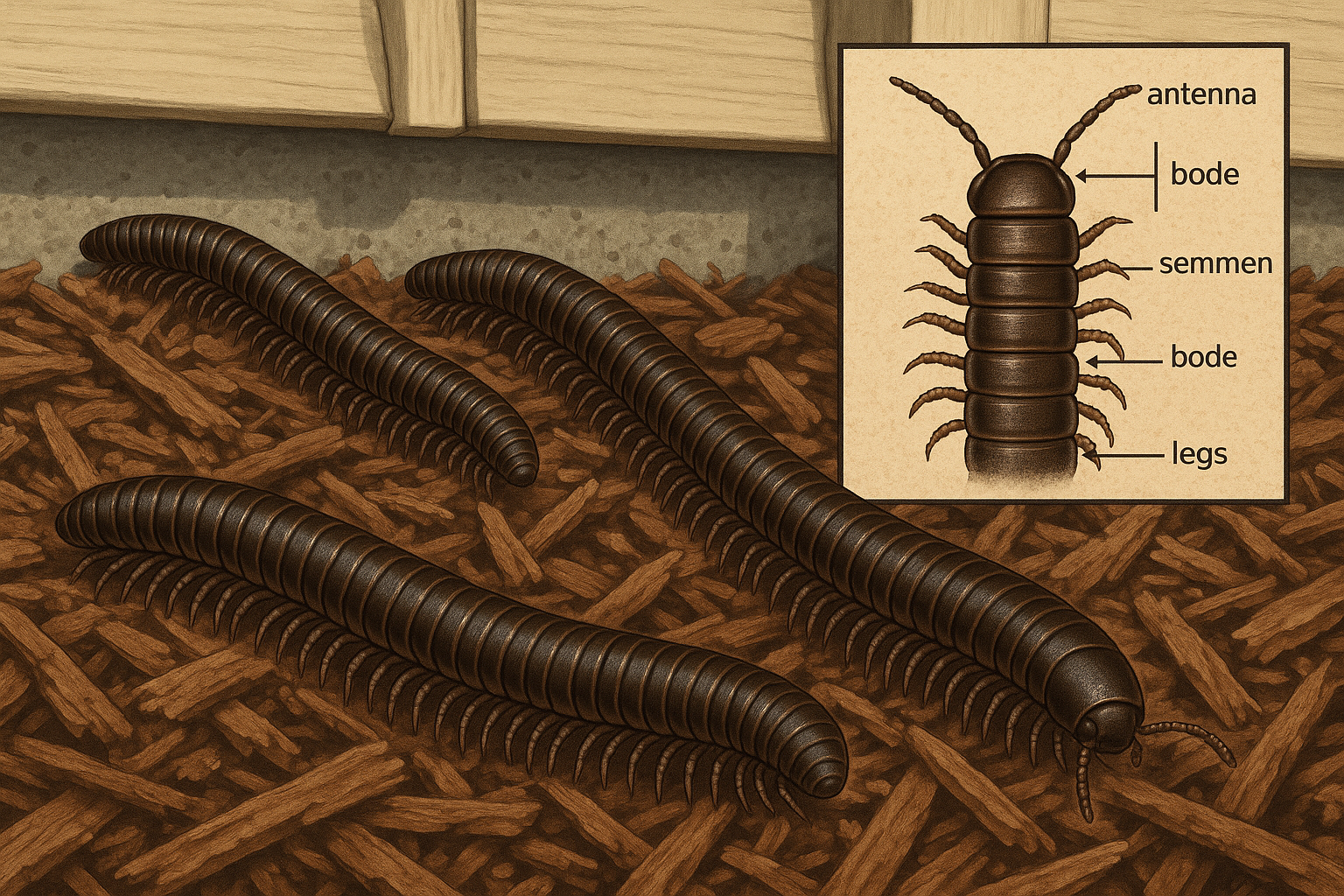
These insects exploit the smallest openings in a home’s envelope. Look for entry through foundation cracks, gaps around crawl‑space vents, utility penetrations for water, gas or electric lines, and any unsealed vent openings in the attic or basement. Moisture‑rich mulch beds and leaf litter against the foundation create a highway that leads straight to these weak spots.
Because millipedes love damp, dark spots, basements and crawl‑spaces become prime hunting grounds during rain.
One South Dunwoody homeowner recounted a “millipede carpet” that appeared in their basement after a heavy summer storm. Within hours, dozens of dark silhouettes lined the concrete floor, forming a moving rug that startled the family. The homeowner later discovered a hairline crack in the foundation wall that had opened during the rain, providing a direct path for the creatures seeking shelter.
If you see a few, more are likely nearby; sealing gaps now stops a larger migration.
Quick Visual Inspection Checklist
A quick visual sweep can catch an infestation early. Use a flashlight to examine shadowed corners and under appliances where millipedes tend to hide.
- Walk the perimeter of each room and note any dark, elongated silhouettes on walls or floors.
- Inspect foundation walls, especially where mulch meets the siding, for cracks wider than ¼ inch.
- Check crawl‑space and basement vents for missing screens or damaged flashing.
- Examine utility penetrations (water, gas, electric) for gaps; seal with appropriate caulk or foam.
- Look for moisture accumulation near entry points—dampness often attracts millipedes.
Effective Treatment Options for Millipedes
Millipedes may seem harmless, but a heavy invasion can turn your yard into a slippery, unsightly mess and even force the insects inside your home. The good news is that homeowners exploring millipede control Dunwoody solutions have several proven ways to knock them back—ranging from low-cost DIY spot treatments to full-service professional applications. Below, we break down each option, explain how to apply it correctly, and show you the typical price you can expect in the Dunwoody area.
DIY Spot Treatments
For homeowners who prefer a hands‑on approach, spot‑treating high‑traffic entry points is the most economical start. A standard insecticidal spray labeled for “millipede control” typically costs $10‑$20 per can and can be applied directly to cracks, door thresholds, and foundation gaps where the critters congregate.
- Choose the right product: Look for EPA‑registered sprays containing bifenthrin, cyfluthrin, or permethrin. These active ingredients are proven to knock down millipedes on contact.
- Wear safety gear: Long sleeves, nitrile gloves, and safety glasses protect your skin and eyes from splatter.
- Apply precisely: Use a pump‑action sprayer to target the exact opening. A thin, even mist—about 0.5 ml per square foot—covers the surface without over‑saturating nearby plants.
- Re‑treat as needed: Millipedes can re‑enter after rain. Spot‑treat after each heavy downpour for the first two weeks.
DIY spot treatments are especially effective when combined with basic sanitation—removing leaf litter and debris that provide shelter. This creates a hostile environment that discourages the pests from returning.
Professional Perimeter Treatments
When the infestation spreads beyond a few entry points, a licensed technician can apply a perimeter barrier that protects the entire property. Professionals use EPA‑registered liquid formulations—often the same active ingredients found in DIY sprays but in higher concentrations and with longer residual activity.
Coverage calculations are straightforward: roughly 0.5 gallon of product per 1,000 sq ft of exterior surface. For an average 2,500‑sq‑ft home with a 1,500‑sq‑ft yard, a technician will mix about 1.25 gallons and spray a continuous band around the foundation, sidewalks, and any exterior walls that touch the soil.
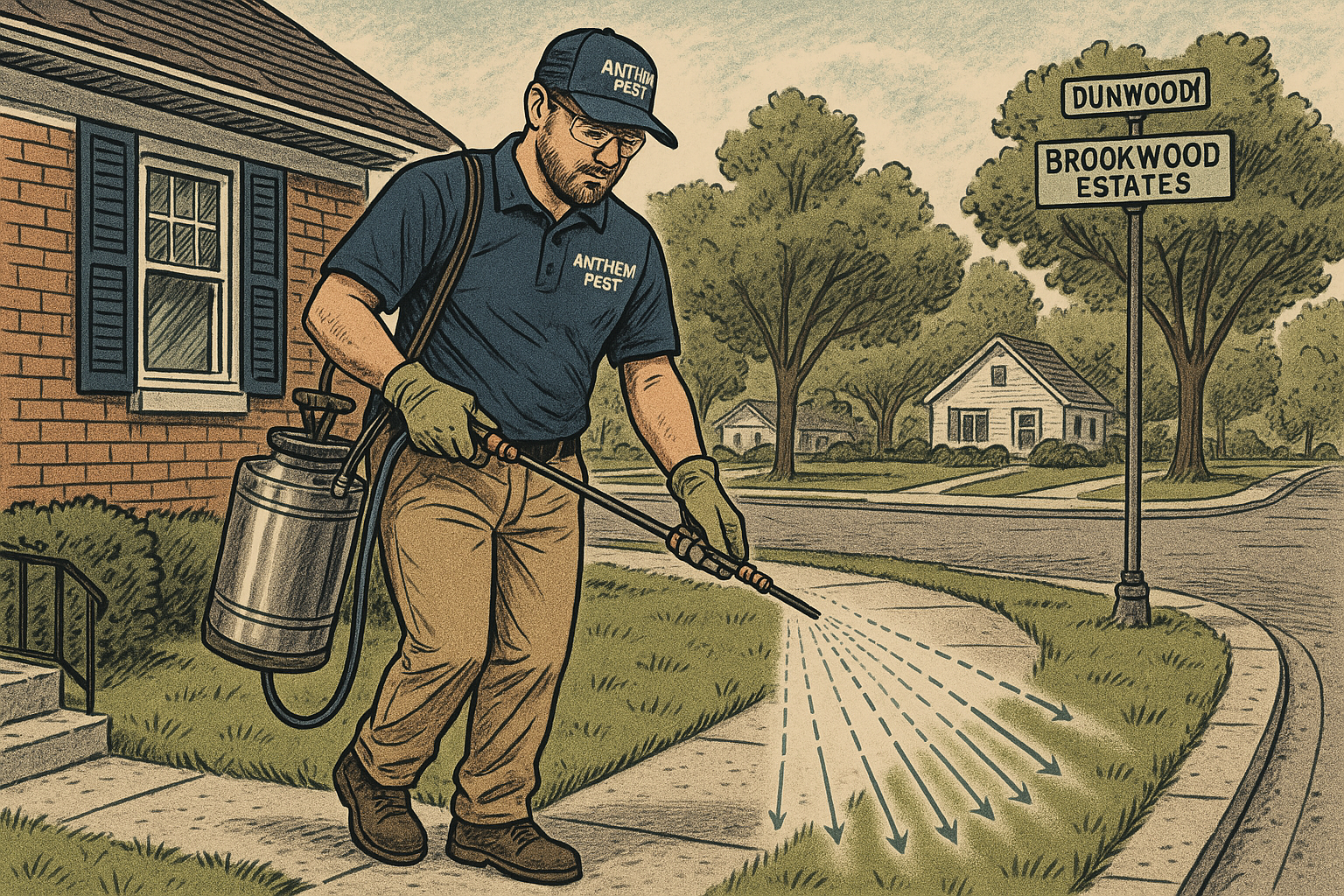
The professional service includes a pre‑treatment inspection, precise calibration of equipment, and a warranty period during which a follow‑up visit is offered if millipedes reappear. Because the product is EPA‑registered, it meets strict safety standards for residential use.
Soil‑Incorporated Treatments
Granular insecticides are mixed directly into the top few inches of soil or mulch, creating a chemical barrier that targets millipedes before they surface. These products usually contain the same pyrethroid active ingredients as sprays, but they release slowly, providing protection for up to 12 weeks.
Timing is critical: apply in early spring before the first major rain or in late summer after the peak activity period. Spread the granules evenly—about 0.75 lb per 1,000 sq ft—and work them into the top 2‑3 inches of soil using a garden rake. Water the area lightly afterward to activate the formulation.
Soil‑incorporated treatments pair well with perimeter sprays, especially in homes surrounded by mulch beds or flower borders where millipedes love to hide. The dual approach creates a “double‑layer” defense that dramatically reduces re‑infestation.
Integrated Pest Management (IPM)
IPM isn’t a single product; it’s a philosophy that blends cultural, mechanical, and chemical tactics for lasting control. For millipedes, an effective IPM program includes:
- Sanitation: Regularly rake leaf piles, remove rotting wood, and keep grass trimmed to eliminate moisture‑rich hideouts.
- Moisture Management: Fix leaky gutters, improve drainage, and use dehumidifiers in basements to make the environment less inviting.
- Physical Barriers: Seal cracks with caulk, install door sweeps, and use metal flashing around foundation vents.
- Chemical Barriers: Apply the perimeter and soil treatments described above, but only when monitoring shows pest activity.
When these steps are coordinated, chemical applications become a safety net rather than a primary solution, reducing the total amount of pesticide used and keeping your family and pets safer.
Cost Ranges in Dunwoody, GA
| Service Type | Scope | Price Range (USD) |
|---|---|---|
| Single‑Treatment Perimeter | Exterior spray covering up to 2,500 sq ft | $150 – $250 |
| Combined Perimeter + Soil‑Incorporated | Perimeter spray plus granular mulch treatment | $250 – $350 |
These figures are based on quotes from local contractors collected in early 2024. DIY spot treatments can be as low as $15 for a single can, but they rarely replace the comprehensive protection a professional service provides.
EPA Guidance on Pesticide Use
The U.S. Environmental Protection Agency (EPA) publishes annual data on pesticide usage for specific pests. According to the 2024 EPA guidance on millipede control, the average residential application of pyrethroid‑based products amounts to 0.6 gallons per 1,000 sq ft per year, a figure that aligns closely with the professional perimeter calculations shown above.
EPA‑registered products undergo rigorous testing for human health and environmental impact. When applied according to label directions, the risk to non‑target organisms—including pets and beneficial insects—is minimal. Always read the label, wear recommended protective gear, and store any leftover product out of reach of children.
Environmental Safety and EPA‑Registered Status
Choosing EPA‑registered treatments guarantees that the active ingredient has been evaluated for safety when used as directed. Both DIY sprays and professional formulations listed in this section meet those standards. For homeowners who prioritize eco‑friendliness, consider pairing chemical barriers with the IPM steps above; this reduces overall pesticide load while maintaining effective control.
Detailed Cost Breakdown for Dunwoody Homeowners
When it comes to millipede control Dunwoody, knowing exactly what you’ll pay helps you plan and avoid surprises. Below is a concise pricing table that reflects the typical range you’ll see from reputable providers in the Dunwoody area.
| Service | Price Range |
|---|---|
| Inspection fee | $75 – $100 |
| Single perimeter treatment | $150 – $250 |
| Quarterly maintenance plan (per year) | $400 – $500 |
All Anthem Pest services come with a 100 % satisfaction guarantee. If millipedes reappear within 30 days of treatment, we’ll return at no extra charge to re‑apply the solution. This guarantee is part of why our pricing remains transparent—there are no hidden fees for follow‑up visits that other companies often charge.
Anthem Pest’s transparent pricing model aligns perfectly with these market benchmarks. Our inspection fee is a flat $85, and a one‑time perimeter treatment is set at $199—no hidden surcharges or surprise add‑ons. For homeowners who prefer ongoing protection, the quarterly maintenance plan is $449 per year, which includes four scheduled visits, re‑treatments if needed, and a complimentary follow‑up inspection.
We also run seasonal promotions that can shave up to 15 % off the standard rates. The current early‑spring promo, announced in March, offers a $30 discount on the inspection fee and an additional $25 off the first perimeter treatment when you lock in a maintenance plan.
These figures are corroborated by the Atlanta Business Journal 2024 pest‑control market analysis, which identified the same price bands for comparable services across the metro Atlanta region, confirming that Anthem Pest’s rates are both competitive and fair.
Quick tip: Getting your free quote
Start by visiting our website or calling 877‑371‑8196 to schedule a free, no‑obligation quote. During the inspection, a certified technician will walk you through the property, identify entry points, and explain the recommended treatment plan. You’ll receive a written estimate on the spot, so you can decide instantly whether to proceed.
Prevention Strategies to Keep Millipedes Outdoors
Millipedes love damp, sheltered spots near a home’s foundation. By making your yard less inviting, you can keep these harmless but pesky critters where they belong—outside. Simple landscaping tweaks and routine maintenance go a long way toward breaking the cycle of millipede migration into your home.

Landscape Management
Mulch is a favorite hiding place for millipedes, so keep its depth to two inches or less. This reduces moisture retention and eliminates the soft, insulated environment they seek. Additionally, maintain a clear buffer zone of at least 12 inches between vegetation—especially shrubs and flower beds—and the house’s foundation. This gap discourages millipedes from using plant roots as a bridge onto your home.
Moisture Control
Leaky gutters and poor yard drainage create the damp conditions millipedes thrive in. Inspect and repair any gutter leaks promptly, and consider adding a French drain or grading adjustments to steer water away from the foundation. In crawl spaces, install a dehumidifier to keep humidity below 60 %, cutting off another key moisture source.
Home Sealing
Even the smallest cracks can become highways for millipedes. Seal foundation gaps with a high‑quality acrylic or silicone caulk. Fit door sweeps on all exterior doors and add fine mesh screens over vents and utility openings. These barriers stop millipedes from slipping inside during their nightly foraging.
Seasonal Timing
The best windows for preventive treatment are early spring (March‑April) when millipedes emerge from the soil, and late fall (October‑November) as they seek shelter for winter. Applying barrier treatments during these periods maximizes effectiveness, creating a protective shield before populations peak.
Case Study: Brookwood Homeowner
John M., a Brookwood resident, followed the above steps over a single season. After reducing mulch depth, fixing a gutter leak, sealing foundation cracks, and treating the perimeter in early April, he reported an 80 % drop in indoor millipede sightings. His experience underscores how coordinated, homeowner‑friendly actions can dramatically curb millipede invasions without heavy reliance on chemical controls.
Frequently Asked Questions About Millipede Control
Below are answers to the most common questions homeowners ask about millipede control.
Are millipedes harmful to humans?
No. Millipedes do not bite or sting, and they are not known to transmit diseases. In very rare cases a homeowner might experience a mild skin irritation or an allergic reaction if the insects are crushed against the skin, but such incidents are uncommon.
How long does a professional treatment last?
A standard professional millipede treatment typically remains effective for 8‑12 weeks. The exact duration depends on local weather patterns, moisture levels, and how well the property is maintained after service. Regular yard upkeep and reducing excess moisture can help extend the protection window.
Will pets be affected by the chemicals?
We use EPA‑registered products that are safe for pets when applied exactly as directed. Pets should be kept away from treated zones until the label‑specified re‑entry time has passed. For detailed safety guidelines, refer to the EPA safety sheet.
Do I need a follow‑up visit?
In most cases a single professionally applied treatment provides adequate control. However, if heavy rain washes away the barrier or if you notice a new surge of millipedes later in the season, a technician can schedule a follow‑up visit to reinforce protection.
Choose Anthem Pest for Dunwoody Millipede Control
When millipedes turn your basement into a moving carpet, the first step is knowing what you’re dealing with. In the previous sections we covered how to spot the tell‑tale silver‑gray legs, the most cost‑effective treatment options—targeted barrier sprays, indoor fogging, and moisture‑reducing fixes—and the preventive habits that keep them from marching back. All of those strategies work best when they’re applied by someone who knows Dunwoody’s climate, soil type, and seasonal rain patterns.
Dunwoody’s humid summers and occasional flooding create perfect breeding grounds for millipedes. A local provider can pinpoint drainage issues, seal foundation cracks, and time treatments to coincide with peak activity, delivering results that generic, out‑of‑state services often miss.
Why Anthem Pest Stands Out
- More than 15 years of dedicated service to Dunwoody neighborhoods.
- Certified technicians trained in millipede biology and local infestation trends.
- EPA‑registered products that target millipedes while protecting your family and pets.
- 100 % satisfaction guarantee—if the problem returns, we’ll re‑treat at no extra cost.
- Flexible scheduling that fits your calendar, with same‑day appointments available during peak months.
What Dunwoody Homeowners Are Saying
“Anthem’s team cleared our basement in one visit – no more millipede carpets!” – J. M., Dunwoody, GA
Take the Next Step
Don’t wait for the next rainy spell to bring a new wave of millipedes into your home. Schedule a free, no‑obligation inspection today and let our local experts design a custom plan that protects your property year‑round.
Call us now at 877-371-8196 or visit Anthem Pest Control to schedule professional millipede control Dunwoody homeowners trust for fast and reliable results.