Frustration of Moth Damage in Vinings Homes
Imagine the Johnson family pulling a cozy sweater from the closet after the first cold snap, only to find a fringe of tiny, ivory‑colored larvae munching through the fibers. The shock of seeing their favorite winter wear turned into a feeding ground is a feeling many Vinings homeowners know all too well—one that mixes disappointment, anger, and an immediate worry about how far the infestation has spread.
Vinings may be a tight‑knit community of roughly 12,000 residents, but recent neighborhood surveys show a noticeable uptick in moth sightings, especially in North Vinings and the Circle 75 corridor. Homeowners report spotting adult moths fluttering near windows and discovering larvae hidden in closets, drawers, and pantry shelves. This surge isn’t just a nuisance; it translates into real financial loss as clothing, linens, and stored food begin to deteriorate.
The damage extends beyond wardrobes. Several blocks report pantry items—cereal, grains, and even pet food—infested with webbing and larvae, forcing families to discard months of groceries. The emotional toll of watching cherished heirloom garments and everyday staples disappear can be overwhelming, especially when the culprit is invisible until it’s too late.
For more than two decades, Anthem Pest has been the go‑to solution for Atlanta‑area homeowners confronting exactly these problems. With a 20‑year track record of safe, effective moth control, Anthem Pest blends local knowledge with proven treatment protocols, giving Vinings residents a trusted partner to protect their homes and peace of mind.

Know Your Enemy – Common Household Moths in Vinings
When a moth flutters into your home, it’s more than a nuisance—it can damage cherished fabrics and pantry staples. Knowing which species you’re dealing with is the first step toward effective control.
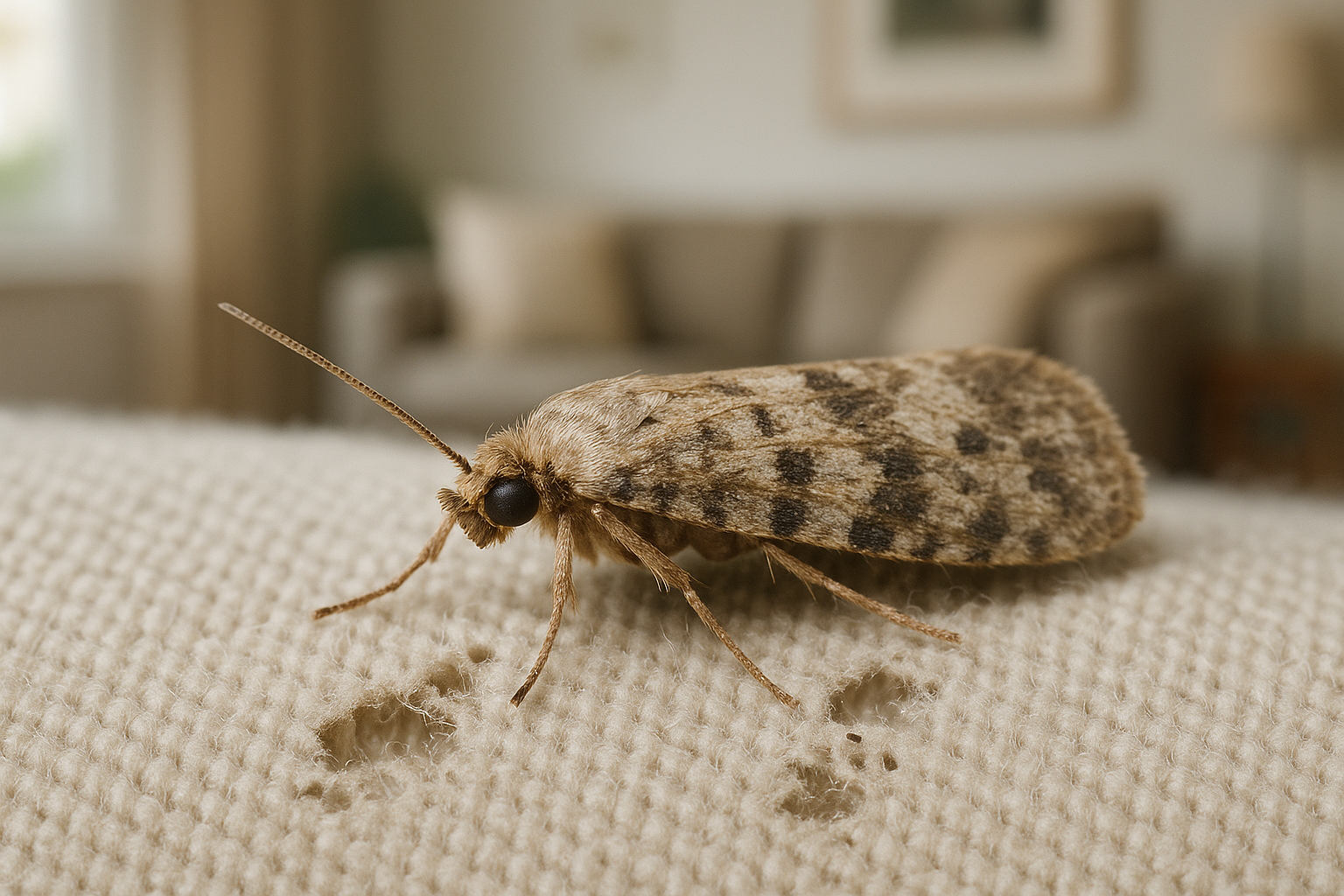
Webbing Moth (Tineola bisselliella)
The webbing moth is the classic cloth pest you’ll hear about most often. Adults are small—about 6‑9 mm long—with silky, pale‑golden wings that lack distinct markings. They favor natural fibers such as wool, silk, and cashmere, laying fine, silken webs that appear as tiny, white patches on the surface of garments or in drawers. Over time, the larvae chew irregular holes, leaving a “chewed‑out” look that can ruin a favorite sweater.
- Wing color: pale‑golden, almost translucent
- Size: 6‑9 mm wingspan
- Damage: fine webbing, irregular holes in fabrics
- Typical hiding spots: closets, dresser drawers, and upholstery
Indian Meal Moth (Plodia interpunctella)
This pantry invader is instantly recognizable by its reddish‑brown forewings that contrast sharply with a coppery fringe. Adults hover near stored grains, cereals, nuts, and dried fruit, where they lay eggs that hatch into creamy, worm‑like larvae. The larvae tunnel through food packages, leaving behind silky strands and small fecal pellets, which can quickly contaminate entire batches of pantry goods.
- Wing pattern: reddish‑brown with coppery fringe
- Size: 12‑16 mm wingspan
- Damage: webbed tunnels in stored grains, visible frass
- Typical hiding spots: pantries, cabinets, grain bins
Carpet Moth (Trichophaga tapetzella)
The carpet moth targets natural fibers in rugs, carpets, and upholstery. It is larger than the webbing moth, with a wingspan of 15‑20 mm and mottled gray‑brown wings that display subtle, irregular spots. Larvae feed from the inside out, creating irregular, round holes that can expand into sizable gaps if left unchecked.
- Wing color: mottled gray‑brown with speckled spots
- Size: 15‑20 mm wingspan
- Damage: round, irregular holes in carpets and rugs
- Typical hiding spots: under carpets, behind baseboards, furniture cushions
According to the National Pest Management Association, 28% of U.S. households experience a moth infestation each year (NPMA 2024). That means almost one in three homes in Vinings could be harboring one of these tiny destroyers without even realizing it.
Take the case of a Vinings homeowner who opened a dresser drawer to find a web of silvery threads and tiny, cream‑colored larvae munching at the seams of a cashmere sweater. The culprit? A webbing moth infestation that had been silently feeding for weeks before any visible damage appeared.
When Moths Strike – Seasonal Peaks in Vinings
Georgia’s warm, humid climate creates a nearly perfect playground for moths all year long. In Vinings, average temperatures hover around 72 °F with humidity near 50 % (EPA Georgia Climate). Those conditions keep adult moths active and larvae thriving, meaning you can’t rely on a “cold‑weather lull” to keep them at bay.
Peak Activity Periods
The moth life cycle speeds up during two key windows:
- Late spring (April‑May) – Fresh growth of outdoor plants and rising indoor humidity provide abundant food for caterpillars.
- Early fall (September‑October) – Warm evenings and the start of indoor heating create ideal breeding spots inside homes.
During these months, you’ll notice more moth sightings, increased webbing in closets, and a higher chance of pantry infestations. Catching the problem early—before the next generation hatches—can save you both time and treatment costs.
Winter Warm‑Ups Can Trigger a Secondary Spike
When you turn on your furnace, the indoor temperature climbs while the outdoor chill persists. Moths, seeking warmth, migrate indoors, often landing in dark, undisturbed spaces like attics, basements, and closets. This secondary surge can catch homeowners off guard, especially if they assume moths are a purely “summer” pest.
Monthly Activity Overview
Month – Activity Level ----------------------- Jan – Low (indoor heating spike) Feb – Low Mar – Moderate (rising temps) Apr – High (spring peak) May – High Jun – Moderate Jul – Moderate Aug – Moderate Sep – High (fall peak) Oct – High Nov – Moderate Dec – Low (indoor heating spike)
Use this quick reference to schedule inspections and treatments. A professional check in early spring, followed by a follow‑up in early fall, aligns perfectly with the moths’ natural rhythm and gives you the best chance to stay ahead of an infestation.
Effective Treatment Strategies Used by Anthem Pest
Comprehensive Inspection
Before any spray or trap is placed, Anthem Pest sends a certified technician to conduct a full‑house inspection. Using infrared cameras, the crew can spot hidden larvae and adult moths behind insulation, inside wall cavities, and under flooring where the naked eye often misses them. Pheromone traps are strategically positioned in closets, pantries, and attics to confirm species identification and to map population hot spots. The inspector also tracks moisture levels, because damp areas frequently become breeding grounds for pantry moths. By documenting each finding, Anthem creates a custom action plan that targets the exact locations where moths are thriving.
Chemical Treatments
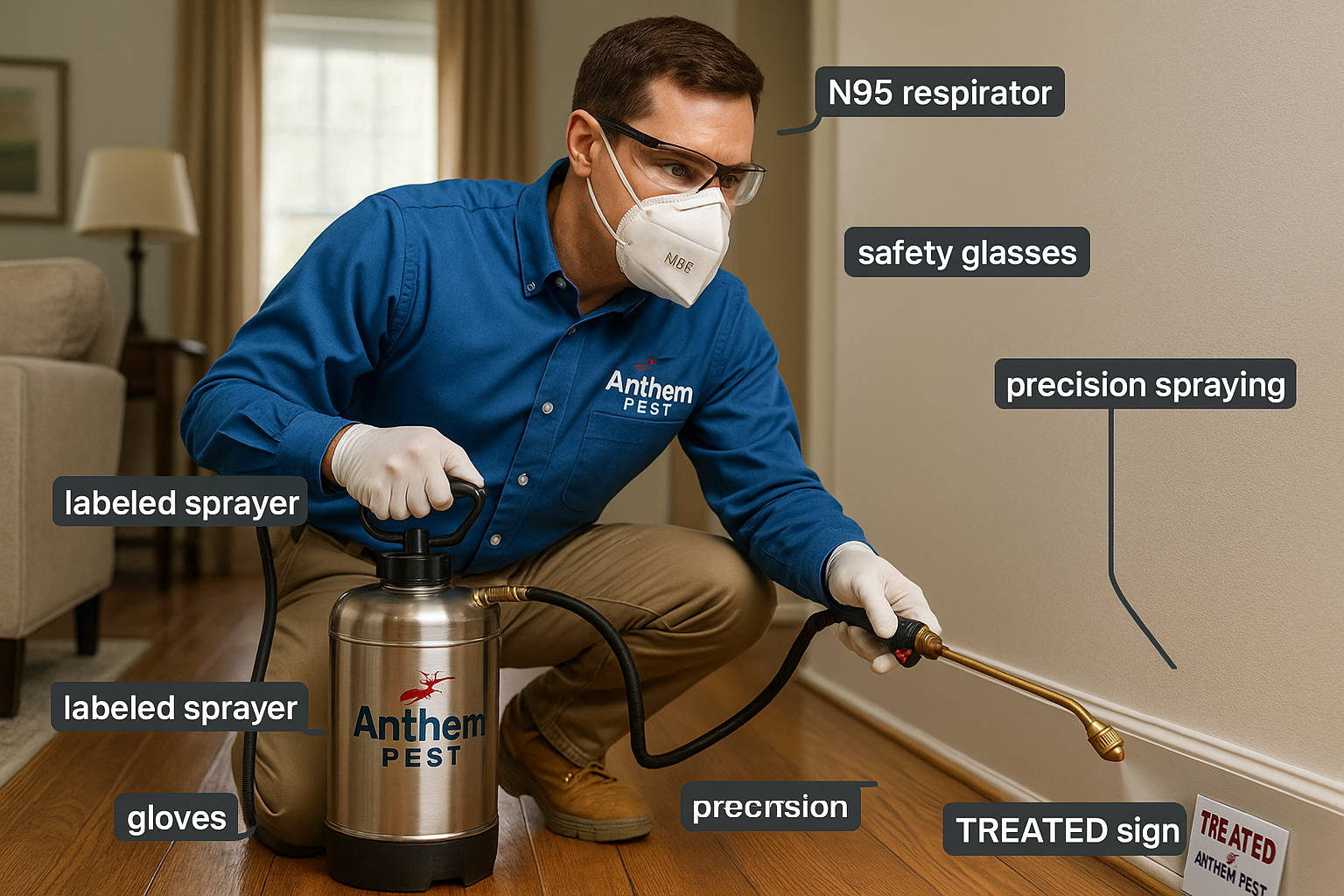
When chemicals are necessary, Anthem relies on low‑toxicity pyrethroids and EPA‑approved organophosphate alternatives that are proven effective against both adult moths and their larvae. These products are applied as spot‑treatments, focusing on the most vulnerable areas—wardrobes, pantry shelves, and attic insulation—rather than blanket‑spraying the entire home. This precision reduces exposure for occupants and pets while still delivering a lethal dose to the pests. All formulations meet federal safety standards and are mixed on‑site to ensure potency at the moment of application.
- Low‑toxicity pyrethroids: Fast‑acting, breaks down quickly in the environment.
- EPA‑approved organophosphate alternatives: Effective for resistant moth strains, used sparingly.
- Spot‑treatment protocol: Direct application to closets, pantry corners, and attic joists.
Integrated Pest Management (IPM)
Anthem’s IPM approach blends chemical control with non‑chemical tactics to keep moths out for the long term. First, homeowners receive a sanitation checklist that emphasizes vacuuming, proper food storage, and removal of clutter where moths can hide. Physical barriers such as tightly sealed garment bags, screen doors, and door sweeps block entry points. When chemicals are employed, they are limited to the smallest effective dose, and follow‑up monitoring ensures the population stays suppressed without over‑reliance on pesticides.
Transparent Pricing
Anthem offers two primary pricing options that align with the scope of work identified during the inspection:
- Single‑visit treatment: $150 – $350, ideal for homeowners who need an immediate knock‑down of a localized outbreak.
- Full‑home annual protection: $300 – $600, includes quarterly inspections, repeat spot‑treatments, and ongoing monitoring traps to prevent re‑infestation.
These figures are based on the 2025 Georgia Pest Association pricing study and reflect Anthem’s commitment to affordable, upfront costs—no hidden fees, no surprise add‑ons.
Safety First
Anthem adheres strictly to the CDC’s guidance on home pesticide safety. Technicians wear protective gear, use calibrated applicators, and ensure proper ventilation after each treatment. All products are stored in sealed containers and are kept out of reach of children and pets. Homeowners receive a post‑treatment safety sheet that outlines any necessary precautions, such as avoiding direct contact with treated surfaces for a specified period.
Success Story: A Vinings Home
One Vinings family called Anthem after noticing moths fluttering around their winter coats and pantry staples. After the initial inspection, the technician identified three breeding sites: the master closet, a kitchen pantry shelf, and an attic insulation seam. Two targeted spot‑treatments were applied, combined with a thorough sanitation walkthrough and the placement of pheromone traps for ongoing monitoring. Six weeks later, trap counts showed a 92 % reduction in moth activity, and the family reported no new sightings. The homeowner praised Anthem’s clear communication, transparent pricing, and the fact that no one in the household experienced any irritation or health concerns during the process.
Local Knowledge Meets Professional Excellence
Certified and Trusted
When you call Anthem Pest, you’re not just hiring a pest‑control company—you’re partnering with a team that meets the highest industry standards. Our technicians hold certifications from the National Pest Management Association (NPMA), a benchmark that signals expertise in safe, effective treatment protocols. In addition, we are fully licensed by the Georgia Department of Agriculture, ensuring every service complies with state regulations and environmental best practices. These credentials give Vin‑ing homeowners the confidence that the moth‑control solutions we apply are both scientifically sound and legally vetted.
Rapid Response When Moths Strike
Time is critical when a moth infestation begins to spread, especially in tightly packed neighborhoods like North Vinings, Circle 75, and Vinings Village. Anthem Pest’s local dispatch center monitors service requests 24/7, allowing us to schedule an on‑site inspection within hours of your call. Our technicians live and work in the Vinings area, so they know the typical building structures, seasonal moth activity, and the most effective entry points to target. This local insight, combined with our fleet of fully stocked service trucks, means we can arrive, assess, and begin treatment before the problem escalates.
Our 100 % Satisfaction Guarantee
We stand behind every moth‑control program with a bold promise: if you are not completely satisfied with the results, we will return for a free re‑treatment within 30 days—no extra charge, no hassle. The guarantee covers the entire treatment plan, from the initial inspection to the final follow‑up visit. Should a moth resurgence occur, our customer‑service team will prioritize your case, schedule a revisit, and apply any additional measures needed to restore a moth‑free home. This commitment eliminates risk for homeowners and underscores our confidence in the methods we employ.
What Vinings Homeowners Are Saying
“I called Anthem Pest after spotting moths in my pantry, and they were at my door the same afternoon. The technician identified the source, treated the entire house, and within a week the moths were gone. Their follow‑up call confirmed everything was still clear, and the guarantee gave me peace of mind. I wouldn’t trust anyone else in Vinings.” – Emily R., Vinings Village
Ready to protect your home with a locally trusted, certified team? Explore our full range of moth solutions on the Anthem Pest moth service page and schedule your rapid‑response inspection today.
Frequently Asked Questions About Moth Control
Are treatments safe for pets and children?
Yes. Professional moth‑control products used by Anthem Pest are EPA‑registered and must carry a safety‑label that specifies re‑entry intervals for humans and animals. Our technicians follow those label directions to the letter—applying the correct dose, allowing the required ventilation time, and confirming that the area is clear before you and your pets return. This ensures effective eradication without compromising household safety.
How long before I see results?
Most homeowners notice a dramatic drop in adult moth activity within 48–72 hours after the initial treatment. Eggs and larvae take a bit longer to die off because they are protected inside fabrics or stored goods. A follow‑up visit, usually scheduled 7–10 days later, confirms that the life cycle has been fully interrupted and any remaining hotspots are addressed.
Can moths return after treatment?
Reinfestation is possible if the source of the problem isn’t eliminated or if new items are introduced without inspection. That’s why Anthem Pest includes a post‑treatment inspection and offers a preventive maintenance plan. Regular monitoring, proper storage practices, and seasonal treatments dramatically reduce the chance of a comeback.
Do I need to discard infested items?
Not always. We evaluate each item to determine whether it can be salvaged with targeted treatment or if disposal is the safest route. General guidelines:
- Clothing or fabrics: Most can be professionally treated and then washed at a high temperature.
- Heavily contaminated textiles (e.g., moth‑eaten wool blankets): Consider disposal if damage is extensive.
- Stored food products: Discard any that show signs of infestation; sealed, uninfested packages can be saved.
- Wooden or structural items: Treat in place whenever possible; replace only if structural integrity is compromised.
Our goal is to preserve your belongings while eradicating the pest, so we’ll advise you on the most cost‑effective and environmentally responsible approach.
Protect Your Home – Call Anthem Pest Today
By now you know how to spot the most common pantry and clothing moths, recognize the seasonal peaks that bring them out, and weigh the pros and cons of DIY methods versus professional treatment. When a moth infestation starts, timing is everything—addressing it before the next peak can save you time, money, and a lot of frustration.
Quick recap:
- Identify the moth species and monitor for signs.
- Know the peak months—spring and early fall.
- Choose professional treatment for lasting protection.
Because we’ve been on the Vinings block for two decades, we understand the local climate, building styles, and the hidden entry points moths love. Our satisfaction guarantee means we’ll stay until the problem is gone, giving you peace of mind without surprise fees.
That’s where Anthem Pest steps in. With more than 20 years serving Vinings homeowners, our technicians combine local knowledge with proven, EPA‑approved solutions. We guarantee your satisfaction: if you’re not happy with the results, we’ll return at no extra charge.
Ready to protect your pantry, closets, and home from future moth invasions? Call us today for a free, no‑obligation inspection. Reach us at 877‑371‑8196 or visit our website for easy online scheduling.
Take the first step before the next seasonal surge—let Anthem Pest keep your home moth‑free.