
Why Mouse Control Matters in Dunwoody
In the leafy suburbs of Dunwoody, the common house mouse (Mus musculus) is more than a fleeting sight—it’s a persistent neighbor that thrives in our homes, garages, and even well-kept gardens. Warm, humid Georgia summers create the perfect backdrop for these tiny rodents to seek shelter, food, and nesting spots inside our living spaces, making proactive mouse control Dunwoody homeowners can rely on more important than ever.

Beyond the nuisance factor, mice pose serious health hazards. They are carriers of Hantavirus, salmonella, and leptospirosis, all of which can be transmitted through droppings, urine, or contaminated food. Even allergic reactions to mouse dander can trigger asthma attacks in sensitive residents. For a detailed breakdown of these risks, see the CDC’s mouse‑related disease information.
Property damage is another hidden cost. Mice gnaw on electrical wiring, creating fire hazards, and they chew through insulation, reducing energy efficiency. Their constant foraging can ruin stored pantry items, while their nesting behavior weakens structural wood over time. Left unchecked, these issues can lead to costly repairs and compromise the safety of your home.
That’s why Anthem Pest Control’s guide focuses on data‑driven, locally‑tailored solutions for Dunwoody residents. We combine scientific insight with neighborhood‑specific knowledge to help you protect your family’s health and preserve the integrity of your property—before a small mouse becomes a big problem.
Mouse Behavior and Hotspots in the Dunwoody Area
In Dunwoody’s mix of historic bungalows and newer townhomes, mice are opportunistic explorers. In older homes, they slip through cracks in foundation walls, gaps around pipe penetrations, and deteriorated siding. Newer constructions aren’t immune—unfinished vent chases, improperly sealed utility openings, and tiny foundation gaps left after concrete pours become prime doorways for these tiny invaders.

Neighborhood Hotspots
Three Dunwoody sub‑areas illustrate how building style influences mouse activity:
- Brookhaven – Predominantly early‑20th‑century Craftsman homes with deep crawl spaces; mice favor the exposed joist bays and attic vents.
- Peachtree Corners – A blend of mid‑century ranches and modern condos; unfinished vent chases and shared utility shafts are common entry routes.
- Dunwoody Village – Recent mixed‑use developments with concrete slab foundations; mice exploit the narrow gaps around HVAC ducts and exterior lighting fixtures.
Economic Impact
According to the U.S. Environmental Protection Agency, rodents cause $20–$30 billion in property damage annually in the United States (2024 data verification). This staggering figure underscores why even a single mouse can translate into costly repairs, contaminated food, and potential health risks for your family.
Why Hotspots Matter for Inspection Planning
Identifying these entry points before a mouse establishes a nest saves time and money. During a professional inspection, technicians prioritize the listed hotspots—cracks, vent chases, and utility openings—because they are the most likely pathways in Dunwoody’s varied housing stock. By addressing these areas early, homeowners can prevent a minor sighting from escalating into a full‑scale infestation, keeping both repair costs and stress levels low.
Transparent Pricing for Dunwoody Homeowners
When a mouse makes its way into your kitchen, the first question most homeowners ask is, “How much will it cost to get rid of it?” The cost of professional mouse control Dunwoody homeowners rely on depends on the severity of the infestation and the treatment plan required. At Anthem Pest Control, we keep every charge out in the open so you can weigh short-term expenses against long-term peace of mind.
Itemized professional fees
- Inspection: $75 – $120 – A thorough walkthrough identifies entry points, nesting sites, and the severity of the infestation.
- One‑time treatment: $150 – $300 – Includes bait placement, sealing of obvious gaps, and a full‑service mouse‑proofing package.
- Quarterly maintenance: $100 – $180 per visit – Preventative checks, bait refresh, and warranty verification to keep rodents out year‑round.
DIY vs. professional: a side‑by‑side cost comparison
Below is a quick snapshot of what you’ll spend on a typical DIY trap kit versus hiring a certified technician.
| Feature | DIY Trap Kit | Professional Service |
|---|---|---|
| Upfront cost | $15 – $30 (single kit) | $150 – $300 (initial treatment) |
| Labor/Installation | None – you set the traps | Included in treatment fee |
| Warranty | None | 12‑month guarantee, free re‑treatment if mice return |
| Follow‑up visits | Typically none; you may need to buy more traps | Quarterly maintenance ($100 – $180 per visit) |
| Total 1‑year cost | ≈ $45 – $90 (multiple kits) | ≈ $550 – $1,020 (treatment + 4 maintenance visits) |
Why the professional route saves you money in the long run
At first glance a DIY kit looks cheaper, but hidden costs quickly add up. Homeowners often replace traps, miss concealed entry points, and end up with recurring infestations that damage insulation, wiring, and food supplies. A professional service eliminates those gaps, provides a 12‑month warranty, and includes quarterly check‑ins that catch new activity before it becomes a full‑blown problem. The result is fewer emergency calls, lower health‑risk exposure, and a home that stays mouse‑free without you constantly buying new traps.
Our pricing aligns with industry standards. The NPMA cost survey (2024 data) shows the average national cost for professional rodent control ranges from $140 to $320 for an initial treatment, with maintenance visits averaging $110‑$190—exactly the range we offer here in Dunwoody. By choosing Anthem Pest Control, you’re not only getting transparent pricing; you’re investing in a proven, warranty‑backed solution that protects your home and your wallet.
Effective Mouse Treatment Methods
Comprehensive Inspection
Before any product touches a home, our technicians conduct a thorough walk‑through that’s more detective work than a quick glance. Using moisture meters, we pinpoint hidden damp spots where mice love to nest, while infrared cameras reveal activity behind walls and under insulation that the naked eye can’t see. We trace every possible travel corridor—baseboard gaps, utility openings, and attic joists—to map the exact routes the rodents are using. This data‑driven snapshot lets us design a treatment plan that targets the problem at its source, not just the symptoms.
Exclusion
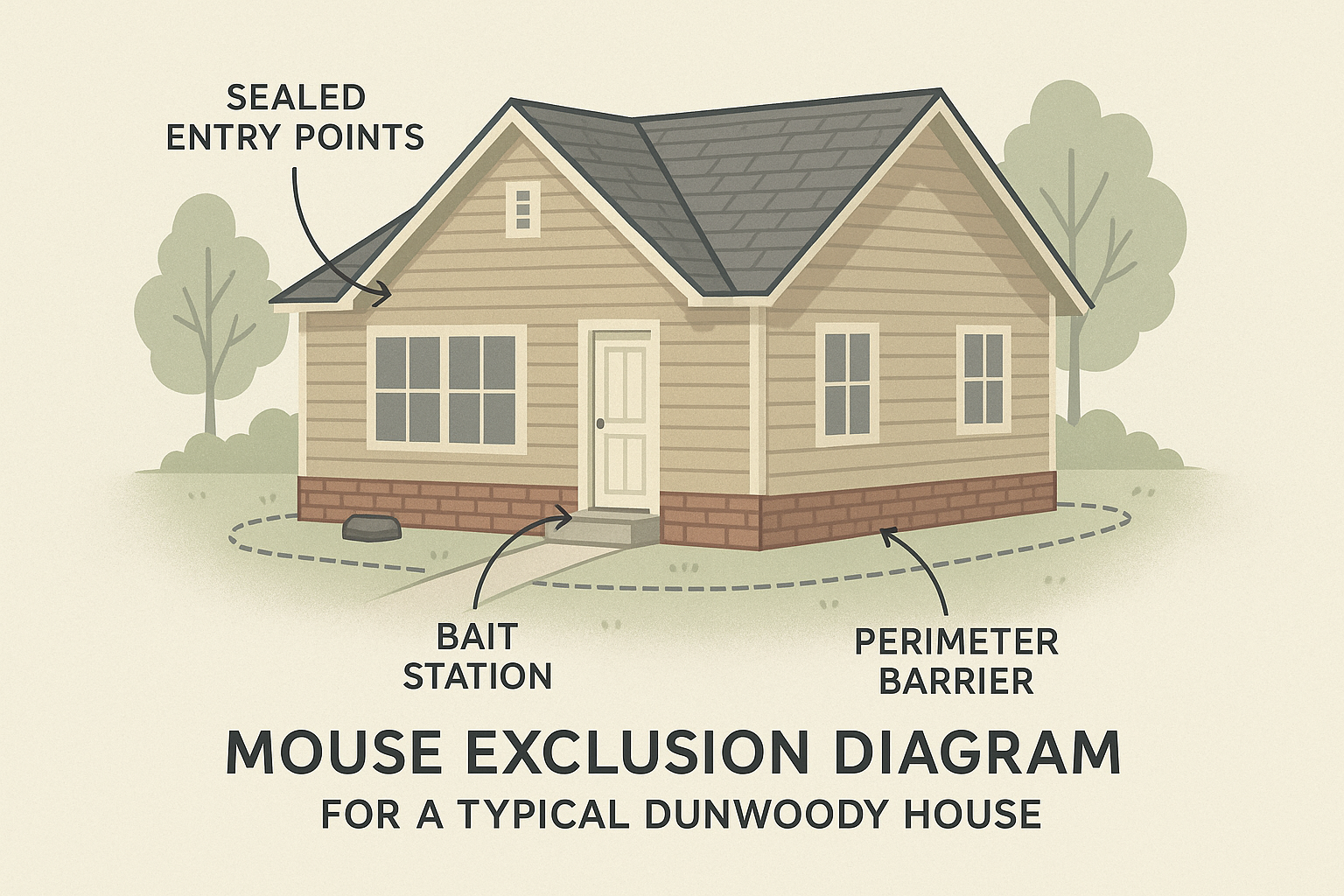
Exclusion is the cornerstone of long‑term mouse control; it’s the “seal the doors” step that stops new intruders from entering. Our crew starts by sealing cracks as small as a pencil lead with high‑grade silicone caulk, then backs larger openings with steel wool or copper mesh that rodents can’t gnaw through. Door sweeps are installed on all exterior doors, and vent covers receive stainless‑steel mesh to block tiny entry points while preserving airflow. The result is a fortress‑like envelope that leaves no easy path for a mouse to slip inside.
Baiting
When a mouse population is already established, baiting provides the quickest knock‑down while we finish sealing entry points. We deploy EPA‑registered bait stations that are tamper‑resistant, child‑safe, and designed to protect pets. Stations are placed strategically along interior walls, behind appliances, and around the perimeter where we observed the highest traffic during inspection. Each station contains a measured dose of anticoagulant or neurotoxic bait, ensuring that any mouse that contacts it receives a lethal dose before it can return to its nest.
Trapping
Traps complement baiting by delivering immediate results and offering a non‑chemical option for homeowners who prefer it. Snap traps are positioned perpendicular to walls, with the trigger end facing the mouse’s travel lane for a swift, humane kill. Live‑catch traps give you the ability to relocate rodents, but we pair them with clear disposal guidelines to prevent stress or injury to the animal. All captured mice are removed promptly, and trap locations are adjusted based on ongoing activity reports to keep pressure on the remaining population.
Local Success Story
In early May, a Dunwoody homeowner called us after noticing droppings in the kitchen and hearing scurrying in the attic. Our technician performed a full inspection on May 3, identified three primary entry points, and recommended a two‑visit exclusion plus baiting plan. On May 5 we sealed all cracks, installed door sweeps, and placed steel‑wool packs in ventilation shafts. The following day we set up four bait stations and six snap traps in the most active zones.
After the first visit, the homeowner reported a sharp decline in sightings. A second exclusion visit on May 12 reinforced any missed gaps and refreshed the bait stations. By May 20, mouse activity had dropped by 90 %, confirmed by a follow‑up inspection that found no new droppings and only one dead mouse in a trap. The homeowner praised the quick turnaround and the peace of mind that came from a fully sealed home.
This case illustrates how the four pillars—inspection, exclusion, baiting, and trapping—work together to eradicate a mouse problem and prevent its return. At Anthem Pest Control, we apply the same systematic approach to every Dunwoody residence, tailoring each step to the unique layout and infestation level of the home.
What Homeowners Can Do Right Now
Even before a professional comes to treat your home, there are simple steps you can take today that make a big difference in keeping mice out of Dunwoody houses.
- Seal every food source. Transfer pantry staples, cereals, and pet food into airtight containers made of glass or heavy‑wall plastic. Wipe down countertops, cabinets, and floors after meals, and sweep up crumbs before they become a mouse’s midnight snack.
- Declutter storage spaces. Basements, attics, and garage shelves are prime hiding spots. Remove cardboard boxes, old clothing piles, and unused items, or store them in sealed plastic bins. The fewer “cluttered” corners, the fewer places mice can nest.
- Fix leaks and eliminate standing water. Mice need water just as much as food. Inspect under sinks, around washing machines, and in crawl spaces for drips. Repair leaky pipes, clear clogged drains, and dry any damp areas within 24 hours to deny rodents a reliable hydration source.
- Maintain a tidy yard. Trim shrubs and tree branches that brush the house, and keep firewood stacked at least two feet from the foundation. Remove leaf piles, garden debris, and excess mulch that sit against the exterior walls—these create covered pathways for mice to slip inside.
- Consider ultrasonic repellents, but use them wisely. These devices emit high‑frequency sound that’s uncomfortable for rodents. Studies show mixed results, so treat them as a supplemental tool rather than a replacement for sealing entry points and professional treatment.
If you spot a mouse activity or suspect an infestation, you can also alert Dunwoody’s public works pest‑report hotline at 404‑301‑6500. Prompt reporting helps the city coordinate community‑wide control measures and keeps neighborhoods safer.
Combine these quick actions with a scheduled visit from Anthem Pest Control, and you’ll give your home a solid, multi‑layered defense against unwanted guests.
When Mice Are Most Active in Georgia
In the Peach State, mouse activity doesn’t follow a single‑year‑round pattern. The biggest surge occurs during the cooler months of fall and winter. As temperatures dip, mice abandon their outdoor burrows and scramble for the warmth and steady food sources that homes provide. This is why you’ll often hear the faint scurrying in walls or attics as soon as the first chill arrives.
Spring brings a secondary, though less intense, spike. After the breeding season, juvenile mice mature and begin to explore new territories, prompting a modest increase in indoor sightings. By late spring, the population stabilizes, and activity eases through the hot summer months when outdoor habitats become more hospitable.
Optimal Inspection Timing
To stay ahead of these cycles, schedule a professional inspection before the Thanksgiving rush and again after the summer vacation period as part of a proactive mouse control Dunwoody plan. A pre-holiday check gives you the chance to seal entry points before families gather and food stores become abundant. The post-summer visit catches any late-spring juveniles that may have slipped inside during the brief surge.
Following the EPA’s seasonal rodent activity guide, a proactive two‑inspection strategy dramatically reduces the likelihood of an infestation taking hold. EPA’s 2024 rodent activity guide confirms that early detection combined with prompt sealing of gaps is the most cost‑effective defense.
By aligning your pest‑control schedule with these natural patterns, you give Anthem Pest Control the best possible window to protect your home—keeping mice out before they become a problem.
Why Anthem Pest Is Dunwoody’s Trusted Mouse Control Provider
When a mouse problem shows up in a Dunwoody home, you need a partner who understands both the science of extermination and the quirks of local architecture. Anthem Pest brings that blend of expertise and neighborhood familiarity, making us the first call for homeowners who refuse to live with rodent damage.
Licensed professionals and EPA‑approved solutions
Every technician on our roster holds a state‑issued pest‑control license and completes ongoing training on the latest integrated pest‑management techniques. We rely exclusively on EPA‑approved products that target mice while protecting families, pets, and the surrounding environment. Our approach combines strategic bait placement, sealing of entry points, and a follow‑up inspection to verify that the infestation is truly gone.
100 % satisfaction guarantee
We stand behind our work with a 100 % satisfaction guarantee. If you still see mouse activity after the initial treatment, we’ll return at no extra cost until the problem is resolved. This promise removes the guesswork from pest control and lets you focus on what matters most—your home and peace of mind.
Deep roots in Dunwoody
Anthem Pest has served the Dunwoody area for more than a decade, giving us intimate knowledge of the region’s housing styles—from historic bungalows to modern townhomes. That experience lets us anticipate the most common entry points, such as foundation cracks, attic vents, and utility gaps, and tailor our treatment plan accordingly. Local residents appreciate our quick response times, friendly service, and the fact that we treat each property as if it were our own.
Ready to protect your home?
Give us a call today at 877‑371‑8196 or visit our dedicated mouse control page to schedule a free inspection. Our team will assess the situation, explain the recommended steps, and provide a transparent quote—no hidden fees, no surprise chemicals.
“The Anthem Pest team was thorough, and we saw no mouse activity within weeks. Their professionalism and the guarantee gave us confidence that the problem was truly solved.” — A satisfied Dunwoody homeowner
We also offer seasonal monitoring plans so you stay mouse‑free year after year, and our local office is just a short drive away for any follow‑up needs.
Mouse Control FAQs for Dunwoody Homeowners
Q1: How long does a treatment last?
When our technicians apply a comprehensive mouse control program—including bait stations, dusts, and structural exclusion—the active protection typically remains effective for 6‑12 months. The longevity hinges on maintaining the exclusion barriers (sealed entry points, trimmed vegetation, and proper sanitation). If homeowners keep these preventive measures in place, the treatment continues to deter new activity well beyond the initial application (EPA, 2023).
Q2: Are the chemicals safe for pets?
Yes. All rodent‑control products we use are EPA‑registered and meet the agency’s stringent low‑toxicity standards for household environments. Our bait stations are sealed, preventing pets from accessing the poison, and the dusts we apply are formulated to minimize inhalation and dermal exposure. Technicians wear protective gear, follow strict placement protocols, and label all treatment zones clearly. This layered safety approach ensures that cats, dogs, and other domestic animals remain unharmed while the mice are eliminated (EPA, 2023; Anthem Pest Control Policy).
Q3: What is the warranty on exclusion work?
Anthem Pest Control backs all exclusion services with a 90‑day re‑service guarantee. If a mouse re‑enters your home through a previously sealed entry point within that period, we’ll return at no extra cost to re‑inspect and reinforce the barrier. The warranty also covers any bait stations that lose efficacy during the window, ensuring continuous protection without surprise fees (Anthem Pest Control Warranty).
Take Action Today for a Mouse‑Free Home
Professional mouse control protects your family’s health and your wallet. By eliminating rodents early, you prevent costly structural damage, reduce the risk of disease transmission, and stop food contamination before it becomes a bigger problem.
Anthem Pest Control brings Dun‑Doo‑wy homeowners the advantage of local expertise. Our technicians know the neighborhood’s entry points, seasonal patterns, and the most effective treatment methods. We offer transparent pricing with no hidden fees and back every job with a satisfaction guarantee, so you can feel confident in the results. We respond within 24 hours, and our follow‑up inspections ensure the mice stay gone, giving you peace of mind.
Ready for a mouse-free home? Call us today at 877-371-8196 for trusted mouse control Dunwoody homeowners rely on, request a free, no-obligation quote, or schedule your inspection online. Visit Anthem Pest Control to learn more and take the first step toward lasting protection. Our team uses safe, EPA-approved products to protect children and pets while delivering proven results.