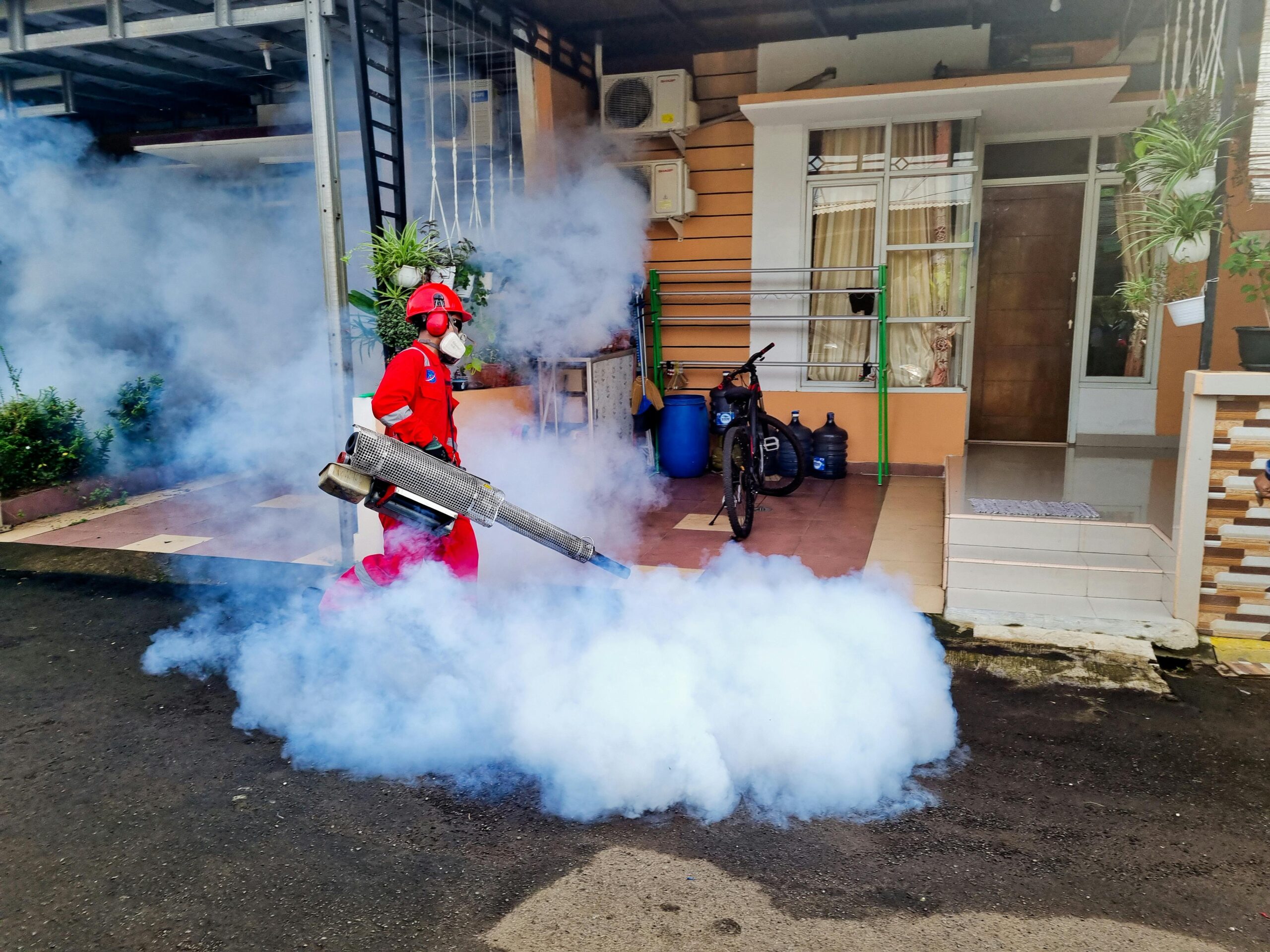
Why Silverfish Matter in Dunwoody
Silverfish are tiny, fish-shaped insects that slip into homes unnoticed. If you’re looking for effective silverfish control Dunwoody homeowners trust, early identification is essential. Measuring only about half an inch, they glide on a silvery, scaled belly and thrive on starchy residues—think paper, fabrics, glue, and crumbs left on countertops. Their nocturnal habits make them hard to spot until they’ve already started nibbling on your belongings.

The damage may seem minor, but over time silverfish can ruin cherished items. They chew through book spines, damage historic documents, create holes in wallpaper, and even weaken delicate clothing fibers. In the pantry, they feast on cereal, flour, and dried fruit, contaminating food stores and prompting costly replacements.
Dunwoody’s climate turns this tiny pest into a persistent problem. Humid summers—often exceeding 70% relative humidity—and mild winters provide the perfect moisture reservoir silverfish need to reproduce rapidly. When indoor humidity rises in basements or attics, those insects multiply, spreading from room to room.
“If you’ve spotted tiny, fish‑shaped insects, you’re not alone—Dunwoody homeowners report a 12% rise in sightings last year (verify with Dunwoody Health Dept. 2024 report).” This guide will walk you through data‑driven prevention tactics and treatment options, so you can protect books, clothing, and pantry goods before the infestation takes hold.
At Anthem Pest Control, we’ve seen how quickly a few silverfish can turn into a full‑scale nuisance in Dunwoody homes. Our technicians monitor humidity levels, seal entry points, and apply low‑toxicity treatments that target the insects without endangering your family or pets. By acting early, you save both money and the sentimental value of irreplaceable items.
Silverfish 101: Biology and Behavior
Silverfish are tiny, wing‑less insects known for their silvery, fish‑like look. Adults are about ½ to ¾ inch long, with a flattened, tapered body covered in overlapping scales that shimmer. Three tail‑like appendages and quick, darting movements often catch homeowners off guard on countertops or baseboards.
Silverfish pass through egg, nymph and adult stages. A female deposits 30‑50 eggs in dark, damp cracks and can lay up to 100 eggs each year. Nymphs look like miniature adults and molt repeatedly. Under indoor conditions they may live up to three years, allowing several generations to coexist.
They feed on carbohydrate‑rich materials: paper, cardboard, book bindings, wallpaper glue, cereal crumbs, and even shed skin. Because they digest cellulose and starch, silverfish are commonly found near stored boxes, pantry shelves, or laundry rooms where paper products and fabric fibers collect.
Typical indoor hideouts combine food sources with moisture:
- Kitchens – behind cabinets, under sinks, pantry cracks.
- Bathrooms – tile grout, under tubs, vanity bases.
- Basements/attics – insulation, cardboard boxes, wall voids.
- Closets – between clothing, shoe piles, luggage.
- Under appliances – beneath fridge, dishwasher, washer.
They prefer humidity above 60 %, so leaky pipes or poor ventilation create ideal breeding grounds, especially during Georgia’s humid summer months.
Indoor environments provide the temperature (around 70‑80 °F) and constant moisture that silverfish need to stay active. Cracks in foundation, leaky bathroom caulking, or damp laundry piles retain the humidity they love, turning ordinary rooms into long‑term habitats.
Because a female can lay dozens of eggs each week, an unnoticed infestation can grow fast. Homeowners usually spot silverfish by silvery trails on walls or tiny holes in paper items.
Dunwoody’s Unique Conditions That Invite Silverfish
Silverfish thrive where moisture lingers, and Dunwoody’s climate delivers just that. According to the 2024 NOAA climate summary, the city averages about 65% relative humidity in the summer months and holds a steady 55% during winter. Those numbers may seem modest, but they’re high enough to keep walls, floors, and stored goods damp enough for silverfish to flourish year‑round.
Older Housing Stock Traps Moisture
Much of Dunwoody’s residential fabric predates 1990. Homes built before that cutoff often feature legacy insulation—fiberglass batts and cellulose that were installed without modern vapor barriers. Over time, these materials absorb and retain humidity, creating a micro‑environment that mirrors the damp basements where silverfish love to hide.
Building Materials That Hold On to Dampness
Typical construction in the area includes plaster walls, wood framing, and carpeted floors. Plaster, while aesthetically pleasing, is porous and can wick moisture from the air. Wood framing, especially when not sealed properly, acts like a sponge, and carpet fibers lock in humidity, providing perfect cover for silverfish to lay eggs and scavenge for starchy debris.
Neighborhood Focus
- North Dunwoody – This sector contains the oldest homes in the city. The combination of aging insulation and older plaster work means moisture stays trapped longer, turning basements and closets into silverfish hotspots.
- Dunwoody Village – A mixed‑age community where newer builds sit beside mid‑century houses. Frequent pantry storage in these homes adds a steady food source, encouraging silverfish to migrate from damp walls to kitchen cabinets.
- Brookhaven‑adjacent area – Although the houses here are relatively new, the dense landscaping and extensive tree canopy raise local humidity levels. Even modern, well‑sealed homes can experience elevated indoor moisture when outdoor air is constantly saturated.
“Homes built before 1990 in North Dunwoody often have older insulation that traps moisture, creating ideal habitats.” – Local pest specialist, Anthem Pest Control
When you layer these factors—persistent humidity, moisture‑retaining construction, and neighborhood‑specific quirks—you get a perfect recipe for recurring silverfish activity. Understanding how each element contributes helps homeowners recognize early warning signs and take proactive steps before an infestation takes hold.
How to Spot a Silverfish Problem Early
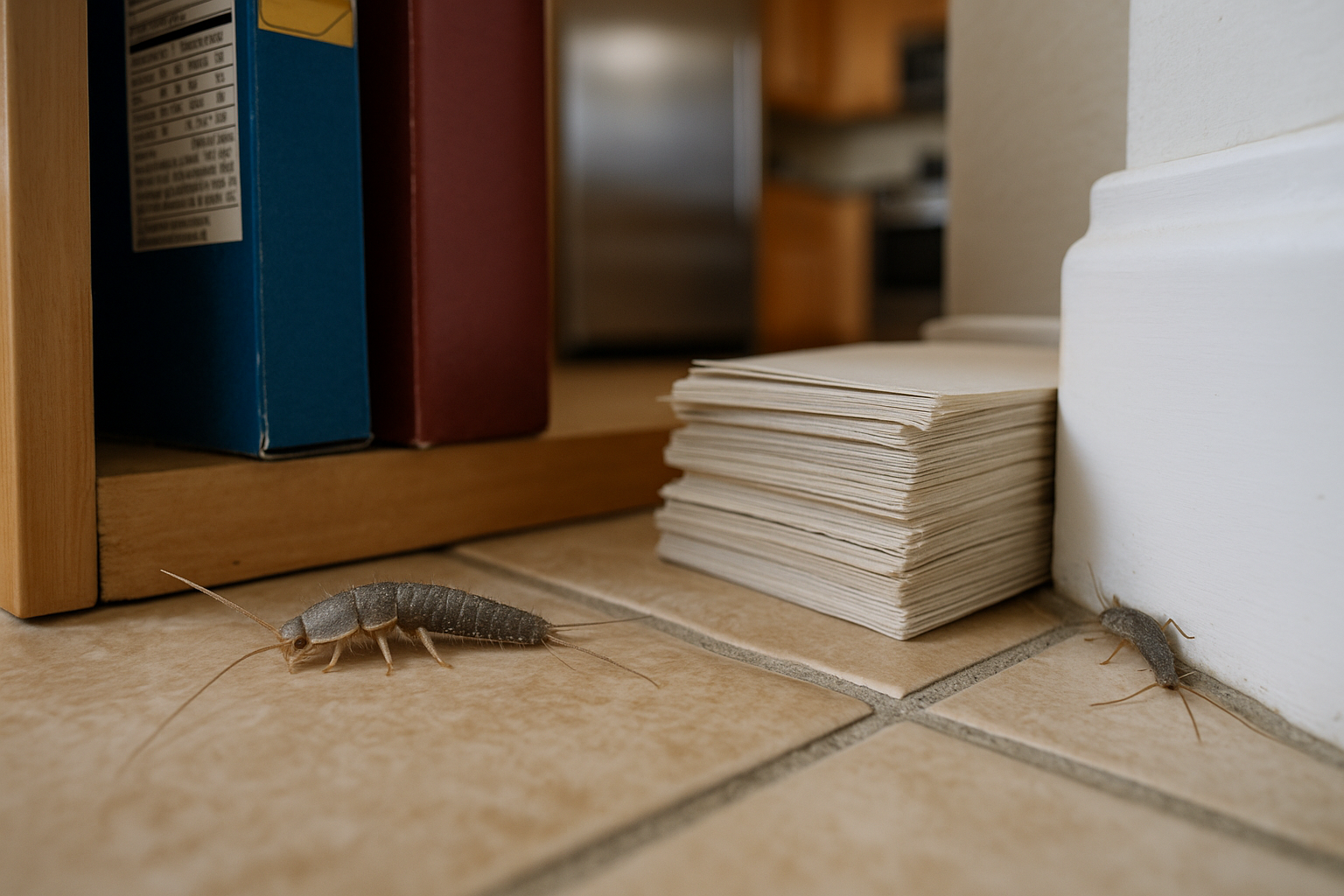
Silverfish are tiny, fish‑shaped insects that love damp, dark corners. Catching them before they multiply saves you from costly damage to books, clothing, and food. Look for three visual clues that tell you they’ve already set up shop. Early detection also means you can often avoid professional treatment, keeping your budget intact.
Visual signs to watch for
First, you’ll notice small, silvery‑gray droppings that resemble pepper flakes or fish scales. Second, paper or cardboard may appear yellowed, scorched, or covered with a faint sheen where the insects have brushed past. Finally, actual silvery scales—tiny, translucent fragments—can be found near baseboards or in crevices.
Damage indicators
Silverfish chew on starchy materials. Check book pages for irregular holes, fabric for shredded edges, and pantry packaging for gnawed corners. Even unopened cereal boxes can show tiny bite marks if an infestation is brewing.
Inspection checklist by area
- Bathrooms: Examine tile grout and the undersides of sinks where moisture lingers.
- Kitchens: Pull pantry shelves, inspect cereal boxes, and look behind appliances for hidden trails.
- Basements: Scan stored boxes and insulation for scales or droppings.
- Attics: Look through insulation and seasonal items for the same signs.
A Dunwoody homeowner on Peachtree Road discovered a cluster of silverfish near a leaky pipe. Fixing the leak and cleaning the area halted the spread before it reached the kitchen pantry.
Quick tip: In a dark room, shine a flashlight along cracks and run a thin card or ruler across them; any sudden movement or a faint rustle signals a silverfish hiding nearby.
Effective Silverfish Treatments: From DIY to Pro
Silverfish are resilient, but you have several proven ways to push them out of your home. Whether you’re considering DIY methods or professional silverfish control Dunwoody homeowners rely on, it’s important to choose solutions that follow the EPA Indoor Pesticide Use Guidelines (2023). Below is a balanced look at do-it-yourself (DIY) options versus professional services, along with key safety tips.
Chemical Sprays
- Common active ingredients: Pyrethroids (e.g., bifenthrin, permethrin) and bait formulations that attract silverfish before delivering a lethal dose.
- Effectiveness rating: 3 / 5 – works well for spot treatments and cracks but may require multiple applications for larger infestations.
- Safety precautions: Keep children and pets out of treated areas for at least 2 hours, wear gloves, and follow label directions precisely. Ventilate rooms after spraying to reduce inhalation risk.
Non‑Chemical Methods
- Diatomaceous earth (DE): Lightly dust DE into baseboard cracks, behind appliances, and under sinks. The microscopic silica particles abrade the insects’ exoskeletons, causing dehydration.
- Sticky traps & pheromone lures: Place traps along wall lines and near known harborage spots. Pheromone lures draw silverfish into the adhesive surface, providing a visual cue of activity levels.
- Moisture control: Use dehumidifiers to maintain indoor humidity below 50 % and promptly repair leaks. Silverfish thrive in damp environments, so drying out the home cuts their food source.
Heat Treatment
Professional heat treatments raise interior temperatures to 120‑130 °F for several hours, a range that kills eggs, nymphs, and adults instantly.
- Pros: Completely chemical‑free, provides whole‑home coverage, and eliminates hidden colonies in wall voids.
- Cons: Higher upfront cost (often $400‑$800), and occupants usually need to vacate the house for the duration of the service.
Quick Comparison
| Method | Approx. Cost (USD) | Efficacy Rating (1‑5) |
|---|---|---|
| Chemical sprays (DIY) | $30‑$70 | 3 |
| Non‑chemical (DE, traps, dehumidifier) | $20‑$150 | 2‑4 |
| Professional heat treatment | $400‑$800 | 5 |
When deciding between DIY and professional routes, weigh the immediate cost against long‑term effectiveness and safety. For small, isolated sightings, a targeted spray or DE dust may suffice. For pervasive infestations, especially in older homes with hidden moisture, a professional heat service often delivers the most reliable, chemical‑free result.
What Does Silverfish Control Cost in Dunwoody?
Understanding how much silverfish control Dunwoody homeowners typically need helps you budget for a safe, pest-free home. Prices vary by treatment method, home size, and infestation level, so knowing the typical range prevents surprise invoices.
Below are the most common service options and their 2024 price bands in the Dunwoody area.
- One‑time chemical spray: $120‑$200.
- Integrated pest management (inspection + treatment + follow‑up): $250‑$450.
- Full‑home heat treatment: $600‑$900.
One‑time chemical spray
This is the most economical choice. A professional applies a residual insecticide that targets active silverfish and provides protection for a few weeks. It works best for light infestations, but repeat visits may be needed if the problem returns.
Integrated pest management (IPM)
IPM combines a thorough inspection, targeted chemical or non‑chemical treatments, and a scheduled follow‑up visit. The approach not only reduces the current silverfish population but also tackles moisture sources that attract them. Homeowners receive a written plan and a warranty that covers any retreatment within the agreed period.
Full‑home heat treatment
Heat treatment raises indoor temperatures to a level lethal to silverfish at every life stage, eliminating eggs, nymphs, and adults without chemicals. The process is ideal for families with pets or sensitivities to pesticides. Although the upfront cost is higher, it often eliminates the need for future chemical applications.
Several key factors influence the final bill, and each can shift a quote by a few hundred dollars.
- Home size (square footage).
- Infestation severity (light, moderate, heavy).
- Treatment type (DIY vs. professional).
- Access difficulty (tight crawl spaces, multiple stories).
For example, a 2,200‑sq‑ft. home in Dunwoody Village received a comprehensive integrated package that included inspection, treatment, and a six‑month warranty for $375. The homeowner saved on repeat visits because the plan covered follow‑up visits and any needed retreatments within the warranty period.
We recommend checking the 2024 National Pest Management Association pricing survey to confirm that these figures reflect current market averages in Georgia. Seasonal demand can affect rates, so it’s wise to get a written estimate before scheduling work.
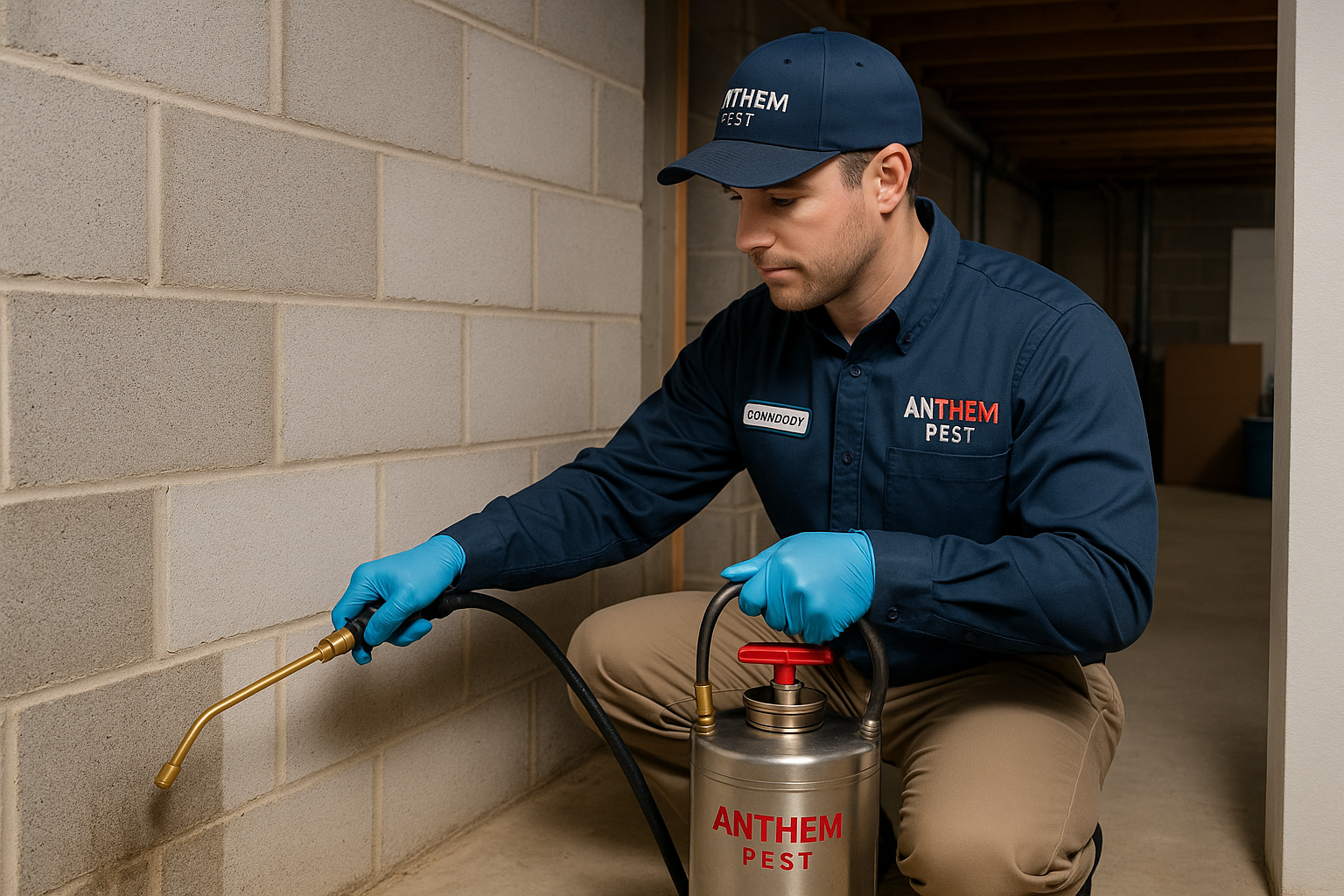
Signs It’s Time to Hire Anthem Pest
Even the most diligent DIY efforts can miss the subtle clues that silverfish leave behind. When you start seeing a pattern of damage or repeated sightings, it’s a clear signal that professional help is needed.
Scenarios that warrant a pro
- Extensive damage to books, fabrics, or stored foods – torn pages, chewed clothing fibers, or pantry crumbs that keep reappearing.
- Recurring sightings after multiple DIY attempts – traps, boric acid, or homemade sprays haven’t reduced the activity.
- Multi‑room infestations or hidden colonies in wall voids, crawl spaces, and under floorboards, indicating the problem has spread beyond a single spot.
- Presence in hard‑to‑reach areas such as vent ducts, behind built‑in cabinets, or inside appliance gaps where DIY tools can’t reach.
These warning signs are not just inconvenient—they can compromise the integrity of your home’s insulation and invite secondary pests that feed on the same organic debris.
Why Anthem Pest is the right choice
- All technicians are licensed and EPA‑registered, guaranteeing compliance with the strictest safety standards.
- We employ approved, low‑toxicity products that protect your family and pets while effectively eradicating silverfish.
- A 24‑hour response window for emergency calls ensures the infestation is addressed before it escalates.
“Anthem Pest identified a hidden pantry infestation within a day and eliminated it—our home feels safe again.” – Dunwoody resident, 2024
When any of the above signs appear, waiting can lead to costly damage to cherished belongings and structural components. Trust Anthem Pest’s local expertise and transparent pricing to restore peace of mind quickly and affordably.
How to Pick the Best Silverfish Control Provider
Key criteria to evaluate
When you’re hunting for a silverfish specialist in Dunwoody, focus on five measurable factors that separate the trustworthy from the “just another” pest‑control flyer.
- Local reputation and years of service. A company that has been serving Dunwoody families for 5+ years likely knows the neighborhoods, building types, and seasonal patterns that affect silverfish activity.
- Transparent pricing and written guarantees. Look for a clear, itemized quote and a guarantee that outlines what’s covered, how long the warranty lasts, and whether follow‑up visits are included.
- Proven results. A solid warranty (minimum 90 days) and documented follow‑up visits demonstrate confidence in the treatment’s effectiveness.
- Customer reviews and BBB accreditation. Aim for a Google rating of 4.5 stars or higher and a BBB rating of A‑ or A+. Real‑world feedback reveals reliability and professionalism.
- Eco‑friendly practices. Preference should be given to firms that employ low‑toxicity products and Integrated Pest Management (IPM) strategies, protecting your family and the environment.
Quick provider comparison
- Anthem Pest – licensed, EPA‑registered, 24‑hour response, 4.8‑star Google rating, offers eco‑friendly IPM.
- XYZ Pest – competitive pricing, 4.4‑star rating, no heat‑treatment option, limited warranty.
- ABC Exterminators – long‑standing local firm, 4.6‑star rating, limited warranty, standard chemical treatments.
Before you sign a contract, request a free inspection quote. A reputable provider will send a technician, assess the infestation, and give you a written plan with costs and guarantees—no surprise fees. It also protects you from unexpected future costs.
Silverfish FAQ for Dunwoody Homeowners
Do silverfish carry diseases?
No, silverfish are not known to transmit diseases to people. While they don’t bite or sting, they can wander onto food, paper, or clothing and leave behind droppings, scales, or shed skins that may contaminate surfaces. The Centers for Disease Control and Prevention confirms that silverfish are considered a nuisance rather than a health threat. CDC – Silverfish Facts
How long does treatment take?
Typical chemical‑spray applications last about 30‑45 minutes, allowing our technicians to treat baseboards, cracks, and other hiding spots efficiently. Heat‑based treatments, which raise indoor temperatures to eradicate eggs and larvae, require 4‑6 hours of active heating plus set‑up and cool‑down time. Most homeowners see a follow‑up visit scheduled 2‑4 weeks after the initial service to verify that the infestation is fully resolved.
Can pets be harmed?
When we use EPA‑registered products and follow label directions, the risk to cats, dogs, or other indoor pets is minimal. We always advise keeping pets out of treated rooms until the recommended re‑entry interval has elapsed. For complete safety details, refer to the EPA Indoor Pesticide Use Guidelines.
If you have any concerns, give us a call; we’ll walk you through the safest practices for your specific pet’s breed and age.
Summary and Next Steps
In Dunwoody, silverfish reveal themselves through tell‑tale signs: tiny, fish‑shaped scales in pantry corners, silvery trails along baseboards, and occasional damage to books, clothing, or wallpaper. Effective control starts with a thorough inspection, followed by targeted treatments such as residual sprays, dusts, or heat applications. Homeowners should also budget for a one‑time service ranging from $150 to $300, with ongoing prevention plans available at a predictable monthly rate.
Anthem Pest brings Dunwoody‑specific expertise to every job. Our licensed technicians know the local building styles and seasonal patterns, allowing them to locate hidden harborage quickly. We back every treatment with a satisfaction guarantee, so you can trust that silverfish won’t return without us taking another look—at no extra charge.
Ready to protect your home from silverfish damage? Call 877-371-8196 today for professional silverfish control Dunwoody homeowners trust, or visit Anthem Pest Control to schedule your free, no-obligation inspection. Download our DIY prevention guide to stay ahead of future infestations.