Why Spider Control Matters in Vinings
Imagine stepping into your garage on a warm June morning in Vinings, only to spot a glossy, hour‑glass‑marked black‑widow perched on a stack of garden tools. Your heart skips a beat, and the thought of a bite sends a chill down your spine. This is a scenario many Vinings homeowners face as spider activity spikes with the arrival of summer.

The risk isn’t just local folklore. The Centers for Disease Control and Prevention reports roughly 1.2 million spider‑related medical visits across the United States each year, ranging from harmless bites to serious envenomations. (Source: CDC – Spider Bites)
Vinings sits in a humid subtropical zone, where hot, moist summers and mild winters create a perfect habitat for spiders year‑round. The combination of abundant outdoor vegetation, frequent rainfall, and indoor humidity from air‑conditioning systems provides both shelter and a steady food supply of insects, encouraging species like black‑widows, brown recluses, and common house spiders to thrive inside homes.
Beyond the immediate fear of a painful bite, spider envenomation can cause severe muscle cramps, nausea, and in rare cases, neurological complications that require emergency care. In Vinings, average summer humidity hovers around 70 % and temperatures regularly climb above 85 °F (29 °C), conditions that accelerate spider reproduction cycles. Moreover, the area’s dense tree canopy and nearby wetlands attract insects, which in turn lure spiders closer to human dwellings. Ignoring these environmental cues allows spider populations to multiply unchecked, increasing the likelihood of accidental encounters inside basements, garages, and even bedrooms.
Because the threat is both real and pervasive, this guide takes a data‑driven, professional approach to help you protect your family and property. We’ll break down how to identify high‑risk areas, what treatment options are most effective in Vinings, and how Anthem Pest Control’s safe, affordable solutions can keep unwanted eight‑legged guests out of your life.
Identify Vinings’ Most Common Household Spiders
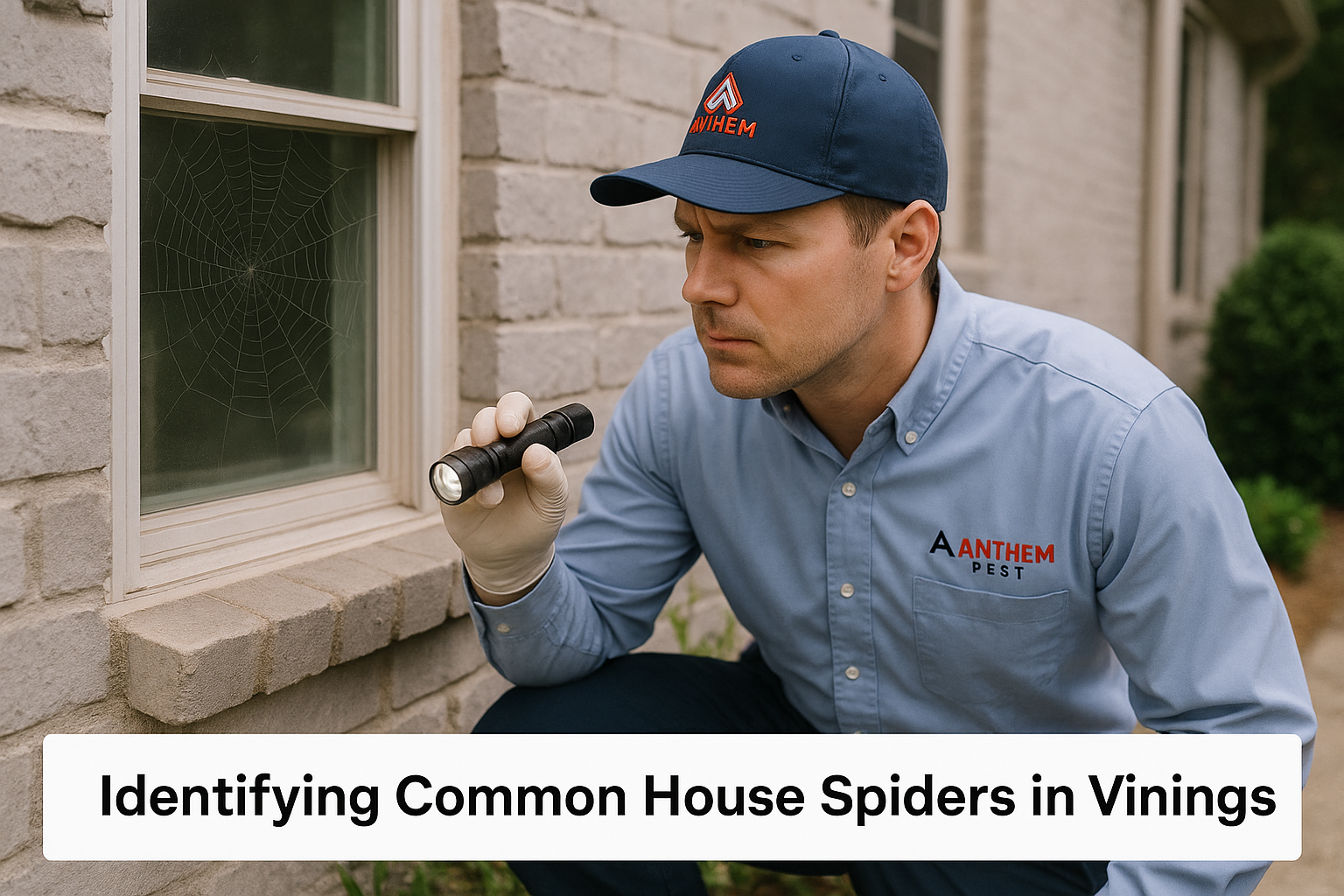
Vinings homeowners most often run into just four spider species inside their homes. Recognizing each one’s size, coloration, web style, and favorite hide‑outs lets you catch a problem early and decide whether a professional treatment is warranted.
According to the National Pest Management Association, 65 % of U.S. homes report spider sightings each year.
Source: NPMA – Spider Facts
Southern House Spider
- Size & coloration: ½‑¾ in. leg span; brown‑gray body with subtle mottling.
- Web type: Loose, sheet‑like webs that cling to corners and window frames.
- Indoor hotspots: Window sills, ceiling corners, and damp basements.
- Seasonal pattern: Peaks in late summer through early fall when humidity climbs.
Wolf Spider
- Size & coloration: Up to 1 in. leg span; dark brown to gray with a distinctive “eye‑mask” pattern.
- Web type: Does not spin webs; hunts on the ground.
- Indoor hotspots: Garages, laundry rooms, and any cluttered floor space.
- Seasonal pattern: More visible in spring as they seek shelter before the hotter months.
Brown Recluse
- Size & coloration: ¼‑½ in. body; uniform light‑brown with a violin‑shaped marking on the cephalothorax.
- Web type: Irregular, flat retreats in undisturbed corners.
- Indoor hotspots: Basement walls, closets, and under furniture.
- Seasonal pattern: Most active from late summer into early winter, when indoor heating creates a stable environment.
Black Widow
- Size & coloration: Females up to 1½ in. total length; glossy black with a bright red hourglass on the underside.
- Web type: Dense, tangled cobwebs that often drape low near the floor.
- Indoor hotspots: Dark, undisturbed areas such as garages, sheds, and behind stored boxes.
- Seasonal pattern: Spiders mature in late summer; females remain active through winter, especially in heated spaces.
Treatment Options Overview and Cost
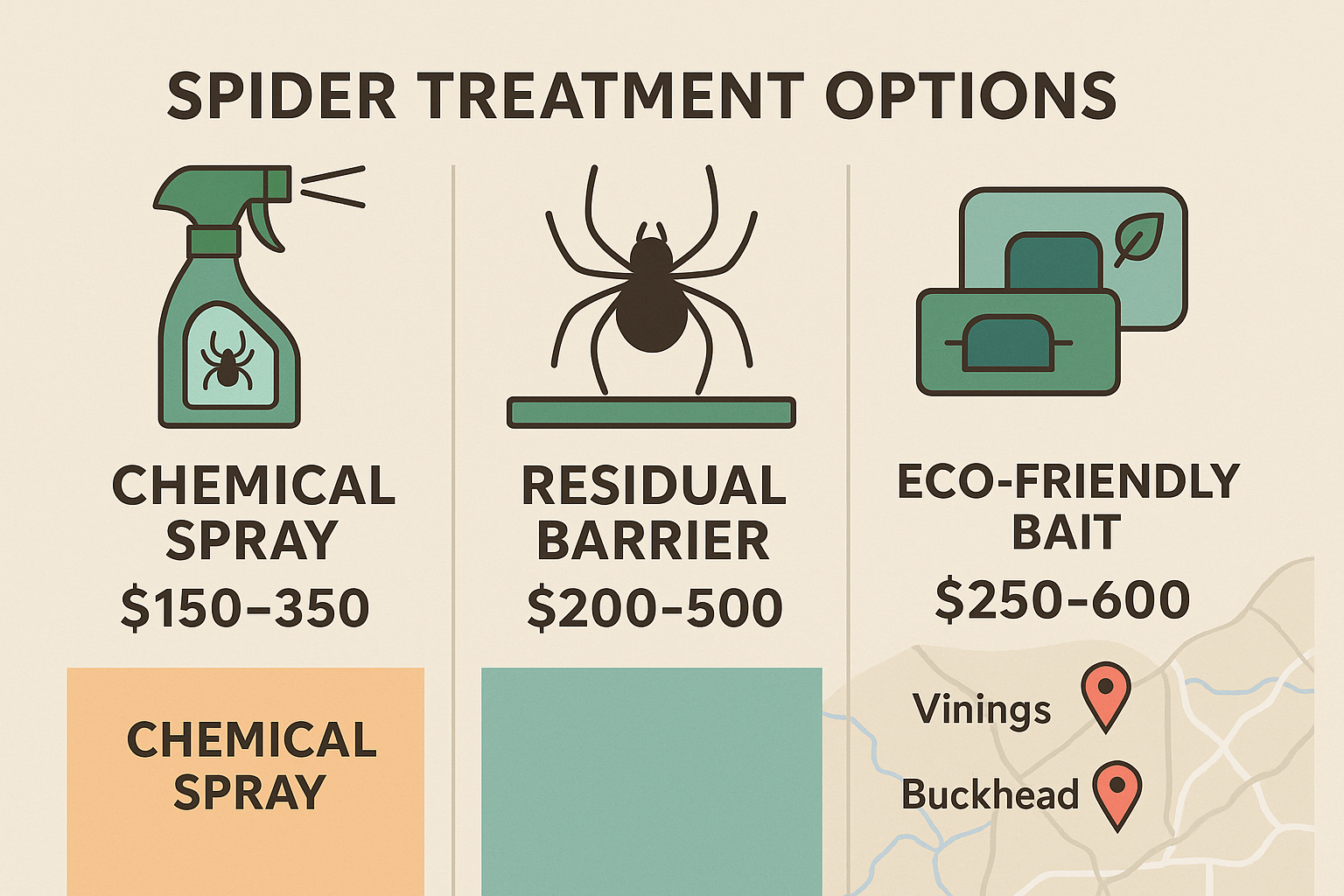
Chemical Spray
Our fast‑acting chemical spray targets spiders wherever they hide—inside walls, basements, garages, and outdoor perimeters. Technicians use EPA‑registered insecticides that knock down active spiders within minutes and provide residual protection for up to two weeks. This method is ideal for homeowners who need an immediate reduction in spider activity before a big event or during a seasonal spike. The typical cost ranges from $150 to $200 per visit, covering labor, product, and a thorough inspection.
Residual Barrier
The residual barrier treatment creates a long‑lasting shield around your property. After the initial application, a low‑toxicity pesticide is reapplied monthly to maintain a protective film on foundations, crawl spaces, and exterior walls. This continuous approach disrupts spider breeding cycles and deters new entrants, making it a favorite for year‑round prevention plans. Because of the recurring nature, the annual expense falls between $200 and $300, which includes all scheduled visits and any necessary touch‑ups.
Eco‑Friendly Options
For pet owners and families seeking a greener solution, we offer pyrethrin‑based treatments that are derived from natural chrysanthemum flowers. These products break down quickly in the environment, are pet‑safe when applied correctly, and still deliver strong knock‑down power against common house spiders. While the efficacy matches conventional sprays, the application frequency is usually once every 4–6 weeks. Pricing for eco‑friendly services typically ranges from $180 to $250 per treatment cycle.
| Treatment | Effectiveness | Safety Level | Application Frequency | Price Range |
|---|---|---|---|---|
| Chemical Spray | High – rapid knock‑down | Moderate – EPA‑registered, indoor/outdoor | One‑time (as needed) | $150‑$200 per visit |
| Residual Barrier | Medium – sustained protection | High – low‑toxicity, long‑term | Monthly re‑application | $200‑$300 annually |
| Eco‑Friendly (Pyrethrin) | High – comparable to spray | Very High – pet‑safe, biodegradable | Every 4–6 weeks | $180‑$250 per cycle |
All of our treatment plans comply with the EPA residential pesticide safety guidelines, ensuring that products are applied at legally approved rates and with proper protective measures. In Vinings, Georgia, local ordinances may require a permit for certain high‑concentration chemicals, especially in multi‑family dwellings. Our technicians stay current on city regulations, so you won’t need to worry about paperwork—just a safe, effective spider control solution tailored to your home.
Pricing Transparency for a 2,000‑sq‑ft Vinings Home
When it comes to spider control, Vinings homeowners want a clear picture of what they’re paying for. For a typical 2,000‑sq‑ft residence, Anthem Pest offers a comprehensive interior‑and‑exterior treatment that targets all common spider species while keeping your family and pets safe.
Base Service Range
The standard package includes:
- Full‑home interior spray covering living spaces, bedrooms, basements, and attics.
- Exterior perimeter treatment around the foundation, doors, windows, and garage.
- One‑hour on‑site inspection to identify high‑risk zones and tailor the application.
For a 2,000‑sq‑ft home, this core service is priced at $199
Homeowners can enhance protection with two popular add‑ons: Anthem Pest stands behind a flat‑rate guarantee. The price you see before the technician arrives is the price you pay—no hidden fees, no surprise surcharges. This guarantee covers the entire square footage of your home, ensuring that every corner receives the same level of protection. Understanding that pest control is an essential, but sometimes unexpected, expense, Anthem Pest offers flexible financing: These options let Vinings homeowners spread the cost without compromising on safety or effectiveness. By presenting a straightforward base price, clearly listed add‑ons, and transparent financing, Anthem Pest gives you the confidence to plan your spider control budget ahead of time. No guesswork, no hidden costs—just predictable pricing that protects your home and peace of mind. Before you schedule a professional spider treatment, there are several low‑cost actions you can take right now to make your home less inviting to eight‑legged guests. Spiders slip through the tiniest cracks. Walk around the exterior and caulk any gaps around windows, baseboards, and siding. Install door sweeps on all exterior doors, and use expanding foam to close openings around utility lines, vents, and pipe penetrations. Basements, garages, and closets are perfect hiding spots. Remove cardboard boxes, old furniture, and piles of laundry. Store items on shelves instead of the floor, and vacuum corners regularly to eliminate spider webs before they become established. Several household ingredients deter spiders without harsh chemicals: Doing these tasks each season not only cuts down on spider sightings but also helps keep other pests at bay. Remember to empty and clean vacuum bags after each use to avoid redistributing spider eggs. For a step‑by‑step guide and printable worksheets, visit Anthem Pest’s detailed DIY spider‑prevention blog post. These simple measures can dramatically reduce spider activity and give you peace of mind before a professional comes in. Even if you’re used to sharing a home with a few harmless garden spiders, there’s a point when the sightings become more than a curiosity. When spiders start popping up in multiple rooms—especially in hidden places like under cabinets, behind baseboards, or inside ceiling tiles—it’s a clear signal that a colony has taken root. One isolated spider is normal; dozens crawling across the living‑room floor is not. These hidden hideouts provide the perfect climate for spiders to multiply, and they often go unnoticed until the webs become impossible to ignore. When any of these indicators appear, the infestation has likely moved beyond DIY control. While most house spiders are timid and pose little risk, the presence of Black Widow or Brown Recluse spiders changes the equation entirely. Their venom can cause severe systemic reactions, and bites often require prompt medical evaluation. If you spot the distinctive shiny black hourglass on a female Black Widow or the violin‑shaped marking on a Brown Recluse, treat the sighting as an emergency. That’s why Anthem Pest offers a 24‑hour emergency service for Vinings homeowners. Our certified technicians are on call around the clock, ready to assess the situation, identify the species, and implement a targeted treatment plan that protects your family and pets. Don’t wait for the problem to spread—dial 877‑371‑8196 now and let the local experts handle the infestation safely and efficiently. Anthem Pest is fully licensed in Georgia and exclusively uses EPA‑registered products that are proven safe for families and pets. Every technician completes a rigorous training program that emphasizes the unique climate and spider activity patterns of Vinings, ensuring treatments are timed and applied for maximum effectiveness. Our service footprint stretches across Vinings and the surrounding neighborhoods of West Cobb, Buckhead, and Sandy Springs. This hyper‑local coverage lets us respond quickly, understand the specific building styles in each area, and tailor prevention plans that match the local ecosystem. Transparency is built into our pricing: we offer a flat‑rate guarantee on all spider control packages, so you never face surprise fees. For homeowners on a budget, flexible financing options are available, allowing you to spread the cost without compromising protection. “Anthem Pest arrived within an hour of my call, identified the spider hotspots, and treated my home with no lingering odors. The technician explained everything clearly, and the results have been fantastic. Highly recommend them to anyone in Vinings!” – J. M., Vinings resident Our commitment to satisfaction is reflected in a 5‑star rating on Google and over 1,200 five‑star reviews from Vinings homeowners. We back every service with a satisfaction guarantee—if spiders return, we’ll re‑treat at no extra cost. Beyond pest removal, Anthem Pest actively supports the Vinings community through local sponsorships, school clean‑up events, and educational workshops on pest prevention. Our rapid response team is on standby 24/7, guaranteeing that a spider sighting is addressed promptly, often within the same day. A single spider treatment usually protects for 6‑8 weeks, depending on species and season. Our technicians apply a residual barrier that works as long as the product stays active on surfaces. For heavy infestations or outdoor zones, we may recommend a follow‑up visit to extend coverage. If you notice new spider activity before the interval ends, give us a call and we can assess whether a spot‑treatment is needed. Yes. We use EPA‑registered products labeled safe for cats and dogs when applied per label directions. Technicians keep pets out of treated areas for at least 30 minutes; once dry, normal activity can resume. We also recommend ventilating the room for an hour after application. For extra peace of mind, review the schedule online for your free quote. While you’re there, download the complimentary Vinings Spider Prevention Checklist to keep your home spider‑free all year. Our team works evenings and weekends to fit your busy schedule. Visit Anthem Pest Control for more information.Optional Add‑Ons
Sample Quote Scenarios
Package
Services Included
Total Cost
Basic
Interior & exterior treatment
$199
Basic + Add‑Ons
Basic package + crawl‑space treatment + one follow‑up visit
$324
Premium Eco‑Friendly
Basic package + eco‑safe chemicals + crawl‑space treatment
$279
Flat‑Rate Guarantee
Financing Made Simple
DIY Prevention Tips Before Calling a Pro
Seal Entry Points
Declutter Storage Areas
Natural Repellents
Seasonal Checklist
Signs It’s Time to Call a Professional
Local Expertise – Choosing Anthem Pest in Vinings
Frequently Asked Questions
How long does a professional treatment last?
Are pets safe during and after treatment?