Why Tick Prevention Matters for Suwanee Homeowners

Suanees’s Climate: A Tick‑Friendly Environment
Located in the heart of Gwinnett County, Suwanee experiences hot, humid summers and mild winters—conditions that create an ideal breeding ground for ticks. The area’s abundant oak and pine forests, coupled with sprawling lawns, garden beds, and nearby wetlands, provide the moisture and shade ticks need to thrive. Even short, damp evenings can keep tick larvae active well into the fall, meaning homeowners are exposed to these pests for much of the year.
Tick‑Borne Disease Threats in Georgia
Georgia consistently ranks among the top states for tick‑borne illnesses. According to the CDC’s tick disease data, more than 4,000 cases of Lyme disease, Rocky Mountain spotted fever, and ehrlichiosis are reported annually across the state. While many of those cases cluster in rural counties, a significant portion originates from suburban neighborhoods like Suwanee, where human‑tick encounters are frequent due to backyard recreation and pet activity.
Debunking the “Only Rural” Myth
One common misconception is that ticks only haunt farms and deep woods. In reality, any green space that offers shade and moisture can harbor ticks—your front porch, a community park, or even a well‑maintained garden. Pets that roam outdoors act as unwitting “taxi rides,” bringing ticks onto porches and into homes. The reality is that suburban homeowners face the same risk as their rural counterparts, often without realizing it.
Financial and Health Costs of Ignoring Ticks
Beyond the obvious health risks—fever, fatigue, joint pain, and in severe cases, organ damage—untreated tick infestations can drain a household’s budget. A single emergency room visit for a suspected tick‑borne disease can exceed $5,000, not to mention the cost of follow‑up appointments, antibiotics, and lost workdays. Add to that the expense of professional extermination after an infestation has taken hold; late‑stage treatments often require multiple visits, specialized equipment, and higher chemical concentrations, driving up the total price.
Why Proactive, Cost‑Effective Control Is the Smart Choice
Preventing ticks before they establish a foothold is both healthier and more economical. Regular yard inspections, targeted perimeter treatments, and pet‑focused tick control can reduce the likelihood of an outbreak by up to 80 %. For Suwanee homeowners, partnering with a local expert like Anthem Pest Control means receiving a customized plan that aligns with the region’s specific tick species, seasonal activity, and your property’s layout—delivering maximum protection without unnecessary expenses.
Identifying Ticks and Their Threats
Common Tick Species in Georgia
Homeowners in Suwanee most often encounter three tick species that pose a health risk to people and pets:
- American dog tick (Dermacentor variabilis) – A hardy, brown‑gray tick that thrives in grassy fields and along fence lines. It’s the primary carrier of Rocky Mountain spotted fever in the Southeast.
- Black‑legged or deer tick (Ixodes scapularis) – Small, reddish‑brown when unfed and darker when engorged. This species is the chief vector for Lyme disease and can also transmit anaplasmosis.
- Lone star tick (Amblyomma americanum) – Recognizable by a single white dot on the back of adult females, giving it a “lone star” appearance. It spreads ehrlichiosis, Southern tick‑associated rash illness (STARI), and can cause painful bites.
Visual Cues for Quick ID
When you spot a tick, note these key characteristics before it hides in clothing or fur:
- Size – Unfed ticks range from 2 mm (deer tick nymph) to 5 mm (adult dog tick). After a blood meal, they can swell to the size of a pea.
- Coloration – Dog ticks are darker brown with a mottled back; deer ticks are lighter brown to reddish; lone star ticks are tan with that distinctive white spot.
- Body shape – All three have a flat, oval body when unfed, but the lone star’s scutum (shield) is broader, giving it a more “rounded” look.

The close‑up image above highlights the scutum (the hard plate on the back), the eight legs, and the tiny mouthparts that anchor the tick to skin. Use these landmarks to differentiate a harmless spider from a biting tick.
Diseases Each Tick Can Carry
Understanding which pathogen a tick may transmit helps you act fast if you’re bitten:
| Tick Species | Primary Disease(s) | Typical Symptoms |
|---|---|---|
| American dog tick | Rocky Mountain spotted fever | Fever, headache, rash that starts on wrists/ankles |
| Black‑legged (deer) tick | Lyme disease, Anaplasmosis | Bull’s‑eye rash, fatigue, joint pain, fever |
| Lone star tick | Ehrlichiosis, STARI | Fever, muscle aches, rash, sometimes a “bull’s‑eye” lesion |
Warning Signs of a Tick Bite
Both humans and pets may not feel a bite right away. Keep an eye out for these red flags:
- Redness or a small bump at the attachment site within 24 hours.
- Flu‑like symptoms—fever, chills, headache, or muscle aches—especially after a hike or yard work.
- Rash patterns: a target‑shaped “bull’s‑eye” (Lyme) or a spreading maculopapular rash (Rocky Mountain spotted fever).
- Pets may exhibit excessive scratching, licking of a particular spot, or develop a localized swelling that doesn’t resolve.
Early Detection Tips for Outdoor Activities
Preventing a bite starts with vigilance. Here are practical habits you can adopt on the trail or in the backyard:
- Dress smart. Wear long sleeves, long pants, and tuck pant legs into socks. Light‑colored clothing makes ticks easier to spot.
- Perform a tick check every hour. Run your hands over your neck, scalp, underarms, and groin—areas ticks love to hide.
- Use a handheld mirror. It helps you see hard‑to‑reach spots like the back of the knees or the lower back.
- Shower within two hours of returning home. A thorough wash can dislodge unattached ticks before they embed.
- Inspect pets. Run a comb through your dog’s or cat’s coat, paying special attention to ears, neck, and between toes.
- Keep your yard trimmed. Mow lawns regularly, clear leaf litter, and create a gravel or wood‑chip barrier between wooded areas and play zones.
By learning the visual cues of Georgia’s most common ticks, recognizing the illnesses they can transmit, and adopting these early‑detection habits, you protect your family and pets before a tiny parasite becomes a big problem. If you find a tick attached and are unsure how to remove it safely, or if you develop any of the warning symptoms, contact Anthem Pest Control for professional guidance and, if needed, prompt treatment options.
Seasonal Tick Activity in Georgia
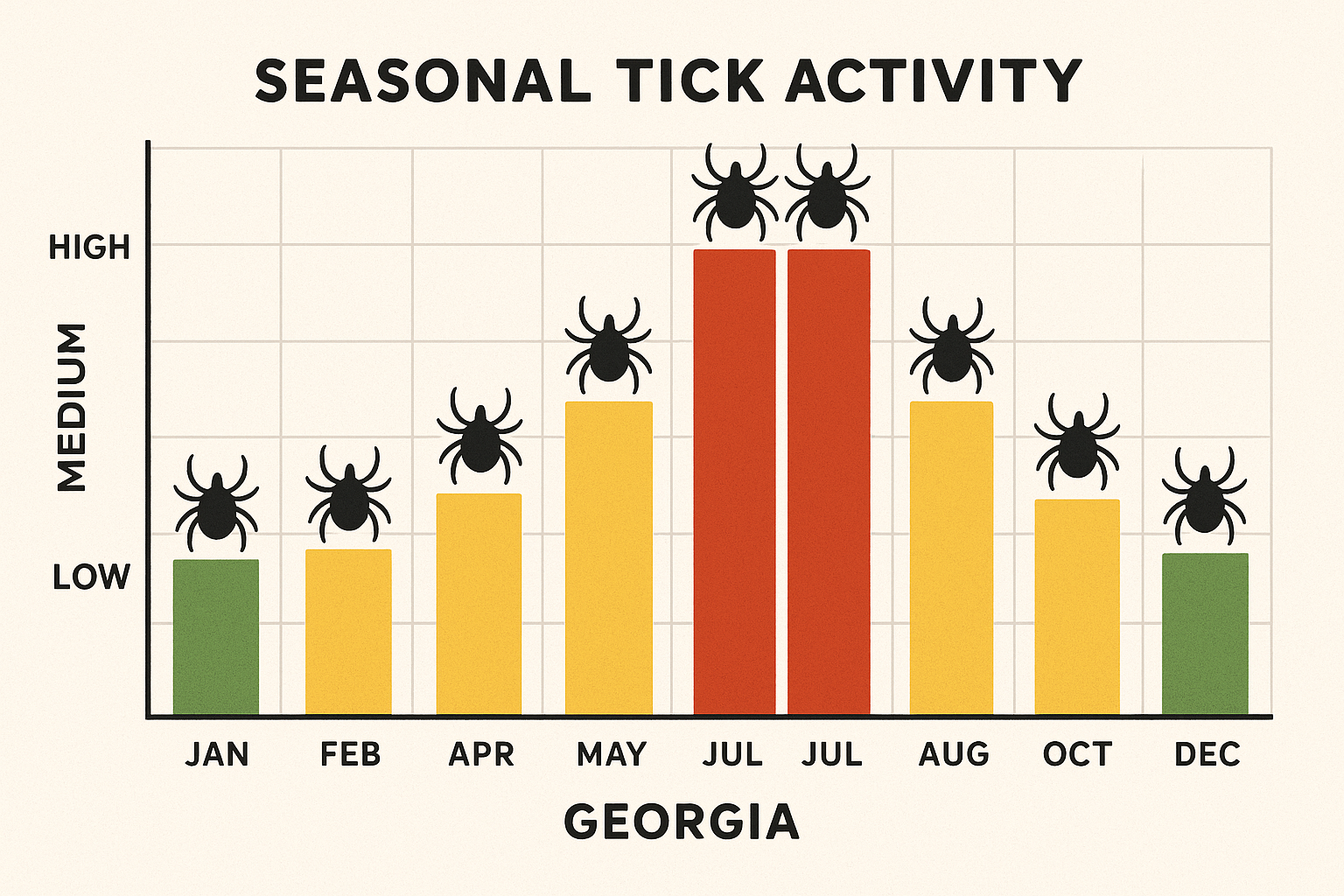
Understanding when ticks are most active is the cornerstone of an effective control plan. In Georgia, the seasonal activity chart shows a clear surge from May through July, followed by a secondary bump in early fall. Those months coincide with the life‑stage transitions that make ticks most eager to latch onto a host. Below the chart, you’ll see a sharp dip during the cooler winter months when both temperature and humidity drop below the thresholds ticks need to stay active.
Why Temperature and Humidity Matter
Ticks are ectothermic, meaning their body temperature matches the environment. When daily highs consistently sit between 65°F and 85°F, metabolic processes speed up, and larvae, nymphs, and adults become more aggressive in seeking blood meals. Humidity is equally critical; ticks lose water rapidly through their cuticle, so they gravitate toward moist microclimates—under leaf litter, tall grass, or shaded yard corners—when relative humidity stays above 80%. In Georgia’s humid spring, the combination of warm days and lingering moisture creates a perfect breeding ground.
Host Animal Behavior Drives the Peaks
Spring awakens the primary hosts that ticks rely on: white‑tailed deer, raccoons, and ground‑dwelling birds. As these animals move through neighborhoods searching for fresh forage, they transport ticks from wooded corridors into suburban lawns. Meanwhile, backyard pets—especially dogs that love to explore the edges of the property—pick up ticks and bring them right to your doorstep. By late summer, many of those hosts begin to reduce activity, which explains the dip after July, but a second, smaller surge appears in September as deer start their autumn migrations.
Actionable Timing Recommendations
- Early‑Spring Pre‑emptive Treatment (late February – early March): Apply a perimeter barrier before ticks emerge from overwintering sites. This creates a protective “tick shield” that reduces the number of nymphs that can climb onto host animals.
- Mid‑Spring Boost (mid‑April): Follow up with a targeted spray on high‑risk zones—tall grass, leaf piles, and shaded fence lines—when the first wave of larvae begins to hatch.
- Late‑Summer Follow‑up (late August – early September): Treat again as the second generation of nymphs seeks hosts. This timing also aligns with the tail end of the mosquito season, allowing you to address two pests in one service.
- Annual Inspection (October): Conduct a walk‑through with a professional to identify any lingering hotspots before the ticks enter their dormant phase.
By syncing your treatment schedule with these biological cues, you’ll dramatically cut the chance of ticks establishing a foothold in your yard. Remember, a single missed window can allow an entire cohort of ticks to reproduce, leading to a cascade of infestations the following year.
Local Data Insight
Our neighboring partner, Mosquito Joe Suwanee, tracks broader pest trends across the region. Their data shows a parallel rise in mosquito activity during the same May‑July window, reinforcing the importance of a coordinated approach to outdoor pest management. When you schedule a tick treatment with Anthem Pest Control, we can also assess mosquito breeding sites, giving you a comprehensive shield against both nuisances.
Keeping an eye on the seasonal chart, monitoring weather patterns, and acting at the right moments will keep your family and pets safe from tick‑borne diseases. Stay ahead of the cycle, and let the experts handle the heavy lifting—your yard will thank you.
Treatment Options – DIY vs. Professional Services
DIY Tick Control: What’s Available and What It Misses
Homeowners often reach for over‑the‑counter acaricides, yard sprays, or pet‑wearable collars when they spot a tick problem. Common products include permethrin‑based lawn treatments, spray‑on foggers, and “tick‑off” collars that claim to repel or kill on contact. While these solutions can provide a quick sense of action, they usually target only the adult stage of ticks and leave larvae and nymphs untouched. Moreover, most DIY formulas are designed for short‑term knock‑down rather than long‑term population suppression, meaning the tick pressure often returns once the chemicals degrade.
The Hidden Risks of DIY Applications
Applying chemicals without proper training can create more problems than it solves. Consider these pitfalls:
- Chemical drift: Spraying on a windy day can carry residues onto neighboring lawns, playgrounds, or even inside your home, exposing children and pets to unnecessary toxins.
- Resistance buildup: Repeated use of the same active ingredient gives ticks a chance to develop resistance, rendering future treatments ineffective.
- Pet and child exposure: Many acaricides are toxic if ingested or inhaled. A careless application near pet feeding areas or children’s play zones can lead to skin irritation, respiratory issues, or more serious health concerns.
- Incomplete coverage: Without a systematic inspection, homeowners often miss hidden hotspots such as under decks, dense shrubbery, or the undersides of outdoor furniture where ticks thrive.
These risks underscore why a DIY approach, while tempting, rarely delivers the comprehensive protection a family truly needs.
Why a Licensed Professional Makes a Difference
Professional pest‑control technicians bring a blend of expertise, equipment, and accountability that DIY cannot match. First, a licensed expert conducts a thorough inspection to identify tick hotspots, assess habitat conditions, and determine which life stages are present. This diagnostic step informs a targeted treatment plan rather than a blanket spray.
Second, professionals use calibrated applicators and industry‑approved formulations that achieve the right droplet size and coverage depth, ensuring the product penetrates leaf litter, soil, and tick shelters. Third, reputable companies like Anthem Pest Control schedule follow‑up visits to monitor effectiveness, re‑treat if necessary, and adjust strategies based on seasonal tick activity.
Finally, many professional services back their work with guarantees—if ticks persist after the agreed‑upon treatment window, the company will revisit the site at no extra cost. This level of confidence is rarely offered with a DIY kit.
Anthem Pest Control’s Tailored Approach
Anthem Pest Control doesn’t rely on a one‑size‑fits‑all spray schedule. Instead, the team designs a custom plan that aligns with your property’s unique layout and your family’s safety concerns. Typical components include:
- Spot‑on spraying: Precise applications to identified tick habitats, such as the base of trees, mulch beds, and animal shelters, reducing chemical use while maximizing impact.
- Perimeter barriers: A continuous, low‑drift treatment around the property’s outer edge creates a protective “moat,” preventing ticks from migrating onto your lawn.
- Pet‑safe options: When pets share the yard, Anthem selects EPA‑registered products with low toxicity to animals, and they can also apply pet‑specific collars or topical treatments as part of an integrated strategy.
Each of these steps is documented, and homeowners receive a clear report outlining where products were applied, the active ingredients used, and any recommended follow‑up actions.
Integrated Pest Management at the Core
Anthem’s philosophy follows Integrated Pest Management (IPM) principles, which blend cultural, mechanical, and chemical tactics for sustainable tick control. First, the company advises homeowners on habitat modification—regularly mowing grass, clearing leaf litter, and trimming shrubbery to reduce humidity, a key factor for tick survival. Second, mechanical controls such as tick tubes or bait stations are employed where appropriate, providing a non‑chemical option that targets rodents, a primary host for many tick species.
Only after these steps are evaluated does Anthem introduce targeted chemical treatments, and even then, the lowest effective dose is used. This layered approach not only curtails tick populations more reliably but also minimizes the environmental footprint and protects non‑target organisms, including beneficial insects and wildlife.
By combining thorough inspection, precise application, and ongoing monitoring, professional services deliver a level of safety and effectiveness that DIY kits simply cannot guarantee. For homeowners in Suwanee, Georgia, where the humid climate fuels tick activity from early spring through late fall, partnering with a trusted provider like Anthem Pest Control ensures peace of mind and a healthier outdoor space for the whole family.
Comparing Tick‑Control Pricing Plans
When it comes to protecting your Suwanee yard from ticks, the price you pay today often determines how secure you’ll feel tomorrow. Anthem Pest Control offers three transparent pricing structures that fit a range of budgets and lifestyles: a one‑time treatment, a quarterly subscription, and an annual plan. Understanding the differences helps you avoid surprise fees and choose the option that delivers the best value for your property.

One‑Time Treatment
This option is perfect for homeowners who need an immediate fix—perhaps after discovering a tick hotspot in the garden. You pay a single upfront fee, and Anthem’s technicians perform a thorough perimeter and hotspot application. The service typically includes one visit, a detailed inspection, and a 30‑day guarantee that covers any re‑treatment if ticks reappear.
Quarterly Subscription
The quarterly plan spreads the cost across four visits per year, aligning with the seasonal peaks of tick activity in Georgia. Each visit includes a full‑yard treatment, a follow‑up inspection, and a 60‑day warranty on each application. The subscription model also grants you priority scheduling and a discounted rate compared to buying four separate one‑time treatments.
Annual Plan
For the most comprehensive protection, the annual plan bundles six visits—every two months—ensuring your yard stays covered before, during, and after the high‑risk months. This package includes unlimited re‑treatments within the year, a 90‑day warranty on each service, and a complimentary inspection of pet‑friendly zones to verify that all products meet safety standards for dogs and cats.
| Plan | Number of Visits | Re‑treatment Policy | Warranty Length | Typical Cost (USD) |
|---|---|---|---|---|
| One‑Time Treatment | 1 | Included within 30 days | 30 days | $199–$259 |
| Quarterly Subscription | 4 | Included within each 60‑day window | 60 days | $649–$749 (≈$162–$187 per visit) |
| Annual Plan | 6 | Unlimited within the year | 90 days | $899–$999 (≈$150–$167 per visit) |
Cost‑Benefit Analysis: Upfront Savings vs. Long‑Term Protection
At first glance, the one‑time treatment appears cheapest because you only pay once. However, the limited 30‑day warranty means any resurgence after that period requires a new service, potentially doubling your expense within a year. The quarterly subscription reduces per‑visit cost by roughly 15 % and adds a longer warranty, which translates to fewer unexpected re‑treatments.
The annual plan, while the highest initial outlay, spreads the cost over six applications and locks in the lowest per‑visit price. Because it includes unlimited re‑treatments, you avoid extra charges if a tick surge occurs after heavy rain or a change in landscaping. Over a 12‑month horizon, many homeowners find the annual plan saves $150–$250 compared with stacking four quarterly subscriptions or repeatedly purchasing one‑time services.
For a clear breakdown of Anthem’s transparent pricing, visit the Anthem Tick Control Cost Suwanee page. The site lists exact figures for each plan, any applicable discounts, and the specific products used in each treatment.
Choosing the Right Plan for Your Yard
Start by measuring your property. Small yards (under 5,000 sq ft) often do well with a one‑time treatment if you have minimal foliage and no pets that roam outdoors. Larger properties, especially those with dense landscaping, benefit from the regular touchpoints of a quarterly or annual plan to keep the tick population suppressed.
If you have dogs or cats that spend time in the yard, the annual plan’s pet‑friendly inspection becomes a decisive advantage. The extra safety checks ensure that any residual chemicals stay well below toxic thresholds, giving you peace of mind while your pets explore the grass.
Budget constraints also play a role. Homeowners who prefer predictable monthly expenses may opt for the quarterly subscription, which can often be billed in four equal installments. Those who can afford a larger upfront payment—and want the most comprehensive coverage—should consider the annual plan, which locks in the best rate and eliminates surprise re‑treatment fees.
In short, match the plan to three simple criteria: yard size, pet presence, and budget comfort level. By aligning these factors with Anthem’s clear pricing options, you’ll secure a tick‑free yard without hidden costs or last‑minute emergencies.
Protect Your Home Today with Anthem Pest Control
Ticks are more than a nuisance—they carry Lyme disease, Rocky Mountain spotted fever, and other serious illnesses that can affect anyone who spends time outdoors. In Suwanee, the peak tick season stretches from early spring through late fall, making timely treatment essential to keep your yard, patio, and pet areas safe. Ignoring the window can let a tiny parasite establish a permanent foothold, turning a simple backyard walk into a health risk for the whole family.
Why Choose Anthem for Tick Control in Suwanee?
Anthem Pest Control combines decades of entomology expertise with a safety‑first philosophy that puts your loved ones and pets at the forefront. Their technicians are certified, continuously trained, and equipped with EPA‑approved products that target ticks without lingering residues. Transparency is baked into every estimate; you’ll see a clear, itemized price list before any work begins, so there are no surprise fees. Because Anthem serves homeowners across the U.S., they bring a broad knowledge base while still tailoring each plan to Suwanee’s unique climate and tick species.
Take the First Step – Free, No‑Obligation Quote
Ready to protect your home before the next tick surge? Anthem offers a complimentary, no‑obligation quote that outlines exactly what’s needed for your property. Simply call 877‑371‑8196 or email the team, and a local specialist will schedule a quick assessment at a time that fits your calendar. Their friendly staff will walk you through the treatment process, answer any safety questions, and recommend a maintenance schedule to keep ticks at bay year after year.
Don’t let ticks dictate your outdoor plans. Visit Anthem Pest Control today, schedule your free quote, and enjoy a tick‑free yard with confidence.