Understanding Rat Risks in Brookhaven Neighborhoods

Why Brookhaven Attracts Rodents
Brookhaven’s leafy streets, mature trees, and well‑tended gardens create an ideal buffet for rats. The abundance of mulch, compost bins, and outdoor pet food provides easy, year‑round nourishment. At night, when most residents are indoors, these critters emerge to explore the quiet backyards, taking advantage of the low human activity and plentiful shelter.
Common Rat Species and Their Habits
The two species you’ll most likely encounter are the Norway rat (Rattus norvegicus) and the roof rat (Rattus rattus). Norway rats prefer ground‑level burrows near dense vegetation, while roof rats are excellent climbers that nest in attics, eaves, and dense shrubbery. Both species are nocturnal, highly adaptable, and capable of squeezing through openings as small as a half‑inch.
Health Hazards Linked to Rat Infestations
Rats are more than a nuisance; they are vectors for serious diseases. Their urine, droppings, and saliva can carry Hantavirus, which may cause severe respiratory illness. Leptospirosis, another bacterial infection, spreads through contaminated water and can affect the skin, kidneys, and liver. Even without disease transmission, rat allergens can trigger asthma attacks and allergic reactions in sensitive individuals.
Property Damage Caused by Gnawing, Nesting, and Contamination
Rats have a relentless need to gnaw, which can compromise electrical wiring, plumbing, and structural wood. A single chew on a hidden wire can spark a fire hazard. Their nests, built from shredded insulation, paper, and plant material, not only damage insulation but also attract other pests. Moreover, rats contaminate stored food, pantry items, and even pet supplies with droppings, rendering them unsafe for consumption.
Seasonal Activity Patterns: Spring and Fall Peaks
Rats become especially active during the milder months of spring and fall. In spring, young rats emerge from burrows, seeking new territories and food sources. Fall brings cooler temperatures, prompting rats to seek warm indoor spaces before winter sets in. Recognizing these seasonal spikes helps homeowners anticipate and address problems before they spiral.
The Cost of Ignoring Early Signs vs. Prompt Control
Delaying treatment can quickly turn a minor sighting into an extensive infestation. Early signs—such as gnaw marks, droppings, or faint scratching noises—are inexpensive to investigate and often resolve with targeted baiting or sealing entry points. In contrast, a full‑scale infestation may require extensive trapping, structural repairs, and possible health‑related expenses, easily running into thousands of dollars. Investing in a professional inspection and timely control not only protects your health but also preserves the value of your home.
Spotting Early Signs of a Rat Infestation
Common visual indicators
Rats leave a trail of clues once you know what to look for. Fresh droppings—about ½ inch long, dark and tapered—often appear in clusters near food sources or along wall edges. Urine stains leave a faint yellow or brown sheen, especially on wood, plastic, or fabric, and may cause a slight discoloration that becomes more pronounced over time.
Gnaw marks are another giveaway; rats’ incisors leave clean, V‑shaped chew holes on cardboard, wood, and even wiring. Look for shredded paper or insulation that resembles a nest, and greasy, smudged runways along baseboards where their fur leaves a dark residue.
Auditory clues
At night, the house can sound like a tiny construction site. Listen for scratching, scurrying, or squeaking noises behind walls, ceilings, and attics, especially when the home is quiet. A sudden burst of activity followed by silence often means a rat has retreated to a hidden nest.
Olfactory hints
Rats emit a strong, musky odor that intensifies when urine or nesting material accumulates. The smell is often described as a mix of ammonia and stale cheese and can linger even after the pests are gone.
Typical kitchen scenario
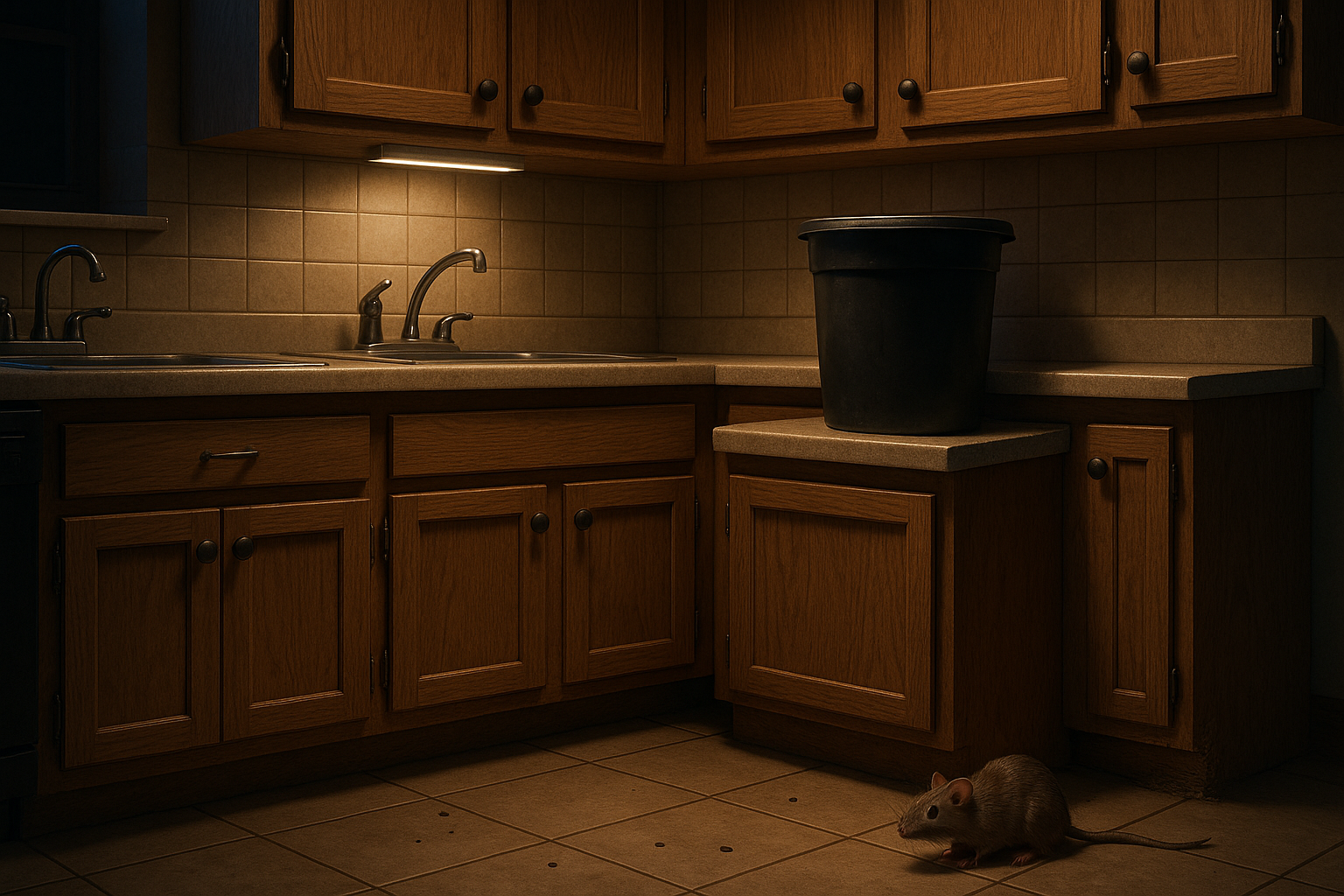
In a kitchen, the most common hotspots are the trash can, pantry shelves, and the space behind appliances. You’ll often find droppings on the floor near the garbage bin, along the baseboard under the sink, and on the lower shelves of a pantry where food crumbs collect. Gnaw marks may appear on the sides of cardboard boxes, on the plastic coating of trash cans, and on wooden cabinet doors. Grease‑smudged runways are especially visible on the underside of countertops where rats travel to reach food.
Rat vs. mouse signs
While both rodents leave droppings, mouse droppings are smaller—about ¼ inch long and more pointed—whereas rat droppings are larger and more robust. Mice tend to gnaw on softer materials like paper, while rats can chew through tougher surfaces such as wood, plastic, and even thin metal. Additionally, mouse runways are usually narrower, while rat pathways are wider and may show more obvious grease smears.
Safe DIY inspection tips
- Gear up: Wear disposable gloves and a dust mask to avoid direct contact with droppings or urine.
- Light it up: Use a bright flashlight or headlamp to inspect dark corners, behind appliances, and inside crawl spaces.
- Document: Take photos of any evidence you find; this helps professionals assess the severity and plan treatment.
- Mark locations: Use a piece of tape or a marker to note where droppings or gnaw marks appear, so you can track patterns over time.
When you spot several signs in one area, a colony is likely present. Contact Anthem Pest Control for safe, fast treatment.
Effective Treatment and Prevention Strategies
When rats have taken up residence in your home, a quick fix rarely works. A systematic, professional approach is the only way to eliminate the current infestation and keep the critters out for good.

Initial Professional Inspection
Our certified technicians begin with a thorough walk‑through of every accessible area—attic, crawl space, basement, kitchen, and exterior perimeters. Using flashlights, moisture meters, and infrared cameras, they look for droppings, gnaw marks, grease trails, and nesting material. Identifying the exact pathways and harborage sites is crucial; missing a single hidden entry can allow the colony to rebound within days.
During the assessment we also evaluate sanitation habits and structural vulnerabilities. This data drives the customized treatment plan and helps you understand why certain actions, such as clearing food debris, are as important as trapping.
Sealing Entry Points
Rats can squeeze through openings the size of a quarter. Common gaps appear around utility pipes, vent ducts, door thresholds, and the foundation slab. Once identified, we recommend durable, rodent‑proof materials:
- Steel wool packed tightly into small holes, then covered with caulk for a flexible seal.
- Hardware cloth (¼‑inch mesh) for larger gaps around vents and crawl‑space vents.
- Exterior-grade caulk to smooth cracks around windows and door frames.
All sealing work is performed with EPA‑approved products that won’t harm pets or children, ensuring a long‑lasting barrier against future invasions.
Trapping Options
We offer three primary trap types, each suited to different scenarios:
- Snap traps – inexpensive, instant‑kill devices. Best placed along walls, behind appliances, and in dark corners where rats travel.
- Live‑catch traps – humane cages that allow you to release captured rodents far from your property. Ideal for homeowners who prefer a non‑lethal approach.
- Electronic traps – battery‑powered units that deliver a quick, high‑voltage shock. They’re reusable, low‑maintenance, and eliminate the mess of dead rats.
Placement tips include setting traps perpendicular to the wall, baiting with peanut butter or dried fruit, and checking them daily for quick removal.
Bait Stations and Rodenticides
When an infestation is extensive, bait stations become a vital tool. They contain tamper‑proof containers with EPA‑registered rodenticides, reducing accidental exposure to children and pets. Legal restrictions vary by state, so our technicians stay current on local regulations and handle all licensing paperwork.
Proper usage means rotating active ingredients to prevent bait shyness, positioning stations out of reach of non‑target animals, and monitoring consumption levels. Safety is never an afterthought; we wear gloves, use protective eyewear, and follow label directions to the letter.
Integrated Pest Management (IPM) Approach
IPM blends three core pillars—sanitation, exclusion, and monitoring—to create a sustainable defense:
- Sanitation: Remove food sources by storing grain, pet food, and garbage in sealed containers.
- Exclusion: Seal every discovered entry point and reinforce vulnerable structural elements.
- Monitoring: Install discreet glue boards or motion‑activated cameras to track activity after treatment.
By addressing the problem from all angles, IPM reduces the need for repeated chemical applications and keeps your home rat‑free year after year.
Pricing Transparency
Homeowners appreciate knowing exactly what they’re paying for. Below is a typical price range for our rat‑control services, based on a standard single‑family residence:
| Service | Price Range | What’s Included |
|---|---|---|
| Initial Inspection | $99–$129 | Comprehensive walkthrough, entry‑point identification, and treatment recommendation. |
| Full‑Home Treatment | $279–$349 | Sealing, trapping, bait stations, and a follow‑up visit. |
| Quarterly Maintenance Plan | $139–$169 per visit | Inspection, trap servicing, and preventive sealing. |
All quotes are upfront, with no hidden fees. If additional work is required—such as extensive structural repairs—we discuss the cost before any extra steps are taken.
Why Choose Anthem Pest Control
Anthem Pest Control stands out because our technicians are fully certified, use only EPA‑approved products, and back every job with a satisfaction guarantee. Our transparent pricing model means you never face surprise charges, and our integrated approach ensures the problem is solved, not just masked.
Ready to reclaim your home? Call us at 877‑371‑8196 or visit anthempest.com to schedule your inspection today.
Protect Your Home with Anthem Pest Control Today
When you spot the first sign of a pest—whether it’s a trail of ants, a rustle in the attic, or tiny droppings—acting fast protects both your family’s health and your property’s value. Early detection lets us target the problem before it spreads, saving you time, stress, and expensive repairs.
Why Anthem Stands Out in Brookhaven
- Safe, effective solutions: We use EPA‑approved products that eliminate pests while keeping children and pets safe.
- Affordable pricing: Transparent, upfront quotes mean no hidden fees.
- Local expertise: Our technicians are trained specifically for Brookhaven’s seasonal pests, from termites to mosquitoes.
Our treatment plans are customized. We start with a thorough inspection, identify entry points, and then apply targeted products that address the specific species you’re dealing with. Because we know Brookhaven’s climate shifts, we also schedule follow‑up visits to keep your home pest‑free year‑round.
Safety is our top priority. All chemicals are applied according to state regulations, and our technicians wear protective gear to ensure no residue is left on surfaces your family touches.
We back every service with a free, no‑obligation inspection. Our technicians will walk you through the findings, explain the treatment plan, and give you a clear price before any work begins.
Ready to take the first step? Scheduling an inspection is hassle‑free—just click the button on our website or give us a call. We’ll fit you into a convenient time slot, arrive on schedule, and leave your home protected without any surprise costs.
Call us today at 877‑371‑8196 or visit Anthem Pest Control for your free quote. Your peace of mind is only a phone call or a few clicks away.