
Identifying Brown Marmorated Stink Bugs and Their Damage

What the brown marmorated stink bug looks like
Stink Bug Exterminator Decatur GA services often begin with proper identification of the brown marmorated stink bug (Halyomorpha halys), a medium-sized pest measuring ½ to ⅝ inch (12–16 mm) in length. Its back is mottled brown with a glossy sheen, and its most distinctive feature is a pair of dark, shield-shaped “V” markings that extend from the middle of the thorax to the wing tips. The antennae are long and segmented, and the legs end in tiny, claw-like tips that help the bug cling to smooth surfaces.
How they get inside your home
Homeowners searching for a stink bug exterminator Decatur GA often notice these pests gathering around lights first. Stink bugs are highly attracted to illumination, which makes windows, doors, and any lit vent easy entry points. During the fall, as temperatures begin to drop across Decatur, they seek shelter indoors, slipping through cracks around window frames, under siding, or behind outdoor lighting fixtures. Even a tiny gap—no wider than a pencil—can invite a swarm of these insects into your home.
Typical damage you’ll notice
- Agricultural crop loss: In orchards and fields, they pierce fruit, vegetables, and nuts, injecting enzymes that cause discoloration, premature ripening, and rot.
- Garden plant damage: Home gardeners see wilted leaves, speckled fruit, and stunted growth on tomatoes, peppers, beans, and ornamental shrubs.
- Indoor nuisance: Once inside, the bugs release a foul, garlic‑like odor when crushed. Their exoskeletons can leave oily stains on walls, countertops, and fabric.
Early warning signs for homeowners
Spotting a few individuals on a sunny window is often the first clue. Look for their shield‑shaped bodies in cracks, under appliances, or around baseboards. In late summer and early fall, you may notice large swarms gathering on exterior lights—an unmistakable signal that a larger infestation could follow.
Life cycle basics and peak infestation times
A professional stink bug exterminator Decatur GA understands that brown marmorated stink bugs overwinter as adults in protected spaces such as attics, garages, and wall voids. As temperatures rise in late spring across the Decatur area, they emerge to feed on plant sap, mate, and lay eggs on the undersides of leaves. Nymphs pass through five instar stages before becoming fully winged adults by midsummer. Because the adults are the ones that seek indoor shelter, the greatest indoor pressure in Decatur homes typically occurs from late summer through early winter, when they search for warm places to hibernate.
Understanding these identification cues and damage patterns helps you act quickly—whether that means sealing entry points, removing visible bugs, or calling a professional exterminator who knows how to treat both indoor and outdoor populations safely.
Seasonal Activity of Stink Bugs in Decatur, GA
A stink bug exterminator Decatur GA understands how the city’s humid subtropical climate creates an ideal breeding environment for the brown marmorated stink bug (Halyomorpha halys). Warm summers, mild winters, and consistent humidity give these insects a long window to reproduce, feed, and eventually seek shelter inside homes. By understanding how Decatur’s local weather patterns drive their yearly activity, homeowners can take proactive steps before an infestation becomes a serious nuisance.
Overview of Decatur’s Climate
Average high temperatures hover around 85°F (29°C) from June through August, while winter lows rarely dip below 30°F (‑1°C). Rainfall is evenly spread throughout the year, with a slight peak in spring. This combination of heat and moisture accelerates stink bug development cycles, allowing multiple generations to emerge before the first frost.
Month‑by‑Month Activity Levels
Stink bugs are most active when temperatures stay between 70°F and 90°F (21‑32°C). Below 60°F (15°C) they become sluggish, and once the first hard freeze arrives, they seek overwintering sites inside structures. Below is a quick snapshot:
- January–February: Low activity; bugs are deep in attic or wall voids.
- March–April: Emerging from winter shelters; early signs of indoor sightings.
- May: Moderate activity as new adults hatch and begin feeding outdoors.
- June–August: Peak outdoor activity; large populations build.
- September–October: Highest indoor intrusion as bugs hunt for warm overwintering spots.
- November–December: Declining movement; most have settled in protected indoor areas.
How Temperature and Humidity Influence Indoor Movement
When daytime highs stay above 75°F (24°C) and relative humidity exceeds 60%, stink bugs are comfortable outdoors, feeding on fruit trees and garden crops. As evenings cool or humidity spikes, they migrate toward the heat of homes—especially near windows, doors, and light fixtures. A sudden cold snap in early fall can trigger a rapid surge of indoor activity, catching homeowners off guard.
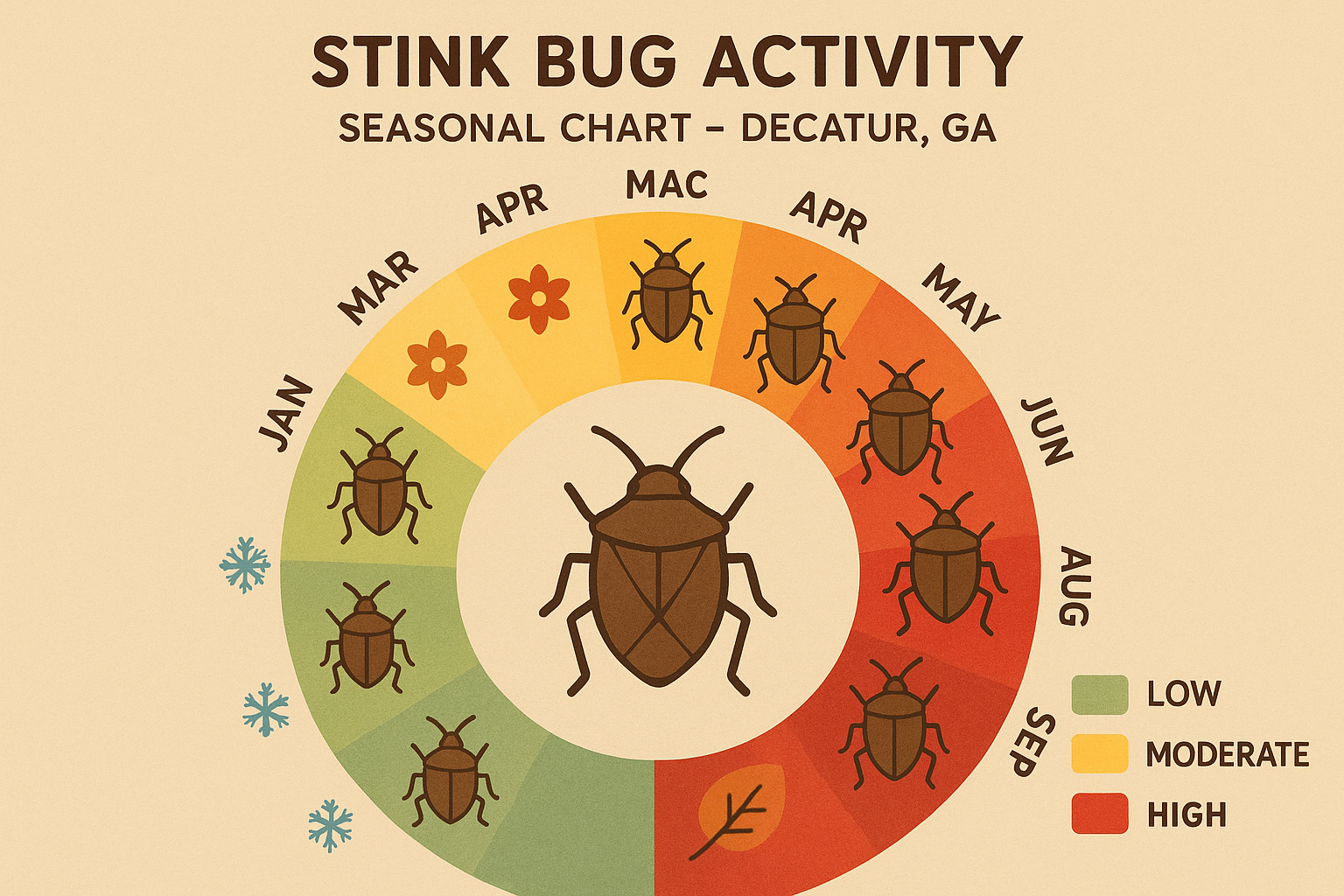
Seasonal Chart: Visualizing Activity Intensity
| Month | Activity Level |
|---|---|
| January | Low |
| February | Low |
| March | Low‑to‑Moderate |
| April | Moderate |
| May | Moderate |
| June | High |
| July | High |
| August | High |
| September | High |
| October | High |
| November | Low‑to‑Moderate |
| December | Low |
Best Months for Inspections and Treatments
Homeowners looking for a stink bug exterminator Decatur GA should schedule inspections during late May through early June—just before outdoor populations surge. Treating at this stage disrupts breeding cycles and significantly reduces the number of bugs that later attempt to enter homes. A follow-up treatment in early September targets the seasonal wave of indoor migration, sealing entry points before stink bugs settle in for winter. By aligning pest control services with Decatur’s seasonal peaks, you greatly minimize the risk of a late-season infestation inside your home.
EPA‑Approved Treatment Options for Stink Bugs

What the EPA Requires for Stink Bug Control
The U.S. Environmental Protection Agency (EPA) mandates that any pesticide used against stink bugs must be registered for that specific pest and demonstrate low risk to humans, pets, and non‑target organisms. EPA’s guidelines stress integrated pest management (IPM) as the first line of defense, encouraging homeowners and professionals to combine monitoring, exclusion, and only then, targeted chemical applications. This framework ensures treatments are both effective and environmentally responsible.
Low‑Toxicity Chemical Treatments
When chemicals are necessary, EPA‑approved products are formulated with reduced toxicity. Common options include pyrethroid‑based residual sprays and insect growth regulators that disrupt stink bug development without lingering hazards. Technicians apply these solutions along exterior perimeters—foundation cracks, window sills, and door frames—creating a protective barrier that intercepts bugs before they enter the home. Because the formulations break down quickly under sunlight, they minimize long‑term exposure while still delivering a lasting knock‑down effect.
Non‑Chemical Strategies That Work
Physical barriers are a cornerstone of EPA‑compliant IPM. Installing fine mesh screens on vents, sealing gaps with caulk, and using door sweeps block the insects’ primary entry points. For immediate removal, a high‑efficiency vacuum equipped with a HEPA filter can capture adult stink bugs without spreading their odor. Additionally, homeowners can deploy sticky traps or light‑based attractants around the property’s perimeter to monitor activity and reduce populations without a single drop of pesticide.
How Professionals Apply EPA‑Approved Solutions
Anthem Pest Control begins with a thorough inspection, identifying hotspots such as sunny walls, garden beds, and utility openings where stink bugs congregate. Technicians then map a targeted spray plan, focusing on high‑risk zones while avoiding over‑application. All products are applied using calibrated hand‑held sprayers or low‑pressure pump‑ups, ensuring a uniform coat that adheres to EPA label rates. Safety gear—including gloves, goggles, and respirators—is mandatory, and technicians always follow strict re‑entry intervals to protect occupants and pets.
Why Choosing EPA‑Approved Products Matters
Using EPA‑registered treatments safeguards your family’s health, keeps pets out of harm’s way, and preserves beneficial insects that help control other garden pests. These products undergo rigorous testing for acute toxicity, environmental persistence, and impact on water sources, giving homeowners confidence that the solution won’t create new problems. Moreover, compliance with EPA standards protects you from liability and ensures that any warranty or service guarantee from Anthem Pest remains valid.
Comparing Stink Bug Extermination Pricing Plans
When you call a pest‑control professional in Decatur, the first question you’ll hear is whether you want a one‑time fix or an ongoing plan. Both models aim to eliminate stink bugs, but they differ in how they spread the cost and the level of protection they provide.
One‑time treatment
A single‑visit service typically includes an initial inspection, a thorough application of a residual insecticide, and a follow‑up visit to ensure the bugs are gone. This option is best for homeowners who have a small, isolated infestation and want a quick resolution.
- Inspection: 30‑minute walk‑through to locate entry points.
- Applications: One full‑coverage spray, sometimes a second spot‑treatment if needed.
- Follow‑up: One visit within 2‑3 weeks to confirm results.
- Warranty: Usually 30‑day guarantee on effectiveness.
Quarterly maintenance plan
A maintenance contract spreads the work over four visits per year, each timed to the stink bug life cycle. The plan not only treats existing bugs but also builds a barrier that deters new invasions, giving you peace of mind through the hottest months.
- Inspection: Detailed assessment each quarter.
- Applications: Four scheduled sprays, covering interior and perimeter.
- Follow‑up: Post‑treatment checks to adjust dosage if needed.
- Warranty: Year‑long protection with a satisfaction guarantee.
Price ranges you’ll see in Decatur
Because Anthem Pest Control tailors each job to the home’s size and infestation severity, prices vary. Below is a typical band you can expect:
- One‑time treatment: $150 – $300 for a 1,500‑sq ft home with moderate bugs.
- Quarterly plan: $450 – $800 per year, covering up to 2,500 sq ft and including all follow‑ups.
Factors that push the cost higher include larger square footage, heavy infestations that require extra applications, and homes located near heavily wooded areas where stink bugs migrate from.
Evaluating value, not just price
Look beyond the sticker price. A one‑time spray may seem cheaper, but if you experience a resurgence each summer, the cumulative cost of repeat visits can exceed a maintenance plan. Quarterly service spreads the expense, reduces the chance of a full‑blown invasion, and often comes with a longer warranty, which translates into fewer emergency calls and less stress.
Ask yourself how often you’ve needed emergency treatments in the past year. If the answer is more than once, the maintenance plan likely offers a better return on investment.
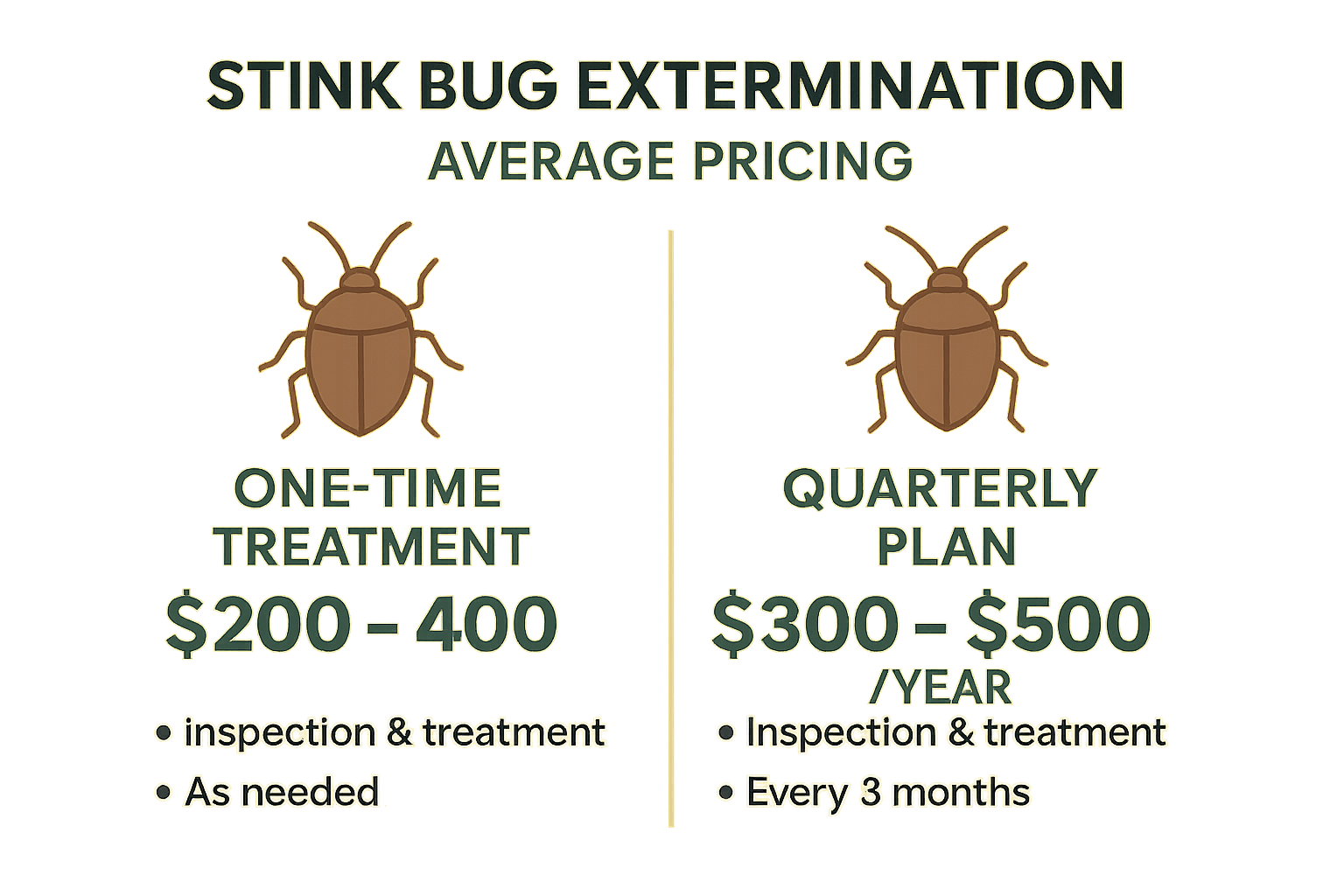
Visual side‑by‑side comparison
For a quick snapshot of the two options, see the infographic below. It breaks down the services, timing, and price bands at a glance, helping you decide which model aligns with your budget and peace‑of‑mind goals.
DIY Prevention Tips to Keep Stink Bugs Out
Seal Entry Points
Stink bugs love slipping through the tiniest cracks. By tightening your home’s envelope, you remove the highways they use to get inside.
- Apply a high‑quality silicone caulk around window frames, door jambs, and any visible gaps in siding.
- Inspect all exterior screens; replace torn mesh and re‑tension loose ones.
- Install door sweeps on all exterior doors, especially the back and side entries that see heavy foot traffic.
Landscape Management
What grows around your house can either invite or deter stink bugs. Keeping the perimeter tidy creates a natural barrier.
- Trim trees, shrubs, and vines at least two feet away from the foundation to eliminate bridge routes.
- Rake away leaf litter, fallen fruit, and mulch that sit directly against the walls.
- Avoid planting attractant species such as maple, oak, or ornamental pear within ten feet of the home; these trees release scents that stink bugs seek.
Indoor Habits
Even a well‑sealed house can become a bug magnet if indoor habits give them a reason to stay.
- During the peak season (late summer through early fall), keep interior lights off at night or use motion‑activated bulbs to reduce illumination that draws bugs.
- Swap traditional porch lights for yellow “bug lights,” which are less attractive to many flying insects.
- Vacuum corners, window sills, and light fixtures weekly; this removes any stragglers before they can establish a foothold.
Seasonal Preparation
Stink bugs start looking for shelter as temperatures dip, so a pre‑fall check can save you a lot of hassle.
- Walk the exterior of your home in early September and seal any new cracks that appear after summer storms.
- Apply a thin layer of diatomaceous earth or a low‑toxicity barrier spray around the foundation, paying special attention to vent openings.
- Consider a professional‑grade perimeter treatment if you’ve had a heavy infestation in previous years; a single application can act as a safety net for the winter months.
When DIY Isn’t Enough
Despite your best efforts, some signs tell you it’s time to call in the pros.
- Large numbers of bugs gathering on windows, light fixtures, or inside wall voids.
- Visible clusters in attics, crawl spaces, or behind stored items—areas you can’t easily reach.
- Repeated sightings after you’ve completed a full DIY seal‑up and landscape cleanup.
If any of these symptoms appear, a licensed exterminator can perform a targeted interior and exterior treatment, ensuring the bugs are eliminated before they cause the characteristic odor and potential damage to your home.
Protect Your Home with Anthem Pest Control
Stink bugs are easily recognized by their shield‑shaped, mottled brown bodies and the unmistakable odor they release when disturbed. In Decatur, they become most active from late summer through early fall, when cooler nights drive them indoors in search of warmth and shelter.
Homeowners can try DIY measures such as light traps, vacuuming, or sealing entry points, but these methods often provide only temporary relief. Professional options include targeted insecticidal sprays, perimeter treatments, and interior fogging that penetrate cracks and crevices where bugs hide. Choosing the right approach depends on infestation level, home size, and timing.
A licensed, EPA‑compliant pest service guarantees that the chemicals used have been rigorously evaluated for human and pet safety, and that technicians follow strict application protocols. This reduces the risk of off‑target damage and ensures the treatment remains effective throughout the season. Moreover, EPA‑registered providers carry the insurance and warranties required for peace of mind.
Anthem Pest Control brings years of experience tackling stink bugs across the United States, backed by certified technicians who stay current on the latest EPA‑approved products. Their pricing is transparent—no hidden fees, just a clear breakdown of labor and materials—so homeowners know exactly what they’re paying for. With a nationwide network, Anthem can dispatch a team to Decatur quickly, ensuring the problem is addressed before it spreads.
If you prefer a plan that fits your home’s unique layout and infestation severity, Anthem will design a customized program at no obligation. Simply request a free quote and let the experts handle the rest.
If you’re ready to stop stink bugs from turning your home into an unwanted summer guest, let Anthem Pest Control handle the problem safely and affordably. Our certified technicians use EPA‑approved treatments and tailor a plan that fits your home’s size and infestation level. Call us today at 877-371-8196 for a free quote, or visit our website to schedule an inspection.