Recognizing Stink Bugs in Buford, GA
Overview of the species you’ll meet
In Buford, the most common invader is the brown‑marmorated stink bug (Halyomorpha halys). Originating from East Asia, it arrived in the United States in the late 1990s and quickly spread throughout the Southeast, including Georgia. Alongside this invasive guest, homeowners also encounter native stink bugs such as the green stink bug (Acrosternum hilare) and the southern green stink bug (Nezara viridula). While the native varieties tend to be smaller and less aggressive, the brown‑marmorated stink bug is the one most likely to trigger a call to Anthem Pest Control because of its sheer numbers and its habit of seeking shelter inside homes.
Key identification features
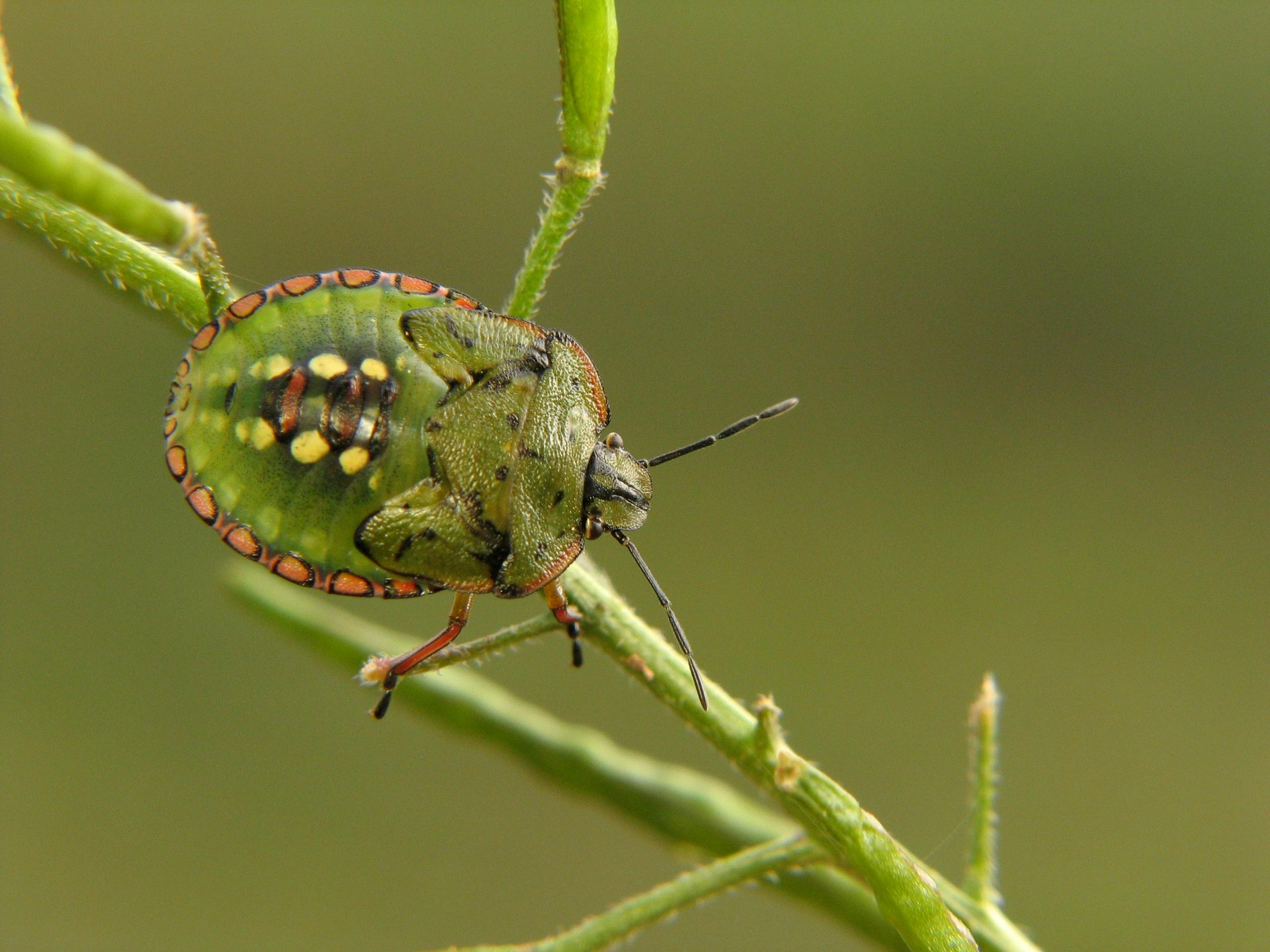
Stink bugs are unmistakable once you know what to look for. Adults measure roughly ½‑¾ inch in length, giving them a compact, shield‑shaped silhouette that fits comfortably on the palm of your hand. Their exoskeleton displays a mottled blend of brown‑gray tones, often with faint amber or reddish highlights along the edges of the “shield.” The most reliable giveaway is the defensive odor released when the insect is crushed or disturbed—an unpleasant, pungent smell that can linger for minutes. If you spot a bug that fits these dimensions, has a flat, triangular back, and emits that characteristic stink, you’re likely looking at a brown‑marmorated stink bug.
Typical entry points and hiding spots
Stink bugs are expert hitchhikers and opportunistic invaders. In Buford homes they most often slip in through eaves and roof overhangs, where they can crawl along the underside of shingles. Cracked or torn window screens provide a direct pathway into living spaces, while gaps in siding, especially around utility penetrations, act as silent doors. Once inside, they favor warm, sheltered locations: the kitchen pantry (where they can feast on fruits and vegetables), the basement (cooler, damp areas), and even the attic where they hide in insulation or stored boxes awaiting the first chill of autumn.
Seasonal appearance patterns
Understanding the bug’s calendar helps you stay one step ahead. Adult stink bugs emerge in late summer, typically in August, and begin their search for overwintering sites as temperatures dip. By early September, you’ll notice an uptick in indoor sightings as they congregate near heat sources. The peak of homeowner encounters usually occurs from mid‑September through early November, after which the bugs enter a dormant state within walls, crawl spaces, or other protected crevices. Knowing this window lets you schedule a pre‑emptive treatment with Anthem Pest Control before the infestation reaches its height.
Quick visual cue
Below is a close‑up macro photograph that captures the texture and shape of a brown‑marmorated stink bug. Use this image as a reference when you’re checking the corners of your home or sorting through pantry items.
Why Stink Bugs Matter – Damage and Health Concerns
Agricultural and Garden Damage
Stink bugs may look harmless, but their feeding habits can turn a thriving garden into a disappointment. By piercing fruit, vegetables, and ornamental plants with their needle‑like mouthparts, they inject digestive enzymes that break down plant tissue. The result is wilting leaves, discolored fruit, and “sunken” spots that never fully mature. Home gardeners in Buford often notice a sudden drop in tomato yield, blemished blueberries, or wilted roses—all classic signs of stink‑bug feeding. Over a single growing season, the cumulative loss can equal dozens of dollars in wasted produce and the cost of replacing damaged plants.
Household Nuisance
When stink bugs feel threatened, they release a pungent liquid from their abdomen. That defensive spray stains walls, ceilings, and fabric with a brownish‑orange mark that is notoriously difficult to remove. The odor, reminiscent of cilantro gone sour, can linger for days, making living spaces feel uninviting. A handful of bugs trapped in a kitchen cabinet or attic can quickly become a visible and olfactory nuisance, prompting homeowners to scramble for cleaning supplies instead of enjoying their home.
Allergic Reactions and Health Concerns
Most people experience only a mild irritation when a stink bug brushes against their skin, but sensitive individuals may develop a red, itchy rash. In rare cases, the proteins in the bug’s defensive fluid can trigger respiratory symptoms such as sneezing, coughing, or shortness of breath—especially for those with pre‑existing asthma or allergies. While the reaction is not life‑threatening, it adds another layer of inconvenience and can turn a simple “bug problem” into a health concern for the whole household.
Setting the Record Straight: No Disease Transmission
One common myth is that stink bugs spread diseases to humans. The scientific consensus is clear: stink bugs do not carry pathogens that infect people. Their primary impact is mechanical—damage to plants and the potential for allergic responses. By debunking this misconception, homeowners can focus on practical solutions—like sealing entry points and scheduling professional treatments—rather than worrying about invisible germs.
Economic Ripple Effects for Buford Homeowners
Beyond the direct damage to gardens and interiors, stink bugs impose hidden costs. Repeated cleaning, replacement of stained fabrics, and lost harvests add up quickly. Moreover, a severe infestation can lower a property’s curb appeal, affecting resale value. Early intervention is the most cost‑effective strategy. By addressing the problem before populations explode, homeowners avoid the steep price of emergency treatments and extensive repairs. Anthem Pest Control recommends a proactive inspection in early spring, when stink bugs first seek shelter, to keep both your garden and your home intact.
Seasonal Activity of Stink Bugs in Buford
The seasonal chart below gives a quick, month‑by‑month snapshot of stink bug activity in Buford, GA. From the dormant hush of January to the frantic scramble of October, each bar reflects the typical population pressure you can expect around your home. Use this visual as a planning tool—knowing when bugs are most active lets you schedule inspections before they become a nuisance.
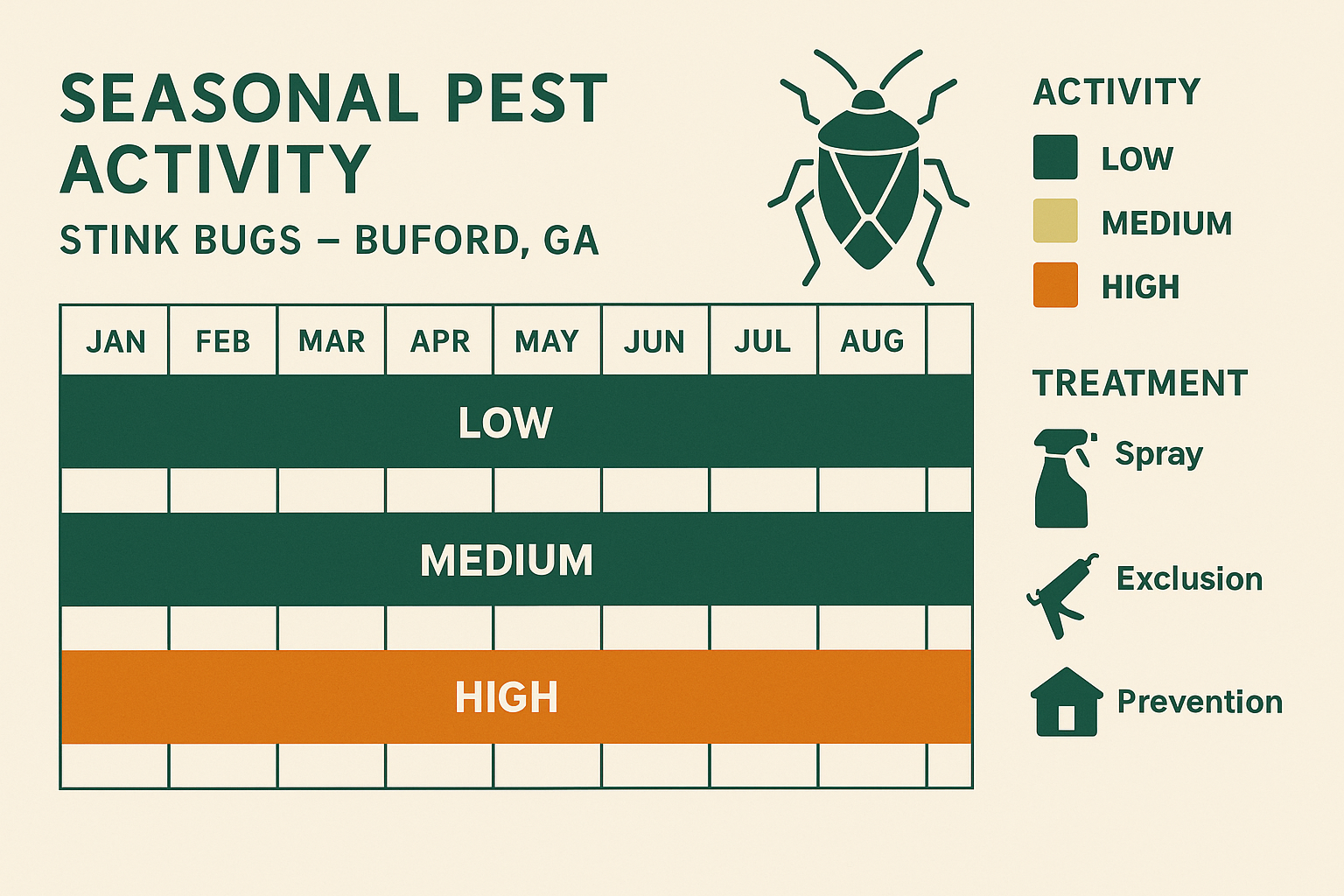
August through October are the unmistakable peak months. As daytime temperatures climb above 80°F and the nights stay warm, adult stink bugs finish their summer feeding and start searching for a warm, dry place to overwinter. That’s why you’ll often find them clustered in attic insulation, wall voids, or even inside kitchen cabinets during these months.
Winter months—December through February—show the lowest activity on the chart. Most bugs have already found shelter, and outdoor populations shrink dramatically. However, Buford’s mild winters mean a few stragglers can linger, and indoor colonies can persist if undetected. Regular indoor monitoring, especially around entry points, remains crucial even when the chart reads “low.”
Timing your treatments to the chart maximizes effectiveness. A pre‑emptive exterior spray applied in late May or early June creates a chemical barrier before the bugs begin their mass migration toward homes. Then, an interior barrier treatment in early September—just as the peak window opens—helps seal cracks and treat any bugs that have already slipped inside.
Buford’s local climate amplifies these patterns. The city sits in a humid subtropical zone, delivering hot, humid summers and relatively mild winters. Frequent summer thunderstorms keep foliage lush, providing abundant feeding sites, while the occasional early‑fall cold snap can trigger an accelerated move indoors. Understanding these micro‑climatic cues lets you anticipate shifts in bug behavior before they happen.
Practical tip: schedule a professional inspection in late April, when the chart indicates rising activity but before the first major wave. Follow up with the recommended exterior spray, then plan a second visit in early September for the interior barrier. By aligning your pest‑control calendar with the seasonal activity chart, you’ll keep stink bugs at bay while avoiding unnecessary treatments.
Treatment Options – DIY vs. Professional Services
DIY Approaches You’ll Find Around Buford
Many Buford homeowners start with a do‑it‑yourself (DIY) plan because it feels cheaper and more immediate. The most common DIY tactics include:
- Perimeter sprays: Aerosol or pump‑spray insecticides applied around doors, windows, and foundation cracks.
- Indoor traps: Light‑or‑heat traps that lure bugs into a sticky surface or a collection jar.
- Vacuuming: A quick way to remove visible stink bugs from walls, ceilings, and floorboards.
- Natural repellents: Homemade mixtures such as neem oil, garlic spray, or essential‑oil blends that claim to deter stink bugs.
These methods can provide short‑term relief, especially when you catch a few stragglers early in the season. However, they rarely address the root cause—an established population hiding in wall voids, attic spaces, or landscaping.
Why DIY Often Falls Short
Even the most diligent DIYer runs into three major limitations:
- Inconsistent coverage: Hand‑spraying a perimeter leaves gaps, and indoor traps capture only the bugs that wander into their reach.
- Health hazards: Over‑the‑counter sprays may contain pyrethroids or other chemicals that can irritate skin, eyes, or lungs, especially in homes with children or pets.
- Repeated applications: Stink bugs reproduce quickly. A single spray or a few traps often require weekly re‑application, turning a “one‑off” job into a recurring chore.
For a homeowner dealing with a moderate to high infestation, these drawbacks can quickly outweigh the initial savings.
Professional Services: What the Experts Bring
When you call Anthem Pest Control, you’re hiring licensed technicians who follow EPA‑approved protocols. A typical professional treatment in Buford includes:
- Comprehensive exterior perimeter treatment using residual insecticides that stay active for weeks.
- Targeted interior applications on known entry points, wall voids, and attic spaces.
- Safety measures such as protective gear, proper ventilation, and precise dosing to protect occupants.
- Follow‑up monitoring visits to assess effectiveness and adjust treatment if needed.

Benefits of Going Pro
Choosing a professional service offers several tangible advantages:
- Guaranteed coverage: Technicians map out every potential entry point, ensuring no hidden cracks are missed.
- Safety protocols: EPA‑approved products are applied with calibrated equipment, minimizing exposure risks for families and pets.
- Long‑term protection: Residual treatments keep stink bugs at bay for months, reducing the need for constant re‑application.
- Expert monitoring: Follow‑up visits catch any rebound early, allowing quick corrective action before an infestation spreads.
Cost‑Benefit Analysis for Buford Homeowners
It’s tempting to compare the upfront price of a DIY kit (often $20‑$50) with a professional service that can range from $150 to $350 per treatment. The real decision hinges on what you value most:
| Option | Initial Cost | Effective Duration | Re‑application Frequency | Overall Value |
|---|---|---|---|---|
| DIY Perimeter Spray | $30‑$60 | 1‑2 weeks | Weekly | Low – high labor time |
| DIY Natural Repellent | $15‑$40 | 3‑5 days | Every 2‑3 days | Very low – limited efficacy |
| Professional Full‑Service | $180‑$320 | 8‑12 weeks | None (unless rebound) | High – peace of mind & safety |
For a single‑season scare, DIY might seem economical, but the cumulative labor, repeated product purchases, and potential health concerns can erode those savings. In contrast, a professional treatment front‑loads the expense but delivers a durable barrier that protects your home throughout the stink‑bug season and reduces the likelihood of a repeat call.
In Buford’s warm climate, stink bugs can appear early and linger well into the fall. If your home shows signs of a high‑severity infestation—large numbers inside, frequent sightings near windows, or damage to fruit trees—the professional route is usually the most cost‑effective and safest long‑term solution.
Pricing Guide for Stink Bug Control in Buford
Service Models at a Glance
Anthem Pest offers three straightforward ways to keep stink bugs out of your home:
- One‑time treatment: A single, thorough application that tackles the current infestation.
- Seasonal plan: Four scheduled visits (spring, early summer, midsummer, fall) to stay ahead of the bug’s life cycle.
- Monthly maintenance: Twelve visits a year, providing continuous protection and rapid response to any new activity.
Cost Breakdown by Home Size & Infestation Level
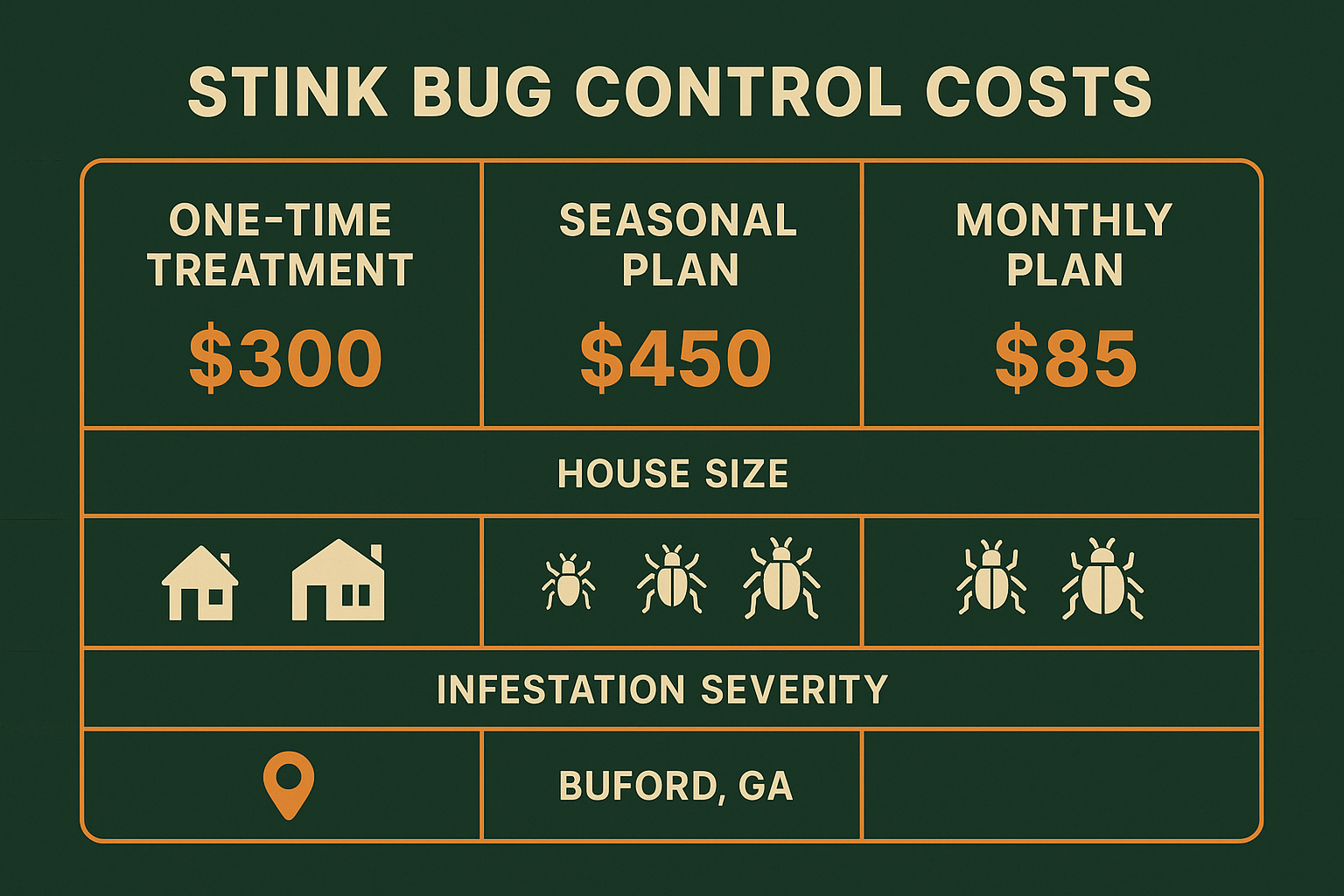
The table below reflects typical price ranges for each service model, based on home size (square footage) and infestation severity. All figures are drawn from local market data and validated by HomeYou’s Buford pest‑control cost survey.
| Home Size | Low Infestation | Medium Infestation | High Infestation |
|---|---|---|---|
| Small (≤1,500 sq ft) | $120‑$150 | $150‑$180 | $180‑$210 |
| Medium (1,501‑2,500 sq ft) | $150‑$190 | $190‑$230 | $230‑$270 |
| Large (≥2,501 sq ft) | $190‑$240 | $240‑$300 | $300‑$360 |
| Home Size | Low Infestation | Medium Infestation | High Infestation |
|---|---|---|---|
| Small (≤1,500 sq ft) | $250‑$300 | $300‑$350 | $350‑$400 |
| Medium (1,501‑2,500 sq ft) | $300‑$360 | $360‑$420 | $420‑$480 |
| Large (≥2,501 sq ft) | $360‑$430 | $430‑$500 | $500‑$580 |
| Home Size | Low Infestation | Medium Infestation | High Infestation |
|---|---|---|---|
| Small (≤1,500 sq ft) | $420‑$480 | $480‑$540 | $540‑$600 |
| Medium (1,501‑2,500 sq ft) | $480‑$560 | $560‑$640 | $640‑$720 |
| Large (≥2,501 sq ft) | $560‑$660 | $660‑$760 | $760‑$880 |
What Each Plan Includes
Regardless of the chosen model, Anthem Pest delivers a consistent set of services designed to seal your home against stink bugs:
- Initial perimeter spray: A targeted application around the exterior foundation, doors, and windows.
- Interior barrier: Focused treatment of high‑risk rooms (kitchens, sunrooms, and basements) where bugs often congregate.
- Follow‑up visits: For seasonal and monthly plans, we return to re‑apply, monitor, and adjust treatment based on any new activity.
- Inspection report: A clear summary after each visit, outlining what was treated and any recommendations for homeowner actions.
Choosing the Right Plan for Your Home
Pick the option that aligns with your budget, infestation severity, and how hands‑off you’d like to be:
- If you’ve just discovered a few bugs and want a quick fix, the one‑time treatment is the most cost‑effective entry point.
- When you know stink bugs return each summer, the seasonal plan balances price with proactive protection.
- For households that experience chronic infestations or prefer “set it and forget it,” the monthly maintenance offers the most comprehensive shield.
Contact Anthem Pest at 877‑371‑8196 or visit our website for a free, on‑site quote tailored to your Buford home.
Protect Your Home with Anthem Pest Control Today
By now you know how to spot a stink bug, the best time of year to act, and the treatment options that keep these pests from turning your home into a summer nightmare. Early detection in late spring, combined with targeted sprays or barrier treatments, stops a small intrusion from becoming a full‑blown infestation.
Why Choose Anthem Pest Control in Buford, GA?
- Local expertise: Our technicians understand Buford’s climate, the species that thrive here, and the most effective timing for interventions.
- Safe, effective solutions: We use EPA‑approved products that protect your family and pets while eliminating stink bugs at the source.
- Transparent pricing: No hidden fees—just clear, affordable rates that scale to any home size or infestation level.
- Customized plans: Whether you own a modest bungalow or a sprawling estate, we tailor a treatment schedule that fits your budget and your schedule.
Stink bugs can quickly become a year‑round nuisance if left unchecked. A prompt, professional response not only removes the current problem but also creates a lasting barrier against future invasions. That’s why we recommend a free, no‑obligation inspection as soon as you notice the first signs.
Take the Next Step
Ready to protect your home and enjoy a bug‑free season? Give us a call at 877‑371‑8196 to schedule your complimentary inspection. One of our licensed technicians will assess your property, explain the most effective treatment plan, and provide a personalized quote—no pressure, just peace of mind.
Visit Anthem Pest Control online to learn more about our services, read customer testimonials, and book your appointment with a few clicks.