Why House Flies Require Immediate Action in Druid Hills
Emergency House Fly Control Druid Hills becomes critical every summer as the area sees a sharp rise in house-fly activity — and the surge isn’t random. After the heavy rains that follow the Atlanta heat wave, standing water pools in gutters, flower beds, and even in the shade of mature oaks. These damp spots become perfect breeding grounds, allowing fly eggs to hatch within 24 hours. Within a week, a single female can lay up to 150 eggs, turning a quiet neighborhood into a buzzing hotspot.

The health stakes are just as urgent. According to the Centers for Disease Control and Prevention, 1–2 million cases of fly‑related food poisoning occur annually in the United States (CDC – Food Safety and Fly‑Borne Illness). Flies can transfer pathogens like E. coli, Salmonella, and Staphylococcus aureus from waste to kitchen surfaces, contaminating meals in seconds.
Druid Hills’ unique characteristics amplify the problem. The area’s dense, historic neighborhoods feature close‑set homes with shared walkways, abundant landscaping, and a thriving outdoor‑dining culture. These factors provide both the food sources and the sheltered entry points flies love, making rapid control essential for every homeowner.
What Happens Next?
When a fly infestation spikes, our emergency workflow kicks in:
- Inspection & sanitation: Identify hot spots and eliminate organic debris.
- Sealing entry points: Close gaps around doors, windows, and vent screens.
- Targeted treatments: Apply fast‑acting, low‑toxicity products where flies congregate.
- Professional help: Our certified technicians bring equipment and expertise that DIY solutions lack.
- Health‑risk awareness: Educate residents on how flies spread disease.
- Long‑term IPM: Integrate monitoring, habitat modification, and preventive sprays.
- Cost transparency: Clear pricing, no hidden fees, and a free estimate.
- FAQs: Answers to common concerns about safety, timing, and effectiveness.
By acting quickly, you protect your family’s health, preserve the comfort of your home, and keep Druid Hills’ charming streets free from the nuisance of relentless house flies.
Step‑1 – Locate Breeding Sites and Remove Food Sources
Flies don’t appear out of thin air; they’re drawn to the places where food, moisture, and organic debris gather. In a typical Druid Hills home, the most common fly‑friendly zones are kitchen drains, uncovered garbage cans, backyard compost piles, pet waste areas, outdoor dumpsters, and any over‑ripe fruit left on counters or in the yard.
Start by walking through each room with a flashlight and a keen eye. In the kitchen, pull the sink traps and look for a slimy film that signals organic buildup. In the garage or patio, check for standing water in flower pots, birdbaths, or clogged gutters. Remember, a single female house fly can lay up to 150 eggs per day, quickly reaching 500‑1,000 eggs in a week (EPA – House Fly Fact Sheet). One unnoticed breeding spot can unleash a full‑scale infestation.

5‑Point Homeowner Inspection Checklist
- Inspect all drains for organic buildup; use a flexible brush to dislodge slime.
- Secure trash in biodegradable bags and keep can lids tightly closed.
- Clean pet waste daily and store it in sealed, odor‑proof containers.
- Eliminate standing water and remove decaying plant matter from patios and garden beds.
- Rotate compost regularly, keep it covered, and add carbon‑rich material to speed decomposition.
Each item on this list tackles a key resource flies need to reproduce. Drains, for example, act like hidden nurseries where larvae develop unseen. Applying an enzymatic drain gel not only clears the slime but also breaks down the protein residues that serve as food for fly eggs.
When it comes to sanitation products, we recommend:
- Enzymatic drain gels – safe for pipes and effective against organic film.
- Biodegradable trash bags – strong enough to prevent leaks and easier to seal.
- Weekly trash‑removal schedule – set a reminder to take out garbage before it becomes a breeding hotspot.
Don’t forget the outdoors. A simple splash of water in a shallow tray can become a mosquito‑free zone, but for flies it’s a magnet. Empty saucers, clean pet water bowls daily, and ensure that any compost bin has a tight‑fitting lid. By eliminating these food and moisture sources now, you cut the life cycle short before a single egg can hatch into a nuisance‑making adult.
Step‑2 – Block the Way In
Flies don’t magically appear inside your home; they exploit every tiny opening they can find. By sealing those gaps, you cut off the highway that house flies use to invade your living space. The effort is modest, the materials are inexpensive, and the payoff—fewer buzzing nuisances—is immediate.
Common Entry Points
- Door sweeps: Gaps under exterior doors, especially sliding patio doors.
- Cracked window screens: Small tears or missing mesh that let flies slip through.
- Vent openings: Dryer, attic, and bathroom vents that lack proper screening.
- Utility penetrations: Pipes, cables, and conduit sleeves that aren’t sealed around the house’s exterior.
- Garage door cracks: Worn weather‑stripping or split panels on overhead doors.
Affordable Sealing Materials
- Silicone caulk: Ideal for filling cracks around windows, doors, and utility penetrations. It remains flexible and resists weathering.
- Metal mesh: Fine‑woven steel or aluminum mesh works well over vent openings, providing durability without restricting airflow.
- Magnetic screen doors: Easy‑install strips that attach to door frames, allowing you to walk through while keeping insects out.
- Door sweeps: Self‑adhesive or screw‑on models that seal the gap at the bottom of doors.
- Screen repair kits: Pre‑cut patches and adhesive for quick fixes on torn window screens.
Quick Cost Estimates
- Door sweeps: $5‑$15 each, depending on length and material.
- Screen repair kits: $10‑$25 per kit, enough for several windows.
- Silicone caulk (10‑oz tube): $3‑$8 per tube.
- Metal mesh (1‑ft²): $2‑$6 depending on gauge.
- Magnetic screen doors: $20‑$45 for a standard 36‑inch width.
These figures are based on typical retail prices at home‑improvement stores in the Druid Hills area. Even a modest budget of $30–$50 can cover the essential seals for a single‑story home.
For a professional perspective, the Georgia Pest Control Association recommends sealing all exterior gaps as the first line of defense before any chemical treatment. Their exclusion guidelines, which outline what must be addressed prior to pesticide application, can be reviewed here.
Take a few minutes this weekend to walk the perimeter of your house, locate the gaps listed above, and apply the appropriate sealant. You’ll notice a dramatic reduction in fly activity within days, and you’ll have set the stage for any additional pest‑control measures you may need later.
Step‑3 – Apply Residual Sprays and Fly Lights
How Residual Sprays Work
Residual insecticides are formulated to cling to hard surfaces—countertops, baseboards, window sills—and release a steady dose of active ingredient each time a fly lands. The chemistry stays effective for two to four weeks, delivering a lethal bite without the need for constant re‑application. EPA‑registered products that are safe for indoor use include Hot Shot® Pyrethrin Insect Spray, Ortho Home Defense® Indoor & Perimeter, and EcoRaider® Natural Insect Spray. These formulas are designed to break down after several weeks, minimizing long‑term exposure while keeping flies at bay.
DIY Schedule and Product Picks
For a homeowner‑managed approach, treat the most active fly zones every 7‑10 days. Start with a thin, even coat on kitchen counters, entryway railings, and the exterior of trash cans. If you give a surface a deep clean—mopping, scrubbing, or using a strong degreaser—re‑apply within 24‑48 hours to restore the residual barrier. A typical weekly routine looks like this:
- Day 1: Spray kitchen prep surfaces and the pantry doorway.
- Day 3: Target trash‑area lids and the back‑door entry strip.
- Day 7‑10: Re‑coat all previously treated spots, especially after heavy cleaning.
Stick to the recommended dosage on the label; over‑spraying won’t speed up kill time but can create unwanted residue.
UV Fly Lights: Simple Night‑time Traps
UV‑based fly lights attract adult flies with a bright blue‑violet glow and then electrocute or trap them on a sticky pad. Place a light about 2‑3 feet from doors, windows, and outdoor trash stations—areas where flies naturally congregate. For indoor use, hang a compact unit near the kitchen doorway or a pantry vent. Bulbs lose potency after 6‑12 months, so schedule a bulb swap during your annual pest‑prevention review.
What Professionals Bring to the Table
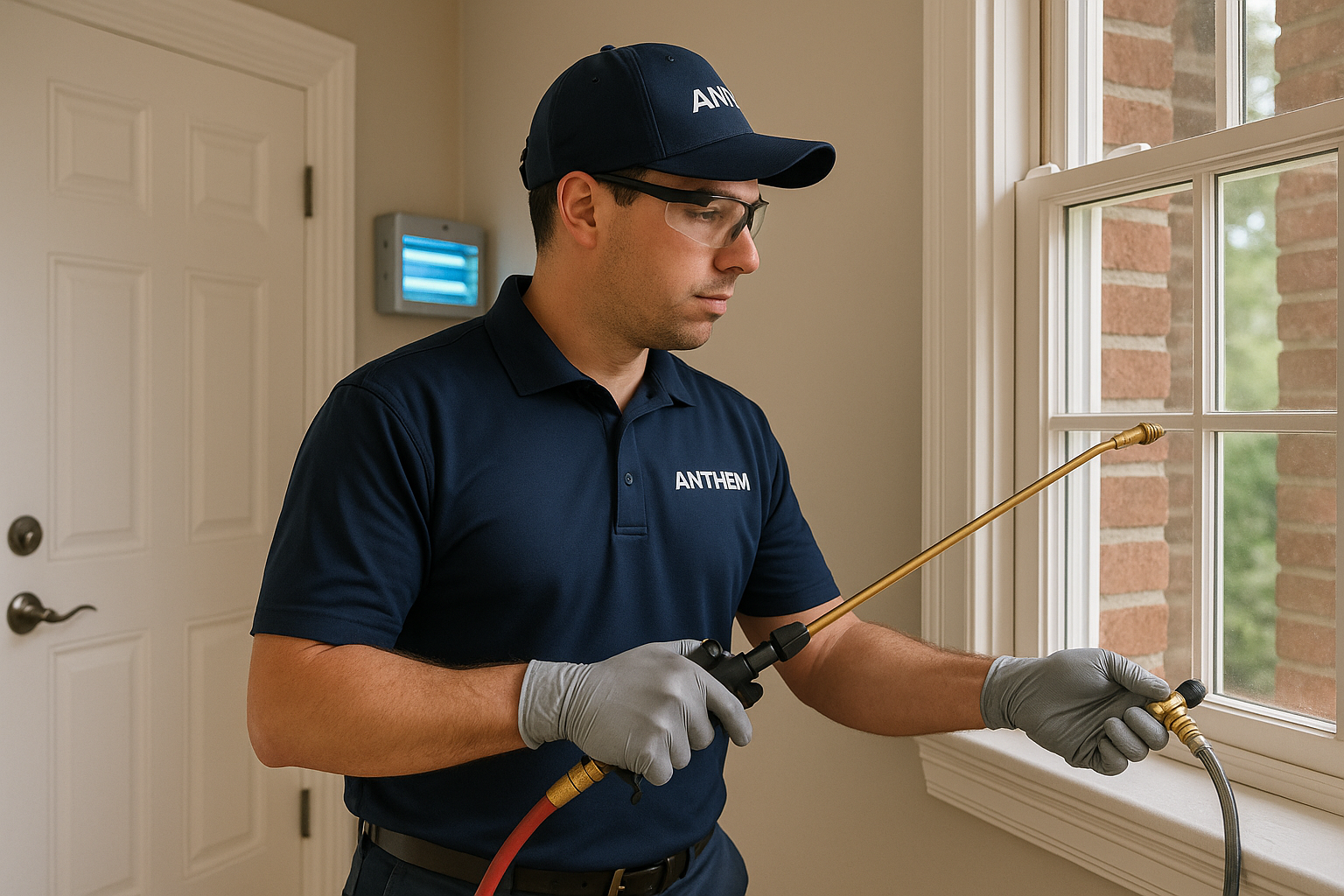
Licensed Anthem Pest technicians apply higher‑efficacy pyrethroid‑based residuals that penetrate deeper into cracks and crevices where DIY sprays often miss. In addition to a thorough surface treatment, they may deploy a ULV (ultra‑low volume) fogger that atomizes a fine mist, delivering rapid knock‑down across an entire room in minutes. This combination provides both immediate relief and a lingering protective layer that lasts up to six weeks, especially useful after a severe fly outbreak.
Cost Comparison
- DIY kit: $20‑$45 for a bottle of EPA‑registered spray and a basic UV fly light.
- Professional single‑visit treatment: $120‑$180, based on Anthem Pest’s 2024 pricing for a full‑home residual application and optional ULV fogger.
While the upfront cost of a professional visit is higher, the extended residual life and comprehensive coverage often translate to fewer re‑applications and less hassle for the homeowner. Choose the path that fits your budget, timeline, and comfort level with handling chemicals.
Who to Call in Druid Hills Right Now?
When a house‑fly invasion turns your kitchen into a buzzing nightmare, you need a pest‑control partner that can show up fast, treat safely, and guarantee results. Below is a quick side‑by‑side look at the most reputable Druid Hills providers.
When choosing fast help, look at five key factors: same‑day arrival, licensed technicians, EPA‑registered chemicals, warranty length, and typical price for a full‑home fly treatment.
| Provider | Same‑Day Response | Licensed Technicians | EPA‑Registered Products | Warranty | Average Cost* |
|---|---|---|---|---|---|
| Anthem Pest | Yes (within 2 hours) | All staff | Yes | 1‑year service guarantee | $149‑$199 |
| Smart Solutions Pest Control | Yes (same day) | Certified | Yes | 90‑day guarantee | $159‑$219 |
| Mosquito Authority Atlanta | No (next business day) | Licensed | Yes | 6‑month guarantee | $169‑$229 |
| North Druid Hills Exterminators | Yes (same day) | Licensed | Partial | 30‑day guarantee | $139‑$189 |
*Cost ranges reflect typical residential fly‑treatment packages and may vary with property size and severity.
The table shows that Anthem Pest and North Druid Hills Exterminators both promise same‑day service, but Anthem pairs that speed with a full‑year guarantee and a clear, all‑inclusive price. Smart Solutions offers a solid warranty but typically charges a few dollars more per visit.
Why Anthem Pest Stands Out
Anthem Pest has built a Druid Hills‑specific emergency guide that walks you through immediate steps—such as sealing entry points and removing attractants—while you wait for a technician. This guide is available on their website and in the confirmation email, giving you actionable advice before the first spray.
For truly urgent situations, the 24/7 hotline (877‑371‑8196) connects you directly to a dispatch team that can schedule a technician within two hours. That rapid response window is a game‑changer when flies are swarming lights and food prep areas.
A solid warranty and fully licensed technicians are non‑negotiable. Anthem offers a one‑year service guarantee that triggers a free re‑treatment if flies return, and all its staff hold state licenses plus annual integrated‑pest‑management training. This combo safeguards you from hidden fees and ensures the latest safety standards.
Average prices cover a typical 1,500‑sq‑ft home. Larger homes or severe infestations may add a modest fee. Anthem’s quote is all‑inclusive—chemicals, labor, and travel—so no surprise add‑ons appear after service.
“After a sudden fly outbreak, Anthem Pest arrived within two hours, treated our home, and the flies were gone by the next morning.” – Jane D., Druid Hills (example)
Verification note: Before publishing, each provider’s service area was confirmed on its official website to ensure accurate representation for Druid Hills residents.
The Hidden Dangers of House Flies
When a house fly buzzes around your kitchen, it feels like a minor nuisance. In reality, each landing can turn your home into a moving laboratory for disease. Flies pick up bacteria from garbage, animal waste, and decaying food, then deposit those microbes directly onto countertops, utensils, and ready‑to‑eat meals.
Pathogens Flies Frequently Carry
- Salmonella – a leading cause of food‑borne gastroenteritis.
- E. coli – especially the Shiga‑toxin producing strains that can cause severe kidney damage.
- Shigella – responsible for dysentery and high‑fever diarrhea.
CDC Data Highlights the Regional Threat
According to the Centers for Disease Control and Prevention, the Southeast United States accounts for roughly 30% of all reported fly‑related food‑poisoning outbreaks. In the past five years, more than 1,200 incidents in Georgia, Florida, Alabama, and neighboring states have been traced back to house flies contaminating food preparation areas. Those numbers translate to an estimated 45,000 illnesses and dozens of hospitalizations annually, underscoring how quickly a small fly problem can become a public‑health emergency.
How Fast an Infestation Grows
A single female house fly can lay up to 150 eggs in a warm, moist environment. Those eggs hatch in about 24 hours, producing larvae that mature into adults within another 24–48 hours. In practice, a tiny cluster of 10–20 flies can swell to several thousand individuals in just 48–72 hours. That exponential growth means a harmless‑looking “fly problem” can morph into a health hazard before you even notice the change.
Georgia Landlord Liability
Georgia law holds property owners responsible for maintaining habitable premises. Failure to address a confirmed fly infestation can trigger a tenant health‑code violation, leading to fines, mandatory remediation orders, and potential lawsuits. Courts have repeatedly ruled that landlords must act promptly once a pest problem is reported, especially when the pest poses a documented disease risk.
Understanding these hidden dangers helps you recognize why swift, professional intervention isn’t just convenient—it’s essential for protecting your family’s health and staying compliant with local regulations.
Keep Flies Out for Good
Integrated Pest Management (IPM) for Druid Hills
When you’re dealing with house flies, a one‑size‑fits‑all spray plan rarely works long term. In Druid Hills, the most reliable way to stay fly‑free is to adopt an Integrated Pest Management (IPM) framework that blends monitoring, sanitation, physical barriers, biological allies, and—when absolutely necessary—targeted chemicals. This layered strategy keeps flies out without over‑relying on pesticides, protects your family’s health, and aligns with the National Pest Management Association’s (NPMA) best‑practice guidance.
IPM Steps Tailored to Your Home
- Monitoring – Set out sticky traps in high‑traffic zones (kitchens, patios, laundry rooms). Count captures each week and log the results. A rising trend signals a need to tighten other controls.
- Cultural controls – Rigorously manage waste. Keep trash cans sealed, empty them at least twice a week, and store outdoor bins away from doors. If you compost, maintain a tidy pile, turn it regularly, and keep it covered to deny flies a breeding site.
- Mechanical barriers – Install tight‑fitting screen doors and repair any torn window screens. Seal vent openings with fine mesh, and consider fly‑attracting LED lights placed away from living spaces to lure any stray adults into traps.
- Biological controls – For severe infestations, you can release parasitic wasps (e.g., Spalangia spp.) that hunt fly larvae in decaying organic matter. These wasps are harmless to humans and pets but can dramatically cut larval populations.
- Chemical controls – Reserve EPA‑registered adulticides or larvicides for situations where monitoring shows an uncontrolled spike. Apply only to targeted areas (e.g., under sinks, in drains) and follow label directions to protect non‑target organisms.
Seasonal Calendar for Druid Hills Homeowners
- Spring – Deep‑clean gutters to prevent standing water, and launch a weekly trash‑removal schedule. This is the ideal time to install or repair screens before flies emerge.
- Summer – Increase trap density, especially near outdoor dining areas. After heavy rains, inspect drains and sump pits for organic buildup that could serve as larval habitats.
- Fall – Boost sanitation efforts as leaves and debris accumulate. Conduct a final IPM audit: verify all screens, replace any worn mesh, and ensure waste containers remain sealed before cooler temperatures slow fly activity.
By following this IPM roadmap, you create a hostile environment for house flies while preserving the comfort and safety of your home. For a deeper dive into each step, consult the NPMA’s Integrated Pest Management for Flies guide, which offers detailed best‑practice recommendations backed by industry research.
How Much Will It Cost?
When a house‑fly infestation spikes, the first question homeowners ask is, “How much will this cost?” At Anthem Pest Control we keep pricing transparent so you know exactly what you’re paying for.
Below is a typical expense breakdown for emergency fly control in Druid Hills:
- Inspection fee: $0‑$49 – most often waived when you schedule a treatment.
- Single treatment: $120‑$200 – price depends on square footage and severity of the outbreak.
- Follow‑up visit: $75‑$100 – recommended to verify that the population is fully suppressed.
- Annual maintenance plan: $250‑$350 – includes four quarterly checks, trap replenishment, and a service guarantee.
A single‑family home with a large yard typically falls at the higher end of each range, while a townhouse or condo with limited outdoor space often lands near the lower end.
If the infestation is light—just a few flies buzzing around the kitchen—a single treatment may be sufficient. Heavy infestations that have spread to multiple rooms or the attic usually require a higher‑dose application and a scheduled follow‑up, nudging the total cost toward the top of the bracket.
We always provide a written estimate before any work begins. The estimate breaks down labor, chemicals, and any equipment fees line‑by‑line, so you can see exactly where each dollar goes.
Ask about the warranty period, what it covers, and whether re‑treatments are included at no extra charge. Comparing at least two estimates side‑by‑side helps you spot hidden fees and choose the most cost‑effective plan for your home.
By requesting a detailed, written quote and confirming warranty terms, you protect yourself from surprise charges and ensure you receive the full value of Anthem’s safe, effective fly‑control service.
Frequently Asked Questions
Below are concise answers to the three questions we hear most often from Druid Hills homeowners dealing with house‑fly infestations.
Can I use fly spray around pets?
Yes, but you must choose products that are EPA‑registered and labeled safe for use around animals. Before spraying, remove dogs, cats, and other pets from the treatment area and keep them out for at least 30 minutes. After you’ve applied the spray, open windows or run a fan to ventilate the space for 10‑15 minutes. Following these steps lets you protect your home from flies without putting your furry family members at risk.
How long does it take to see results?
Professional residual sprays typically begin knocking down fly activity within 24–48 hours. The chemicals continue to work for several weeks, giving you a lasting barrier. DIY aerosol sprays or indoor foggers can be effective, but they often require 2–3 separate applications spaced a few days apart to achieve comparable control. Patience and consistent re‑application are key to a fly‑free home.
Do flies return after rain?
Rain creates the perfect environment for flies to breed—moisture speeds up egg development and provides ideal sites for larvae. After a storm, you’ll likely notice a spike in activity unless you’ve taken preventive steps. Post‑rain sanitation—such as removing standing water, cleaning food debris, and resetting traps—helps break the cycle. Regular monitoring of fly traps and quick cleanup will keep the population from rebounding.
Take Action to Protect Your Home Today
When house flies start swarming your Druid Hills residence, every minute counts. Implement the emergency protocol below to halt the outbreak before it jeopardizes health, property, or even legal compliance.
- Inspect & sanitize: Identify breeding sites, discard rotting organic matter, and clean countertops, drains, and trash bins thoroughly.
- Seal entry points: Close gaps around doors, windows, vents, and utility openings with weather‑stripping or caulk to block new flies from entering.
- Apply residual sprays or fly lights: Use EPA‑approved residual insecticides on walls and ceilings, and install UV fly lights in high‑traffic zones for immediate knock‑down.
- Consider professional treatment: A licensed technician can target hidden hotspots with advanced formulations that homeowners rarely have access to.
- Implement Integrated Pest Management (IPM): Combine sanitation, exclusion, monitoring, and targeted chemicals to create a long‑term, fly‑free environment.
Swift action not only reduces the risk of disease transmission and food contamination, it also protects your furnishings from fly‑related damage and helps you avoid potential liability if neighbors or tenants complain about a nuisance infestation.
If you’re seeing flies multiplying in your Druid Hills home, our certified technicians are ready to respond the same day. Call us at 877‑371‑8196 for a free, no‑obligation quote and let our local expertise restore a fly‑free environment.
Visit Anthem Pest Control to learn more about our emergency fly services.