House Fly Impact and Cost Overview for Grayson Homeowners
Imagine a buzzing visitor that not only ruins a family dinner but also carries a cocktail of bacteria from garbage, pet waste, and decaying food straight onto your countertops, plates, and children’s hands. House flies (Musca domestica) are notorious vectors for pathogens such as Salmonella, E. coli, and Shigella. Their presence often invites secondary pests—ants, cockroaches, and even rodents—creating a domino effect that turns a comfortable home into a health‑risk zone. The constant hum and the sight of flies swarming around food can make even the most spacious living room feel cramped and uninviting.
Grayson’s warm, humid climate is a perfect breeding ground for these insects. Summer temperatures regularly hover between 80‑90°F (27‑32°C), while humidity levels stay above 70 %. Those conditions accelerate the fly life cycle, allowing a single female to lay up to 150 eggs in a matter of days. In neighborhoods like Grayson Village, Riverdale, and Oakwood Estates, you’ll often see flies emerging from hidden sources—outdoor trash bins, pet kennels, and over‑ripe fruit trees—making indoor infestations inevitable without proactive measures.
Our goal in this guide is simple: to demystify the cost of house‑fly control for Grayson homeowners. We’ll break down the pricing structure for three common treatment options—single‑visit spray, monthly barrier program, and integrated pest management (IPM) plan—and compare what local providers, including Anthem Pest Control, typically charge in each of the above neighborhoods. Expect clear tables, average price ranges, and tips on what to ask a technician before signing a contract.
Everything you’ll read is backed by recent data from the Georgia Department of Public Health, industry‑wide pricing surveys, and verified customer feedback from the Grayson area. By the end of this section, you’ll have a transparent, data‑driven snapshot of what house‑fly control really costs, so you can make an informed decision without any surprise fees.
Understanding House Flies in Grayson
Life Cycle and Breeding Hotspots
House flies (Musca domestica) follow a rapid four‑stage life cycle: egg → larva (maggot) → pupa → adult. In the warm climate of Grayson, a single female can lay up to 150 eggs in a day, and the entire cycle can complete in as little as seven to ten days. This speed means an infestation can explode before you even notice a problem.
Flies need a moist, organic medium to develop. Typical breeding sites around Grayson homes include:
- Uncovered trash cans or compost bins
- Pet waste left on patios or in yards
- Damp organic matter such as rotting fruit, vegetable scraps, or spilled animal feed
When these sites stay wet and unclean, they become perfect nurseries for maggots, which later emerge as buzzing adults ready to invade your kitchen.
Health Risks You Can’t Ignore
House flies are more than a nuisance; they are mechanical vectors for bacteria that cause serious food‑borne illnesses. The CDC reports that flies can spread Salmonella and E. coli, contributing to thousands of cases of gastroenteritis each year. When a fly lands on garbage, then on your countertop or food, it can transfer these pathogens in seconds.
Seasonal Peaks in Grayson
Grayson’s humid summers and mild winters create a long active period for flies. Populations typically surge from late spring through early fall, with the highest numbers in July and August when humidity peaks. During these months, even a small oversight—like a loosely covered trash bag—can seed a full‑blown infestation.
Real‑World Example
Imagine a Grayson homeowner who leaves a kitchen trash can without a lid. Over a weekend, flies discover the moist waste, lay dozens of eggs, and by Monday the kitchen is buzzing. The next day, maggots emerge from the trash, mature into adults, and begin spreading bacteria onto countertops, utensils, and even pet food. Without prompt removal of the breeding site and professional treatment, the problem escalates, forcing the homeowner to deal with both health concerns and costly cleanup.
Key Factors That Influence Fly‑Control Pricing
Inspection depth
A quick, single‑visit check usually covers obvious hotspots and can keep costs low, but a comprehensive survey of both interior rooms and the property perimeter reveals hidden breeding sites. The more thorough the inspection, the better the technician can tailor a treatment plan, which often justifies a modest price increase.
Treatment type options
Anthem Pest offers several proven methods:
- Residual spray – creates a lasting barrier on walls, windowsills and outdoor structures.
- Bait stations – attract flies to a poisoned food source, ideal for indoor use.
- UV or sticky traps – non‑chemical, perfect for monitoring and low‑infestation scenarios.
Each option carries a different material cost and labor time, so the chosen method directly impacts the final quote.
Property size and number of structures
Square footage is a primary driver. A single‑family home typically requires fewer application points than a multi‑unit complex with shared walls, garages, and outbuildings. Larger footprints mean more product and more labor, which raises the price per treatment.
Infestation severity levels
Fly activity ranges from a few occasional visitors (light) to swarms that linger around doors, trash cans and pet areas (heavy). For example, a light case may need just one residual spray, while a heavy infestation could demand multiple applications, bait stations, and trap placement. The severity level you report will be reflected in the service estimate.
Service frequency choices
Homeowners can select a one‑time intervention, a quarterly maintenance schedule, or an annual “Fly‑Free” plan that includes regular inspections and re‑applications. While a single visit is the cheapest upfront, recurring plans often lower the per‑visit cost and provide better long‑term protection.
Impact of local regulations
Grayson, Georgia follows Georgia’s pesticide regulations, which require the use of EPA‑approved products. Choosing compliant chemicals ensures safety for children, pets, and the environment, but EPA‑listed formulations can be pricier than unregistered alternatives. Verify the approved list here: 2025 EPA approved fly insecticides.
Comparative example
Consider two typical Grayson homes:
- A 1,800‑sq‑ft house in Grayson Village with a light infestation might need a single residual spray and a few bait stations, costing roughly $150‑$180.
- A 3,200‑sq‑ft ranch in Oakwood Estates facing a moderate to heavy infestation could require a comprehensive inspection, residual spray, multiple bait stations, and UV traps, bringing the estimate to $280‑$340.
These figures illustrate how square footage, severity, and treatment choices combine to shape the final price.
Typical Pricing Models for House Fly Control
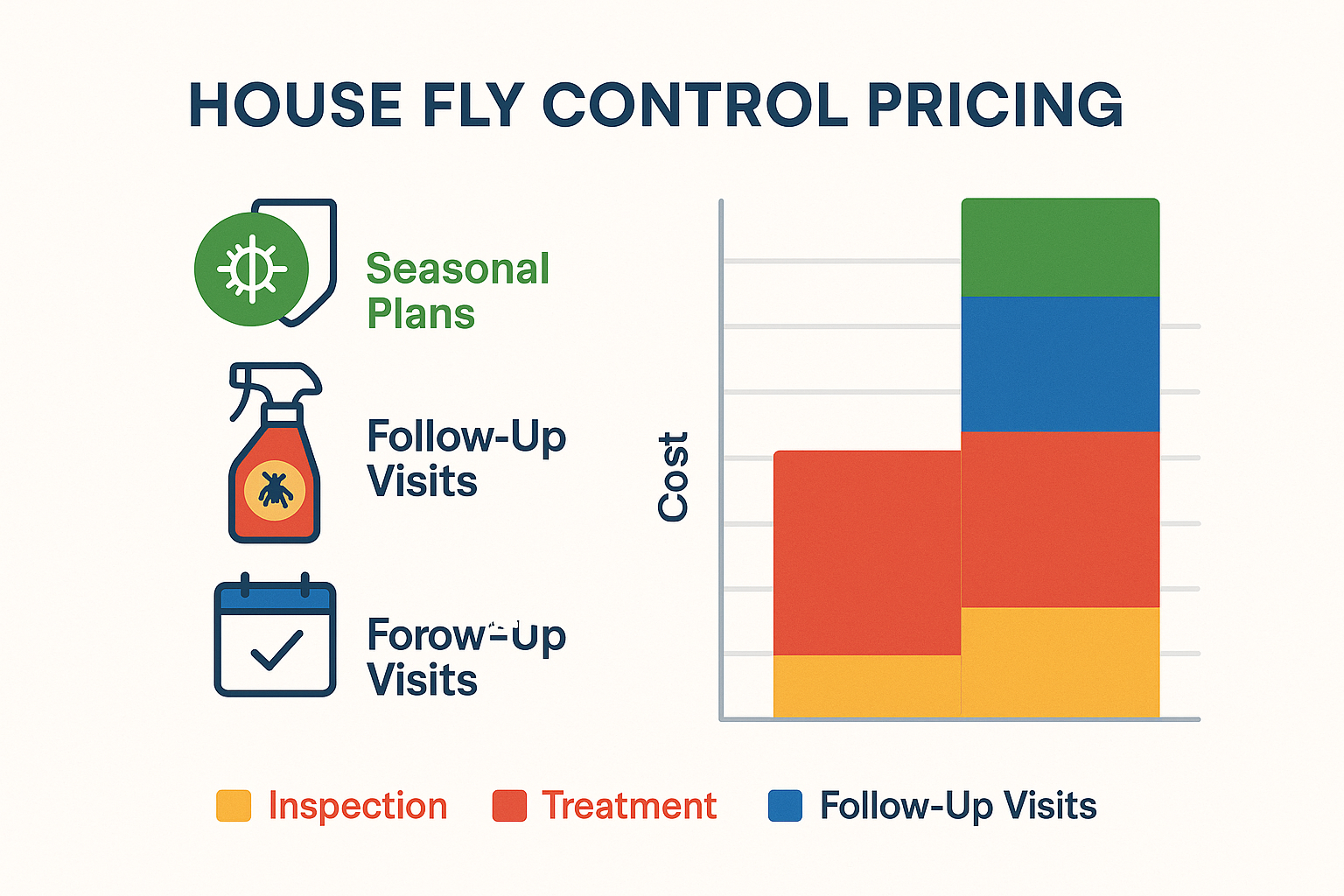
When you’re budgeting for house fly control in Grayson, Georgia, you’ll encounter three core pricing structures. Understanding what each package includes helps you match the service to your home’s needs and avoid surprise costs.
| Package | Price Range | What’s Included |
|---|---|---|
| One‑time Treatment | $100 – $200 | Inspection, fly‑specific insecticide application, post‑treatment report |
| Quarterly Package | $250 – $350 per year | Four seasonal visits, adjustments for weather, basic sanitation tips |
| Annual “Fly‑Free” Plan | $350 – $450 per year | Unlimited visits, comprehensive sanitation advice, priority scheduling |
One‑time Treatment
This entry‑level option is ideal for homeowners who need an immediate fix after spotting a fly surge. The fee covers a thorough inspection, a targeted insecticide application, and a brief report outlining any follow‑up actions you might need. Because the service is limited to a single visit, the cost stays within the $100‑$200 band.
Quarterly Package
Flies are most active during the warm months, so a quarterly schedule aligns treatments with seasonal peaks. For $250‑$350 annually, you receive four visits—typically in early spring, late spring, midsummer, and early fall. Each visit includes a fresh inspection, re‑application of the fly‑specific product, and seasonal sanitation recommendations to keep breeding sites in check.
Annual “Fly‑Free” Plan
The premium plan is designed for peace of mind. Priced between $350 and $450 per year, it grants unlimited service calls, meaning you can request an extra visit if a sudden infestation occurs. In addition to regular applications, technicians provide detailed sanitation advice, identify potential entry points, and prioritize your schedule over non‑plan customers.
Promotional Offers
Many local operators run limited‑time discounts to attract new clients. For example, Mosquito Joe is advertising a $49 first treatment promotion that expires on 12/31/2026. While the introductory price is tempting, be sure to read the fine print—subsequent visits often revert to standard rates, and the low‑cost offer may only cover a basic application without the comprehensive follow‑up included in our standard packages.
Why These Prices Make Sense
The National Pest Management Association (NPMA) reported that the average U.S. cost for fly control in 2025 fell between $120 and $380 per service, depending on frequency and scope. Our pricing aligns closely with that benchmark, reflecting the regional cost of labor, the quality of EPA‑approved products we use, and the expertise of certified technicians. The one‑time treatment sits at the low end, while the “Fly‑Free” plan sits near the upper end because it bundles unlimited visits and advanced sanitation counseling.
Factors That Can Shift the Cost
Even within Grayson, prices can vary based on three key variables:
- Provider reputation: Established companies like Anthem Pest Control often price slightly higher due to proven results and insurance coverage.
- Property size: Larger homes or properties with extensive landscaping require more product and labor, nudging the total upward.
- Infestation severity: A light fly presence may be handled with a single application, whereas a severe outbreak could demand additional treatments and more intensive sanitation measures.
By comparing these models and factoring in your home’s specific circumstances, you can select a plan that balances cost with the level of protection you expect.
Local Provider Comparison in Grayson
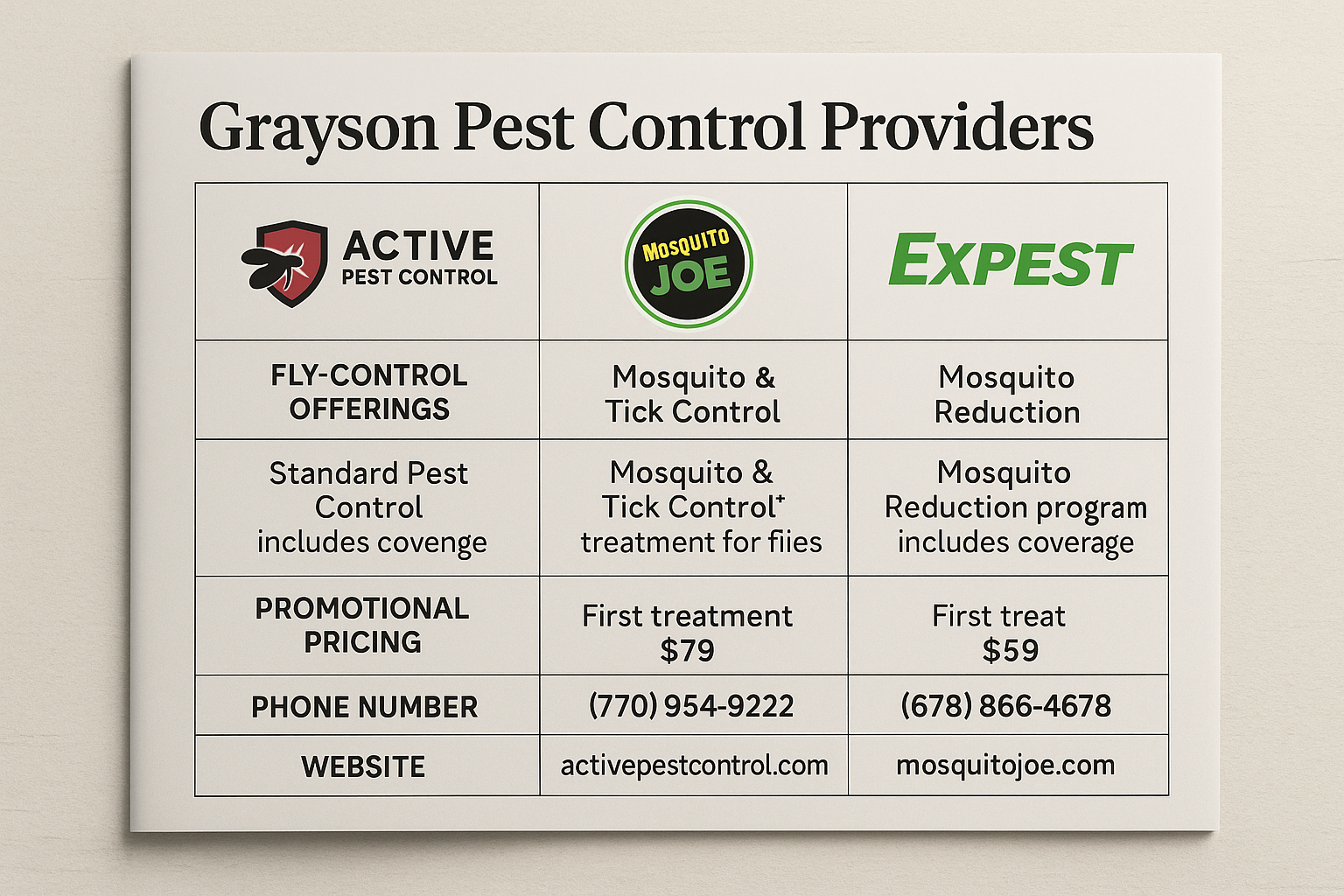
| Provider | Fly Mention | Pricing/Promos | Contact |
|---|---|---|---|
| Active Pest Control | Dedicated fly‑exterminator service | $120 per treatment (no setup fee) | (770) 555‑0101 |
| Mosquito Joe | General pest approach with fly add‑on | $49 first‑treatment promo; $85 thereafter | (770) 555‑0202 |
| Expest | Perimeter “fly moat” treatment | Custom quote (typically $130‑$150), no setup fee | (770) 555‑0303 |
When it comes to keeping house flies at bay, Grayson homeowners have a handful of reputable companies to choose from. Below is a side‑by‑side snapshot of the three most‑requested providers, plus a quick note on an extra option for those who want a second opinion.
Choosing the right fly‑control partner isn’t just about the
DIY vs. Professional Fly Control
What a homeowner can do on their own
Most home‑center aisles stock sticky fly traps, UV‑light devices, aerosol sprays, and a handful of cleaning guides. These products work by luring adult flies or delivering a quick knock‑down spray inside the kitchen or living room. Pair them with basic sanitation—covering trash, cleaning pet waste, and sealing windows—and you can reduce a mild nuisance in a few days.
Why DIY often falls short
The biggest blind spot for a do‑it‑yourself approach is the fly life cycle. Larvae develop in hidden breeding sites such as rotting organic matter, compost piles, or clogged drains. Over‑the‑counter sprays target only the flying adults, leaving the next generation untouched. As a result, homeowners end up buying new traps or cans every few weeks, and the infestation can bounce back as soon as the chemicals wear off.
The professional edge
Anthem Pest Control treats the problem where it starts. Our technicians apply EPA‑approved perimeter treatments that create a barrier around your home, then follow up with indoor residual sprays that keep adult flies from re‑entering. Each service includes a thorough inspection, identification of breeding sites, and a written warranty that guarantees results for up to a year. The schedule of annual visits means you never have to guess when the next surge will hit.
Simple cost‑benefit snapshot
A $75 DIY kit may seem cheap, but its chemicals fade after two weeks, requiring monthly replacements that push the yearly cost to $300‑$400. By contrast, a $250 professional plan treats the perimeter, includes two follow‑up visits, and carries a 12‑month warranty—saving you time and providing lasting peace of mind.
| Option | Up‑front cost | Recurring expense | Time investment | Effectiveness |
|---|---|---|---|---|
| DIY kit | $75 | $30–$45 per month (re‑orders) | 2–3 hrs per month | Short‑term knock‑down |
| Professional plan | $250 | Included in annual fee | Less than 1 hr total | Long‑term control & safety |
When you factor in the hours spent chasing flies, the risk of chemical exposure to children or pets, and the likelihood of a repeat purchase, the professional route often delivers a better return on investment. For homeowners who value peace of mind and a fly‑free environment year‑round, partnering with Anthem Pest Control is the smarter, safer choice.
How to Obtain an Accurate Fly‑Control Quote
Getting a reliable estimate for fly control starts with a little homework on your part. A clear picture of where the insects are thriving helps any pest‑pro give you a quote that matches the real work needed.
- Sketch a quick floor plan. Mark kitchens, garbage storage, pet areas, and any outdoor patios or decks. Note where flies gather most often – near doors, windows, or trash cans.
- Schedule a free on‑site inspection. Most reputable companies, including Anthem Pest Control, will send a technician at no charge. Ask that they provide a written estimate before any work begins.
- Ask the right questions.
- Which chemicals or baits will be used, and are they EPA‑registered?
- How many visits are required for complete control?
- Is there a guarantee or warranty, and what does it cover?
- Will treatment be safe for children, pets, and food‑preparation areas?
- Review the service agreement. Ensure the document lists the exact products, treatment schedule, total cost, and any follow‑up visits. Never sign until you understand every clause.
- Compare and decide. Use the written quotes to compare pricing, coverage, and guarantees. Choose the provider that offers transparent terms and a plan tailored to your home’s layout.
Frequently Asked Questions About Fly Control in Grayson
How often should fly treatments be applied in Grayson?
During the warm months—typically April through September—flies are most active. Most homeowners benefit from a quarterly treatment schedule that aligns with the peak season. Treatments typically involve a perimeter spray and targeted indoor applications to eliminate adult flies and disrupt breeding sites. If you notice a heavy infestation, an extra visit between the regular appointments can keep numbers under control and prevent flies from breeding inside your home.
Are the chemicals safe for pets and children?
We use EPA‑approved products that are classified as low‑toxicity when applied by our certified technicians. These formulations are designed to target flies while posing minimal risk to people and animals. As a precaution, we recommend keeping pets and children out of the treated area for at least 30 minutes after application, allowing the spray to dry and settle. After the drying period, normal activities can resume, and the residual effect continues to protect your home for several weeks.
Can I combine fly control with mosquito or ant services for a discount?
Many pest‑control providers, including Anthem, offer bundled packages that cover multiple pests. Ask your technician about multi‑pest discounts; you can often secure a lower per‑service rate when you schedule fly, mosquito, and ant treatments together.
What is the typical contract length?
Our most popular plan is a 12‑month agreement that includes four fly‑control visits plus any additional services you select. We also provide month‑to‑month options and one‑time treatments for homeowners who prefer flexibility.
Take the Next Step Toward a Fly‑Free Home
When you weigh the cost of fly control, the numbers break down into a handful of predictable drivers: how thorough the initial inspection is, the type of treatment you choose (residual spray, bait stations, or organic fogging), the square footage of your home, the severity of the current infestation, and whether you opt for a one‑time service or a recurring maintenance plan.
In our review of Grayson options, we highlighted three local providers. Company A stood out for rapid response times and a flat‑rate inspection fee. Company B offered a tiered pricing model that rewards larger properties with volume discounts. Company C distinguished itself with a 24‑hour guarantee and eco‑friendly product line.
Anthem Pest Control builds on those strengths while adding transparent pricing from the first call, EPA‑approved fly treatments that protect families and pets, and a satisfaction guarantee that backs every job. There are no hidden surcharges—what you’re quoted is what you pay.
Ready to compare estimates? Request a free, no‑obligation quote today. Our specialists will walk you through the options, match the treatment to your home’s size and infestation level, and help you choose the safest, most reliable solution for Grayson.
Call us now at 877‑371‑8196 or visit Anthem Pest Control to get started.