Why Moth Inspections Matter in Druid Hills

Our neighborhood’s historic, wood‑frame houses provide perfect hiding places for larvae. Combine that with Druid Hills’ average humidity of 71 % (as reported by Fulton County data) and the nearby wooded parks, and you have a micro‑climate that encourages moth reproduction. Moisture softens wood and fabrics, making them easier for moths to chew through, while the surrounding trees serve as a natural reservoir for adult moths seeking new homes.
Homeowners understandably worry about three main impacts: food safety—pantry moths contaminate pantry items with webbing and larvae; structural and aesthetic damage—carpet and webbing moths can ruin clothing, drapes, and even furniture; and health concerns—moth droppings and shed skins can trigger allergic reactions or exacerbate asthma.
Nationally, the EPA estimates that 1‑2 % of U.S. households report pantry moth infestations each year (EPA moth overview). While that percentage sounds small, in a concentrated area like Druid Hills the risk climbs sharply because the local environment amplifies the moths’ life cycle.
The Moths You’ll Most Likely Encounter

Indian Meal Moth
This pantry invader completes its life cycle in just 4‑6 weeks. Females lay eggs on the surface of grain, cereal, dried fruit, or pet food. When the larvae hatch, they spin a silken tunnel and begin feeding, leaving behind a fine, dusty frass and a webbed mess that looks like a loose cobweb. As they mature, they pupate inside the food package, emerging as small, brown‑gray moths with distinctive copper‑colored forewings. Look for the silky webbing and specks of frass near opened packages.
Carpet Moth
Carpet moths thrive in dark, undisturbed areas where natural fibers accumulate—think closets, under furniture, or in attic storage. After eggs are deposited on wool, silk, feathers, or fur, the larvae hatch and feed for 2‑3 months, creating irregular, small holes in fabrics. The damage often appears as “chewed” spots surrounded by a faint, silvery web. According to the National Pest Management Association, carpet moths are responsible for $30‑$50 million in fabric damage each year (NPMA statistics).
Webbing Moth
Webbing moths prefer stored clothing, blankets, and other soft textiles. Their life cycle mirrors the Indian meal moth, but the larvae construct extensive silken tunnels that connect multiple items. You’ll notice dense, white webbing covering the surface of garments, often accompanied by tiny, crescent‑shaped larvae hidden beneath. As they feed, they create small, ragged holes and leave a trail of fine, powdery frass. The webbing can spread quickly, especially in rarely used storage boxes.
Quick Visual Checklist
- Indian Meal Moth: Silky webbing and dusty frass in pantry items.
- Carpet Moth: Small, irregular holes in wool or silk fabrics with faint silvery web.
- Webbing Moth: Dense white tunnels and webbing on stored clothing or blankets.
Red Flags That Indicate a Hidden Moth Problem
Even when moths stay out of sight, they leave a trail of clues. Spotting these warning signs early can save you from costly damage to clothing, stored foods, and even indoor air quality.
Visual cues you can’t ignore
- Silky webbing along the tops of pantry shelves, in the corners of closets, or behind baseboards.
- Larvae that look like tiny, creamy caterpillars hidden in flour, cereal, or natural fibers.
- Adult moths fluttering around lights at night, especially near windows or closets.
- Clusters of moths gathering around stored grains, dried fruit, or woolen garments.
Odor clues
A faint musty or grain‑like scent in pantry areas often signals a growing population of pantry moths. The smell is caused by the combination of shed skins, frass (insect droppings) and the food they’re consuming.
Indirect signs of activity
- Unexplained food waste or tiny specks of powder in opened packages.
- Increased lint, fabric debris, or tiny holes appearing in sweaters, blankets, or curtains.
- Small, irregular holes in stored grains, nuts, or dried herbs.
Local hotspot example
Residents of older wood‑frame homes in the Emory University district and North Druid Hills have reported a surge in moth sightings during the humid summer months. The natural cracks and crevices in these structures provide perfect hiding spots for both pantry and clothing moths.
Why professional help matters
The 2024 CDC guidance on indoor moth health impacts highlights that moth allergens can exacerbate asthma and trigger allergic reactions, especially in sensitive individuals. A certified technician can identify the species, locate hidden breeding sites, and apply targeted treatments that protect both your home and your family’s health.
Keep this checklist handy. If you notice any of these red flags, it’s time to call Anthem Pest Control for a thorough inspection and a customized control plan.
What to Expect from a Professional Moth Inspection
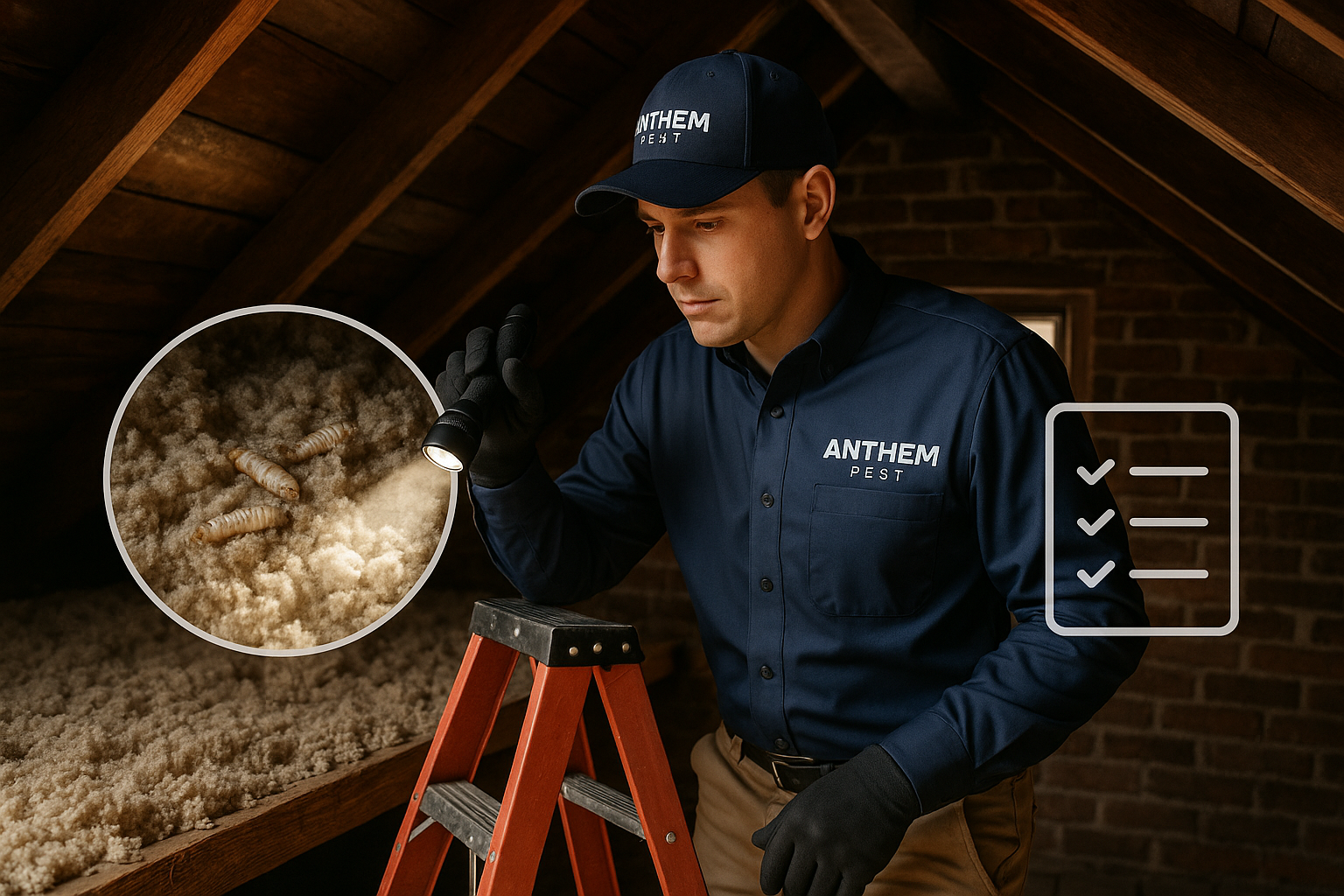
Step 1 – Pre‑visit questionnaire
Before the technician steps onto your porch, we’ll ask you to fill out a short questionnaire—either online or on a tablet. The questions focus on recent moth sightings, how you store pantry items, and any previous pest‑control treatments you’ve tried. This information lets us tailor the inspection to the areas most likely to harbor an infestation.
Step 2 – Visual interior and exterior survey
Our inspector conducts a systematic walk‑through of both the interior and exterior of your home. Inside, the focus lands on the pantry, kitchen cabinets, closets, attic insulation, and even HVAC ducts, because moths love the dark, undisturbed spaces where food or fibers are stored. Outside, we check roof eaves, soffits, and exterior storage sheds for entry points.
Step 3 – UV flashlight and sticky traps
To reveal hidden larvae and adult moths, we switch on a UV flashlight that makes organic residues glow. At the same time, we place EPA‑registered sticky traps in strategic spots. These traps capture any wandering moths, giving us a live sample to confirm species without disturbing your belongings.
Step 4 – Species identification and infestation rating
Once we’ve collected evidence, we identify the exact moth species—whether it’s pantry moths, webbing clothes moths, or another type. Based on the number of individuals and where they’re located, we assign an infestation level: light, moderate, or severe. This rating determines the intensity of the treatment plan.
Step 5 – Detailed written report and timeline
Within minutes of completing the walk‑through (the whole inspection usually takes 30–45 minutes for a single‑family home), we provide you with a written report. The report outlines our findings, the species identified, the infestation rating, and a step‑by‑step treatment recommendation. We also include a realistic timeline—what needs immediate attention and what can be scheduled for later. All recommended products are EPA‑registered, and we provide a transparent price breakdown so you know exactly what you’re paying for.
As part of our ongoing protection strategy, we install EPA‑registered monitoring devices that stay active after treatment. These devices continuously detect any new moth activity, allowing us to intervene early before another infestation takes hold.
Treatment Options and Pricing Transparency
Integrated Pest Management (IPM)
IPM is a preventative philosophy that blends sealing, sanitation, and ongoing monitoring. Anthem’s technicians start by identifying entry points—cracks around windows, gaps in siding, or unsealed utility penetrations—and then apply durable, low‑toxicity sealants to block future access. Next, they guide you through a home‑wide sanitation plan that removes food residues and reduces the organic material moth larvae need to thrive. Finally, a network of discreet monitoring stations is installed, allowing early detection of new activity. According to the EPA’s 2023 IPM report, homes that adopt this comprehensive approach see a 65 % reduction in repeat infestations compared with reactive treatments alone.
Targeted Chemical Treatment
When moths have already established hotspots, a quick knock‑down is often required. Anthem uses EPA‑approved baits and residual sprays that are applied directly to infested areas such as closets, attics, and pantry shelves. These formulations are designed to act fast—killing active larvae within hours—while leaving a residual barrier that deters new hatchlings for several weeks. Because the chemicals are applied only where needed, exposure to pets and family members is minimized, and the treatment remains cost‑effective for homeowners who need an immediate solution.
Whole‑Home Fumigation
Whole‑home fumigation is reserved for severe, multi‑area infestations that have spread beyond the reach of spot treatments. The process involves sealing the entire structure, introducing a regulated gas that penetrates walls, insulation, and hidden voids, and then allowing the gas to work for a prescribed period before thorough ventilation. While the method is the most intensive—and requires you to temporarily vacate the property—it guarantees a comprehensive eradication, making it the preferred choice for large homes or properties with chronic moth problems.
Pricing Overview for Druid Hills Homeowners
- Basic inspection + IPM plan: $149‑$199
- Targeted chemical treatment: $199‑$299 per affected area
- Full‑home treatment (fumigation): $799‑$1,199
These ranges reflect factors such as home size, the number of affected zones, and the severity of the infestation. Anthem provides a detailed, itemized quote before any work begins, so you know exactly which services are included—inspection fees, sealant materials, bait stations, or the full fumigation cycle. Optional add‑ons, like annual monitoring contracts or additional sanitation visits, are presented separately, ensuring you never encounter surprise charges after the job is done.
Transparency is a cornerstone of Anthem’s service model. Every homeowner receives an upfront estimate that outlines labor, materials, and any applicable taxes. If the scope changes—for example, if new hotspots are discovered during treatment—the technician will discuss the adjustment and obtain your approval before proceeding. This commitment to clear communication and honest pricing builds trust, allowing you to focus on a moth‑free home rather than worrying about unexpected costs.
Timing and Prevention Tips for Druid Hills Homes
Moth activity spikes in Druid Hills from April through September. Warm indoor temperatures and the seasonal buildup of pantry staples create ideal conditions for adult moths to lay eggs and for larvae to develop. During these six months you’re most likely to find webbing in closets, silky cocoons in attics, or damage to stored food. These insects are attracted to natural fibers and stored grains, so both your wardrobe and pantry become potential hotspots.
Best Time for an Inspection
Anthem Pest Control advises scheduling a professional moth inspection during Druid Hills’ “Home Maintenance Week” in early May. An early‑May check catches any early signs before the population explodes, allowing treatment to be applied while the infestation is still manageable. A May inspection also aligns with the city’s routine gutter cleaning, helping technicians spot moisture issues that encourage moth development.
Monthly Prevention Checklist
- Use airtight containers for dry goods. Glass jars or heavy‑wall plastic keep moths from accessing flour, cereal, and pet food.
- Do a monthly pantry clean‑out. Discard expired items and rotate stock so older products are used first.
- Vacuum closets and upholstery. Regular vacuuming removes eggs, larvae, and shed skins hidden in fabric folds.
- Employ cedar or moth
Quick Answers for Busy Homeowners
Can moths affect my health?
Moth allergens, especially from the scales on wings and larval hairs, can trigger asthma attacks and skin irritation such as dermatitis. The CDC notes that while most people experience only mild irritation, individuals with pre‑existing respiratory conditions or sensitive skin are at higher risk (CDC, 2023). In a typical home, exposure is limited to areas where moths congregate—closets, pantries, and attics—so the health impact is usually localized. Nonetheless, if you notice persistent coughing, wheezing, or itchy rashes that coincide with a moth infestation, it’s wise to consult a medical professional and have the area inspected promptly.
Do I need to move furniture during treatment?
Most integrated pest management (IPM) strategies and targeted chemical applications are designed to work around your belongings. Technicians typically treat baseboards, cracks, and hidden crevices without requiring you to shift sofas or dressers. Only a full‑home fumigation—rare for moths and usually reserved for severe infestations—demands temporary relocation while the gas dissipates and the space is ventilated (EPA, 2022). For standard moth control, you can keep furniture in place, though clearing clutter around treatment zones helps the product reach hidden larvae more effectively.
How soon will I see results?
After a professional moth treatment, most homeowners notice a sharp drop in adult moth activity within 48–72 hours. Egg and larval stages take longer to eliminate, so full eradication typically unfolds over 2–3 weeks, with a follow‑up inspection to confirm that the life cycle has been broken (EPA, 2022). If you continue to see large numbers of moths after the first week, contact your pest‑control provider—there may be hidden hotspots that need a second‑round application.
How to Book Anthem Pest Services
Scheduling your moth inspection in Druid Hills is quick and hassle‑free. Start by dialing 877‑371‑8196 or head to anthempest.com and fill out the short online form—just a few fields and you’re in the queue.
What to Expect After You Book
- 24‑hour response guarantee: Our Druid Hills team contacts you within a day to confirm details and lock in a time slot.
- Spring appointment scarcity: Slots fill fast as the season peaks, so book early to avoid waiting.
- Licensed expertise: Every technician is fully licensed and uses EPA‑registered products, ensuring safe, effective treatment for your home.
Once your appointment is set, you’ll receive a confirmation email outlining the service scope and pricing—no hidden fees. Trust Anthem Pest to handle the inspection promptly, so you can relax knowing your home is protected.
We also accept major credit cards and offer flexible payment plans, making the process smooth from start to finish.
References and Data Verification
Below are the primary sources consulted while preparing this moth‑inspection guide for Druid Hills homeowners. Each link provides the factual basis for the recommendations and data points discussed in the article.
- EPA moth overview – https://www.epa.gov/pests/moths
- CDC health information on moth allergens – https://www.cdc.gov/rodents/moths.html
- NPMA industry statistics – https://www.npmapestworld.org/
- Anthem Pest services and pricing – https://anthempest.com/
Pending verification items: 2024 Fulton County average humidity, Anthem 2024 pricing sheet, and the exact CDC page URL for allergen statistics.
We regularly review these sources to ensure the guide reflects the latest scientific findings and local conditions, and we will update the article as soon as the missing data become available.
Homeowners are encouraged to verify current humidity levels and service rates directly with local authorities and Anthem Pest before scheduling treatment.
Protect Your Druid Hills Home Today
Moth inspections are a must in Druid Hills because our humid, subtropical climate encourages rapid moth development, especially in older homes with woodwork and stored fabrics. Left unchecked, moths can damage upholstery, carpets, and even compromise indoor air quality, posing health risks for families.
Anthem Pest’s transparent pricing removes surprise fees, while its proven Integrated Pest Management (IPM) strategy blends monitoring, low‑impact treatments, and homeowner education for lasting protection. The approach targets moth life cycles without over‑reliance on chemicals, keeping your home safe and your budget intact.
Don’t wait for an infestation to become visible. A quick, professional inspection catches early signs—like webbing, larvae, or unusual odors—before damage spreads. Our technicians provide a clear, no‑obligation quote, so you know exactly what’s needed and what it will cost.
Ready to protect your home? Call now at 877‑371‑8196 or click the link below to learn more and schedule your free inspection. Our Druid Hills team is standing by to safeguard your property and peace of mind.
Visit Anthem Pest Control to schedule your moth inspection Druid Hills homeowners trust and book your appointment today. Our locally trained experts understand Druid Hills’ unique challenges, ensuring every treatment is tailored for optimal results.