Rising Spider Sightings in Lawrenceville – What Homeowners Need to Know
When Lawrenceville’s temperatures climb above 85°F, the city’s backyards, basements, and attics become a magnet for spiders looking for warmth and food. Residents who once only saw a lone house spider on a window pane now report clusters of funnel‑webs in corners, and even occasional encounters with larger, more intimidating species. This seasonal surge isn’t just a nuisance—it’s a clear signal that proactive control measures are becoming essential.
“I thought a few spiders in the garage were normal, but within a week I was finding webs in the pantry, the bathroom, and even the kids’ bedroom. The stress of not knowing how much it would cost to get it under control kept me up at night.” – Lawrenceville homeowner, anonymized
That uncertainty is exactly why we’ve created this guide. Our goal is simple: provide transparent spider‑control pricing so you can budget confidently, understand the range of treatment options available, and avoid surprise invoices. By breaking down each cost factor, you’ll see where your money goes—whether it’s a one‑time interior spray, a seasonal perimeter barrier, or a comprehensive package that includes follow‑up visits.
Why does local data matter? Spider species, infestation severity, and even the micro‑climate of each neighborhood vary across Georgia. Pricing that works for a downtown condo in Atlanta may not reflect the realities of a suburban Lawrenceville home with a large, shaded yard. Using data collected from real jobs in Lawrenceville ensures the estimates you see are rooted in the actual conditions you’ll face.
In the sections that follow, we’ll dive into:
- The most common spiders you’ll encounter in Lawrenceville and how to identify them.
- Key pricing factors such as square footage, species‑specific treatments, and the need for repeat applications.
- Service package options—from single‑visit knock‑down to ongoing protection plans.
- Practical prevention tips that keep spiders out before they set up shop.
Identifying the Spiders You’re Dealing With
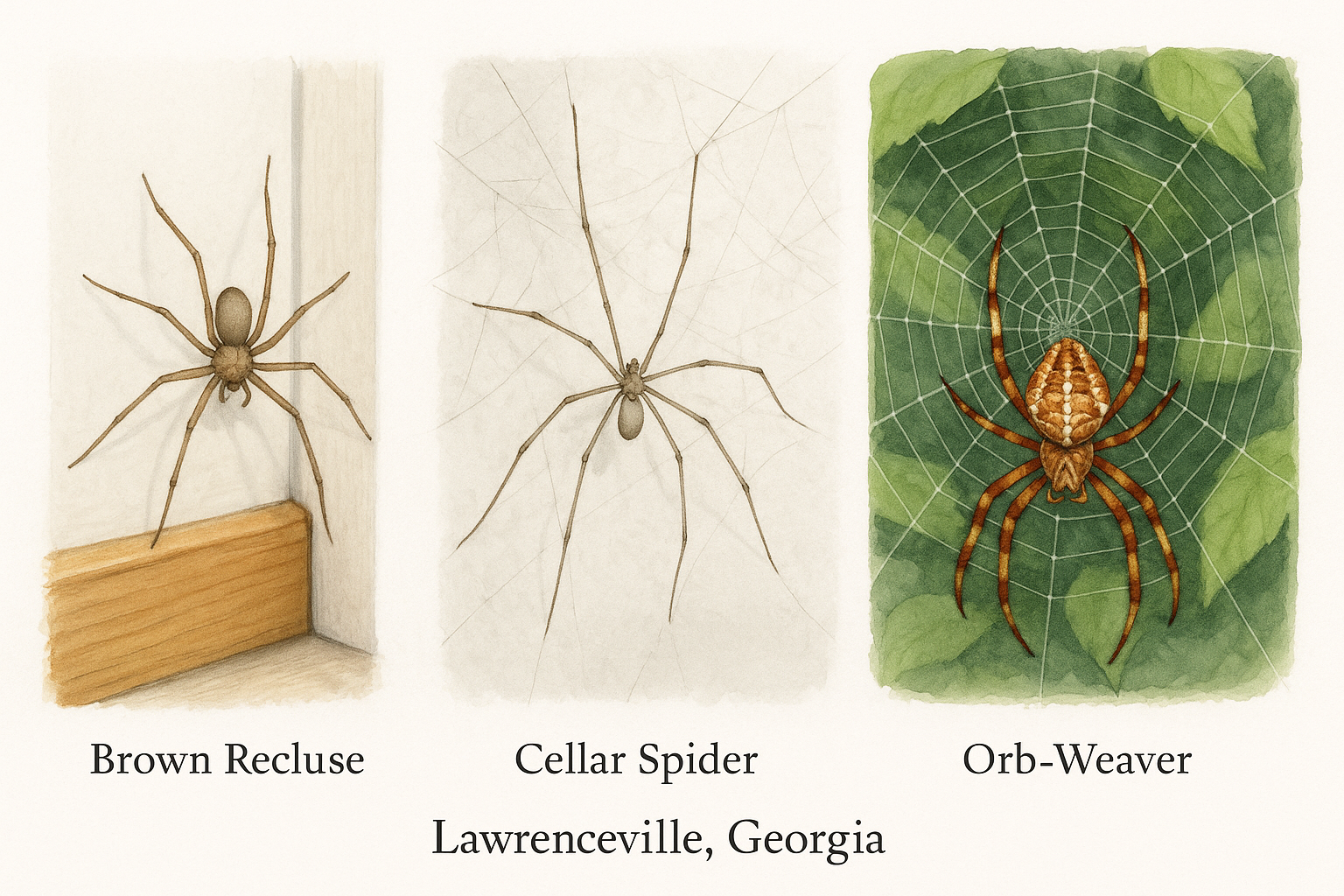
Lawrenceville homeowners most often encounter three spider species that can turn a routine cleaning into a cause for concern: the brown recluse, the cellar spider, and the orb‑weaver. Knowing where each likes to hide and what health risks they pose helps you decide whether a simple DIY removal will suffice or you need a professional treatment.
Brown Recluse
These small, violin‑shaped arachnids favor quiet, dry spaces. Inside the home you’ll find them in basements, closets, under furniture, and even inside stored cardboard boxes. Outdoors they linger in woodpiles, sheds, and garden debris where humidity stays low.
The primary danger is their bite. While most bites cause only mild irritation, a brown recluse bite can lead to necrotic lesions, fever, and, in rare cases, systemic infection. Prompt medical attention is recommended if you notice a painful, expanding wound.
Cellar Spider
Also called “daddy‑long‑legs,” cellar spiders love the cool darkness of basements, crawl spaces, and garage corners. They spin irregular, tangled webs that often drape from ceiling beams to floor joists.
Vivid scenario: Imagine you’re pulling a box of holiday decorations from a basement shelf. A long‑legged spider darts across the floor, its web glistening in the low light. You pause, watch it settle on the corner of the box, then gently sweep it away with a broom. The spider is harmless—it rarely bites humans and actually helps control other insects.
Orb‑Weaver
Orb‑weavers are the classic garden spiders you see crafting perfect circles of silk on fence posts, shrub branches, and patio railings. Inside, they may set up in sun‑lit windowsills or behind curtains.
These spiders pose no medical threat; their bites are comparable to a bee sting at most. The main issue for homeowners is the visual nuisance of large, decorative webs that can make a room feel untidy.
According to the CDC spider bite statistics, Georgia reports fewer than 100 spider‑related medical visits per year, a fraction of which involve brown recluse bites. The low incidence underscores that most encounters are harmless, but the potential severity of a recluse bite still warrants professional assessment.
Quick ID checklist for the three species:
- Brown Recluse: Six eyes in a violin‑shaped pattern, uniform brown color, prefers dry, undisturbed indoor spots.
- Cellar Spider: Long, thin legs, small body, builds irregular cobwebs in low‑light corners.
- Orb‑Weaver: Large, rounded abdomen with patterned markings, constructs circular webs in sunny outdoor areas.
Key Factors That Influence Pricing
Inspection complexity
Before any spray is applied, our technicians conduct a thorough inspection. The time spent can swing dramatically depending on how easy it is to reach crawl spaces, attics, or wall voids. A home with a single‑story layout and clear access points might be surveyed in 30 minutes, while a property riddled with hidden compartments or multiple levels can require an hour or more, driving up labor costs.
Treatment types
Treatment choice is the next cost driver. Conventional chemical sprays are fast and effective for many species, but they often require higher concentrations and repeat visits to stay within EPA‑mandated application limits. Integrated Pest Management (IPM), on the other hand, blends low‑impact chemicals with habitat modification, monitoring, and physical barriers. While IPM may involve more upfront labor for sealing entry points, the reduced chemical load can lower material expenses and provide longer‑term protection.
Property size and square‑footage
Square footage directly influences both labor and material calculations. Technicians typically estimate a base amount of product per 1,000 sq ft, then adjust for the number of treatment zones—such as interior rooms, exterior perimeters, and outdoor structures. A 1,500‑sq‑ft home will generally need fewer spray passes and less perimeter fogging than a sprawling 2,500‑sq‑ft property, translating into a noticeable price gap.
Severity levels
Infestation severity adds another layer. Light infestations—only occasional sightings—may be resolved with a single spot‑treatment, keeping costs low. Moderate problems often require a full‑property spray and a follow‑up visit. Heavy infestations, where webs blanket walls and spiders are active day and night, demand multiple applications, intensified monitoring, and sometimes structural remediation, all of which push the bill upward.
Side‑by‑side example
Consider two typical jobs: a modern 1,500‑sq‑ft suburban home with a light infestation, and a 2,500‑sq‑ft historic house battling a heavy infestation.
| Property | Size | Age/Style | Infestation Level | Estimated Labor | Product Cost | Total Estimate |
|---|---|---|---|---|---|---|
| Suburban Home | 1,500 sq ft | Modern | Light | $80 | $70 | $150 |
| Historic House | 2,500 sq ft | Victorian | Heavy | $150 | $130 | $280 |
All of these variables are reflected in the EPA pest‑management cost factors, which cap the amount of active ingredient per square foot and dictate minimum re‑entry intervals. Because technicians must honor those limits, more extensive jobs often require additional crew time, directly influencing the final quote.
Breakdown of Average Costs for Spider Control
When you call a professional pest‑control service in Lawrenceville, the first question on most homeowners’ minds is price. The good news is that Anthem Pest Control offers transparent, tiered options that fit a range of budgets while still delivering the thorough spider protection you need.
Typical Pricing Tiers
- One‑time treatment: $120 – $180 per visit.
- Quarterly service: $350 – $500 annually (four visits per year).
- Annual protection plan (includes monitoring): $600 – $850 per year.
These figures are anchored in the NPMA 2023 pricing survey and have been adjusted for Georgia’s cost‑of‑living index, which tends to be about 5 % higher than the national average. That adjustment ensures the numbers reflect what a Lawrenceville homeowner can realistically expect to pay.
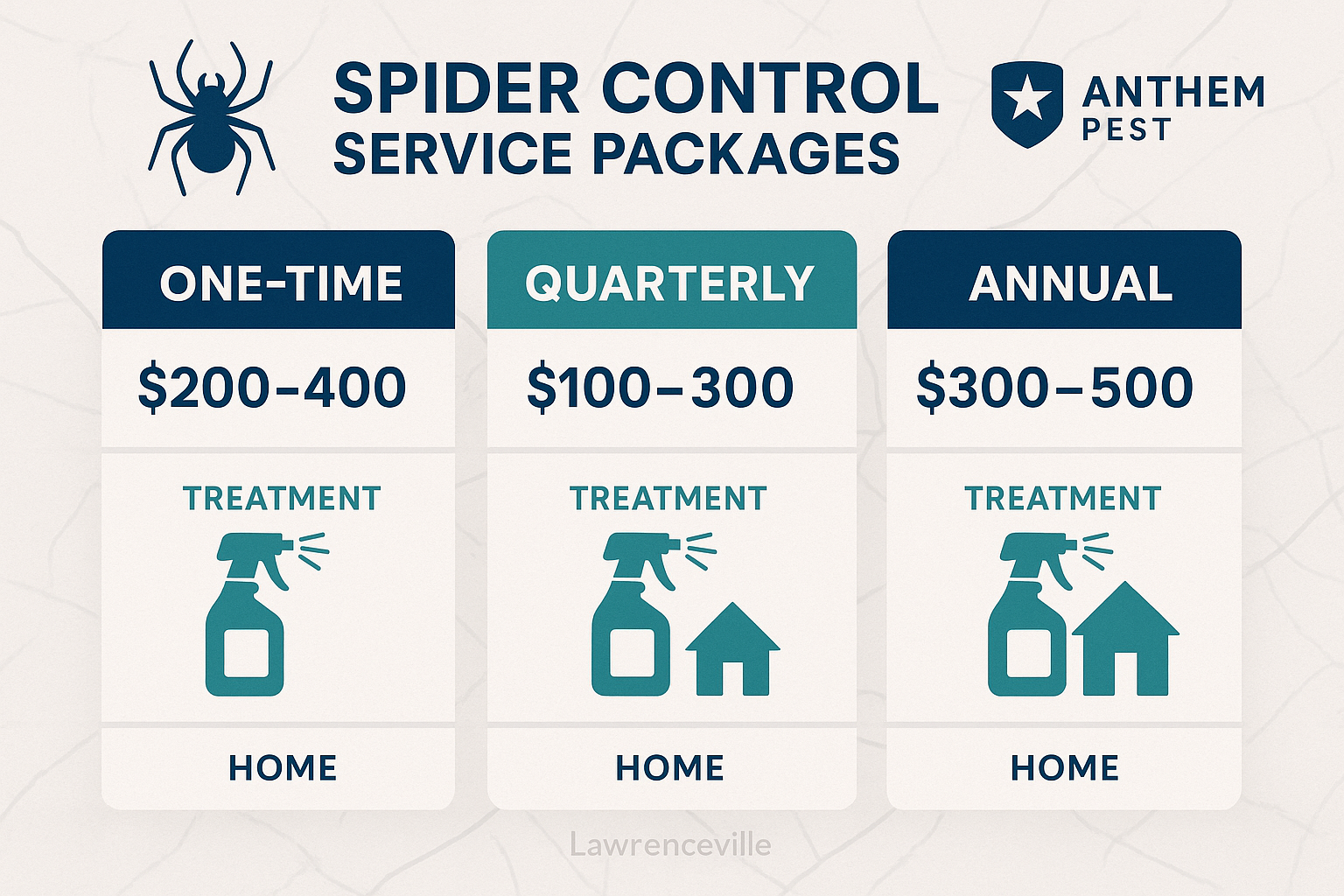
Cost‑Calculator for a 2,000‑sq‑ft Home
| Tier | Frequency | Total Annual Cost |
|---|---|---|
| One‑time treatment | 1 visit | $120 – $180 |
| Quarterly service | 4 visits | $350 – $500 |
| Annual protection plan | 1 comprehensive visit + monitoring | $600 – $850 |
What’s Included in Each Tier?
One‑time treatment focuses on immediate spider reduction. Our technicians apply a residual insecticide to interior baseboards, doorways, and exterior perimeters. The visit also includes a brief inspection to locate high‑risk entry points, but follow‑up visits are not part of this package.
Quarterly service spreads the same residual treatment across four evenly spaced appointments. This schedule keeps the chemical barrier fresh, tackles any new spider activity, and provides two short follow‑up checks (mid‑season and pre‑winter) to adjust treatment zones as needed. Homeowners also receive a simple “spider‑spotting” checklist to help monitor activity between visits.
Annual protection plan is the most comprehensive option. It starts with a full‑home inspection, followed by a deep‑clean treatment that targets interior voids, crawl spaces, and the exterior foundation. The plan includes quarterly “touch‑up” sprays, remote monitoring via our smart‑sensor network, and an annual report that outlines spider trends in your home and recommendations for long‑term prevention. This tier is ideal for families who want to eliminate spiders once and forget about them for the rest of the year.
Choosing the right tier depends on your current spider situation, how much peace of mind you want, and your budget. No matter which option you select, Anthem Pest Control guarantees that every visit follows industry‑best practices, uses EPA‑approved products, and prioritizes the safety of your family and pets.
Choosing the Right Treatment Approach
Conventional Chemical Sprays
Traditional spider control relies on contact and residual chemicals applied as a fine mist or foam. These contact sprays kill spiders on contact, while residual formulas remain active on surfaces for weeks, attacking any spider that later walks across. These products are effective against fast‑moving, surface‑dwelling species such as house spiders and cellar spiders, but they often require repeated applications to keep the perimeter clear.
Integrated Pest Management (IPM)
IPM takes a broader view. It starts with exclusion—sealing cracks, repairing screens, and fixing foundation gaps that give spiders a highway into your home. Next comes habitat reduction: removing clutter, trimming vegetation, and managing moisture to make the environment less inviting. Finally, targeted low‑toxicity treatments are applied only where monitoring shows activity, using baits, dusts, or spot‑sprays that pose minimal risk to humans and pets.
Why Many Homeowners Prefer IPM
- Lower long‑term costs: By eliminating entry points and removing food sources, fewer chemical applications are needed over time.
- Reduced chemical exposure: Low‑toxicity products and strategic placement keep families and pets safer.
- Higher efficacy for reclusive species: Funnel‑web and cellar spiders hide in cracks and basements where exclusion and habitat work better than blanket sprays.
Real‑World Example from Lawrenceville
When the Martins noticed an uptick in cellar spiders, they switched from quarterly spray contracts to an IPM program. After sealing foundation cracks, installing door sweeps, and using a few low‑toxicity dust applications in the crawl space, their annual bill dropped from $480 to $380. Over two years they saved roughly 20% while reporting fewer spider sightings and no adverse health reactions.
How to Choose the Best Fit for Your Home
Start by assessing your priorities. If you need an immediate knock‑down of visible spiders and are comfortable with standard chemicals, a conventional spray may be the quickest solution. If you’re concerned about long‑term health, have children or pets, or deal with hidden species, IPM offers a sustainable, cost‑effective path. Talk to a local Anthem Pest professional—provide details about spider activity, home construction, and budget. They can run a quick inspection, estimate the cost of sealing and targeted treatments, and recommend a plan that balances upfront expense with lasting peace of mind.
How Anthem Pest Provides Transparent Pricing
Free On‑Site Inspection – What Happens
When you call Anthem Pest, the first step is a free on‑site inspection. A licensed technician arrives, walks through every room, and notes any spider activity, entry points, and conditions that attract pests. During the 30‑minute walkthrough they use flashlights, moisture meters, and a handheld magnifier to locate hidden webs and egg sacs, then take photos and record any structural cracks that could become future entry points. They identify the species—whether common house spiders, brown‑recluse, or black‑widow—and assess the severity of the infestation before recommending a treatment strategy that matches the level of risk and your home’s layout.
From Assessment to Written Estimate
Based on that assessment, the technician builds a customized treatment plan. The plan lists each product by brand, the exact amount to be applied, and the labor hours required. It also outlines the expected timeline—typically two visits spaced one week apart—and includes a written guarantee that any surviving spiders will be retreated at no extra charge. Within 24 hours Anthem Pest emails you a clear, written estimate that breaks down every line item, so you know exactly what you’re paying for before any work begins.
You can review the full range of options on the Anthem Pest spider‑control services page, which outlines everything from one‑time treatments to annual protection packages.
Sample Quote for a Typical Lawrenceville Home
Below is a sample quote that illustrates how transparent the pricing can be. Each line item is presented with a unit price and a total cost, so you can see how the overall figure is calculated.
| Service | Quantity / Area | Unit Price | Total |
|---|---|---|---|
| Free Inspection | 1 visit | $0.00 | $0.00 |
| Initial Treatment (spray & dust) | 2,200 sq ft | $0.12 per ft² | $264.00 |
| Follow‑up Visit (re‑treatment) | 1 visit | $85.00 | $85.00 |
| Spider‑Free Guarantee (retreat if needed) | Included | $0.00 | $0.00 |
| Total Estimate | $349.00 |
Next Steps for You
- Call 877‑371‑8196 to schedule your free inspection.
- Ask the scheduler to email you the written estimate before the technician arrives.
- Inquire about the company’s “Spider‑Free Guarantee” and any follow‑up visits included.
- Discuss payment options, such as credit‑card, check, or a seasonal service plan.
Transparency doesn’t stop at pricing; Anthem Pest keeps you informed throughout the treatment, providing post‑service reports and tips to keep spiders out year‑round.
When to Treat and How to Prevent Future Infestations
In Lawrenceville, spider activity follows a predictable seasonal rhythm. The busiest months run from late spring through early fall, when warm temperatures and abundant outdoor lighting draw spiders into homes. During this window you’ll notice more webbing in corners, basements, and garages, especially after a rainy spell. Knowing this peak period helps you plan treatment before the insects become a nuisance.
Pre‑season treatment for optimal results
Our experience shows that a pre‑emptive application in early spring—typically March or early April—offers the best protection. Treating before spiders emerge gives the insecticide a chance to establish a barrier around entry points, deterring adults from setting up nests inside your house. Early intervention also reduces the amount of product needed later in the season, which translates into lower overall costs for you.
Prevention checklist
Even with professional treatment, everyday habits play a crucial role in keeping spiders at bay. Use the following checklist to create an unfriendly environment for unwanted eight‑legged guests:
- Reduce indoor clutter: store boxes, shoes, and laundry off the floor.
- Seal cracks and crevices around windows, doors, and foundation.
- Manage outdoor lighting: switch to yellow‑tone bulbs and keep lights away from building walls.
- Keep the yard tidy: remove piles of leaves, wood, and debris.
- Trim vegetation: ensure shrubs, vines, and tree branches are at least 2 feet away from the house.
For a science‑backed timeline, consult the Georgia Extension pest calendar, which outlines when spider activity typically spikes in the region.
Why regular maintenance matters
Consistent upkeep—such as annual inspections, routine sealing of entry points, and seasonal pre‑treatments—cuts down on the need for emergency, repeat visits that can quickly inflate your pest‑control bill. By staying ahead of the infestation curve, you not only protect your family’s comfort but also preserve the structural integrity of your home. In short, a little preventive effort today saves you both time and money when the next spider season rolls around.
Frequently Asked Questions
Are spider sprays safe for pets?
Anthem uses products that meet the U.S. Environmental Protection Agency (EPA) safety standards for residential use. Most of our formulations are low‑toxicity, meaning they contain the minimum amount of active ingredient needed to knock out spiders while posing little risk to dogs, cats, birds, or fish. When a pet‑friendly option is available, we apply it in areas that are out of direct reach and advise a short 30‑minute re‑entry window. We also label each product and give you clear post‑t
Protect Your Home with Affordable Spider Control Today
Understanding the cost of spider control in Lawrenceville is easier when you see the three clear pricing tiers Anthem Pest offers. The first tier, a basic single‑treatment plan, starts around $79 and covers a one‑time interior spray for common house spiders. The second tier adds a quarterly maintenance schedule for roughly $149, giving you four visits a year and continuous protection against seasonal spikes. The premium tier bundles a full‑home treatment—including exterior perimeter, garage, and crawl‑space—plus unlimited follow‑up visits for about $229, delivering the most comprehensive shield for high‑risk properties.
Beyond numbers, Anthem Pest brings deep local expertise to every job. Our technicians know the exact spider species that thrive in Lawrenceville—like the aggressive brown recluse and the web‑spinning garden spider—and understand how their activity peaks in late summer and early fall. That insight lets us time treatments precisely, targeting nests before they spread and tailoring products to the local climate, which maximizes effectiveness while minimizing chemical use.
If you’re ready for a free, no‑obligation inspection, simply give us a call at 877‑371‑8196. Our friendly team will schedule a same‑day visit, walk you through the estimate, and answer any questions you have about protecting your family and belongings. When you’re comfortable with the plan, you can book online or click the link below to learn more about our services.
Take the first step toward a spider‑free home today—Visit Anthem Pest Control and secure your peace of mind. Our clear estimates mean no surprise fees, just reliable protection.