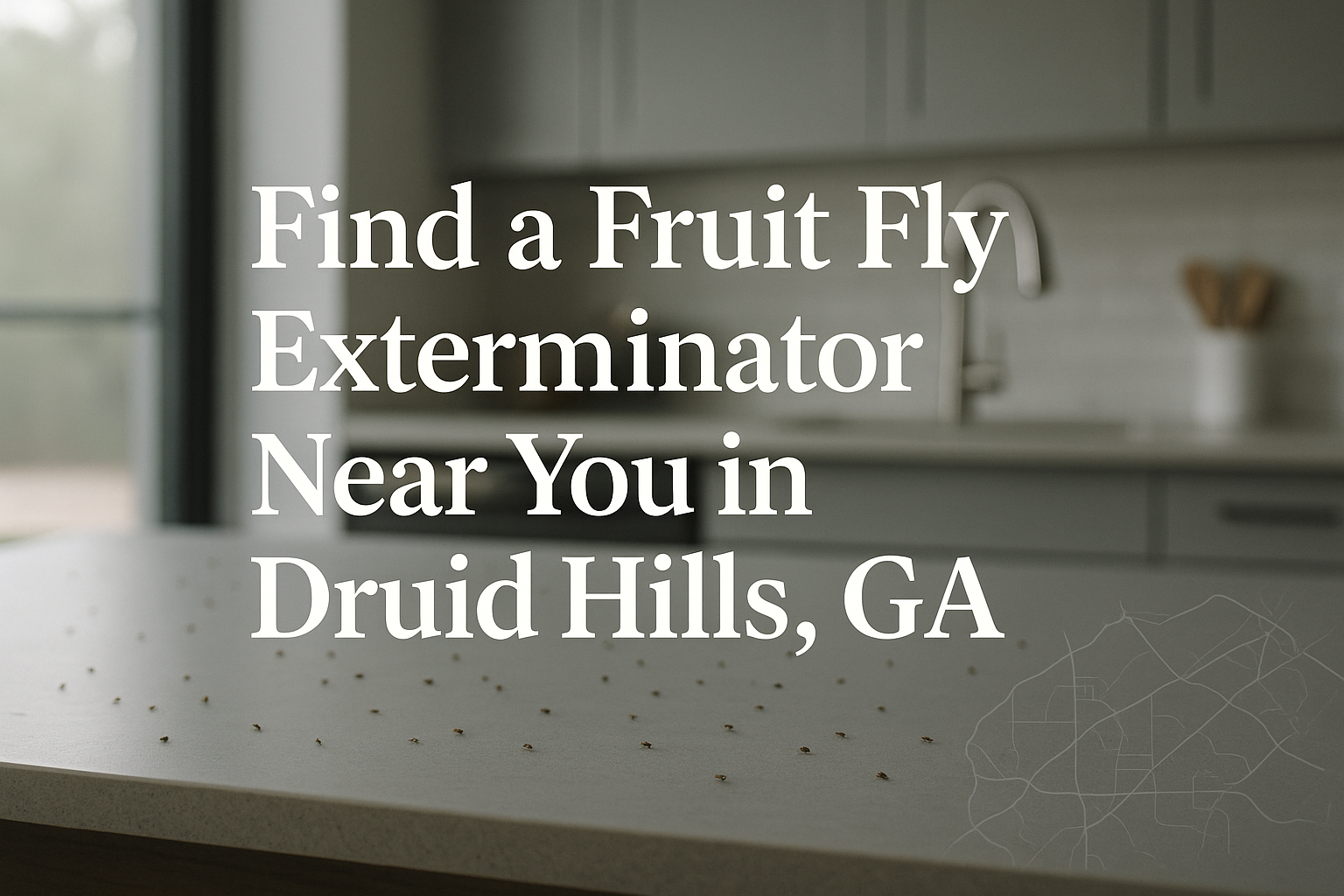
Why Fruit Flies Matter in Druid Hills

In Druid Hills, a single fruit‑fly can turn a quiet kitchen into a buzzing nuisance in less than two weeks. The insect’s entire life cycle—egg, larva, pupa, and adult—compresses into an 8‑10‑day sprint when temperatures stay above 75°F. Warm, humid Georgia summers act like a fast‑forward button, shrinking each developmental stage and allowing dozens of generations to emerge before the season ends.
The latest EPA residential pest‑management statistics for 2024 reveal a 12 % increase in fruit‑fly complaints across the Atlanta metro area during the summer months. That spike isn’t random; it mirrors the region’s climate pattern and the surge of outdoor gatherings that leave fruit, sugary drinks, and compost piles exposed.
For Druid Hills homeowners, those numbers translate into a clear warning: fruit flies can establish a breeding colony before you even notice the first tiny winged visitor. The neighborhood’s mature trees, well‑tended gardens, and historic homes with vintage kitchens create perfect micro‑habitats—moist soil in potted plants, lingering fruit scraps, and even the occasional damp crawl space.
Early detection is your most cost‑effective defense. A single adult female can lay up to 150 eggs on the surface of fermenting fruit or in damp organic matter. Within days, those eggs hatch into larvae that feed, grow, and emerge as new adults ready to reproduce. By the time you spot a few flies hovering near the sink, an entire hidden population may already be thriving.
Understanding this rapid lifecycle and the recent uptick in complaints helps you act before the problem spirals. In the next sections, we’ll walk you through practical inspection tips, preventive measures, and why partnering with a local expert—like Anthem Pest Control—ensures a swift, safe resolution.
Spotting Fruit Flies in Your Home
Fruit flies are tiny, but they’re not easy to miss once you know what to look for. An adult fruit fly measures roughly 1/8 inch (about 3 mm) in length, sports a tan‑brown body and striking red eyes, and its wings display a faint, mottled pattern that looks like a miniature fingerprint. These features set them apart from the larger, dull‑gray house flies that buzz around doors and windows.
Where They Love to Hang Out
Even the most diligent homeowner can overlook the favorite hang‑outs of fruit flies. In most kitchens, you’ll find them clustering in three predictable hotspots:
- Overripe fruit bowl: Soft, sugary fruit releases volatile compounds that act like a perfume for fruit flies.
- Kitchen compost bin: Moist organic waste creates a perfect breeding ground, especially if the lid isn’t sealed tightly.
- Drain traps: The dark, damp environment of sink drains accumulates food particles that hatch into larvae within days.
Quick‑Check Identification Graphic
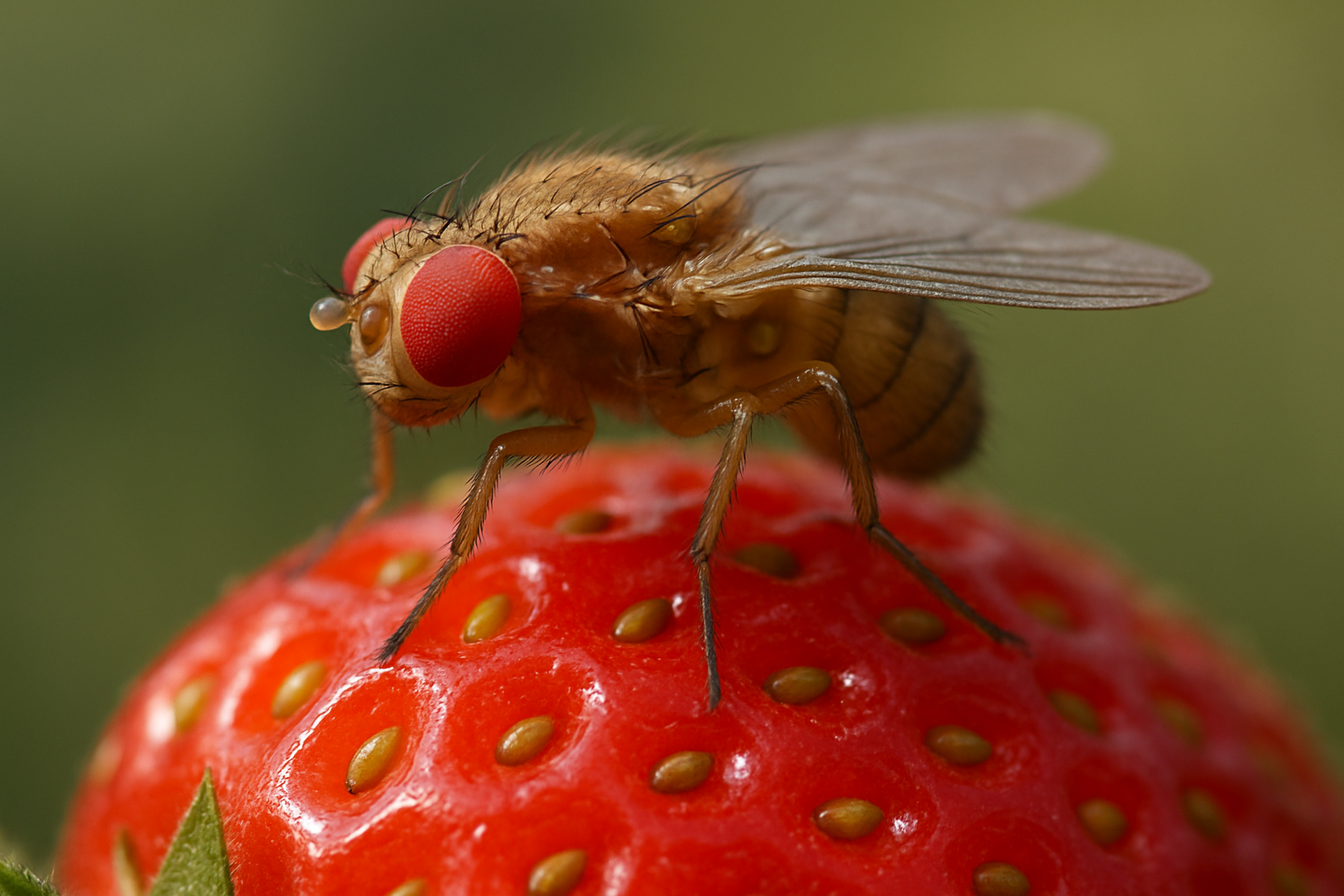
The graphic above breaks the visual cues into bite‑size checkpoints. When you spot a tiny insect, run through the list: size ≈ 3 mm? tan‑brown body? red eyes? If the answer is “yes” to all three, you’re likely looking at a fruit fly.
Fruit Flies vs. Common Look‑Alikes
| Characteristic | Fruit Fly (Drosophila melanogaster) | Fungus Gnat | Small House Fly |
|---|---|---|---|
| Size | ≈ 3 mm (1/8 in) | 2–4 mm, slightly slimmer | ≈ 6 mm, noticeably larger |
| Body Color | Tan‑brown | Dark gray to black | Gray‑black, no tint |
| Eye Color | Bright red | Dark brown | Dark brown |
| Wing Pattern | Faint mottling, almost transparent | Clear, no pattern | Clear, larger wings |
| Preferred Habitat | Overripe fruit, compost, drains | Moist soil, houseplants | General indoor/outdoor surfaces |
By keeping these distinctions in mind, you’ll avoid the common pitfall of treating a harmless fungus gnat as a fruit‑fly infestation—or vice versa. Accurate identification is the first step toward a targeted, cost‑effective solution, whether you choose a DIY trap or call a professional like Anthem Pest Control for a thorough treatment.
Health Risks and Cost of Fruit Fly Infestations
Fruit flies may look harmless, but in a Druid Hills kitchen they act like tiny couriers delivering microbes from trash, overripe produce, and damp drains straight onto the food you eat. Each time a fly lands, it deposits a film of saliva and regurgitate that can contain yeast, bacteria, and even trace amounts of mold spores. Over time, this constant shuttling creates a hidden contamination pathway that turns a simple fruit bowl into a breeding ground for food‑borne pathogens.
How flies spread contamination
- Contact with decaying fruit or vegetables transfers yeast and bacterial colonies onto the fly’s body.
- Flies then alight on clean surfaces—countertops, utensils, or open containers—leaving microscopic deposits.
- Regurgitation while feeding adds digestive enzymes that help microbes survive and multiply on new food sources.
- Dropping fecal matter during flight introduces additional bacteria such as E. coli and Salmonella.
Potential health concerns
The most common outcomes are mild but can become serious for sensitive individuals. Yeast carried by fruit flies can trigger opportunistic infections, especially in people with weakened immune systems or uncontrolled diabetes. Some residents report allergic reactions—skin irritation, sneezing, or watery eyes—after prolonged exposure to the flies’ waste particles. While fruit flies rarely cause severe disease on their own, they often act as a catalyst that turns a small kitchen slip‑up into a full‑blown food‑borne illness.
According to the Centers for Disease Control and Prevention, fruit‑fly contamination accounted for roughly 5 % of food‑borne illness outbreaks in the Southeast in 2023. The CDC’s analysis (2023 outbreak report) highlights that even low‑level infestations can contribute to larger public‑health concerns when they intersect with other hygiene gaps.
Financial impact on homeowners
Beyond health, the pocket‑book feels the sting. The average Druid Hills homeowner spends between $150 and $300 per incident. That range covers discarded spoiled food, emergency professional treatment, and the cost of a follow‑up inspection to ensure the problem is truly eradicated. Repeated infestations can quickly climb into the high‑hundreds, especially when you factor in lost groceries and the time spent sanitizing every surface.
Understanding both the medical and monetary stakes makes it clear why swift, professional intervention—like the services offered by Anthem Pest Control—is a smart investment in your family’s well‑being.
Proven Prevention Tips for Druid Hills Homeowners
Seasonal Fruit‑Handling Routine
One of the simplest, yet most effective, ways to keep fruit flies out of your kitchen is to eliminate their favorite breeding ground – overripe fruit. In Druid Hills, where summer humidity encourages rapid fruit decay, make it a habit to inspect countertops, tables, and pantry shelves at least once a week. Any fruit that has softened, darkened, or begun to ferment should be tossed or moved into a sealed container such as a glass jar with a tight‑fitting lid. Likewise, store whole produce in the refrigerator or in airtight bins instead of leaving it exposed on the counter. This weekly sweep removes the scent cues that attract adult flies and prevents larvae from completing their life cycle inside your home.
Monthly Drain Maintenance
Fruit fly larvae love the organic film that builds up in kitchen and bathroom drains. A quick, chemical‑free cleaning routine can shut down that hidden nursery. Once a month, pour a cup of baking soda down each drain, followed by an equal amount of white vinegar. The bubbling reaction loosens slime, and after five minutes, flush the pipe with hot water. For stubborn buildup, repeat the process and finish with a short run of boiling water. This 1:1 vinegar‑baking soda solution not only curtails fruit flies but also keeps your plumbing odor‑free and flowing smoothly.
Neighborhood Clean‑Up Programs
Fruit flies don’t respect property lines; they thrive wherever food residue or standing water accumulates. Druid Hills residents can amplify their personal efforts by joining the community clean‑up initiatives that run quarterly on Ponce de Leon Ave and Briarcliff Rd. These events coordinate volunteers, the city’s public works crew, and local businesses to collect discarded organic waste, trim overgrown vegetation, and empty storm drains. Participation not only reduces the overall attractant load in the neighborhood but also fosters a collective sense of stewardship. If you’re unable to attend, simply keep your own yard tidy—regularly mow lawns, remove fallen fruit from trees, and store compost in sealed bins.
For a deeper dive into home sanitation strategies, visit Anthem Pest’s blog on fruit‑fly prevention.
- Weekly fruit check: Remove ripened fruit and store produce in sealed containers.
- Monthly drain cleaning: Use a 1:1 vinegar‑baking soda solution followed by hot water.
- Community involvement: Participate in clean‑up events on Ponce de Leon Ave and Briarcliff Rd to reduce neighborhood attractants.
When DIY Falls Short – Hiring a Pro
Most homeowners start with over‑the‑counter traps or homemade solutions when fruit flies appear. Those methods can work for a few days, but they often miss the hidden breeding grounds that keep the infestation alive. Knowing when to call in a professional can save you time, money, and a lot of frustration.
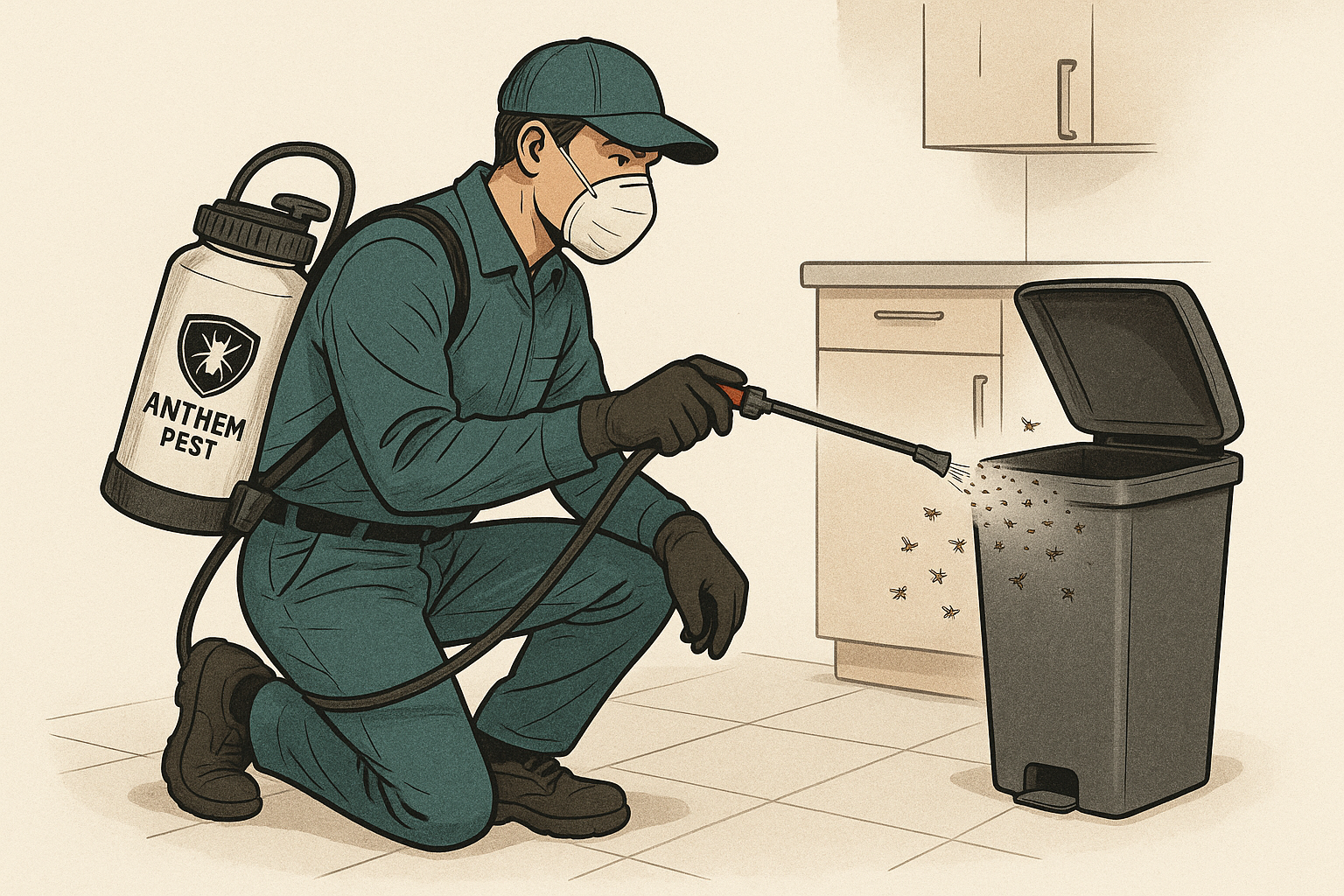
Red flags that signal you need a professional
- Persistent swarms – Traps catch a few flies, but the kitchen or pantry remains a buzzing hotspot day after day.
- Hidden breeding sites – Fruit flies love damp, organic debris. If you can’t locate the source (e.g., under appliances, in drain pipes, or inside compost bins), the problem will keep resurfacing.
- OTC traps fail repeatedly – When store‑bought traps lose effectiveness within a week, it’s a clear sign the infestation is deeper than surface level.
- Spread to multiple rooms – A localized issue that suddenly appears in bathrooms, closets, or even the garage indicates a widespread breeding network.
When any of these signs appear, a professional inspection is the smartest next step. DIY attempts often only mask the symptoms while the root cause continues to multiply.
What Anthem Pest brings to the table
Anthem Pest’s fruit‑fly service is designed to eradicate the problem at its source and keep it from returning. The process includes:
- Comprehensive inspection – Certified technicians examine kitchens, drains, garbage areas, and any moist zones where larvae may hide.
- EPA‑registered bait stations – Strategically placed, these stations attract adult flies and deliver a low‑dose, fast‑acting insecticide that targets the entire population without harming pets or children.
- Follow‑up visit – Within 7‑10 days, a second appointment confirms that the bait stations have reduced activity and that no new breeding sites have emerged.
- Satisfaction guarantee – If fruit flies persist after the full treatment cycle, Anthem will re‑treat at no additional cost, ensuring you’re completely pest‑free.
All products used are EPA‑approved, meaning they meet strict safety standards for indoor use. Anthem’s technicians are trained to apply treatments precisely, minimizing exposure to household members while maximizing effectiveness against the flies.
Transparent pricing you can count on
Anthem Pest offers clear, upfront pricing so you know exactly what you’re paying for:
- Standard residential treatment: $149 – $229 for homes up to 2,500 sq ft.
- Larger homes (over 2,500 sq ft): $199 – $279, reflecting the additional time and materials required.
These rates are based on the 2025 pricing listed on Anthem’s website and include the full service package—inspection, bait stations, follow‑up, and the satisfaction guarantee. No hidden fees or surprise charges appear on your bill.
Choosing a professional like Anthem Pest not only eliminates the current infestation but also puts preventive measures in place. With EPA‑approved methods, family‑safe products, and a transparent pricing model, you can restore peace of mind to your Druid Hills home without the guesswork of DIY trials.
Anthem Pest’s Local Edge in Druid Hills
When fruit flies turn a kitchen into a buzzing nuisance, the difference between a quick fix and a lingering problem often comes down to who’s treating it. In Druid Hills, Anthem Pest’s technicians arrive not just with EPA‑approved products, but with a training program that zeroes in on Atlanta‑area fruit‑fly activity patterns. They spend months mapping seasonal peaks, preferred breeding sites, and the subtle ways the insects exploit the city’s climate. That localized knowledge lets them target the source before it spreads to neighboring rooms. They also stay current with the latest Integrated Pest Management (IPM) guidelines, ensuring every application balances effectiveness with the safety of children and pets.
Deep Knowledge of Druid Hills Homes
Druid Hills isn’t a cookie‑cutter suburb; its streets are lined with early‑20th‑century colonial and craftsman homes, each with unique architectural quirks that can hide fruit‑fly larvae. Anthem’s crews know that the wide eaves of a colonial, the built‑in window seats of a craftsman, and even the historic brick porches create micro‑habitats where organic debris accumulates. By inspecting these features during the initial walk‑through, they can place bait stations and residual sprays exactly where the insects congregate, reducing retreat visits by up to 60 %.
Neighborhood Voices: Real Satisfaction Scores
Here’s what neighbors are saying:
Virginia‑Highland resident, Maria L. gave Anthem Pest a 4.9‑star rating: “The tech knew exactly where the fruit flies were hiding behind my kitchen cabinets. Within 48 hours the swarm was gone, and the follow‑up was prompt and courteous.”
Morningside homeowner, Jamal R. posted a 5‑star review: “I’ve lived here for 15 years and never saw a pest company that understood the historic homes like Anthem does. Their treatment plan was clear, the price transparent, and the result was immediate.”
Speedy Service and Community Roots
Because Anthem maintains a micro‑office just north of the Druid Hills BeltLine, the average response time is under two hours for emergency fruit‑fly calls. That proximity also means the team participates in local events—sponsoring the annual Druid Hills Garden Tour, offering free pest‑identification workshops at the neighborhood library, and volunteering for the historic home preservation committee. Homeowners repeatedly tell us that this visible presence builds trust far beyond a single treatment. Anthem backs every treatment with a 30‑day satisfaction guarantee, so if fruit flies reappear, a follow‑up visit is scheduled at no extra charge.
Get Help Today
Ready to reclaim your kitchen? Call 877‑371‑8196 or book online for a same‑day inspection. Our Druid Hills specialists are standing by to apply the locally‑tuned solution that keeps fruit flies out for good.
Frequently Asked Questions
How long does a treatment take?
Most fruit‑fly treatments in Druid Hills are completed in 30‑45 minutes. Our technician first inspects the infested areas, places low‑toxicity bait stations, and applies a targeted residual spray where needed. Because we focus on precise placement rather than blanket fogging, the job is quick, quiet, and finished before dinner. If you have young children or pets, keep them in a separate room for about 15 minutes while the spray dries; we then wipe any excess, leaving the area ready for normal use.
Are the chemicals safe for children and pets?
Absolutely. We use EPA‑approved baits and spot‑sprays that are specifically formulated for low toxicity. No foggers or wide‑area aerosols are used, which means there’s no lingering mist that could drift into living spaces. Bait stations are placed out of reach, and we supply a safety sheet; food prep surfaces are never sprayed, so cooking can resume immediately. After the 15‑minute drying period, families and pets can resume normal activities without restriction.
Can I schedule quarterly preventive visits?
Yes, and it’s the smartest way to stay ahead of fruit‑fly spikes during the warm months. Our quarterly plan includes a comprehensive inspection, bait replenishment, and a follow‑up spray if needed. You can choose the months that suit your schedule, and the $399 plan includes all four visits plus one complimentary emergency call if flies reappear between appointments. When you bundle four visits into an annual contract, the price drops to $399—a discount of over 20 % compared with single‑service rates.
What warranty and follow‑up policy do you offer?
All Anthem Pest treatments come with a 30‑day satisfaction guarantee. If fruit flies reappear within that window, we’ll return at no extra charge to re‑treat the affected zones. For preventive contracts, we perform a brief post‑visit check after each service to confirm that bait stations are still active and that no new hotspots have emerged. We store warranty details in your online portal and follow each visit with a brief phone check‑in to ensure satisfaction. Should any issue arise outside the guarantee period, our customer‑service line (877‑371‑8196) is available 24/7 to arrange a prompt revisit.
Take Action with Anthem Pest Today
Early detection is the cornerstone of keeping fruit flies—and any unwanted guests—out of your home. A certified local exterminator knows the habits of Druid Hills’ most common pests, can spot infestations before they spread, and tailors treatment to your property’s unique layout. By acting quickly, you protect not only your kitchen but also the health of your family.
Now is the perfect time to schedule your free inspection. If you book within the next seven days, Anthem Pest will apply a limited‑time discount to your first service, giving you premium protection at a fraction of the cost.
At Anthem Pest, our mission is simple: safeguard homes and families with solutions that are safe for children and pets, proven effective against stubborn pests, and priced transparently so you never face hidden fees. Our technicians are locally trained, EPA‑certified, and equipped with the latest environmentally‑responsible products, ensuring every treatment works hard while leaving your living spaces untouched.
Ready to take the next step? Call us today at 877‑371‑8196 or click the button below to book your free inspection online. Our friendly team will confirm your appointment and lock in the discount, so you can enjoy a fruit‑fly‑free home without delay.
By choosing Anthem Pest now, you’ll receive:
- Rapid response within 24 hours of your request
- A comprehensive inspection that identifies all hidden entry points
- Customized treatment plan using low‑toxicity products
- Ongoing monitoring to keep fruit flies from returning
- Peace of mind backed by our satisfaction guarantee
Take advantage of this limited offer and let us handle the problem before it spreads.