Surprising Earwig Sightings in Norcross Homes

“I always thought earwigs belonged only in the garden,” says many Norcross homeowners the moment they spot a slender, dark‑gray insect scuttling across a kitchen counter or lurking in a damp basement corner. That sudden “out‑of‑place” feeling is more common than you might imagine, especially after a rainy spell or when humidity spikes in the fall. The surprise isn’t just a momentary shock—it’s a signal that these nocturnal critters have found a cozy bridge from the outdoors into the very rooms where you cook, store food, and relax.
In the next few minutes you’ll learn exactly what drives earwigs into your home, how much a professional removal or preventive treatment typically costs in Norcross, and which steps you can take to keep them out for good. We’ll break down the pricing into clear components—inspection, treatment, follow‑up visits, and any optional warranties—so you won’t be caught off guard by hidden fees. You’ll also discover simple, homeowner‑friendly prevention tips that reduce the need for repeat services, and we’ll walk you through the criteria for choosing a reputable pest‑control partner that matches Anthem Pest Control’s standards of safety, effectiveness, and transparency.
This guide is built on real‑world data gathered from local inspections, service records, and seasonal pest‑activity reports specific to the Norcross area. By grounding our recommendations in numbers—average labor rates, product costs, and regional pest pressure—you’ll see a clear, data‑driven picture of what to expect when you call a professional. We avoid vague estimates; instead, we provide ranges that reflect the true market in Fulton County, helping you budget confidently and avoid surprise invoices.
All of the information below is tailored to Norcross, Georgia. The city’s humid subtropical climate, frequent summer thunderstorms, and mature landscaping create an ideal environment for earwigs to thrive. Because we focus exclusively on this locale, the pricing, treatment timing, and preventive measures we discuss are calibrated to the exact conditions you face at home—whether you live in a historic bungalow near the city park or a newer ranch in a cul‑de‑sac.
Spotting the Culprits – Earwig Identification for Georgia Homeowners
Earwigs are easy to miss because they hide in dark, damp places and are most active after sunset. The adult insect has an elongated, flattened body that tapers toward the rear, typically measuring 12‑25 mm in length. The most distinctive feature is a pair of forceps‑like pincers (cerci) protruding from the last abdominal segment; males usually have curved, more robust pincers than females. Their wings, when present, lie flat over the back and are rarely seen because they prefer to crawl rather than fly.
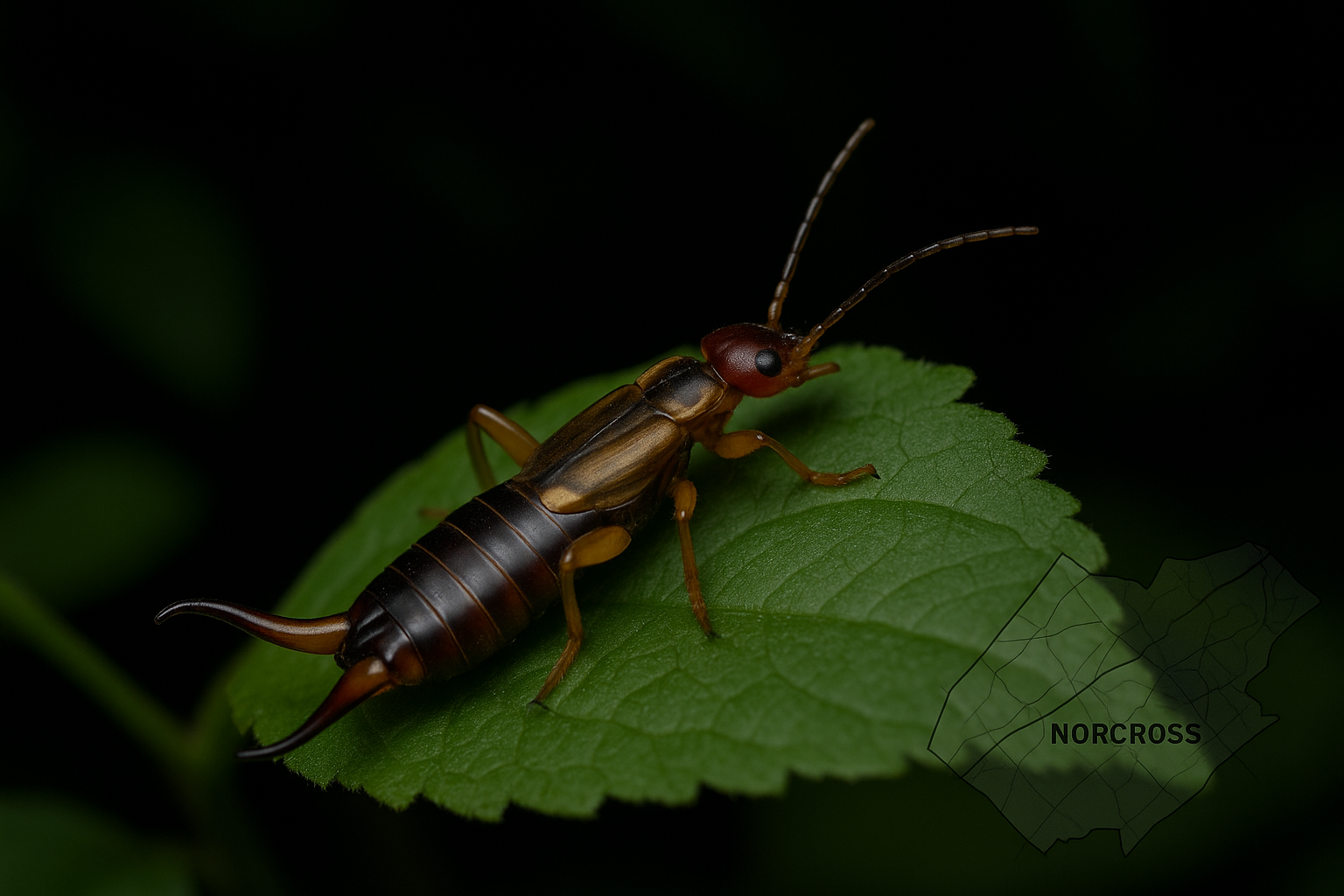
The species you’ll encounter most often in Norcross and the broader Georgia region is Forficula auricularia, the European earwig. This non‑native invader arrived in the United States in the early 1900s and has since adapted to our humid climate. It displays a dark brown to reddish‑black coloration, with the characteristic pincers that can reach up to one‑third of its total length. While it is not a disease vector, its presence can signal moisture problems and can cause minor damage to seedlings, fruit, and soft‑bodied insects.
Accurate identification is the first step toward an effective control plan. Misidentifying earwigs as harmless house crickets or as dangerous pests can lead to unnecessary pesticide use or, conversely, to ignoring a moisture issue that encourages larger infestations. By confirming you’re dealing with F. auricularia, you can choose targeted, low‑impact methods such as habitat modification, sealing entry points, and, when needed, a spot‑treatment that focuses on the insects’ hiding places.
EPA statistic: Approximately 25 % of suburban Southeast homes report earwig activity each summer, according to the 2024 EPA pest‑activity report. This means that one in four households in the Norcross area is likely to encounter these nocturnal visitors during the warm months.
Consider the story of a Norcross homeowner, Lisa M., who discovered a line of tiny, dark insects crawling out of the bathroom drain after a late‑night shower. At first she thought they were small beetles, but a quick flash‑light inspection revealed the unmistakable cerci. The next morning she called Anthem Pest Control, and our technician confirmed the insects were indeed F. auricularia. By sealing the drain gap and reducing bathroom humidity, we eliminated the attraction point and prevented future sightings.
Tips for Visual Confirmation
- Size: Look for insects 1–2 cm long; larger specimens are likely male earwigs.
- Color: Dark brown to black bodies with a slightly glossy sheen.
- Pincers: Two slender, forceps‑shaped cerci at the rear; males have more curved, “claw‑like” tips.
- Habitat: Check damp areas such as bathroom drains, kitchen sinks, under sinks, mulch beds, and leaf litter.
- Behavior: They are most active after sunset; a flashlight or night‑vision camera can help spot them.
Why Earwigs Matter – Damage and Health Concerns
Garden damage you can see (and feel)
Earwigs are nocturnal foragers that love the tender foliage of many garden plants. Their pincered mouths strip the edges of leaves, leaving ragged, chewed margins that reduce photosynthetic efficiency. Over time, a light feeding pattern can turn into noticeable “skeletonized” leaves, especially on lettuce, kale, and other leafy greens.
Fruit‑bearing plants are not immune. Earwigs chew tiny pits into strawberries, tomatoes, and peppers, creating blemishes that not only look unsightly but also invite secondary infections from fungi or bacteria. Ornamental shrubs such as azaleas and hydrangeas may develop unsightly leaf holes, diminishing curb appeal and potentially lowering property value.
Indoor nuisance and food‑safety risks
When the outdoor food supply wanes, earwigs often wander indoors in search of moisture and crumbs. Homeowners may find them crawling out of kitchen drains, bathroom sinks, or even the cracks around windows. While they rarely bite or transmit disease directly, their presence can signal a broader sanitation issue.
More importantly, earwigs can contaminate pantry items. Their bodies carry soil‑borne bacteria, and if they crawl across uncovered food, they can transfer microbes that lead to food‑borne illness. The CDC’s food‑safety guidance warns that any pest activity in the kitchen increases the risk of contamination and should be addressed promptly.
Local evidence: Fulton County gardeners speak up
A 2023 survey conducted by the Fulton County Extension highlighted that earwigs are more than a backyard curiosity. Approximately 12% of surveyed gardeners reported noticeable earwig damage to their vegetable plots or ornamental beds. Many of those respondents noted that the damage was severe enough to affect harvest yields and required professional intervention.
These numbers may seem modest, but when multiplied across the thousands of households in Norcross, the cumulative impact on garden productivity and homeowner satisfaction becomes significant. Early detection and targeted control can prevent a small, manageable problem from turning into a season‑long headache.
What this means for you
Understanding the dual threat—both to your garden’s health and your kitchen’s cleanliness—helps you prioritize earwig control before the insects become a visible nuisance. Simple steps like removing mulch piles, sealing entry points, and keeping food storage airtight can deter earwigs, but persistent infestations often require a professional’s expertise.
At Anthem Pest Control, we combine local knowledge with safe, effective treatment options to protect your garden’s yield and keep your indoor spaces pest‑free. By addressing earwig activity early, you safeguard both the beauty of your landscape and the safety of your family’s meals.
Seasonal Activity and Practical Prevention Tips
Earwigs are opportunistic insects that thrive when the weather is warm and moisture is abundant. In the Atlanta metro area, including Norcross, they become a noticeable nuisance as soon as the last frost melts and remain active through the height of summer. Understanding their seasonal rhythm helps you intervene before they settle into the cracks and crevices around your home.
Peak Activity Months
According to the 2024 Georgia Extension pest calendar, earwig populations surge from April through September. During this window, daytime temperatures consistently sit above 65 °F (18 °C) and nighttime humidity stays high—conditions earwigs love. Early spring (April‑May) sees adults emerging from overwintering sites to mate and lay eggs, while midsummer (June‑August) is when the next generation reaches adulthood and disperses. By September, cooler evenings begin to curb their movement, but a few late‑season survivors may still linger in damp basements or crawl spaces.
Prevention Checklist
Taking a few proactive steps before the first earwig appears can dramatically reduce the chance of an infestation. Below is a homeowner‑focused checklist you can print and keep in your garage or on the fridge.
- Eliminate excess moisture: Repair leaky faucets, roof gutters, and sprinkler heads. Ensure that the soil around your foundation slopes away from the house to promote proper drainage.
- Seal foundation cracks and entry points: Use a high‑quality caulk or expanding foam to close gaps around windows, doors, utility penetrations, and the base of siding.
- Reduce outdoor lighting that attracts insects: Switch to yellow‑tinted or motion‑sensor bulbs, and keep porch lights directed away from walls where earwigs could use them as a highway.
- Manage mulch depth and placement: Keep mulch no deeper than 2‑3 inches and maintain at least a 6‑inch gap between the mulch edge and your home’s foundation. This deprives earwigs of the cool, damp shelter they favor.
For quick reference, consider creating a printable version of this checklist. A single‑page PDF that you can hang near your entryway serves as a visual reminder to stay on top of moisture control, sealing, and lighting adjustments throughout the earwig season.
By aligning your maintenance routine with the earwig’s peak activity period, you’ll not only keep these harmless‑looking insects out of your kitchen cabinets but also reduce the likelihood of secondary pests—such as flies and beetles—that earwigs sometimes carry. A little seasonal foresight goes a long way toward a pest‑free home, and Anthem Pest Control is always ready to step in with professional treatment if you spot a problem that DIY measures can’t resolve.
Treatment Options Overview
1. DIY Traps & Baits
For homeowners who prefer a hands‑on approach, commercial earwig trap kits are widely available at home‑improvement stores and online. A typical kit costs between $10 and $30, and most include a few sticky boards, a lure, and simple instructions.
- Advantages: Low upfront cost, immediate deployment, and the ability to target problem spots such as garage corners or garden beds.
- Disadvantages: Coverage is limited to the area where traps are placed, so hidden colonies in wall voids or beneath foundations often go untreated. Traps also require regular checking and replacement, which can become time‑consuming. Finally, because the bait attracts earwigs without eliminating the source, populations can rebound quickly once traps are removed.
2. Professional Chemical Barrier
When a homeowner needs broader, longer‑lasting protection, a licensed pest‑control professional will apply a residual chemical barrier. This method typically uses a spray or granular formulation that creates a protective “wall” around the home’s perimeter, foundation, and vulnerable entry points.
- Advantages: The barrier can remain effective for several weeks to months, reducing the need for frequent re‑application. It also reaches hidden cracks, gaps, and soil pockets where earwigs hide, offering a more comprehensive shield.
- Disadvantages: The service costs more than a DIY kit—often ranging from $100 to $250 for a single‑family residence—because it includes labor, product, and the expertise of a certified applicator. Homeowners must also schedule the treatment during a window when pets and children can stay clear of the treated area.
3. Integrated Pest Management (IPM)
Integrated Pest Management blends monitoring, targeted treatments, and environmental stewardship to keep earwig populations below damaging levels. Rather than relying solely on chemicals, an IPM program starts with a thorough inspection to locate breeding sites, assess moisture problems, and identify entry points.
- Monitoring: Technicians set up discreet monitoring stations that record earwig activity over time, allowing them to pinpoint hotspots.
- Targeted Treatments: When activity exceeds a predefined threshold, the pest‑control team applies the smallest effective dose—often a low‑toxicity spray or a baitspecific to earwigs—directly where it’s needed.
- Environmental Stewardship: IPM emphasizes non‑chemical solutions first, such as fixing leaky gutters, reducing outdoor lighting that attracts insects, and sealing foundation cracks. Chemical interventions are used only as a last resort, minimizing risk to pets, children, and beneficial insects.
Anthem Pest Control’s IPM approach is built on local expertise in Norcross, GA. By combining precise monitoring with judicious treatment, the company delivers protection that lasts while keeping the home’s ecosystem healthy.
Case Study: From DIY to IPM Success in Norcross
When the Martinez family in Norcross first noticed earwigs scurrying across their kitchen floor, they started with a $20 DIY trap kit. After three weeks they saw only a modest drop in sightings, and new earwigs continued to appear in the basement and garage.
Seeking a more reliable solution, they contacted Anthem Pest Control. The technician performed a full‑home inspection, identified moisture‑prone areas under the deck, and installed two discreet monitoring stations. Based on the data, Anthem applied a targeted low‑toxicity spray to the most active zones and recommended simple home‑maintenance steps: fixing a leaky downspout, trimming vegetation away from the foundation, and reducing outdoor night lighting.
Within two months, the Martinez household reported a 90% reduction in earwig sightings. The few remaining insects were captured in the monitoring stations, confirming that the IPM program kept the population well below nuisance levels. The family saved money by avoiding repeated purchases of trap kits and felt confident knowing their pest‑control strategy was both effective and environmentally responsible.
Understanding Professional Pricing Factors
When you call a pest‑control pro in Norcross, the quote you receive isn’t a random number—it reflects a handful of concrete variables. Knowing what drives the price helps you compare estimates confidently and avoid surprise fees later on.
Key Variables That Influence Your Bill
- Property size: Larger homes or yards require more product and longer labor times. Most technicians price per 1,500 sq ft blocks.
- Infestation severity: A light, spot‑only problem costs less than a full‑scale invasion that has spread through walls, foundations and outdoor mulch.
- Treatment type: Options range from a single‑application spray to a combination of bait stations, perimeter fogging, and habitat modification.
- Frequency of service: One‑time fixes are priced differently than scheduled follow‑ups or annual protection plans.
- Follow‑up visits: Some companies bundle inspections with each visit; others charge a separate travel or labor fee.
Typical Cost Ranges in Norcross (2023)
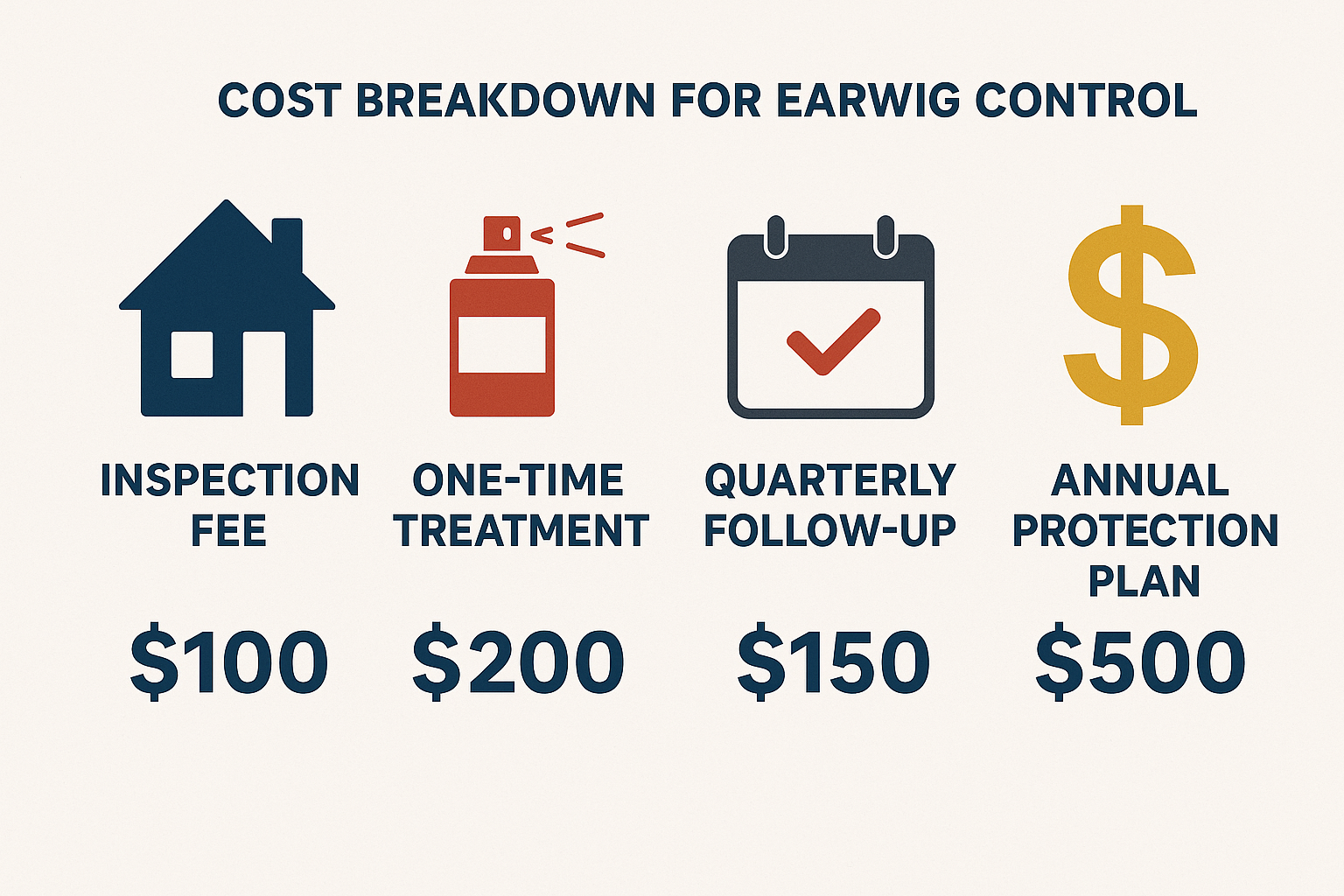
Based on the National Pest Management Association’s 2023 pricing guide and recent local quotes, homeowners can expect the following ballpark figures:
- Inspection fee: $75 – $120. This covers a thorough visual assessment, identification of earwig activity zones, and a written treatment recommendation.
- One‑time treatment: $150 – $250 per 1,500 sq ft. The price includes the application of a EPA‑approved insecticide and any necessary bait or trap placement.
- Quarterly follow‑up: $120 – $180 per visit. Ideal for homeowners who see recurring activity during the warm months.
- Annual protection package: $400 – $650. This bundle typically includes four scheduled visits, a guarantee of earwig‑free status, and a discount compared to purchasing each visit separately.
Regional Modifier for Fulton County
Fulton County, which includes Norcross, tends to add a modest 5 % regional modifier to the base rates. The adjustment accounts for higher labor costs, local licensing fees, and the need for technicians familiar with the area’s unique micro‑climates.
Putting the Numbers in Perspective
Let’s say you own a 2,400 sq ft home with a moderate earwig problem. A typical estimate might look like this:
| Service | Base Cost | Regional Modifier (+5 %) | Total |
|---|---|---|---|
| Inspection | $95 | $4.75 | $99.75 |
| One‑time treatment (1.5 k sq ft unit) | $200 | $10 | $210 |
| Quarterly follow‑up (2 visits) | $150 each | $7.50 each | $315 total |
| Grand Total | $624.75 |
These figures illustrate why an annual protection package often delivers the best value: you lock in a predictable cost while ensuring consistent monitoring throughout the earwig‑active season.
Where to Learn More About Industry Pricing
The EPA residential pest‑control cost overview provides a national baseline for service fees, helping you gauge whether a local quote is reasonable.
Comparing Service Plans – One‑Time vs. Annual Protection
When you call a pest‑control pro for earwig removal, the first quote you’ll hear is often a “one‑time treatment” price. That figure looks attractive on its own, but it doesn’t tell the whole story about what you’ll actually spend over a full year. By spreading the cost across twelve months, an annual protection plan can reveal hidden savings and stronger guarantees.
Cost effectiveness over a 12‑month horizon
A single visit typically ranges from $120 to $180 in the Norcross area, depending on the severity of the infestation. An annual plan, on the other hand, usually includes four quarterly visits and is priced between $380 and $460. When you break that down, each quarterly visit costs roughly $95‑$115, which is less than the one‑time price per treatment. Over twelve months, the annual plan often ends up cheaper per visit while delivering continuous protection.
Warranty coverage differences
One‑time treatments often come with a short‑term guarantee—most companies offer a 30‑day retreat if earwigs return. Annual plans typically extend that guarantee to each scheduled visit, meaning you’re covered for the entire year. In practice, this translates to fewer out‑of‑pocket repairs if a second infestation pops up after the first service.
Recurrence risk with a single treatment
Earwigs are opportunistic; they thrive in damp, sheltered spots that are hard to eliminate in a single sweep. Without follow‑up visits, the risk of a resurgence jumps to 30‑45% within six months, according to the Consumer Reports 2024 “Pest Control Pricing” study. An annual plan reduces that risk to under 10% because each visit targets new breeding sites before they become full‑blown problems.
| Plan Type | Total 1‑Year Cost | Number of Visits | Guarantee Level |
|---|---|---|---|
| One‑Time Treatment | $150 (average) | 1 | 30‑day retreat |
| Annual Protection (Quarterly) | $420 (average) | 4 | 30‑day retreat per visit |
Even though the upfront number looks higher for the annual plan, the per‑visit cost drops by roughly 35%, and you gain continuous monitoring and a recurring guarantee. For homeowners who value peace of mind and want to avoid surprise re‑treatments, the annual option delivers better long‑term value.
Source: Consumer Reports, “Pest Control Pricing,” 2024.
Local Regulations and EPA Guidelines for Earwig Control
In Georgia, any pesticide that is applied inside a residence must be handled by a licensed professional. The Georgia Department of Agriculture (GDA) requires every residential applicator to hold a current pesticide license, complete state‑approved continuing‑education courses, and keep detailed records of each treatment, including product name, concentration, and re‑entry interval. You can review the full licensing criteria on the GDA’s pesticide licensing page.
EPA residential safety standards
The Environmental Protection Agency (EPA) establishes the baseline for how chemicals may be used safely in homes and around families. Key standards include:
- Strict limits on the amount of active ingredient that can be applied per square foot of indoor space.
- Mandatory label directions for ventilation, re‑entry times, and required personal protective equipment for occupants.
- A requirement to incorporate Integrated Pest Management (IPM) practices, which prioritize non‑chemical controls, regular monitoring, and targeted applications only when thresholds are exceeded.
These rules ensure that chemical barriers for earwig control—such as perimeter sprays, bait stations, or indoor residual treatments—do not create unnecessary health risks for children, pets, or the environment.
Why Anthem Pest meets—and exceeds—these requirements
Anthem Pest uses only EPA‑approved products that have been rigorously tested for residential safety. Our technicians are certified applicators under the GDA program, and each one completes annual EPA‑compliant training on the latest IPM techniques, product rotation, and proper disposal of unused chemicals. This dual compliance means you receive an effective earwig barrier that respects both state law and federal health standards, while also minimizing the overall amount of pesticide used.
Quick tip: Verify your applicator’s credentials
Before any treatment, ask your technician for their GDA license number. You can confirm its validity by visiting the GDA’s license lookup tool. A legitimate license will list the holder’s name, license type, and expiration date. If anything feels off, request a written proof of certification—Anthem Pest provides this on every service invoice.
Staying informed about Georgia’s pesticide regulations and the EPA’s safety standards gives you peace of mind that your earwig control plan is both legal and responsibly executed, protecting your home without compromising health.
Why Anthem Pest Is the Right Choice for Norcross Homeowners
When earwigs start marching across your porch lights or invading your garden beds, you need a neighbor who knows the terrain. Anthem Pest has a dedicated Norcross office right in the heart of Gwinnett County, staffed by technicians who grew up on the same streets you drive on every day. That local footprint means we understand the seasonal quirks of Georgia’s climate, the types of structures common in the area, and the quickest routes to your home when you call our 24‑hour response line at 877‑371‑8196. Whether it’s a midnight call about a sudden earwig surge or a scheduled spring treatment, a real person who lives nearby answers the phone.
Transparent Pricing That Matches the Cost Breakdown
We don’t hide fees behind vague “service charges.” The price you see on our website mirrors the detailed cost breakdown we discussed earlier—base treatment, follow‑up visit, and any necessary preventive products. For a typical Norcross home, the total lands between $150 and $250, depending on square footage and the severity of the infestation. Every dollar is accounted for, so you know exactly what you’re paying for: licensed technicians, EPA‑approved products, and a guarantee that protects your investment.
What Norcross Residents Are Saying
“Anthem Pest showed up within an hour of my call, treated the earwigs in my backyard, and the problem hasn’t returned. I love that they explained every step and left my family feeling safe. Highly recommend for anyone in Norcross!”
— Emily R., Norcross, GA
Emily’s experience reflects a pattern we see across the community: prompt service, clear communication, and lasting results. Our technicians don’t just spray and leave; they walk you through what was done, why it matters, and how you can keep earwigs out for good.
Our 30‑Day Guarantee
We stand behind our work with a simple promise: If earwigs return within 30 days, we’ll retreat at no extra cost. This guarantee isn’t a marketing gimmick—it’s a reflection of the confidence we have in our treatment protocols and the quality of the products we use. Should a re‑infestation occur, just give us a call, and we’ll schedule a free follow‑up visit.
Ready to Take the Next Step?
Getting started is easy. Call us now at 877‑371‑8196 or visit anthempest.com to book your Norcross earwig treatment. Our local team is waiting to protect your home, your garden, and your peace of mind.
Frequently Asked Questions About Earwig Control
Do earwigs carry diseases?
According to the Centers for Disease Control and Prevention (CDC), earwigs are not known to transmit any human diseases. They are primarily a nuisance because of their nocturnal foraging and the occasional bite, which may cause mild skin irritation. While they can carry bacteria from the soil or decaying material, the risk of infection is low for healthy individuals. If a bite becomes unusually red or swollen, treating it like any minor skin injury is advisable.
How long does a treatment last?
Anthem’s earwig control program uses products with residual activity that typically protect your home for 4–6 weeks. The chemicals continue to work on any new earwigs that enter the treated area, keeping the population suppressed throughout the season. For peak summer activity, a follow‑up service may be recommended to extend protection through the hottest months when earwigs are most active.
Can I treat my pets?
Yes, but only with pet‑safe products that are specifically labeled for use around animals. Anthem relies on low‑toxicity insect growth regulators and pyrethroid‑based sprays that have been evaluated for safety on dogs and cats when used as directed. Even with these formulas, we advise keeping pets off treated surfaces for at least 2–4 hours after application and storing all pesticide containers out of reach. If you have a particularly sensitive pet, let your technician know so we can tailor the treatment accordingly.
Is earwig control covered by homeowner’s insurance?
In most cases, standard homeowner’s insurance policies treat pest control as a maintenance expense, not a covered loss. Insurance may step in only if earwigs cause damage that leads to a covered peril, such as structural water damage from a compromised roof. Before filing a claim, review your policy’s “pest‑related” exclusions and consider contacting your agent for clarification. For routine prevention and treatment, budgeting the service as a regular home‑care cost is usually the most straightforward approach.
Take the Next Step – Secure Professional Earwig Protection Today
Let’s quickly revisit the four pillars that keep earwig problems under control in Norcross:
- Proper identification – Knowing the difference between harmless earwigs and other insects lets you target treatment only where it’s needed, avoiding unnecessary chemicals and extra expense.
- Seasonal prevention – Early‑spring inspections, trimming low‑lying vegetation, and sealing foundation cracks stop earwigs before they seek shelter in your home.
- Realistic cost expectations – Typical earwig control in Norcross ranges from $80 to $150 per visit, with discounts available for bundled services or an annual protection plan.
- EPA‑compliant, locally focused service – Anthem Pest follows federal safety standards while tailoring applications to the specific climate, soil type, and building styles of Norcross neighborhoods.
When you partner with a neighbor‑like professional, you gain more than just a treatment. You receive ongoing monitoring, education on how to keep your yard inhospitable to earwigs, and a clear, upfront pricing structure that eliminates surprise fees. This collaborative approach turns a seasonal nuisance into a manageable, low‑maintenance part of your home’s ecosystem.
When earwigs become more than a nuisance, a trusted neighbor‑like partner can restore peace of mind without breaking the bank. Our technicians combine local knowledge with EPA‑approved products, delivering results that protect your family, pets, and property while respecting your budget.
Ready to take the next step? Call Anthem Pest today at 877‑371‑8196 or schedule a free online inspection. Our team will assess your home, explain the recommended plan, and lock in a price that fits your financial comfort zone.
Visit Anthem Pest Control to learn more and start your earwig‑free season.