Why Termite Control Matters in Smyrna, GA
If you own a home in Smyrna, the thought of termites might feel distant until you see a small mound of mud or a hollowed wooden beam. In the humid South, these insects work silently, eating through structural wood, insulation, and even furniture. The damage they cause is not just an inconvenience—it can quickly become a financial nightmare.
In the Southeast, homeowners typically face repair bills ranging from $5,000 to $10,000 per infestation. Those figures represent the cost of replacing damaged joists, flooring, and drywall, plus the labor required to restore a home to safe condition. For many families, that expense rivals a major home improvement project, and it often arrives without warning.
“Termites cause $5 billion in property damage annually in the U.S.” – EPA
That national figure translates into a local crisis for Smyrna, where each untreated colony can shave thousands off a property’s market value.
Smyrna’s humid subtropical climate—characterized by hot, wet summers and mild, damp winters—creates the perfect environment for subterranean termites. The combination of abundant moisture, frequent rainfall, and warm soil temperatures accelerates colony growth and wood decay. Even a small leak in a foundation or a poorly drained yard can become a highway for termites to infiltrate a home’s structure.
Because the damage is often hidden until it’s severe, proactive termite control isn’t optional—it’s a safeguard for your investment. Ignoring early warning signs can lead to costly repairs, lower resale value, and even safety hazards from compromised structural integrity. In the sections that follow, Anthem Pest Control breaks down the most effective treatment options, pricing, and a step‑by‑step plan to keep Smyrna homes termite‑free.
Recent surveys show that Smyrna neighborhoods with older wooden framing experience infestation rates up to 30% higher than newer subdivisions. For a typical 2,000‑square‑foot home, a single colony can eat through as much as 200 pounds of wood each year—equivalent to the weight of a small refrigerator. Those silent eaters can undermine load‑bearing beams, leading to sagging floors or cracked walls that require professional remediation.
The Termite Species Most Common in Cobb County
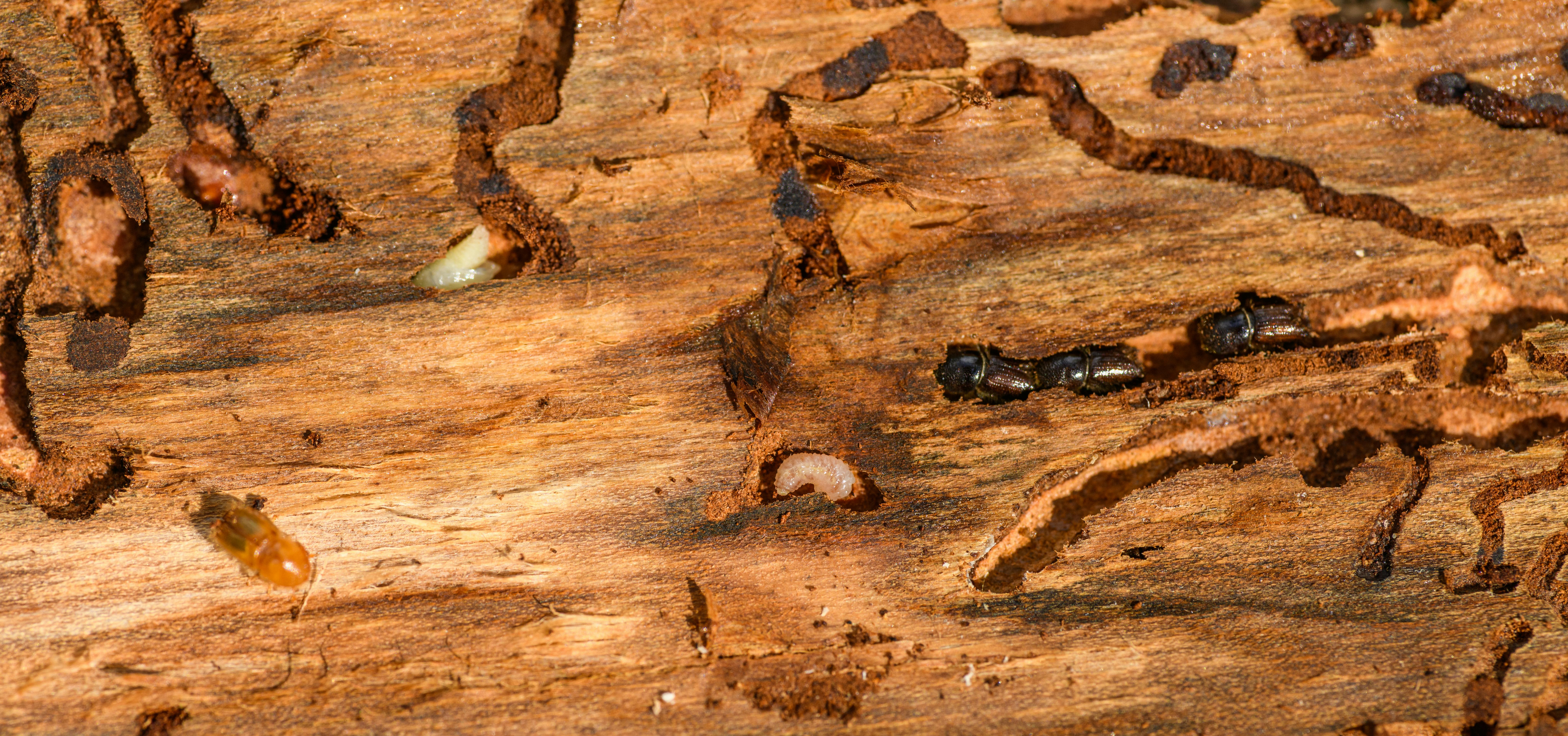
Subterranean Termites (Reticulitermes flavipes)
Subterranean termites are the primary threat to homes in Smyrna and the broader Cobb County area. Their colonies can range from a few thousand to over a million workers, all living underground and accessing the structure through mud tubes that protect them from the dry air above. The life cycle includes egg, larva, nymph, and adult stages, with reproductives (king and queen) capable of producing thousands of eggs each month. Moisture is the key driver: these termites need damp soil or leaky foundations to thrive, which is why proper drainage and gutter maintenance are essential preventive steps.
Dampwood Termites
Dampwood termites, though less common than their subterranean cousins, appear in Cobb County’s more humid micro‑climates—especially around older, moisture‑rich wood like decks, porches, and fire‑blocked walls. Unlike subterranean termites, they do not build mud tubes and can live directly within decaying wood that retains a high moisture content. Their colonies are smaller, typically a few hundred individuals, and they prefer wood with a moisture content above 20 %.
Statistic: Cobb County reports over 1,200 termite inspections annually, according to the Georgia Department of Agriculture pest report.
Case Study – Old Powder Springs Road: A three‑bedroom home on Old Powder Springs Road experienced a sudden surge of subterranean activity after a heavy spring rain. Inspection revealed extensive mud‑tube networks along the foundation and a thriving colony of approximately 150,000 workers. The homeowner’s water‑logged crawl space provided the moisture the termites needed, leading to visible damage in the kitchen cabinets and bedroom closets. Prompt treatment with a liquid barrier and targeted bait stations eliminated the colony and prevented further structural loss.
How to Spot Early Termite Activity
Detecting termites before they chew through your home’s structure can save you thousands of dollars. Below is a concise, visual checklist that lets you scan your property in minutes and catch the first hints of an infestation.
Concrete Signs to Watch For
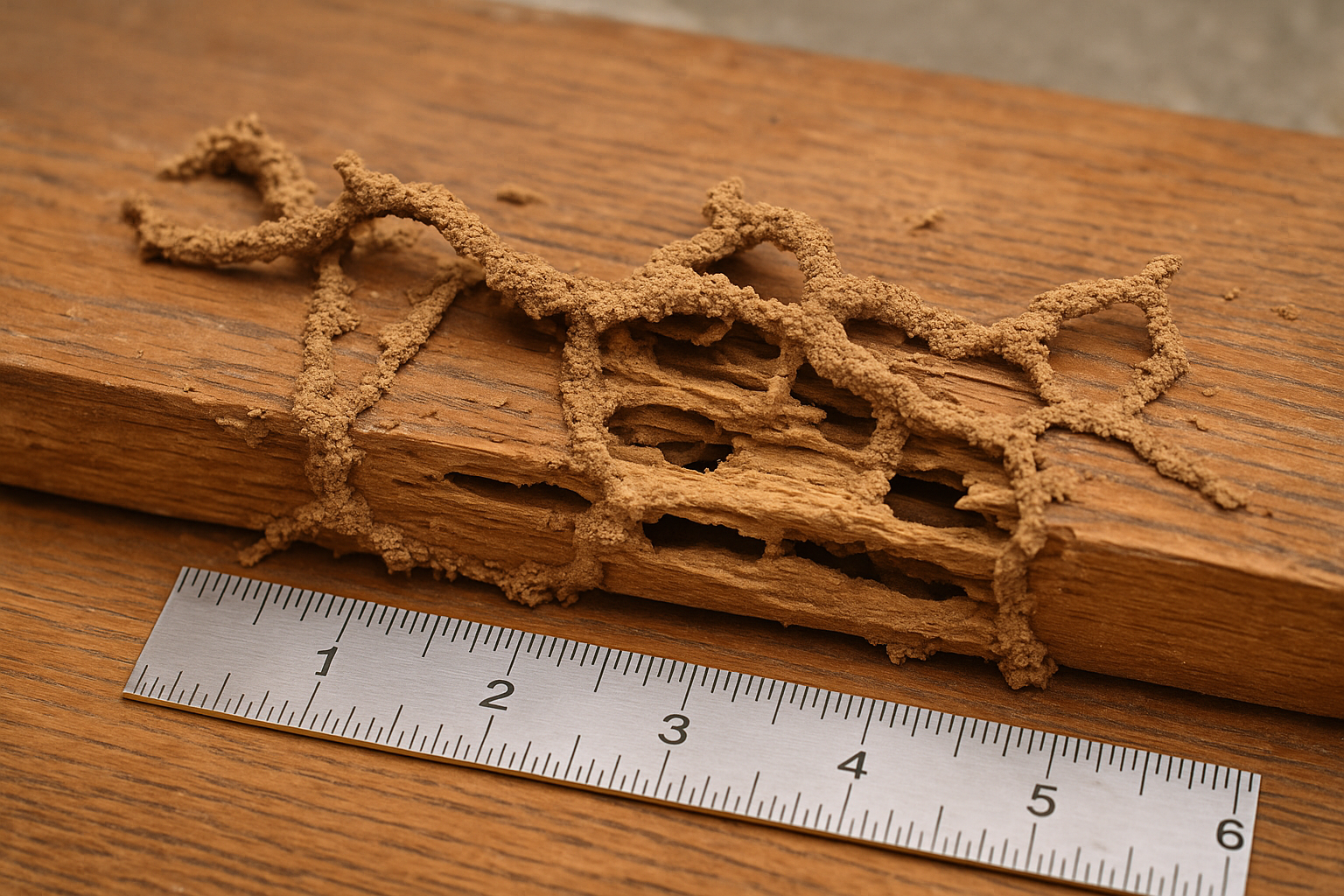
- Mud tubes – earthen tunnels pressed against foundations, walls, or crawl spaces.
- Hollow‑sounding wood – a dull thud when tapped, indicating internal damage.
- Discarded wings – clusters of shed wings near windows, doors, or light fixtures.
- Frass (termite droppings) – fine, pellet‑like material that resembles sawdust but may have a slightly sweet odor.
Quick‑Reference Visual Checklist
- ✓ Mud tubes along foundation or in crawl‑space walls
- ✓ Hollow sound when tapping wooden beams, porch posts, or window frames
- ✓ Small piles of discarded wings near entry points
- ✓ Fine, powdery frass on wood surfaces or in hidden corners
- ✓ Visible damage or tunnels in untreated wood
Real‑World Example: East Cobb Homeowner
When Jane Miller, a homeowner in East Cobb, first noticed a thin line of mud tubes creeping up the exterior foundation of her 1970s ranch, she called Anthem Pest Control immediately. Our technician confirmed an active subterranean colony and recommended a targeted baiting system. Because Jane acted within weeks of spotting the tubes, the treatment prevented the termites from breaching the structural beams. She avoided an estimated $8,000 in repair costs and now enjoys a termite‑free home.
Why Early Detection Matters
Termites work silently; a small colony can cause up to 2 inches of wood loss each year. Catching the signs listed above lets you intervene while the infestation is still localized, which translates to:
- Lower treatment expenses – baiting or localized spot‑treatments are far cheaper than full‑structure fumigation.
- Reduced disruption – early action often requires only a few technician visits.
- Preserved property value – a clean inspection report reassures future buyers.
Make a habit of walking your property twice a year—once in spring and once in fall—to run through this checklist. If any item checks off, contact Anthem Pest Control at 877‑371‑8196 or visit our website for a prompt, professional inspection.
Effective Termite Treatments Available in Smyrna
When a termite colony takes hold, homeowners in Smyrna have three proven ways to eradicate the threat and protect their investment. Each method differs in how it’s applied, how long it shields a home, and what it costs. Understanding these nuances helps you choose the solution that matches the severity of the infestation, your budget, and your peace of mind.
Liquid Termiticides
Liquid termiticides—most commonly fipronil or imidacloprid—are applied using a trenching technique. A certified technician drills shallow trenches around the foundation, walls, and crawl spaces, then injects the chemical to create an invisible barrier that termites cannot cross. The barrier remains active for 5 to 10 years, providing long‑term protection without the need for frequent re‑treatments.
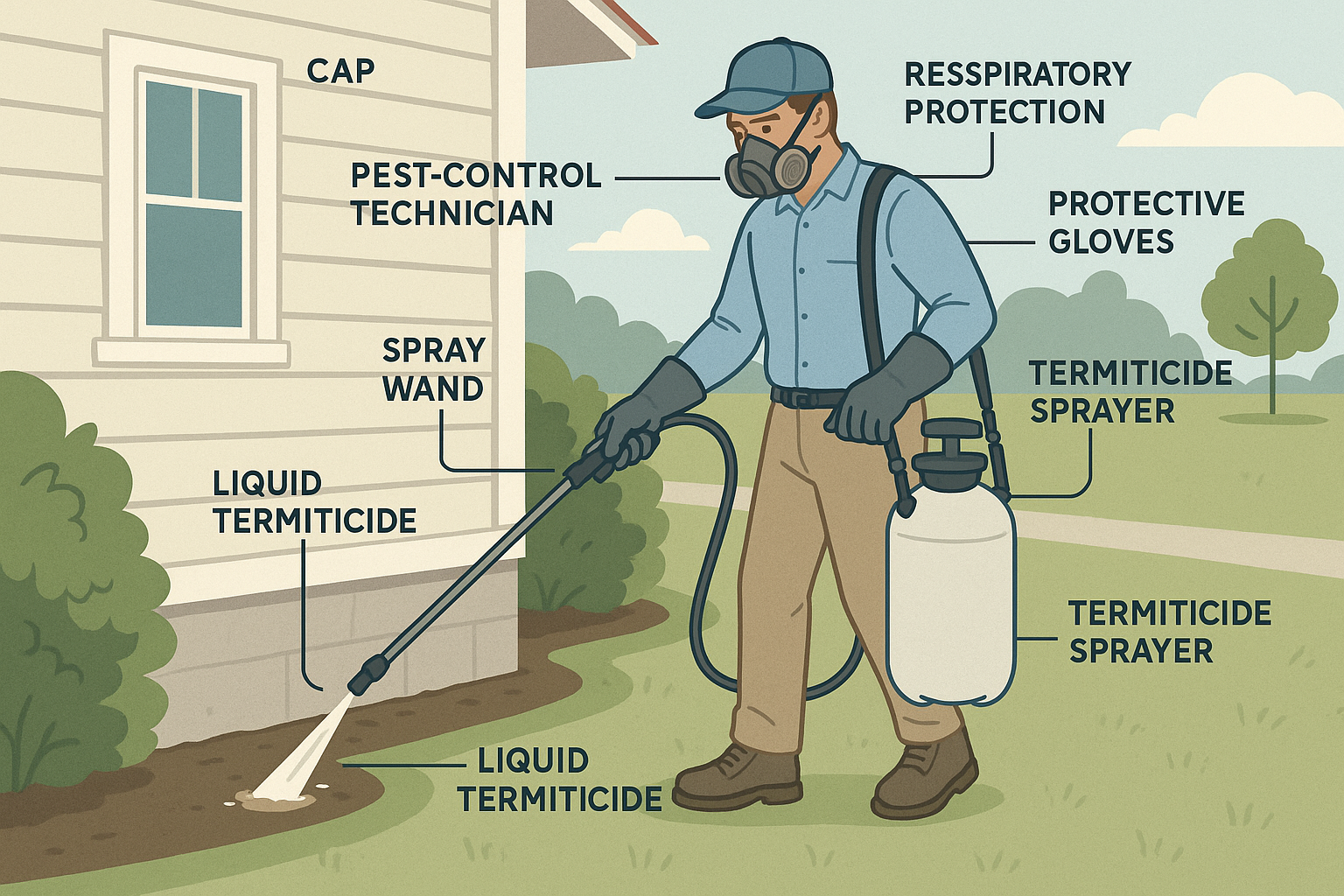
Because the chemical penetrates soil and wood, it stops both subterranean and dry‑wood termites before they can reach structural components. Homeowners appreciate the “set‑and‑forget” nature of this approach, especially in areas with high moisture that attract termite activity.
- Longevity: 5–10 years of continuous protection
- Typical cost range: $1,200 – $2,500
According to the National Pest Management Association (NPMA), 78% of homeowners choose liquid termiticides as their first line of defense. This popularity reflects both the proven efficacy and the convenience of a single, long‑lasting application.
Baiting Systems
Baiting systems such as Sentricon and Exterra rely on strategically placed stations that attract foraging termites. Each station contains a cellulose matrix laced with a slow‑acting insect growth regulator. As termites feed and share the bait through trophallaxis, the colony’s reproductive capacity is gradually crippled.
Installation involves drilling small holes in concrete slabs, crawl spaces, or foundation walls, then inserting the bait stations at intervals of 10–15 feet. Technicians monitor the stations every 30–60 days, replacing or repositioning baits based on termite activity reports. This ongoing surveillance allows for early detection of new colonies and fine‑tuned adjustments to the treatment plan.
- Longevity: Effective for 3–5 years with regular monitoring
- Typical cost range: $1,500 – $3,000 for installation and first year of service
Fumigation (Tenting)
Whole‑home fumigation, often called tenting, is reserved for severe infestations where termites have colonized multiple structural components. The process begins by sealing the home inside an airtight tent, then releasing a gas—typically sulfuryl fluoride—that penetrates wood, drywall, and insulation. The gas remains in the structure for several hours, ensuring every hidden termite is exposed.
Safety is paramount: technicians conduct a thorough pre‑treatment inspection, provide homeowners with detailed evacuation instructions, and coordinate with local authorities to verify that gas concentrations fall within permissible exposure limits before re‑entry. After the tent is removed, a post‑treatment walkthrough confirms that the infestation is fully eradicated.
- Longevity: Provides immediate eradication; no residual protection, so follow‑up preventive measures are recommended
- Typical cost range: $4,000 – $7,000, depending on home size and severity of damage
What You’ll Pay for Termite Control in Smyrna
Understanding the price tags behind each termite‑treatment option helps you budget confidently and avoid surprise fees. Below is a typical cost range you’ll encounter from reputable providers such as Anthem Pest Control in Smyrna, GA.
Itemized cost breakdown
- Liquid termiticide: $1,200 – $2,500 – a perimeter and soil‑treatment that creates a chemical barrier around your foundation.
- Baiting system: $1,500 – $3,000 – stations placed in strategic locations that attract foraging termites and release a slow‑acting insecticide.
- Fumigation (tenting): $4,000 – $7,000 – whole‑home gas treatment used for severe infestations or when structural wood is heavily compromised.
- Inspection fee: $80 – $120 – a thorough assessment that identifies activity, damage level, and the most effective treatment plan.
- Follow‑up visit: $100 – a post‑treatment check to ensure the barrier or bait stations are performing as expected.
Financing options
Anthem Pest offers flexible financing, including a 0 % interest plan for up to 12 months on qualified treatments. This allows homeowners to spread the cost of a $3,000 baiting system or a $5,500 fumigation over a year without additional fees.
Side‑by‑side example
Consider a typical 1,800‑sq ft home in Smyrna. Choosing a baiting system at the midpoint of its range ($2,250) plus inspection ($100) and one follow‑up ($100) brings the total to roughly $2,450. The same home treated with liquid termiticide at the midpoint ($1,850) plus the same inspection and follow‑up totals about $2,050. While the liquid option appears cheaper upfront, baiting provides ongoing monitoring that can reduce future re‑treatment costs.
By reviewing these figures and leveraging Anthem Pest’s financing, you can select a solution that fits both your budget and long‑term protection goals.
Why Anthem Pest Is Smyrna’s Trusted Choice
Certifications You Can Trust
Anthem Pest’s technicians are EPA‑registered and hold a Georgia State Pest Control License. These credentials mean every treatment follows strict federal and state guidelines, ensuring safety for your family, pets, and the environment. When you see the Anthem badge, you know the work is backed by recognized expertise.
Our team completes a minimum of 40 hours of continuing education each year, staying ahead of emerging pest trends and new EPA‑approved products. This investment translates into faster, more precise treatments that protect your home long‑term.
Rapid, Local Service Guarantees
We understand that a termite sighting or a sudden ant invasion can’t wait. That’s why Anthem Pest promises a 24‑hour response time for all Smyrna‑area calls. Our service zone spans Smyrna, Marietta, and the broader East Cobb region, so a local team is always just a short drive away. The guarantee isn’t just speed—it’s a commitment to arrive prepared, diagnose accurately, and begin treatment the same day whenever possible.
Every job includes a written service agreement that outlines the scope, timeline, and a no‑re‑infestation guarantee. If termites reappear within 12 months, we return at no extra charge, reinforcing our confidence in the solution we provide.
What Neighbors Are Saying
“Anthem Pest arrived within hours of my call, identified a hidden termite tunnel, and fixed it before any damage occurred. Their crew was courteous, explained every step, and the price was exactly what they quoted. I’ll never trust anyone else for pest control in Smyrna.”
Why Smyrna Homeowners Choose Anthem Pest
- EPA‑registered and state‑licensed professionals.
- Same‑day, 24‑hour response for urgent infestations.
- Coverage across Smyrna, Marietta, and East Cobb.
- Transparent pricing with no hidden fees.
- 12‑month no‑re‑infestation guarantee.
Ready to Protect Your Home?
Don’t let pests take advantage of your property. Call Anthem Pest today at 877‑371‑8196 or visit anthempest.com to schedule your free inspection. Our transparent pricing and satisfaction guarantee mean you get effective protection without surprise fees.
Year‑Round Strategies to Keep Termters at Bay
Spring: Beat the Moisture Surge
- Inspect roof leaks and repair them promptly – even a slow drip can raise soil moisture around your foundation.
- Clean gutters and downspouts; ensure water is directed at least 6 feet away from the house.
- Check interior plumbing for drips under sinks and behind appliances; fix any leaks before they saturate nearby soil.
- Apply a perimeter sand barrier if your property sits on a clay base that retains water.
Summer: Reduce Direct Wood‑to‑Soil Contact
- Examine decks, porches, and wooden siding for any sections touching the ground; add concrete footings or metal brackets to lift them.
- Trim back trees, shrubs, and vines that touch the structure; vegetation can trap moisture and provide a bridge for termites.
- Store garden tools and outdoor furniture on raised platforms rather than directly on the soil.
- Schedule a professional termite inspection before the heat peaks, as warm, dry conditions can accelerate colony activity.
Fall: Clean Up Before the Cold Sets In
- Rake away leaf litter, twigs, and other organic debris that can hold moisture against the foundation.
- Remove firewood piles from the house perimeter; keep them at least 20 feet away and on a raised rack.
- Seal any cracks in the foundation or crawl‑space walls that appeared during summer expansion.
- Check that vent covers are intact and not allowing rainwater to pool near the foundation.
Winter: Stay Vigilant When the Ground Is Frozen
- Monitor for new termite activity once the snow melts; frozen soil can mask early signs.
- Ensure crawl‑space vents remain closed during extreme cold to keep dry air from entering.
- Inspect exterior paint for peeling; water can seep behind compromised siding.
- Schedule a post‑winter professional inspection to catch any damage caused by freeze‑thaw cycles.
Neighborhood Spotlight: West End of Smyrna
The West End sits near the Chattahoochee River, where high water tables often raise soil moisture levels. Homeowners here should prioritize extra drainage measures—such as French drains or raised grading—to keep the foundation dry. Regularly testing soil moisture with a simple meter can reveal hidden saturation points before termites exploit them.
Case Study: Installing a Moisture Barrier Under a Deck
One Smyrna homeowner installed a 6 mm polyethylene moisture barrier beneath a 12 × 20‑foot deck, sealing all seams with waterproof tape. After six months, a follow‑up inspection showed a 40 % reduction in soil moisture directly under the deck and no new termite tunnels. The barrier not only protected the wooden joists but also eliminated the humid corridor that termites love to travel.
Termite FAQ for Smyrna Residents
Below are concise answers to the most common termite questions we field from Smyrna homeowners.
Q1: How long does treatment last?
The protection period depends on the method you choose. Liquid termiticides create a chemical barrier that can remain effective for five to ten years when applied by a certified technician. Baiting systems don’t stay in the soil; instead, they require quarterly inspections and occasional bait replacement to keep the colony suppressed. Whole‑structure fumigation eliminates termites throughout the home, but the effect typically lasts only six to twelve months, after which a new barrier or bait program is recommended.
Q2: Are the chemicals safe for pets?
EPA‑registered termiticides are formulated to be low‑toxicity for humans and animals when applied according to label directions. A professional application includes proper placement, calibrated dosing, and a post‑treatment safety window that allows the product to settle before pets roam the treated zones. For peace of mind, review the EPA’s safety guidelines, which detail exposure limits and best‑practice handling procedures. You can read more on the EPA safety page.
Q3: Can I do DIY treatment?
Do‑it‑yourself termite kits are marketed for quick fixes, but they rarely provide the comprehensive soil barrier and ongoing monitoring that a licensed professional installs. DIY products often rely on a single application of a low‑dose termiticide, which may not reach hidden colonies or protect against future incursions. Homeowners who opt for professional service benefit from a guaranteed barrier, regular inspections, and a higher success rate documented by industry studies. While a DIY approach can reduce upfront cost, the long‑term risk of reinfestation usually outweighs the savings.
Protect Your Home with Professional Termite Service
Termites can silently chew through a home’s foundation, costing Smyrna owners tens of thousands in repairs. The most common culprits here are Formosan and subterranean termites, which leave tell‑tale signs such as mud tubes, hollow‑sounding wood, and swarms in the spring. Early detection—spotting these clues or noticing increased wood damage—lets you choose between liquid barrier treatments, bait‑station systems, or a combination approach before the infestation spreads.
Anthem Pest’s Smyrna team backs that expertise with transparent pricing you can read before any work begins. Homeowners also benefit from flexible financing plans that spread the cost of a full‑service termite program, so protecting your property never feels like a surprise expense.
Our technicians know Smyrna’s soil types, seasonal weather patterns, and building styles, allowing them to tailor each treatment for maximum protection and minimal disruption.
Ready to safeguard your property? Contact Anthem Pest for a complimentary inspection and a clear, no‑surprise quote. Call us today at 877‑371‑8196 or visit Anthem Pest Control to schedule your free assessment.