Recognizing Early Pest Signs in Your Kitchen
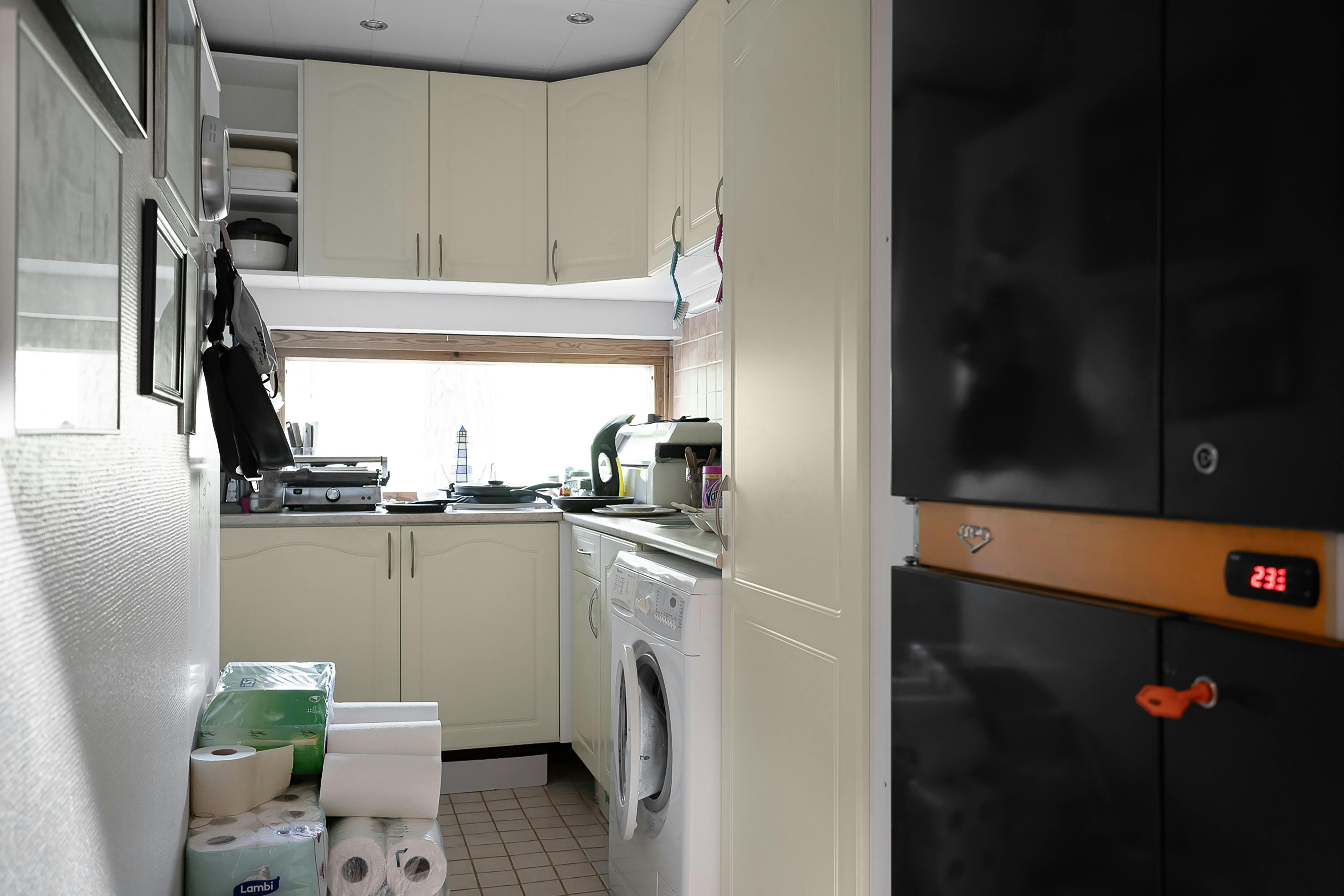
Imagine stepping into your kitchen on a damp Thursday evening, the scent of rain still clinging to the windows, and spotting a line of tiny black beetles marching across the granite countertop. The insects are barely the size of a grain of rice, but their sudden appearance feels like a warning bell echoing through the house.
This guide is designed to help you spot those early warning signs before a minor nuisance turns into a full‑blown infestation. We’ll walk you through the most common kitchen pests in your city—ants, cockroaches, pantry moths, and fruit flies—so you can identify, prevent, and treat them with confidence.
Anthem Pest brings local expertise and a data‑driven approach to every call. Our 24‑hour hotline (877‑371‑8196) connects you instantly with technicians who know the seasonal patterns and hot spots specific to your neighborhood. Whether you need a quick inspection or a comprehensive treatment plan, we’ve got the tools and the knowledge to protect your home.
The article is organized into clear sections: seasonal insights that explain why certain pests appear at particular times of year, step‑by‑step identification tips, practical prevention steps you can start today, proven treatment options, a concise FAQ, and finally a direct path to schedule professional help.
Early detection matters because pests multiply fast—one ant can lead to a colony of hundreds within days, and a single cockroach egg case can produce dozens of offspring. By catching the problem at the first sign, you save time, money, and the peace of mind that comes with a pest‑free kitchen.
As you read on, keep an eye out for the subtle clues we highlight—tiny droppings, faint odors, or unusual smudges near food storage areas. Each clue is a piece of the puzzle that, when assembled, points to the exact species you’re dealing with.
When you’re ready to act, remember the 24‑hour line is always open. A quick call to Anthem Pest can turn a small sighting into a swift, professional solution, keeping your kitchen safe for the whole family.
Seasonal Pest Calendar for City
Understanding when pests are most active helps you stay one step ahead. Below is a concise table titled “When to Expect Which Pests in City,” summarizing the typical peak periods for the most common household invaders based on the EPA’s 2024 pest‑season data.
| Months | Primary Pests |
|---|---|
| Mar – May | Ants, Cockroaches |
| Jun – Aug | Mosquitoes, Flies |
| Sep – Nov | Rodents, Termites |
| Dec – Feb | Indoor pests (Bed bugs, Carpet beetles) |
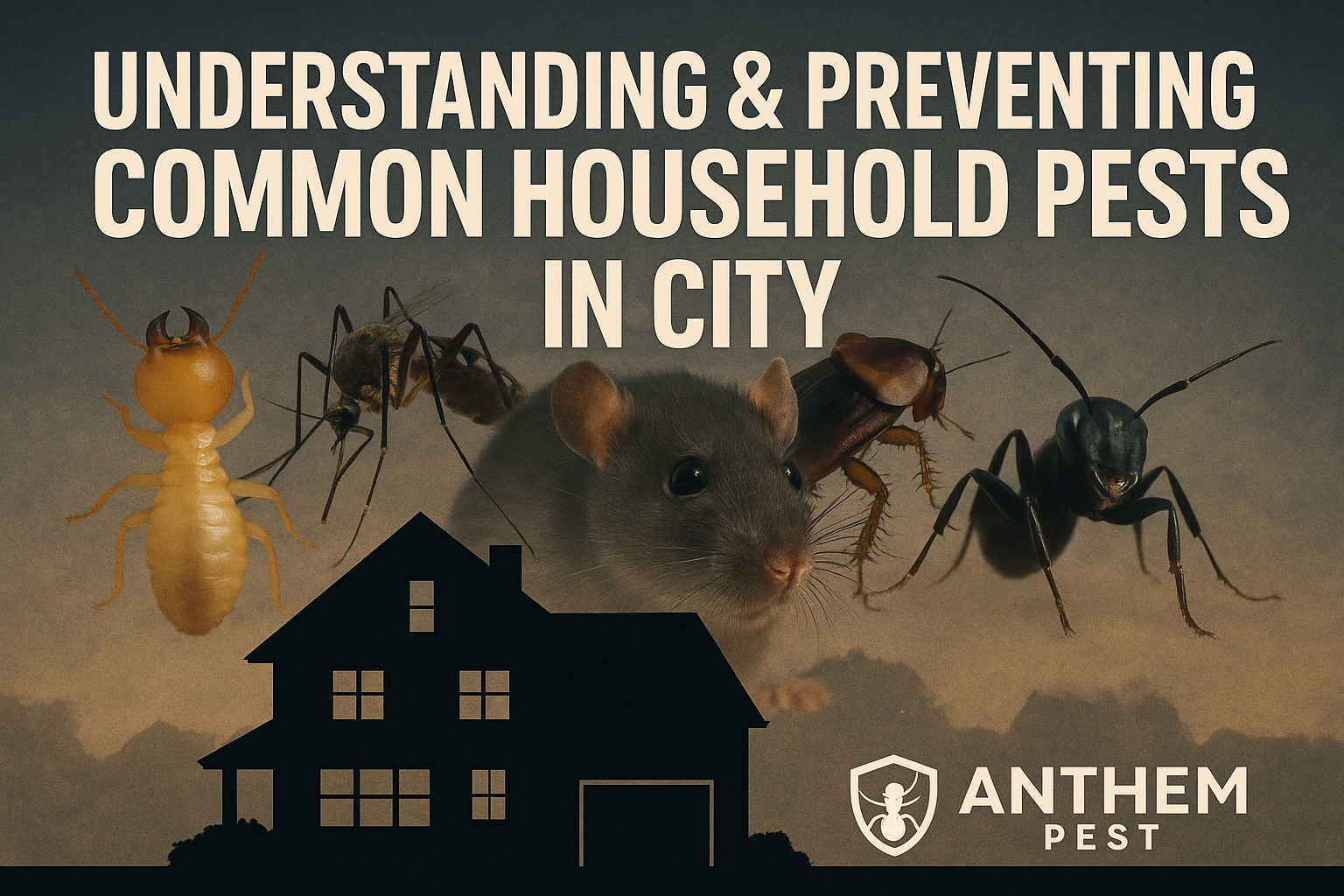
The EPA’s comprehensive survey of pest trends across the United States confirms these seasonal patterns. For the full dataset, see the Termites are pale, soft‑bodied insects about a half‑inch long with straight antennae. They travel concealed in mud‑like tubes that trace a path to wood. Winged swarmers, called alates, appear as dark, slender flies with equal‑sized wings. These silent destroyers eat structural timber, leading to weakened foundations and expensive repairs. A homeowner on the Eastside discovered 2‑inch mud tubes along the foundation, confirming an active colony. Termite damage costs U.S. homeowners $5‑$7 billion annually. Mosquitoes are slender flyers with long legs, a needle‑like proboscis, and scaled wings that produce a faint buzz. Females are the only biters, identifiable by tiny hair‑like scales on their thorax and banded legs. They are most active at dawn and dusk, hovering near standing water. Beyond itchy bites, they transmit diseases such as West Nile virus and Zika. In a suburban cul‑de‑sac, a resident found dozens of larvae clinging to the edge of a neglected birdbath, prompting a surge in nighttime bites. Rodents—primarily mice and rats—are small mammals with furred bodies, pointed noses, and ever‑growing incisors. Mice measure 2‑4 inches with pink ears; rats are larger, 7‑10 inches, with coarse brown fur and blunt snouts. They leave droppings, gnaw marks, and greasy smears along walls and cabinets. These foragers can chew through wiring, insulation, and drywall, creating fire hazards and costly repairs. A Midwest family discovered a nest of mice behind the kitchen pantry, evident from fresh droppings and shredded packaging. Cockroaches are oval, flattened insects with long antennae, shiny exoskeletons, and a fast, skittering gait. The common German roach is about half an inch, light brown with two dark stripes behind the head. They favor warm, damp areas and often surface at night in kitchens and bathrooms. They contaminate food and release allergenic particles that trigger asthma and allergies. A coastal tenant reported a trail of cockroach droppings near the sink and later uncovered a hidden infestation behind the dishwasher. Ants are small, segmented insects with elbowed antennae and a narrow “waist” between thorax and abdomen. Workers range from 2 mm to 12 mm, displaying colors from light brown to dark black, often with a glossy sheen. They travel in organized trails, leaving pheromone lines that guide others to food. Carpenter ants hollow out wood for nests, compromising structure, while other species contaminate food and may bite. A Pacific Northwest homeowner found a line of black ants marching from a cracked window frame into the pantry, indicating a colony nesting in the siding. Compare what you see with the collage image above to confirm the pest’s identity and act quickly. Living in a bustling city doesn’t mean you have to share your living space with unwanted guests. By taking a few deliberate steps before pests even think about crossing your threshold, you protect your home’s structure, your family’s health, and your peace of mind. The key is to make your house less inviting than the surrounding streets, alleys, and vacant lots that often serve as pest highways. These four habits form the backbone of an effective, low‑maintenance pest shield: When these habits become part of your routine, you’ll notice fewer insects crawling along baseboards and fewer nocturnal sounds from behind the walls. The effort is modest, but the payoff—fewer emergency calls and lower treatment costs—is substantial. Every district has its quirks, and the Downtown historic district is a perfect example. Many homes feature older brickwork and mortar joints that deteriorate over time, creating hidden entryways for cockroaches, ants, and even termites. Schedule a bi‑annual inspection of the brick façade and apply a high‑quality, paint‑compatible caulk to any gaps you discover. In areas with frequent construction, keep an eye on temporary scaffolding or debris piles, as they can serve as temporary shelters for pests that later migrate into nearby residences. For a science‑backed framework, consult the EPA’s Integrated Pest Management (IPM) Guidelines. The EPA emphasizes prevention, monitoring, and the judicious use of treatments—principles that align perfectly with the proactive steps outlined above. Inset diagram description: A simple line drawing of a two‑story home highlights six labeled prevention points: (1) sealed window seams, (2) caulked foundation cracks, (3) gutter downspout extensions, (4) trash can with tight lid, (5) grass trimmed to three inches, and (6) vegetation cleared from the foundation wall. When it comes to protecting your home, knowing how a pest is tackled and what it costs is just as important as the result. Anthem Pest offers four main treatment categories, each designed for specific pests and homeowner preferences. Below you’ll find a clear comparison, local price ranges for City, and the warranties that back every service. These are the industry‑standard “spray‑and‑protect” solutions. A perimeter spray creates a long‑lasting barrier that kills insects on contact and deters new intruders. Ideal for ants, roaches, and termites, the barrier typically lasts 30‑60 days before a re‑application is needed. Because the chemicals are professionally applied, homeowners enjoy consistent coverage without the guesswork of DIY products. Bait stations work from the inside out. Small, tamper‑proof containers are placed in high‑traffic areas, luring ants, cockroaches, or rodents to feed on a slow‑acting toxin they then carry back to the colony. This method reduces the need for widespread spraying and is especially effective for hidden infestations. Monitoring stations are checked regularly, allowing technicians to adjust bait placement based on activity. Ultrasonic emitters claim to repel pests by broadcasting high‑frequency sound waves that are uncomfortable for insects and rodents. While they’re a non‑chemical option that’s easy for homeowners to install, field studies show mixed results. Anthem Pest typically recommends ultrasonic devices as a supplemental measure rather than a primary treatment, pairing them with proven chemical or bait solutions for best outcomes. For environmentally conscious homeowners, botanical sprays, diatomaceous earth, and other low‑toxicity products provide an effective alternative. These treatments use plant‑based ingredients or natural minerals to disrupt pest life cycles without lingering residues. While they may require more frequent applications—often every 2‑3 weeks—they align with a greener lifestyle and are safe around pets and children. These figures are competitive when compared to the NPMA Cost Survey 2023, which reports national averages of $120‑$180 for ant control, $160‑$210 for mosquito services, and $1,300‑$2,800 for full‑scale termite treatments. Anthem Pest stands behind every job with a 12‑month guarantee that covers re‑treatment if pests return under normal conditions. The standard service timeline includes: All fees are disclosed up front. There are no hidden service charges, surprise travel fees, or mandatory add‑ons. The price you see is the price you pay, and any optional upgrades are clearly presented before work begins. Most residential mosquito barrier treatments remain effective for 6 to 8 weeks when applied according to label directions. Longevity can shift based on rainfall, lawn irrigation, and how often the treated area is disturbed (e.g., heavy foot traffic or mowing). Homeowners who maintain a tidy yard and limit excessive watering often see the full eight‑week window, while heavy rains may shorten efficacy to around six weeks. DIY termite products are tempting, but they carry significant risks. Over‑the‑counter baits or spot‑treatments rarely reach hidden colonies deep within foundations, and improper application can expose you to toxic chemicals. The CDC Pest‑Control Safety FAQ stresses that only trained professionals should handle termiticides, especially those requiring precise placement and dosage. A licensed inspector can identify the species, map infestation routes, and recommend a comprehensive plan that protects both your home and your family. Anthem Pest Control uses EPA‑approved products that have been rigorously tested for indoor and outdoor use. Technicians wear personal protective equipment (PPE) such as gloves, goggles, and respirators to prevent exposure. After a treatment, we advise keeping children and pets away from the treated zone for the manufacturer‑specified re‑entry time—usually 30 minutes to two hours. Opening windows and running fans helps disperse any residual vapors, ensuring a safe environment once the area is cleared. Yes. House mice and Norway rats gnaw on wood, insulation, and even electrical wiring. Their constant chewing can weaken framing members, create fire hazards, and compromise the integrity of walls and ceilings. Studies show that a single active rat can cause up to 2 inches of damage per month, so early detection and professional removal are crucial to prevent costly repairs. Current research indicates ultrasonic repellents offer little to no measurable control over insects or rodents. Laboratory tests reveal that most pests quickly adapt to the sound frequencies, rendering the devices ineffective after a short period. For reliable protection, rely on proven chemical or mechanical treatments backed by industry‑standard data rather than unverified gadgets. After exploring how pests infiltrate our homes, the most reliable defense boils down to four simple pillars. By keeping these fundamentals front‑and‑center, you can stay one step ahead of insects, rodents, and other unwelcome guests. Anthem Pest brings local expertise to every neighborhood we serve. Our technicians know the quirks of Downtown, Westside, and Riverbend, earning 5‑star reviews from homeowners who appreciate prompt, courteous service. Need help at odd hours? Our 24‑hour service line (877‑371‑8196) is always ready to dispatch a certified professional. Whether you need a quick inspection or a comprehensive year‑round plan, our certified technicians are ready to protect your home with transparent pricing and eco‑friendly options. Contact us for a free, no‑obligation quote and experience why City homeowners trust Anthem Pest. Ready to take the next step? Visit Anthem Pest Control today.Termites
Mosquitoes
Rodents
Cockroaches
Ants
Proactive Prevention Strategies for City Homes
Core actions every urban homeowner should adopt
Neighborhood‑specific tips for city dwellers
Treatment Options and Pricing Transparency
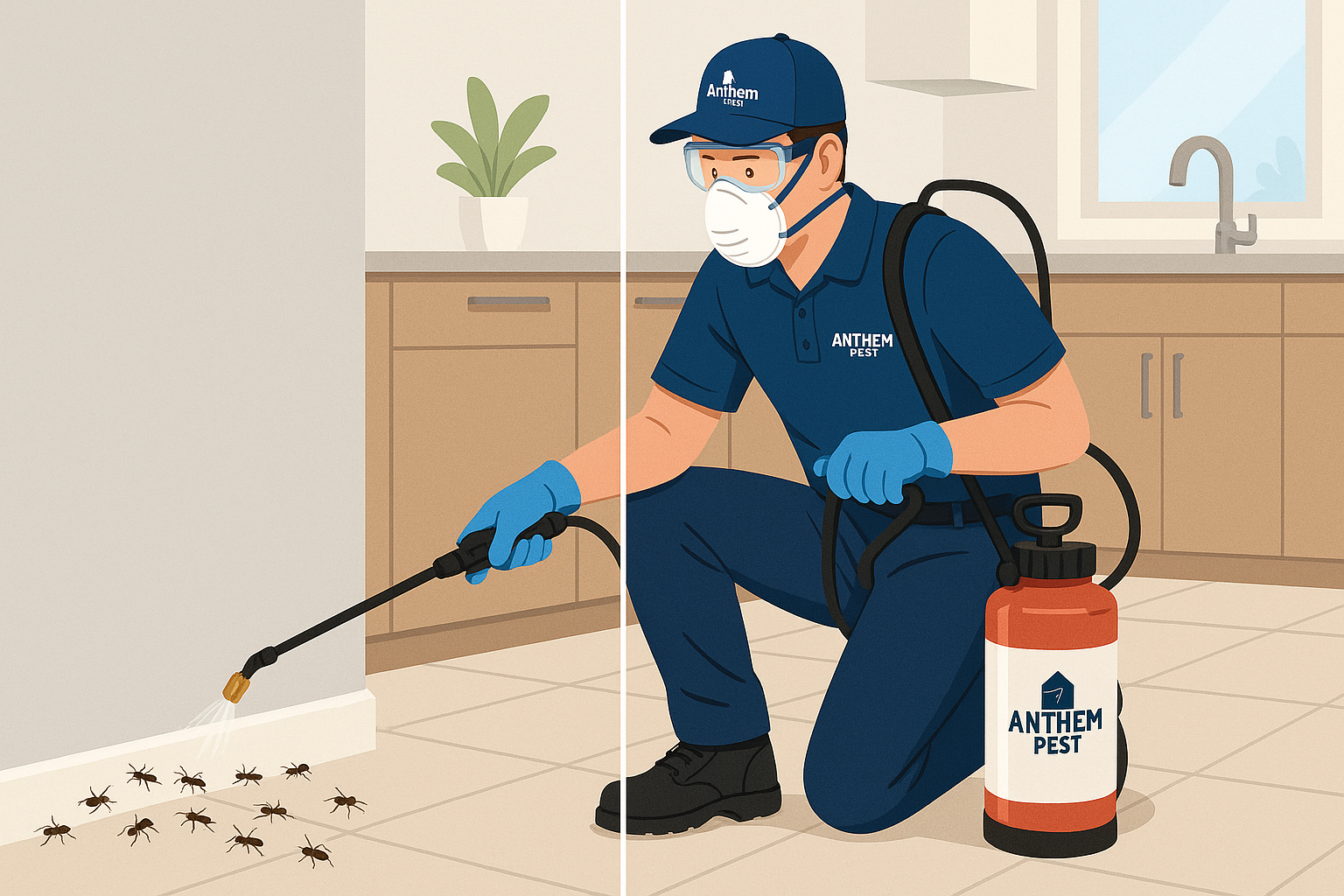
Chemical Barrier Treatments
Bait Station Programs
Ultrasonic Devices
Eco‑Friendly Options
City‑Specific Pricing (Anthem Pest)
Warranty Terms & Follow‑Up Schedule
Frequently Asked Questions
How long does a mosquito treatment last?
Can I DIY termite control?
What safety measures protect children and pets during treatment?
Do rodents cause structural damage?
Are ultrasonic devices effective against pests?
Secure Your Home with Anthem Pest Control Today