Why Termites Are a Serious Threat in Marietta
When you hear the word “termite,” most homeowners picture a lone insect gnawing at a wooden fence. In reality, termites operate like an underground army, silently eating away at the structural heart of a home making rated termite control Marietta essential for early detection and protection. In Marietta, Georgia, that army is larger, more aggressive, and far more common than you might think.
Subterranean termites dominate the southeastern United States, and Fulton County—where Marietta sits—ranks among the hottest hotspots. According to the 2024 EPA report, more than 1.5 million homes nationwide suffer termite damage each year, translating to an estimated 12,000 homes in Fulton County alone. Those numbers aren’t abstract statistics; they represent neighbors who have faced costly repairs, insurance headaches, and the stress of living in a compromised structure.
Climate and Soil: Marietta’s Perfect Termite Playground
Two natural factors make Marietta especially inviting for these pests:
- Warm, humid summers: Temperatures regularly climb above 85 °F, and humidity levels hover around 70 % during the peak season. This moisture‑rich environment keeps the soil damp, providing termites with the moisture they need to thrive.
- Clay‑rich soils: The region’s prevalent clay soils retain water longer than sandy soils, creating a stable, moist tunnel system beneath foundations, sidewalks, and driveways.
Combine those conditions with the abundance of mature trees and landscaping typical of Marietta neighborhoods, and you have a year‑round buffet for colonies that can grow to millions of individuals. A single mature colony can consume up to 30 pounds of wood per year—the equivalent of a small tree.
Why Homeowners Should Pay Attention
Termite damage is rarely visible until it’s severe. By the time you notice sagging floors, warped door frames, or a faint hollow sound when tapping wood, the colony has often been feeding for months, if not years. The financial impact is staggering: the EPA estimates that average repair costs range from $2,000 to $5,000 per infestation, with some structural repairs exceeding $10,000.
Beyond the monetary burden, untreated termite activity can compromise a home’s safety. Weakened support beams increase the risk of sudden collapses, especially during heavy rains or storms—a real concern in Georgia’s seasonal weather patterns.
What This Guide Will Cover
Understanding the threat is the first step; taking action is the next. In the sections that follow, you’ll learn:
- How to spot early warning signs before damage becomes visible.
- The most effective treatment options, from liquid termiticides to baiting systems, and how Anthem Pest tailors each method to Marietta’s unique conditions.
- Transparent pricing breakdowns so you know exactly what you’re paying for.
- Seasonal timing tips to maximize treatment efficacy and minimize disruption to your daily life.
- Preventive measures you can implement today to keep colonies at bay.
Armed with data, local expertise, and a clear action plan, you’ll be able to protect your biggest investment—your home—from one of the most insidious pests in the Southeast. Let’s dive deeper and turn that silent threat into a manageable, solvable problem.
Signs Every Homeowner Should Know
Termites work in the shadows, but they leave unmistakable clues that any attentive homeowner can spot. Catching these hints early can mean the difference between a quick, inexpensive fix and a costly structural repair. Below are the four visual red flags that most infestations reveal.
Primary visual signs
- Mud tubes – ear‑shaped, pencil‑thin tunnels made of soil and wood particles that connect the soil to the wood they’re eating.
- Winged alates – the swarming “white‑flies” you see after a rainstorm; they’re the reproductive winged termites looking for a new home.
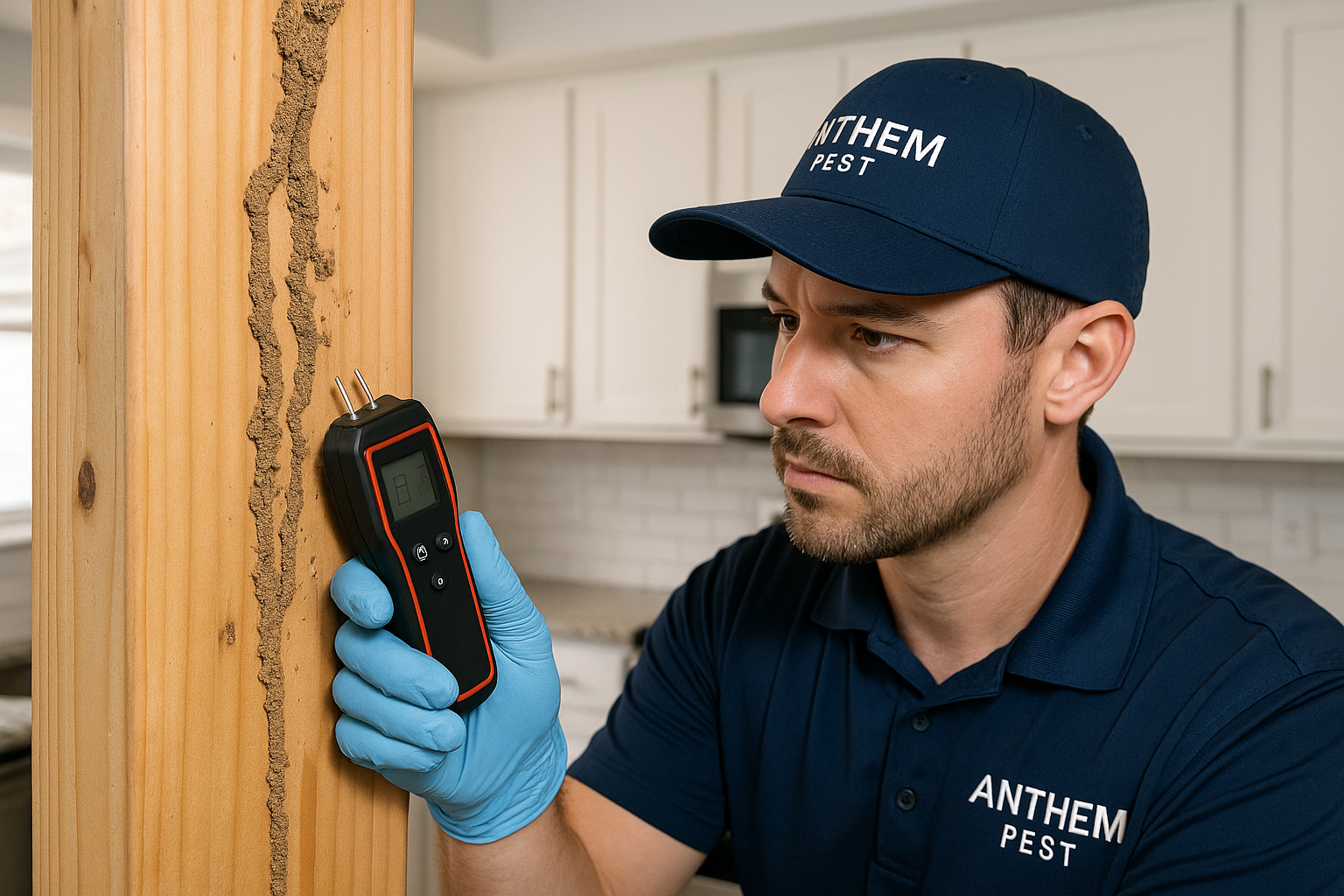
- Damaged or hollow‑sounding wood – tap a beam or floor joist; a hollow thud often means the interior has been hollowed out by termites.
- Visible frass – dry, pellet‑shaped droppings that look like sawdust or tiny wooden beads, usually found near exit holes.
Real‑world example from East Marietta
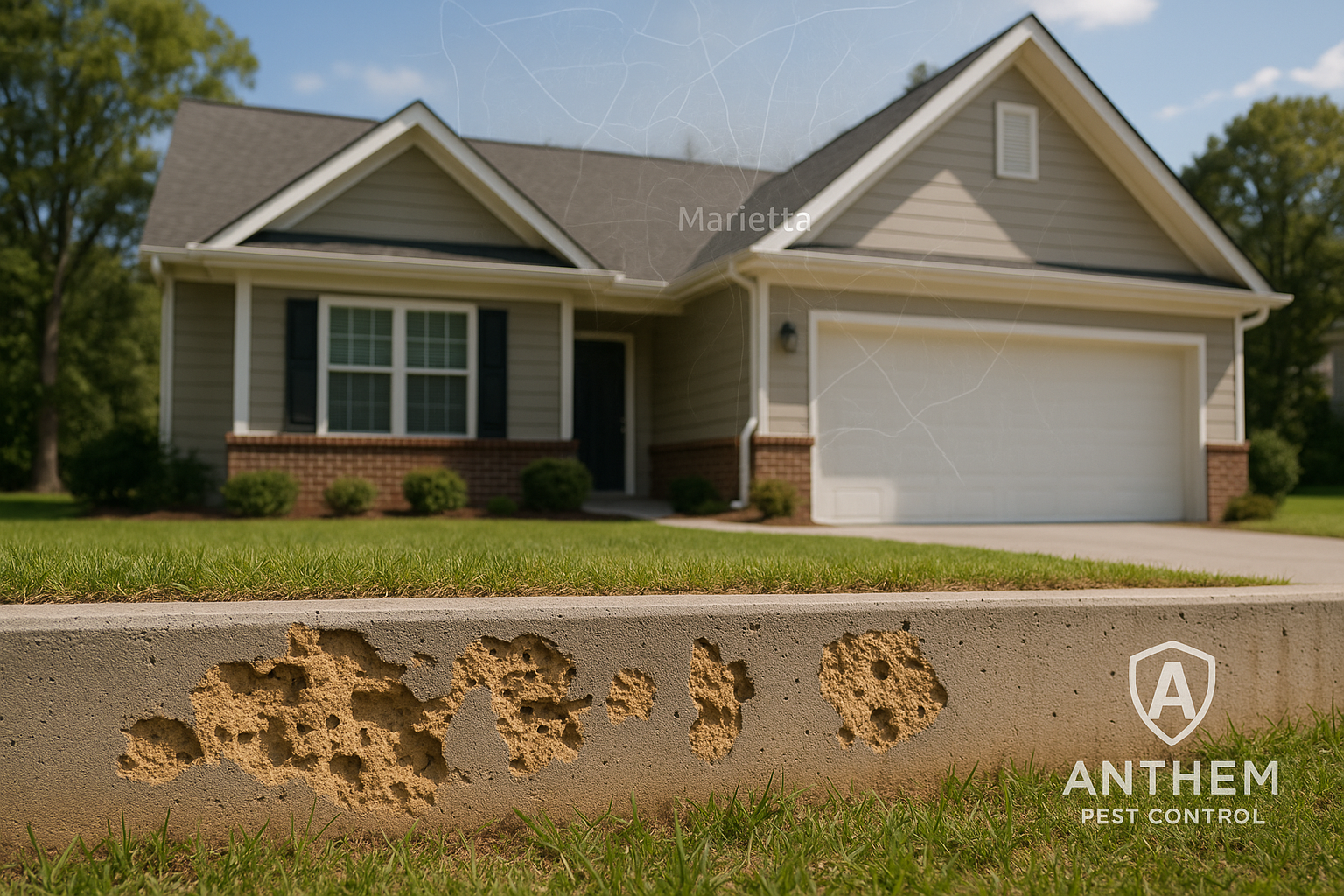
Last spring, the Martinez family noticed a faint, wet line creeping up the lower corner of their basement wall. At first they assumed it was a minor moisture issue, but a closer look revealed a network of mud tubes snaking from the foundation into the concrete block. The tubes were only a few millimeters wide, yet they provided a direct highway for termites to reach the wooden joists beneath the floor. By calling a professional termite specialist within 48 hours, the Martinezes avoided weeks of hidden damage that could have compromised the entire foundation highlighting the importance of rated termite control Marietta homeowners can rely on.
Why homeowner detection matters
According to the NPMA 2023 report, 30 % of infestations are first spotted by homeowners. That statistic underscores the power of a vigilant eye; when you recognize the signs early, you give your pest control team a head start and keep treatment costs low.
Tips for inspecting common entry points
Perform a quick visual sweep at least twice a year—once in spring and once in fall—to catch any new activity before it spreads.
- Foundation: Walk the perimeter of your home and look for mud tubes or cracks wider than a quarter inch. Pay special attention to areas where landscaping soil meets the concrete.
- Crawl spaces: Lift any access panels and shine a flashlight into the space. Mud tubes often hug the joists, and you may also see frass piles near vent openings.
- Exterior walls: Check siding, especially where it meets the roofline. Alates are attracted to light, so a sudden cluster of winged insects on a sunny day is a warning sign.
- Wooden decks and porches: Inspect the undersides for hollow sounds or visible tunnels. Even a small, untreated deck can serve as a bridge for termites to reach the main structure.
When you notice any of these cues, don’t wait for the damage to become visible. A professional inspection can confirm the presence of termites, identify the species, and map out the extent of the infestation. Early detection not only protects your home’s integrity but also preserves the value of your biggest investment.
Local Termite Species and Their Behaviors
Eastern Subterranean Termite (Reticulitermes flavipes)
The Eastern subterranean termite is the most common culprit behind wood damage in Marietta homes. Its colonies typically range from 5,000 to 10,000 individuals, but under optimal moisture and food conditions they can swell to well over 30,000 workers. These termites build their nests in the soil, sending out a network of mud‑tube tunnels that protect them from the elements while they forage for cellulose.
Foraging patterns are seasonal: activity peaks in late spring and early summer when soil temperatures climb above 55 °F (13 °C). Workers travel outward in concentric circles, often extending 30 to 50 feet from the nest, and will exploit any wood that remains in direct contact with the ground—decking, sill plates, and foundation walls are prime targets. Because they remain hidden underground, damage can accumulate unnoticed for years, especially in homes with poor drainage or cracked foundations.
Formosan Termite (Coptotermes formosanus)
While the Formosan termite is still relatively rare in Georgia, its presence is a growing concern for Marietta homeowners near ports, rail yards, or large landscaping projects. Unlike its subterranean counterpart, the Formosan builds massive, above‑ground foraging columns that can stretch over 300 feet, allowing it to reach food sources without staying in direct soil contact.
Formosans are notorious for their aggressive foraging behavior and high reproductive rate—colonies can exceed 2 million individuals within a few years. This sheer numbers advantage translates into rapid, extensive damage; a single colony can chew through a 2 × 4 stud wall in just a few months. Their ability to thrive in both moist and relatively dry conditions means they can invade homes that appear well‑sealed, making early detection especially critical.
“Monitoring programs in Georgia have identified both R. flavipes and the emerging threat of C. formosanus. While the former remains the dominant species, the latter’s aggressive foraging warrants heightened vigilance.” – Georgia Department of Agriculture, Termite Fact Sheet
When to Stay on High Alert for Formosan Activity
Homeowners should be particularly watchful for Formosan signs if their property is located within a half‑mile of commercial warehouses, freight corridors, or recent construction sites—areas where these termites are most likely to be introduced. Look for unusually large mud tubes that rise above the soil surface, especially those that are wider than a pencil and appear in clusters. Sudden, unexplained wood damage near exterior walls, decks, or garden structures during the cooler months (when subterranean activity usually wanes) can also indicate a Formosan incursion.
If any of these red flags appear, contact a local expert like Anthem Pest Control right away. Early intervention—often a targeted baiting or localized termiticide treatment—can prevent the exponential colony growth that makes Formosan infestations so costly to eradicate.
Treatment Options Overview
When it comes to protecting a Marietta home from silent, wood-eating invaders, homeowners typically have three proven pathways making rated termite control Marietta an essential consideration: soil-borne liquid barriers, baiting systems, and foam or direct-wood treatments. Each method tackles termites in a slightly different way, carries its own price tag, and offers distinct advantages and drawbacks. Below is a straightforward walk-through so you can match the right solution to your home’s layout, budget, and peace-of-mind requirements.
Soil‑Borne Liquid Barriers
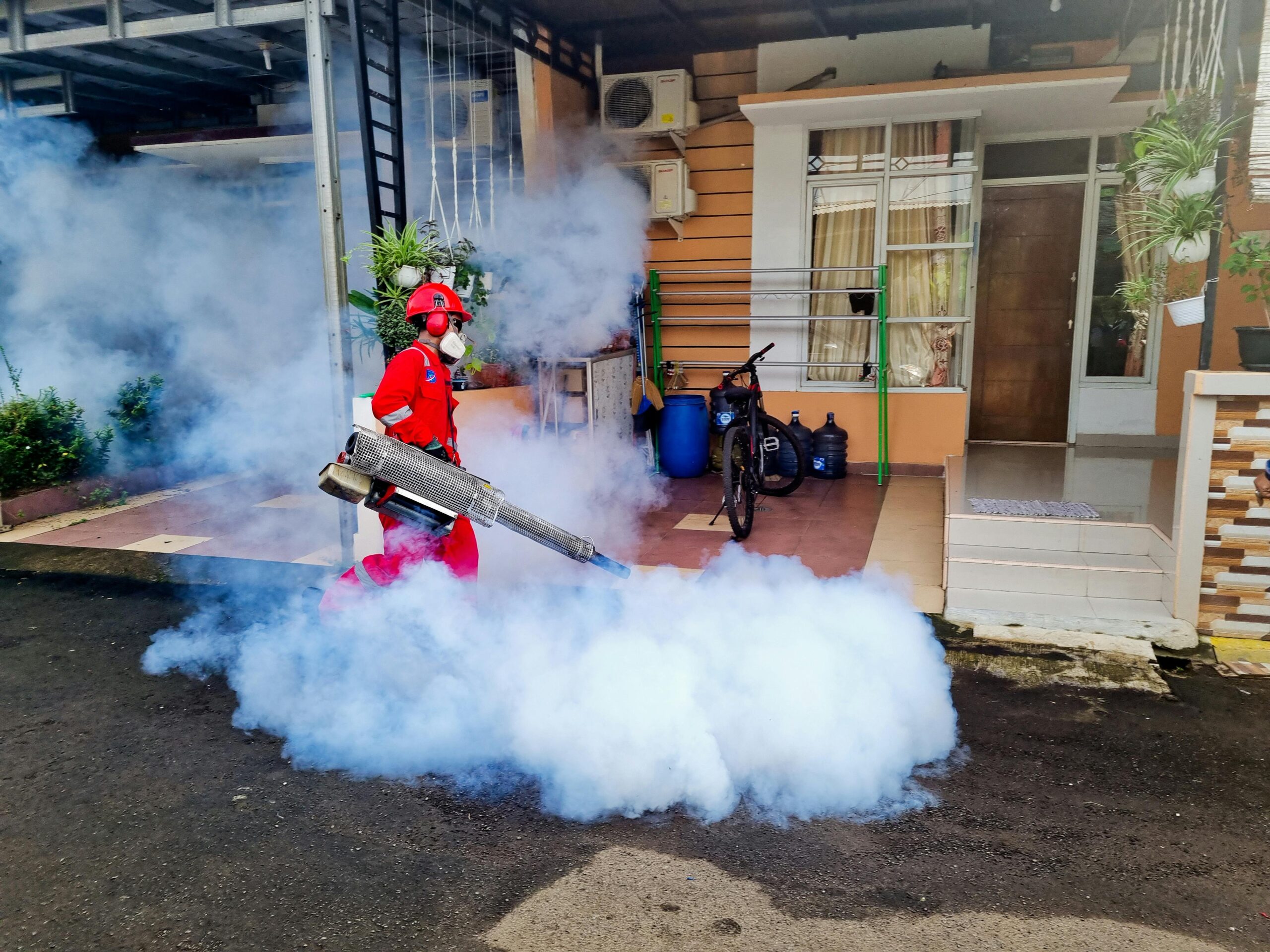
Liquid termiticides are sprayed or injected into the soil surrounding a home’s foundation, creating an invisible shield that termites cannot cross without dying. Professionals use a specialized pump to apply the chemical in a continuous trench that typically extends 6–12 inches deep and 12–18 inches wide around the perimeter.
- Typical cost: $1,200 – $2,500 for a 2,000 sq ft residence in Marietta.
- Protection span: 5 – 10 years, depending on product longevity and soil conditions.
- Pros: Provides long‑term, area‑wide protection; eliminates the need for frequent follow‑up visits; works against both subterranean and some dry‑wood species that travel through soil.
- Cons: Involves handling chemicals that some homeowners find unsettling; requires a licensed technician for proper mixing and application; any future landscaping changes (like adding a deck) may disturb the barrier.
Baiting Systems
Bait stations are discreet, low‑profile containers placed in strategic spots around the yard—typically near foundations, trees, and utility lines. Each station houses a cellulose substrate laced with a slow‑acting insecticide. Termites discover the bait, share it with the colony, and gradually collapse the population. Professional technicians monitor the stations quarterly, replacing or re‑treating as needed.
- Typical cost: $1,500 – $3,000, including installation of 8–12 stations and the first year of monitoring.
- Success rate: Approximately 85 % colony elimination within 12–18 months, according to the EPA’s 2022 baiting study.
- Pros: Minimal chemical exposure to occupants and pets; adaptable to landscaping changes; can target hidden colonies without disturbing the soil.
- Cons: Requires ongoing professional monitoring; effectiveness hinges on proper station placement and regular maintenance; initial cost can be higher than a one‑time liquid barrier.
Foam / Direct‑Wood Treatments
When termites have already breached wood structures—such as a porch post, support beam, or interior framing—expanding foam or direct‑wood termiticides become the go‑to solution. Technicians drill small holes into the infested wood, inject a fast‑curing foam or liquid that expands to fill voids, and seal the entry points. This method is especially useful for spot‑treating localized damage without disturbing the surrounding soil.
- Typical cost: $800 – $1,500, depending on the number of voids and wood volume treated.
- Pros: Targets the exact area of infestation; provides immediate knock‑down of active termites; less invasive than excavating soil.
- Cons: Offers limited residual protection—usually only a few months; not a stand‑alone solution for a full‑home infestation; may require follow‑up treatments if the colony persists.
Quick Comparison Table
| Method | Cost Range | Protection Duration | Pros | Cons |
|---|---|---|---|---|
| Soil‑Borne Liquid Barriers | $1,200 – $2,500 | 5 – 10 years | Area‑wide, long‑lasting shield; no regular visits needed | Chemical handling concerns; may be disrupted by landscaping changes |
| Baiting Systems | $1,500 – $3,000 | 12 – 18 months (colony elimination) | Low chemical exposure; adaptable to yard layout; proven 85 % success | Quarterly monitoring required; higher upfront cost |
| Foam / Direct‑Wood Treatments | $800 – $1,500 | Months (spot protection) | Targets exact damage; quick knock‑down; minimal disruption | Limited residual effect; not a full‑home solution |
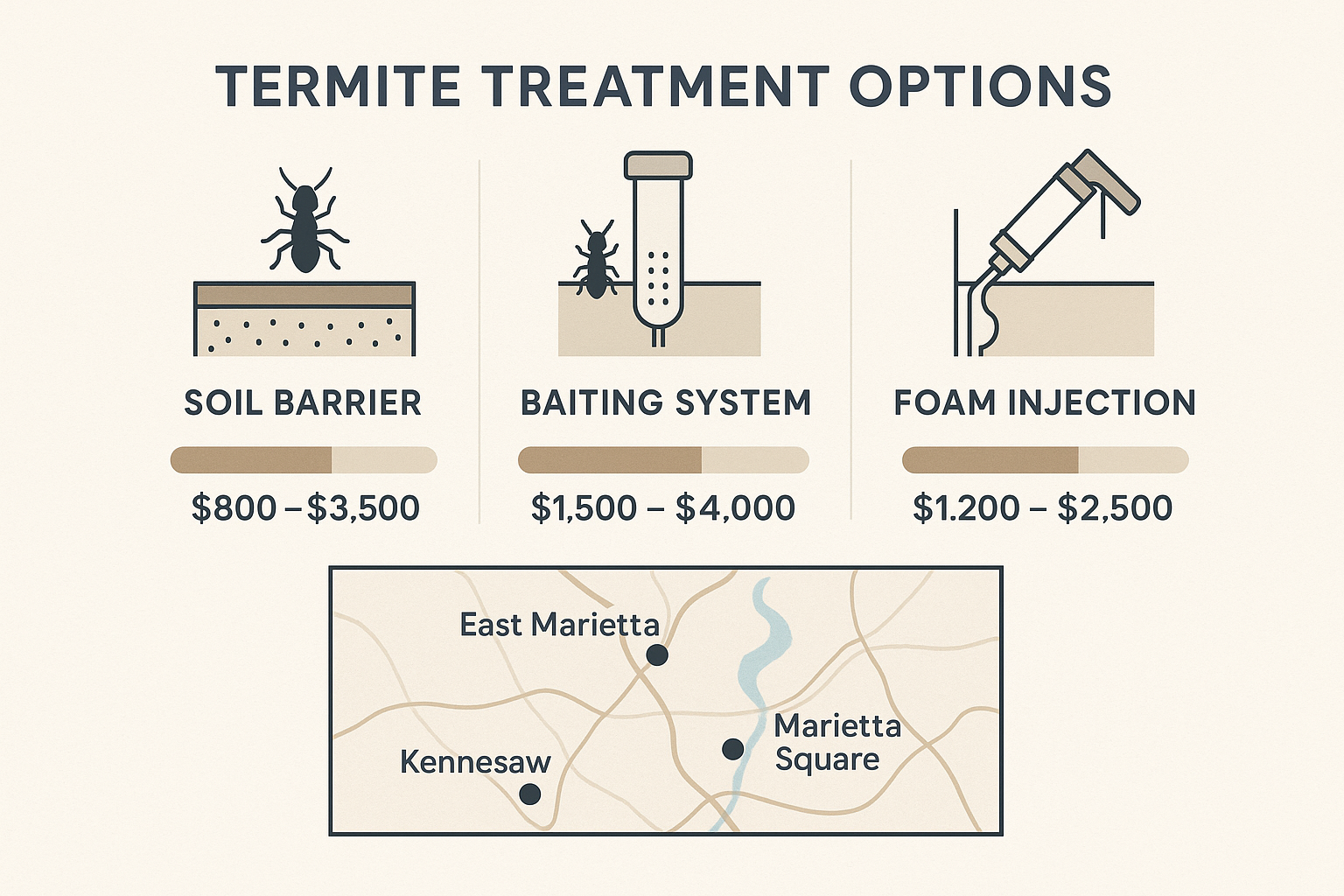
Choosing the right approach often depends on where termites are active, how much you’re willing to invest upfront, and how comfortable you feel with chemical exposure. A liquid barrier is ideal for homeowners who want a set‑and‑forget shield, while baiting offers a more environmentally gentle, colony‑focused strategy. If you’ve already spotted damage in a specific beam or joist, foam or direct‑wood treatment can knock out the problem quickly, but you’ll still want a broader preventive measure to keep the rest of the house safe.
At Anthem Pest Control, we evaluate each home’s construction, soil type, and existing infestation level before recommending a tailored plan. By understanding the cost, longevity, and trade‑offs of each method, you’ll be equipped to make an informed decision that protects your investment for years to come.
Choosing the Right Service Provider in Marietta
What to Look for – A Quick Vetting Checklist
When you’re ready to tackle a termite invasion, the last thing you want is to hire a company that can’t deliver. Use the checklist below to separate the pros from the pretenders:
- Proper licensing and certification: Verify that the company holds a Georgia state pest‑control license and that its technicians are certified for termite work.
- Liability insurance: A reputable provider will carry insurance that protects you in case of accidental damage during treatment.
- Local customer reviews: Look for recent feedback from Marietta homeowners. Consistent five‑star ratings in your neighborhood are a strong indicator of reliability.
- Warranty length and coverage: Quality termite programs include a written warranty—ideally 2‑5 years—that covers retreatment if the pests return.
- Response time: Termites can cause irreversible damage quickly. Choose a service that promises a rapid, preferably same‑day, on‑site assessment.
Why Anthem Pest Stands Out in Marietta
Anthem Pest checks every box on the list, and it brings a few local advantages that make it the go‑to choice for Marietta homeowners.
Certified technicians: All Anthem field agents complete state‑required training and hold certifications specific to termite identification, inspection, and treatment. This expertise means they can spot hidden colonies that less‑trained crews might miss.
24‑hour response guarantee: We understand that a termite sighting can feel urgent. Anthem pledges to be on your property within 24 hours of your call, providing a thorough inspection and a clear, written plan of action.
Marietta office location: Our local office sits just minutes from downtown Marietta, allowing us to dispatch crews faster than regional chains that operate from distant hubs. The proximity also means we’re familiar with the specific soil types and construction styles that influence termite activity in this area.
Transparent pricing is another hallmark of Anthem Pest. You’ll receive a detailed estimate before any work begins, so there are no surprise fees once the treatment starts.
Get Started Today
Ready to protect your home with a trusted partner? Call us now at 877‑371‑8196 or visit anthempest.com to schedule your free inspection. Our friendly staff will walk you through the process, answer any questions, and set up a treatment plan that fits your budget.
“Anthem Pest arrived exactly when they said they would, explained every step, and finished the treatment before dinner. My backyard is termite‑free, and I finally feel safe again.” – Emily R., Brookhaven, GA
Detailed Cost Breakdown & Influencing Factors
When you request a termite quote, the number you see on the estimate isn’t random—it reflects a handful of concrete variables that can differ from one home to the next. Understanding these factors helps you compare bids, avoid surprise fees, and budget with confidence. Below are the primary drivers that most pest‑control companies, including Anthem Pest Control, use to calculate their prices.
Key Variables That Shape Your Quote
- Square footage of the treated area – Larger homes require more product, longer application times, and often additional equipment. A 2,000‑sq‑ft house will typically cost 30‑40 % more to treat than a 1,200‑sq‑ft property.
- Infestation severity – A light, localized spot can be handled with a spot‑treatment, while a widespread colony may need full‑structure barrier applications and repeated follow‑ups, driving the price up.
- Chosen treatment type – Options range from liquid termiticides (the most common barrier treatment) to bait‑station systems and foam injections for hard‑to‑reach voids. Each method carries its own material and labor costs.
- Property accessibility – Homes with crawl spaces, finished basements, or intricate landscaping can increase labor time. Obstacles such as concrete slabs or limited entry points often add a service‑access surcharge.
- Seasonal demand – Termite activity spikes in the spring and early summer. During these peak months, many companies adjust rates to reflect higher demand and tighter scheduling windows.
Typical Price Ranges by Treatment
| Treatment Type | Low Estimate | Median Estimate | High Estimate |
|---|---|---|---|
| Liquid Termiticide Barrier | $1,200 | $2,300 | $3,800 |
| Bait‑Station System (installation + 1‑yr monitoring) | $900 | $1,700 | $2,600 |
| Foam Injection for Void Treatment | $500 | $1,100 | $1,800 |
| Integrated Termite & Mosquito Package | $1,500 | $2,400 | $3,200 |
These figures are illustrative; your final quote will reflect the exact mix of the factors listed above.
Bundled‑Service Discounts
Many homeowners in Marietta combine termite control with other seasonal services—most commonly mosquito or rodent management. Anthem Pest Control offers a bundled‑service discount that can shave 10‑15 % off the combined total. For example, pairing a standard liquid termiticide with a full‑season mosquito barrier often reduces the overall out‑of‑pocket cost while keeping both pests at bay.
2024 Pricing Trends
The National Pest Management Association’s 2023 cost survey, released early in 2024, shows a modest upward shift in termite treatment prices nationwide—about 4 % compared with the previous year. The increase is largely attributed to rising raw‑material costs for termiticides and heightened labor rates during peak season. Anthem Pest Control aligns its pricing with these industry trends while still emphasizing transparent, competitive quotes for Marietta homeowners.
Optimal Inspection and Treatment Timing
When to Schedule Your Inspection
In Marietta, the most reliable windows for a termite inspection are early spring (March–May) and early fall (September–October). These periods bracket the hottest months, giving you a clear view of any activity before colonies expand in summer or re-establish after the heat subsides making rated termite control Marietta a smart choice during these key seasons. By booking during these windows, you catch termites while they are still foraging near the foundation, which makes detection easier and treatment more cost-effective.
Why Spring Is Prime Time for Treatment
During spring, termite workers increase their foraging trips as soil temperatures rise above 55 °F. The colonies are actively searching for food, so bait stations and liquid barriers encounter a larger number of individuals. This heightened activity means that a single treatment can affect a broader portion of the colony, reducing the need for repeat visits.
In addition, the soil is typically moist but not water‑logged, allowing liquid termiticides to flow evenly and bond with the soil particles. A well‑placed barrier in spring creates a continuous “moat” that termites cannot cross, and the cooler, drier summer months then lock that barrier in place.
Marietta’s Climate at a Glance
According to NOAA’s 2023 climate normals, Marietta enjoys an average spring temperature of 68 °F and a relative humidity of about 70 %. These conditions are ideal for termite activity because the soil remains warm enough for the insects to move, yet not so dry that they retreat deep underground. Knowing these numbers helps you understand why termites are most visible in March through May and why a fall inspection can catch any late‑season survivors before the winter chill drives them
Practical Prevention Tips for Homeowners
Termites are relentless, but you don’t have to wait for an infestation to take action. By making a few simple, low‑cost adjustments around your Marietta home, you can dramatically lower the chances of a colony taking hold. The following steps are easy to implement, require minimal tools, and work year‑round.
Reduce Wood‑to‑Soil Contact
Termites need a direct path from the ground to the wood they eat. Cutting that bridge is one of the most effective deterrents.
- Concrete slabs or piers: Whenever possible, replace ground‑level wooden decks, porches, or siding supports with concrete footings. This creates a physical barrier that termites cannot cross.
- Firewood storage: Keep firewood stacked at least 20 feet away from your foundation and elevate it on pallets or a raised platform. This prevents moisture‑rich wood from becoming a feeding station right next to your house.
- Landscaping adjustments: Trim back any trees, shrubs, or vines that touch the exterior walls. Their roots can act as hidden highways for termites.
Manage Moisture Everywhere
Termites thrive in damp environments. Controlling moisture eliminates their favorite habitat.
- Fix leaks promptly: Dripping faucets, roof leaks, and faulty irrigation lines should be repaired within 24 hours. Even a slow drip can saturate wood and soil.
- Ensure proper drainage: Grade the soil around your home so water flows away from the foundation. Install or clean gutters and downspouts regularly to prevent pooling.
- Use dehumidifiers: Basements and crawl spaces are natural moisture traps. Running a dehumidifier to keep relative humidity below 60 % dries out wood and soil, making them inhospitable to termites.
- Ventilate crawl spaces: Install vent fans or passive vents to promote airflow, especially after heavy rains.
Schedule Annual Professional Inspections
Even the most diligent DIY efforts can miss hidden activity. A once‑yearly inspection by a trusted provider such as Anthem Pest adds a professional safety net.
- Technicians use moisture meters, infrared cameras, and termite detection tools that homeowners rarely have.
- Early detection means treatment costs stay low—often just the price of a preventive barrier rather than a full eradication.
- Anthem Pest offers transparent pricing and a guarantee that the same termite pressure won’t return within the warranty period.
Quick‑Reference Checklist
Keep this checklist handy on your fridge or in a home‑maintenance binder. Review it each season, especially after heavy rain or when you notice any new wood‑to‑soil contact. By staying proactive, you protect your investment, your family’s safety, and your peace of mind—all without breaking the bank.
Frequently Asked Questions
How long does a treatment last?
Most liquid termiticides create a protective barrier in the soil around your home that remains effective for five to ten years, depending on the product and soil conditions. Baiting systems work a bit differently; the stations stay active as long as they contain active bait, which typically requires quarterly inspections and occasional bait replacement. In practice, a well‑installed barrier paired with annual monitoring can keep termites at bay for a decade, while a baiting program may need ongoing attention to stay effective.
Are the chemicals safe for pets and children?
Yes when applied by a licensed professional, the termiticides we use meet strict EPA safety standards and are formulated for low toxicity. Anthem Pest Control selects products that have a high margin of safety for non‑target organisms, and we follow label directions to the letter. After the application, the treated soil is left undisturbed, and any surface residues are below levels that could harm pets or kids. We always advise a short waiting period usually an hour before allowing children or animals back onto the treated area.
What if I see new activity after treatment?
Spotting fresh termite signs can be unsettling, but it doesn’t automatically mean the treatment failed. Our warranty includes a re‑inspection within the first 30 days and annually thereafter. If we confirm new activity, we’ll assess whether it’s a breach in the barrier, a missed colony, or a new entry point. Depending on the findings, we may offer a complimentary retreatment of the affected zone or adjust the baiting system. The goal is to restore protection without additional cost to you.
Can I treat termites myself?
DIY kits are marketed as “quick fixes,” but they rarely address the hidden nature of subterranean colonies. Professional treatment combines soil‑borne barriers, bait stations, and expert knowledge of termite behavior—something a homeowner can’t replicate with a spray can. Attempting a DIY approach can also void warranties and may expose your family to unnecessary chemicals if not applied correctly. For lasting peace of mind, let a certified technician handle the job.
How often should I schedule inspections?
Even after a successful treatment, termites can find new ways into a home. We recommend a full inspection at least once a year, preferably in the spring when activity ramps up. Annual visits let us spot early warning signs, verify the integrity of the barrier, and service bait stations before an infestation takes hold.
Protecting Your Marietta Home
Early detection, professional treatment, and ongoing prevention form the three‑pillared defense every Marietta homeowner needs against termites. Spotting mud tubes, hollow‑sounding wood, or discarded wings the moment they appear gives you a critical window to act before a colony establishes a foothold. Once a professional inspection confirms activity, licensed technicians can apply targeted liquid barriers, bait stations, or localized foam treatments—each designed to eradicate the infestation while safeguarding the surrounding landscape. After the initial eradication, a schedule of quarterly inspections and barrier re‑applications keeps the perimeter sealed, ensuring that any new intruders are caught before they can cause damage.
The cost of postponing action can be staggering. A single termite colony can chew through a 2,000‑square‑foot home’s structural members in as little as two years, leading to compromised foundations, sagging floors, and costly repairs that often exceed tens of thousands of dollars. Beyond the financial hit, delayed treatment jeopardizes your family’s safety; weakened support beams increase the risk of sudden collapse, especially during heavy rains or storms common in Georgia. Moreover, insurance policies typically exclude coverage for damage caused by untreated termites, leaving you to foot the entire bill. Acting now not only preserves your home’s value but also protects your peace of mind.
If you notice any warning signs or simply want to confirm that your home is termite‑free, pick up the phone and call Anthem Pest at 877‑371‑8196. Our friendly team will schedule a complimentary inspection at a time that fits your busy schedule, or you can request a personalized quote online. A quick, professional assessment today can prevent a costly, disruptive battle tomorrow.
Anthem Pest has been serving Marietta and the surrounding Georgia communities for years, building a reputation for reliable, science‑backed termite control. Our technicians are locally trained, understand the specific behavior of Georgia’s subterranean termites, and use EPA‑approved products that protect your family and pets while delivering lasting results. We pride ourselves on transparent pricing—no hidden fees, no surprise charges—and a satisfaction guarantee that ensures you’re completely happy with the outcome. Whether you need a one‑time eradication or a comprehensive prevention plan, we tailor our services to fit your home’s unique layout and your budget.
Ready to safeguard your investment? Visit Anthem Pest Control to learn more about our termite solutions, read customer testimonials, and schedule your free inspection for rated termite control Marietta homeowners trust. Taking the first step today means a healthier, stronger home for years to come.