
Why Moths Matter in Dunwoody

According to the 2023 CDC household pest survey, roughly 12 % of homes throughout the Atlanta‑metro area reported spotting moths inside their living spaces. While that percentage may seem modest, the numbers translate into thousands of households in Fulton County alone—Dunwoody’s home base—dealing with unwanted winged visitors. The data also reveal a steady upward trend over the past three years, indicating that moth activity is no longer an occasional nuisance but an emerging neighborhood concern.
Two species are driving the surge in Dunwoody: pantry moths (Plodia interpunctella) that infiltrate kitchens, and carpet moths (Trichophaga tapetzella) that silently gnaw at wool, silk, and stored textiles. In Fulton County, pest‑control calls for pantry infestations have risen by nearly 35 % since 2021, while carpet‑moth reports have jumped 28 % in the same period. Warm, humid summers, combined with the region’s dense housing density, create a perfect breeding ground for these pests, allowing them to move easily from one home to the next.
Beyond the obvious annoyance, moths pose genuine health and property risks. When pantry moth larvae chew through packaged foods, they leave behind droppings, webbing, and shed skins that can contaminate entire batches of grain, cereal, or dried fruit. Consuming contaminated products may trigger food‑borne illnesses or allergic reactions, especially in children and the elderly. Carpet moths, on the other hand, target natural fibers, gradually hollowing out clothing, upholstery, and heirloom blankets. The damage is often invisible until large sections of fabric are weakened, leading to costly replacements and loss of sentimental items.
Homeowners who discover webbing in pantry corners or notice small holes in wool sweaters should act quickly. While DIY traps can provide temporary relief, a professional assessment ensures the infestation is fully mapped and treated. Anthem Pest Control has been serving the Dunwoody area for years, combining local knowledge with EPA‑approved treatment protocols. Their technicians understand the unique climate patterns of Fulton County and can tailor a prevention plan that protects both food storage areas and fabric‑rich rooms.
Understanding the scope of the problem is the first step; the next is learning to recognize the specific moth species invading your home. In the following section, we’ll break down the visual cues that differentiate pantry moths from carpet moths, helping you identify the culprit before it spreads further.
Common Moth Culprits in Dunwoody Homes
When you hear a soft flutter in the pantry or spot tiny specks on a carpet, you’re likely dealing with one of the three moth species that thrive in Dunwoody’s warm, humid climate. Understanding how each pest looks, what it eats, and when it’s most active can save you time, money, and a lot of frustration. Below is a quick‑reference guide that lets you pinpoint the culprit before it turns a seasonal nuisance into a full‑blown infestation.
Pantry Moth (Plodia interpunctella)
Also called the Indian meal moth, the pantry moth is the most common indoor moth in Georgia. Adults are small—about ½ inch long—and love to hide in dry food storage.
- Wing pattern/coloration: Forewings are a striking mix of reddish‑brown and amber with a distinctive silver‑gray band that runs across the middle, creating a “chevron” look.
- Larval food source: The caterpillars feast on grains, cereals, nuts, dried fruit, and pet food. Even a single forgotten bag of flour can become a breeding ground.
- Peak seasonal activity: June through August, when temperatures hover above 75 °F and humidity spikes, creating ideal conditions for rapid egg development.
Summer example: In a typical Dunwoody kitchen, pantry moths can multiply from a handful of eggs to hundreds of larvae within weeks of June. If you store bulk rice or oats in a pantry that isn’t airtight, the moths will lay eggs on the surface, and the emerging larvae will tunnel into the grain, leaving webby residue and a faint, unpleasant odor.
Carpet Moth (Tineola bisselliella)
The carpet moth, sometimes called the common clothes moth, targets natural fibers rather than food. It’s a silent destroyer of wool, silk, and even some synthetic blends.
- Wing pattern/coloration: Adults have narrow, creamy‑white wings speckled with dark brown or black dots, giving them a “peppered” appearance.
- Larval food source: Larvae feed on keratin‑rich materials—wool blankets, upholstery, carpets, and even pet hair left in closets.
- Peak seasonal activity: Late summer to early fall (August‑October), when indoor heating begins to dry out fabrics, prompting larvae to seek out fresh food sources.
Webbing Moth (Trichophysetis spp.)
Webbing moths are less well known but can cause noticeable damage to stored products and even decorative items. They’re often confused with pantry moths because of similar habits.
- Wing pattern/coloration: Wings are pale tan with fine, wavy lines that resemble a delicate net; the hindwings are slightly translucent.
- Larval food source: Larvae spin loose webs and feed on dried herbs, spices, and sometimes on the glue that holds book spines together.
- Peak seasonal activity: Spring (April‑June), when the combination of moderate temperature and rising humidity encourages egg laying on stored pantry items.
According to the U.S. Environmental Protection Agency, pantry moth populations in humid regions like Fulton County climb by roughly 35 % during the summer months. That spike underscores why proactive identification and early intervention are crucial for Dunwoody homeowners.

Red Flags: How to Spot a Moth Problem Early
Even a tiny moth can cause big damage if it goes unnoticed. The good news is that early infestations leave clear clues—clues that any diligent homeowner can catch with a quick look around the kitchen, closets, and bedrooms. Recognizing these signs before the population explodes saves you time, money, and the headache of a full‑scale treatment.
Three early indicators to watch for
- Silk webbing in pantry corners – Moth larvae spin fine, white silk as they move between food items.
- Clusters of larvae in stored fabrics – Look for tiny, cream‑colored caterpillars hidden in sweaters, blankets, or wool rugs.
- Adult moths fluttering near lights at night – Their attraction to indoor lighting often reveals a hidden breeding site.
Real‑world anecdote from Peachtree Commons
When a resident of the Peachtree Commons apartment complex opened a box of cereal for breakfast, she discovered a delicate web clinging to the inside of the lid. A quick inspection revealed a few larvae nestled among the flakes. The homeowner’s immediate action—removing the contaminated box, vacuuming the pantry shelf, and sealing all food in airtight containers—prevented a pantry-wide infestation and saved her family from future moth damage.
DIY inspection checklist
Take a systematic walk through your home with this short checklist. It’s designed to catch the subtle signs most people overlook.
- Visually scan all food packages for webbing, holes, or clumped powder; discard any suspect items.
- Vacuum closet and drawer floors, paying special attention to seams and corners where larvae may hide.
- Check light fixtures and ceiling fans for adult moths resting on bulbs or dust.
Document before you call a professional
Before dialing a pest‑control service, snap photos of any webbing, larvae clusters, or adult moth sightings. Note the locations (e.g., “pantry corner shelf A3” or “master bedroom closet floor”). This documentation helps a technician pinpoint the infestation’s scope, recommend the most effective treatment, and often speeds up the quoting process. With clear evidence in hand, you’ll feel confident that you’re making an informed decision about the next steps.
Proactive Measures to Keep Moths Out
Even the most diligent homeowner can fall prey to pantry moths if the smallest entry points are left open. The good news? A handful of evidence‑based habits can slash the risk dramatically, and most of them cost less than a night out in Dunwoody. Below are the steps you can start today to keep those flutter‑wing invaders at bay.
Airtight Food Storage
Invest in BPA‑free, snap‑lock containers for all dry goods—flour, cereal, grains, and pet food. These containers create a vacuum seal that moths cannot penetrate, effectively locking away any stray eggs or larvae. Most reputable brands sell a 5‑piece set for $15‑$45, a price range that fits most household budgets while delivering long‑term protection.
Regular Vacuuming of Closets and Storage Areas
Vacuuming isn’t just for dust; it’s a frontline defense against moths. Use a hose attachment to reach corners, seams, and the undersides of shelves where moth eggs and larvae love to hide. A thorough pass once a week removes any stray hatchlings before they can mature, and the vacuum’s suction also captures stray food particles that could attract adult moths.
Seasonal Cleaning of Stored Clothing
Clothing, especially wool and cashmere, is a favorite breeding ground for cloth moths. At the start of each season, pull out any garments you’ve stored for more than six months. Wash them in hot water (at least 120°F) or place them in a sealed bag and freeze for 72 hours to kill hidden larvae. For delicate items, a professional dry‑cleaning service provides the same lethal effect without damage.
Evidence‑Based Impact
According to the NPMA 2024 guidelines, proper food storage alone can reduce pantry moth infestations by up to 80 %. This statistic underscores why airtight containers are more than a convenience—they’re a proven preventive tool.
Pre‑Season Checklist for Dunwoody Homeowners
| Action | How Often |
|---|---|
| Inspect and seal all dry‑food packages in BPA‑free containers | Immediately; re‑check monthly |
| Vacuum pantry, closets, and storage nooks | Weekly |
| Wash, freeze, or dry‑clean seasonal clothing | At the start of each season |
| Dispose of cracked or infested packages | As soon as discovered |
| Run a final visual sweep before summer | One week before peak moth activity (late April) |
Follow this checklist each spring, and you’ll dramatically lower the chance of a moth outbreak in your Dunwoody home. Proactive steps are far cheaper—and far less stressful—than battling an infestation after it’s taken hold.
Choosing the Right Treatment: DIY or Call an Expert?
DIY Options You Can Try Today
Many homeowners start with a do‑it‑yourself approach because it feels immediate and inexpensive. Below are three of the most common DIY methods for moth control, along with their pros and cons.
- Pheromone Traps – These sticky traps emit a scent that lures male moths, interrupting the breeding cycle. They’re simple to hang in closets or pantry corners and cost about $10‑$15 per pack. While they’re safe around kids and pets, they only capture a fraction of the population and do little for larvae hidden in fabric or stored food.
- Diatomaceous Earth (DE) Application – Food‑grade DE is a fine powder made from fossilized algae. When moths or their larvae crawl over it, the microscopic shards pierce their exoskeletons, causing dehydration. A small bag (1 lb) runs $12‑$20 and can be sprinkled under carpets, along baseboards, and inside garment storage. The downside is that DE must stay dry to remain effective, and it can irritate eyes or lungs if mishandled.
- Homemade Botanical Sprays – A blend of essential oils such as lavender, cedarwood, or peppermint mixed with water and a mild surfactant can deter adult moths. A typical recipe costs under $5 for the oils and provides a pleasant scent while repelling insects. However, botanical sprays lack residual power; they need frequent re‑application and may cause allergic reactions in sensitive family members.
What Professionals Offer: Anthem Pest’s Proven Solutions
When moths have already infested walls, upholstery, or stored goods, a professional service can deliver a faster, more comprehensive knock‑down. Anthem Pest’s two flagship treatments are:
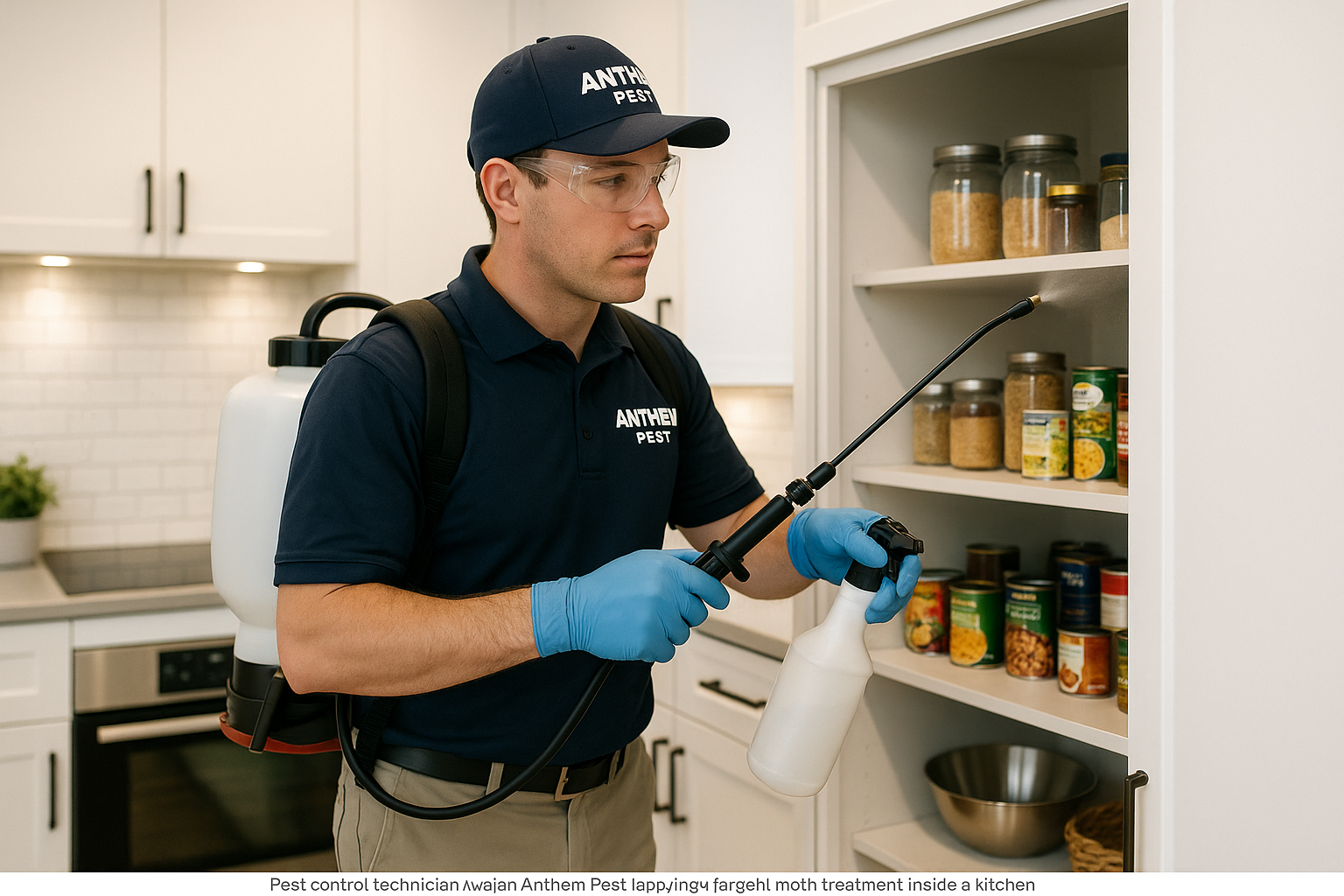
- EPA‑registered aerosol treatments – Technicians apply a fast‑acting, low‑odor spray that penetrates cracks, crevices, and fabric folds. The chemicals are vetted by the Environmental Protection Agency for indoor safety, and the formulation remains active for weeks, targeting both adult moths and developing larvae.
- Whole‑home moth programs – This is a multi‑step approach that combines a perimeter fogger, targeted spot‑treatments, and a follow‑up inspection. The program also includes preventive measures like closet liners and advice on proper food storage, ensuring the infestation doesn’t return.
Cost Comparison: DIY Kits vs. Professional Service
| Solution | Typical Cost (per home) | Coverage Duration |
|---|---|---|
| Pheromone traps (2‑pack) | $10‑$15 | 1‑2 months |
| Diatomaceous earth (1 lb bag) | $12‑$20 | Up to 6 months (dry conditions) |
| Homemade botanical spray (ingredients) | $5‑$10 | 1‑2 weeks per application |
| Anthem Pest professional treatment | $150‑$250 | 3‑6 months (with follow‑up) |
Safety First: Who Keeps Your Family Out of Harm’s Way?
Professional crews follow strict child‑ and pet‑friendly protocols. Technicians wear protective gear, seal off treated rooms, and use products that have been tested for low toxicity in occupied homes. After application, they provide clear re‑entry timelines and safety instructions, giving you peace of mind.
DIY chemicals, on the other hand, can pose hidden risks. Diatomaceous earth’s fine particles may cause respiratory irritation if inhaled, especially for young children or pets that love to dig. Essential oils, while natural, are concentrated and can trigger skin sensitivities or allergic reactions. Improper mixing of homemade sprays can also result in ineffective concentrations, leaving the moth problem untouched while exposing your household to unnecessary chemicals.
When to Call an Expert
If you notice widespread damage—e.g., holes in wool blankets, clusters of larvae in pantry goods, or a persistent fluttering of adult moths despite DIY attempts—it’s time to let a professional step in. Anthem Pest’s technicians can locate hidden breeding sites, apply EPA‑approved treatments safely, and set up a preventive schedule that protects your home year‑round.
Local Expertise You Can Trust
Our Fulton County Footprint
Anthem Pest Control has woven itself into the fabric of Fulton County, serving neighborhoods that range from the leafy streets of Brookhaven to the bustling corridors of Peachtree Corners, and even the historic charm of Dunwoody Village. Our technicians know the unique pest pressures each area faces—whether it’s the seasonal surge of ants near Brookhaven’s parks, the mosquito hotspots around Peachtree Corners’ water features, or the occasional bed‑bug sightings in Dunwoody’s older homes. This hyper‑local knowledge lets us tailor treatments that work where you live, not just where pests happen to appear.
Safe, Certified Treatments & Transparent Pricing
Every solution we deploy is backed by EPA‑registered products, ensuring that the chemicals are both effective against pests and safe for families, pets, and the environment. Our 24‑hour response guarantee means a qualified technician will be at your door within a day of your call, minimizing the window for infestations to spread. We also believe pricing should never be a surprise; our transparent model lays out every step—from inspection to follow‑up—so you know exactly what you’re paying for, with no hidden fees.
What Our Neighbors Say
“I called Anthem after spotting moths near my pantry. Within an hour they were at my door, identified the problem, and treated it with a product that left no odor. The moths are gone, and I felt confident knowing the chemicals were EPA‑approved. Best service I’ve had in Dunwoody!”
— Emily R., Dunwoody homeowner
Why Dunwoody Homeowners Choose Anthem
Beyond the quick response and certified products, our local presence means we’re just a phone call away. We’ve built lasting relationships with the community by consistently delivering results that protect homes and peace of mind. When you choose Anthem, you’re not hiring a faceless corporation; you’re partnering with a team that treats each neighborhood as its own backyard.
Get in Touch
Ready to experience pest control that’s rooted in local expertise? Call us today at 877‑371‑8196 or visit anthempest.com to schedule your inspection. Our friendly staff will walk you through the process, answer any questions, and set up a treatment plan that fits your schedule and budget.
Best Times of Year for Moth Control in Dunwoody
Moths aren’t active year‑round; they follow a predictable seasonal rhythm that aligns with temperature, humidity, and the life cycles of the fabrics and foods they love. In the Atlanta metro area, including Dunwoody, the two most critical windows for moth activity are late spring (typically May) and early fall (usually September). During these months adult moths emerge, mate, and lay eggs, setting the stage for infestations that can spread quickly if left unchecked.
Why May and September Matter
In May, rising daytime temperatures combined with lingering moisture create ideal conditions for the larvae of pantry and carpet moths to hatch. By early summer, the first generation of adults is already seeking new food sources inside homes. Come September, cooler evenings trigger a second surge as surviving larvae complete their development and adult moths emerge to find warm indoor shelters before winter sets in. This “double‑peak” pattern is confirmed by the 2024 Georgia Extension Service pest calendar, which highlights May and September as the primary risk periods for moths throughout the state.
Scheduling Professional Inspections
To stay ahead of these peaks, we recommend homeowners book a professional inspection at the start of each window:
- May Inspection: Detect early‑season activity, treat vulnerable areas, and set up preventive barriers before moths establish a foothold.
- September Inspection: Catch any late‑season survivors, address lingering larvae, and reinforce protection for the colder months.
Our certified technicians use targeted monitoring tools and low‑impact treatments that protect both your family and the environment. By aligning inspections with the extension‑identified peaks, you dramatically reduce the chance of a full‑blown infestation.
Seasonal Service Package – 10% Off in May
Because timing is everything, Anthem Pest Control is offering a special seasonal package for Dunwoody homeowners. Book any comprehensive moth control service during the month of May and receive 10% off the total price. The package includes:
- Detailed interior and exterior inspection.
- Targeted application of EPA‑approved moth growth regulators.
- Installation of pheromone traps for ongoing monitoring.
- Follow‑up visit to ensure treatment efficacy.
Take advantage of this discount to lock in protection before the first wave of moths hits your home. The offer expires on May 31, so call us today at 877‑371‑8196 or schedule online at anthempest.com.
Quick Checklist for Homeowners
- Mark May 1 and September 1 on your calendar for professional inspections.
- Look for telltale signs: fine webbing, silky cocoons, or small holes in fabrics.
- Keep pantry items in airtight containers to deny larvae food sources.
- Take advantage of the 10% May discount to get ahead of the first peak.
By syncing your moth‑control strategy with the natural activity peaks identified by Georgia’s extension experts, you’ll protect your home, your belongings, and your peace of mind—all while enjoying the reliable, affordable service Anthem Pest Control is known for.
Protect Your Home Year‑Round
Throughout this guide we’ve walked you through the four pillars of moth control: learning how to identify adult moths and larvae, setting up early‑detection stations, implementing prevention measures such as proper food storage and sealing entry points, and choosing the right treatment—whether it’s a targeted spray, a pheromone trap, or a whole‑home application. Mastering each step gives you a solid defense against the next infestation.
But moths, like many pests, don’t respect a single‑season fix. A warm summer can bring a surge of pantry moths, while cooler months may push carpet moths to seek shelter inside walls. That’s why ongoing vigilance is essential; a quick visual check after each season can catch a problem before it spreads.
We recommend a simple calendar of seasonal checks: in spring, inspect stored grains and pantry shelves; in summer, look for webbing in closets and under furniture; in fall, examine insulation and attic spaces; and in winter, verify that exterior doors and windows remain sealed. A five‑minute walk‑through each quarter keeps your home one step ahead of moth activity.
Quick‑Reference Checklist
- Scan pantry items for tiny holes or webbing.
- Vacuum closets, under beds, and baseboards weekly.
- Replace damaged weather‑stripping on doors and windows.
- Set pheromone traps in high‑risk rooms during peak months.
- Schedule a professional inspection at least twice a year.
When you need a partner who knows the local Dunwoody climate, the best‑selling moth species, and the most effective treatment protocols, Anthem Pest Control is right around the corner. Our technicians are trained to spot the subtle signs most homeowners miss, and we tailor a plan that fits your budget without sacrificing safety.
Choosing Anthem means you’re backed by a company that blends transparent pricing with eco‑friendly solutions. We don’t just spray and leave; we provide a detailed report, explain why a particular method was chosen, and set up a follow‑up schedule to ensure the moths stay gone.
Ready for a peace‑of‑mind inspection? Our free, no‑obligation assessment will pinpoint any hidden hotspots and give you a clear action plan. Call us today at 877‑371‑8196 or visit Anthem Pest Control to lock in your seasonal protection.