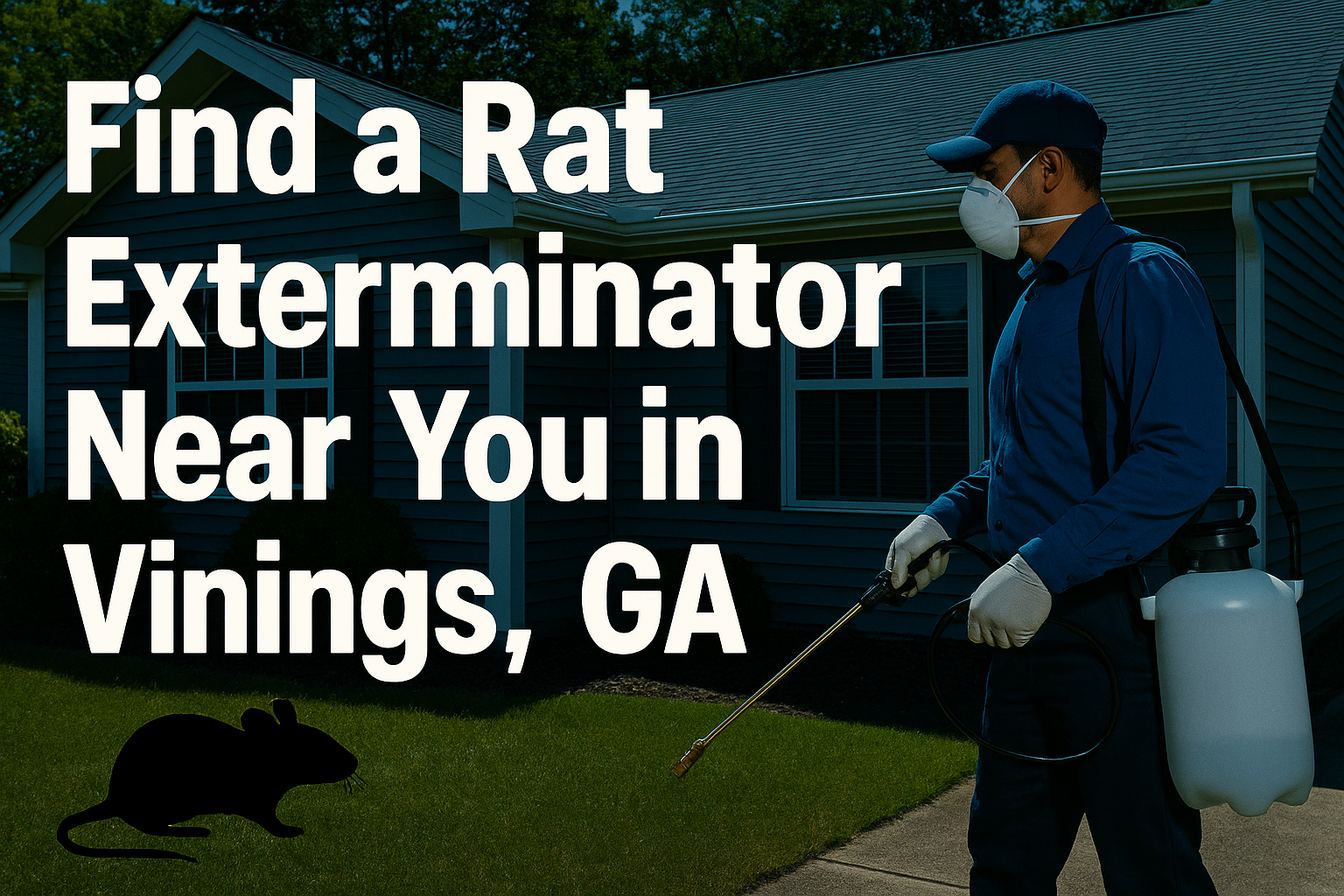
Finding a Rat Exterminator Near You in Vinings, GA

Imagine settling in for the night and hearing the unmistakable patter of tiny feet scurrying across your attic ceiling. In neighborhoods like West Cobb, Cumberland, or the Vinings Village, that sound often means an unwelcome guest—rats have slipped into the quiet corners of your home.
Rats are more than a nuisance; they are carriers of diseases such as leptospirosis, hantavirus, and salmonella. The EPA estimates that rodent‑related damage costs the United States between $2 billion and $5 billion each year, a figure that includes medical expenses, food contamination, and the structural repairs caused by gnawed wiring, insulation, and wood.
Beyond health risks, a single rat can chew through electrical cables, creating fire hazards, or tunnel through drywall, compromising the integrity of your foundation. Left unchecked, these activities can lead to costly repairs that far exceed the price of professional treatment.
Vinings’ blend of mature landscaping, historic homes, and nearby creeks creates an ideal habitat for rats seeking shelter and food. Overgrown shrubs provide hidden pathways from the street to basements, while dense leaf litter near gutters offers perfect nesting material. Seasonal rains can flood lower levels, forcing rodents to migrate upward into attics and walls. Recognizing these local conditions helps you spot early warning signs—chewed wood, droppings in pantry corners, or fresh gnaw marks on plumbing.
This guide is designed to put an end to that anxiety. We’ll show Vinings homeowners how to locate a qualified rat exterminator, what typical service costs look like, and which preventive steps keep rodents out for good. Our recommendations are backed by local data, customer reviews, and the expertise of Anthem Pest Control, a trusted provider that serves the Vinings area.
By the end of this section, you’ll understand why swift action matters, how to evaluate a pest‑control partner, and what to expect from a thorough inspection and treatment plan. Let’s turn those midnight scurries into a thing of the past.
Identifying Rat Activity in Vinings Homes
Rats are stealthy, but they leave a trail of clues that any vigilant Vinings homeowner can spot. The first thing to look for are the tiny, dark droppings they scatter as they move. In a typical Vinings residence, you’ll find pellets that are about 2‑3 mm long, roughly the size of a grain of rice, often tucked into corners, under appliances, or along baseboards. Unlike mouse droppings, rat feces are larger and have a more pointed tip.
Next, examine woodwork, cabinets, and especially any exposed electrical wiring. Rats love to gnaw for both food and to file down their ever‑growing teeth. Look for shallow, crescent‑shaped chew marks on wooden beams, plastic pipe, or the insulation surrounding your wiring. If you notice frayed wires or scorch marks, it’s a sign that rats are not just passing through—they’re making a home inside your walls.
Rats are also master builders. In attics, basements, or crawl spaces you may discover piles of shredded paper, dried leaves, or soft fabrics—these are their nesting materials. A dense, irregular mound of such debris, often tucked behind insulation or in the corners of a garage, signals a well‑established colony.
Finally, trust your ears. A faint, scratching or scurrying noise coming from the ceiling, walls, or attic—especially at night—usually means rats are active. The sound may sound like a soft, rapid tapping, similar to a distant woodpecker, but it’s actually their tiny feet moving along hidden pathways.
Beyond the nuisance, rat activity carries health risks. According to the Centers for Disease Control and Prevention (CDC), Georgia reported 12 confirmed cases of Hantavirus and 27 cases of Leptospirosis in 2024. Both diseases can be transmitted through direct contact with rodent urine, droppings, or saliva, and inhalation of contaminated dust. While the numbers may seem low, each case represents a serious, potentially life‑threatening infection that can be avoided with early detection and professional intervention.
Quick‑Scan Checklist for Vinings Homeowners
- Inspect for 2‑3 mm dark droppings in kitchens, pantries, and hidden corners.
- Look for gnaw marks on wood, plastic, and especially electrical wiring.
- Search attics, basements, and crawl spaces for shredded nesting material.
- Listen for faint scratching or scurrying noises after dark.
- Check for unexplained gaps or holes near the foundation, vents, and utility entry points.
Real‑world example: The Johnson family, longtime residents of Vinings Country Club, noticed a faint rustling sound above their master bedroom ceiling one summer night. When they lifted a section of attic insulation, they found a sizable patch of chewed‑through fiberglass and a nest of shredded newspaper tucked beside a broken pipe. The gnawed insulation not only reduced their home’s energy efficiency but also created a direct pathway for rats to access the living space. After calling Anthem Pest Control, a certified technician confirmed a moderate infestation, sealed entry points, and applied a targeted baiting program that eliminated the problem within two weeks.
Benefits of Choosing a Local, Licensed Exterminator
Deep‑Rooted Local Knowledge
Vinings homeowners face a unique blend of building codes, older bungalow foundations, and a humid subtropical climate that drives seasonal pest peaks. A locally owned technician knows which soffit gaps, utility penetrations, and storm‑drain openings are most likely to invite rats during the rainy spring. That insight lets them inspect and seal entry points before the infestation spreads, something a generic national crew may overlook.
Faster Response & Tailored Treatments
National chains often schedule service from a regional hub, resulting in longer wait times and one‑size‑fits‑all bait stations. In contrast, a Vinings‑based provider can dispatch a certified technician within hours, often the same day you call. Because they work exclusively in Cobb County, they customize bait placement to match local foraging routes and adjust toxin concentrations to the area’s temperature swings, delivering a more effective, quicker eradication.
What Homeowners Really Want
A recent NPMA survey found that 78 % of homeowners prefer locally owned pest services because of trust, accountability, and community reputation. Read the full survey here. The data underscores that proximity isn’t just convenient—it’s a decisive factor in choosing a partner who will stand behind their work.
Anthem Pest’s Local Edge
Anthem Pest is fully licensed in Georgia, meaning every technician meets state‑mandated training and safety standards. Our Vinings office maintains a 24‑hour emergency line (877‑371‑8196) so you can reach a local expert any time a rat is spotted after dark. Because we live and work in the same neighborhoods we serve, we understand Cobb County’s pest trends and can proactively protect your home year‑round.
Treatment Options and What to Expect from Anthem Pest

Primary Rat Treatment Methods
Anthem Pest tailors its approach to the severity of the infestation and the homeowner’s preferences. The three core methods are:
- Snap traps with humane disposal – Traditional snap traps are placed in high‑traffic rodent zones. After capture, technicians seal the trap in a disposable container, preventing any accidental contact by children or pets.
- Bait stations using EPA‑registered anticoagulant rodenticides – These tamper‑resistant stations house a measured dose of rodenticide that only a mouse or rat can access. The product is EPA‑approved, ensuring it meets strict safety and efficacy standards.
- Integrated Pest Management (IPM) – A holistic strategy that combines exclusion (sealing entry points), sanitation (removing food and water sources), and ongoing monitoring. IPM reduces reliance on chemicals and creates a long‑term barrier against reinfestation.
Step‑by‑Step Service Visit
When you call Anthem Pest, the technician follows a transparent, four‑stage process designed to keep your family safe while eliminating rats:
- Inspection – The technician conducts a thorough walkthrough, identifying signs of activity, potential entry points, and any conditions that could attract rodents.
- Risk assessment – Based on the inspection, the technician grades the infestation level and evaluates the risk to occupants, especially children and pets.
- Customized treatment plan – A blend of the methods above is selected. For example, a moderate problem may receive snap traps and a few bait stations, while a severe case triggers full IPM with sealing of gaps and sanitation recommendations.
- Follow‑up monitoring – After the initial treatment, Anthem schedules a revisit (usually 7–14 days later) to check trap performance, replace bait, and ensure no new activity has emerged.
Pricing for Vinings Homeowners
Transparent pricing helps you budget without surprises. Based on the 2025 Georgia Department of Agriculture data, typical costs in Vinings are:
| Service | Price Range |
|---|---|
| Initial inspection | $75 – $120 |
| Single‑visit treatment (snap traps or bait stations) | $150 – $300 |
| Full‑service package (IPM + follow‑up) | $350 – $550 |
Safety First: Protecting Children and Pets
Anthem Pest’s technicians are trained to follow strict safety protocols. All bait stations are child‑proof and pet‑resistant, and any chemical products used are EPA‑registered, meaning they have undergone rigorous testing for human and animal safety. Technicians wear gloves, use disposable containers for captured rodents, and provide homeowners with clear after‑care instructions—such as keeping pets out of treatment zones for 24 hours and storing food in sealed containers.
By combining proven treatment methods, a systematic service visit, and clear pricing, Anthem Pest gives Vinings homeowners the confidence that rat problems will be resolved quickly and safely. If you spot droppings, gnaw marks, or hear nocturnal scurrying, a prompt call to Anthem can stop the invasion before it spreads.
Seasonal Timing and Prevention Strategies for Vinings Residents

In Vinings, rat activity follows a predictable seasonal rhythm. As temperatures climb in late spring, outdoor food sources—fresh fruit, garden produce, and insect populations—multiply, giving rats the energy they need to breed. A single female can produce up to five litters a year, and each litter can contain eight to twelve pups. By early summer, the combination of abundant food and warm, humid conditions creates ideal nesting opportunities in attics, crawl spaces, and under decks.
Come early fall, the story repeats. Leaves drop, creating cluttered ground cover that offers shelter, while homeowners begin to store harvested vegetables and firewood. These resources act like a magnet, drawing rats back into residential areas just as they prepare for the cooler months. Understanding these two peak windows—late May through June and September through October—allows Vinings residents to act before infestations become visible.
Vinings‑Specific Prevention Checklist
- Seal all gaps larger than ½ inch, especially around utility penetrations, vents, and foundation cracks.
- Trim tree branches and shrubs so they clear the roofline by at least three feet.
- Secure compost bins with tight‑fitting lids and keep them at least three feet from the house.
- Clean gutters and downspouts regularly to eliminate standing water and debris that attract insects, the primary food source for rats.
- Store firewood off the ground and at least two feet away from exterior walls.
- Inspect and repair damaged screens on doors, windows, and garage openings.
For homeowners who prefer a printable reference, Anthem Pest Control offers a free “Vinings Rat‑Proof Checklist.” Download the PDF, print it, and run through each item before the spring surge or autumn transition. Having a physical list on hand makes it easy to spot missed spots during routine home maintenance.
Our recommendations align with federal best practices. The EPA guidance on rodent exclusion emphasizes sealing entry points, removing food attractants, and maintaining a clean perimeter—exactly the steps outlined above. By following both the EPA’s proven methods and our local checklist, Vinings residents can dramatically reduce the chance of a rat invasion without immediate chemical treatment.
Remember, the most effective defense is proactive. Schedule a quick walk‑through of your property during the first week of May and again in early September. Spotting a gap or an overgrown branch now is far cheaper—and less stressful—than calling an exterminator after the rats have already moved in.
Verifying an Exterminator’s Credibility
Before you hand over a key and invite a pest‑control professional into your home, take a few minutes to confirm that the company is legitimate, insured, and follows state and federal guidelines. A quick credibility check saves you from hidden fees, sub‑par service, and potential liability.
Step‑by‑step checklist
- Check the Georgia licensing portal. Visit the Georgia Department of Agriculture’s online database, enter the company name or license number, and verify that the license is current and specifically covers rodent control.
- Read BBB and Google reviews. Scan the Better Business Bureau profile and Google My Business feedback. Consistent five‑star ratings are encouraging, but repeated complaints about missed appointments or incomplete work are red flags.
- Request proof of insurance. Ask for a Certificate of Insurance that shows general liability coverage of at least $1 million and workers’ compensation for the technicians who will enter your home.
- Verify EPA‑registered product list. Confirm that any pesticide or bait the technician plans to use appears on the EPA’s Registered Pesticide Products List, ensuring it is approved for residential use and has undergone safety testing.
Quick comparison of local providers
Below is a side‑by‑side look at how three common providers stack up against the checklist.
| Company | Licensed | Insured | Avg. Price (per treatment) | Customer Rating |
|---|---|---|---|---|
| Annapolis Pest | Yes | Yes | $140 | 4.3/5 |
| Vinings Rodent Control | Yes | No | $125 | 4.1/5 |
| Anthem Pest | Yes | Yes | $130 | 4.8/5 |
Based on this snapshot, Anthem Pest checks every box—licensed, fully insured, competitively priced, and boasting a 4.8‑star rating from local homeowners—making it a trustworthy choice for Vinings residents.
Use this checklist each time you request a quote, and you’ll feel confident that the professional you hire is both qualified and accountable.
Frequently Asked Questions About Rat Extermination
- How long does treatment take?
Our technicians typically complete the on‑site inspection and initial treatment within 1–2 hours. After the first visit, we schedule a follow‑up inspection 7–10 days later to confirm that activity has stopped and to apply any needed spot treatments. For ongoing protection, many homeowners add quarterly visits, but the core eradication process usually wraps up in under two weeks.
- Are the chemicals safe for pets?
Yes. Anthem Pest uses only EPA‑registered rodent control products that are formulated for low toxicity to non‑target animals. Our technicians follow strict safety protocols: they apply bait stations and perimeter sprays in areas inaccessible to pets, wear protective gear, and advise owners to keep pets away for 2–4 hours after application. Once the area is ventilated, it’s safe for cats, dogs, and other household animals.
- What is the warranty period?
Anthem Pest backs every rat‑extermination job with a 30‑day guarantee. If live rats are observed within that window, we’ll return at no extra charge to re‑treat the affected zones. Homeowners who enroll in our extended service plans receive longer protection periods and priority scheduling for any follow‑up visits.
Take Action to Protect Your Vinings Home Today
Keeping your Vinings property rat‑free begins with recognizing the warning signs, moving quickly when they appear, selecting a trusted local professional, and putting long‑term prevention habits in place.
- Identify the signs. Look for fresh droppings, gnaw marks on wood or wiring, greasy smudge trails along walls, and a constant scratching or scurrying noise, especially at night.
- Act without delay. Rats reproduce rapidly; a single pair can produce hundreds in a few months. Schedule an inspection as soon as you notice any evidence to stop the problem before it spreads.
- Choose a licensed Vinings expert. A locally certified technician understands the area’s building styles, seasonal rodent activity, and the most effective treatment methods for Georgia’s climate.
- Implement prevention measures. Seal cracks and utility openings, store trash in sealed containers, keep outdoor garbage away from the house, and trim trees or shrubs that touch the roof to eliminate easy entry points.
By following these four steps you dramatically lower the chance of an infestation taking hold, protect your family’s health, and avoid costly damage to wiring, insulation, and structural wood.
Ready to act? Call Anthem Pest at 877‑371‑8196 for a free, customized quote, or visit anthempest.com to schedule service today. Our team combines safe, effective treatments with transparent pricing, so you know exactly what’s being done and why.
Help your neighbors stay safe, too—share this guide with other Vinings homeowners. A community that works together on rodent prevention enjoys fewer surprises, lower expenses, and a healthier living environment.